https://www.lymedisease.org/next-tbdwg-meeting-may10/

Tick-Borne Disease Working Group meeting set for May 10

From the Federal Register, the Daily Journal of the US Government, April 9, 2018:

The Department of Health and Human Services (HHS) announces the fourth online meeting of the Tick-Borne Disease Working Group (Working Group) on May 10, 2018, from 8:30 a.m. to 6:30 p.m., Eastern Time.

For this fourth meeting, the Working Group will focus on the findings and basis for the draft reports from the work of the six Subcommittee Working Groups that were established on December 12, 2017.

These subcommittees were established to assist the Working Group with the development of the report to Congress and the HHS Secretary as required by the 21st Century Cures Act. The subcommittees are:

1. Disease Vectors, Surveillance and Prevention (includes epidemiology of tick-borne diseases);

2. Pathogenesis, Transmission, and Treatment;

3. Testing and Diagnostics (including laboratory-based diagnoses and clinical-diagnoses);

4. Access to Care Services and Support to Patients;

5. Vaccine and Therapeutics; and

6. Other Tick-Borne Diseases and Co-infections.

DATES:

May 10, 2018, from 8:30 a.m. to 6:30 p.m., Eastern Time.

ADDRESSES:

This will be a virtual meeting that is held via webcast. Members of the public may attend the meeting via webcast. Instructions for attending this virtual meeting will be posted one week prior to the meeting at: https://www.hhs.gov/​ash/​advisory-committees/​tickbornedisease/​index.html.

FOR FURTHER INFORMATION CONTACT:

James Berger, Office of HIV/AIDS and Infectious Disease Policy, Office of the Assistant Secretary for Health, Department of Health and Human Services; via email at tickbornedisease@hhs.gov or by phone at 202-795-7697.

SUPPLEMENTARY INFORMATION:

The Working Group invites public comment on issues related to the Working Group’s charge. Comments may be provided over the phone during the meeting or in writing. Persons who wish to provide comments by phone should review directions at https://www.hhs.gov/​ash/​advisory-committees/​tickbornedisease/​meetings/​index.html before submitting a request via email at tickbornedisease@hhs.gov on or before May 3, 2018.

Phone comments will be limited to three minutes each to accommodate as many speakers as possible. A total of 60 minutes will be allocated to public comments. If more requests are received than can be accommodated, speakers will be randomly selected.

The nature of the comments will not be considered in making this selection. Public comments may also be provided in writing. Individuals who would like to provide written comment should review directions at https://www.hhs.gov/​ash/​advisory-committees/​tickbornedisease/​meetings/​index.html before sending their comments to tickbornedisease@hhs.gov on or before May 3, 2018.

Background and Authority: The Tick-Borne Disease Working Group was established on August 10, 2017, in accordance with section 2062 of the 21st Century Cures Act, and the Federal Advisory Committee Act, 5 U.S.C. App., as amended, to provide expertise and review all HHS efforts related to tick-borne diseases to help ensure interagency coordination and minimize overlap, examine research priorities, and identify and address unmet needs. In addition, the Working Group will report to the Secretary and Congress on their findings and any recommendations for the federal response to tick-borne disease prevention, treatment, and research, and addressing gaps in those areas.


PMCID: PMC5872229
PMID: 29498648

Citizen Science and Community Engagement in Tick Surveillance—A Canadian Case Study

Abstract

Lyme disease is the most common tick-borne disease in North America and Europe, and on-going surveillance is required to monitor the spread of the tick vectors as their populations expand under the influence of climate change. Active surveillance involves teams of researchers collecting ticks from field locations with the potential to be sites of establishing tick populations. This process is labor- and time-intensive, limiting the number of sites monitored and the frequency of monitoring. Citizen science initiatives are ideally suited to address this logistical problem and generate high-density and complex data from sites of community importance. In 2014, the same region was monitored by academic researchers, public health workers, and citizen scientists, allowing a comparison of the strengths and weaknesses of each type of surveillance effort. Four community members persisted with tick collections over several years, collectively recovering several hundred ticks. Although deviations from standard surveillance protocols and the choice of tick surveillance sites makes the incorporation of community-generated data into conventional surveillance analyses more complex, this citizen science data remains useful in providing high-density longitudinal tick surveillance of a small area in which detailed ecological observations can be made. Most importantly, partnership between community members and researchers has proven a powerful tool in educating communities about of the risk of tick-vectored diseases and in encouraging tick bite prevention.

_______________

**Comment*

Please know that according to an independent Canadian tick expert John Scott, climate change has nothing to do with the spread of ticks and the pathogens they carry:  

https://madisonarealymesupportgroup.com/2017/08/14/canadian-tick-expert-climate-change-is-not-behind-lyme-disease/  “The climate change range expansion model is what the authorities have been using to rationalize how they have done nothing for more than thirty years. It’s a huge cover-up scheme that goes back to the 1980’s. The grandiose scheme was a nefarious plot to let doctors off the hook from having to deal with this debilitating disease. I caught onto it very quickly. Most people have been victims of it ever since.”
“This climate change ‘theory’ is all part of a well-planned scheme. Even the ticks are smarter than the people who’ve concocted this thing,” he says.
“Climate change has nothing to do with tick movement. Blacklegged ticks are ecoadaptive, and tolerate wide temperature fluctuations. On hot summer days, these ticks descend into the cool, moist leaf litter and rehydrate. In winter, they descend into the leaf litter, and are comfortable under an insulating blanket of snow.Ticks have antifreeze-like compounds in their bodies, and can tolerate a wide range of temperatures. For instance, at Kenora, Ontario, the air temperature peaks at 36°C and dips to –44°C, and blacklegged ticks survive successfully.
“Ticks are marvellous eco-adaptors. They will be the last species on the planet. Do you see how silly this theory of climate change is as a way to rationalize what’s happening. It’s all a red herring to divert your attention,” he explains. “In simple terms, the feds have diverted our attention by saying ‘let’s worry about ticks and climate change, put all our funding there and we will solve the problem of Lyme disease’.”

Similarly to the latest fashion trends from Paris driving fashion across the world, the phrase “climate change,” is the latest angle in Science to obtain grants that is driving research.  

This research is not helping patients in the least.  

https://madisonarealymesupportgroup.com/2017/01/28/sit-down-science/  How research is being manipulated to fit industry agendas.

https://madisonarealymesupportgroup.com/2017/01/02/fake-science/ Exactly how this manipulation occurs.

https://madisonarealymesupportgroup.com/2017/07/08/global-warming-numbers-fudged/

https://madisonarealymesupportgroup.com/2017/01/13/lyme-science-owned-by-good-ol-boys/

https://madisonarealymesupportgroup.com/2017/08/04/science-for-sale/

https://madisonarealymesupportgroup.com/2017/12/05/bought-documentary-on-pharma-vaccines-gmos/


https://jameslyonsweiler.com/2018/04/07/a-tale-of-three-metals-and-the-fate-western-civilization/

A Tale of Three Metals and The Fate of Western Civilization

by jameslyonsweiler

1200px-madlhatterbytenniel

Biff: LET’S DIG UP TOXINS, PURIFY THEM, AND INJECT THEM INTO OURSELVES! AND BABIES! AND PREGNANT WOMEN! AND LET’S PUT THEM INTO PAINT THAT WE USE IN OUR HOMES WE LIVE IN, AND PUMP THEM INTO THE AIR WE BREATHE! AND LET’S MAKE SURE THAT THE WATER WE DRINK COMES INTO OUR HOMES IN PIPES THAT LEACH LEAD!
Buff: ARE YOU MAD?
Biff: NO, BUT WE WILL BE!

The Romans drank beverages prepared in lead vessels, and brought spring water into their homes through lead pipes. Lead poisoning undoubtedly hastened the fall of the Roman empire. So when we think about the evidence that we are harming ourselves, and our children, with lead in the water, mercury in the air, mercury in flu vaccines, and aluminum in many other vaccines, one has to wonder: what are the likely effects on society?

  1. African Americans will suffer the most. Due to Vitamin D deficiency, African Americans at northern latitudes can be expected to be most sensitive to toxins because they rely on dietary Vitamin D to drive their cellular detoxification systems. The fix? Measure blood Vitamin D levels, and absent any mutation that would preclude increased doses of Vitamin D, improve brain health via addition Vitamin D supplementation.
  2. Young adults (millenials) will have different sociality, and higher rates of early-age psychological disorders such as schizophrenia. They may also experience higher rates of early age of onset Parkison’s disease, Alzheimer’s disease, and other neurodegenerative diseases. The fix? Filter aluminum out of the water, try silica-rich mineral waters, silica drops, with a preference for sources with the more biologically available silicic acid. In short, detoxify their food, water, and everything in their environment, and more (see below).
  3. Young children with special education needs will tend to be more violent and brain studies will show increased presence of amyloid precursor protein, the kind responsible for Alzheimer’s disease.
  4. There will be a population-wide downward shift in IQ.
  5. There will be a plague of multiple chemical sensitivity.
  6. Academics will be stretched thin and the curriculum dumbed down to the point where schools will have to stop giving grades. When 20% of the class can no longer function academically to take and exam, the rest will be asked to “help” their classmates learn.
  7. Families will become increasingly stressful social units. Divorce rates will skyrocket.
  8. People will become increasingly dependent on the State (Nanny State).
  9. Those most able to withstand the toxic effects of accumulating neurotoxins will become increasingly taxed because their income and property will have to sustain an increasingly demanding medico-government empire.
  10. When they, too, begin to fall apart, the tax base will falter.
  11. Violence will become increasingly common. Those most damaged will tend to kill and injure those who are capable.
  12. America will tear itself apart from within.

This doomsday scenario is not inevitable. So what can we do to prevent this?

  1. Listen to the mothers. They have experience in what works. NIH has avoided real research on neurodevelopment disorders that address neurotoxic metal exposure since the CDC worked so hard to defraud the public on the vaccine/autism link. They gambled, lost, and we now pay the cost.
  2. These solutions must be tested in combinations in clinical studies to insure safety, and also to validate them (if they do help). They must be studied NOW, before it’s too late.

Option 1. Environmental Detoxification. Remove all neotoxins from your home. Use reverse osmosis water filters, and use filtered water for everything – even cooking – because aluminum is used to condition the water coming from the tap. Fluoride is another issue, and your filtration should also remove fluoride. Eat organic foods and nothing out of aluminum containers. Certainly never cook in aluminum pots.

Option 2. Get the Aluminum Out. Consider using high silicic acid mineral water, or adding silicic acid drops to your filtered water to bind any aluminum from food. Other possibilities include malic acid, magnesium, and acetoacetic acid:

Principles of Orthomolecularism. R.A.S. Hemat: “Aluminum can be effectively complexed and excreted with silicon, a complex of malic acid and mg, and acetoacetic acid.”

Precise combinations that work best and are safe are not yet determined. That’s why we need studies.

Doctor Toni Bark, MD informs me that ketogenic diet can also help reduce brain inflammation and reduce the effects of toxic metals from the body and the brain – including the reduction of brain amyloid. And Dr. Richard Frey’s research on intranasal insulin https://academic.oup.com/biomedgerontology/article/71/1/30/2614162 and intranasal deferoxamine https://www.ncbi.nlm.nih.gov/pubmed/28870559 seems very promising for the actual removal of iron and aluminum from the brain. Care should be taken to conduct any such research under the direct care of a physician.

Option 3. Up the Vitamin D3, watch the A, Avoid Folic Acid. Dr. Keith Baggerly, MD, has determined that the FDA flubbed in it recommended daily Vit D intake:  https://vitamindwiki.com/Vitamin+D+math+mistakes+made+7+years+ago+–+K+Baggerly+2016-2017 As a result, most Americans are Vit D deficient. Increased Vitamin D3 can be expected to improve many aspects of health by helping our cells properly fold proteins. Vits A and D are antagonistic, and so watch all sources of Vit A and make sure you and your child are not taking in too much Vitamin A. Read The Big Vitamin D Mistake:  https://www.ncbi.nlm.nih.gov/pmc/articles/PMC5541280/ and Grant Genereux’s resources on Vit A toxicity [1] [2].

Much of our population has MTHFR mutations that cause problems with Folic Acid. Moms taking prenatal vitamins should seek methyl folate or folinic acid: https://www.nature.com/articles/mp2016168 instead of folic acid. Children’s vitamins with methyl folate are also available.

Option 5. Reduce Brain Inflammation. Chronic low-grade inflammation is a hallmark of autism. Powerful brain antioxidants include N-acetylcysteine and glutathione. It seems likely that everyone with a brain could benefit from less brain inflammation.

Option 6. Improve the Gut. The commensal (helpful) bacteria in the large intestine can become significantly altered after antibiotic use to treat ear infections, most likely caused by harm from to the immune system from thimerosal. Pro-biotics may help, as will eating organic.

Option 7. Keep This Handy for Bad Head Days. Brain dysfunction from metal-induce excitotoxicity involves high glutmate levels in the brain. Oxaloacetate can reduce blood glutamate levels, allowing the excess glutamate in the brain to spill into the blood. Oxaloacetate is used after stroke to reduce the exitotoxic brain injury. Research is needed to determine if it should be used after vaccination to reduce the incidence of vaccine-induced excitotoxicity. And aluminum should be removed from vaccines because the schedule results in toxic doses in infants.

Option 8. HBOT is HOT. Consider Hyperbaric Oxygen Therapy (HBOT). HBOT can increase de novo neurogenesis. If the brain has suffered a loss of neurons due to toxic exposure, increased neurogenesis – at the right time in development – could ultimately be shown to increase IQ.

Option 9. Avoid Thimerosal. If you choose to use a flu vaccination, ask the doctor for the type of flu shot that does not contain thimerosal.

Option 10. Tell Congress You Want Research Reform.

No studies of the synergistic toxicity of aluminum, lead and mercury have been conducted at doses reflecting the vaccine schedule and daily exposure due to leaching of lead from pipes into homes.

We know which homes have lead pipes. Departments of Health should consider telling parents of children in those homes to avoid exposures to mercury and to aluminum – in other words, to skip vaccines that contain these neurotoxic metals. The children will become more educated, better behaved, make better decisions, commit fewer crimes, and overall have better lives. Toxicity of lead, aluminum and mercury is synergistic.

No studies of the options and combinations of options listed above have been conducted to determine if we could improve overall brain health in children and adults. This research is badly needed. YOU can make it happen.

Make an appointment with your Congressional Representative and ask them to create the Brain Health 2030 initiative designed to reverse the ill effects of the past 30 years of industry and medicine on brains, and on our childrens’ brains. These interventions are not intrusive. Studies could be done also with the Department of Education to determine whether reports of violence decrease, grades increase, drop-out rates decrease if entire SCHOOLS – including administrators – are enrolled in Healthy Brain programs, which could incorporate aspects of mindfulness.

You can join the Neurodevelopment Research Reform group on Facebook where ideas on the Brain Health 2030 initiative are shared. And you can support our efforts to compile the most promising evidence-based approaches to improving brain health by supporting IPAK’s Neurodevelopment Research Reform Initiative.

This article is a call for research reform. These statements have not been evaluated by the Food and Drug Administration. This product is not intended to diagnose, treat, cure, or prevent any disease. Check with your physician before changing any mode of medical treatment for your child, or yourself.

Further Reading:

Lyons-Weiler, J and R. Ricketson. 2018. Reconsideration of the Immunotherapeutic Pediatric Safe Dose Levels of Aluminum. Journal and Trace Elements in Medicine and Biology 48:67 73.

https://www.sciencedirect.com/science/article/pii/S0946672X17300950

Thanks to Tim Lundeen for the Vit A information and of course to the outstanding medical doctor, Dr. Toni Bark, MD for permission to cite her expertise.

 
jameslyonsweiler
Dr. Lyons-Weiler is a research scientist and author of three books, the latest of which is “The Environmental and Genetic Causes of Autism”. He is available for speaking engagements and book signing events at your location. To contact, follow on twitter @lifebiomedguru, email ebolapromo[at]gmail.com, and connect via LinkedIn https://www.linkedin.com/in/jameslyonsweiler

________________

For more:

https://madisonarealymesupportgroup.com/2018/04/09/3-part-series-on-genetic-mutations/

https://madisonarealymesupportgroup.com/2017/09/21/aluminum-flawed-assumptions-fueling-autoimmune-disease-and-lyme/

https://madisonarealymesupportgroup.com/2017/01/04/aluminum-alzheimers-ld/

https://madisonarealymesupportgroup.com/2017/09/19/autism-aluminum-adjuvant-link-corroborated/


Audio here:

https://madisonarealymesupportgroup.com/wp-content/uploads/2018/04/folic-acid-and-mthfr.mp3

UNCOVERING GENETIC MUTATIONS: HOW TO TEST FOR THEM

Dr. Doni explains why she recommends genetic testing, the different kinds of tests available, and what they can tell you about your overall health and well-being.

Part 2 of Dr. Doni’s Series on How Genetic Mutations Affect Your Health

genetic testing, genetic health conditions, genetic mutations, chronic health issues, genetic treatments, MTHFR, MTHFR mutations, MAO, COMT, folic acid, active folate, SNP, single-nucleotide polymorphismIn this blog series, I will be talking all about genetic mutations, how you can easily test for them, how they can affect your health, and what you can do to address them. Testing for and addressing genetic mutations is one of the newest approaches in healthcare and one that many practitioners have not yet integrated into their practices. At the same time, this relatively new ability to determine gene mutations combined with research that shows us what we can do about them can truly be power at your fingertips when it comes to managing your health.

Last week, we discussed how knowing which genetic mutations you have makes it possible to address the underlying causes of your health issues. I emphasized that when I talk about genetic mutations, I am referring to mutations in DNA that are not life threatening in the immediate future. What we are looking at are mutations that decrease processes in the body that affect the way vitamins are activated, toxins are detoxified, and neurotransmitters are made or destroyed. As a result, they can make you more likely to feel tired and anxious, and to have allergies or autoimmunity, for example. But none of the health implications are set in stone, because we can influence the outcome with stress remedies, lifestyle, diet, and nutrient choices.

We all have some of these mutations. The question is which?

This week’s blog is all about the testing that is available and how the results can inform what we do to improve your health.

TESTING FOR GENETIC MUTATIONS

Testing for genetic mutations and then determining how they are affecting your health usually comes down to a three part process:

  • Phase 1: Getting your genetic data
  • Phase 2: Translating that to genes and SNPs
  • Phase 3: Tests to help you to understand how those SNPs are influencing your health

Phase 1: Getting Your Genetic Data

There are a bunch of labs that now offer varying amounts of genetic testing via saliva, blood, and cheek swab. I’m sharing a few of them here to give you a sense of the options.

Saliva tests that you can order yourself online (usually $199 or less):

These three companies have a genealogy focus rather than a health focus–they show your ancestry based on your DNA and provide interactive ways to connect with your relatives online. What they don’t do is give health information related to your genes, but they will allow you to download your genetic data, which can then be used to determine which mutations you have.

Tests that are ordered by a clinician:

  • GENOMIND – A saliva test for genes that affect mood and mental health
  • PROMETHEUS – A blood test for genetic predisposition to Celiac Disease
  • PHARMASAN – Saliva tests, with various panel options, to test for common genetic mutations
  • KIMBALL GENETICS – A cheek swab (or buccal swab) test for genes associated with Celiac Disease
  • Quest, LabCorp, and other labs also offer blood tests for certain genetic mutations such as MTHFR

Phase 2: The Raw Data and How to Interpret It

Keep in mind that the FDA prohibits open access labs from offering health-related information based on your genetic panel. This means that the saliva tests you can order online will be for ancestry information only. However, they can provide you with what is called your “raw data,” a number/letter listing of your genes. Hidden within what appears to be a scramble of letters are your genetic mutations. When your genes are compared to the human genome, it is possible to find the differences. These differences are called SNPs or mutations. These differences in your DNA are what make you YOU and can affect processes and systems in your body when they’ve been activated by stress.

But don’t worry—you don’t have to do all the letter matching yourself. There are software programs that will upload your raw data and provide a neatly organized report showing your mutations, and whether they are homozygous or heterozygous. Homozygous means that there is a mutation on both strands of DNA and heterozygous means that the mutation is on just one strand.

Here are links to three online tools that process raw data:

Note: Please use these tools with caution! Be careful with your personal information and be prepared to see information about your genetic health. Consider having your practitioner help you with this step in the process.

Even using these programs, it can be time-consuming and overwhelming to get the data and then successfully process it, not to mention the difficulties of interpreting the data if you don’t know what you are looking for. If you would prefer to have help processing and interpreting your genetic data, you may want to consult with a practitioner who has been trained to do just that. YOU CAN FIND PRACTITIONERS IN YOUR AREA BY SEARCHING HERE.

I’m happy to help as well. Learn about scheduling an initial appointment with me, in-person or by phone/Skype) on the MAKE AN APPOINTMENT page. I have developed a consultation package for just that situation, so I can support you to process and interpret your raw data and then advise you on how to use the information to maximize your health. Find out about that package below.

What the Tests Tell Us

The saliva panels you order for yourself, and the raw data they provide, will give you a fairly comprehensive list of genes, but will not include all of them. However, once the data has been run through a program that creates a report you will have more information than you would if you did a condition-specific genetic panel (such as those ordered by a clinician’s office), but you may still find that some of the genes you want to know about are missing simply because they were not included in the original data. Ongoing research will continue to increase our knowledge over time.

For most people, however, you will get plenty of information about many of the genetic SNPs that have been researched enough for us to have an idea how to address them and how they may be related to your current health issues.

Phase 3: How SNPs Are Affecting Your Health

If you find that you do have SNPs that may be affecting your health, the next step is to do a urine organic acids panel and potentially also a methylation panel (this would be a blood test) if you have SNPs that affect methylation. These tests show us the metabolites in your body that indicate the function of the various processes and enzymes that are determined by your genes. Remember that having a mutation doesn’t necessarily mean it is affecting your processes and health. It is only by checking your urine and blood that we can find out the influence your genes are having on you! These two would have to be ordered by a practitioner.

If your SNPs indicate that you may be predisposed to allergies and food sensitivities, then it would be helpful to do an IGG AND IGA FOOD SENSITIVITY PANEL to see whether you have developed reactions to certain foods so you can adjust your diet accordingly. At the same time, if you have SNPs related to neurotransmitters, such as serotonin, dopamine, and norepinephrine, then testing your neurotransmitters levels (a urine test) can be useful. Cortisol, our main stress hormone, can be both influenced by your SNPs and influence how your genes affect your health—so testing your cortisol levels (four timed saliva samples) will help you understand what you can do to improve your health.

Depending on your specific genetics, there may be other tests that you decide to do to help you get a clearer sense of whether SNPs are playing a role in your current health issues. That may include blood work for autoantibodies, stool tests that tell us about your digestive function, and blood and/or urine tests to show nutrient levels in your body.

To help you get started with testing for your genetic mutations, how they are influencing your health and what to do about it, I created a GENETIC PROFILE SOLUTIONS PACKAGE. It includes an comprehensive initial appointment with me (in-person or by phone/Skype) so that I can learn all your health concerns and review your records. Then it includes the testing mentioned in this article and follow up sessions so that we can review your results and create a plan to support your health. It is the most cost effective way to get this information and a plan built for you.

WHAT TO DO ONCE YOU HAVE YOUR RESULTS

I want to emphasize that while it is possible to explore your genetic mutations by yourself, and you may gain some useful information, I do encourage you to choose a practitioner to support you in the process. The reason I say this is that the processes in the body are highly responsive and dependent on each other. Say you find one genetic mutation—MTHFR for example—and begin to address it by taking methylfolate*. Well, if you also have SNPs on MTRR, COMT, CBS, and/or BHMT, then you may actually feel worse from taking 5MTHF. This is because you will have supported one step in the process, but not the other steps, and a ripple effect can result. A trained practitioner will be able to help you understand how your various SNPs are interrelated and how to address them in a way that hopefully avoids aggravations (and making you feel worse).

If you are curious, but not sure what you need, you could start by scheduling an initial consultation with me. That way we can review your case and I can help you get a sense of your next steps. You can schedule a consultation ONLINE HERE or by contacting my office HERE.

At the very least, testing for genetic mutations is a learning process. You’ll be learning about your body and what it needs, and how it responds to changes. But you’ll want to go about this slowly and carefully so as not to rock the boat too much.

*Please keep in mind that any and all supplements—nutrients, herbs, enzymes, or other—should be used with caution. My recommendation is that you seek the care of a naturopathic doctor (with a doctorate degree from a federally-accredited program) and that you have a primary care physician or practitioner whom you can contact to help you with individual dosing and protocols. If you ever experience negative symptoms after taking a product, stop taking it immediately and contact your doctor right away.

—
Photo credit: “DNA” by STEFANO is licensed under CC BY-SA 2.0. Changed from original: Added text overlays.

UNDERSTANDING THE METHYLATION CYCLE AND ITS EFFECT ON HEALTH

Naturopathic Doctor Doni Wilson explains how our genetic makeup defines which enzymes need extra support in your body and the role the methylation cycle plays.
Part 3 of Dr. Doni’s Series on How Genetic Mutations Affect Your Health

genetic health conditions, genetic mutation, chronic health issues, methylation, methylation cycle, genetic testing, genetic treatments, MTHFR, MTHFR mutations, SNP, single-nucleotide polymorphismIn the first two parts of THIS BLOG SERIES, we explored how genetic mutations (or SNPs) can affect our health and how we go about finding out which SNPs you have as the first step on the road to optimal health.

Understanding your genetic mutations (SNPs) will help you identify which processes and enzymes may need support in your body and your metabolism.

Once you have this information you’ll be able to design exactly the right support for your body including making the right diet choices, taking the right nutrients and optimizing the way in which you respond to stress, all based on your individual needs.

Today I’m going to discuss the enzymatic pathways in the methylation cycle that influence not only the way you feel from day to day but also your risk of disease in the long run. Then, next week, I will share my 8 STEPS TO A HEALTHY METHYLATION CYCLE. First, before diving into the enzymes, let’s talk about why the methylation cycle is important and how it affects your health.

Why is The Methylation Cycle Important?

The methylation cycle is important because it takes the nutrients from our food (and supplements) to make the energy our bodies need to work properly. I often refer to it as the “B vitamin Cycle” because this is where the B vitamins (B1, B2, B3, B6, B9, B12) get used in our bodies and why B vitamins are so important for our health.

Once through the methylation (B vitamin) cycle, our bodies use methyl-groups to make healthy cells and neurotransmitters (for mood), as well as for removing toxins (in the liver), fighting infections and protecting us from oxidative stress.

That’s why we often hear about how important B vitamins are to feeling well and for recovering from stress. When you are stressed, your methylation cycle has more work to do and needs more B vitamins to get that work done.

It is quite amazing when you think about it that the processes involved can have such a significant influence throughout your body. When methylation is working, you’re more likely to feel full of energy, in a good mood; you will feel generally well. When it is not working, you will feel tired, depressed, irritable, run-down, susceptible to infections, foggy-brained, and just plain “toxic.”

Understanding the Methylation Cycle

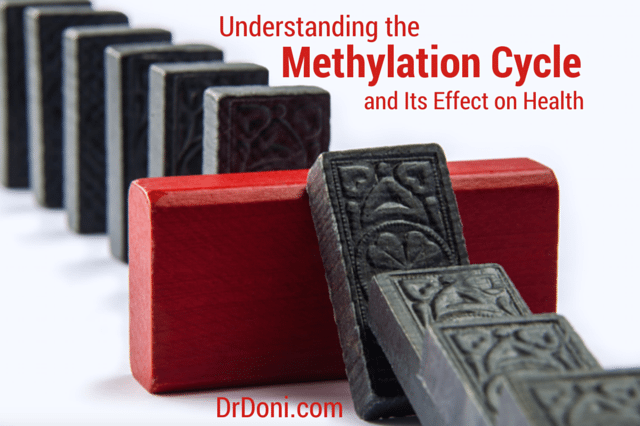
Understanding the methylation cycle starts with thinking of dominos lined up. Just as when the dominos start to fall—each domino toppling the next—when enzymes start processing nutrients, one enzyme affects the next. And just as with dominos, if one is out of line and doesn’t topple onto the next one (or it stops working), it causes a backup that inhibits the enzymes that follow and this, in turn, affects how we feel and how well we function.

More specifically:

  1. Research shows that decreased function of the enzymes in the methylation cycle can affect your health and increase your risk of heart disease, cancer, chronic fatigue, mood disorders, diabetes, and aging in general. If you want to read more on this subject you can check out the research studies listed at the end of this article, and refer to the other articles in THIS BLOG SERIES.
  1. Methylation is important for mitochondrial function and energy production. Low mitochondrial function and low methylation can lead to low energy, LOW THYROID FUNCTION, decreased MEMORY, and more. READ MORE ABOUT MITOCHONDRIA IN THIS ARTICLE.
  1. Methylation also affects your:
    – neurotransmitter levels, which can lead to ANXIETY AND DEPRESSION,
    – immune function, including the likelihood that you’ll experience allergies this spring,
    – liver detoxification, which has to do with how your body gets rid of toxins, and
    – fertility, including risk of MISCARRIAGE
  1. And methylation influences the production of GLUTATHIONE, a major antioxidant and protector of your cells.
  1. Ultimately methylation affects the ability of your body to make new healthy cells.

The Key Enzymes in the Methylation Cycle:

Enzymes are given nicknames based on the first letter of each of the chemical words in their name. So they are often called by 3 to 5 capital letters, the last of which describes that enzyme’s function. For example, R stands for reductase, and T is for transferase (it transfers a molecule from one substance to another). I don’t want you to have to worry too much about those details. What is more important is to understand how the enzymes relate to one another and where they lead in the end.

Here are the main enzymes that are involved in the methylation cycle and what they do:

  • MTHFR – stands for Methylenetetrahydrofolate reductase. It converts folic acid to methylfolate (5MTHF or B9) using B2.
  • MTR – Methionine Synthase uses methylfolate (folate) and methylcobalamin (B12) to turn homocysteine into methionine.
  • MTRR – Methionine Synthase Reductase creates methylcobalamin (B12) from cobalamin.
  • MAT – creates S-Adenosyl Methionine (SAM) from methionine.
  • BHMT – The backup system (so to speak) in the liver and kidneys that can make methionine from choline and TMG.
  • CBS – Removes homocysteine from the methylation cycle (using B6) and converts it into cysteine and glutathione.

How Do These Enzymes Affect Each Other?

The methylation pathway starts with MTHFR. MTHFR has one job – to turn folic acid into folate. Folic acid is a man-made nutrient that we get from processed foods that are “fortified” with B vitamins, and from (lower quality) multivitamins and B complex supplements. On the other hand, we can skip the MTHFR enzyme step by eating foods that naturally contain folate, like raw spinach, and by taking vitamins that contain folate (or methyl-folate).

Research indicates that at least 45% of people have an MTHFR mutation and they consequently have a decreased ability to turn folic acid into folate (the process doesn’t completely stop; it merely decreases by 40 to 80%).

If you have an MTHFR mutation, your body is less able to use folic acid in the methylation cycle, which means you won’t get the benefit of the B vitamin cycle working optimally, and that can increase your risk for many health conditions, including:

What is the Treatment for MTHFR and Methylation?

The best treatment is for you to AVOID folic acid and instead ensure that you are getting an adequate amount of folate, as well as the other B vitamins involved in the methylation cycle.

It is extremely important to know that when you start taking (preferably before you start taking) methyl-folate, that you are under the care of a practitioner (like me) who is trained in how to optimize methylation to ensure you are taking the right dosage and that it is having the desired effect.

Over the years helping people with methylation, I have developed a step-wise process to ensure optimal outcomes. Here are the beginning essential steps:

Essential Steps to Take Prior to Addressing Methylation (before taking folate):

  • Know your Homocysteine level – this is a blood test that can be done at a regular lab.
  • Know your methylation SNPs – order a 23ANDMEsaliva test kit, then when the results are in, give the data to your methylation practitioner who will run it through software that identifies your SNPs.
  • Check your urine sulfur level – your methylation practitioner will be able to guide you on how to do this.
  • Complete a trial of taking hydroxo-B12 for at least 5 days – your methylation practitioner will guide you.

Once you have completed these steps, and if your homocysteine level is higher then 7, then your methylation practitioner will guide you to start taking methyl-folate, along with other important B vitamins in the methylation cycle, starting with low dosages. Each person’s body responds differently as the methylation cycle optimizes, so it is important to go slowly so that we can find out how your body will respond and address any adjustments that need to be made.

This is how your methylation cycle gets the nutrients it needs to keep you healthy. And it is NOT just about methyl-folate. The next steps in methylation cycle need to be addressed as well. Methyl-folate connects with the next ‘dominos’ in the chain–MTR, MTRR, MAT, BHMT, and finally CBS.

MTRR creates methylcobalamin (a form of vitamin B12) and then MTR uses that methylcobalamin, together with methylfolate (the methylfolate we just spoke about), to turn a substance called homocysteine into another, called methionine. Then, in the next step, MAT uses methionine to make yet another crucial substance called SAM or S-Adenosyl Methionine.

BHMT is a “shortcut” through the middle of the methylation cycle that allows your body to use choline (such as from eggs, shrimp, poultry, salmon, and leafy greens) instead of folate and B12 to make methionine, which is (again) turned into SAM by MAT.

SAM, the end result of this particular domino line, creates a much needed methyl group which is then passed on to other pathways that protect your DNA and cells, and make your neurotransmitters and other important pathways, including energy-production pathways in your mitochondria. So many good things come from the methylation cycle!

In the end, SAM turns back into homocysteine so it is ready to go around the cycle again (unlike dominos, in our bodies, the process is continuous). That’s why measuring homocysteine in your blood can be so useful for knowing how well your methylation cycle is working.

The final enzyme in this process is called CBS; this acts as the methylation cycles built-in ‘drain’ by removing homocysteine and using it to process ammonia and make glutathione. Glutathione is our most important anti-oxidant, so SNPs on CBS can make for increased OXIDATIVE STRESS and higher ammonia levels, leading to fatigue and achiness. SNPs on CBC can also affect sulfur levels in your body, which is why it is important to check your urine sulfur before starting to address methylation.

Where Do We Run Into Trouble?

The methylation cycle is super sensitive to stress!

When you are emotionally or physically stressed (and your cortisol levels increase), the enzymes slow down and the amount of SAM produced decreases. At the same time, your body needs more SAM to help process the adrenaline produced by stress.

This means that right when you are most stressed, you are more likely to feel worse! It is when you are stressed that you have an increased need for the nutrients that help your enzymes work well.

Things that bring stress to your methylation cycle include:

  • Oxidative stress, READ MORE IN THIS ARTICLE
  • Alcohol (yes, as in wine, beer and liquor)
  • Yeast die off, from having and treating yeast (also known as candida or thrush) whether with herbs or medications
  • Elevated nitric oxide, which is common with chronic fatigue, inflammation, autoimmunity and Lyme disease; nitrous oxide gas treatment at the dentist will also increase nitric oxide
  • Autoimmune antibodies
  • Inflammation in general
  • Food sensitivities and leaky gut, READ MORE IN THIS ARTICLE
  • TOXINS in the environment and in our personal care products
  • Heavy metals (like mercury, lead and aluminum)

So it is important to address your stress. By decreasing exposure to stresses and by helping your body to recover from stress, you’ll be helping your methylation cycle work better and therefore, preventing health issues. The way to help your body recover from stress is to find out HOW YOUR ADRENAL GLANDS ARE FUNCTIONING and to support them to recover using nutrients, herbs, and what I call “STRESS REMEDIES.” I find that it is essential to address adrenal distress when addressing methylation.

Where to Go From Here?

It can seem complex, but it can pay off to address methylation in terms of your short and long term health. I’ve seen it make a difference for my patients, and I want that for you too.

Working with a practitioner who understands methylation and how to address it appropriately can make all the difference. For some people methylation can be optimized in a matter of weeks or months. For others it can take years. And when everything falls into place, wow, how exciting and how much of a difference it can make in getting you back to feeling well.

If you would like to explore this further you may want to check out my GENETIC PROFILING SOLUTIONS PACKAGE HERE. With this package you’ll meet with me in-person or by phone/Skype to review your case and records. Then I’ll be able to help you with genetic testing and panels to help us know how your body is being affected by mutations so that we can then create a clear plan for you including diet recommendations and supplements.

If you are not sure about the whole package, then you can start with a COMPREHENSIVE HEALTH BREAKTHROUGH INITIAL CONSULTATION WITH ME and then we can decide what is needed for your health goals.

Another option is to start by following the STRESS REMEDY PROGRAM – the 7-day or the 21-day – which include step by step instructions for changing your diet and implementing daily activities that reduce your stress level. They also come with my recommended PROTEIN SHAKE. All of this will start optimizing your methylation cycle. Then you’ll be in a better place to start getting into the details with SNPs and nutrients to optimize your health further.

To be sure you receive articles from me in the future, you can subscribe to my weekly WELLNESS WISDOM NEWSLETTER, and with it you’ll receive a free ebook called A Guide to Adrenal Recovery.

Further Reading

Lin PT1, Cheng CH, Wei JC, Huang YC. Low plasma pyridoxal 5′-phosphate concentration and MTHFR 677C–>T genotypes are associated with increased risk of hypertension. Int J Vitam Nutr Res. 2008 Jan;78(1):33-40.

Qi YH1, Yao LP2, Cui GB3, Liang J1, Shao QJ1, Yan LF3, Du P4. Meta-analysis of MTHFR C677T and A1298C gene polymorphisms: association with the risk of hepatocellular carcinoma. Clin Res Hepatol Gastroenterol. 2014 Apr;38(2):172-80.

Sohn KJ1, Jang H, Campan M, Weisenberger DJ, Dickhout J, Wang YC, Cho RC, Yates Z, Lucock M, Chiang EP, Austin RC, Choi SW, Laird PW, Kim YI. The methylenetetrahydrofolate reductase C677T mutation induces cell-specific changes in genomic DNA methylation and uracil misincorporation: a possible molecular basis for the site-specific cancer risk modification. Int J Cancer. 2009 May 1;124(9):1999-2005.

Wang LJ1, Lee SY2, Chen SL3, Chang YH4, Chen PS5, Huang SY6, Tzeng NS6, Chen KC5, Lee IH5, Wang TY5, Yang YK5, Lu RB7.  A potential interaction between COMT and MTHFR genetic variants in Han Chinese patients with bipolar II disorder. Sci Rep. 2015 Mar 6;5:8813.

Schmechel DE1, Edwards CL. Fibromyalgia, mood disorders, and intense creative energy: A1AT polymorphisms are not always silent. Neurotoxicology. 2012 Dec;33(6):1454-72.

Gilbody S1, Lewis S, Lightfoot T. Methylenetetrahydrofolate reductase (MTHFR) genetic polymorphisms and psychiatric disorders: a HuGE review. Am J Epidemiol. 2007 Jan 1;165(1):1-13. Epub 2006 Oct 30.

Qin X1, Li Y, Yuan H, Xie D, Tang G, Wang B, Wang X, Xu X, Xu X, Hou F. Relationship of MTHFR Gene 677C→T Polymorphism, Homocysteine, and Estimated Glomerular Filtration Rate Levels With the Risk of New-Onset Diabetes. Medicine (Baltimore). 2015 Feb;94(7):e563.

*Please keep in mind that any and all supplements—nutrients, herbs, enzymes, or other—should be used with caution. My recommendation is that you seek the care of a naturopathic doctor (with a doctorate degree from a federally-accredited program) and that you have a primary care physician or practitioner whom you can contact to help you with individual dosing and protocols. If you ever experience negative symptoms after taking a product, stop taking it immediately and contact your doctor right away.

About Dr. Doni

DR. DONIELLE (DONI) WILSON N.D., is a naturopathic doctor, certified professional midwife, and certified nutrition specialist with nearly 20 years in professional practice. A graduate of Bastyr University, she is the author of widely-acclaimed book The Stress Remedy: Master Your Body’s Synergy & Optimize Your Health. In that book, she redefines “stress” to include toxins, food sensitivities, and imbalanced blood sugar levels, and offers expert guidance on how to reclaim optimal health. She is a sought-after speaker in the media, and at both public and professional events. Dr. Doni is also the creator of The Stress Remedy 7-Day and 14-Day programs, which support diet change, sleep, exercise and stress reduction. She hosts the podcast Empowering Wellness Naturally and writes a weekly blog at DoctorDoni.com.

https://dailygazette.com/article/2018/02/24/10-bars-with-great-atmosphere

The battle to fight Lyme disease continues

Informational night set Tuesday at Guilderland Town Hall, NY

Bill Buell @buell_bill | April 8, 2018 0

web ticks2Holly Ahern, left, and Linda Reeves have both seen the effects of Lyme disease.  PHOTOGRAPHER: PHOTOS PROVIDED

When the Centers for Disease Control and Prevention web site informs its visitors that “most cases of Lyme disease can be treated successfully with a few weeks of antibiotics,” Holly Ahern must resist the urge to scream.

“It’s very complicated, and for the CDC to set up a bunch of guidelines from incomplete research done in the 1970s and ’80s is very frustrating,” said Ahern, a 1977 Scotia-Glenville High School graduate who has spent the last 20 years as a professor of microbiology at SUNY-Adirondack in Queensbury. “We need to change our approach to everything about Lyme disease, but there are an important group of individuals who are still in power that refuse to believe they were half wrong and will not yield the stage. We need more research. We need better testing.”

While she continues to emphasize the need for better “science” when it comes to Lyme disease, Ahern’s focus will switch to public awareness Tuesday at 7 p.m. with a presentation on Lyme disease and other tick-borne illnesses at the Guilderland Town Hall. The presentation is being offered by the Lyme Action Network, a not-for-profit group created by Ahern and Christina T. Fisk back in 2009. Both women had daughters they felt were negatively impacted by what they portray as the poor CDC standard of care available to Lyme patients.

“What we’re doing is teaching people about the disease, and trying to dispel some of the hard-core myths about it,” said Ahern. “The bullseye rash, that’s just one of them.  That doesn’t happen for most of the patients. It didn’t happen to my daughter.”

Ahern’s daughter Kayleigh, an All-American swimmer at Union College as a freshman, was bitten by a tick in 2009.

“Within two weeks of competing at the highest level, she came back from nationals and was bedridden,” remembered Ahern. “She didn’t get out of bed for two years. We were only able to get a correct diagnosis after my husband had been at an educational meeting about Lyme disease. We decided to have her tested again and this time she was positive. The tests are so poor. They’re wrong half of the time.”

While Ahern’s daughter struggled through a long recovery, Linda Reeves is still waiting for the time when she feels good again. Good enough to work in her garden or good enough to play tennis, two passions of her’s she’s enjoyed for 40 years.

“I go for short walks now to the end of my street and back,” said Reeves, who grew up in Burnt Hills and Ballston Spa and now lives in Guilderland. “That’s my big accomplishment for the day. It’s effected my neurological system, so I still have mobility issues. I have orthopedic and circulation problems. Along with playing tennis three or four times a week and gardening, I also was a long-distance walker. Suddenly, one day, I couldn’t do anything.”

Reeves began feeling ill in March of 2016, and says she wasn’t even diagnosed correctly until 15 months later.

“I went to countless doctors who laughed at me and told me I was wasting their time,” she said. “I would come home and read medical journal after medical journal to try to find out what was wrong with me, because it seemed as though the doctors weren’t really interested. And if you read people’s stories this is the kind of thing that happens all the time. There’s so much miss-information out there. The doctors don’t recognize the symptoms and they’re relying on faulty tests.”

It is Reeves, with the help of the town of Guilderland and state Senator George Amedore, R-Rotterdam, who is putting together Tuesday night’s informational get-together. Reeves is hopeful the public continues to become more informed, and that things will get better. She said a new book, “Lyme: The First Epidemic of Climate Change,” by Mary Beth Pfeiffer, was released just last week, and physicians such as Dr. Kenneth Liegner of Pawling and Dr. Daniel Cameron of Mt. Kisco continue their strenuous efforts to improve medical science’s response to the disease. Back in 2010, Liegner said the following:

“In the fullness of time, the mainstream handling of chronic Lyme disease will be viewed as one of the most shameful episodes in the history of medicine because elements of academic medicine, elements of government and virtually the entire insurance industry have colluded to deny a disease.“

Both Liegner and Cameron have been engaged in the fight to educate doctors and the public about Lyme disease for more than 30 years.

“Doctors are still divided as to how best approach the complicated issues relating to Lyme disease,” Cameron said by phone last week. “Physicians are willing to accept patients for early treatment of the rash by prescribing 21 days of antibiotics, but they’re not so comfortable dealing with the long-term, chronic complications associated with Lyme disease. It is so complicated. There’s no damage to your organs so the physical exam looks good, and the testing for the bacteria is not very reliable. It can get very frustrating, but I encourage doctors to revisit the situation. I tell patients to find a doctor who will revisit the problem, and maybe send you to a specialist. Everyone involved has to have a better understanding of all the problems you come up against.”

Physicians like Liegner and Cameron are a godsend according to Ahern, but they’re too few and far between.

“People have to advocate for themselves when they’re dealing with their doctors,” she said. “People have to be informed and have conversations with their health care providers. I’m doing this so that maybe other mothers don’t have to go through the anguish that I did. Don’t be afraid to ask questions. Stand up to your doctor. This is a two-way street.”

Ahern wishes she knew back in 2010 what she knows now about Lyme disease.

“We were told if there’s no bullseye rash there’s no Lyme disease,” she said. “I didn’t know. I think about how if I had stood my ground back then maybe things would have turned out a lot better. I try not to dwell on that too much, but I would like to help other people avoid that kind of situation. About the only thing medical science agrees on is that the earlier you’re diagnosed, the easier it is to get better. That’s why we have to have better testing.”

There are efforts under way to improve the medical response to Lyme disease. In 2015, then Republican Congressman in the 19th District, Chris Gibson, spearheaded legislation that prioritized Lyme disease research, and at the state level just this past week state Senator James L. Seward, R-Oneonta, pushed through legislation that calls upon the state to investigate the impact Lyme and tick-borne diseases may have on mental health.

“We know more today than ever before about these debilitating ailments and are making strides in prevention and treatment,” Seward said in a statement to the press last week. “Studying Lyme in relation to mental health is a logical step forward that can lead to improved diagnosis and treatment plans that can improve patient outcomes in the short and long term.”

A tick-borne disease caused by the bacterium Borrelia burgdorferi, Lyme disease cases have increased dramatically since the CDC began monitoring the problem in the early 1990s. According to Vector Disease Control International, a group created in 1992 to help communities manage their mosquito population, the increase in Lyme disease can be attributed to a “northern expansion” of the ticks that carry the bacteria, and that the shift northward is “suspected to be associated with global climate change.”

Whatever the reason, Lyme disease – the name comes from a small town in Connecticut where a cluster of cases were recognized in 1977 – is here and it isn’t going anywhere right away. And, there’s something else people have to worry about.

“Insurance companies want nothing to do with you,” said Reeves. “I felt like I was really out there on my own financially and it’s the same with most other people. Parents have to take out loans to take care of their kids who get Lyme disease. It’s unconscionable to me. You have to worry about getting better physically and then you have to worry about getting better financially.“

Town of Guilderland supervisor Peter G. Barber is hoping to see a good turnout Tuesday night.

“The town is pleased to co-sponsor this important presentation as we open the town’s open spaces this spring,” said Barber. “Professor Ahern’s presentation and Senator Amedore’s update will provide town residents with necessary information for their safe enjoyment of outdoor activities.”