Approx. 10 Min.  The Criminalization of Science Whistleblowers

Best 10 minutes you will ever spend to educate yourself.  Please, please, watch this. This explains the sorry state of science at present. When scientists discover or even question anything contrary to the accepted narrative they are ostracized and typically their careers are destroyed.

In this particular video, Dr. Judy Mikovits explains how she was thrown in jail without a search warrant after she found retroviruses in vaccines. Mainstream news has all but ignored this important discovery that could be affecting 6% of the U.S. population, and before you disregard that as insignificant, that’s 20 million people infected by a retrovirus.  A pretty big deal.

Specifically, Dr. Klinghardt, a well known LLMD, has stated that it’s a significant problem in his patients with chronic illness – even “intractable” (chronic/persistent) Lyme/MSIDS:  https://madisonarealymesupportgroup.com/2018/06/23/the-role-of-retroviruses-in-chronic-illness-a-clinicians-perspective/

The entire sordid story here:  https://madisonarealymesupportgroup.com/2017/10/15/vaccines-and-retroviruses-a-whistleblower-reveals-what-the-government-is-hiding/

For more:  https://madisonarealymesupportgroup.com/2018/03/01/vaccines-could-contribute-to-disease-epidemics-due-to-retrovirus-contamination/

https://madisonarealymesupportgroup.com/2018/12/09/vaccines-likely-infected-with-retroviruses-linked-to-chronic-disease/

https://madisonarealymesupportgroup.com/2019/03/12/unrest-documentary-about-me-cfs-on-netflix/

https://madisonarealymesupportgroup.com/2019/02/07/infections-following-vaccinations/

Are some vaccines contaminated?  https://www.youtube.com/watch?v=bptNj4zPF_Y  Dr. Garth Nicolson  He discusses recent studies that show some forms of contamination in vaccines scheduled for children. He also discusses Gulf War Syndrome and how that could be tied to contamination of vaccines in the military.

BTW:  Just saw this today:  https://www.healthnutnews.com/new-york-county-just-banned-unvaccinated-kids-from-all-public-places/

Officials announced that beginning on Wednesday at 12 a.m., “anyone under 18 who has not yet been vaccinated will be barred from public places until they receive the MMR vaccine or until the emergency declaration expires in 30 days.”1

To balance this hysteria:

https://madisonarealymesupportgroup.com/2019/03/15/medical-doctor-of-50-years-current-measles-hysteria-not-based-on-science-but-scientism-a-quasi-religious-faith-in-vaccines/

ALL OF THESE OUTBREAKS ARE TYPICAL OF THOSE THAT HAVE OCCURRED EVER SINCE THE VACCINE WAS INTRODUCED, AND OTHERS JUST LIKE THEM WILL UNDOUBTEDLY CONTINUE TO OCCUR EVEN IF THE DRUG INDUSTRY’S WELL-FUNDED CAMPAIGN SUCCEEDS IN VACCINATING EVERYBODY.

Unfortunately, what they’re being told is not only bad ethics, but also bad science, based on assumptions that are flatly contradicted by current research, and violate basic human rights and moral values that we still profess to hold dear.

Often assumed to be self-evident without even having to be stated, much less proved, their bottom-line assumptions are really two postulates that depend on each other to support them — namely,

  1. that these small outbreaks of measles and other infectious diseases that we vaccinate against are initiated and propagated by unvaccinated individuals; and
  2. that vaccines are not only miraculously safe, but also uniformly effective in rendering people immune to these diseases without having to contract them, so that only the unvaccinated are still susceptible and thus capable of transmitting them to others.

But you can’t have it both ways. For if these postulates were really true, if the immunity conferred by the measles vaccine were truly comparable to the absolute, lifelong immunity that results from coming down with and recovering from the actual disease, then the unvaccinated would pose no threat to anyone but themselves, based on a free choice of their own making, such that those taking the vaccine would have nothing to worry about.

Conversely, if vaccinated individuals are indeed at risk of acquiring the disease from the unvaccinated, then the vaccine is clearly ineffective to that extent, and whatever it does offer cannot be a genuine or reliably effective immunity.

And the beat plays on…..


https://www.medicalnewstoday.com/articles/324770.php?

Could prescription vegetables be the future of healthcare?

Published
The authors of a new study conclude that healthful food prescriptions in Medicare and Medicaid would be more cost-effective after 5 years than preventive drug treatments.
Father and daughter shopping

As the cost of healthcare rises, could prescription vegetables save money?

Medicare and Medicaid are the two largest healthcare programs in the United States.

Approximately 57 million people received coverage from Medicare plans in 2016, while Medicaid had about 66 million enrollees in 2018.

Medicare is the federal health insuranceprogram that supports certain groups of people, including those who are 65 years or older, those with permanent kidney failure, and some younger people with disabilities.

Medicaid is a federal and state program that helps people who have limited income and resources.

Medicare accounted for 15 percent of the federal budget in 2017. As the population ages and healthcare costs rise, experts estimate that healthcare spending will continue to grow. According to projections, Medicare spending will reach 18 percent by 2028.

Encouraging people to eat better

A team of researchers from Tufts University and Brigham and Women’s Hospital in Boston, MA analyzed the effects of healthful food prescriptions in Medicare and Medicaid. The study, which the journal PLOS Medicine published, found that offsetting the cost of healthful foods by 30 percent through health insurance would improve health and reduce costs.

According to the co-first author Dr. Dariush Mozaffarian, dean of the Friedman School of Nutrition Science and Policy at Tufts:

“Medicare and Medicaid are the two largest healthcare programs in the U.S., together covering one in three Americans and accounting for 1 in every 4 dollars in the entire federal budget.”

The researchers modeled two different scenarios that would play out if Medicare and Medicaidcovered 30 percent of healthful food purchases.

In both scenarios, these programs would cover 30 percent of fruit and vegetable purchases. However, in the second scenario, they would also cover 30 percent of purchases of whole grains, nuts, seafood, and plant oils.

The findings showed that the first scenario would prevent about 1.93 million cases of heart disease, while the second one would prevent close to 3.28 million cases of heart disease as well as 120,000 cases of diabetes.

The positive effect on diabetes is due to the role that whole grains, nuts, and seeds play in diabetes prevention.

“We found that encouraging people to eat healthy foods in Medicare and Medicaid — healthy food prescriptions — could be as or more cost-effective as other common interventions, such as preventative drug treatments for hypertension or high cholesterol,” says Yujin Lee, Ph.D., a postdoctoral fellow at the Friedman School and co-first author of the study.

Reducing the need for healthcare

Both scenario one and scenario two significantly reduced healthcare utilization, leading to savings of about $40 billion and $100 billion respectively. The total costs for subsidizing just fruits and vegetables were $122.6 billion, while it cost $210.4 billion to cover the broader range of healthful foods.

Comparing the net costs with savings and health benefits, both scenarios were highly cost-effective.

To conduct this study, the researchers used a validated micro-simulation model called CVD Predict that generated samples representative of the Medicare, Medicaid, and dual-eligible populations. To achieve this, they used data from recent National Health and Nutrition Examination Surveys (NHANES), published sources, and meta-analyses.

They then applied the two scenarios to each of the different samples and assessed their effect at 5-, 10-, and 20-year horizons and at a simulated lifetime horizon.

This research forms part of the Food Policy Review and Intervention Cost-Effectiveness (Food-PRICE) research initiative, which is a collaboration of international researchers who are working to improve the health of the U.S. population by identifying possible nutrition strategies and evaluating their cost-effectiveness.

“These new findings support the concept of [the public initiative] Food is Medicine: That innovative programs to encourage and reimburse healthy eating can and should be integrated into the healthcare system.”

Dr. Dariush Mozaffarian

The researchers believe that this study provides the best national assessment of the potential effects that these initiatives could have at the federal level, but they caution that these models cannot prove the health and cost effects of the incentives.

_________________

**Comment**

My main reason for posting this article is to demonstrate how important diet is to us.  It IS literally MEDICINE and not to be taken lightly.  These links shows how sugary drinks fed tumors in mice & may be implicated in cardiovascular disease:  http://science.sciencemag.org/content/363/6433/1345, and https://www.ahajournals.org/doi/10.1161/CIRCULATIONAHA.118.037401

These articles reveal that when you eat is important as well.  This article shows that time restricted eating may prevent cancer:  https://www.eurekalert.org/pub_releases/2019-03/tes-tem032019.php.  The take away is we should eat when we are active – within an 8-hour window. Along the same lines, this study showed that eating later into the day was associated with higher BMI & fat mass, both of which lead toward disease:  https://www.abstractsonline.com/pp8/#!/5752/presentation/20950

Regarding medical insurance:

My now deceased holistic MD told me that he remembered the original intent of health insurance was only to bridge the gap from when farmers collected money from the sale of their crops to pay their medical bills. Now, insurance is so expensive people have to seriously cut back in other areas – such as budgeting for food.

In this article, you can read about alternatives to traditional health insurance:

You should consider these as typical insurance often won’t cover Lyme/MSIDS anyway. There are also much less expensive programs that actually can cover your treatment. Sometimes the only caveat to that is that you must be a member prior to your diagnosis – i.e. it isn’t a “preexisting condition.”
After going without insurance for a number of years due to cost we finally joined a “medical cost sharing program.” While it didn’t cover Lyme/MSIDS for us because it was a preexisting condition, it does cover many adjunctive therapies regular insurance won’t cover – provided your doctor writes a brief letter explaining why he/she feels it an appropriate treatment. We’ve had colonics, massages, laser therapy, and a whole host of treatment modalities that never in a million years would be covered by regular insurance.

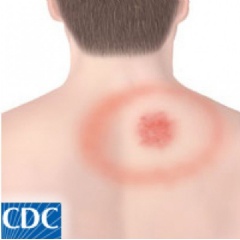
https://www.lymedisease.org/cdc-lyme-disease-rashes/

Formally challenging CDC advice on Lyme disease rashes

Advocates for Lyme disease patients have filed an “information quality request for correction” complaint that challenges the Centers for Disease Control and Prevention’s (CDC’s) position on how frequently the bull’s-eye erythema migrans (EM) rash occurs in patients with Lyme disease.

The contested information includes statements in CDC publications and presentation materials and on CDC web pages that the EM rash “occurs in 70–80% of the patients with Lyme disease.”

According to Holly Ahern, associate professor of microbiology at SUNY Adirondack and co-author of the complaint, this assertion stems from a 1984 study titled “Epidemiologic Features of Lyme disease in New York.”

Inherent bias

The study design introduced an inherent bias, Ahern said.

“In that study, participants (NYS physicians) were advised by the New York State Department of Health to identify and report patients as having Lyme disease based on the sole reporting criteria of an observed rash.”

The advisory included pictures of “classic” EM rashes, specifically those that had a bull’s-eye appearance. Excluded from this study were persons with non-specific symptoms or other types of rashes who may have had Lyme disease.

“This is a form of confirmation bias in research,” Ahern added, “where study participants were selected to confirm a previous observation rather than investigate the true incidence of EM rash in Lyme disease patients. Prior to this study, the rate of EM in Lyme disease patients was noted to be less than 50%.”

According to the complaint, this study has never been reproduced, and numerous subsequent published studies show the rate of EM in Lyme disease patients to be significantly less than the CDC-cited 70-80%.

In fact, in the study, “An Update on the Diagnosis and Treatment of Early Lyme disease: Focusing on the Bull’s eye, You May Miss the Mark,” the rate of the classic bull’s-eye rash was shown to be 9%, and nearly 50% of the patients did not develop a rash of any type.

Skewed priorities, worse outcomes

According to Bruce Fries, president of the Patient Centered Care Advocacy Group and lead complainant,

“Inaccurate information about the EM rash skews research priorities and results in critically flawed studies that use the rash as an entry criteria and/or end point.

Clinical practice guidelines based on this research lead to worse health outcomes for patients who are misdiagnosed and denied treatment as a result of recommendations based on the faulty evidence. This can increase the number of long-term Lyme disease cases, worsening the current epidemic and increasing the financial impact on our country in terms of lost productivity, disability, and increased medical expenses.”

The complaint requests that CDC conduct a systematic review of the evidence about the frequency of EM rashes in patients with Lyme disease and publish a notice in CDC’s Morbidity and Mortality Weekly Report. Based on the results of this study, the complainants want CDC to update its guidance on the EM rash in all CDC publications, presentation materials, and websites.

Click here to read the full complaint.

Source: Patient Centered Care Advocacy Group

___________________

**Comment**

In the first ever real time patient group only about a quarter had an “unusual” rash:  https://madisonarealymesupportgroup.com/wp-content/uploads/2019/02/1976circularletterpdf.pdf

https://www.lymedisease.org/idsa-lyme-lawsuit-medical-exams/

IDSA lawsuit: Patients may have to undergo independent medical exams

By Mary Beth Pfeiffer

Patients who are suing over alleged denial of care for long-standing Lyme disease may have to submit to medical examination to prove their conditions, a federal judge ruled in a hearing in Texarkana, Texas, federal court.

The ruling hits on a pivotal issue in the potentially groundbreaking case in which 25 living patients and the families of three who have died claim the Infectious Diseases Society of America and six physician-researchers conspired with eight insurance companies to limit Lyme disease treatment.

At the hearing March 11, the court gave conditional OK for the independent medical exams or IMEs, but ordered narratives showing that “good cause has been demonstrated for each IME sought.”

The defense subsequently submitted 29 sealed documents in the names of 24 patients.

Defense seeks to prove patients don’t have Lyme

In another filing, the defendants made clear that they will use patient tests and diagnoses to assert the patients do not have Lyme disease.

According to the defense,

“These [patients’] records establish that the question of whether these Plaintiffs are currently suffering from Lyme Disease or so-called ‘Chronic Lyme’ Disease is in controversy as they have received multiple negative test results … and/or have received different diagnoses (not including ‘Lyme Disease’) related to the same constellation of symptoms,” including fibromyalgia, Epstein-Barr virus, and “genetic maladies.”

Lyme disease tests have long been known to be inaccurate, with evidence growing of the pathogen’s ability to subvert immune responses on which the test is based – an issue that is likely to be argued in the lawsuit.

The hearing in Torrey v. Infectious Diseases Society of America et al also focused on several other contentious issues that will define the scope of the proceedings — and its chance of prevailing. At this point, the lawsuit is still scheduled for a trial in late June.

Other rulings by the judge

Among the hearing’s other outcomes:

  • Patients must provide a tally of the personal costs incurred as a result of the IDSA-insurer policies. This would include lost wages, travel costs to other far-flung providers and the uncovered costs of their care. Significantly, they aren’t seeking damages – just reimbursement.
  • Patients’ attorneys were granted more time to argue that the IDSA defendants likely violated the Racketeer Influenced and Corrupt Organizations Act; the patients hope to prove the defendants acted as a criminal enterprise that used IDSA treatment guidelines as a “predatory device,” driving out competing doctors and harming patients. The judge has already ruled the suit can go forward on assertions that the defendants violated anti-trust laws.
  • On the issue of the medical examinations, the court told the parties to confer “regarding a person who can serve as a court appointed independent medical examiner; defendant will be responsible for the costs of the IME; travel expenses will be shared equally between the parties with respect to the plaintiffs.”
  • The parties are still hashing out issues related to documents to be provided under discovery. The defendants previously were to provide documents dated from four years before the suit’s filing – or to November 2013 — to which the patients’ side objected. The court told the parties to settle on a “reasonable amount of time for defendant to go back for documents.” The plaintiffs, meantime, have been told to “produce all documents going back to beginning.” It is unclear what “beginning” means.

Discovery question

On the issue of discovery, the defendants noted pointedly they have not refused to provide documents. In a slide presentation which was posted after the hearing, defense lawyers acknowledged documents weren’t given — because there were none:

“What Defendants did not produce are any documents that purport to show:

  • Payments from insurance companies to the defendant doctors or IDSA
  • Receipts of payments by the IDSA or defendant doctors from insurance companies
  • Complaints by insurance companies and/or IDSA to state medical boards seeking discipline of so-called “Lyme-literate” physicians
  • Communications between and among the insurance companies and/or IDSA to further any “scheme” to deny patients long-term antibiotic therapy”

The slide ended with the statement, highlighted in red by the defense side: “Such documents do not exist.”

In another development, the two sides agreed on the scope of emails to be turned over in which patients discussed their Lyme conditions. It was not immediately known what search terms were accepted.

After the hearing, the court posted slides on pending defense arguments: That claims against the six named physicians should be dismissed based on a lack of jurisdiction; that 11 plaintiffs should be deposed (which the Torrey attorneys disputed pending resolution of the discovery issue); and that the Torrey side has failed to comply with a court deadline to prove the case qualifies as a claim under the racketeering law, or RICO.

***

Click here to read documents filed in the case, including the lawsuit, assorted motions, the slides referred to above and a summary of the hearing.

________________

**Comment**

If you are just tuning in:  https://madisonarealymesupportgroup.com/2017/11/15/lyme-patients-file-lawsuit-against-idsa-and-insurers-over-treatment-denials/

https://madisonarealymesupportgroup.com/2019/02/27/should-lyme-patients-rico-lawsuit-include-yale/

https://madisonarealymesupportgroup.com/2019/03/05/patient-lawsuit-against-idsa-insurers-moves-forward-in-texas/

https://www.sciencedirect.com/science/article/abs/pii/S1877959X18304965

A minority of children diagnosed with Lyme disease recall a preceding tick bite

online 26 February 2019

Abstract

Of 1770 children undergoing emergency department evaluation for Lyme disease, 362 (20.5%) children had Lyme disease. Of those with an available tick bite history, only a minority of those with Lyme disease had a recognized tick bite (60/325; 18.5%, 95% confidence interval 14.6–23.0%). Lack of a tick bite history does not reliably exclude Lyme disease.

_______________

**Comment**

While this information isn’t shocking to me in the least, what does concern me is that only about 20% were found to have Lyme.  The abstract does not give the diagnostic criteria; however, it is typically the 2-tiered CDC serological (blood) testing which misses over half of all cases.  

So many of these children have Lyme and are now undiagnosed and will go on to develop chronic/persistent symptoms.

While I’m thankful the authors conclude that lack of recollection of a tick bite does not exclude infection, I’m highly concerned for those that perhaps are infected but couldn’t mount an appropriate immune response to show antibodies.