‘It’s just crazy’: Why is Lyme disease treatment so difficult to find in Mississippi?
Brian Broom, Mississippi Clarion Ledger Published April 19, 2019
Tick-borne diseases can cause serious illnesses, including Lyme disease. Prevalent throughout New Jersey, ticks are found in wooded and grassy areas. Here’s what to after a family hike to protect yourself against tick bites. Russ Zimmer
When Keith Bradshaw of Bolton recently told his story to the Clarion Ledger about contracting Lyme disease in Mississippi and his struggle to get proper care, it caught the interest of readers and others suffering from the disease.
Bradshaw said he was bitten by 10 to 15 small ticks in the fall of 2015 while cutting a food plot for deer. Within a few months he became so ill he thought he was dying. He was treated for anxiety and depression.
After three years of his eyes being sensitive to light, loss of balance, loss of hearing and confusion, along with facial, foot and hand numbness, Bradshaw knew anxiety and depression were not the causes. After researching his symptoms, he determined he had Lyme disease and a Western Blot Test confirmed it.
Even so, an infectious disease doctor he was referred to wanted to run tests for other possible causes and would not treat him for the disease. Bradshaw received treatment out of state and is now recovering.
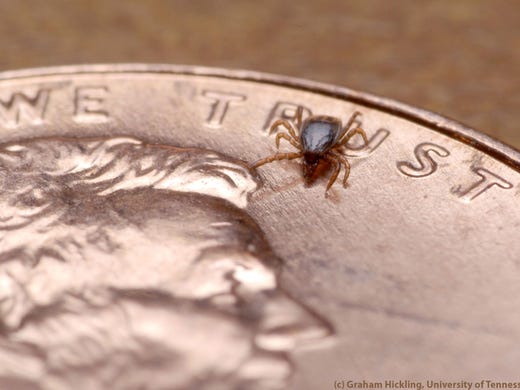
Lyme disease is transmitted by black-legged ticks, often called deer ticks. Due to the wide range of symptoms that are associated with it, the disease is often misdiagnosed, according to Bradshaw. Another problem with getting treatment in Mississippi is some in the medical community don’t believe the disease is present in the state.
“The doctors won’t treat you because they say you can’t get Lyme disease in Mississippi,” Erica Broome of Hinds County said. “It’s just crazy they’re still saying it doesn’t exist in Mississippi. It’s just crazy.”
Broome found a tick on her head on Jan. 7 and soon after developed headaches. She initially felt the headaches were caused by her new prescription eyeglasses. Then she began experiencing burning sensations in her neck, thirst, fatigue, dizziness, muscle aches, digestive problems and fluctuating body temperatures.
Remembering the tick bite, she suspected Lyme disease and had a Western Blot Test run. It came back positive. Her initial treatment in Mississippi was unsuccessful, so friends referred her to a doctor in Mobile. She is now recovering and feels fortunate she received treatment quickly.
Lyme disease symptoms: ‘I got sicker and sicker’
Buddy Black of Greenville wasn’t so lucky. Black hunts in Mississippi and other Southern states. He believes he was exposed to Lyme disease while hunting in Texas roughly 13 years ago. When he returned to Mississippi, he began to feel sick.
“I got sick and didn’t know what I had,” Black said. “I got sicker and sicker and sicker. I was missing more and more work.”
Black said he couldn’t find anyone in Mississippi who could figure out what was wrong with him and he was exhibiting 42 symptoms. After 15 months of suffering, Black made a graph. He placed symptoms in one column and then found a possible diagnosis for each and placed them in another column. The most common diagnosis was Lyme disease.
Unable to find treatment in Mississippi, he went to a doctor in New York. The disease is gone, but he still suffers from some symptoms due to nerve damage.
“It’s a nightmare,” Black said. “It’s just a dadgum nightmare.”
Monique Pietrowski of Biloxi knows all too well the frustrations of those trying to find treatment in Mississippi. Pietrowski said she contracted the disease while working in New Jersey as a critical care nurse. Back in Mississippi, she ran into similar roadblocks while seeking treatment.
Even though she contracted the disease out of state, she’s certain it exists in Mississippi. She pointed out that the disease is endemic in multiple counties in Alabama and one, Mobile County, borders Mississippi.
Where to get assistance: Mississippi Lyme Disease Association
“It’s insane to think there’s no Lyme disease in Mississippi,” Pietrowski said. “These vectors don’t know state lines.”
For Pietrowski, the journey toward recovery became a calling. She formed the Mississippi Lyme Disease Association in 2014. Since then, she says about 200 people have sought aid and most of them have the disease.
“Most of the time, when people get to this point there’s a good chance they have Lyme or a co-infection,” Pietrowski said. “They get frustrated and they find me.”
So, Pietrowski helps those who believe they have the disease. She gives them a checklist of related symptoms and helps them find medical care providers that offer effective treatment. The organization also allows those with the disease to meet others who have the disease or once did.
The organization became a nonprofit two years ago, and Pietrowski said funds raised are used to help improve care Lyme disease and related infections.
“We are using that to get medical professionals trained to treat these long-term infections,” Pietrowski said. “I try to raise money to assist with that.
“There’s only one Lyme-literate doctor in the state and he’s not taking on more patients. He’s booked a year out.”
“Researchers receive hate mail from angry and desperate patients, and scientific disputes can be vitriolic. That may have left government agencies reluctant to wade too deep into the fray.”
“MAN UP & grow a pair!”
DO WHAT YOU WERE HIRED TO DO, quit whining, and stop expecting us to be nice.
27% faced lawsuits – cases take 5 years on average
26% had to seek psychiatric or physical care
25% suffered alcohol abuse
17% lost their homes
15% got divorced
10% attempted suicide
8% went bankrupt
only 16% said that they wouldn’t blow the whistle again
Taken from Rost P. The Whistleblower: Confessions of a Healthcare Hitman. 2006.
“People avoid an honest academic debate. Instead they revert to authoritied information and Bull S _ _ _ , which means something that is short of lying.” Peter Gotzsche
Gotzsche speaks from the heart and we need to listen. Being a biologist, Gotzsche feels heroes are made through genes. I believe we all have a choice.
For those of you unfamiliar with the name of Gotzsche, he was expelled from the well known Cochrane Collaboration, an international group which undertakes systematic reviews of primary research in human health care and health policy.
Strong words indeed, but he backs up everything he states.
This video not only tells what drives him, but he methodically goes through his reviews on everything from mammograms to anti-depressants to psychiatric drugs.
“Follow the money and you will find out a lot of things in our absurd world.” Peter Gotzsche.
“If you are neutral in situations of injustice, you have chosen the side of the oppressor. If an elephant has its foot on the tail of the mouse and you say that you are neutral, the mouse will not appreciate your neutrality.” Desmond Tutu
“The only thing necessary for the triumph of evil is for for good men to do nothing.” Edmund Burke
Months after a U.S. Congress–mandated working group sounded the alarm about tickborne illnesses and urged more federal action and money, the National Institutes of Health (NIH) is readying a strategic plan for these diseases. Last week it also, serendipitously, issued a rare solicitation for prevention proposals in tickborne diseases. The new pot of money, $6 million in 2020, represents a significant boost; NIH spent $23 million last year on Lyme disease, by far the most common tickborne illness, within $56 million devoted to tickborne diseases overall.
“I’m happy for anything” new going toward research, says John Aucott, director of the Johns Hopkins Lyme Disease Clinical Research Center in Baltimore, Maryland, who chaired the group that wrote the 2018 report. Strategies that may garner support include vaccines that target multiple pathogens carried by ticks or that kill the ticks themselves.
Aucott’s panel included academic and government scientists as well as patient advocates; it formed as a result of the 2016 21st Century Cures Act. The group’s report described tickborne diseases as a “serious and growing threat.” About 30,000 confirmed Lyme disease cases were reported last year to the Centers for Disease Control and Prevention (CDC), but the agency believes the real number to be more than 300,000. Cases of Lyme disease have roughly tripled since the 1990s as ticks carrying Borrelia burgdorferi, the causative bacterium, have spread in response to climate change, neighborhoods encroaching on animal habitats, and other ecologic shifts.
The Lyme disease field has for years been mired in controversy—researchers receive hate mail from angry and desperate patients, and scientific disputes can be vitriolic. That may have left government agencies reluctant to wade too deep into the fray.
“I think the discussion is starting to shift,” says Monica Embers, a microbiologist at Tulane University in New Orleans, Louisiana.
She and others still hope for additional money from NIH and CDC for diagnostics and treatment research. CDC’s budget for Lyme disease grew this year from $10.7 million to $12 million—the first increase in 5 years, albeit a modest one.
“Preventing infection is going to go a long way if we can do it,” Embers says.
Symptoms of Lyme disease vary but can include a rash at the site of the tick bite, fever, fatigue, and swollen lymph nodes. After a course of antibiotics, 10% to 20% of those infected remain sick, and the question is why: Some scientists believe the bacterium can persist in the body, but others dismiss the idea. This dispute, combined with patients whom doctors often can’t help, has created a fractious field unlike almost any other.
The $6 million from the National Institute of Allergy and Infectious Diseases (NIAID), is slated to fund up to 15 projects. The funding “will get new technology out of the shadows,” spurring development of nascent approaches and collaborations, says Maria Gomes-Solecki, a veterinarian at the University of Tennessee Health Science Center in Memphis who has designed an oral vaccine for mice and other rodents against B. burgdorferi. It kills the bacterium in ticks feeding on the animals. A company called US Biologic, also in Memphis, is seeking marketing approval for the vaccine from the Department of Agriculture and hopes to sell it to homeowners and health departments.
“Vaccines are certainly going to be at the top” of prevention priorities for tickborne diseases, says Samuel Perdue, chief of the Basic Sciences Section in NIAID’s Bacteriology and Mycology Branch in Bethesda, Maryland, noting that the institute already funds some vaccine research.
The only Lyme vaccine for people had a difficult history: It was almost 80% effective but was pulled from the market in 2002 after safety concerns surfaced and sales tanked. Since then, tickborne diseases have become a growing problem, and the black-legged tick can transmit many of them, says Richard Ostfeld, a disease ecologist at the Cary Institute of Ecosystem Studies in Millbrook, New York. He favors developing a vaccine that protects against multiple pathogens, possibly by targeting ticks instead. Some scientists are studying how to design a tick-killing vaccine for people that reacts to the tick’s salivary proteins. Ostfeld knows firsthand that this is possible: After exposure to dozens of tick bites during fieldwork, his immune system now kills ticks when they begin to feed on him.
“I’m not alone,” he says. “There are people who seem to attack the tick.” Animal models have backed the approach.
Nonvaccine prevention efforts are underway as well. Across 24 neighborhoods in Dutchess County in New York, Ostfeld and ecologist Felicia Keesing of Bard College in Annandale-on-Hudson, New York, are leading an effort to test whether a tick-killing fungus and a pesticide that kills ticks when applied to animals can reduce infection rates in people and pets. Much of that project is supported by the Steven & Alexandra Cohen Foundation, which has spent more than $42 million on Lyme and other tickborne disease research since 2015. Two other groups, the Global Lyme Alliance and the Bay Area Lyme Foundation, have together directed more than $20 million to research in recent years.
“These foundations are giving a lot of money,” says Embers, who receives foundation support. “They want translational research, and they want answers.”
Foundations are keen to address the third rail of Lyme disease: how Borrelia bacteria persist—if they do—in treated patients who don’t get better. NIH’s strategic plan is due this summer, but Ostfeld says researchers coming together could make it easier for the agency to boost funding in a polarized field. “The responsibility,” he suggests, “lies at least in part with the community to try to avoid so much acrimony and to try to find areas of agreement.”
BELOW IS A LETTER FROM GLOBAL LYME ALLIANCE’S CHIEF SCIENTIFIC OFFICER IN RESPONSE TO THE NIH’S REQUEST FOR INFORMATION TO THEIR TICK-BORNE DISEASES STRATEGIC PLAN
As Chief Scientific Officer of GLA, I herewith respond to the solicitation for feedback to the National Institutes of Health Tick-borne Diseases Strategic Plan, which was developed by the Tick-Borne Disease Working Group, a Health & Human Services advisory committee established by Congress in its 21st Century Cures Act. While the plan includes important topics on which research efforts should focus, our position is that it neglects several urgent areas that are of equal or higher importance.
Deficiencies in the current Strategic Plan include:
The lack of any mention under the heading “Basic Research” of the need to better understand mechanisms of bacterial persistence both in reservoir species and in the face of exposure to antibiotics and the implications for treatment failure and persistent infection/symptomatology.
The lack of mention under the heading “Diagnosis and Detection” of the need to supplement indirect diagnostic tests, that rely upon the presence of antibodies, with direct tests that detect the presence of pathogen-specific protein antigens or nucleic acid. Additionally, the testing paradigm needs to shift towards multi-pathogen (bacterial, viral, etc.) rather than solely Lyme disease diagnoses.
The lack of mention under the heading “Therapeutics” of the need to develop novel treatment strategies for those suffering from multiple tick-borne and/or opportunistic infections. Additionally, there is a need to explore non-traditional treatment modalities to care for patients continuing to suffer from persistent infection/symptomatology due to initial antibiotic treatment failure.
The list also underemphasizes (1) the ecology and management of ticks; (2) ecological interactions between ticks, hosts, and pathogens; and (3) environmental drivers of tick emergence, spread, and changing risk. Specifically, the plan lacks:
Mention of national surveillance of ticks and tick-borne pathogens that would provide real-world representations of exposure risk in space and time;
Any mention of finding vulnerabilities in the tick/host/pathogen life cycle and of the importance of seeking the means of exploiting such vulnerabilities to control exposure;
A focus on identifying and ameliorating anthropogenic disturbances (land use changes, climate change, habitat degradation, etc.) that exacerbate tick-borne risk;
Recognition of the importance of understanding how both native and non-native ticks (e.g., black-legged ticks, lone star ticks, long-horned ticks, etc.) become invasive, rapidly expand beyond their historic geographic ranges, and potentially share hosts and pathogens; and
A focus on novel and existing methods to reduce tick populations.
It is our institutional view that any set of research priorities on tick-borne diseases in the United States must address these essential issues. We hope that by pointing out these omissions you will be allowed to redress their absence in a final draft of the NIH’s Tick-borne Diseases Strategic Plan.
Respectfully,
Timothy J. Sellati, Ph.D.
Chief Scientific Officer
Global Lyme Alliance
_______________________
**Comment**
It saddens me that still after over 40 years, the basics need to be pointed out to the people running the show. The issues delineated in this letter are so basic a kindergartner could explain them, yet authorities treat this as a one pathogen illness using testing that’s like throwing sand into the ocean.
My only concern with #3 in the last series is the mention of “climate change” when independent Canadian tick researcher, John Scott, has completely blown that “theory” out of the water showing ticks to be very ecoadaptive and able to survive harsh conditions by merely crawling under leaf litter or snow: https://madisonarealymesupportgroup.com/2018/08/13/study-shows-lyme-not-propelled-by-climate-change/
Nothing has resulted from ANY data on the climate in helping very ill patients.
See link for references and entire article. List below developed article:
1. Produce a two tier antibody testing algorithm where first line screening tests (Elisa) fail to detect 60% of infections. Those patients who do test positive will be allowed the second more sensitive test (Western blot) but design the test with strict criteria (Case definition) so as to rule out 90% keeping infection numbers artificially low.
2.Fund only those studies through institutions with researchers that have a bias against persistent infection.
3. Maintain a belief that all stages of infection, acute through late stage are easily cured with a standard two week treatment guideline and turn the disease into a syndrome when patients complain of persistent debilitating symptoms after unsuccessful treatment.
4. If a culture test should be developed which is the gold standard for many bacterial infections do not recognize this test and insist it is not government approved.
5. Create a map depicting limited territories were the infection is present.Use an existing institution with a bias against persistent infection to manage the data.
6.Define the disease exclusively as a zoonotic illness and disregard congenital and gestational transfer cases or transfer between sexually active couples.
7. No need to screen the blood supply for this pathogen.
9. Create a foundation to promote the disinformation campaign and staff the foundation with the same researchers with a bias against persistent infection.
10. Create a Working Groupto talk about the problem for another decade (submitting reports every two years) without upgrading the threat to Highest Alert even though infection rates may exceed five times the AIDS epidemic or become twice as prevalent as breast cancer.
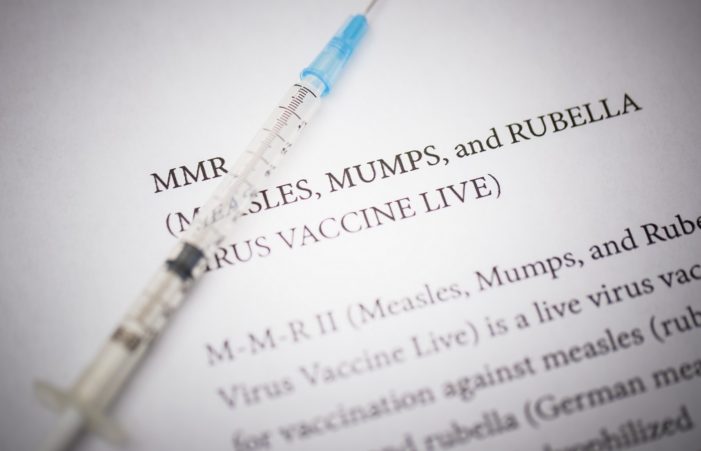
The MMR vaccine study recently published by Hviid et al. (2019, Annals of Internal Medicine)1 entitled, “Measles, Mumps, Rubella Vaccination and Autism: A Nationwide Cohort Study,” leaves many more serious questions than definitive answers.
The authors claim that their work, “strongly supports that MMR vaccination does not increase the risk for autism, does not trigger autism in susceptible children, and is not associated with clustering of autism cases after vaccination.”
This is an extremely broad claim that unfortunately is not supported by the evidence they present. There are eight fundamental flaws in the research study that lead to questions about the accuracy of the conclusions.
1. Children were notably missing from the study sample
First and foremost is the underascertainment of autism cases within their data sample. The study authors used Denmark population registries of children born in Denmark of Danish-born mothers which should reflect the current reported autism incidence in Denmark at 1.65% (Schendel et al. 2018, JAMA).2However, the autism incidence within the sample of the Hviid et al. paper is 0.98%, meaning that approximately 4,400 autistic children are missing from this study. The authors do not discuss the discrepancy in the number of cases.
2. Many of the children in the sample were too young for an autism diagnosis
The most probable reason for the discrepancy in cases is that the sample in the Hviid et al. paper is too young to completely ascertain autism diagnoses. The average age of sample is 8.64 years with a standard deviation of 3.48 years. Age of autism diagnosis on average is reported as 7.22 years with a standard deviation of 2.86 years. Assuming that the age of diagnosis follows a standard bell curve, this would mean that 31.5% of the sample was too young to get an autism diagnosis. This could account for as many as 3,400 additional cases not included in the analysis, which would bias the outcomes to favor not finding a relationship between the MMR vaccine and autism.
3. Failure to eliminate those with autism related to genetic conditions from the sample
In addition, individuals who were diagnosed with genetic comorbidities (known to lead to autism) after age 1 were “censored,” meaning that they were followed until the time of diagnosis, but not removed from the study. Thus, they were counted among the sample with many of them most likely autistic due to a genetic condition. These should have appropriately been eliminated from the sample.
4. Use of two different MMR vaccines
Also, two different MMR vaccines were used in this study. The GlaxoSmithKline Prolix® formulation was used from 2000 to 2007 and Merck’s MMR®II formulation was used from 2008 to 2013. Prolix® contains the Schwarz measles strain and MMR®II contains the Ender’s Edmonston measles strain. Thus, children using the Merck formulation were much too young to receive an autism diagnosis as the oldest they would be at the time of study is 6 years of age or younger. This is important for comparison to the experience in other countries, especially the U.S. where the Merck formulation was used exclusively for the entire study period.
5. Failure to control for the “dosage effect”
In addition, the age at which Danish children in the sample received their second dose of MMR vaccine was dropped from 12 years to 4 years in 2008. This means that children born after 2004 would get two MMR vaccines prior to the average age of an autism diagnosis, whereas children born prior to 2004 would have received only one MMR vaccine. If indeed there is a “dosage effect” of the MMR (i.e., where both doses were causally related to autism), this could not be elucidated in the sample and again, this would bias the results erroneously to not find a relationship.
6. Statistical method failed to capture those children with a delayed diagnosis of autism
The authors also used a non-transparent statistical method where “person-years” were considered following the MMR vaccine to an autism diagnosis where children who received a diagnosis soon after receiving their first MMR vaccine would be weighted more heavily than children with a delay in diagnosis. This makes no sense given that the age of autism diagnoses varies widely among populations based on access to services and severity of the autism case, among other factors. This type of method is “borrowed” from infectious disease epidemiology where an exposure directly leads to a disease state rather quickly, for example, chicken pox. However, the method has no place in evaluating chronic sequelae to vaccination which may take a period of years to receive an accurate diagnosis.
7. Vaccinated male siblings of children with autism show more autism diagnoses
It is interesting to note the increased incidence of autism in boys with autistic siblings in the vaccinated group shown in Figure 2 of the article’s supplement.1The increase towards the end of the “survival curve” shows that more boys vaccinated with MMR (with autistic siblings) are diagnosed with autism than unvaccinated boys. The difference is not statistically significant but this may be an artifact of the very small subset of boys considered in this analysis.
The study authors also cite the CDC’s Destefano et al. 2004 study which actually shows a statistically significant relationship between MMR timing and autism incidence. This is discussed further in a reanalysis of CDC’s data in the Journal of American Physicians and Surgeons (Hooker, 2018).3
8. Conflict of interest of the study authors
It should be noted that three of the study authors are currently employed at the Statens Serum Institut which is a for-profit vaccine manufacturer in Denmark. In addition, this work was funded by a grant from the Novo Nordisk foundation. Novo Nordisk is a Danish multinational pharmaceutical manufacturer.
These are two serious conflicts of interest.
The lead author, Anders Hviid was the second author on the New England Journal of Medicine MMR autism paper from 2002 (Madsen et al. 2002).4 This research was completed despite the fact that the study authors had never received proper ethics approval to complete the study. A detailed analysis of this is featured by Children’s Health Defense.5
With these issues, this paper cannot be relied upon as evidence that the MMR vaccine does not cause autism.
The outcome of the Vaccine Culture War will determine what it means to be free. 101 Because if the State can tag, track down and force individuals against their will to be injected with biologicals of known and unknown toxicity today, then there will be no limit on which individual freedoms the State can take away in the name of the greater good tomorrow.