
Does the Coronavirus Exist?
For a completely different take on what you are hearing in the media, please see the following article which essentially states:
- Very little Science is happening regarding COVID-19
- COVID-19 has no distinctive symptoms & is not a NEW disease
- If the virus exists, then it should be possible to purify viral particles. From these particles RNA can be extracted and should match the RNA used in the test for it
- Scientists are detecting novel RNA in multiple patients with influenza or pneumonia-like conditions and assume the detection of RNA is equivalent to isolation of the virus, which it is not. One author stated, “we did not perform tests for detecting infectious virus in blood,” and another paper admitted: “our study does not fulfill Koch’s postulates.”
- Evidence demonstrates the virus is not as transmissible as we are being told
- There is a strong correlation between the amount of panic and the potency of drugs being used (which can have serious side-effects)
- Powerful drugs, especially in the elderly with pre-existing conditions will likely lead to many deaths
- A future vaccine may become mandatory in some countries – even after the epidemic is over, so that proving that it reduces the risk of a positive test will be impossible (therefore they can state as they do now that vaccines stop diseases) It is known that a virus in the wild will grow weaker over time naturally without any human intervention.
- The Coronavirus panic is irrational – based upon an unproven RNA test that has never been connected to a virus. For more on this read Pfeiffer’s explanation about faulty Lyme testing and know that the CDC is making similar mistakes now: https://madisonarealymesupportgroup.com/2020/03/16/lessons-from-lyme-disease-six-reasons-the-cdcs-covid-19-failure-was-predictable/
- Even IF a novel virus is detected it isn’t proof that it is causing symptoms (this is the argument they continue to use against chronic Lyme – that just because borrelia is present does not mean it’s causing disease. Funny how the marketability of a disease determines if it’s infectious or not.)
- Even IF a test could detect a dangerous virus, the rate of false positives remains unknown which translates out to if there’s a 1% false positive rate, that could produce 100,000 false positive results in the size of a city such as Wuhan.
Regarding the use of the faulty PCR test, read this quote from its creator:
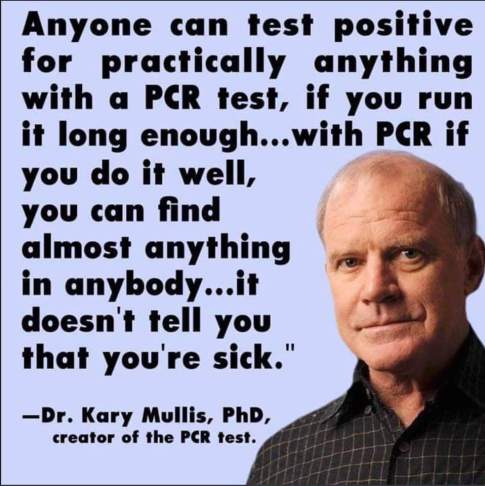
Here too is an important article written by an investigative science reporter outlines the sordid details behind the pre-designed plannedemic: https://madisonarealymesupportgroup.com/2020/05/07/was-the-covid-19-test-meant-to-detect-a-virus/
Sadly, Mullis supposedly died of pneumonia in Aug. 2019, right before COVID hit. He would have screamed bloody murder about the scam of PCR testing for COVID and he would have been a threat as he is THE expert. In this interview he completely reveals Fauci as the fraud he is.
https://www.greenmedinfo.com/blog/does-2019-coronavirus-exist If you would rather listen to the article, scroll down to the pod bean link.
Does the 2019 Coronavirus Exist?

Originally published on www.theinfectiousmyth.com
by David Crowe
Introduction
The Coronavirus scare that emanated from Wuhan, China in December of 2019 is an epidemic of testing. There is no proof that a virus is being detected by the test and there is absolutely no concern about whether there are a significant number of false positives on the test. What is being published in medical journals is not science, every paper has the goal of enhancing the panic by interpreting the data only in ways that benefit the viral theory, even when the data is confusing or contradictory. In other words, the medical papers are propaganda.
It is also an epidemic by definition. The definition, which assumes perfection from the test, does not have the safety valve that the definition of SARS did, thus the scare can go on until public health officials change the definition or realize that the test is not reliable.
What I learned from studying SARS, the previous big coronavirus scare, after the 2003 epidemic, was that nobody had proved a coronavirus existed, let alone was pathogenic. There was evidence against transmission, and afterwards, negative assessments of the extreme treatments that patients were subjected to, the nucleoside analog antiviral drug Ribavirin, high dose corticosteroids, invasive respiratory assistance, and sometimes oseltamivir (Tamiflu). This is documented in my draft book chapter (mostly complete) that you can find here: https://theinfectiousmyth.com/book/SARS.pdf
https://www.podbean.com/eu/pb-qm2br-d55b2b Listen to article here
Executive Summary
The world is suffering from a massive delusion based on the belief that a test for RNA is a test for a deadly new virus, a virus that has emerged from wild bats in China, supported by the western assumption that Chinese people will eat anything that moves.
If the virus exists, then it should be possible to purify viral particles. From these particles RNA can be extracted and should match the RNA used in this test. Until this is done it is possible that the RNA comes from another source, which could be the cells of the patient, bacteria, fungi etc. There might be an association with elevated levels of RNA and illness, but that is not proof that the RNA is from a virus. Without purification and characterization of virus particles, it cannot be accepted that an RNA test is proof that a virus is present.
Officially the virus is called SARS-CoV-2 and the disease it is believed to caused, COVID-19. We will just refer to coronavirus for the current virus panic, and SARS for the 2003 panic.
Definitions of important diseases are surprisingly loose, perhaps embarrassingly so. A couple of symptoms, maybe contact with a previous patient, and a test of unknown accuracy, is all you often need. While the definition of SARS, an earlier coronavirus panic, was self-limiting, the definition of the new coronavirus disease is open-ended, allowing the imaginary epidemic to grow. Putting aside the existence of the virus, if the coronavirus test has a problem with false positives (as all biological tests do) then testing an uninfected population will produce positive tests, and the definition of the disease will allow the epidemic to go on forever.
This strange new disease, officially named COVID-19, has none of its own symptoms. Fever and cough, previously blamed on uncountable viruses and bacteria, as well as environmental contaminants, are most common, as well as abnormal lung images, despite those being found in healthy people. Yet, despite the fact that only a minority of people tested will test positive (often less than 5%), it is assumed that this disease is easily recognized. If that was the truly the case, the majority of people routed for testing by doctors should be positive.
The coronavirus test is based on PCR, a manufacturing technique. When used as a test it does not produce a positive/negative result, but simply the number of cycles required to detect genetic material. The division between positive and negative is an arbitrary number of cycles chosen by the testers. If positive means infected and negative means uninfected, then there are cases of people going from infected to uninfected and back to infected again in a couple of days.
A lot of people say it is better to be safe than sorry. Better that some people are quarantined who are actually uninfected than risk a pandemic. But once people test positive, they are likely to be treated, with treatments similar to SARS. Doctors faced with what they believe is a deadly virus treat for the future, for anticipated symptoms, not for what they see today. This leads to the use of invasive oxygenation, high dose corticosteroids and antiviral drugs. In this case, some populations of those diagnosed (e.g. in China) are older and sicker than the general population and much less able to withstand aggressive treatment. After the SARS panic had subsided doctors reviewed the evidence, and it showed that these treatments were often ineffective, and all had serious side effects, such as persistent neurologic deficit, joint replacements, scarring, pain and liver disease.
Virus Existence
Scientists are detecting novel RNA in multiple patients with influenzaor pneumonia -like conditions, and are assuming that the detection of RNA (which is believed to be wrapped in proteins to form an RNA virus, as coronaviruses are believed to be) is equivalent to isolation of the virus. It is not, and one of the groups of scientists was honest enough to admit this:
“we did not perform tests for detecting infectious virus in blood” [2]
But, despite this admission, earlier in the paper they repeatedly referred to the 41 cases (out of 59 similar cases) that tested positive for this RNA as, “41 patients… confirmed to be infected with 2019-nCoV.”
Another paper quietly admitted that:
“our study does not fulfill Koch’s postulates” [1]
Koch’s postulates, first stated by the great German bacteriologist Robert Koch in the late 1800s, can simply be stated as:
- Purify the pathogen (e.g. virus) from many cases with a particular illness.
- Expose susceptible animals (obviously not humans) to the pathogen.
- Verify that the same illness is produced.
- Some add that you should also re-purify the pathogen, just to be sure that it really is creating the illness.
Famous virologist Thomas Rivers stated in a 1936 speech, “It is obvious that Koch’s postulates have not been satisfied in viral diseases”. That was a long time ago, but the same problem still continues. None of the papers referenced in this article have even attempted to purify the virus. And the word ‘isolation’ has been so debased by virologists it means nothing (e.g. adding impure materials to a cell culture and seeing cell death is ‘isolation’).
Reference [1] did publish electron micrographs, but it can clearly be seen in the lesser magnified photo, that the particles believed to be coronavirus are not purified as the quantity of material that is cellular is much greater. The paper notes that the photos are from “human airway epithelial cells”. Also consider that the photo included in the article will certainly be the “best”photo, i.e. the one with the greatest number of particles. Lab technicians may be encouraged to spend hours to look around to find the most photogenic image, the one that most looks like pure virus. There is no way to tell that the RNA being used in the new coronavirus PCR test is found in those particles seen in the electron micrograph. There is no connection between the test, and the particles, and no proof that the particles are viral.
A similar situation was revealed in March 1997 concerning HIV, when two papers published in the same issue of the journal “Virology” revealed that the vast majority of what had previously been called “pure HIV” was impurities that were clearly not HIV, and the mixture also included microvesicles that look very similar to HIV under an electron microscope, but are of cellular origin.[5][6]
Disease Definition
Infectious diseases always have a definition, but they are usually not publicized too widely because then they would be open to ridicule. They usually have a “suspect case” category based on symptoms and exposure, and a “confirmed” category that adds some kind of testing.
Reference [13] describes a suspect case definition, based on WHO definitions for SARS and MERS (Middle East Respiratory Syndrome) that was in effect until January 18, 2020, and required all four of the following criteria:
- “fever, with or without recorded temperature”. Note that there is no universal definition of fever, so this may just be the opinion of a physician or nurse. With SARS a fever was defined as 38C even though normal body temperature is considered to be 37C (98.6F).
- “radiographic evidence of pneumonia”. This can occur without illness, as was seen in [3] – a 10 year old boy with no clinical symptoms. He was diagnosed with pneumonia in the absence of symptoms.
- “low or normal white-cell count or low lymphocyte count”. This is not really a criterion as every healthy person is included. This is also strange because people suffering from an infection normally have elevated white blood cell counts (although they may drop in people dying from an infection).
One of the following three:
– “no reduction in symptoms after antimicrobial treatment for 3 days”. This is a standard indication of a ‘viral’ pneumonia, i.e. one that does not resolve with antibiotics.
– “epidemiologic link to the Huanan Seafood Wholesale Market”. This, and the next criterion, create the illusion of an infectious disease, as it prefers the diagnosis of connected cases.
– “contact with other patients with similar symptoms”.
On January 18th the last, three-part category was changed to:
- One of the following:
– “travel history to Wuhan”
– “direct contact with patients from Wuhan who had fever or respiratory symptoms, within 14 days before illness onset”
The big problem is that, in contrast to the definition for SARS, a “confirmed case” did not originally require the criteria for a suspect case to be met. A “confirmed case” simply required a positive RNA test, without any symptoms or possibility of contact with previous cases, illustrating total faith in the PCR technology used in the test. The World Health Organization definition [15] has the same flaw.
It was the fact that the SARS definition required both a reasonable possibility of contact with a previous case, and symptoms, that allowed the epidemic to burn out. Once everyone was quarantined, new cases were highly unlikely, testing stopped, and doctors could declare victory.
The Chinese eventually woke up and, around February 16th required confirmed cases to meet the requirements for a suspected case, as well as a positive test. They may have put this new definition into practice earlier because after a massive addition of almost 16,000 confirmed cases on February 12th , the number fell dramatically each day and, by February 18th was under 500 cases, and continued to stay low.
But other countries did not learn. Korea, Japan and Italy (and perhaps other countries) have started doing tests on people with no epidemiological link, encouraging people with the vague symptoms that are part of the definition to come to hospital to get checked, and obviously following up with asymptomatic people with a connection to anybody who tests positive. Consequently, in mid to late February, cases in those countries started to skyrocket.
A New Disease?
COVID-19, to use its formal name, is described as a distinct new disease. But it clearly is not. There are no distinctive symptoms, for a start. Reference [2] showed that, among 41 early cases, the only symptoms found in more than half, were fever (98%) and cough (76%). 98% had CT Scan imaging showing problems in both lungs (although it is possible to have shadowing on a CT scan without symptoms). The high percentage of cases with fever and shadowing in both lungs is an artefact of the disease definition, fever and “radiographic evidence of pneumonia” are two of the diagnostic criteria for a probable case.
The low rate of people testing positive on the coronavirus testing is further evidence that there are no obvious symptoms. If there were recognizable symptoms, doctors should have a better than 4% chance of guessing who has the virus. While some of the people may have been tested, without symptoms, because they were on a flight or cruise, countries outside China are encouraging people with the vague symptoms that exist to check in to a hospital, so increasingly people have symptoms of the flu or pneumonia, and are still testing negative in high numbers.
For example, as of March 9th , Korea had found 7,382 positive cases out of 179,160 people tested (4.1%) [20]. In Washington State, where they appear to be reluctant to test anyone, only 1 out of 27 tested by February 24th had tested positive (3.7%)
Perhaps if they had tested all 438 who were then under quarantine, the epidemic would have exploded from 1 to about 16 cases (3.7% of 438). By March 9th, 1,246 tests had been performed with 136 found positive (11%). Obviously, in neither location can doctors recognize cases clinically.
Testing
Assuming, for a moment, the existence of a new coronavirus, what would a coronavirus test tell us, at this stage? Or rather, what does it not tell us?
- Without purification and exposing animals to viral particles we do not know if the virus is pathogenic (disease causing). It could be an opportunistic infection (invades unhealthy people with weakened immune systems) or a passenger virus (that is carried along by risky behavior, such as eating an animal carrier of a virus).
- We don’t know the false positive rate of the test without widespread testing of healthy people far from places where people are being diagnosed with this possible new disease. If the test is 99% accurate, in a city of over 10 million, like Wuhan, there would be about 100,000 false positives (1%). It is easy to generate a false epidemic if you just keep testing like this. And it’s worse if you restrict the test to people with symptoms, because then the flaws in the test will not be revealed for much longer.
- If someone is sick there is no proof that any or all of their symptoms are due to the virus, even if it is present. Some people may be immune, some may have some symptoms caused by the virus, but others caused by the drugs they are given, by pre-existing health conditions, and so on.
- We don’t know if the people who test negative are infected or not, especially when they show up with similar symptoms. For example, in [2], out of 59 patients, only 41 tested positive, but the researchers were clearly not sure whether the remaining 18 were uninfected or not. If they truly are not infected, they lend weight to the coronavirus not being the cause of their illness, as they had symptoms indistinguishable from the 41 positives.
Testing at such an early stage of knowledge is incredibly dangerous. It spreads panic, it can put people on dangerous medications, other circumstances of their treatment can be physically and psychologically damaging (such as intubation and isolation, and even seeing all the doctors and nurses in special suits emphasizing how deathly sick you are).
False Negatives – Big Problem
According to an article in the South China Morning Post [23], Li Yan, head of the diagnostic center at the People’s Hospital of Wuhan University, noted on Chinese state TV that because of the multi-step process, an error at any stage could result in an incorrect outcome, and Wang Chen, president of the Chinese Academy of Medical Sciences, also on CCTV, said the accuracy is only 30 to 50 percent.
Wang Chen really means, however, that the test is only ever falsely negative, and never falsely positive. In a paper documenting a cluster of illness and positives tests in a family [3], this bias is clear, as most patients had more negative tests than positive tests, but were considered positive anyway. Patient 1 had 3/11 positive (27%), patient 2 had 5/11 (45%), patient 3 had all 18 negative, patient 4 had 4/14 (29%), patient 5 had 4/17 (24%) and patient 7 was the only with a majority positive (64%).
The only way to decide logically and scientifically is to have a gold standard for presence of the virus, which can only be purification and characterization. Since this has never been accomplished, doctors get to make decisions on the fly, always leaning towards treating patients as infected.
False Positives – Best Evidence
The major attempt to define the false positive rate was in a paper describing a new test methodology, but it has a built-in conflict of interest [19]. Clearly, if the false positive rate was high, the authors’ aim to “develop and deploy robust diagnostic methodology for use in public health laboratory settings”, would have failed. They did, however, do more than most. They took 297 samples of nasal and throat secretions from biobanks and tested them, only finding “weak initial reactivity” in four samples which, upon retesting, disappeared. The problem with this kind of analysis is that biobank samples may not have been obtained in the same way as samples from live people in an epidemic panic. The sampling was also not blinded, something that is necessary to eliminate the possibility of unconscious bias (a real problem in medicine). Furthermore, many samples in people believed to be infected are negative, and multiple samples are tested, as described for the family cluster paper.
In sum, testing 297 samples could, at best, show that the false positive rate was 1/300, but because multiple samples are often taken, with any one positive sample over-ruling all the negatives the false positive rate could be considerably less, as the biobank samples were only tested once.
And, even if this test did have a false positive rate that was very low, it is not clear that this particular test is in use, and the false positive rate cannot be extrapolated to any other test design.
Even a small false positive rate is critically important. A 99% accurate test would produce 100,000 false positives in a city of 10 million, like Wuhan. And if the number of positives in sampling is around 4% (which it appears to be from early statistics), then 1 out of 4 positives would be false.
Positive, Negative, Positive Again – Confusion
Some people have fully recovered from illness blamed on coronavirus, started to test negative, and then tested positive again. According to a news report [22] patients are not considered cured in China until they no longer have symptoms, have clear lungs, and have two negative coronavirus tests. Despite this, 14% of discharged patients later tested positive, but with no relapse of symptoms. This is very difficult to explain if the test is for a virus, much easier to explain if the RNA that the test is looking for is not viral in origin.
Other reports2:
- (Jan 31) A women returning to Canada from China tested negative while “mildly ill” after arriving in Canada, but later tested positive.
- (Feb 11) A sick woman in Wuhan tested negative on her first test, after days of illness, but positive on the second.
- (Feb 16) An 83-year old American woman was screened as disease free after leaving a cruise ship but tested positive twice after arrival in Malaysia. Ironically, her husband had pneumonia, but tested negative. Nobody on the ship was sick, nor had travelled to mainland China recently.
- (Mar 1) Newsweek reported an American man tested negative upon return from Wuhan, China, without any symptoms. But later he was “weakly positive” and was returned to quarantine.
References are available upon request. Dates are of the report.
Negative, Negative, Negative
A group of doctors in Marseille, France, working in a very experienced lab, that regularly does testing for respiratory viruses, reported testing 4,084 samples for the novel coronavirus, using several systems approved for use in Europe, without a single positive [25]. This included 337 people returning from China who were tested twice, and 32 people referred because of suspected coronavirus infection.
It is statistically improbable that this lab was just lucky to not get any coronavirus cases, it is more likely that they used more stringent criteria, illustrating that the performance of not just test kits, but labs, with this new test, is completely unknown. Yet, a positive test remains unquestioned in every case.
Test Experience
A paper from Singapore by doctors and public health officials provides a revealing look at the inner guts of coronavirus testing. Hidden away in the supplementary material of reference [24], where few people will see it, it exposes some important issues with tests:
- The test is not binary (negative/positive) and has an arbitrary cutoff.
- The quantity of RNA does not correlate with illness.
- If negative means uninfected and positive means infected, then people went from infected to uninfected and back again, sometimes several times.
- Results below the cutoff are not shown, are treated as negative, but if PCR continued past the cutoff and was eventually positive, would indicate presence of small quantities of the RNA which is supposedly unique to the coronavirus.
Before you read beyond the following figure, ask yourself why the first 6 graphs, shown deliberately out of numerical order, are separated. What are the visual differences between those 6 and the remainder? Do this right away so my interpretation does not bias your opinion.

The Test is Not Binary
Tests for infections are usually reported as positive or negative (sometimes ‘reactive’ and ‘unreactive’. One of the reasons for this is that, in many cases, multiple tests are required, and it is common to conclude that someone is infected with some negative tests and that someone is uninfected with some positive tests. The results of a complex multi-test algorithm are also usually reported as positive or negative, but interpreted by doctors and patients as infected or uninfected. The former could mean isolation, special medications, special precautions for health care workers and more.
But, in reality even individual tests are not binary, not positive or negative, but a range of numbers that are arbitrarily divided into positive on one side and negative on the other. Possibly there is a grey area that allows other factors, including the bias of the doctor or laboratory, to enter into the interpretation, or that will require further testing.
Understanding RT-PCR
Before we continue it is important to understand what RT-PCR, the PCR test technology is. It is based on PCR (Polymerase Chain Reaction) technology. This is a DNA manufacturing technique invented by the iconoclastic Kary Mullis, who received a Chemistry Nobel for it in 1993. It may be the most important technology in the biotech industry. Starting with one DNA strand, the strand is cleaved (split in two) and then complementary strands are allowed to grow, the same process that occurs in a cell during mitosis (cell division).
So far, not so impressive, but through the magic of doubling, if this process is repeated only 32 times you will end up with about 4 billion identical strands of DNA. Each round of doubling is referred to as a cycle.
One important issue is that we are talking about a testing technique, and using a manufacturing technique. PCR for manufacturing DNA normally starts with one or more strands (i) and ideally ends up with i•2n strands after n cycles. For example, if you started with one DNA strand, after 32 cycles you would have 4 billion.
To use PCR as a test, you assume that you are starting with an unknown number of strands and end up with an exponential multiple after n cycles. From the quantity of materials at termination the starting quantity can be estimated. A major problem with this is that because PCR is an exponential (doubling) process, errors also grow exponentially.
The second problem is that the Coronavirus is believed to be composed of RNA, but this can be solved by converting all RNA into DNA with the Reverse Transcriptase enzyme at the start of the process.
The technology, after these two adaptations, is known as RT-PCR (Reverse Transcriptase PCR).
Now you have the information necessary to understand the numbers from 20-40 on the vertical axis of the graphs above. These are the number of cycles. It implies that it always took at least 20 PCR cycles before any RNA could be detected, and they stopped after a maximum of 37 cycles. The blue line is at cycle 38, and the black dots do not mean RNA was detected after 38 cycles (as clarified in the paper), but that it wasn’t detected by 37 cycles, and so the process terminated. This “Serial Cycle Threshold (Ct)” was the arbitrary definition of a negative result by the authors of reference [24].
We can see that it was arbitrary, because in another paper, reference [13], the authors had two end points: 37 and 40. Anything less than 37 was considered positive and anything 40 or greater was defined as negative. The in-between values were re-tested and re-interpreted. Note that this paper would treat 37 as indeterminate but the Singapore paper would treat it as positive.
RNA Quantity does not Correlate with Illness
Theoretically the PCR cycle number at which DNA is detectable tells us the relative quantity of RNA. Whatever initial amount was necessary to be detectable on the 20th cycle, 21 cycles would be doubly sensitive, and could detect about half as much, and 30 cycles about 1000th as much as 21. One could therefore expect sicker people to have more virus, and thus to have a lower cycle number on testing.
This is the reason the authors separated out the first six graphs from the remaining twelve. The first six were the people who were sick enough to require oxygen. But one can clearly see from the graph that the six sicker people did not have distinctly higher quantities of RNA.
Positive to Negative and Back Again
The majority of the 18 patients had a positive test, followed by a negative test, followed by a positive test. Some had this several times.
If a negative test means uninfected, then this is impossible. You cannot rid yourself of the virus, and then be reinfected the next day, and then infected the day after and uninfected again.
The simplest answer to this conundrum is that negative tests do not mean uninfected. But the corollary is that positive tests do not mean infected. Which would make the test worthless.
Results Below the Cutoff
The authors of reference [24] apparently programmed the PCR machine to stop after 37 cycles if no DNA had been detected. This means that we don’t have information on when or if the process would have terminated by the detection of if it had been allowed to continue. More importantly, what would it mean if DNA was detected on cycle 38 or 40 or 80? If the DNA is unique to the virus there is no other possible interpretation than that the person is infected. But it is possible that everyone would eventually detect enough DNA detected, which could only be interpreted as the corresponding RNA being endogenous (i.e. formed within the cells of the human body).
Given that several people bounced back from negative to positive again, one could argue that the cutoff should be lower than 37. But likely if this was done many more people might test positive, and even with a cutoff of, say, 40, going to negative and back again might still occur.
Transmission
There is lots of evidence that the virus is not as transmissible as is being implied.
- (January 2) “27 (66%) [of 41 early] patients had direct exposure to Huanan seafood market [i.e. about 1/3 did not]”. [2].
- (January 1-20) “Of the 99 patients with 2019-nCoV pneumonia, 49 (49%) had a history of exposure to the Huanan seafood market.” [10] [i.e. 51% did not]
- (January 1-January 22) A larger survey, including all the first 425 cases, showed that of those diagnosed January 1st or later, 72% had “No exposure to either market or person with respiratory symptoms”. [13]
- “The symptom onset date of the first patient identified was Dec 1, 2019. None of his family members developed fever or any respiratory symptoms. No epidemiological link was found between the first patient and later cases.” [2] (of the family cluster) “None of the family members had contacts with Wuhan markets or animals…They had no history of contact with animals, visits to markets including the Huanan seafood wholesale market in Wuhan, or eating game meat in restaurants.” [3]
Transmission 1 – The Shenzhen Family Cluster
Reference [3] attempts to show the ease with which the virus could be transmitted in a family that travelled from Shenzhen, near Hong Kong, to Wuhan in December, and then back again about a week later.
Two grandparents (patients 1 and 2), the daughter and son-in-law (patients 3 and 4), a 10-year old grandson and a 7-year old granddaughter (patients 5 and 6) flew to Wuhan on December 29th. On the first day, the grandmother (1) and her daughter visited a baby boy with pneumonia, known as Relative 1, in a hospital in Wuhan (the hospital is not named, but the implication is that this child had this new disease). Outside of this they mingled with four other local relatives, of which two had also spent extensive time in the hospital. Notably the infant’s symptoms resolved one or two days after the visit, and he returned home.
On day four of the visit (January 1st), the son-in-law, who had not gone to the hospital got sick. On this basis, they declared that the coronavirus had a very short incubation time, and that people were almost immediately infectious. There’s no evidence for this, except nothing else can support their hypothesis that the hospitalized baby had this new coronavirus, infected Patients 1 (grandmother) and 3 (daughter), one of which then infected the son-in-law (Patient 4). All in four days. Then, like dominoes, the other visitors got sick, the daughter one day after her husband (Jan 2), the grandmother the next day (Jan 3), and then the grandfather and Relatives 2, 3, 4 and 5 (Jan 4). The family appeared to have a history of being frequently ill. In this case symptoms were mostly fever, cough and weakness.
On January 4th the whole family returned to Shenzhen. Note that the grandchildren, patients 5 and 6, had no symptoms during their time in Wuhan, or after returning home.
On January 9th, the grandparents and their daughter attended a clinic in Shenzhen, and the next day the grandparents visited the big hospital (University of Hong Kong-Shenzhen Hospital) for tests. The daughter followed one day later (January 10th ). The grandparents had significant pre-existing health conditions, such as having been treated for brain cancer (grandmother) and hypertension (both). In Wuhan they both suffered from fever, dry cough, weakness, and later were found to have various lab abnormalities. They were genuinely sick.
Concern that they were infected with the new coronavirus is probably the reason why the rest of the family were brought in over the next few days for testing. The daughter and son-in-law were still sick (diarrhea, congestion, sore throat, chest pain) but by then had a normal body temperature (even lower than). They did have some lung opacities on a CT scan so were diagnosed with pneumonia despite the normal temperature.
The grandson had been a bad boy (patient 5) and had refused to wear a mask in Wuhan, so the parents insisted he get a CT scan. Despite the complete lack of symptoms, he also had lung opacities, and so was also diagnosed with pneumonia, albeit completely asymptomatic.
The granddaughter was a good girl (patient 6), and had worn a mask, and so nobody was surprised that she was not only asymptomatic, but also did not have lung abnormalities.
All six patients (apparently including patient 6 who was healthy in all ways) were tested using the new RNA test. Not surprisingly, the grandparents tested positive on nose swabs and serum samples. The son-in-law tested positive on nose and throat samples. But the daughter, Patient 3, despite doing 18 tests, more than anyone else, stubbornly tested negative on each one. But, showing shocking bias, the authors concluded, “she was still regarded as an infected case because she was strongly epidemiologically linked to the Wuhan hospital exposure and radiologically showing multifocal ground-glass lung opacities.” Another indication of bias was the omission of test results for Patient 6, who also tested similarly tested negative every time (but based on only four samples, according to personal correspondence from the authors). In this case the bias was clearly to classify her as uninfected.
The bad grandson (patient 5) also tested positive on nose, throat and sputum samples, despite having no symptoms of illness.
Additionally, there was a relative who did not travel to Wuhan (Patient 7), who got sick with back pain and weakness four days after everyone returned to Shenzhen and, when she was tested, she also tested positive for RNA (nose, throat and sputum).
Several of the relatives who lived in Wuhan also got sick afterwards, but no coronavirus test information was provided in this paper.
No consideration was given to other causes for illness, such as exposure to food contaminated by chemicals, food that was prepared in anticipation of their visit, that was left out too long, or in unsanitary conditions. The purpose of reference [3] appears to have been to prove that the putative coronavirus is infectious, not to try to disprove it (which is what good scientists should do). Note that the relatives visited each other a lot over a few days, that was indeed the purpose of the trip, and one can guess that they ate more than usual, ate richer and more exotic foods (but not exotic animals) and perhaps drank more than usual. But none of this was investigated.
Transmission 2 – The German Connection
Reference [9] attempts to connect the illness of some Germans, one of whom met with a Chinese woman, who afterwards was diagnosed positive on the RNA test. The sequence of events started between January 20th and 22nd when a woman from Shanghai and a local German were in meetings together. Both were healthy at the time. The woman flew back to China on January 22nd and started to feel sick on the flight home. The German also got sick (sore throat, chills, muscle pain, fever, cough), late on the 24th, and did not return to work until the 27th. By coincidence, this was the same day that the Shanghai woman informed the German company that she had been sick and had tested positive for coronavirus RNA. By this time the German man had recovered without any special medicines or interventions, but he tested positive, and so did three other colleagues who had contact with him, or the Shanghai woman, or both. It is logical that everyone who had any contact with them was tested, and likely no employees who did not have contact were tested. The paper does not say how many tested negative, and whether any of those testing negative had similar symptoms.
The article claims that all four Germans had symptoms starting on the 24th, 26th , or 27th , but what those symptoms were is not detailed for three not in the meeting with the Chinese woman. The article does note that, “so far, none of the four confirmed patients show signs of severe clinical illness”.
If the purpose of the paper was to support the idea that this illness is transmissible, it is important to accept the four positive tests on Germans as true positives, despite the fact that none of them had “severe clinical illness”. This, however, calls into question the severity of the illness, and why heroic and dangerous medical measures are needed. Because the Germans did not find out about their positive RNA test until after their period of symptoms, they probably only had to suffer quarantine, and not antiviral drugs, steroids or invasive respiratory assistance, which might have happened if they had shown up at an emergency department with symptoms and had been diagnosed with the 2019 coronavirus at the same time.
An alternative explanation is that the coronavirus is deadly, but that these four Germans represent four false positive tests. If this is the case, the usefulness of the test must be questioned.
Note that the fact that all the people with positive tests and symptoms had contact is not surprising if testing was limited to people who had contact.
Transmission 3 – Magical
Numerous newspaper articles have noted cases outside China (where individual cases were still newsworthy) that had no known contact with another case, or travel to an endemic region (notably Wuhan)3:
- (Feb 2) An 80 year old Hong Kong man tested positive after hospital admission due to a fever, but his only recent trip to mainland China was a brief visit to Shenzhen, just outside Hong Kong (over 1000km from Wuhan by car). He had no contact with other cases, markets with live animals or wild animals.
- (Feb 13) A Japanese woman in her 80s tested positive after death. Her son-in-law, a taxi driver, also tested positive. He had not travelled to the affected parts of China and denied having carried any foreign customers in the two weeks before testing positive.
- (Feb 16) An 82-year old man in Seoul, Korea, had no record of overseas travel or contact with other positive testing people.
- (Feb 17) Three men in Aichi, Chiba and Hokkaido prefectures in Japan have no infection routes identified.
- (Feb 18) A 61-year-old woman described as a “superspreader” was the first person diagnosed in her highly populated region of South Korea, with no known contacts or travel to explain her case. She was blamed for spreading the infection to 37 other people, but this may just be an artefact of the size of the church. She had 1,160 “contacts”(presumably mainly members of her congregation), and so the fraction of cases among her contacts is 3.3%, lower than the rate of positive tests seen overall in South Korea.
- (Feb 22) Two cases in Chiba prefecture, Japan, had no relationship with each other, or any contact with other cases or a relevant travel history.
- (Feb 22) Director-General of WHO says that “cases with no clear epidemiological link, such as travel history to China or contact with a confirmed case” are a concern.
- (Feb 24) In Lombardy, Italy, none of the early patients had been to China or had contact with another case.
- (Feb 27) After a hospital in Vienna, Austria, decided to test everyone with compatible symptoms, a 72-year old man tested positive. He had no known route of infection, had already been in the hospital 10 days, and none of his contacts were ill or infected.
- (Feb 27) An 88-year old man in San Marino (Duchy within Italy) tested positive, but an investigation showed he had not travelled abroad, nor to the ‘red’ areas of Italy where other cases have been found.
- (Feb 28) An Oregon resident became the first positive case with no known history of travel to affected countries or contact with infected individuals.
- (Mar 2) El Pais reported that at least five positive cases in Torrejón de Ardoz, near Madrid, had not travelled to any country considered a risk, not had contact with any other patient.
- (Mar 6) British Columbia, Canada reports a positive case with no recent travel history and no known contact with another patient.
Proving Transmission
It is impossible, in most cases, to prove that someone did have contact with another coronavirus case, even if they did travel to Wuhan and visit the Huanan market. In the best case it will be possible that someone was in the vicinity of someone who tested positive earlier, but that does not constitute proof that they were exposed to the virus, let alone that it was that person who infected them. In most cases, even if someone was in Wuhan, there will be no evidence that a person was in contact with another victim.
Fundamentally, this belief that it is contact that causes positive tests is necessary to preserve the infectious paradigm. Therefore, the slightest evidence of an association between an old case and a new case (such as having been in the same city at the same time) is taken as proof of transmission, when it is obviously not.
Preserve the test
Overall, it seems that test results must be interpreted to preserve the coronavirus theory. No alternative interpretation is allowed. And when there is an inconsistency, it must be ignored or explained away, often invoking imaginary data:
- As mentioned above, in Reference [3] the daughter, important in the chain of transmission of a family, was interpreted as a false negative. Alternatively it could have been concluded that this woman did not have the coronavirus, but that would have badly damaged the family transmission story, and left open other reasons for the cluster of illnesses (and CT scan abnormalities).
- Also in Reference [3] the grandson tested positive without any symptoms at all, except lung abnormalities on a CT scan. This allowed them to declare him as ill (asymptomatic pneumonia). But he could have been an asymptomatic case or a false positive.
- A woman who returned from China to her Canadian university with illness, first tested negative, and then positive. This was interpreted as indicating that she had very little virus in her body at the time of the first test, and that the test was not sensitive enough. However, PCR testing is extraordinarily sensitive, and if she had so little virus, how was it that she had symptoms? An alternative explanation is that she became positive on the test in Canada, perhaps because this virus is actually quite common, or because the test is not for a virus, but is just measuring RNA created by the human body in response to disease conditions.[8]
- The four Germans [9] could be seen as showing that the RNA test produces false positives or that the illness produced by the virus is often not severe. But it will be interpreted as neither by dogmatic promoters of the coronavirus theory, it simply will not be mentioned now that the main message, that the virus is infectious, is bolstered by the evidence.
- Out of 206 Japanese evacuated from Wuhan, only three tested positive, and two were found to have “no symptoms”. Instead of considering them false positives, they are considered infected and possibly infectious.[12]
- Of 6 positive cases in Singapore reported in [14], the first had a sore throat and cough, but no pneumonia, the second and third had undescribed symptoms, and the last three had no symptoms.
Treatment
There is a strong correlation between the amount of panic (and there is certainly a lot of that in this case) and the potency of drugs being used. And this can be very dangerous. As a report commissioned by WHO after SARS was over said,
“Despite an extensive literature reporting on SARS treatments, it was not possible to determine whether treatments benefited patients during the SARS outbreak. Some may have been harmful …Of patients treated with ribavirin, 49/138 to 67/110 (36%-61%) developed haemolytic anaemia, a recognised complication with this drug, although it is not possible to rule out the possibility that SARS-CoV infection caused the haemolytic anaemia, as there is no control group. One study noted that over 29% of SARS patients had some degree of liver dysfunction indicated by ALT levels higher than normal, and the number of patients with this complication increased to over 75% after ribavirin treatment…In the Chinese literature, we found 14 reports in which steroids were used. Twelve studies were inconclusive and two showed possible harm. One study reported diabetes onset associated with methylprednisolone treatment. Another study (an uncontrolled, retrospective study of 40 SARS patients) reported avascular necrosis and osteoporosis among corticosteroid-treated SARS patients [which resulted in many joint replacements, particularly in Hong Kong]”[7]
The treatment of what is seen as a new disease is aggressive but does not appear to be as aggressive as SARS, perhaps due to the greater size of the epidemic putting pressure on drug supplies. Ribavirin is not being used, and doctors are more cautious with steroids (only 22% of the patients in [2] and 19% in [10] received them, although dosages are similar to those given to SARS patients). A paper documenting 99 “confirmed” coronavirus patients [10], reported that 76% were receiving antivirals, already including AIDS drugs lopinavir and ritonavir, along with oseltamivir and ganciclovir, but does not indicate how many were getting each antiviral, let alone how much and for how long.
At the beginning of February 2020, the Chinese government announced a trial of a new Gilead antiviral drug, originally planned for Ebola, remdesivir, which, previously, “may have helped alleviate the symptoms of a 35-year-old male” diagnosed with a coronavirus infection in the US [15]. The drug was going to be trialed on 270 people, although it is not clear whether there will be a placebo or comparison group. A Chinese chemistry professor, Jiang Xuefeng, warned “No random, controlled, or blank samples were used in [its previous use in an American man]…The effectiveness of remdesivir cannot be determined by this single case…It can take years to fully understand the pharmacological and toxicological side effects of new drugs.”
A Japanese hospital is testing the anti-influenza medication Avigan (Favipiravir) on one patient.
Reference [10] did indicate greater caution with respiratory assistance, only 13% were given a face mask for extra oxygen, and only 4% were subjected to invasive ventilation.
Apart from having pneumonia, and often being subject to potent drugs, many of the patients have other health problems, and are therefore much weaker than average.
For example, “50 (51%) patients had chronic diseases, including cardiovascular and cerebrovascular diseases, endocrine system disease, digestive system disease, respiratory system disease, malignant tumour, and nervous system disease”[10]. They are also older than average, “The average age of the patients was 55.5 years, including 67 men and 32 women”[10]. Only about 12% of the Chinese population are 55 or over [11]. In a later study [13], the median age was 59, and only about 10% of Chinese are this age or older. In the last of three time periods of this study, January 12th through 22 nd, the median age had crept up to 61.
Combine old age, pre-existing health conditions, pneumonia and powerful drugs, and you have a recipe for another iatrogenic disaster.
These drugs are sometimes described as “experimental”, but that is a misnomer, and disguises the fact that they are not used in the context of science. It is clearly not science when there is no placebo, no blinding, and no randomization. It is likely that sicker patients will be prescribed untested drugs, if they have a health decline it will be blamed on the virus, and nobody could know what would have happened if they had received standard medical treatment for their symptoms. If the patient survives it will likely be considered a success, and is worth millions, or more, in public relations to an antiviral drug that has not yet found a market.
Treatment Experience
It is not surprising that summaries of experience with treatment tend to come out after an epidemic is over, when doctors have time to go through the copious records that will be taken, and see if they can determine whether the treatments had any impact on the markers of the disease or on the health of the patient. Since it is almost certain that there was no control, it will be impossible to distinguish between a patient who recovered on their own despite the treatment, and one who was saved by the treatment. However, useful information on adverse events and disease markers can be obtained.
The first such report that I am aware of came from Singapore [24]. They reported on 18 patients, of which only five received antiviral medications, chosen from six who required supplemental oxygen. This is a sign of some restraint.
The doctors used the AIDS drugs Lopinavir and Ritonavir, often marketed as the combination pill Kaletra. For two of the patients they reported a reduction of oxygen requirements within 3 days, and for two they started to get negative coronavirus tests (not the same two). So far, so good, although it is impossible to claim this is due to the drugs, and it was only a minority of the patients.
The bad news is that two patients, “deteriorated and experienced progressive respiratory failure while receiving lopinavir/ritonavir, with 1 requiring invasive mechanical ventilation”. And these two patients continued to produce positive coronavirus tests. Furthermore 3 out of 5 patients “developed abnormal liver function test results” and 4 out of 5, “developed nausea, vomiting, and/or diarrhea”. In total, only one of the five was able to complete the planned 14-day course of antiviral drugs.
It is of course not possible to prove that the drugs produced these side effects, as there was no control. However, liver problems, nausea, vomiting and diarrhea are common with AIDS drugs.
Conclusions
The coronavirus panic is just that, an irrational panic, based on an unproven RNA test, that has never been connected to a virus. And which won’t be connected to a virus unless the virus is purified. Furthermore, even if the test can detect a novel virus the presence of a virus is not proof that it is the cause of the severe symptoms that some people who test positive experience (but not all who test positive). Finally, even if the test can detect a virus, and it is dangerous, we do not know what the rate of false positives is. And even a 1% false positive rate could produce 100,000 false positive results just in a city the size of Wuhan and could mean that a significant fraction of the positive test results being found are false positives.
The use of powerful drugs because doctors are convinced that they have a particularly potent virus on their hands, especially in older people, with pre-existing health conditions, is likely to lead to many deaths. As with SARS.
There is very little science happening. There is a rush to explain everything that is happening in a way that does not question the viral paradigm, does not question the meaningfulness of test results, and that promotes the use of untested antiviral drugs. And, given enough time there will be a vaccine developed and, for some of the traumatized countries, it may become mandatory, even if developed after the epidemic has disappeared, so that proving that it reduces the risk of developing a positive test will be impossible.
Footnotes:
1. Officially the virus is called SARS-CoV-2 and the disease it is believed to caused, COVID-19. We will just refer to coronavirus for the current virus panic, and SARS for the 2003 panic.
2. References are available upon request. Dates are of the report
3. I am not including references for this section due to the sheer number, but I’m happy to provide them to anyone who is interested. Dates are of the news reports, the cases were probably identified earlier.
References
1. Zhu N et al. A Novel Coronavirus from Patients with Pneumonia in China, 2019. N Engl J Med. 2020 Jan 14. https://www.nejm.org/doi/full/10.1056/NEJMoa2001017
2. Huang C et al. Clinical features of patients infected with 2019 novel coronavirus in Wuhan, China. Lancet. 2020 Jan 24. https://www.thelancet.com/journals/lancet/article/PIIS0140-6736(20)30183-5/fulltext
3. Chan J F-W et al. A familial cluster of pneumonia associated with the 2019 novel coronavirus indicating person-to-person transmission: a study of a family cluster. Lancet. 2020 Jan 24. https://www.thelancet.com/journals/lancet/article/PIIS0140-6736(20)30154-9/fulltext
4. Rivers TM. Viruses and Koch’s Postulates. J Bacteriol. 1937 Jan; 33(1): 1-12. https://www.ncbi.nlm.nih.gov/pmc/articles/PMC545348/
5. Gluschankof P et al. Cell membrane vesicles are a major contaminant of gradient-enriched human immunodeficiency virus type-1 preparations. Virology. 1997 Mar 31; 230(1): 125-133. https://davidcrowe.ca/SciHealthEnv/papers/277-Microvesicles-Gluschankof.pdf
6. Bess JW et al. Microvesicles Are a Source of Contaminating Cellular Proteins Found in Purified HIV-1 Preparations. Virology. 1997 Mar 31; 230(1): 134-44. https://davidcrowe.ca/SciHealthEnv/papers/278-Microvesicles-Bess.pdf
7. Stockman LJ et al. SARS: Systematic Review of Treatment Effects. PLoS Med. 2006 Sep 12; 3(9). https://davidcrowe.ca/SciHealthEnv/papers/5253-SARS-Treatment-Effects.pdf
8. Fourth case of novel coronavirus confirmed in Canada. Globe & Mail. 2020 Jan 31. https://www.theglobeandmail.com/canada/article-fourth-case-of-novel-coronavirus-confirmed-in-canada/
9. Rothe C et al. Transmission of 2019-nCoV Infection from an Asymptomatic Contact in Germany. N Engl J Med. 2020 Jan 30. https://www.nejm.org/doi/full/10.1056/NEJMc2001468
10. Chen N et al. Epidemiological and clinical characteristics of 99 cases of 2019 novel coronavirus pneumonia in Wuhan, China: a descriptive study. Lancet. 2020 Jan 30. https://www.thelancet.com/journals/lancet/article/PIIS0140-6736(20)30211-7/fulltext
11. Population pyramid for China. https://www.populationpyramid.net/china/
12. Kim C-R. Three Japanese evacuees from Wuhan test positive for virus, two had no symptoms. Reuters. 2020 Jan 29. https://www.reuters.com/article/uk-china-health-japan/three-japanese-returnees-from-wuhan-test-positive-for-coronavirus-nhk-idUKKBN1ZT02K
13. Li Q. Early Transmission Dynamics in Wuhan, China, of Novel Coronavirus-Infected Pneumonia. N Engl J Med. 2020 Jan 29. https://www.nejm.org/doi/full/10.1056/NEJMoa2001316
14. Singapore confirms first cases of local coronavirus transmission: What we know about the 6 new cases, Health News & Top Stories. The Straits Times. 2020 Feb 4. https://www.straitstimes.com/singapore/health/singapore-confirms-first-cases-of-local-coronavirus-transmission-what-we-know-about
15. Haiyun W. China To Begin Testing Ebola Drug on Coronavirus Patients. Sixth Tone. 2020 Feb 3. https://www.sixthtone.com/news/1005155/china-to-begin-testing-ebola-drug-on-coronavirus-patients
16. Global Surveillance for human infection with novel coronavirus (2019-nCoV): Interim guidance. WHO. 2020 Jan 31. https://www.who.int/publications-detail/global-surveillance-for-human-infection-with-novel-coronavirus-(2019-ncov)
17. Diagnosis and treatment: COVID-19 prevention and control. China CDC. 2020 Feb 16. https://www.chinacdc.cn/en/COVID19/202002/P020200217499154038416.pdf
18. Countries/areas with reported cases of Coronavirus Disease-2019 (COVID-19). CHP. 2020 Feb 22, 27. [This is a regularly updated page, and the PDF file will change] https://www.chp.gov.hk/files/pdf/statistics_of_the_cases_novel_coronavirus_infection_en.pdf
19. Corman VM et al. Detection of 2019 novel coronavirus (2019-nCoV) by real-time RT-PCR. Euro Surveill. 2020 Jan; 25(3). https://www.ncbi.nlm.nih.gov/pmc/articles/PMC6988269/
20. Korea Coronavirus Cases. KCDC. 2020 Feb 25-27 [accessed]. https://www.cdc.go.kr/board/board.es?mid=a30402000000&bid=0030
21. Novel Coronavirus Outbreak 2020. Washington State Department of Health. 2020 Feb 24 [accessed]. https://www.doh.wa.gov/Emergencies/Coronavirus
22. Koop F. A startling number of coronavirus patients get reinfected. ZME Science. 2020 Feb 26. https://www.zmescience.com/science/a-startling-number-of-coronavirus-patients-get-reinfected/
23. Feng C et al. Race to diagnose coronavirus patients constrained by shortage of reliable detection kits. South China Morning Post. 2020 Feb 11. https://www.scmp.com/tech/science-research/article/3049858/race-diagnose-treat-coronavirus-patients-constrained-shortage
24. Young BE et al. Epidemiologic Features and Clinical Course of Patients Infected With SARS-CoV-2 in Singapore. JAMA. 2020 Mar 3. https://jamanetwork.com/journals/jama/fullarticle/2762688
25. Letter to the editor: Plenty of coronaviruses but no SARS-CoV-2. Eurosurveillance. 2020 Feb 27. https://www.eurosurveillance.org/content/10.2807/1560-7917.ES.2020.25.8.2000171?fbclid=IwAR1yaTgICfc15rO6mkI90pBb45j1EnT87KA5p9gcfnixqS ciJWsFeQb4j5I
- https://www.midwesterndoctor.com/p/thoughts-on-the-existence-of-viruses
- https://madisonarealymesupportgroup.com/2024/02/05/virus-no-virus-im-an-md-and-i-dont-care-neither-should-you/
- https://madisonarealymesupportgroup.com/2022/08/12/dr-flemming-covid-is-a-bioweapon-dr-yeadon-respiratory-viruses-dont-exist/


