Archive for the ‘Viruses’ Category

More”Breakthrough Cases”- Testing Positive After COVID “vaccine”

**UPDATE May, 2023**

The Cleveland Clinic Study is now published as peer-reviewed science.  It shows that the more doses of the COVID shots you get, the higher your risk of contracting COVID.

“Risk of COVID-19… increased with time since most recent prior COVID-19 episode and with the number of vaccine doses previously received.’

Which means the argument for “vaccine” mandates is destroyed. 

It also means the “vaccinated” are now a risk to the unvaccinated and the elderly, but will anyone state this?  Nope.  Will the “vaccinated” lose their jobs and be bullied like the unvaccinated have been?  Nope. 

https://thehighwire.com/videos/did-you-catch-covid-19-after-getting-the-vaccine/  Video Here

DID YOU CATCH COVID-19 AFTER GETTING THE INJECTION?

More than two months in and the Covid injection still has not proven to stop infection or transmission of SARS-CoV2, which could explain what mainstream media is calling “breakthrough cases,” a phenomenon where people are testing positive for #Covid19 within a few days or weeks after getting the Covid shot.

Experts say you should continue to act as if you never got vaccinated.
The question to ponder of course, is why get the injection at all?

Del Bigtree’s question to Dr. Fauci is:

“How do we achieve herd immunity from a product that does not stop infection or transmission?”

Great question that deserves an answer.

As you can see here, many are testing positive for COVID and becoming ill after the injection, but we are continually told it isn’t due to the injection.

Some experts are also calling for a halt to the injections after a multitude of deaths.

Those trying to downplay “breakthrough cases” state people should just, “Stop Stressing Post-Vax Risk of Spreading Coronavirus.” I encourage you to read the article for yourself but the take home is this particular doctor, and others like him, don’t want anything to stop people from getting vaccinated.

This ideology is rampant, but the question has always been about risk and that’s a decision each individual must make for himself – without threats and punishment. See: https://madisonarealymesupportgroup.com/2021/02/23/contact-your-representatives-about-the-vaccine-bill-of-rights/

Besides not stopping transmission and infection, experts have warned about this injection increasing HIV risk.

The belief that everyone, regardless of risk, should be vaccinated “for the greater good” overlooks the many subsets of people who for various reasons shouldn’t be vaccinated – particularly with this experimental, fast-tracked injection that does very little, if anything at all, with warnings and reports of serious adverse reactions and deaths occurring daily.

Do your own reading and don’t be coerced into doing something you very well may regret later.

For those who believe that the injection will help things return to “normal,” Dr. Fauci states Americans will be wearing masks in 2022.

Contact Your Representatives About the Vaccine Bill of Rights

Sample letter below the Bill of Rights

https://www.americasfrontlinedoctors.com/vaccine-bill-of-rights/

Los Angeles, CA – Today America’s Frontline Doctors (AFLDS) released the nonprofit, non-partisan organization’s latest medical-advocacy project, the COVID-19 Vaccine Bill of Rights (VBOR). The measure, presented as a memorializing resolution, can be passed by any of the 50 state legislatures and immediately adopted. The Vaccine Bill of Rights prohibits “vaccine passports,” “digital health IDs,” and other mandates currently supported by certain public as well as private entities. The VBOR lays out six provisions which provide a legal and ethical framework to protect patients who choose to opt out of the largest experimental vaccination program in US history. Read the draft legislation enacting the Vaccine Bill of Rights here.
 
The Vaccine Bill of Rights contains six general categories of protections for individuals against overweening government and attempted interventions by private businesses and organizations. AFLDS is encouraging lawmakers to adopt a minimum of four out of the six provisions contained in the VBOR, depending on the circumstances of their state and policy prerogatives. These provisions are:
  • No persons will be mandated, coerced, forced or pressured to take a COVID-19 vaccine.
  • No physician or nurse shall be asked by their employer to promote a COVID-19 vaccine.
  • All persons reserve the right, at all times, to determine what is in their own best medical interest without threat to their livelihood or freedom of movement.
  • All persons must be given access to independent information to help them determine what is in their own best medical interest, including the risk of death based upon age/condition from contracting COVID-19 naturally. This information must include information from sources that are independent of a conflict of interest such as a government, political or commercial entity. Such information can be included but cannot be the sole source of information.
  • The elderly are additionally entitled to a knowledgeable, independent advocate with medical training to help them determine their own medical interest.
  • Private businesses operating within the jurisdiction have no legal authority to require or mandate or coerce medication or experimental medication for any persons.
Said AFLDS, “Mandates, ‘passports’ or any effort to intimidate Americans into taking a vaccine for a virus with a 99.7% survival rate not only is damaging to individual liberty it also contradicts safe medical practice. Yet state governments, along with powerful private interests, are moving in the direction of requiring inoculations for large segments of our society as a condition to return to a ‘normal’ life. This is wrong. As part of the AFLDS commitment to science-based information exchange, transparency, and accountability, our organization developed this Vaccine Bill of Rights so that state legislatures can re-affirm their commitments to individual rights of conscience, assembly, and movement. America’s Frontline Doctors encourages our representatives to immediately pass this critical measure, direct public health officials to comply, and preserve the freedom of their constituents.”
 
The document will be distributed to legislative clerks as well as the majority and minority leadership of all 50 state legislatures. Read the entire COVID-19 Vaccine Bill of Rights here.

SAMPLE LETTER

Dear Senator or Representative ________________,

As your constituent, I support a COVID-19 Vaccine Bill of Rights to protect myself from unconstitutional experimental vaccine mandates.

Please immediately sponsor and pass the COVID-19 Vaccine Bill of Rights memorializing resolution to re-affirm your commitment to individual rights of conscience, assembly, and movement. The Vaccine Bill of Rights contains six general categories of protections for individuals against government overreach and attempted interventions by private businesses and organizations. These are:

▪ No persons will be mandated, coerced, forced or pressured to take a COVID-19 vaccine.
▪ No physician or nurse shall be asked by their employer to promote a COVID-19 vaccine.
▪ All persons reserve the right, at all times, to determine what is in their own best medical interest without threat to their livelihood or freedom of movement.
▪ All persons must be given access to independent information to help them determine what is in their own best medical interest, including the risk of death based upon age/condition from contracting COVID-19 naturally. This information must include information from sources that are independent of a conflict of interest such as a government, political or commercial entity. Such information can be included but cannot be the sole source of information.
▪ The elderly are additionally entitled to a knowledgeable, independent advocate with medical training to help them determine their own medical interest.
▪ Private businesses operating within the jurisdiction have no legal authority to require or mandate or coerce medication or experimental medication for any persons.

As your constituent, my state representative’s commitment to individual liberty and medical ethics is very important to me. Intimidating Americans into taking a vaccine for a virus with a 99.7% survival rate not only is damaging to individual liberty, it also contradicts safe medical practice. I need to know where you stand. I urge you to sponsor the Vaccine Bill of Rights today and oppose unconstitutional and scientifically dubious COVID-19 vaccine mandates. 

Further, my husband and I have fought a 10 year battle against Lyme disease and the many coinfections that often come with it, helping hundreds of others obtain help.  All of us have compromised immune systems – and there’s a lot of us.  A prominent Lyme literate doctor in Wisconsin states that 80% of his autistic and PANS/PANDAS patients also struggle with tick-borne illness, further adding to this number of vulnerable people.  The last thing any of us need is a fast-tracked, experimental injection that doesn’t even fit the legal definition of a “vaccine,” or prevent infection or transmission.  


Sincerely, ____________________

____________________

To read more & see a video about the COVID injection:  https://www.americasfrontlinedoctors.com/vaccines/

To sign the petition to stop medical discrimination:  https://stopmedicaldiscrimination.org  and read the White Paper on the experimental COVID injection.


Sequelae in Adults at 6 Months After COVID-19 Infection

https://jamanetwork.com/journals/jamanetworkopen/fullarticle/2776560

Research Letter
Infectious Diseases
February 19, 2021

Sequelae in Adults at 6 Months After COVID-19 Infection

JAMA Netw Open. 2021;4(2):e210830. doi:10.1001/jamanetworkopen.2021.0830
Introduction

Many individuals experience persistent symptoms and a decline in health-related quality of life (HRQoL) after coronavirus disease 2019 (COVID-19) illness.1 Existing studies have focused on hospitalized individuals 30 to 90 days after illness onset2–4and have reported symptoms up to 110 days after illness.3 Longer-term sequelae in outpatients have not been well characterized.

Methods

A longitudinal prospective cohort of adults with laboratory-confirmed severe acute respiratory syndrome coronavirus 2 (SARS-CoV-2) infection was enrolled at the University of Washington with a concurrent cohort of healthy patients in a control group (eAppendix in the Supplement). Electronic informed consent was obtained, and the study was approved by the University of Washington human participants institutional review board. This study followed the Strengthening the Reporting of Observational Studies in Epidemiology (STROBE) reporting guideline. COVID-19 symptom data were obtained at the time of acute illness or retrospectively recounted at a 30-day enrollment visit. A total of 234 participants with COVID-19 were contacted between August and November 2020 to complete a single follow-up questionnaire between 3 and 9 months after illness onset. We did not perform statistical tests for this descriptive analysis because of the small numbers in each subgroup. Data analysis was conducted in R version 4.0.2 (R Project for Statistical Computing).

Results

A total of 177 of 234 participants (75.6%; mean [range] age, 48.0 [18-94] years; 101 [57.1%] women) with COVID-19 completed the survey. Overall:

  • 11 (6.2%) were asymptomatic
  • 150 (84.7%) were outpatients with mild illness
  • 16 (9.0%) had moderate or severe disease requiring hospitalization (Table).
  • Hypertension was the most common comorbidity (23 [13.0%]).

The follow-up survey was completed a median (range) of 169 (31-300) days after illness onset among participants with COVID-19 (Figure, A) and 87 (71-144) days after enrollment among 21 patients in the control group.

Among participants with COVID-19, persistent symptoms were reported by:

  • 17 of 64 patients (26.6%) aged 18 to 39 years
  • 25 of 83 patients (30.1%) aged 40 to 64 years
  • 13 of 30 patients (43.3%) aged 65 years and older
  • 49 of 150 outpatients (32.7%), 5 of 16 hospitalized patients (31.3%), and 1 of 21 healthy participants (4.8%) in the control group reported at least 1 persistent symptom.
  • Of 31 patients with hypertension or diabetes, 11 (35.5%) experienced ongoing symptoms.

The most common persistent symptoms were:

  • fatigue (24 of 177 patients [13.6%])
  • loss of sense of smell or taste (24 patients [13.6%]) (Figure, B)
  • 23 patients (13.0%) reported other symptoms, including brain fog (4 [2.3%])
  • A total of 51 outpatients and hospitalized patients (30.7%) reported worse HRQoL compared with baseline vs 4 healthy participants and asymptomatic patients (12.5%); 14 patients (7.9%) reported negative impacts on at least 1 activity of daily living (ADL), the most common being household chores.
Discussion

In this cohort of individuals with COVID-19 who were followed up for as long as 9 months after illness, approximately 30% reported persistent symptoms. A unique aspect of our cohort is the high proportion of outpatients with mild disease. Persistent symptoms were reported by one-third of outpatients in our study, consistent with a previously reported study,4 in which 36% of outpatients had not returned to baseline health by 14 to 21 days following infection. However, this has not been previously described 9 months after infection.

Consistent with existing literature, fatigue was the most commonly reported symptom.2–4 This occurred in 14% of individuals in this study, lower than the 53% to 71%2–4 reported in cohorts of hospitalized patients, likely reflecting the lower acuity of illness in our cohort. Furthermore, impairment in HRQoL has previously been reported among hospitalized patients who have recovered from COVID-19; we found 29% of outpatients reported worsened HRQoL.5

Notably, 14 participants, including 9 nonhospitalized individuals, reported negative impacts on ADLs after infection. With 57.8 million cases worldwide, even a small incidence of long-term debility could have enormous health and economic consequences.6

Study limitations include a small sample size, single study location, potential bias from self-reported symptoms during illness episode, and loss to follow-up of 57 participants. To our knowledge, this study presents the longest follow-up symptom assessment after COVID-19 infection. Our research indicates that the health consequences of COVID-19 extend far beyond acute infection, even among those who experience mild illness. Comprehensive long-term investigation will be necessary to fully understand the impact of this evolving viral pathogen.

Article Information

Accepted for Publication: January 16, 2021.

Published: February 19, 2021. doi:10.1001/jamanetworkopen.2021.0830

Open Access: This is an open access article distributed under the terms of the CC-BY License. © 2021 Logue JK et al. JAMA Network Open.

Corresponding Author: Helen Y. Chu, MD, MPH, Division of Allergy and Infectious Diseases, Department of Medicine, University of Washington, 750 Republican St, Room E691, Seattle, WA 98109 (helenchu@uw.edu).

Author Contributions: Ms Logue and Dr Chu had full access to all of the data in the study and take responsibility for the integrity of the data and the accuracy of the data analysis. Mr Franko and Ms Logue contributed equally to this study and are joint first authors.

___________________

**Comment**

Please keep in mind that nearly 91% were asymptomatic or outpatients with mild illness!

I wish the same effort was being put into the 60% of Lyme/MSIDS patients that suffer with persistent symptoms which are far more severe than fatigue and loss of taste and smell.

VCO as an Adjunct Supplement for COVID-19

https://www.fnri.dost.gov.ph/index.php/programs-and-projects/news-and-announcement/800-virgin-coconut-oil-vco-study-results-on-covid-19-suspect-and-probable-cases-released-by-dost-fnri

VCO-Study

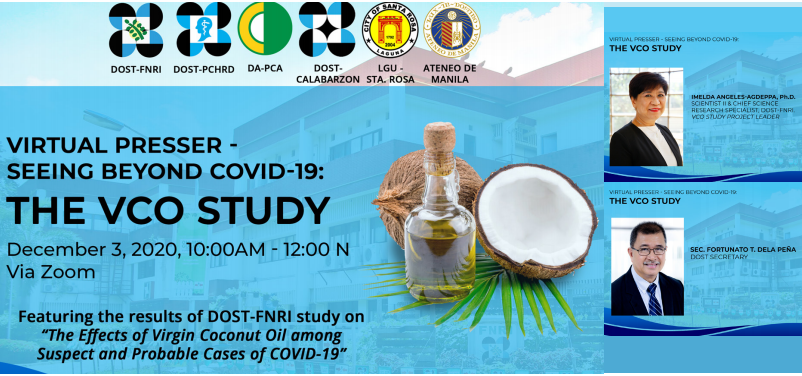
Results of the study on virgin coconut oil (VCO) as dietary supplement among COVID-19 probable and suspect cases showed that 5 of the 29 patients who were served meals with VCO manifested diminishing signs and symptoms as early as the second day, while only one patient served with the same meals but without VCO showed similar improvement.

This is according to the Department of Science and Technology’s Food and Nutrition Research Institute (DOST-FNRI) in a virtual presser dubbed as “Seeing Beyond COVID-19: The VCO Study – Effects of Virgin Coconut Oil among Suspect and Probable Cases” on December 3, 2020.

The VCO Group of patients who were served meals with VCO showed no COVID-19 related symptoms at Day 18, while symptoms persisted in some patients of the Control Group of patients who were served the same meals without VCO until Day 23, DOST Secretary Fortunato T. dela Peña further stated in the presser.

Secretary dela Peña added that VCO could be used as an adjunct supplement to probable and suspect COVID-19 cases to help prevent symptoms from becoming severe.

However, more studies are needed to determine the effectiveness of VCO as adjunct therapy for COVID-19 patients with other co-morbidities, Secretary dela Peña clarified.

In a follow-up interview, Dr. Imelda Angeles-Agdeppa, VCO study leader, Scientist II and Chief Science Research Specialist of DOST-FNRI, said that the study involved 57 suspect or probable COVID-19 cases randomly assigned to the Intervention or VCO Group and the Control Group at the Santa Rosa Community Hospital and Santa Rosa Community Isolation Units in Laguna.

Dr. Agdeppa added that aside from monitoring the signs and symptoms of COVID-19 among the study volunteers, the research team also noted that the mean C-Reactive Protein of CRP levels in the VCO Group normalized to 5 milligrams per liter or less as early as Day 14.

The C-Reactive Protein or CRP is a quantitative marker used to monitor inflammation or infection, and that a CRP equal or less than 5 milligrams per liter signifies recovery from inflammation or infection, Dr. Agdeppa explained.

Dr. Agdeppa further stated that while reduction to normal CRP levels in the Control Group was also evident from Day 1 to 14, it remained at the borderline of 5 milligrams per liter from Day 14 until end of intervention.

The VCO used in the study were strictly analyzed by the Laboratory Services Division of the Philippine Coconut Authority (PCA) to ensure product quality and compliance to Philippine National Standard (PNS).

The PCA requests VCO producers to have their VCO samples analyzed by PCA prior to promotion and marketing, PCA Administrator Benjamin R. Madrigal, Jr. said in the presser.

Administrator Madrigal also states that PCA is planning to develop the protocol in establishing the seal of quality for VCO.

Funding and monitoring of the VCO study was provided by the DOST-Philippine Council for Health Research and Development (or PCHRD), through the overall supervision and motoring of the DOST.

The Ateneo de Manila University Faculty of Chemistry, through Dr. Fabian M. Dayrit, provided research inputs and protocols based on previous VCO studies among HIV patients, like the correct VCO dosages to be given and the analysis to be used.

Dr. Dayrit, also an Academician of the DOST-National Academy of Science and Technology and President of the Integrated Chemists of the Philippines, supported the results of the DOST-FNRI VCO study, saying that several studies have proven the promising anti-viral properties of VCO and more studies are warranted to explore its full potential.

The public is hereby advised to carefully read the label of VCO products to check for PCA or FDA approval and make sure that ingredients, nutrient analysis, manufacturing and expiration dates are clearly declared.

Some media partners attending the presser commented that this development on VCO as promising dietary supplement may cause the skyrocketing of the price of VCO products.

The study team agrees with this inevitable consequence, but stated that the health benefits backed by scientific proof far outweigh the impending price increase, adding that DTI will monitor this.

This VCO study does not only have promising contribution to the prevention and management of symptoms among COVID-19 suspect and probable cases, but could also provide a boost to the coconut industry and the millions of coconut farmers who depend on the “tree of life” to uplift their quality of life.

For more information on the VCO study and other food and nutrition concerns, contact: Dr. Milflor S. Gonzales, Officer-in-Charge, Office of the Director, Department of Science and Technology – Food and Nutrition Research Institute, General Santos Avenue, Bicutan, Taguig City; Telephone/Fax Nos: 8-837-2934 or 8-837-3164; Direct Line: 8-839-1839; DOST Trunk Line: 837-2071 local 2296 or 2284; e-mail: dostfnri47@dost.fnri.gov.ph; DOST-FNRI website: http://www.fnri.dost.gov.ph. Like our Facebook Page at facebook.com/DOST.FNRI or follow our Twitter account at twitter.com/DOST_FNRI.

____________________

For more COVID treatments:

All of these treatments are being debunked and ignored by the CDC.  Please see this to find out why.  

COVID-19 has a 99.991% recovery rate by doing nothing – but you’d never know it from mainstream media.

To read about the numerous deaths/adverse reactions due to this COVID injection, which isn’t a vaccine and doesn’t prevent infection: (list is being updated daily): https://madisonarealymesupportgroup.com/2020/12/21/warning-3150-injuries-in-1st-week-of-covid-vaccines-among-american-healthcare-workers-pregnant-women-included/

The Shaky Science Behind the “Deadly New Strains” of Sars-Cov-2

https://healthimpactnews.com/2021/the-shaky-science-behind-the-deadly-new-strains-of-sars-cov-2/  9-Minute Video Here

The Shaky Science Behind the “Deadly New Strains” of Sars-Cov-2

Feb. 18, 2021

by Rosemary Frei
Off-Guardian

ACCORDING TO WHAT WE HEAR FROM OFFICIALS AND THE MAINSTREAM MEDIA, THE NEW VARIANTS ARE THE MOST DANGEROUS AND UNPREDICTABLE BEINGS SINCE OSAMA BIN LADEN.

Everyone needs to stay safe from these invisible but murderously mighty microbes by shunning contact with the unwashed, unmasked and unvaccinated.

But is that drastic approach — which is accompanied by severe curtailment of civil liberties and constitutional rights — warranted?

It turns out that the case for the variants’ contagiousness and dangerousness centres largely on the theoretical effects of just one change said to stem from a mutation in the virus’s genes.

And, as I’ll show in this article, that case is very shaky.

I also have an accompanying nine-minute ‘explainer’ video (Highly recommend. Please see link at top of page)

That one change is known as N501Y — scientific shorthand for the substitution of one protein building block (amino acid) for another at position 501 in the part of the virus called the spike protein.

Specifically, position 501 lies in the portion of the spike protein that’s responsible for the intimate coupling between the virus and cells that lets the virus slip inside and multiply.

[Note that any such amino-acid switcheroo is correctly called a change, not a mutation. Mutations occur only in genes. For some reason many scientists and scribes who ought to know better are mistakenly calling N501Y and other amino-acid changes ‘mutations.’ ]

A very preliminary study published Dec. 22, 2020, suggested that N501Y also is present in the South African variant named 501Y.V2. And another very preliminary study, published January 12, 2021, asserted it was also present in the new strain emerging from the Brazilian jungle, dubbed P.1.

On top of that, the South African variant is being reported as evading immunity and B.1.1.7 sharing this escape route. And scientists are depicting new variants with N501Y on board as spreading very fast. Some say they make herd immunity impossible, so every single person on earth has to be vaccinated. The models also suggest B.1.1.7 is up to 91% deadlier than the regular novel coronavirus.

(Yet so far it seems the main basis for officials saying it’s more deadly is shown in the minutes of the Jan. 21, 2021 meeting of an influential UK committee called New and Emerging Respiratory Virus Threats Advisory Group [NERVTAG ]. There, they cite modeling papers which haven’t yet been published – which means that until they’re published there’s no way to check their work.)

THREE NON-PEER-REVIEWED THEORETICAL-MODELING PAPERS WHICH CATAPULTED VARIANTS INTO THE SPOTLIGHT

Public-health officials, politicians and the mainstream media around the world turned their collective headlights on the variants right after the publication of three theoretical-modeling papers on B.1.1.7, a variant originating in the U.K. The first was a Technical Briefing by Public Health England published Dec. 21 (it’s the first of an ongoing series of reports on the variant authored by people working at the agency and at other institutions), the second a paper published Dec. 23 by a mathematical-modeling group at the London School of Hygiene and Tropical Medicine, and the third a theoretical-modeling manuscript posted Dec. 31 by a large group of UK scientists.

None of the three papers was checked over for accuracy by objective observers – a process called ‘peer review.’ Nonetheless, all three were portrayed as solid science by many scientists, politicians, public-health officials and the press.

(I reached out for comment to Public Health England, as well as to the first author of the second paper Nicholas Davies, and to the London School of Hygiene and Tropical Medicine. The only reply I received was from a media-relations person at Public Health England; she told me no one was available for an interview.)

(Neil Ferguson was a co-author of the first and third papers. The UK government has relied on Ferguson’s mathematical modeling for many years. This is despite his work turning out to be highly inaccurate time after time. He  also supposedly stepped down from his government-advisory role last May after being caught secretly meeting with his married lover during a time when it was illegal to make contact with anyone outside of one’s household, thanks in large part to his modelling. But he was quickly restored to positions of influence. In an article and accompanying video coming out next week, I describe the connections and conflicts of interest surrounding Ferguson and the modeling papers’ other authors.)

WHAT EFFECT IS N501Y SAID TO HAVE?

In N501Y, the amino acid that’s swapped out at position 501 in the spike protein is asparagine; by scientific convention it’s represented by the letter ‘N.’ The amino acid that’s swapped in in its place is tyrosine, and it’s represented by the letter ‘Y.’ Hence ‘N501Y.’

Position 501 in the amino-acid sequence sits in the part of the spike protein that protrudes from the surface of the virus. Specifically, it’s said to lie in the region of the spike protein that latches or ‘binds’ to the mechanism that is the gatekeeper for whether the virus can enter the cell. That gate-keeping mechanism is known as the ‘ACE2 receptor.’

This region of the spike protein – known as the ‘receptor binding domain’ (RBD) — binds to the gate keeping mechanism, the ACE2 receptor. When the RBD and the ACE2 receptor bind, the cell membrane, which is the circular barrier between the area outside the cell and the cell contents, opens up and allows the virus to enter.

N501Y is posited to make the spike protein bind tighter to the ACE2 receptor. Influential theoreticians have performed mathematical modeling based on this hypothesis. This modeling suggests that this tighter binding allows the virus to enter more easily, and that therefore this makes the virus more transmissible.

Yet as far as I’ve been able to find, there is still no concrete, direct proof of this. And note that epidemiological data cannot be used to definitively detect the effect of an amino-acid in a virus. Only experiments involving direct observation of the virus’s interaction with the body can determine that.

The main evidence that the top three theoretical-models cite as proof of stronger bonding between the N501Y form of the novel coronavirus and the RBD is from just three scientific manuscripts, and these describe experiments with the virus in mice or petri dishes, not observation of whether in fact the variants are truly more contagious or more deadly.

DETAILS OF THE THREE PAPERS THAT UNDERPIN THE ASSERTION THAT N501Y BOLSTERS CONTAGIOUSNESS

One of those three papers was published Sept. 25, 2020, in Science. It describe experiments involving involving six rounds of division of the virus in mice.

The researchers found a large amount of the virus in the mice lungs right from the first round of division. Based on this, they pronounced the virus to have “enhanced infectivity.” However, they didn’t actually test whether the virus is  more transmissible/contagious – that is, whether it moves from mouse to mouse more easily.

They performed ‘deep sequencing’ and reported that they found the N501Y change in the ‘mouse-adapted’ virus. Next they did ‘structural remodeling’ on it and wrote that this analysis…

suggested that the N501Y substitution in the RBD of SARS-CoV[-2] S protein increased the binding affinity of the protein to mouse ACE2.

All of this is very different than direct observations of the variant virus’s behaviour in mice or humans.

The second paper was posted on bioRχiv on Dec. 21, 2020. It describes an “engineered decoy receptor for SARS-CoV-2.” The complicated series of molecular-biological manoeuvers in vitro were performed that is hard to follow and understand – there is no ‘Methods’ section laying out the details and sequence of what they did; rather, the researchers’ approach to their experiments is scattered across all sections of the paper including in the accompanying Supplementary Material. This is many steps removed from real-life situations. The authors conclude from their manoeuvers that laboratory-mutated novel coronavirus with the N501Y mutation seems to bind more tightly to their ‘engineered decoy’ form of the RBD receptor than the RBD receptor that normally occurs in nature.  (The idea, it seems, is that this ‘engineered decoy’ could be injected into people with the goal of getting the new variant to bind to it rather than to cells, thereby stopping it from gaining entry into cells and reproducing.)

bioRχiv is an online-only journal. (It’s pronounced ‘bioarchive’; that’s because the Greek letter χ is pronounced ‘kai.’ I presume the letter χ is used in the journal’s title because the χ2 [‘chi-square’] test is a widely used form of statistical analysis in scientific papers.) The journal has the tagline ‘The Preprint Server for Biology.’ ‘Preprint’ means non-peer-reviewed. bioRχiv focuses entirely on Covid-19-papers and is sponsored by the Chan Zuckerberg Initiative. It has a sister publication medRχiv that also focuses on Covid-19,

The Initiative is the creation of Facebook head Mark Zuckerberg and his wife Priscilla Chan. Facebook has been among the very active censors of information including scientific papers that diverge from the official narrative about Covid.

The third paper  was posted on the website of the online journal bioRχiv on June 17, 2020, and then in Cell on Sept. 3, 2020.

Like the other two papers, it is extremely removed from direct observation of the virus’s behaviour in live animals or humans. In fact, the third paper doesn’t even use human or animal cells. It involves a ‘yeast-surface-display platform’ as a basis for performing ‘deep mutational scanning’ of the novel coronavirus’s RBD. That ‘platform’ is an artificial structure the paper’s authors constructed for measuring binding between antibodies and various RBD regions containing an array of mutations.

According to this paper, the N501Y amino-acid change results in stronger binding of the virus to the RBD.

However, the papers’ authors state in the last section of their paper that:

It is important to remember that our maps define biochemical phenotypes of the RBD, not how these phenotypes relate to viral fitness. There are many complexities in the relationship between biochemical phenotypes of yeast-displayed RBD and viral fitness.

Translation: “Just because our biochemistry experiments showed that the presence of N501Y or other changes in the RBD seems to make the RBD bind tighter to the ACE2 receptor, we don’t know whether any of these changes make the virus more ‘fit’/transmissible.”

And note also that one of the authors of the third paper, Allison Greaney, is quoted as saying in an August 2020 article from the Fred Hutchison Cancer Research Center where she and several of the other authors work, that:

The virus already has a ‘good enough’ ability to bind to ACE2. There’s no reason to believe that going beyond that level will make it more pathogenic or transmissible…[b]ut the RBD may be able to tolerate a number of mutations.

As another note, the third paper was first published in bioRχiv and then published three months later in the peer-reviewed journal Cell. In Cell the paper is labelled ‘Elsevier-Sponsored Documents’ (see image below) (Elsevier is the publishing empire that owns Cell, among hundreds of other journals). I couldn’t find anything online about what ‘Sponsored’ means, nor about what or who sponsored this particular paper; and I couldn’t find any other papers with this designation. So I emailed Cell’s PR manager John Caputo on the evening of Jan. 18 and followed up by leaving him a voicemail message on Jan. 19. I haven’t heard back from him.
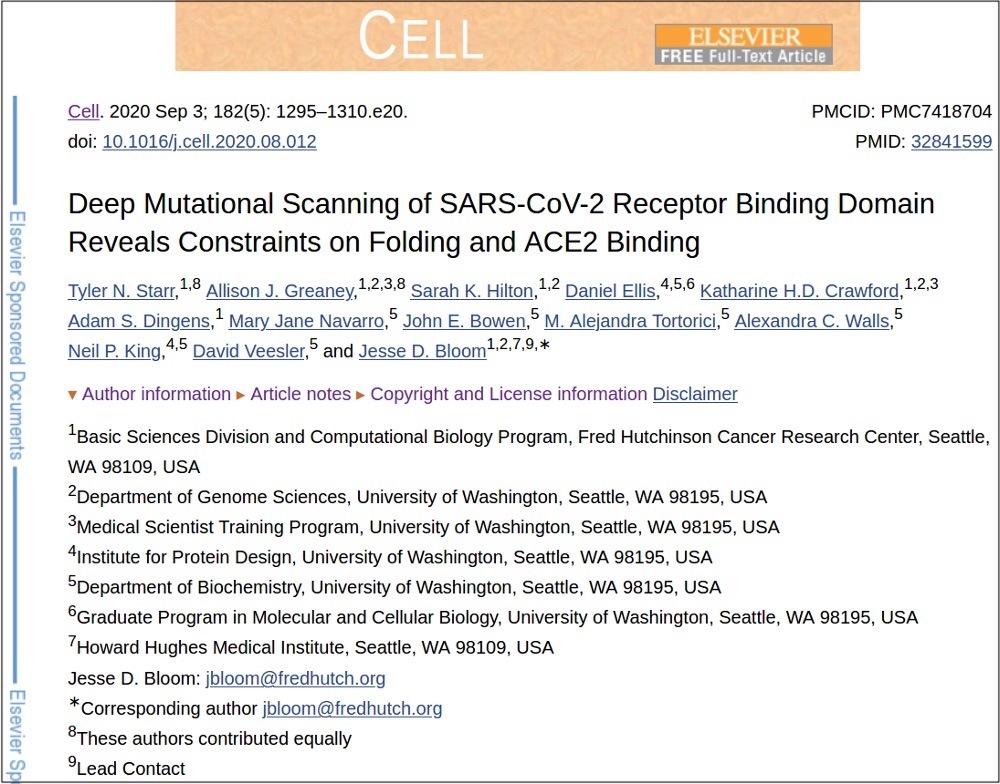
‘Deep Mutational Scanning of SARS-CoV-2 Receptor Binding Domain Reveals Constraints on Folding and ACE2 Binding’ (Tyler N. Starr et al.)

A BRIEF WORD ABOUT ANOTHER AMINO-ACID CHANGE IN B.1.1.7

I’ll quickly turn to another of the key changes said to be present in B.1.1.7. This change, the deletion of three amino acids was described in a paper published on the website of medRχiv on November 13, 2020. (Earlier in this article I mention that medRχiv is a creation of the Chan Zuckerberg Initiative.)

The mutation purportedly makes B.1.1.7 invisible to one of the three key functions of the polymerase chain reaction (PCR) test. That function is detection of the gene that has the genetic code for one of the two main spike proteins on the outer surface of the novel coronavirus.

However, that conclusion is based on only sequencing of the virus in a mere six people who tested positive for the novel coronavirus. On top of that, the paper was not subjected to scrutiny by other scientists (a process known as ‘peer review’) before it was published.

In addition, the Covid diagnoses of those six people were themselves determined by PCR. And PCR has been shown to have a very high rate of false positives — that is, to very frequently give a positive result in people who in fact do not harbour the novel coronavirus at all.

The authors of that paper themselves conclude that:

this result should be interpreted with caution. As a limited number of samples with the S-negative profile [i.e., tests that were positive for two of the three portions of the PCR test but not for the third, S-gene, portion] were sequenced, we could not exclude the presence of other S mutations associated with this profile…. Moreover we could not determine whether the deletion affected the primer or other probe-binding region as their coordinates were not available.

It’s a good bet that similar sleights of hand are behind the new wave of papers and headlines focusing on the amino-acid change dubbed E484K.

WHAT’S THE LESSON FROM ALL THIS?

That the pronouncements about the dire danger posed by the new variants aren’t based on solid science.

They appear to be aimed more at scaring the public into submitting to harsher and longer restrictions than helping to create truly evidence-based policies.

So follow the golden rules. Read the primary scientific-paper sources. Analyze them and think for yourself. Don’t let your reasoning be swept away by the 24-7, fear-filled news cycle.

Rosemary Frei has an MSc in molecular biology from the Faculty of Medicine at the University of Calgary, was a freelance medical writer and journalist for 22 years and now is an independent investigative journalist. You can watch her June 15 interview on The Corbett Report, read her other Off-Guardian articles follow her on Twitter and read her website here.