Archive for the ‘Treatment’ Category

Free Webinar: Lyme Disease and You

MedicalMarijuanaShutterstock1-300x200Event Description:  An informative online webinar specific to medical cannabis and Lyme Disease.  This is an introduction to how various forms of medical cannabis and hemp can help relieve symptoms for people suffering with Lyme Disease.

When:  Thursday, August 18, 2016

US Times:  EST:  1:00pm-2:30pm; MST:  12pm-1:30pm, MDT:  11am-12:30pm, PST:  10am-11:30am.  For other regions see:  http://www.timeanddate.com/time/zones/  (correct me if I’m wrong but that would mean it’s on at 12pm here in WI)

Register at this link:  https://www.eventbrite.com/e/realm-of-caring-orientation-lyme-disease-and-you-tickets-26888571441

For more information on medical Cannabis see:  https://madisonarealymesupportgroup.com/2015/05/19/marijuana-the-miracle-herb/

Dr. Zubcevik Challenges TBI Standard of Care

http://www.mvtimes.com/2016/07/13/visiting-physician-sheds-new-light-lyme-disease/

Dr. Nevena Zubcevik, attending physician at Harvard Medical School and co-director of Dean Center for Tick Borne Illness at Spaulding Rehabilitation Hospital, http://spauldingrehab.org/research-and-clinical-trials/lyme-disease/, recently spoke at a weekly meeting of clinicians, which was open to the public at Martha’s Vineyard Hospital.

In standing room only, Zubcevic admonished that singer/actor Kris Kristofferson’s recent cure of dementia, once diagnosed and properly treated for Lyme Disease, should be a lesson for medical professionals.  https://madisonarealymesupportgroup.com/2016/06/09/alzheimers-byproduct-of-infection/.  She also stated that children present differently than adults, with headache being the most common symptom but to get them tested if they are acting out, experiencing mood issues, irritability, and fatigue.  (They need to be tested; however, with sensitive testing that Lyme Literate Doctors – LLMD’s use.  One lab that offers these tests is Igenex Labs in CA.  The best way to get good information is to contact a Lyme Support Group in your state.  They have all the information regarding LLMD’s, testing, costs, and educational materials.)

She explained of a haunting case of a young male institutionalized for schizophrenia. After proper testing for Lyme Disease, he started daily antibiotics and within six months he was normal.

For more information on how borrelia, the causative agent of Lyme Disease, and various coinfections can and often do affect the brain see: https://madisonarealymesupportgroup.com/2015/10/18/psychiatric-lymemsids/ .  Also, see Amy Hilfiger’s story: https://madisonarealymesupportgroup.com/2016/07/01/ally-hilfiger-on-fox-5-ny/, as well as how Toxoplasmosis can affect the brain: https://madisonarealymesupportgroup.com/2016/05/21/toxoplasmosis/.

She also debunked myths.

*Studies show you can get Anaplasmosis in 15 minutes from tick attachment, 10 minutes for Powassan virus, and that it is UNKNOWN how long it takes for the various strains of borrelia (LD). https://www.youtube.com/watch?v=296pVc5Zbxw&index=2&list=UUTXTo-yWGZkRwrQ9X6X7E0A

*Doxycycline CAN be given to children, infants, and pregnant women.
http://www.ncbi.nlm.nih.gov/pubmed/26680308  (no correlation between the use of doxycycline and teratogenic effects during pregnancy or dental staining in children was found)

*A two-day course of Doxy has little to no prophylactic value, and that the proper course is 100-200mg twice a day for 20 days, regardless of engorgement time.

*The current testing misses 69 out of 100 patients who have LD, and doesn’t pick up borrelia miyamotoi at all, not to mention other strains. Miyamotoi is prevalent in Massachusetts.

*The “classic” bullseye rash only happens 20% of the time and when it does present can look like a spider bite or bruise.

*Patients often have coinfections which tests do not pick up. These coinfections make patient cases extremely difficult and complex.

She also stated that borrelia can go into tissue, travel in the bloodstream and is twice the speed of a white blood cell which means it can swim against the flow of blood and evade the white cell by quickly burrowing into tissue, thereby avoiding the immune system.

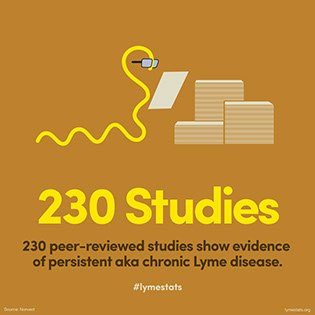
She stated that having LD is a body-wide toxic war – leaving the patient feeling miserable, and that while she is fairly new to this field, she sees no controversy – that animal studies clearly show persistence after treatment and that human tests do too.

She mentions the work of Dr. Ying Zhang of Johns Hopkins Lyme Center and that his work has indicated that current treatments may not clear persisters. Due to this research she feels a combination of several antibiotics, particularly new combinations, are promising.

Zubcevik found that a patient with chronic LD, when given a PET scan, showed blue and purple, indicating atrophy, whereas after six months of IV antibiotics, presented with yellow and green, indicating metabolically active regions.

Zubcevik has patients who have been ignored, beaten down, and who have lost the will to live. They show signs of post-traumatic stress and have destroyed marriages often leaving them alone. They break down crying with she tells them she believes them.

A Child’s Lyme Story

It is not normal for a child to complain of leg pain – particularly in their joints.  For Patrik, the doctors told him he had growing pains.

End of story.

But it didn’t end for Patrik, and it doesn’t end for many children because it isn’t growing pains, it can often be a systemic infection that needs to be dealt with.  Patrik’s issues became more cognitive in nature where he had trouble with memory, paying attention, fatigue, and uncontrollable blinking.  This all intensified and he developed anxiety, stuttering, mood swings – and rage.

Patrik finally tested positively for Lyme and found a compassionate doctor who understood him and treated him for autoimmune brain dysfunction triggered by LD.

Please learn from this story, share it with others, and don’t settle for pat answers.  Doctors should not dismiss a child when they have severe pain and/or cognitive issues.

Good news – Patrik is doing better on treatment and has regained much of his cognitive ability.  In my experience children respond very well to proper MSIDS treatment which treats all forms of borrelia, and typically the various coinfections that tend to come along for the ride.

For various treatments to discuss with your practitioner see:

https://madisonarealymesupportgroup.com/2016/02/13/lyme-disease-treatment/

https://madisonarealymesupportgroup.com/2016/01/16/babesia-treatment/

https://madisonarealymesupportgroup.com/2016/01/03/bartonella-treatment/

https://madisonarealymesupportgroup.com/2016/02/07/mycoplasma-treatment/

https://madisonarealymesupportgroup.com/2016/03/28/combating-viruses/


Dr. Phillips Completely Trounces CDC

Oh, this is good – and it’s going to make your day.

https://www.facebook.com/FOX5NY/posts/10154433090686320:0


Greg Lee -Excellent Article on Strategies for Neurological Lyme

https://www.linkedin.com/pulse/memory-loss-caused-neurological-lyme-disease-brain-eating-greg-lee?articleId=6157556196141187072#comments-6157556196141187072&trk=prof-post

Is Memory Loss Caused by Neurological Lyme Disease or Brain Eating Parasites?
Jul 9, 2016
For people with neurological Lyme disease that have dementia, multiple sclerosis, or Alzheimer’s disease
by Greg Lee

One afternoon, I heard one of my daughters cry out with a huge scream after a wasp stung her arm. After she was taken care of, I got out my wasp fighting gear: electric bug zapper, thick gloves, hat, and a bottle of hair spray. You may be asking, “Why hair spray?” It sticks like glue to the wasp’s wings so they can’t fly and I don’t like pesticides. Once they hurt my girl, then it got personal and they had to go!

So it was me against over a dozen wasps. After zapping and spraying them into submission, I saw one of the wasps crawl into a slot between two deck boards. And then another wasp followed. I cautiously peered into the slot and saw the nest. I got out the garden hose and sprayed that nest until no wasp remained. Then I quickly pried it out and threw it down the sewer. Once the nest was gone, the rest got the message and didn’t return.

How is being stung by angry wasps defending their nest similar to nematodes that infect the brain?

Just like a wasp nest that swarms you, nematodes can infect and damage the brain.
Recent research by Dr. Alan MacDonald has found worms called nematodes in autopsy brain tissue samples from patients with neurological Lyme disease who were also diagnosed with Multiple Sclerosis, dementia, brain tumors, and Alzheimer’s Disease[1]. https://madisonarealymesupportgroup.com/2016/06/03/borrelia-hiding-in-worms-causing-chronic-brain-diseases/  Lyme disease bacteria were actually detected within some of the nematodes. Similar to how wasps can hide in their nest, Lyme bacteria can hide from antibiotic treatment when they are inside of larger parasitic worms. Unfortunately, nematodes have also been detected in ticks.

In deer ticks and lone star ticks, nematodes have been detected.

In multiple tick studies, nematodes have been detected in lone star ticks found in Maryland[2] and Virginia[3], and in deer ticks from Connecticut[4]. Ticks are capable of transmitting nematodes when they feed on a host[5]. Other vectors that can transmit nematodes are mosquitoes and black flies[6]. Once they infect a host, adult nematodes mate and then release thousands of very small larva called “microfilariae” into the blood. Microfilariae circulate throughout the host and can end up in the nervous system[7]. These microfilariae evolve into larvae which can eat through the brain and can cause a wide range of symptoms.

Nematodes produce many symptoms when they infect the brain and spinal fluid.
Larval nematodes in the nervous system can damage tissues and produce masses called granulomas. They can also cause fibrosis, blockages in cerebral blood vessels, or inflammation resulting in meningitis, encephalitis or localized inflammation[8], weakness, blurred vision, stomach flu[9], and even death. In a Taiwan study, patients infected with nematodes reported meningitis, brain inflammation, fever, vomiting, headache, and neuropathy. Two patients died from their infection. In some patients, nematodes were recovered from their cerebral-spinal fluid (CSF). Elevated levels of inflammatory markers vascular endothelial growth factor (VEGF), hepatocyte growth factor (HGF), and matrix metalloproteinase 9 (MMP-9) were also detected in patient’s CSF fluid[10]. Research shows that nematodes can also manipulate the immune system response.

Nematodes produce compounds to deflect how the immune system attacks parasites
One research study on a nematode called B. Malayi, identified proteins that it releases to manipulate the immune response in favor of a parasitic infection[11]. Another study on a filarial nematode infection illustrated how these parasites inhibit the inflammatory response by the immune system[12]. In most cases, anti-parasitic medications are used to treat nematode infections in the nervous system.

Anti-parasitic medications help to kill nematode infections in the brain and spinal fluid
Anti-parasitic medications called antihelminthics are used to treat nematodes in the nervous system including: Mebendazole, Pyrantel pamoate, Thiabendazole, Diethylcarbamazine (DEC), Ivermectin[13], Moxidectin[14], and Alinia[15]. Ivermectin and moxidectin are the most widely administrated antihelminthic medications for nematode infections and unfortunately, their widespread and frequent use has led to high level of resistance to these drugs[16]. Ivermectin only kills the microfilariae, not the adult nematode[17]. DEC can worsen onchocercal nematode eye infections. In patients with a nematode infection called loiasis, DEC can cause serious adverse reactions, including encephalopathy and death, depending upon the density of the parasites. DEC is only available in the US from the CDC upon submitting positive lab results[18]. A mechanism within nematodes called a “drug effux pump” is believed to enable these parasites to develop drug resistance[19]. Killing nematodes can lead to significant Herxheimer reactions.

A symbiotic bacteria within nematodes is the source of Herxheimer toxins.
Wolbachia is a symbiotic bacteria which enables normal development and fertility of nematodes[20]. Wolbachia belong to the order Rickettsiales and is closely related to Anaplasma, Ehrlichia and Rickettsia[21]. Fortunately, this bacteria does not infect people. When nematodes are killed off by anti-parasitic drugs, Wolbachia cannot survive without their host and are killed, which releases their endotoxins. Wolbachia toxins stimulate the production of pro-inflammatory compounds including tumor necrosis factor alpha (TNF)-alpha, Interleukin-1 (IL-1), and Interleukin-12 (IL-12)[22]. In an animal study, Wolbachia surface protein upregulated (IL)-1beta, IL-6, and tumor necrosis factor[23]. These endotoxins and inflammatory compounds can produce painful symptoms associated with a Herxheimer reaction. A combination of anti-parasitic and antibiotic medications is more effective at reducing adult and microfilariae forms of nematodes.

A combination of medications which kill both the adult and microfilariae forms is more effective. 
Recent drug strategies combine Ivermectin for microfilariae and doxycycline to kill Wolbachia which eventually kills the adult nematodes in the nervous system. This combination drug treatment is recommended for six weeks[24]. Another animal study combined DEC with liposomal doxycycline and liposomal rifampin resulting in significant increase in microfilariae die off and a marginal increase in the die off of adult nematodes[25]. Other studies demonstrate the inhibitory effect of anti-Rickettsia antibiotics like tetracycline, rifampin, and azithromyacin on adult nematodes[26].

What else can help people to expel brain-eating nematodes from their central nervous system who have persistent neurological Lyme disease, multiple sclerosis, dementia, brain tumors, or Alzheimer’s disease?

Here are four strategies for expelling brain-eating nematodes from the central nervous system:
A combination of remedies for attacking both the adult and microfilariae forms is the most effective at reducing the overall numbers of parasites. Formulating remedies into microparticles called liposomes enhances the efficacy of anti-parasitic herbs and essential oils for killing the different life stages of nematodes[27] and possibly their symbiotic bacteria.

Clearing Brain-Eating Nematodes Strategy #1: Essential Oils
Essential oils have been found to inhibit different species of nematodes.

Thyme essential oil was effective at inhibiting Meloydogine javanica[28] and larvae from the Anisakis nematode[29]. Thyme essential oil was also effective against gram negative bacteria: Pseudomonas aeruginosa[30], Salmonella spp.[31], and E. Coli[32]. Thyme combined with oregano oil reduced mRNA levels of pro-inflammatory cytokines IL-1beta, IL-6, GM-CSF, and TNFalpha[33].

Palmarosa essential oil was effective against Caenorhabditis elegans[34] and Haemonchus contortus[35] in separate studies. This oil was also effective at inhibiting E. Coli[36] and Aspergillus fumigatus[37]. Palmarosa oil also reduced pro-inflammatory compounds TNF-α, IL-1β, and IL-8[38] and increased anti-inflammatory IL-10 in lab studies[39].

Clove bud essential oil was highly effective at reducing[40] Meloidogyne incognita egg hatch 50% and killing second stage juveniles (J2) as much as 100% in a lab study[41]. Eugenol, the primary compound in clove bud oil, in one rat study reduced expression of VEGF, MMP-2, and MMP-9[42], which are elevated in nematode infections. Processing these oils into a liposomal micronized form increases their penetration into the nervous system[43]. Adding nanoparticles of silver to liposomal oils may further enhance their anti-microbial properties.

Clearing Brain-Eating Nematodes Strategy #2: Nanoparticle Silver
In multiple lab studies, nanoparticles of silver were effective at reducing motility and killing microfilariae of Brugia malayi[44], demonstrated antifilarial activity against microfilaria of S. Cervi[45], disrupted metabolism of Caenorhabditis elegans[46], and killed most of Meloidogyne incognita[47]. Encapsulating nanoparticles of silver along with essential oils into a liposomal remedy may increase their anti-parasitic and anti-symbiotic bacterial properties. When nanoparticle silver is combined with tea tree essential oil into a liposome, their antimicrobial efficiency is enhanced against Pseudomonas aeruginosa, Staphylococcus aureus, and Candida albicans[48]. Silver nanoparticles may reduce inflammation from nematodes by inhibiting IL-1beta and VEGF induced permeability as reported in a pig study[49] and reducing MMP-2 and MMP-9 in another rat study[50]. Herbs have also been effective for treating nematode infections for thousands of years.

Clearing Brain-Eating Nematodes Strategy #3: Herbs
In addition to essential oils and silver, herbs have been used for centuries for fighting nematode infections.

Andrographis, Chinese name Chuan Xin Lian, has been effective at inhibiting Haemonchus contortus[51], microfilaricidal activity against Dirofilaria immitis filarids[52], antifilarial activity against adult worms of subperiodic Brugia malayi[53], killing in vitro the microfilaria of Dipetalonema reconditum in dogs[54], and anthelmintic activity against Ascaris lumbricoides[55]. This herb is also used in Chinese medicine against leptospirosis, another spirochete infection[56]. Andrographis was also effective at reducing inflammatory compounds IL-1α, IL-1β, and IL-6 in a lab study[57]. A compound in Andrographis called andrographolide inhibits expression of inflammatory compounds MMP-2, IL-1beta[58] and VEGF[59]in lab studies.

Ajowan, ajwain, or Trachyspermum ammi has been effective against multiple species of nematodes in multiple studies. Methanolic extract of fruits of Trachyspermum ammi were effective against adult bovine filarial Setaria digitata worms and demonstrated macrofilaricidal activity and female worm sterility in vivo against B. Malayi[60].

Lantana camara is an ornamental shrub which is very hardy and is used medicinally through much of the world. This herb contains triterpenoids pomolic acid, lantanolic acid, lantoic acid, camarin, lantacin, camarinin, and ursolic acid which exhibited 100% mortality in 24 – 48 hours against the nematode Meloidogyne incognita[61]. In other studies, a lantana extract killed adult Brugia malayi nematodes and sterilized many of the surviving female worms, and demonstrated strong microfilaricidal and sterilization efficacy with mild macrofilaricidal action against Acanthocheilonema viteae[62]. Not only herbs, but also tiny electrical frequencies can help to stop nematodes that have infected the brain and spinal fluid.

Clearing Brain-Eating Nematodes Strategy #4: Frequency Specific Microcurrent
Frequency Specific Microcurrent uses millionth of an amp electrical currents to reduce parasitic and bacterial infections, toxins and inflammation[63]. Frequencies for inhibiting parasitic worms, symbiotic bacteria, neutralizing toxins and inflammation, reducing tumors, and promoting healing are paired with frequencies to target infected areas of the nervous system: the brain, forebrain, meninges, basal ganglia, spinal cord, spinal fluid, cranial nerves, and eyes[64]. These paired frequencies have also been helpful in reducing symptoms in patients diagnosed with multiple sclerosis, autism, brain inflammation, mold toxicity, and neurological Lyme disease. These four strategies may help people with neurological Lyme to stop an underlying parasitic nematode brain infection.

A combination of anti-parasitic remedies and treatments can help to overcome a chronic neurological Lyme and nematode infection.
People diagnosed with multiple sclerosis, Alzheimer’s disease, dementia, or brain tumors may have hidden parasitic nematodes along with Lyme disease in their nervous system. Just like finding and eliminating the wasp nest, expelling parasitic nematodes that harbor Lyme bacteria may help to improve neurological symptoms and memory recall. Using liposomal anti-parasitic and anti-symbiotic bacteria remedies and treatments may be effective in eliminating larger parasites and the Lyme bacteria they contain.

Anti-toxin treatments and remedies may also help with reducing inflammatory compounds which may lower toxic Herxheimer pain and discomfort. Making these remedies into micronized liposomes enhances their delivery into the nervous system and may increase their anti-nematode effectiveness. Since some of these treatments and remedies require specialized training, work with a Lyme literate natural remedy practitioner to develop a proper, safe, and effective strategy for your condition.

– Greg

“Thank you, Greg Lee, for such an insightful article.”  Please take these suggestions to your LLMD and discuss them.  I’m thankful for those who are endeavoring to give us answers and are being a part of the solution.