Archive for the ‘Treatment’ Category

Lyme Disease Bill Would Change Coverage Amid Controversy Over ‘Chronic’ Condition

https://www.witf.org/news/2019/06/lyme-disease-bill-would-change-coverage-amid-controversy-over-chronic-condition.php

Lyme disease bill would change coverage amid controversy over ‘chronic’ condition

Written by Brett Sholtis/Transforming Health | Jun 13, 2019 12:10 PM

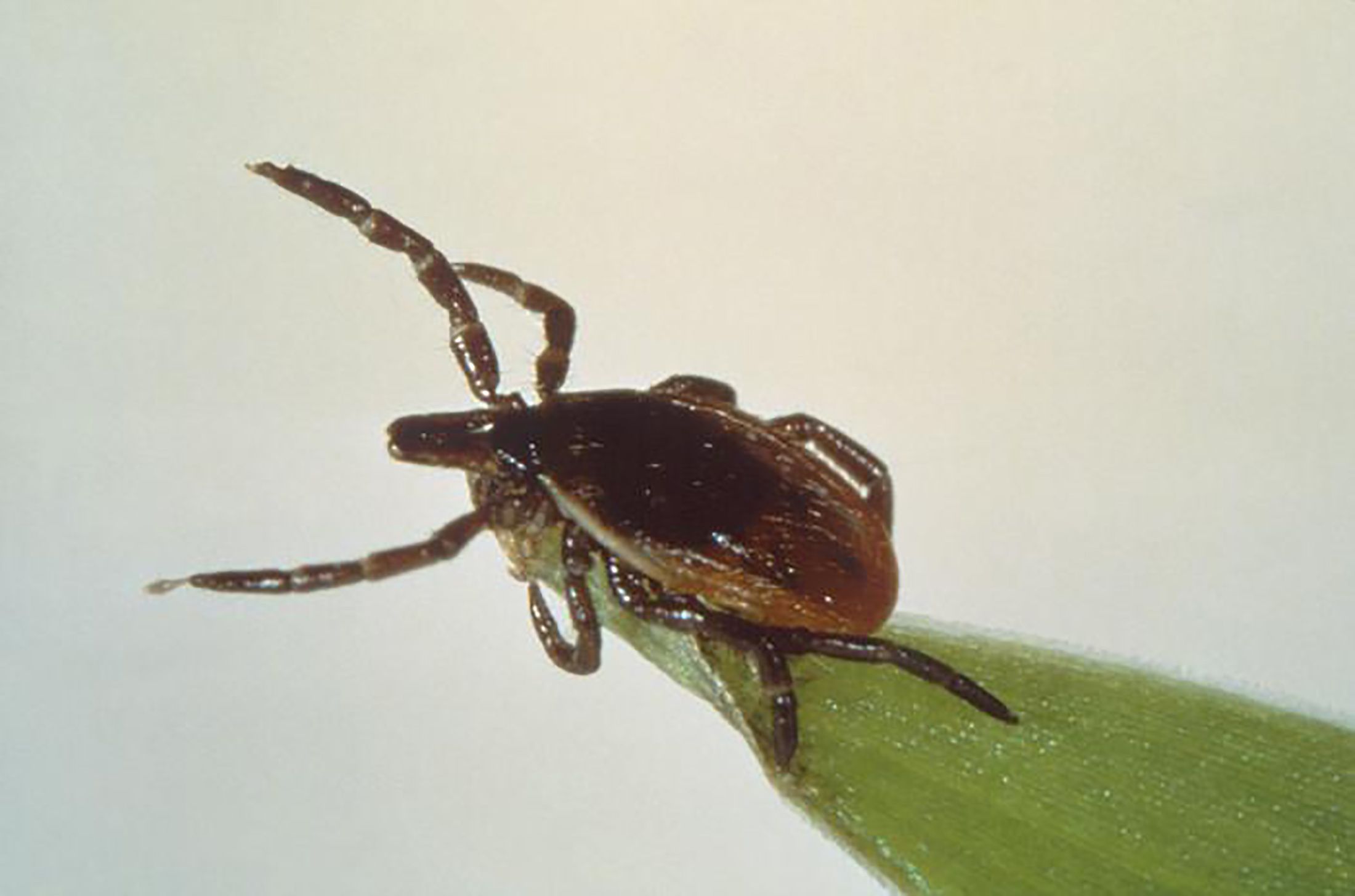
Deer tick on body.jpgA deer tick nymph crawls on a human body. (Andrew Nuss via Flickr)

With the sun shining and birds chirping on a warm spring day, it’s easy to see why Anson Flake loves living at the edge of the woods in Enola. When he and his family bought the 10-acre property more than 20 years ago, it was the fulfilment of a dream.

“But, as we’ll talk about, you know, there’s a lot of ticks out here,” Flake said.

Flake never expected one of those ticks would lead him to the state Capitol in support of a piece of legislation. However, at some point in the early 2000s, he contracted Lyme disease.

“I don’t know if I got it here on the property– which is very possible,” he said. From paintball games to hikes, he and family and friends spent a lot of time outside.

He never got a bulls-eye rash, and he doesn’t remember coming down with the flu-like symptoms that sometimes accompany Lyme. 

Rather, Flake found out he had it the hard way. He was on a sales call in Texas when he got a pounding headache.

“The guy that I was meeting with said, hey, you’re not looking so good. I said, I’m feeling terrible.”

A doctor in Texas diagnosed him with meningitis, a rare complication of late-stage Lyme.

The doctor’s quick response helped to save his life, and the meningitis was cured. But because he went so long without treatment, he had what doctors called “Late-stage Lyme encephalopathy.”

Some of the symptoms were terrifying, Flake said.

“For me it was dementia-type symptoms. It was forgetting how to go places that I’d been to a hundred times.”

It took years to be cured, but the 53-year-old said he feels great. However, because insurance only covers a few weeks of antibiotics, he said it took more than $50,000 of his own money to get better.

Flake, the cofounder of a company that makes physical therapy devices, said he was able to afford it. However, for most people, that kind of spending would be out of reach.

He said that’s why he’s part of a group pushing for House Bill 629, which would require health insurers to cover whatever the doctor prescribes, including long-term antibiotic treatment.

This is where Flake’s cause runs into some controversial questions about Lyme disease: Do some people continue to be sick after getting treatment? Do some people need more than three or four weeks of antibiotics? Is “chronic Lyme disease” a term people should be using?

That all depends on who you ask.

Flake1-resized.jpgAnson Flake stands in his backyard in Enola, Pennsylvania. (Brett Sholtis/Transforming Health)

At the nonprofit American Lyme Disease Foundation, executive director Philip Baker said “chronic Lyme Disease,” as some people call it, doesn’t exist.

There’s no proof that people who develop “chronic” symptoms have Lyme, rather than some other disorder, and no proof that more antibiotics will help.

“They’ll say, well, I’m convinced I have Lyme disease, the tests are no good, and I’ll keep going from doctor to doctor until I find somebody that will tell me I have Lyme disease,” the retired infectious disease specialist said. “It’s like a cult, in a way.” 

Baker noted, three National Institutes of Health studies did find a severe impairment in health and quality of life among people reporting Lyme symptoms after getting treatments. However, results showed no benefit to prolonged antibiotic therapy.

At advocay group Lymedisease.org, CEO Lorraine Johnson said three studies aren’t enough.

“When you close the books and say the science is settled…you really ought to have a strong body of evidence behind you,” Johnson said. “But that hasn’t been done in Lyme disease.”

Johnson’s group advocates for people who say they have Lyme disease that hasn’t responded to the approved treatment. She wants the National Institutes of Health to do more studies, something she says needs to happen fast, because recent research says undiagnosed Lyme may be 10 times more commonplace than once believed.

House Bill 629 passed the house and currently sits in the Senate Insurance and Banking Committee, where past versions of this bill have all stalled.

This year could be different, Flake said. Other states such as Rhode Island, Virginia and Maryland, have adopted similar bills. And this year the committee has a new chair, Republican state Senator Mario Scavello of Monroe County, who has supported a similar Lyme bill in the senate.

Flake hopes to see the bill pass, something he said will give physicians control over whether to prescribe a longer course of antibiotics.

“Just trust the health care practitioner to do the right thing.”

_________________

**Comment**

Please note a few particulars:

  1. Flake didn’t see a tick, a rash, or have flu-like symptoms yet developed meningitis, a “late stage” manifestation of Lyme. This defies everything The Cabal states about Lyme.
  2. It took YEARS of treatment, yet after this long-term treatment, Flake “feels great.”  What does The Cabal say about that? It certainly doesn’t fit into their “long-term antibiotics don’t help Lyme patients” mantra. I can say the same thing as well as my husband and many, many other patients I know, but we aren’t part of any published literature because we never would have made it into a study to begin with as we didn’t test positive on 2-tiered testing, didn’t have the EM rash, or flu-like symptoms, and many other extremely limiting parameters to enter a research study even if there was one. We are the 30%-40% that go months to years undiagnosed and untreated yet reclaim our lives with long-term antibiotics.
  3. As long as insurance companies can control puppets, they don’t have to pay for this plague.
  4. And to Baker of ALDF,
“Absence of Proof doesn’t mean proof of absence.”

When you really ponder the fact that people like Baker demand double-blind placebo controlled studies as “proof” of an organism that’s incredibly difficult to study, yet deny real-world clinical evidence and calmly allow thousands upon thousands to suffer unimaginable pain and suffering, you begin to truly understand ego, power, and greed.

I would state that this story is a perfect example of how real cases not making published literature improve with long-term antibiotics.


Updates in the Diagnosis & Treatment of Resistant Lyme & Chronic Disease – Dr. Horowitz

https://chrissmith.house.gov/uploadedfiles/richard_horowitz_presentation.pdf

Updates in the Diagnosis and Treatment of Resistant Lyme and Chronic Disease

(Used with permission from Dr. Horowitz)

Lyme & TBD Congressional Town Meeting

May 29, 2019

Dr. Richard Horowitz

_____________________

**Comment**

The above link of a pdf by Dr. Horowitz is chuck-full of information.  For those of you who are just beginning this journey, this Lyme/MSIDS treating doctor has written numerous books I highly recommend.  He has many ideas & suggestions for why many do not get better.  He also is the one who came up with the MSIDS questionnaire, which you can access here:  https://madisonarealymesupportgroup.com/wp-content/uploads/2016/01/symptomlist.pdf

The questionnaire is validated & does a much better job of diagnosis than current 2-tiered testing: https://madisonarealymesupportgroup.com/2017/09/05/empirical-validation-of-the-horowitz-questionnaire-for-suspected-lyme-disease/(This link also has other links with information Dr. Horowitz given including his research on mycobacterium drugs)


This is the first item I recommend to patients suspecting tick-borne illness.  I tell them to print it off, fill it out, and take it to their doctor appointment.


Decoding NeuroLyme: Live Webinar With Dr. Rawls – June 19, 2019

https://rawlsmd.com/webinars/decoding-neurolyme/?

Decoding NeuroLyme: Live Webinar with Dr. Bill Rawls

Wednesday 6/19, 8pm EDT

Lyme disease can manifest in seemingly endless ways. But neurological symptoms such as brain fog, limb pain, muscle weakness, anxiety, and more can feel especially debilitating and difficult to diagnose, manage, and overcome.

So why are some people more likely to experience neurological Lyme disease — and what can you do to feel better? 

Join a live webinar with Dr. Bill Rawls, best-selling author of Unlocking Lyme, who knows firsthand what it’s like to live with chronic Lyme disease, as he demystifies neurological Lyme and offers an alternative view of causes and solutions.

You’ll learn how to take control of your health, and the essential steps for empowering your body’s natural defenses. 

PLUS: Don’t miss an exclusive gift for webinar attendees, and have your questions ready for a LIVE Q&A on neurological Lyme disease with Dr. Rawls.

“Dr. Rawls is such a genuine resource in this bewildering Lyme maze. I appreciate you making his insights readily available.” – David

Understanding and Overcoming Neurological Lyme Disease

Live Webinar with Dr. Bill Rawls

RESERVE MY SEAT »

“Super helpful and informative. It was great to hear someone talk about this in a knowledgeable manner given that it seems like a mystery to so many others in the medical community. Thank you!” – Christian

In this webinar, Dr. Rawls will also discuss:

  • Why neurological symptoms such as cognitive impairment, nerve and limb pain, mood disruption, and more are so prevalent among Lyme sufferers
  • What causes these symptoms to become so overpowering in some people
  • Connections between neurological Lyme and other infections and chronic illnesses
  • Why conventional methods of diagnosis and treatment are limited and controversial
  • His holistic, restorative approach to overcoming neurological Lyme

“Neurological symptoms are the most exasperating of all Lyme symptoms, because they disconnect you from the world at large. There is a path to recovery.”  — Dr. Bill Rawls


Wisconsin Tick-Borne Illness Center of Excellence – Howard Young Foundation

Mike Nickel, the founder of the Wisconsin Yahoo online support group (found on the right hand side of this website under support groups) recently visited the new Tick-Borne Illness Center and had the following to say:

I had a chance to meet with the Howard Young Foundation and got a tour of the new lyme clinic {Tick-Borne Illness Center of Excellence} that will be opening in Minocqua, WI. www.howardyoungfoundation.org 715-439-4005.

It’s located in the Howard Young Medical center which is a 90 bed hospital. The Lyme Clinic will have its own wing, sign outside and entrance. They’re remodeling the offices, lab, waiting area, etc. The wing will encompass about 2,000 sq. ft. There’s a large waiting area which will also offer an educational area where folks can learn about tick-borne illness.

The Waite family {Waite-Kaine Foundation} was instrumental in bringing this to fruition as their daughter Jen passed from lyme complications. There will be an area dedicated to her memory.

Dr. Kogelnik of the Open Medicine Institute will manage the clinic and document treatment efficacy, etc. His goal is to provide documented research verifying treatment modalities and effectiveness for lyme and co-infections. He also desires to offer tick testing as well.

I’ll be honest, I’m very excited about what I’ve seen and heard from the foundation. They understand fully if patients show progress this will prove an enormous asset to the community. They understand that they must have an experienced practitioner spearheading the treatment aspect. They’ve set tentative dates of late July or August for opening. As one can imagine there’s a literal mountain of red tape but they’re very close.

-Mike

I’m waiting to be contacted by the folks involved with this clinic and am hoping they will be willing to make a presentation at support group.  Details coming…..

For more:  https://madisonarealymesupportgroup.com/2019/01/11/wisconsin-tick-borne-illness-center-of-excellence/

https://madisonarealymesupportgroup.com/2018/12/16/tick-borne-illness-center-of-excellence-set-to-see-patients-in-early-2019/

https://www.howardyoungfoundation.org/Howard-Young-Foundation-In-the-News/tick-center.html

Grounding – What is it? & FREE Viewing of ‘Down to Earth’ Until June 20, 2019

https://articles.mercola.com/sites/articles/archive/2019/06/15/down-to-earth-movie.aspx?

‘Down to Earth’ — The earthing movie

Written by Dr. Joseph Mercola
The creators of Down to Earth are allowing for a FREE special stream through June 20, 2019. Please share with your friends and family and show your support by ordering a copy today, CLICK HERE for details!

STORY AT-A-GLANCE

  • Grounding, also called earthing, is the practice of placing your bare feet on the ground, which is associated with many health benefits
  • Negatively charged electrons in the Earth neutralize free radicals in your body
  • After exposure to the oil dispersant Corexit, Rebecca and Josh Tickell made the documentary, “Down to Earth — The Earthing Movie” and experienced benefits themselves
  • The discovery of synthetic shoe soles in 1960 had the effect of disconnecting us from the earth, says Clint Ober, the father of grounding
  • Grounding seems to reduce the unwanted voltage from electromagnetic fields that are ubiquitous in developed countries
  • Lack of contact with the earth may contribute to diabetes, obesity, hypertension and other ailments, according to medical research

Grounding, also called earthing, is a scientifically-supported health practice that has been largely ignored by mainstream medicine despite a body of evidence for its effectiveness. Grounding is simply placing your bare feet on the ground to avail your body of the electron-enriched earth.

Why does grounding have positive health effects? Because undesirable free radicals in your body are positively charged while the electrons received from the earth through the soles of your feet are negatively charged. As a result, free radicals are neutralized by grounding, and studies have shown this can often happen quickly.1

In published medical research, grounding has proved effective against chronic inflammation (likely by thinning the blood), pain, stress and sleep difficulties. It has also shown effectiveness in improving the important balance between the sympathetic and parasympathetic nervous systems. Heart and respiratory benefits are also being explored as are grounding’s ability to help people lose weight.

Now, a new documentary “Down to Earth — The Earthing Movie,” in which I am fortunate enough to appear, explains the science behind grounding and how the practice of grounding has dramatically improved the lives of patients.

A chemical disaster leads to new interest in grounding

Rebecca and Josh Tickell are acclaimed film makers known for their 2012 documentary film, “The Big Fix,” which explores the effects of the 2010 BP Deepwater Horizon oil spill on human health. The film also investigates BP’s aggressive use of the controversial oil dispersant Corexit, which kept the world from knowing the extent of the spill.2

Rebecca Tickell herself suffered from exposure to Corexit, she says in “Down to Earth,” which she narrates. She experienced adverse effects, including a cough and pronounced skin rash. Doctors warned her the exposure might mean she would have trouble conceiving or bearing children, but the Tickells accepted the risk and tried to have children. Rebecca suffered a miscarriage.

When Rebecca conceived again, doctors said the baby might be born with birth defects but, luckily, was fine. However, for two years the Tickells’ daughter Athena struggled with chronic illnesses and was constantly in and out of hospitals.

The Tickells explored all possible treatments, both traditional and alternative. Nothing worked until they were given a copy of the book, “Earthing: The Most Important Health Discovery Ever?” The premise of the book, says Rebecca, is that “by planting your feet on the ground your body will begin to heal itself.”

More effects of deepwater oil spill on humans

The Tickells were not the only humans to suffer from the chemicals used in the 2010 BP Deepwater Horizon oil spill. Jamie Griffin, who fed hundreds of cleanup workers in the Gulf Mexico, had extreme reactions to chemicals like the dispersant Corexit, Grist reported:3

“Within days, the 32-year-old single mother was coughing up blood and suffering constant headaches. She lost her voice. ‘My throat felt like I’d swallowed razor blades,’ she says. Then things got much worse.

Like hundreds, possibly thousands, of workers on the cleanup, Griffin soon fell ill with a cluster of excruciating, bizarre, grotesque ailments. By July [two months after the spill], unstoppable muscle spasms were twisting her hands into immovable claws.

In August, she began losing her short-term memory. After cooking professionally for 10 years, she couldn’t remember the recipe for vegetable soup; one morning, she got in the car to go to work, only to discover she hadn’t put on pants.

The right side, but only the right side, of her body ‘started acting crazy. It felt like the nerves were coming out of my skin. It was so painful. My right leg swelled — my ankle would get as wide as my calf — and my skin got incredibly itchy.’

‘These are the same symptoms experienced by soldiers who returned from the Persian Gulf War with Gulf War syndrome,’ says Michael Robichaux, a Louisiana physician and former state senator, who treated Griffin and 113 other patients with similar complaints.”


Animal and ecological effects from oil spill

As the Tickells point out in the “Big Fix,” the use of Corexit hid the overt signs of spilling oil and made the public and news media think the spill was minor. Yet, in 2015, Live Science reported:4

“Up to 10 million gallons (38 million liters) of crude oil from the 2010 Deepwater Horizon oil spill has settled at the bottom of the Gulf of Mexico, where it is threatening wildlife and marine ecosystems, according to a new study.

The finding helps solve the mystery of where the ‘missing’ oil from the spill landed. Its location had eluded both the U.S. government and BP cleanup crews after the April 2010 disaster that caused about 200 million gallons (757 million liters) of crude oil to leak into the Gulf.”

Moreover, the dispersants produced shrimp with no eyes or eye sockets, eyeless crabs, crabs with soft instead of hard shells, shells with no spikes and clawless crabs. “They look like they’ve been burned off by chemicals,” fishermen told news media.5 Tragically, the spill also killed an estimated 800,000 birds and 65,000 turtles, yet few remember the spill today or hold BP responsible.6

Grounding’s only skeptics are those who haven’t tried it

Many have been, and continue to be, skeptical about grounding. Even Clint Ober, considered the founder of the earthing theory, admits in “Down to Earth” that he questioned the theory for 20 years because “it just didn’t make sense” and “sounds absurd.”

The discovery of synthetic shoe soles in 1960, which began the sneaker revolution that is now the running shoe revolution, “accidently disconnected us from the earth,” says Ober, but at that point no one knew the consequences of “losing our ground.” Our love affair with shoes, and especially synthetic soled shoes, has caused the proliferation of inflammation related health disorders we see today, he says.

Ober says he was so intrigued by this theory, he sold all his worldly goods and pursued a back-to-the-earth lifestyle. He found an anesthesiologist in San Diego who agreed to help him with a clinical trial, mostly to “humor” him since the anesthesiologist was sure grounding would prove ineffective.

The anesthesiologist and Ober grounded 60 patients, and there were dramatic results. Inflammation, pain, premenstrual syndrome and temporomandibular joint dysfunction all but disappeared. “Everyone slept better too,” says Ober. The hypothesis was gaining ground, pun intended.

The human body is electrical

Part of our skepticism about grounding might come from the fact that people do not think of their bodies as electrical. Yet, it is electricity that allows your nervous system to send signals to your brain, transmitting from cell to cell in almost instant communication. Electricity also controls the rhythm of your heart, the movement of blood around your body and your circadian rhythms.

People realize that electrical activity is what makes defibrillators work and restore heart rhythm, but the body can also harness the electrical charge of the Earth as “Down to Earth” demonstrates. In a dramatic example, Ober stands barefoot on the ground holding an electrical meter that shows his body is conducting energy.

Next to him, wearing tennis shoes, is a man who is not conducting energy, according to the same meter. Yet, when Ober, who is grounded, touches the man in tennis shoes, he receives the energy from Ober and the meter lights up.

There is another likely benefit to grounding. It seems to reduce the unwanted voltage induced on your body from electricity in your environment, such as that from power stations, Wi-Fi networks and the electromagnetic fields that have become ubiquitous in developed countries.

A medical doctor discovers grounding

Dr. Laura Koniver, a general practitioner, discovered grounding by accident, she says in the documentary. Her recently born baby had become very colicky — always crying — but when she brought the baby to pediatricians they were unable to help.

Koniver found when she was carrying the baby while she was outside and barefoot, the baby calmed down and relaxed. Yet, when she put shoes back on, the colicky and crying behavior almost immediately came back. It seemed to be a demonstration of one human conveying the electron energy to another, as Ober showed with the man wearing tennis shoes.

Moreover, says Koniver, the calming effect of grounding could not be explained by the placebo effectbecause the baby could not possibly have known whether or not Koniver was wearing shoes.

More benefits from grounding

There are other compelling stories in “Down to Earth”: A teacher who says her autistic pupil could not sit for a few seconds but when “grounded” was able to sit for seven minutes; a man’s 92-year-old mother whose peripheral artery disease improved so much she was actually playing tennis again.

But there is also strong scientific support for grounding, such as this 2011 study published in the Journal of Alternative Complementary Medicine, which states:7

Earthing of an electrically insulated human organism during night rest causes lowering of serum concentrations of iron, ionized calcium, inorganic phosphorus, and reduction of renal excretion of calcium and phosphorus.

Earthing during night rest decreases free tri-iodothyronine and increases free thyroxine and thyroid-stimulating hormone. The continuous earthing of the human body decreases blood glucose in patients with diabetes.

Earthing decreases sodium, potassium, magnesium, iron, total protein, and albumin concentrations while the levels of transferrin, ferritin, and globulins α1, α2, β, and γ increase. These results are statistically significant …

Earthing the human body during relaxation and during physical activity is responsible for the increasing glucose utilization by the cells in NIDDM. Lack of contact with the Earth may cause opposite effects and may be the reason for several disorders (diabetes, obesity, and hypertension).

Our experiments have shown that contact of the human body with moistened surface of the Earth via a copper conductor can influence calcium–phosphate homeostasis. The effect of earthing of the human body in a recumbent position on calcium–phosphate homeostasis is opposite to that which occurs in states of weightlessness.”

Happy ending for the tickells

As their daughter Athena began to ground more and more, the Tickells noticed “a dramatic shift in her health,” and the little girl did not go to the hospital for a year for the chronic breathing problems that had plagued her.

Meanwhile, a progressive doctor suggested Rebecca try grounding herself, and “everything changed,” she says. She began to sleep through the night, her energy levels shifted and she reclaimed her libido. After six months of grounding, Rebecca lost an astounding 50 pounds.

The weight loss is not a surprise, said Ober when he visited the Tickells. The first effect of grounding is quieting the sympathetic nervous system, which allows the adrenals to recover from adrenal fatigue. When pain, stress, irritability and depression are ushered out of the body through grounding, the correct hormones can surface, says Ober, and energy and metabolism rise.

The Tickells have come a long way since their exposure to the oil dispersant Corexit during the 2010 BP Deepwater Horizon. Luckily for them and those who view “Down to Earth,” the experience helped them to discover grounding.

About the Director

I believe in bringing quality to my readers, which is why I wanted to share some information about the filmmakers, Josh and Rebecca Tickell, from “Down to Earth.” Here is a little more about the Tickells and what went in to making this film. Thank you to Josh and Rebecca for sharing with us.

What was your inspiration for making this film?

Our daughter struggled with croup for the first few years of her life. Her throat would become inflamed to the point she could not breathe. All of this led to many emergency room and hospital visits, not to mention two frazzled parents.

When we met Earthing pioneer Clint Ober, things began to change. He introduced us to the concept of Earthing and showed us how to stop inflammation by connecting our bodies to the Earth. After that we never went back to the ER with our daughter for croup again. Once we learned the science behind Earthing we realized how important this subject is. We were compelled to share the story in a way that could reach millions of people and transform their lives for the better.

What was your favorite part of making the film?

A big surprise to us was that after I (Rebecca) began Earthing, my hormones balanced, lifelong depression was lifted and I lost 80 pounds! It was incredible to be studying a subject that was directly impacting me in such a major way.

Where do the proceeds to your film go?

The proceeds go toward spreading awareness of Earthing.