Archive for the ‘Transmission’ Category

Transmission time for Borrelia Mayonii by Nymphal Ticks – Mouse Model

https://academic.oup.com/jme/article-lookup/doi/10.1093/jme/tjx089

Transmission of the Lyme Disease Spirochete Borrelia mayonii in Relation to Duration of Attachment by Nymphal Ixodes scapularis (Acari: Ixodidae)
Marc C. Dolan Nicole E. Breuner Andrias Hojgaard Karen A. Boegler J. Charles Hoxmeier Adam J. Replogle Lars Eisen
J Med Entomol
Published: 05 July 2017

Abstract
The recently recognized Lyme disease spirochete, Borrelia mayonii, has been detected in host-seeking Ixodes scapularis Say ticks and is associated with human disease in the Upper Midwest. Although experimentally shown to be vector competent, studies have been lacking to determine the duration of time from attachment of a single B. mayonii-infected I. scapularis nymph to transmission of spirochetes to a host. If B. mayonii spirochetes were found to be transmitted within the first 24 h after tick attachment, in contrast to Borrelia burgdorferi spirochetes (>24 h), then current recommendations for tick checks and prompt tick removal as a way to prevent transmission of Lyme disease spirochetes would need to be amended. We therefore conducted a study to determine the probability of transmission of B. mayonii spirochetes from single infected nymphal I. scapularis ticks to susceptible experimental mouse hosts at three time points postattachment (24, 48, and 72 h) and for a complete feed (>72–96 h). No evidence of infection with or exposure to B. mayonii occurred in mice that were fed upon by a single infected nymph for 24 or 48 h. The probability of transmission by a single infected nymphal tick was 31% after 72 h of attachment and 57% for a complete feed. In addition, due to unintended simultaneous feeding upon some mice by two B. mayonii-infected nymphs, we recorded a single occasion in which feeding for 48 h by two infected nymphs resulted in transmission and viable infection in the mouse. We conclude that the duration of attachment of a single infected nymphal I. scapularis tick required for transmission of B. mayonii appears to be similar to that for B. burgdorferi: transmission is minimal for the first 24 h of attachment, rare up to 48 h, but then increases distinctly by 72 h postattachment.

Discussion

We report here that transmission of B. mayonii appears to be associated with presence of spirochetes in the saliva of the feeding tick (Table 4). Although this finding is not surprising, it provides evidence to support the salivary route of transmission for this Lyme disease spirochete, similar to transmission of B. burgdorferi (Ribeiro et al. 1987, Ewing et al. 1994). Additional studies are needed to explore the dynamics of how B. mayonii spirochetes, as well as B. burgdorferi and the relapsing fever group spirochete Borrelia miyamotoi, disseminate within I. scapularis ticks and multiply within the salivary glands during attachment, resulting in subsequent passage to mammalian hosts via the saliva of a feeding tick.

**Comment**

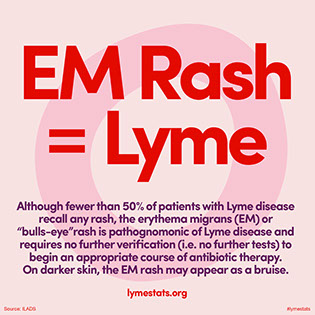
Transmission Time research, similarly to geographical maps of tick populations, has been used against patients for decades.  Please read all transmission time studies with healthy skepticism, realizing many patients have become infected in under the oft quoted 24-72 hours.  Thankfully, the CDC is now telling doctors to treat patients empirically, without waiting for test results, if they suspect tick borne illness.  https://madisonarealymesupportgroup.com/2017/07/12/start-treatment-if-tbis-are-suspected/

https://madisonarealymesupportgroup.com/2017/04/14/transmission-time-for-lymemsids-infection/   Bob Giguere of IGeneX states a case of a little girl who went outside to play about 8:30a.m. and came inside at 10:30 with an attached tick above her right eye. By 2 o’clock, she had developed the facial palsy. At the hospital she was told it couldn’t be Lyme as the tick hadn’t been attached long enough. They offered a neuro-consult…..(not treatment)

This story plays out again and again with doctors not believing patients, often times even refusing to test them, and send theming packing when they have a serious infection(s) that will fester for years until a correct diagnosis is made. 

By then there can be irreversible damage.
https://madisonarealymesupportgroup.com/2017/06/08/review-of-tick-attachment-time-for-different-pathogens/


Start Treatment if TBI’s are Suspected

http://www.mdedge.com/ccjm/article/141387/dermatology/tickborne-diseases-other-lyme-united-states  Cleveland Clinic Journal of Medicine. 2017 July;84(7):555-567

KEY POINTS

  • Tickborne illnesses should be considered in patients with known or potential tick exposure presenting with fever or vague constitutional symptoms in tick-endemic regions.
  • Given that tick-bite history is commonly unknown, absence of a known tick bite does not exclude the diagnosis of a tick-borne illness.
  • Starting empiric treatment is usually warranted before the diagnosis of tickborne illness is confirmed.
  • Tick avoidance is the most effective measure for preventing tickborne infections.

____________________________________________________________________________

The article delineates symptoms, transmission, reservoirs, testing, and treatment of the following TBI’s:  Rocky Mountain Spotted Fever, Rickettsiosis, Ehrlichioses, Babesiosis, Tickborne relapsing fever, Borrelia miyamotoi, Southern Tick-associated Rash illness, Tularemia, and Tickborne viral infections.

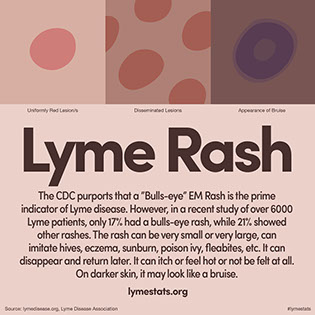
101_emrash316x316

47_rash316x316

I need to address the following statements at the end of the article:

“Knowledge of the geographic locations of potential exposure is paramount to determining which tickborne infections to consider, and the absence of a tick bite history should not exclude the diagnosis in the correct clinical presentation.

Clinicians need to tread carefully here.  Many patients have been denied testing and treatment due to a map.  These maps should be viewed with the same suspicion as the testing.  

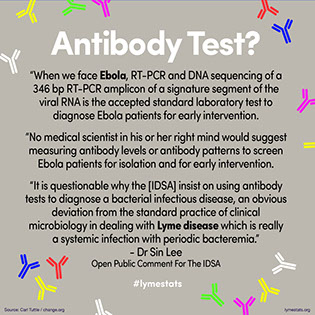
25_antibody316x316

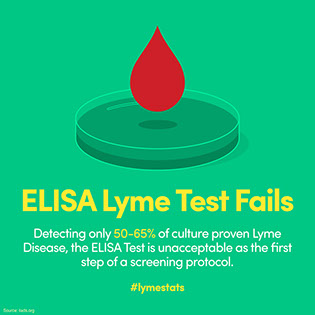
01_test_petri316x316

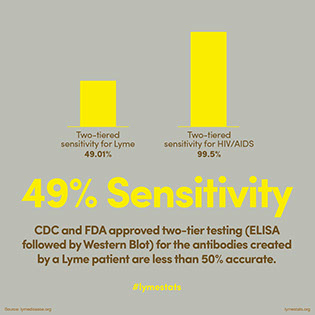
38_sensitive316x316

Until you tell the fox, squirrel, bird, deer, lizards, and hundreds of other reservoirs to stay put, ticks will be traveling everywhere along with the pathogens they carry.  Since Lyme Disease (borrelia) has been found in every continent except for Antarctia (it will be found there too), you can assume that means ticks are there too.  

I’m glad the authors stated this:

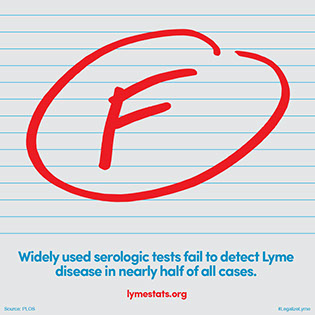
In addition, it is important to recognize the limitations of diagnostic testing for many tickborne infections; empiric treatment is most often warranted before confirming the diagnosis.”132_fail316x316

For those of us in this war, this “empiric treatment” by mainstream medicine is new.  Patient after patient has had to wait for test results before doctors will treat them.  Often, since the testing is so poor, it comes back negative and the patient is sent packing, even if the patient has every symptom in the book.  The next step is for authorities to admit and acknowledge that diagnosis of Tick borne infections is a clinical one.  This means doctors need to learn a whole lot more.  For docs willing to learn, please see:  https://www.lymecme.info

Even the CDC admits the tests suck: https://madisonarealymesupportgroup.com/2017/07/01/good-morning-america-cdc-advises-multiple-lyme-tests-due-to-false-negative-results/ CDC spokesperson at end of video.

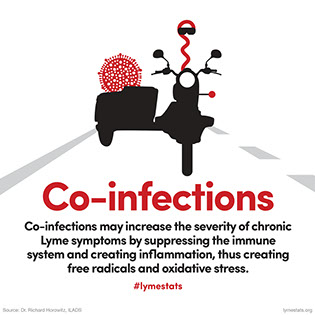
Another very important point needs to be made.  The CDC has pushed this one pathogen for one tick mantra for too long.  Many patients are co-infected making cases infinitely more complex and challenging to treat.  Lyme literate doctors trained by ILADS understand this and treat accordingly.  Until mainstream medicine realizes and admits people can have numerous pathogens, and treat for them, people will not get better.  This is why all the doxycycline in the world will not help some patients.

32_co316x316

One last point is that mycoplasma, Bartonella, and other pathogens are not included here but are quite common in patients.  Many of these pathogens are persistent and are adept at surviving.  More research needs to be done on these co-infections.

Please see:

https://madisonarealymesupportgroup.com/2017/05/01/co-infection-of-ticks-the-rule-rather-than-the-exception/  If ticks are co-infected, so are patients.

https://madisonarealymesupportgroup.com/2017/07/01/one-tick-bite-could-put-you-at-risk-for-at-least-6-different-diseases/

https://madisonarealymesupportgroup.com/2016/03/20/why-we-cant-get-better/


LDA President Pat Smith on Contagion Live


Patricia Smith, President of the Lyme disease Association, discusses Lyme disease has spread throughout the United States in the past decade. Part 1

Lyme Disease: What Makes Diagnosis & Treatment Difficult? Part 2

How Have Tick-Borne Diseases Grown in the United States? Part 3

What Do I Need to Know About Lyme Transmission Time? Part 4

Are Patients Facing Difficulties in Accessing Treatment for Lyme? Part 5

Why is May Lyme Disease Awareness Month? Part 6

How Does Government Acknowledgement of Lyme Affect Patient Care? Part 7

The Current State of Lyme Disease Prevention. Part 8

Lyme Disease Legislation May Advance Patient-Centered Research. Part 9

Review of Tick Attachment Time For Different Pathogens

http://dx.doi.org/10.3390/environments4020037

Environments 2017, 4(2), 37; https://doi.org/10.3390/environments4020037

Do Tick Attachment Times Vary between Different Tick-Pathogen Systems?

Abstract

Improvements to risk assessments are needed to enhance our understanding of tick-borne disease epidemiology.

We review tick vectors and duration of tick attachment required for pathogen transmission for the following pathogens/toxins and diseases: (1) Anaplasma phagocytophilum (anaplasmosis); (2) Babesia microti (babesiosis); (3) Borrelia burgdorferi (Lyme disease); (4) Southern tick-associated rash illness; (5) Borrelia hermsii (tick-borne relapsing fever); (6) Borrelia parkeri (tick-borne relapsing fever); (7) Borrelia turicatae (tick-borne relapsing fever); (8) Borrelia mayonii; (9) Borrelia miyamotoi; (10) Coxiella burnetii (Query fever); (11) Ehrlichia chaffeensis (ehrlichiosis); (12) Ehrlichia ewingii (ehrlichiosis); (13) Ehrlichia muris; (14) Francisella tularensis (tularemia); (15) Rickettsia 364D; (16) Rickettsia montanensis; (17) Rickettsia parkeri (American boutonneuse fever, American tick bite fever); (18) Rickettsia ricketsii (Rocky Mountain spotted fever); (19) Colorado tick fever virus (Colorado tick fever); (20) Heartland virus; (21) Powassan virus (Powassan disease); (22) tick paralysis neurotoxin; and (23) Galactose-α-1,3-galactose (Mammalian Meat Allergy-alpha-gal syndrome).

Published studies for 12 of the 23 pathogens/diseases showed tick attachment times. Reported tick attachment times varied (<1 h to seven days) between pathogen/toxin type and tick vector. Not all studies were designed to detect the duration of attachment required for transmission. Knowledge of this important aspect of vector competence is lacking and impairs risk assessment for some tick-borne pathogens.

**Highlights**

The researchers point out that unlike mosquitoes which rely on saliva for transmission, ticks can transmit via saliva, regurgitation of gut contents, and also via the cement-like secretion used to secure itself to the host (hard ticks).  Published data on transmission times relies upon rodent studies showing 15–30 min for Powassan, anywhere from 4-96 hours for bacteria, 7–18 days for the protozoan Babesia microti, and 5-7 days for neurotoxin (Tick Paralysis). For soft ticks, attachment time of 15 sec–30 min was required for transmission of Borrelia turicata (Tick Relapsing Fever).

The challenge with these studies, and there are many, is that most placed multiple ticks on multiple rodents.  Multiple ticks may be transmitting different pathogens.  It has also been shown that ticks feeding on mice coinfected with B. microti and B. burgdorferi were twice as likely to become infected with Bb compared to B. microti, suggesting that coinfection can amplify certain pathogens – which is another reason to only use one rodent and one pathogen to separate out multiplying factors to muddy the waters.  Also, rarely do studies record the titer of both tick and host – again, making it nearly impossible to determine what’s what.  It was also noted that transmission times are unknown for many pathogens.

**And as always:  if you are the ONE person who contracted Lyme Disease in 10 minutes, all these numbers are essentially meaningless.  The frightening truth is that these numbers, along with geographical information regarding tick habitats, are often used against patients.  It is beyond time for doctors to listen, educate themselves, and treat patients with the respect they deserve – not to mention it’s time for them to treat patients clinically and not based on tests that are wrong over half the time and with the knowledge that ticks are spreading everywhere and bringing the pathogens with them. (In other words, throw the maps away!)

The review essentially gives the following transmission times for various pathogens. Again, please know these numbers are not definitive and many, many cases have proven this fact.

Take each and every tick bite seriously and don’t mess around and take a “wait and see approach.”  There is too much at stake.

Transmission Times noted in review:

Anaplasmosis: 24 hours and increased dramatically after 48-50 hours.  It is possible for it to be transmitted transovarially (from mom to baby tick) and it inhabit’s the salivary glands more frequently than the mid-gut.

Babesiosis:  Greater than 36 hours, 17% after 48 hours, and 50% after 54 hours.  Can be transmitted transovarially and transstadially (pathogen stays with tick from one stage to the next).  Ticks feeding on mice coinfected with B. microti and B. burgdorferi were twice as likely to become infected with Bb compared to B. microti.

Lyme Disease (Borrelia burgdorferi):  24 hours; however, the researchers comment that there are questions regarding previous transmission studies.  They also commented that there may be a difference in attachment time between nymphs and adult females. Transovarian transmission is unknown.

Tick Relapsing Fever (Borrelia turnicatae, B. hermsii):  15 and 30 seconds respectively.  Transovarian transmission is unknown.

Borreliosis (Borrelia mayonii):  24 hours.  Transovarian transmission is unknown.

Borrelia myamotoi Disease:  24 hours.  Transovarial transmission occurs.

Tularemia (Francisella tularensis):  Not assessed.  Can be transmitted mechanically by deer flies, horse flies, mosquitoes, aerosol/ingestion when processing/eating infected animal tissues.  Can be transmitted transtadially and transovarially.

Rocky Mountain Spotted Fever (Rickettsia rickettsii):  10-20 hours.  Can be transmitted transovarially.

Heartland Virus:  Not assessed.  Can be transmitted transovarially and transstadially.

Powassan Virus:  15 Minutes; however, it is possible it was sooner since the first they checked for transmission was 15 minutes.  Can be transmitted transovarially.

Tick Paralysis (Neurotoxin):  2-6 days.

Alpha Gal/Mammalian Meat Allergy (Galactose-a-1,3-Galactose):  Not assessed.  Transovarian transmission is unknown.

For more on transmission times, please read:  https://madisonarealymesupportgroup.com/2017/04/14/transmission-time-for-lymemsids-infection/


Powassan and Bb Infection in Wisconsin and U.S. Tick Populations

http://online.liebertpub.com/doi/full/10.1089/vbz.2016.2082

Powassan/Deer Tick Virus and Borrelia Burgdorferi Infection in Wisconsin Tick Populations

Knox Konstance K., Thomm Angela M., Harrington Yvette A., Ketter Ellen, Patitucci Jacob M., and Carrigan Donald R. Vector-Borne and Zoonotic Diseases. May 2017 Online Ahead of Print

ABSTRACT
Powassan/Deer Tick Virus (POWV/DTV) is an emerging cause of arboviral neuroinvasive disease in the upper Midwest. These studies describe the prevalence and geographic distribution of Wisconsin ticks carrying POWV/DTV as well as the high frequency of Ixodes scapularis ticks coinfected with both POWV/DTV and Borrelia burgdorferi, the causative agent of Lyme disease. These findings suggest that concurrent transmission of POWV/DTV and B. Burgdorferi from coinfected ticks is likely to occur in humans.

Results (see link for maps and graphs of locations and results)

The distribution of I. scapularis and D. variabilis tick collection sites are categorized by geographic quadrant (QNW, QNE, QSW, & QSE) of the state (Fig. 1, Table 1). Nearly 80% of adult female I. scapularis ticks analyzed were collected from the northern half of the state (QNW and QNE) and accounted for 85% of POWV-positive ticks. While only 90 I. scapularis ticks were collected from the southern two quadrants, POWV-positive ticks were identified in both QSE and QSW. QNW I. scapularis ticks revealed the highest MLE of infection for both POWV and B. burgdorferi (4.67% and 23.42%, respectively). A separate analysis of I. scapularis collections from Harvest One endemic zone (Spooner/Hayward) QNW demonstrated a frequency of infection for both POWV (4.65%) and B. burgdorferi (27.91%) that is comparable to the total QNW (Fisher’s exact, p = 1.00 and p = 0.35, respectively). QSE contained the lowest MLE for POWV (1.53%), but B. burgdorferi-infected ticks were high with a MLE of 15.69%. Of the 295 D. variabilis ticks analyzed from both harvests, none (0%) had evidence of POWV infection; however, B. burgdorferi infection in D. variabilis ticks was seen in both QNW (3.1%) and QSW (2.86%), consistent with the high B. burgdorferi infection rate observed in I. scapularis ticks in these same quadrants.

http://online.liebertpub.com/doi/full/10.1089/vbz.2017.2110

Powassan Virus: An Emerging Arbovirus of Public Health Concern in North America

Hermance Meghan E. and Thangamani Saravanan. Vector-Borne and Zoonotic Diseases. May 2017 Online Ahead of Print

ABSTRACT
Powassan virus (POWV, Flaviviridae) is the only North American member of the tick-borne encephalitis serogroup of flaviviruses. It is transmitted to small- and medium-sized mammals by Ixodes scapularis, Ixodes cookei, and several other Ixodes tick species. Humans become infected with POWV during spillover transmission from the natural transmission cycles. In humans, POWV is the causative agent of a severe neuroinvasive illness with 50% of survivors displaying long-term neurological sequelae. POWV was recognized as a human pathogen in 1958 when a young boy died of severe encephalitis in Powassan, Ontario, and POWV was isolated from the brain autopsy of this case. Two distinct genetic lineages of POWV are now recognized: POWV (lineage I) and deer tick virus (lineage II). Since the index case in 1958, over 100 human cases of POWV have been reported, with an apparent rise in disease incidence in the past 16 years. This recent increase in cases may represent a true emergence of POWV in regions where the tick vector species are prevalent, or it could represent an increase in POWV surveillance and diagnosis. In the past 5 years, both basic and applied research for POWV disease has intensified, including phylogenetic studies, field surveillance, case studies, and animal model development. This review provides an overview of POWV, including the epidemiology, transmission, clinical disease, and diagnosis of POWV infection. Recent research developments and future priorities with regard to the disease are emphasized.

Early timeline of POWV transmission
The duration of I. scapularis attachment required for successful transmission of DTV to a host was found to be as little as 15 min (Ebel and Kramer 2004). This finding was particularly striking because unlike other tick-borne pathogens (Borrelia burgdorferi, Babesia microti, and Anaplasma phagocytophilum), very little time between tick attachment and virus transmission is needed for POWV. The reactivation period required for some nonviral tick-borne pathogens provides a grace period of approximately 24 h, where a minimal risk of transmission occurs if humans remove the attached tick within this timeline; however, there is no such grace period for POWV due to its very short timeline of transmission. These differences underscore why the timeline of POWV transmission must be carefully considered when analyzing the early immunomodulatory events that occur at the feeding site of the tick.

**My comment**
The idea of a “grace period” is ludicrous. Ticks do not understand grace, trust me. For accurate information about transmission times of Lyme see:
https://madisonarealymesupportgroup.com/2017/04/14/transmission-time-for-lymemsids-infection/.  In short, it can happen in hours for sure – not requiring the oft repeated dogma of 24-48 or more hours.  Ticks often feed partially and then drop off.  These partially fed ticks have spirochetes in their saliva and can transmit much more quickly.

Every single tick bite should be taken seriously!