Archive for the ‘Transmission’ Category

Crimean-Congo Hemorrhagic Fever Outbreak in Africa

http://outbreaknewstoday.com/crimean-congo-hemorrhagic-fever-cchf-outbreak-declared-namibia-11626/

Crimean-Congo hemorrhagic fever (CCHF) outbreak declared in Namibia

May 21, 2019
By NewsDesk  @bactiman63

The Ministry of Health and Social Services of Namibia officially declared an outbreak of Crimean-Congo hemorrhagic fever (CCHF) on May 6 after reporting a number of cases from different regions of the country.
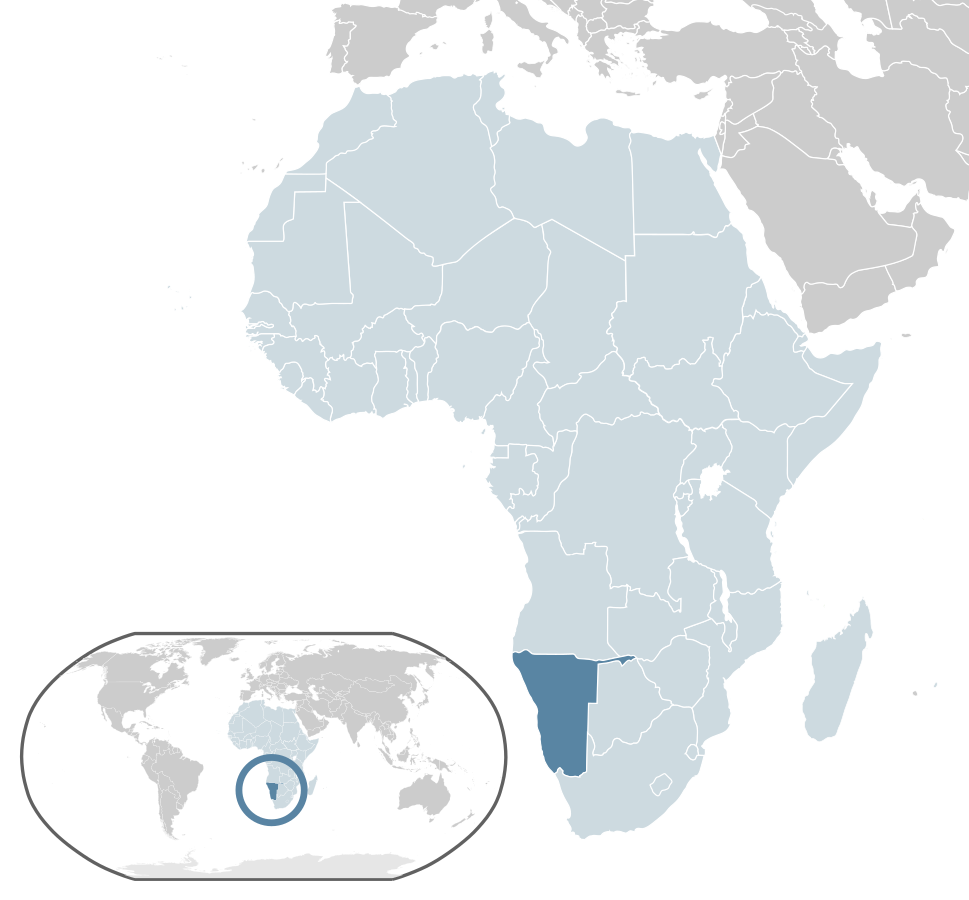
Namibia
Image/ Alvaro1984 18

As of 15 May 2019, seven suspected cases of CCHF were reported from five regions, including one laboratory confirmed case out of seven samples tested and one death (case fatality ratio 14%).

The Ministry of Health and Social Services detail the cases/locations in the following press statement.

The World Health Organization says CCHF outbreaks have been recurrent in Namibia in the past
two years, with cases reported from Omaheke, Omusati and Kharas regions. The last recorded outbreak occurred in March 2018 in Kharas region, where one fatal confirmed case was reported.

The current outbreak arises in the context of a national drought emergency that can intensify the risk of transmission and geographical spread of the disease, with livestock movements from arid to less dry areas, if mitigating measures are not implemented in a timely manner.

Crimean-Congo hemorrhagic fever is a widespread disease caused by a tick-borne virus (Nairovirus) of the Bunyaviridae family. The CCHF virus causes severe viral hemorrhagic fever outbreaks, with a case fatality rate of 10–40%.

Animals become infected by the bite of infected ticks and the virus remains in their bloodstream for about one week after infection, allowing the tick-animal-tick cycle to continue when another tick bites. Although a number of tick genera are capable of becoming infected with CCHF virus, ticks of the genus Hyalomma are the principal vector.

The CCHF virus is transmitted to people either by tick bites or through contact with infected animal blood or tissues during and immediately after slaughter. The majority of cases have occurred in people involved in the livestock industry, such as agricultural workers, slaughterhouse workers and veterinarians. Human-to-human transmission is possible.

___________________

For more:  https://madisonarealymesupportgroup.com/2018/06/14/crimean-congo-the-asian-ebola-virus/

CCHF is transmitted by ticks, though it can also be spread human-to-human.

CCHF is often treated with Ribavirin: http://infectious-diseases-and-treatment.imedpub.com/research-advances-on-epidemiology-of-severefever-with-thrombocytopenia-syndrome-asystematic-review-of-the-literature.php?aid=17986

Ribavirin is reported to be effective for treating Crimean-Congo Hemorrhagic Fever (CCHF) infections and hemorrhagic fever with renal syndrome, but it is still inadequate to judge the effect of ribavirin on SFTS patients because of the study limitation without adequate parameters were investigated [45]. Host immune responses play an important role in determining the severity and clinical outcome in patients with infection by SFTSV.

https://madisonarealymesupportgroup.com/2018/08/19/monster-ticks-found-in-germany-threaten-europe-with-deadly-disease-crimean-congo-fever/

The ticks, known as Hyalomma marginatum have the potential to spread the viral disease Crimean-Congo fever (CCHF).

Symptoms of CCHF include fever, muscle pains, headache, vomiting, diarrhoea, and bleeding into the skin. A QUARTER of those contracting Crimean-Congo fever will die.

https://www.cdc.gov/vhf/crimean-congo/index.html  Crimean-Congo Hemorrhagic Fever (CCHF) can be transmitted to humans through infected ticks, animal blood, and infected human blood and/or bodily fluids (so human to human).   CCHF has also been spread in hospitals due to improper sterilization.  Fatality rate in hospitalized patients has ranged from 9-50%.  Being a virus, care is supportive; however, it is sensitive in vitro to ribavirin, an anti-viral drug.  Recovery is slow.

Signs and symptoms:

  • Sudden onset of symptoms
  • headache
  • high fever
  • back pain
  • joint pain
  • stomach pain
  • vomiting
  • red eyes
  • flushed face
  • red throat & petechiae (red spots on palate are common)
  • jaundice
  • mood changes
  • sensory perception
  • severe bruising
  • sever nosebleeds
  • uncontrolled bleeding at injection sites

crimean-congo-fever-1463771


CDC Creates Interactive Training For Diagnosis, Management of Rocky Mountain Spotted Fever

https://www.cdc.gov/media/releases/2019/p0513-rocky-mountain-spotted-fever-training.html

CDC Creates Interactive Training for Diagnosis, Management of Rocky Mountain Spotted Fever

Press Release

For Immediate Release, Monday, May 13, 2019
Contact: Media Relations
(404) 639-3286


The Centers for Disease Control and Prevention (CDC) has created a first-of-its-kind education module to help clinicians recognize and diagnose Rocky Mountain spotted fever (RMSF), a sometimes serious and fatal disease spread by the bite of an infected tick.

“Rocky Mountain spotted fever can be deadly if not treated early – yet cases often go unrecognized because the signs and symptoms are similar to those of many other diseases,” said CDC Director Robert R. Redfield, M.D. “With tickborne diseases on the rise in the U.S., this training will better equip healthcare providers to identify, diagnose, and treat this potentially fatal disease.”

The module includes scenarios based on real cases to help healthcare providers recognize the early signs of RMSF and differentiate it from similar diseases. Continuing education credit is available for physicians, nurse practitioners, physician assistants, veterinarians, nurses, epidemiologists, public health professionals, educators, and health communicators.

In 2017, a record number of cases of tickborne spotted fever rickettsiosisexternal icon, including RMSF, were reported to the CDC. While the number of spotted fever cases in 2017 is striking (6,248 cases, up from 4,269 the previous year), fewer than 1% of those cases had sufficient laboratory evidence to be confirmed, pointing to the need to better train health care providers on the best methods to diagnose tickborne diseases.

RMSF is treatable with doxycycline, the antibiotic of choice in people of all ages. Disability and death from RMSF can be prevented when doxycycline is prescribed within the first five days of illness, meaning that early recognition and treatment can save lives. RMSF begins with non-specific symptoms such as fever and headache, and sometimes rash, but when left untreated, the disease can lead to devastating consequences. Severely ill patients may require amputation of fingers, toes, or limbs due to poor blood flow; heart and lung specialty care; and management in intensive care units. Roughly 1 in 5 untreated cases are fatal. Half of those deaths occur within the first 8 days of illness.

For more information about Rocky Mountain spotted fever and other rickettsial diseases:

###
U.S. DEPARTMENT OF HEALTH AND HUMAN SERVICESexternal icon

CDC works 24/7 protecting America’s health, safety and security. Whether disease start at home or abroad, are curable or preventable, chronic or acute, or from human activity or deliberate attack, CDC responds to America’s most pressing health threats. CDC is headquartered in Atlanta and has experts located throughout the United States and the world.

____________________

For More:  https://madisonarealymesupportgroup.com/2018/07/10/first-rmsf-death-in-wisconsin/

https://madisonarealymesupportgroup.com/2018/09/14/rocky-mountain-spotted-fever-rmsf/

https://madisonarealymesupportgroup.com/2018/08/16/new-tick-causes-epidemic-of-rmsf/  Excerpt:

It’s usually spread by the American dog tick and the closely related Rocky Mountain wood tick. But in recent years the bacterial infection has also been spread by the brown dog tick — a completely different species.

The researchers were investigating an epidemic of the infection that broke out in the border town of Mexicali starting in 2008. It’s already sickened at least 4,000 people, according to Mexican government estimates. Several hundred have died, and at least four people have died in the U.S. after crossing the border, according to this report and others.

https://madisonarealymesupportgroup.com/2015/08/13/severe-case-of-rmsf-had-to-remove-patients-arms-and-legs/

https://madisonarealymesupportgroup.com/2018/10/21/all-his-symptoms-pointed-toward-the-flu-but-the-test-was-negative-rmsf-in-connecticut/

Again, testing is abysmal.  Doctors NEED education.

If interested:  https://madisonarealymesupportgroup.com/2018/02/19/calling-all-doctors-please-become-educated-regarding-tick-borne-illness-heres-how/

https://madisonarealymesupportgroup.com/2018/06/06/lyme-education-for-healthcare-professionals/

https://madisonarealymesupportgroup.com/2019/03/15/global-lyme-alliance-announces-new-partnership-with-delaware-lyme-board-to-help-educate-physicians-about-lyme-disease/


How a Tick Bite Can Give You a Red Meat Allergy

https://www.consumerreports.org/outdoor-safety/how-a-tick-bite-can-give-you-a-red-meat-allergy/

How a Tick Bite Can Give You a Red Meat Allergy

Scientists think that lone star ticks can induce an allergy to red meat. Here’s how to protect yourself.

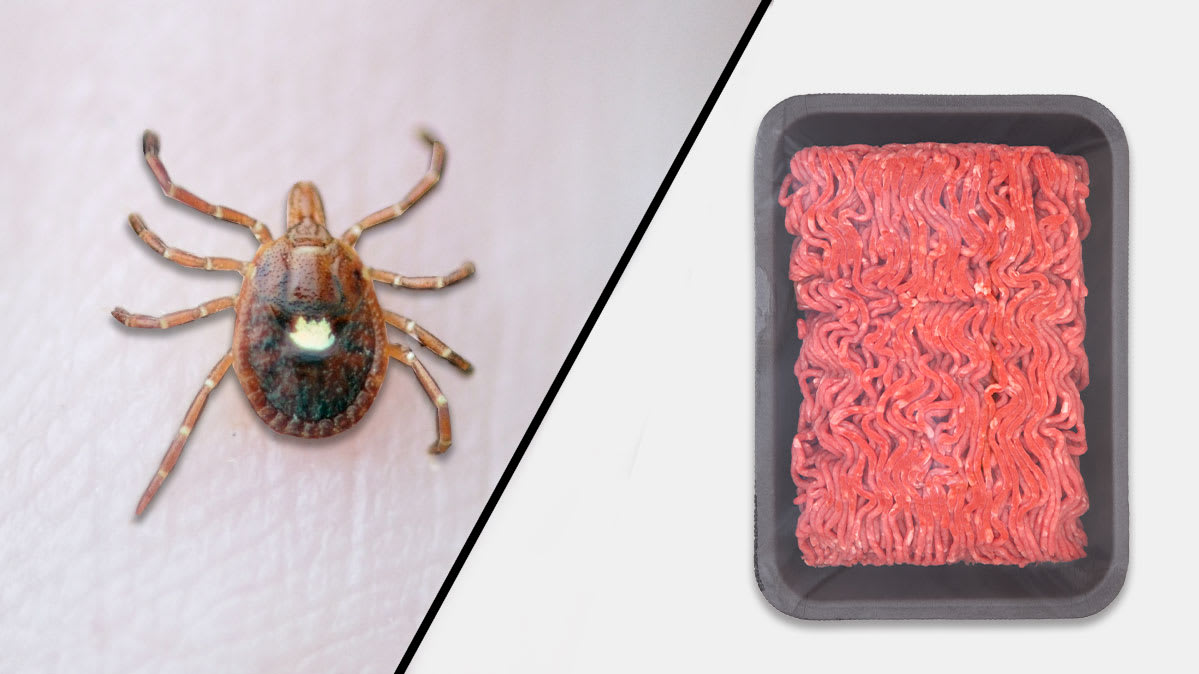
A close-up of a lone star tick, and an image of ground beef.

Most of us worry about Lyme disease or Rocky Mountain spotted fever when getting a tick bite. But different species of ticks can transmit a variety of diseases—and at least one very unusual ailment, scientists have learned: an allergy to red meat.

A growing body of evidence shows that the lone star tick—most prevalent in the southeastern U.S.—could be the cause of an allergy to a carbohydrate known as alpha-gal, which is found in red meat.

Scientists aren’t sure just how common this allergy is. But lone star ticks are spreading—their habitat now extends from the Southeast almost all the way to the Canadian border—which means more people may encounter them. Scientists who study the alpha-gal allergy estimated back in 2013 that more than 5,000 people in the Southeast U.S. alone could have the allergy.

A 2018 study in the Annals of Allergy, Asthma & Immunology suggests that a meat allergy caused by ticks may be more common than previously known, and could explain some previously unexplained cases of severe allergic reactions.

Here’s what you need to know about this allergy.

What Recent Research Reveals

Initially, scientists connected the dots between lone star ticks and meat allergies because of overlap between the geographic areas where the tick and the allergy were most common, according to an analysis published earlier this year in Annals of Allergy, Asthma & Immunology. Other studies showed that people who had the allergy tended to have a history of being bitten by ticks, or worked in jobs where they were likely to be exposed to ticks.

And in two recent cases reported in The Journal of Allergy and Clinical Immunology: In Practice, people who had an allergic reaction to red meat developed hives around the area where they had been previously bitten by a tick.

The 2018 study looked at just one allergy clinic in Tennessee, and found that in cases where they were able to pinpoint the cause, the alpha-gal allergy was behind about a third of anaphylaxis (severe allergic reaction) cases seen there between 2006 and 2016. That’s more than were caused by food allergies to peanuts, shellfish, or others, the researchers found.

Study author Jay Lieberman, M.D., associate professor at the University of Tennessee Health Science Center and vice chair of the American College of Allergy, Asthma and Immunology Food Allergy Committee, is quick to point out that these results do not mean that a third of severe allergic reactions nationwide are due to the effects of lone star tick bites, or that alpha gal is the number one cause of anaphylaxis in the country.

But Lieberman says the clinic has performed similar analyses in previous years, before the alpha-gal red meat allergy was discovered. In those earlier studies, doctors weren’t able to determine a cause for a greater percentage of anaphylaxis cases.

The newer study suggests that a significant number of those earlier cases with an unknown cause may actually have been due to this recently discovered allergy.

Understanding Meat Allergies

It’s not entirely clear to scientists why a bite from a tick could cause a person to develop an allergy to red meat, Lieberman says, or how common such an allergy is. And it doesn’t happen to everybody who’s bitten.

Only some people who’ve been bitten by lone star ticks will develop the antibodies that indicate a possible allergy to alpha-gal, a substance in red meat. Of the people who do develop those antibodies, Lieberman says, some won’t ever show symptoms of an allergic reaction to red meat.

There’s also an intriguing difference between the alpha-gal red meat allergy and every other type of food allergy. Typically, allergic reactions to food occur immediately after exposure, within a few minutes. With an alpha-gal allergy, however, a reaction typically doesn’t start until several hours after eating red meat—which can make it challenging to pinpoint the culprit.

Researchers first linked tick bites to red meat allergies almost a decade ago. But there are still a lot of questions left to answer about why some people develop the allergy and some don’t, how many people have been affected, and why the reaction to red meat is delayed, rather than immediate.

What to Watch For

Early signs of anaphylaxis may include a metallic taste, burning, tingling, or itching of the tongue or mouth, headache, and feelings of fear or confusion. A reaction can progress quickly, and severe symptoms include throat swelling, difficulty breathing, vomiting, diarrhea, and more.

If you think you may be experiencing anaphylaxis, even if you’ve never had an allergic reaction before, you should call 911. (If you know you have an allergy to food, and you experience symptoms of anaphylaxis, especially trouble breathing, wheezing, or throat swelling, you should use an epinephrine auto-injector if you have one.)

When the reaction is under control, talk to your doctor about whether red meat could have been the cause of your symptoms, since some doctors may not be aware of the alpha-gal allergy, suggests Princess Ogbogu, M.D., division director of allergy and immunology at The Ohio State University Wexner Medical Center.

There’s no cure for red meat allergy, so if you’re diagnosed, you’ll need to avoid the foods that trigger a reaction. Commonly, that includes various kinds of red meats. But some people can also become sensitive to other items that contain alpha-gal, including dairy, and even, rarely, sweets that contain gelatin or medications derived from animal byproducts.

In some cases, Lieberman says, if people who’ve developed alpha- gal allergies avoid all future tick bites from lone star ticks (or the varieties that cause the allergy in other countries), their levels of the antibodies to alpha-gal may diminish, and the allergy could subside. It’s unknown how common this is, however.

About the Lone Star Tick

Lone star ticks, so named for the white splotch on the backs of adult females, are most common in southern and eastern states. Like other ticks, however, their geographic distribution is expanding, according to Ellen Stromdahl, a retired entomologist from the tickborne disease laboratory of the U.S. Army Public Health Center in Aberdeen Proving Ground, Md.

Lone star ticks don’t cause Lyme disease, as a recent analysis that Stromdahl conducted shows. But along with spreading the alpha-gal allergy, they can also transmit the bacteria that cause another disease called ehrlichiosis. Ehrlichiosis can cause fever, muscle pain, nausea, vomiting, and, rarely, rash. It’s fatal in about 1.8 percent of cases, according to the Centers for Disease Control and Prevention, although it can be treated with antibiotics.

A lone star tick is much less likely to carry ehrlichiosis than a blacklegged tick is likely to carry Lyme disease, notes Stromdahl. But lone star ticks are much more aggressive than other common types of ticks in the U.S. “You’re more likely to be mobbed by lone star ticks,” she says, and finding multiple bites is common if you’ve been in their habitat.

Protect Yourself From Ticks

As with any tick bite, it’s important not to panic if you discover one, Lieberman says. “The vast majority in this country and elsewhere who get bitten by ticks don’t develop alpha-gal allergy,” he says.

Still, you can take reasonable precautions to protect yourself from ticks and the diseases—or allergies—they can cause. Here’s what to do:

Wear an effective bug spray if you’re going to be in an area where ticks are common. Lone star and other types of ticks prefer wooded areas, brush, and long grass. Consumer Reports’ insect repellent testing has found that products containing 25 to 30 percent deet provide the most reliable protection. (Check out our top-rated repellents.)

Dress carefully. Wear long pants and long sleeves, and tuck your pants into your socks. Wearing clothing commercially treated with the pesticide permethrin, or treating your clothes and gear with permethrin yourself, is also a good option for additional protection.

Check yourself for ticks at the end of every day you’ve been out in their territory. Taking a shower soon after you come in is a good opportunity to wash away any ticks that may be crawling on your skin without having yet bitten you, and to carefully look for any that have attached. If you find them on you, remove them properly.

Be careful with the clothes you were wearing in tick habitats, Stromdahl recommends. Run them through a cycle in a hot dryer to kill any ticks that may be clinging on, and leave your shoes outside in the sun.

Girl Bit By Blood-sucking Kissing Bug in Delaware, CDC Confirms

https://www.wral.com/girl-bit-by-blood-sucking-kissing-bug-in-delaware-cdc-confirms/18345076/  (News story in link)

Girl bit by blood-sucking kissing bug in Delaware, CDC confirms

Posted April 24

— A girl was bitten by a kissing bug in Delaware, the CDC confirmed last week.

According to a statement released April 19, the girl was bitten back in July 2018 while she was watching television in her bedroom.

The family contacted the Delaware Division of Public Health and the Delaware Department of Agriculture for help identifying the bug.

According to the CDC, the home where the girl was bitten was an older home located in a heavily wooded area. A window air conditioning unit was located in the bedroom where the bite occurred.

In April 2019, the insect was preliminarily identified as a kissing bug, or Triatoma sanguisuga.

According to the CDC, kissing bugs are blood-sucking insects that feed on animals and humans. Their nickname comes from their tendency to bite faces.

CNN reported that the bugs, found frequently around Arizona, are known to spread Chagas disease, which can lead to death.

“Anybody who is bitten by these bugs should be very conscious of any flu symptoms, high fevers, swelling over the eye,” said Dawn Gouge, an entomologist with the University of Arizona.

The CDC estimates that there are 300,000 cases of Chagas in the U.S., with most of those contracted in other countries. But the family of the girl who was bitten had not traveled outside the country recently, the statement said.

According to the World Health Organization, more than six million people are estimated to be infected globally.

The CDC provided the following tips to avoid the pests:

  • People can prevent kissing bug infestation by placing outdoor lights away from dwellings such as homes, dog kennels, and chicken coops and turning off lights that are not in use.
  • Homeowners should also remove trash, wood, and rock piles from around the home and clear out any bird and animal nests from around the home.

Cracks and gaps should be inspected and sealed, and chimney flues should be tightly closed when they are not in use.

___________________

**Comment**

Another blood-sucking bug we need to be aware of.  For more:  https://www.thebugsquad.com/general/kissing-bug/

http://

The Kissing Bug – The Bug Squad Guide

Normally thought to be a Central American pest, it’s in the Southern United States; however, as seen in this article, its made it’s way around, just like ticks have.

This insect also flies.

Diagnosis of Chagas is made by identification of trypomastigotes in blood by microscopy. Circulating parasite levels decrease rapidly within a few months and are undetectable by most methods during the chronic phase.

Diagnosis of chronic Chagas disease is made by serologic tests for antibody to the parasite. A single test is not sufficiently sensitive and specific to make the diagnosis. For this reason, the standard approach is to apply two or more tests that use different techniques and that detect antibodies to different antigens. Commonly used techniques include enzyme-linked immunosorbent assay (ELISA) and immunofluorescent antibody test (IFA). Careful consideration of the patient’s history to identify possible risks for infection may be helpful.

According to the CDC, treatment is recommended for people diagnosed early in the course of infection (acute phase), babies with congenital infection, and for those with suppressed immune systems. Many patients with chronic infection may also benefit from treatment.

The two drugs used to treat infection with T. cruzi are nifurtimox and benznidazole. Benznidazole is approved by FDA for use in children 2–12 years of age and is available from www.benznidazoletablets.comExternal. Nifurtimox is not currently FDA approved but is currently available under investigational protocols from CDC. Side effects are fairly common with both drugs and tend to be more frequent and more severe with increasing age.

Common side effects of benznidazole treatment include the following:

  • Allergic dermatitis
  • Peripheral neuropathy
  • Anorexia and weight loss
  • Insomnia

The most common side effects of nifurtimox include the following:

  • Anorexia and weight loss
  • Polyneuropathy
  • Nausea
  • Vomiting
  • Headache
  • Dizziness or vertigo

Contraindications for treatment include severe hepatic and/or renal disease. As safety for infants exposed through breastfeeding has not been documented, withholding treatment while breastfeeding is also recommended. For more on treatment:  https://www.cdc.gov/parasites/chagas/health_professionals/tx.html

Why Kent is a ‘Hotbed For Lyme Disease Carrying Ticks’

https://www.kentonline.co.uk/kent/news/why-kent-is-a-hotbed-for-lyme-disease-carrying-ticks-204215/

Why Kent is a ‘hotbed for Lyme disease carrying ticks’

By Beth Robson

Kent ranks alongside northern Italy, Romania and Norway as a hotbed for blood-sucking ticks carrying Lyme disease, according to a new report.

The county has been ranked as one of the worst areas in Europe for the parasites – alongside London, East Sussex and parts of Essex in the South East.

The evidence has been compiled by experts from across Europe, including scientists from the University of East London, who combed through seven years worth of cases of bites from a type of tick called Ixodes ricinus.

Ticks love forrested areas and long grass. Picture Google

This is the breed which spreads the Lyme disease carrying bacteria Borrelia burgdorferi sensu lato.

They warn because ticks breed best in warm weather, global warning will only spark a jump in their population, making then widespread across the UK – and much of the rest of Europe.

The South East danger zone is on a par with northern Italy, Romania, Switzerland and Norway when it comes to “very high” populations of the critters, creating a severe risk.

It has sparked a warning to holidaymakers if they are concerned about encountering the disease-carrying bugs.

The map below shows risk areas – including the central Netherlands, Copenhagen in Denmark and the coastal area near Gdansk, northern Poland.

Kent and the rest of the South East are a hot bed for ticks which carry Lyme disease

Writing in the International Journal of Health Geographics, the study’s authors warn:

“The distribution of Ixodes ricinus continues to expand northwards in latitude and upwards in altitude in Europe.

“Climate trends and the density of key hosts for the adults of the tick, have been pointed as the main factors behind the spread of Ixodes ricinus.”

The scientists also studied geographical and climate data better understand what type of environment causes these ticks to thrive.

They found that ticks thrive in areas with a yearly average temperature of between 6.8ºc and 16.8ºc, meaning the UK’s mean temperatures of 9ºC-11ºC put it right in the danger zone.

The data also said areas where they thrive include areas with a low and gradual rise in spring temperatures, and a big rise in spring vegetation.

The authors add:

“The highest prevalence occurs in areas of 280°–290° Kelvin (6.85ºC – 16.85ºC) of mean annual temperature – around central Europe and southern parts of Nordic countries – and a slow spring rise of temperature, together with high mean values and a moderate spring rise of vegetation vigor.”

Meanwhile other maps looked at how predicted increases in temperature caused by climate change could see ticks carrying a certain strain of the bacteria which causes Lyme disease becoming widespread across the UK – and much of the rest of Europe.

Getting expert help with tick infestations is crucial. Picture: Google

There are lots of different strains of this Borrelia bacteria, including Borrelia afzelii, burgdorferi, garinii, lusitaniae, spielmanii and valaisiana – all of which cause Lyme disease in humans.

It’s the ‘B. afzelii’ strain that looks particularly dangerous in the UK, with red ‘very high’ zones spread around London and south west Essex, Brighton to the south, and across to the eastern coast of Kent.

There is also a hot spot of the strain B. garinii in the New Forest National Park between Southampton and Bournemouth.

If you are scared of ticks carrying infectious diseases on your holidays abroad, you might want to consider avoiding other European areas such as:

France: There are clusters near the cities of Lyon and St Etienne, as well as Orient Forest Regional Natural Park further north near Troyes.

Italy: The mountainous northern areas near Trento, and further east to the Slovenian border.

Norway: The entire southern coastline is also rife.

Tocks can look different and vary in size making it crucial you get them checked out. Picture Google
Ticks can look different and vary in size making it crucial you get them checked out. Picture Google

Leading UK pest control expert Mario Stanchev says Brits need to be vigilant – whether at home or abroad.

Mario, a technician with UK firm Fantastic Services, says:

“Ticks have been known to infest homes, both here and abroad, and you need to take precautions to stop that happening.

“Whether you’re travelling abroad this summer, or you’re simply out and about in one of the UK hotspots identified by this study, you should use a chemical repellent containing DEET (N,N-Diethyl-m-toluamide) to keep the creatures at bay.

“You should also wear light-coloured protective clothing that covers the skin, as well as tucking your trousers into your socks.

“What’s also vital is that you check your children and pets for any sign of a bite.

“And don’t assume that ticks only live in the forests or wild outdoor areas – they could just as easily be lurking in long grass in your garden, just waiting for you to walk past so they can hitch a ride.”

A tick infestation can be uncomfortable for pets and wildlife - and spread diseases. Picture: Google
A tick infestation can be uncomfortable for pets and wildlife – and spread diseases. Picture: Google

Mario says that if you do find ticks in your home, it is important to catch one of them and to place it in a sealed bag or container.

He says:

“Keep the tick for 30 days, just in case you or any members of your family start to experience any of the symptoms of Lyme disease.

“This tick specimen can then be analysed by doctors to either confirm or deny the presence of the bacteria.

“You might also want to return the tick to Public Health England, which has a tick recording and surveillance programme.

“You should also get into the habit of inspecting pets, children and yourself whenever you venture into green spaces – and that includes even small parks in city centres.

“As this study proves, you never know where they might lurk.”

Lyme disease is on the up - with a 35% hike recorded between 2016 and 2017. Picture Google
Lyme disease is on the up – with a 35% hike recorded between 2016 and 2017. Picture Google

According to the NHS, the most obvious sign you might have Lyme disease is a circular red ‘bullseye’ skin rash around a tick bite.

The NHS website also says:

“Some people also have flu-like symptoms in the early stages, such as a high temperature, or feeling hot and shivery, headaches, muscle and joint pain, tiredness and loss of energy.”

It’s also vital you learn how to remove a tick safely from your body.

The Fantastic Services team say that to remove a tick safely, use fine-tipped tweezers or a tick-removal tool.

Ticks are parasites that burrow into their hosts to suck their blood. Picture: Google

Grasp the tick as close to the skin as possible. Slowly pull upwards, taking care not to squeeze or crush the tick.

And then clean the bite with antiseptic or soap and water.

Worryingly, cases of the disease are rising rapidly in the UK.

Last year Public Health England (PHE) revealed how confirmed Lyme disease infections had shot-up 35% between 2016 and 2017, with around 1,000 cases every year.

_____________________

**Comment**

A few points for consideration:

  1. If you have the bull’s eye rash, YOU HAVE LYME – period.  No need for testing. Start treatment asap; however, if you DON’T have the rash, it means NOTHING.  Of the first ever patient sample in Lyme, Connecticut only a quarter had the rash. Depending upon who’s counting, percentages can range anywhere from 25-80% https://madisonarealymesupportgroup.com/2019/02/21/lyme-disease-dont-wait-for-blood-tests-where-patients-have-bullseye-rash/ (Read comment at end of article)
  2. Climate change regarding tick and pathogen proliferation has been debunked by an independent Canadian researcher:  https://madisonarealymesupportgroup.com/2018/08/13/study-shows-lyme-not-propelled-by-climate-change/, and https://madisonarealymesupportgroup.com/2018/11/07/ticks-on-the-move-due-to-migrating-birds-and-photoperiod-not-climate-change/  Excerpt:
    “For blacklegged ticks, climate change is an apocryphal issue.” – John Scott

    For more on tick prevention:  https://madisonarealymesupportgroup.com/2019/04/12/tick-prevention-2019/

  3. Please know that ticks may not be the sole perp transmitting pathogens to us:  https://madisonarealymesupportgroup.com/2019/04/02/transmission-of-lyme-disease-lida-mattman-phd/,  https://madisonarealymesupportgroup.com/2017/02/24/pcos-lyme-my-story/(Within this link you will find animal and human studies demonstrating sexual, congenital, and other modes of transmission)