Archive for the ‘Ticks’ Category

Prevalence & Genetic Characterization of Deer Tick Virus (Powassan Virus, Lineage II) in Ixodes Scapularis Ticks Collected in Maine

http://www.ajtmh.org/content/journals/10.4269/ajtmh.19-0281

Prevalence and Genetic Characterization of Deer Tick Virus (Powassan Virus, Lineage II) in Ticks Collected in Maine

Abstract

Deer tick virus (DTV) is a genetic variant of Powassan virus (POWV) that circulates in North America in an enzootic cycle involving the blacklegged or “deer tick,” , and small rodents such as the white-footed mouse. The number of reported human cases with neuroinvasive disease has increased substantially over the past few years, indicating that POWV may be of increasing public health importance. To this end, we sought to estimate POWV infection rates in questing collected from four health districts in Maine (York, Cumberland, Midcoast, and Central Maine). Infection rates were 1.6%, 1.7%, 0.7%, and 0%, respectively, for adults collected from April to November in 2016. Adults collected in October and November in 2017 from York and Cumberland counties had slightly higher rates of 2.3% and 3.5%, respectively. There was no difference in the number of males verses the number of females infected. All positive samples were of the DTV (lineage II) variant. Phylogenetic analysis was performed on 8 of the 15 DTV sequences obtained in 2016. Deer tick virus from the coastal regions were genetically similar and clustered with virus strains isolated from from New York State and Bridgeport, CT. The two inland viruses were genetically nearly identical and grouped with viruses from Massachusetts, Connecticut, and New York. These results are the first reported infection rates and sequences for POWV in questing ticks collected in Maine and will provide a reference point for future POWV studies.

________________

More on Powassan Virus:  https://madisonarealymesupportgroup.com/2016/02/21/powassan-virus/

https://madisonarealymesupportgroup.com/2017/05/18/powassan-and-bb-infection-in-wisconsin-and-u-s-tick-populations/

https://madisonarealymesupportgroup.com/2018/06/13/half-of-powassan-cases-from-wisconsin-and-minnesota/

https://madisonarealymesupportgroup.com/2019/05/04/tick-borne-powassan-virus-confirmed-in-6-minnesota-counties/

https://madisonarealymesupportgroup.com/2019/03/08/seroprevalence-of-bb-bm-powassan-in-residents-bitten-by-ixodes-ticks/

Powassan is NOT RARE:  https://madisonarealymesupportgroup.com/2019/06/11/death-of-hampton-man-with-rare-tick-borne-virus-probed/  Please read comment after article.

https://madisonarealymesupportgroup.com/2019/03/04/powassan-virus-on-the-up-tick/

https://madisonarealymesupportgroup.com/2018/01/25/new-powassan-test-89-sensitive/

https://madisonarealymesupportgroup.com/2017/06/28/powassan-can-kill/


What You Need To Know About Bug Sprays

 Approx. 9 Min.

What You Need to Know About Bug Sprays

By LYMETV

https://lymetv.org

For more on tick prevention:  https://madisonarealymesupportgroup.com/2019/04/12/tick-prevention-2019/

https://madisonarealymesupportgroup.com/2019/06/16/study-shows-effectiveness-of-factory-treated-permethrin-impregnated-clothing-works/

https://madisonarealymesupportgroup.com/2018/05/27/study-conforms-permethrin-causes-ticks-to-drop-off-clothing/

https://madisonarealymesupportgroup.com/2019/06/08/ticks-are-out-for-the-summer-how-can-bites-be-prevented/

https://madisonarealymesupportgroup.com/2018/04/03/fire-good-news-for-tick-reduction/

https://madisonarealymesupportgroup.com/2018/09/15/talking-tick-prevention-ask-a-uw-veterinarian/


Lone Star Tick, Known to Cause Red Meat Allergy, Found in Northern Wisconsin: Report

https://www.foxnews.com/health/lone-star-tick-wisconsin-red-meat-allergy

Lone Star tick, known to cause red meat allergy, found in northern Wisconsin: report

By Madeline Farber for Fox News. You can follow her on Twitter @MaddieFarberUDK.

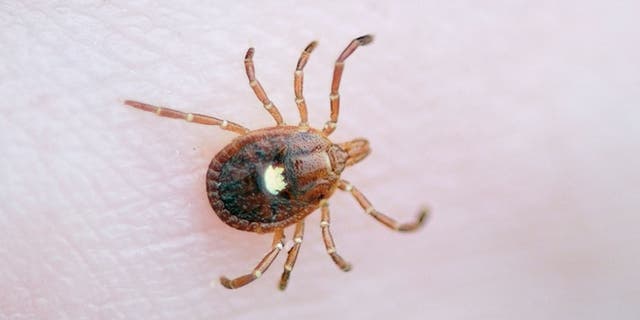
The Lone Star tick, a type of tick that’s known to cause some people it bites to develop an allergy to red meat, has reportedly been found in northern Wisconsin — a rare occurrence as these small arachnids aren’t typically found in the state. 

The tick was purportedly spotted near Eau Claire County, per local news Channel 3000. Lone Star ticks, which are not native to the state and are named for the white spot on the back of adult females, are sometimes reported in the southern half of Wisconsin, if at all, according to the Department of Entomology at the University of Wisconsin-Madison.

Susan Paskewitz, the chair of the Entomology Department at the university, told Channel 3000 the Lone Star tick reported likely found its way north by attaching itself to a bird or other animal that later made its way to the area.

Last summer, Scott Commins — an allergist and associate professor of medicine at University of North Carolina, Chapel Hill and one of the first physicians to discover the connection between Lone Star tick bites and the alpha-gal meat allergy —  told Fox News the allergy caused by a Lone Star tick bite is relatively rare. That said, the number of cases has sharply increased from the roughly two dozen he and his colleagues first studied in 2009.

LONE STAR TICK BITES TRIGGERING RED MEAT ALLERGIES IN MORE PEOPLE ACROSS US, PHYSICIAN SAYS

Commins offered a few different reasons for the increase.

First, doctors can now perform a blood test that detects the allergy, “which has made the diagnosis much easier,” he said.

A Lone Star tick. (iStock)

A Lone Star tick. (iStock)

Additionally, the “range of the Lone Star tick is increasing and expanding,” Commins said, which ultimately increases the chance of getting bitten. Higher costs of living could partly be to blame, causing more people in recent years to trade urban life for the suburbs. This movement results in closer contact with tick-carrying deer, which subsequently increases the chance for tick bites.

Commins also said a heightened awareness about the allergy has led those with symptoms to talk to their doctor and investigate if a Lone Star tick bite could be the cause.

Though it’s not totally clear how Lone Star tick bites sometimes result in the allergy, Commins said the tick’s saliva may be a factor.

“There’s a common pathogen in all of these ticks,” he said at the time.  “It could be a protein or enzyme in tick spit. We’re working on that in the lab at the moment.”

Not unlike the symptoms of a peanut, egg, tree nut or a shellfish allergy, many people who are allergic to red meat may experience hives, a skin rash or anaphylaxis.

Commins warned many also experience “severe GI [gastrointestinal] distress,” such as stomach pain, indigestion, vomiting and diarrhea. Some people have described their gastrointestinal symptoms as “stabbing pain or [being stuck with] a hot poker,” he added.

COLORADO GIRL, 7, DIAGNOSED WITH RARE TICK PARALYSIS AFTER OVERNIGHT CAMP

That said, the symptoms of a red meat allergy are not always immediate. In fact, Commins said, it usually takes hours after eating red meat for the symptoms to appear.

There is no cure for the allergy at this time; the most those with the allergy can do is to avoid red meat, which includes beef, lamb, pork, veal, and goat, among others.

But the news isn’t all bad.

“There is a bright spot in this; this is one of these food allergies that will resolve over time,” he said, though he noted additional tick bites may prolong the condition.

**Comment**
Another example of a tick in a place it’s not supposed to be.
BTW: this isn’t the first time it’s been found in Northern Wisconsin:  https://madisonarealymesupportgroup.com/2017/01/12/tick-related-red-meat-allergy-found-in-minnesota-wisconsin/  Excerpt:
According to Dr. Alaaddin Kandeel, an allergist at Essentia Health in Duluth, he’s diagnosed 18 patients with alpha-gal allergy – 10 from northeast Minnesota and 8 from northwest Wisconsin – hardly accepted Lone Star territory.  In the audio he states he diagnoses approximately 1 patient per month with Alpha-gal allergy and that the reactions can be severe, from passing out to life-threatening reactions.
One patient a month.  NOT RARE.

And while tick borne diseases are reportable by law, allergies like the alpha-gal allergy are not, so nobody truly knows prevalence.

Doctors should NEVER use a map to turn a patient away who is presenting with symptoms. If they do, turn them in to the authorities.
Many people do not know it isn’t just meat those with Alpha Gal have to avoid.
Anything derived from animals can cause the allergic symptoms including gelatin, daily vitamin supplements, shampoos & conditioners, lotions, & vaccines.
This woman limits her diet and uses vegan supplements, medications and personal care products:  https://madisonarealymesupportgroup.com/2018/05/04/arkansas-woman-develops-deadly-meat-allergy-after-tick-bite/
This is about the worst news possible for Wisconsinites whom can handle pain like nobody on the planet, and keep a stiff upper lip that many would collapse under, but take away our meat, cheese, and beer, and we are an absolute mess!
iu-19

Under The Skin – BBC One, Series 1

https://www.bbc.co.uk/programmes/m000640l  News Video here

BBC iPlayer only works in the UK.

Fiona Stalker travels around Scotland to investigate the spread of Lyme sisease. One tiny tick under the skin can cause chronic illness but GPs are often slow to diagnose and to give treatment. Fiona hears from sufferers who feel let down by the health service and asks what more can be done to combat this debilitating disease.

Ottawa Mom Warns Parents to Check Their Kids For Ticks After Her Toddler Is Diagnosed with Lyme Disease

https://ottawa.ctvnews.ca/ottawa-mom-warns-parents-to-check-their-kids-for-ticks-after-her-toddler-is-diagnosed-with-lyme-disease-1.4483914

Ottawa mom warns parents to check their kids for ticks after her toddler is diagnosed with Lyme disease

2-year-old Grace Willis.

2-year-old Grace Willis.

Bullseye rash on Grace's arm.

Bullseye rash on Grace’s arm.

Joanne Schnurr, CTV Ottawa 

Published Wednesday, June 26, 2019 3:48PM EDT

An Ottawa mother is warning parents to check their kids carefully for ticks after her toddler was diagnosed with Lyme disease over the weekend.

Jenny Willis believes her 2-year-old got bitten while playing in a backyard.

Willis knows more about deer ticks than she cares to; Lyme disease attacked her husband’s heart 3 years ago.  Now her daughter contracted it, confirming current research by CHEO that Lyme cases among kids is significantly on the rise.

Like the puzzle that Grace and mom Jenny Willis are working on, it took some piecing together to figure out what was wrong with the talkative 2-year-old, who was suddenly not herself at all.

“We wouldn’t have known anything was wrong with her, really,” says Willis, “unless we had seen that rash and connected the fever and vomiting to the rash and put the whole picture together.”

It was this past Saturday when Jenny Willis figured that bite on Grace’s arm was a little more concerning than they had initially thought.

“It’s a mosquito bite,” says Grace, “He bite me.”

Not a mosquito, her mom adds, but a black-legged tick carrying Lyme disease, leaving the telltale bullseye rash on Grace’s forearm. Willis says an emergency doctor at CHEO quickly diagnosed it and put Grace on antibiotics.

The question, though, is where Grace got the tick since Willis says she has only been outside at her house in Vars and at her daycare.

“It’s not anyone’s fault,” says Willis, “they don’t know.  Because Lyme is so new to Canada, doctors don’t fully understand it.  Daycare operators aren’t aware that they should check children in their care and notify parents if one of the kids gets Lyme because other parents need to know.”

It is important information to know, according to doctors at CHEO who are currently researching Lyme cases among kids in this region.

Dr. Jason Brophy is an infectious disease specialist at CHEO, “We’re seeing a fair amount of Lyme disease in kids,” he says.

Dr. Brophy worked with pediatrics resident Dr. Stephanie Zahradnik and Ottawa Public Health to look at a ten-year population-level review of the rise of Lyme disease in Eastern Ontario.

“Here at CHEO, we are doing a chart review of all the cases we’ve seen of Lyme disease over the past 10 years,” says Dr. Brophy, “to demonstrate that we are seeing increase in the rate of Lyme in children and the different varieties so people are confident we’re able to diagnosis and treat this disease.”

Their numbers show a jump in Lyme cases in adults from 6 in 2009, to 159 in 2017. In children ages 0 to 18, there were no cases reported in 2009 and 31 cases in 2017, with the bulk of cases among children ages 6 to 10.

“We’re seeing an increase in all age groups consistently throughout the years,” says Dr. Zahradnik, “6 to 10 is the commonest age of presentation in the diagnosis of Lyme but it is becoming more common in children of all ages.”

“This is a very treatable illness,” adds Dr. Brophy, “it is in the same family as syphilis and we know how to treat syphilis, too so people shouldn’t be afraid if they get Lyme disease that no one will know how to treat it.”

The Willis family knows more than they care to about Lyme disease.  Three years ago, Grace’s father Andrew was on death’s door from Lyme disease that attacked his heart. It is called Lyme carditis, a rare infection that occurs when the Lyme bacteria enters the heart and affects the heart’s electrical system.

“The doctors told me had I not brought him in that day, he’d have died that night,” recalls Willis, “In fact, at 5:00 that evening after being admitted, he went into cardiac arrest.”

So, after a trip outside to play on the swing set in the back yard, a daily tick check is now standard procedure.

“Curing Lyme is so difficult,” says Willis, as she checks between Grace’s toes and around her neck, “I mean, an ounce of prevention is worth weeks or months of the cure.”

Willis says anyone can check for ticks in your back yard.  Grab a white sheet, attach it to a stick and drag it over your grass.  Then, get a magnifying glass and start looking.    She adds that we should not assume that just because we have not heard of ticks in our neighbourhood, that they aren’t there or won’t be soon.

_________________

**Comment**

  • Lyme in Canada is NOT RARE.


  • Lyme carditis is NOT RARE.


  • Yes, you should be very afraid of how doctors treat this.  Most are CLUELESS.