Archive for the ‘Ticks’ Category

Tick Swarm Kills 5 Cows

https://www.mtairynews.com/news/75689/state-tick-swarms-kill-five-cows?

State: Tick swarms kill five cows

By Cory Smith – csmith@mtairynews.com
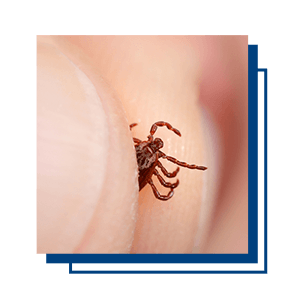
Nymph and adult female, top view. – Centers for Disease Control and Prevention

RALEIGH — A new breed of tick has been found in Surry County and could be to blame for the deaths of five cows this year.

The N.C. Department of Agriculture and Consumer Services issued a press release late Monday warning of the dangers of a relatively new species of the parasites: the Asian longhorned tick.

“State Veterinarian Doug Meckes is reminding livestock and pet owners to be vigilant in their tick preventative measures during warm weather,” stated a news release from Andrea Ashby, director of the department’s public affairs division.

“Recently, the deaths of five cows in Surry County were linked to acute anemia caused by tick infestations. Samples were sent to the N.C. Division of Public Health, Communicable Disease Branch for identification which confirmed Asian longhorned ticks.”

“This is the fourth confirmed case in North Carolina since 2018, and the first case reported this year. Previous cases were found in Polk, Rutherford and Davidson counties,” Meckes said. ‘The deceased young bull brought to our Northwestern Animal Disease Diagnostic Lab had more than 1,000 ticks on it and the owner had lost four other cattle under the same circumstances.”

The first case of the East Asia species identified in the U.S. was in West Virginia from a specimen taken from a white-tail deer in August 2010. Since then, 67 counties in the United States have confirmed local Asian longhorned tick populations. Virginia has the most counties with 24 confirmed.

“It is a serious pest of livestock in its native regions,” said the news release. “It is an aggressive biter and frequently builds intense infestations on animals causing great stress, reduced growth and production, and blood loss. The tick can reproduce parthenogenetically (without a male) and a single fed female tick can create a localized population.”

The Department of Agriculture made sure to point out that the tick has not been linked to any infections in humans in the U.S. at this point.

“The N.C. Division of Public Health, Communicable Disease Branch is working with NCDA&CS to understand its distribution and monitor for diseases it may carry. The finding of this tick in the state corresponds with a continued effort by the N.C. Department of Health and Human Services to identify ticks in all 100 counties of the state. Veterinarians are encouraged to submit ticks they find on clinical patients to help track and identify tick populations in North Carolina.”

Practicing vets interested in participating in this study are encouraged to email Dr. Alexis M. Barbarin at NCTickID@dhhs.nc.gov.

Ticks attack people, domestic animals and wildlife. The state agency says that prevention remains the best method to deter tick-borne illnesses.

“Protect yourself while outdoors by wearing long clothing, wearing permethrin-treated clothing, and using DEET, picaridin, and other EPA-approved repellents. It is also good practice to shower immediately once you return home. Checking for ticks can help deter tick attachment or allow for early removal. For domestic animals, talk to your veterinarian about effective options to treat your pets and livestock for ticks.”

If you believe you have located an Asian longhorned tick, the CDC encourages you to carefully remove the tick from the person or animal as quickly as possible. After placing the ticks in rubbing alcohol in a jar or a ziplock bag, the CDC says to take the following steps:

• Contact your health department about steps you can take to prevent tick bites and tickborne diseases.

• Contact a veterinarian for information about how to protect pets from ticks and tick bites.

• Contact your state agriculture department or local agricultural extension office about ticks on livestock or for tick identification.”

In regards to the impact of these ticks on humans, the CDC reported that, “In other countries, bites from these ticks can make people and animals seriously ill. As of June 24, 2019, no harmful germs that can infect people have been found in the ticks collected in the United States. Research is ongoing.”

The most common symptoms of tick-related illnesses according to the CDC are:

• Fever/chills: With all tickborne diseases, patients can experience fever at varying degrees and time of onset.

• Aches and pains: Tickborne disease symptoms include headache, fatigue and muscle aches. With Lyme disease you may also experience joint pain. The severity and time of onset of these symptoms can depend on the disease and the patient’s personal tolerance level.

• Rash: Lyme disease, southern tick-associated rash illness (STARI), Rocky Mountain spotted fever (RMSF), ehrlichiosis, and tularemia can result in distinctive rashes:

In Lyme disease, the rash may appear within 3-30 days, typically before the onset of fever. The Lyme disease rash is the first sign of infection and is usually a circular rash called erythema migrans or EM. This rash occurs in approximately 70-80% of infected persons and begins at the site of a tick bite. It may be warm, but is not usually painful. Some patients develop additional EM lesions in other areas of the body several days later.

The rash of (STARI) is nearly identical to that of Lyme disease, with a red, expanding “bulls eye” lesion that develops around the site of a lone star tick bite. Unlike Lyme disease, STARI has not been linked to any arthritic or neurologic symptoms.

The rash seen with Rocky Mountain spotted fever (RMSF) varies greatly from person to person in appearance, location, and time of onset. About 10% of people with RMSF never develop a rash. Most often, the rash begins 2-5 days after the onset of fever as small, flat, pink, non-itchy spots (macules) on the wrists, forearms, and ankles and spreads to the trunk. It sometimes involves the palms and soles. The red to purple, spotted (petechial) rash of RMSF is usually not seen until the sixth day or later after onset of symptoms and occurs in 35-60% of patients with the infection.

• In the most common form of tularemia, a skin ulcer appears at the site where the organism entered the body. The ulcer is accompanied by swelling of regional lymph glands, usually in the armpit or groin.

In about 30% of patients (and up to 60% of children), ehrlichiosis, a bacterial infection, can cause a rash. The appearance of the rash ranges from macular to maculopapular to petechial, and may appear after the onset of fever.”

_________________

**Comment**

The Asian Long-horned tick is a formidable foe: https://madisonarealymesupportgroup.com/2018/09/12/three-surprising-things-i-learned-about-asian-longhorned-ticks-the-tick-guy-tom-mather/

https://madisonarealymesupportgroup.com/2018/08/08/an-invasive-new-tick-is-spreading-in-the-u-s/

https://madisonarealymesupportgroup.com/2019/05/27/going-outside-watch-out-for-asian-longhorned-tick-now-in-kentucky/

At last count, the tick has been found in 11 states.

Please remember, the rash authorities want to state happens to so many people, actually only happens to 25-80% and in many not at all.
 

House Orders Pentagon to Say if it Weaponized Ticks And Released Them

https://www.rollcall.com/news/congress/house-orders-pentagon-report-whether-weaponized-ticks

Congress

House orders Pentagon to say if it weaponized ticks and released them

The order requires the agency to say if it experimented with insects for use as a biological weapon between 1950 and 1975

The House vote to require the Pentagon inspector general to tell Congress whether the department experimented with weaponizing disease-carrying insects and whether they were released into the public realm — either accidentally or on purpose.

The House quietly voted last week to require the Pentagon inspector general to tell Congress whether the department experimented with weaponizing disease-carrying insects and whether they were released into the public realm — either accidentally or on purpose.

The unusual proposal took the form of an amendment that was adopted by voice vote July 11 during House debate on the fiscal 2020 defense authorization bill, which lawmakers passed the following day.

The amendment, by New Jersey Republican Christopher H. Smith, says the inspector general “shall conduct a review of whether the Department of Defense experimented with ticks and other insects regarding use as a biological weapon between the years of 1950 and 1975.”

If the answer is yes, then the IG must provide the House and Senate Armed Services committees with a report on the experiments’ scope and “whether any ticks or insects used in such experiments were released outside of any laboratory by accident or experiment design.”

[House approves NDAA with no Republican votes]

The amendment is an attempt to confirm or deny reports that Pentagon researchers — at places such as Fort Detrick in Maryland and Plum Island in New York — implanted diseases into insects to learn about the effects of biological weapons and also looked into using such insects to disseminate biological agents.

President Richard Nixon banned U.S. government research into biological weapons in 1969, but research into protecting U.S. military personnel from such agents may have continued, Smith said in an interview Monday.

A book called “Bitten,” published this year, makes the case that the Defense Department research occurred and hints at a possible connection between the experiments and the spread of maladies such as Lyme disease, which is borne by ticks.
To Smith and other advocates of the Pentagon IG report, studying the past may provide data that can help stem the spread of Lyme disease in the future.
Between 300,000 and 427,000 new cases of Lyme disease occur each year, with further growth expected in the years ahead, said Smith, a founding co-chairman of the Congressional Lyme Disease Caucus, which advocates for greater awareness of the disease and for more funding for research into a cure.

“We need answers and we need them now,” Smith said.

Smith’s amendment was co-sponsored by Minnesota Democrat Collin C. Peterson, who is the House caucus’s other leader, and by Maryland Republican Andy Harris.

Pat Smith, president of the Lyme Disease Association, said in an interview Monday that she is hopeful the IG report could provide information that could save lives.

“We need to find out: is there anything in this research that was supposedly done that can help us to find information that is germane to patient health and combating the spread of the disease,” she said.

It remains to be seen whether Congress will send President Donald Trump a defense authorization bill with the weaponized ticks amendment. The Senate has passed its version without any similar provision, and now House and Senate negotiators must reconcile the two bills.

________________

**Comment**

If the Pentagon states anything other than “yes,” they are lying, and it’s not just Lyme:

https://www.level9news.com/bio-warfare-soft-kill-solution/

https://www.veteranstoday.com/2018/02/27/the-pentagon-bio-weapons/  Tularemia, Crimean Congo Fever and many mosquito transmitted diseases.

http://www.samento.com.ec/sciencelib/4lyme/Townsendhowens.html

By Dr. James Howenstine, Excerpts below:

Transmission of the disease has been clearly documented after bites by fleas, mites, mosquitos and ticks.  There is compelling evidence that Lyme disease (LD) can be spread by sexual and congenital transfer….  miscarriage, premature births, stillbirths, birth defects, and transplacental infection of the fetus have all been reported.  Studies at the University of Vienna have found Bb in urine and breast milk of LD mothers...researchers at the University of Wisconsin have reported that dairy cattle can be infected with Bb, hence milk could be contaminated.  Bb can also be transmitted to lab animals by oral intake such as food…the Sacramento, California blood bank thinks that LD can be spread by blood transfusions.  The CDC (Center of Disease Control) in Atlanta, Georgia states that their data indicates that Bb can survive the blood processing techniques used for transfusions in the US.

Regarding bioweaponry, the article goes on to state:

Several US government scientists including Dr. Shuy-Ching Lo, of the American Institute of Pathology, hold a patent on a Pathogenic Mycoplasma (mycoplasma fermentans) which has been converted into a crystalline form.  In the patent application the diseases AIDS, chronic fatigue syndrome, Wegener’s Granulomatosis, Sarcoidosis, lupus and Alzheimer’s Disease were mentioned as related to this patented form of mycoplasma fermentens.  The crystalline form of mycoplasma fermentens contains the part of the brucella bacteria that causes disease in patients.  In its crystalline form this mycoplasma can be transmitted into subjects by intravenous administration or injections, spread as an aerosol,implanted by the bite of an insect, or placed into food or water.  There is no laboratory evidence for infection by brucella in subjects who have received the “crystalline pathogenic mycoplasma.”

When a nation is developing biologic warfare agents it is imperative that these agents be tested on humans to evaluate the results.  If an infectious biologic warfare agent was able to produce person to person transfer it would have to be regarded as a gigantic success.

In the Faroe Islands in 1943 British biowar researchers ran tests to see if sheep could be infected by air-borne brucella.  The brucella spread into sheep dogs as brucella canis and then appeared to cause several humans to develop multiple sclerosis.

In 1947 and 1948, approximately 1,100 school children in remote northern Icelandic villages (Akureyri) became ill with a new disease that caused severe burning pain in the limbs, profound muscle weakness, and severe fatigue.  Of these 1,100 teenagers who became ill, 5 of the students developed an aggressive form of Parkinson’s disease and proceeded to die (unheard of in teenagers not using methedrine-like drugs).  The United States had effective control of Iceland during these years and a research scientist trained in plant and animal virology at the Rockefeller Institute (oriented toward eugenics), Dr. Bjorn Sigurdson, was installed to start an Institute of Experimental Pathology at the University of Iceland with $200,000 in grant money from the Rockefeller Institute.  In 1950 a group of American physicians, microbiologists, and biologic researchers sponsored by the Rockefeller Foundation arrived in Iceland to study the effects of the mystery illness that had struck Northern Iceland.  The appearance of a new disease was of such great interest that Icelandic Disease was promptly reported in the New England Journal of Medicine.

The Canadian government set up the Dominion Parasite Laboratory in Belleville, Ontario in the 1950’s and 60’s to grow one hundred million mosquitos a month.  In late August of 1984, 500 persons in the St. Lawrence Valley became ill with a mystery illness which had the profound weakness seen in brucellosis without any laboratory evidence of brucella infection.  One woman was certain her illness came from a mosquito bite.  She recalled being bitten by a mosquito and woke up the next day with a target skin lesion at the bite site (same skin lesion as seen in Lyme Disease) and such profound weakness she was unable to get out of bed.  Another woman recalled a target lesion at the site of a mosquito bite. Both women remain ill 20 years later.

Citizens in Punta Gorda, Florida woke up one spring morning in 1956 with a cloud of mosquitos in their town.  Calls to the Meteorological Service about the mosquito influx were answered with the information that there had been a forest fire thirty miles away in the Everglades and that these mosquitos had fled the fire.  The truth is mosquitos will not move from one side of a barn to the other when a fire breaks out, let alone fly 30 miles.  One week later 5 persons appeared in the local medical clinic with symptoms of chronic fatigue syndrome.

In 1984 mycoplasma may have been transmitted by aerosol into a high school in Incline Village, Nevada, where many persons suddenly developed chronic fatigue syndrome.  Children became ill with a similar mysterious illness in 1984 after drinking goat’s milk in Lyndonville, New York.  The cities of Adelaide, Australia 1949, West Otago, New Zealand 1984, and Royal Free Hospital London, England 1955 have all been visited by mini-epidemics of chronic fatigue syndrome.

The United States maintains a biological warfare research laboratory on Plum Island directly across Long Island Sound from the sites where Lyme Disease and West Nile Disease were first encountered in Old Lyme and Madison, Connecticut.  Massive deaths of birds are common at the sites where West Nile viral disease appears, suggesting that the illness may afflict birds before entering humans.  Dr. Warren Levin of Wilton, Connecticut states that 56% of the families in Wilton have at least one family member with LD.  Could seagulls containing crystalline mycoplasma fermentens and West Nile Virus have escaped or been released from Plum Island?

Much of this information about biowarfare agents and crystalline mycoplasma fermentens is from an article written by biochemist Donald W. Scott and published in the Winter 2003 edition of The Journal of Degenerative Diseases Volume 5 Number 1.  The publisher is Common Cause Medical Research Foundation, Box 133, Station B, Sudbury, Ontario, Canada P3E 4NR Canada.

Since the date of this article excerpt (2004), the research facility at Plum Island has moved to Kansas University:  https://madisonarealymesupportgroup.com/2015/07/07/plum-island-research-center-moved-to-ku/

For more:  https://madisonarealymesupportgroup.com/2018/12/19/its-1984/

https://madisonarealymesupportgroup.com/2019/05/01/interview-with-kris-newby-bitten-the-secret-history-of-lyme-disease-biological-weapons/

https://madisonarealymesupportgroup.com/2019/05/27/medical-thriller-about-a-government-cover-up/

https://madisonarealymesupportgroup.com/2019/05/15/is-lyme-disease-a-bioweapons-experiment-gone-bad/  Video of Willy Burgdorfer after article. Burgdorfer died of Parkinson’s. 

https://madisonarealymesupportgroup.com/2019/05/17/where-lyme-disease-came-from-and-why-it-eludes-treatment/

The sordid history of bioweaponized mycoplasma is in Dr. Garth Nicolson’s book, “Project Daylily.” Info found here:  https://madisonarealymesupportgroup.com/2015/08/12/connecting-dots-mycoplasma/  Excerpt:  

Genes part of the HIV-1 envelope were found in these Mycoplasmas, which in a nutshell means that a person may not get HIV but they may get some of the symptoms. It is also important to note that while military personnel were likely exposed to the Mycoplasmas from weapons in the Gulf War, they were also exposed through vaccinations.

Nicholson found Mycoplasma to be the #1 coinfection of Lyme disease.


FREE Tick Testing – Adds Bartonella Pathogen Assay

https://www.prnewswire.com/news-releases/bay-area-lyme-foundation-tick-testing-program-adds-bartonella-pathogen-assay-300883339.html

Suspected Insect and Arthropod Vectors for Bartonella Species – Galaxy

https://www.galaxydx.com/suspected-bartonella-vectors/

Suspected Insect and Arthropod Vectors for Bartonella species

For the first time, Garg et al. show a 85% probability for multiple infections including not only tick-borne pathogens but also opportunistic microbes such as EBV and other viruses.

And, according to this review, 83% of all commercial tests focus only on Lyme (borrelia), despite the fact we are infected with more than one microbe.  The review also states it takes 11 different visits to 11 different doctors, utilizing 11 different tests to be properly diagnosed.  https://www.news-medical.net/news/20181101/Tick-borne-disease-is-multiple-microbial-in-nature.aspx?

Thousands of patients are flying under the radar.

Is it Bartonella?

Bartonella is Hard to Diagnose in Chronic Lyme Disease

In this article Dr. Marty Ross describes how to diagnose Bartonella in chronic Lyme disease. There are a lot of controversies in this area. These include:

  • whether Bartonella is transmitted by ticks,
  • poor testing, and
  • a wide range of symptoms that look like other illnesses.

See link for more:  https://www.treatlyme.net/guide/diagnose-bartonella

For more on Bartonella: 

https://madisonarealymesupportgroup.com/2018/05/07/fox-news-bartonella-is-the-new-lyme-disease/

https://madisonarealymesupportgroup.com/2019/05/09/bartonella-transmitted-to-children-at-birth-causing-chronic-infections/

https://madisonarealymesupportgroup.com/2019/04/24/human-bartonellosis-an-underappreciated-public-health-problem/

https://madisonarealymesupportgroup.com/2019/02/27/advanced-imaging-found-bartonella-around-pic-line/

https://madisonarealymesupportgroup.com/2018/05/24/help-support-the-study-of-bartonella/  Chip in and help Dr. Ericson with Bartonella research. Ericson has a vested interest in getting to the bottom of this tenacious pathogen – her son has chronic bartonellosis.

https://madisonarealymesupportgroup.com/2016/12/29/cardinal-state-bartonella/

https://madisonarealymesupportgroup.com/2019/02/06/uh-study-shows-hawaii-kids-more-vulnerable-to-bartonella/

https://madisonarealymesupportgroup.com/2019/03/24/cat-scratch-disease-caused-teens-schizophrenia-like-symptoms-report-says/