
Babesia and Tick-borne Encephalitis Diagnosed in England
https://www.gov.uk/government/news/rare-tick-borne-infections-diagnosed-in-england
Rare tick-borne infections diagnosed in England
PHE calls for people to be tick aware as the first case of a babesiosis is diagnosed in England.
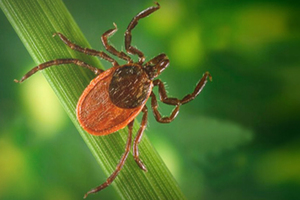
Public Health England (PHE) can confirm the diagnosis of a case of babesiosis and a probable case of tick-borne encephalitis (TBE) in England. This is the first record of a UK-acquired case of babesiosis and the second case of TBE being acquired in the UK.
Babesiosis is caused by a parasite which infects red blood cells whilst TBE is a viral infection that affects the central nervous system. Both are rare infections spread by the bite from an infected tick.
Both patients have been transferred to hospital, where they are receiving appropriate treatment and supportive care.
PHE regularly undertakes work to understand the potential risks of tick-borne infections in England. This year, PHE has surveyed sites in Devon close to where the person with babesiosis lives, collecting and testing hundreds of ticks – all tested negative for the parasite which causes babesiosis.
PHE has tested deer blood samples from Hampshire in areas near to where the person with probable TBE lives and they have shown evidence of likely TBE virus infection, which matches similar results found in 2019.
The risk of babesiosis or TBE for the general public is very low. However, a number of infections can develop following a tick bite, including Lyme disease, and there are things we can all do to reduce our risk of being bitten by ticks while enjoying the outdoors this summer.
It is important to ‘be tick aware’ and take precautions to reduce your risk of being bitten by ticks when enjoying green spaces this summer including:
- keeping to footpaths and avoiding long grass when out walking
- wearing appropriate clothing such as a long-sleeved shirt, and trousers tucked into your socks makes it less likely that a tick will bite and attach
- considering the use of repellents containing DEET
- making it a habit to carry out a tick check regularly when you’re outdoors and when you get home
- if you have been bitten by a tick, it should be removed as soon as possible using fine tipped tweezers or a tick removal tool which is sold by many outdoor stores, vets and pharmacies. Grasp the tick as close to the skin as possible and pull upwards slowly and firmly. Once removed, wash your skin with water and soap, and apply an antiseptic cream to the skin around the bite
- contact your GP promptly if you begin to feel unwell, remembering to tell them you were bitten by a tick or recently spent time outdoors
Dr Katherine Russell, Consultant in the Emerging Infections and Zoonoses team at PHE, said:
It is important to emphasise that cases of babesiosis and TBE in England are rare and the risk of being infected remains very low. Lyme disease remains the most common tick-borne infection in England.
Ticks are most active between spring and autumn, so it is sensible to take some precautions to avoid being bitten when enjoying the outdoors. Seek medical advice if you start to feel unwell after a tick bite.
Background
About babesiosis
Most people with babesiosis will have either no symptoms or mild symptoms of infection; people with weakened immune systems can become very ill and present with flu-like symptoms such as fever, chills, muscle ache, fatigue, and jaundice.
About TBE
Around 2 thirds of people with TBE infections will have no symptoms. For those who develop symptoms, there are often 2 phases. The first is associated with flu-like symptoms such as fever, headache and fatigue. This can then progress to a more serious second phase that involves central nervous system, which can lead to meningitis, encephalitis and paralysis.
If you develop flu-like symptoms after being bitten by a tick, visit your GP.
Go to hospital if you:
- get a stiff neck and a severe headache
- get pain when looking at bright lights
- have a seizure (fit)
- have a change in behaviour – such as sudden confusion
- develop weakness or loss of movement in part of the body
____________________
**Comment**
Authorities really need to stop saying infection is rare. Many doctors don’t know what to look for and many cases go undiagnosed, and therefore unreported. They should just state that it’s been found and refrain from telling people anything about numbers when frankly no one has been keeping track.
And it should be a real heads-up that they do need to start looking for it and recording it when it’s found.
Secondly, Babesia, according to Dr. Horowitz is one of the most tenacious coinfections he deals with and necessitates 9 months to a year of solid treatment. To say that people with Babesia mostly have no symptoms or mild symptoms is asinine because people bitten by a tick and typically getting Lyme in the process CAUSES a weakened immune system.
We know that those infected with multiple things have more severe illness for a longer duration of time. Authorities need to quit soft peddling their comments.
For more: https://madisonarealymesupportgroup.com/category/babesia-treatment/

 “After preliminary trials, the detailed changes in the concentration of specific circulating and local antibodies were followed in 15 volunteers inoculated with coronavirus 229E. Ten of them, who had significantly lower concentrations of preexisting antibody than the rest, became infected and eight of these developed colds. A limited investigation of circulating lymphocyte populations showed some lymphocytopenia in infected volunteers. In this group, antibody concentrations started to increase 1 week after inoculation and reached a maximum about 1 week
 “The specific humoral immune response of 17 volunteers to infection with human rhinovirus type 2 (HRV-2) has been measured both by neutralization and by ELISA. Six volunteers who had HRV-2-specific antibodies in either serum or nasal secretions before HRV-2 inoculation were resistant to infection and illness. Of the remaining 11 volunteers who had little pre-existing HRV-2-specific antibody, one was immune but 10 became infected and displayed increases in HRV-2-specific antibodies. These antibodies first increased 1-2 weeks after infection and reached a maximum at 5 weeks. All six resistant volunteers who had high pre-existing antibody and eight of the volunteers who became infected maintained their HRV-2-specific antibody for at least 1 year. At this time they were protected against reinfection. Two volunteers showed decreases in HRV-2-specific antibodies from either serum or nasal secretions. They became infected but not ill after HRV-2 inoculation 1 year later.“So, people infected with coronaviruses have short-lived active antibodies compared to rhinovirus, but have a mild infection a year later if re-exposed. To be fair to the authors of the study, they referenced the coronavirus study from 1990, as well as length of antibody responses in SARS and MERS. But it’s still a fair question to ask:Why then are we reading headlines such as
 The high profile emphasis is followed by proclamations that natural immunity from infections might not “enough”, begging the question of definition of “enough” – Fauci and others (like Paul Offit) have already presaged that an untested vaccine might only make the infection less severe, and not prevent infection or transmission. So this high emphasis and follow-on claim that natural herd immunity might not be enough is a type of distortion used to convince the public that they may have to wait for a vaccine to save society. Of course.
 Madison Area Lyme Support Group