Archive for the ‘Testing’ Category

They Shall Not Be Left to Rot: The Emerging Law of Lyme Disease

https://www.belmontlawreview.org/articles/volume-8-issue-1-2020/

transparent-law-logo-retina

VOLUME 8, ISSUE 1: 2020

Creighton R. Meland, Jr.

They Shall Not Be Left to Rot: The Emerging Law of Lyme Disease

For the excellently written paper for the Belmont Law Review, on the state of affairs with Lyme disease, please see this pdf:  https://cpb-us-w2.wpmucdn.com/blogs.belmont.edu/dist/8/25/files/2020/11/Meland_95-163.pdf

Table of Contents:

INTRODUCTION 96

I. WHAT IS LYME DISEASE AND WHY IS IT MEDICALLY CONTROVERSIAL? 97

     A. What is Lyme Disease? 97

     B. Lyme Disease Detection and Diagnosis 101

     C. Lyme Disease Treatment Regimens 104

          1. IDSA v. ILADS 104

          2. Coinfections and their Effect on Treatment 106

     D. Lyme Disease is not a Research Priority 107

II. LYME DISEASE LEGAL ISSUES 108

     A. IDSA and CDC Set Treatment Standards 108

          1. Effects on Quality and Availability of Care 108

          2. Antitrust Implications 112

     B. State Lyme Disease Legislation 122

          1. Health Insurance Coverage Mandates 122

          2. Professional Standards 125

          3. Lyme Testing Disclosures 127

          4. Safe Harbors 130

          5. Awareness, Prevention, and Government Support 133

**J.D. University of Michigan; B.S. Economics, Major in Finance, Wharton School, Undergraduate Division, University of Pennsylvania.**

I am grateful to Belmont Law Review for the opportunity to critique laws designed to redress health care problems presented by Lyme disease. Despite a pervasive presence and severe symptoms, Lyme disease is widely misunderstood by the medical community and too often goes untreated or improperly treated. While we await advances in medical science, the law can help those who suffer. I recognize and thank the International Lyme and Associated Diseases Society and its many contributors, who have deepened my understanding of medical problems associated with Lyme disease.  These insights have influenced positively the form of the work I now submit.

Early Warning: Lab Test Can Detect Acute Lyme Disease From a Single Cell

https://www.lymedisease.org/detect-acute-lyme-single-cell/

Early warning: Lab test can detect acute Lyme disease from a single cell

New Lyme Disease Test Distinguishes Between Early and Late-Stage Disease

ihttps://medicalxpress.com/news/2021-04-lyme-disease-distinguishes-early-late-stage

New Lyme disease test distinguishes between early and late-stage disease

April 7, 2021

Lyme disease

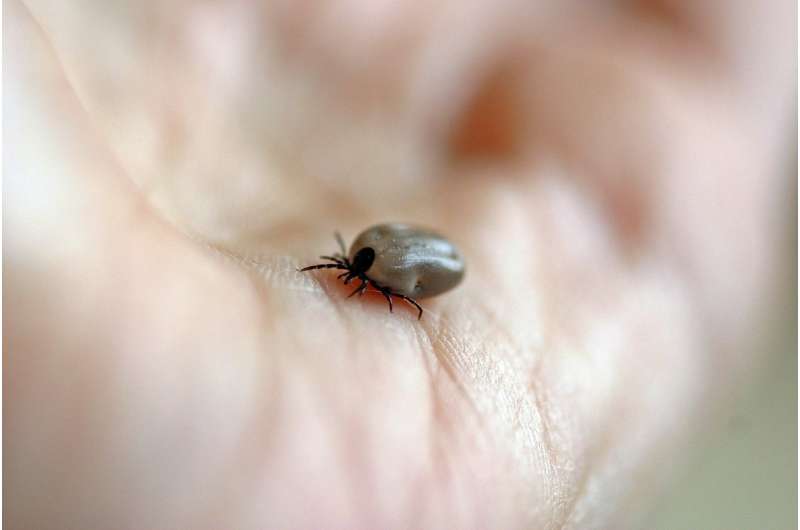
For those who live in an area blighted by ticks, the threat of Lyme disease can cast a shadow over the joy of spring and summer. These blood-sucking arachnids can transmit bacteria into the bloodstream of their unsuspecting host, causing the disease. Early treatment is essential, but current tests are not usually sensitive enough to detect the disease in early-stage patients. A recent study in open-access journal Frontiers in Microbiology reveals a new test for Lyme disease, which is the first to reliably distinguish between early- and late-stage patients. The test detects a genetic sequence left by a virus that resides in Lyme-causing bacteria, and can detect just one bacterial cell in a small blood sample.

As the most common tick-borne infection, Lyme affects nearly 500,000 people in the U.S. every year. Symptoms include fever, fatigue, joint pain, and a distinctive ‘bullseye’ rash, but if left untreated, the disease can cause paralysis and even death. As such, is important, but difficult.

“Early diagnosis of Lyme disease is absolutely vital in reducing suffering, because early Lyme can be treated, but late Lyme is very difficult to treat,” explained Dr. Jinyu Shan of the University of Leicester, lead author on the study. “Current tests cannot typically detect the low numbers of bacteria in early-stage patient blood samples. Our goal was to design a highly sensitive to help doctors to identify Lyme disease as early as possible.” (See link for article)

______________________

Study here: https://madisonarealymesupportgroup.com/2021/03/31/targeting-multicopy-prophage-genes-for-the-increased-detection-of-borrelia-burgdorferi-sensu-lato-the-causative-agents-of-lyme-disease-in-blood/

Evidently the test is unique in that it is based on prophages that have a genetic sequence inserted into the bacteria by a virus which can escape the bacteria, and is more likely to be picked up in the blood due to having multiple copies within cells.

They found the test is sensitive and can detect one bacterial cell in .3 mL of blood.  Infected patients have between 1-100 bacterial cells per mL of blood.

The test is the first to distinguish between healthy, early-stage, and late-stage samples.


I must admit that the debacle with PCR testing for COVID has made me extremely skeptical and wary.  I hope that this isn’t too good to be true.  Time will tell.

Current Serology – No Better Than A Coin Toss

https://www.change.org/p/the-us-senate-calling-for-a-congressional-investigation-of-the-cdc-idsa-and-aldf

Current serology is no better than a coin toss

MAR 31, 2021 — 

Please see the letter below addressed to the Chair of the NH Lyme Disease Study Commission in reference to a presentation from our last Zoom meeting.

You can hear/see my arguments at 1:01 in the recorded YouTube video link below.

———- Original Message ———-
From: CARL TUTTLE <runagain@comcast.net>
To: William Marsh <wmarshmd@gmail.com> CHAIR
Cc: All members of the study group
Date: 03/31/2021 8:59 AM
Subject: Topic for discussion at our next meeting (Dr. Martin’s Presentation)

I would like to add the following letter of concern as a topic for discussion at our next meeting and have copied all committee members so they can review the document prior to the meeting. 

Please reserve any discussion of these documents until our next scheduled Zoom meeting.

To members of the Lyme Study Commission,

Dear Rep Marsh,
I have some serious concerns regarding Dr. Martin’s informative presentation last Friday.

In reference to the 2013 C6 Elisa paper from Dr. Wormser, [1] this test is not widely used here in the US for the detection of Borrelia infections. When performing a search on the Quest Diagnostics website, I could not find the C6 Elisa listed as an option for Lyme disease.

Furthermore, test performance from that 2013 Wormser paper and 2018 pegalajar-jurado et al publication [2] was derived through the use of serum samples from patients who had the positive marker for Lyme; erythema migrans (bulls-eye rash) so testing results for the newer serology were positive because they were already positive. There was no performance data for those who never developed the bulls-eye rash. Once again this is misleading to the reader and highly inaccurate in real-world application. (what front line physicians are experiencing) Maine Department of Health is reporting incidence of rash at only 50%. So, half of the patient population is not being represented in these studies. That is a serious concern.
 
To my knowledge, the Modified Two-Tiered Testing Algorithm (MTTTA) is not in use outside of Dr. Martin’s lab and irrelevant to our study commission at this time so any performance numbers offered by Dr. Martin are meaningless. Until such time that these newer tests are fully implemented (if ever) performance characteristics should not be acknowledged or posted in the minutes of the Lyme Study Commission.

Although current testing methods are evolving, we are still using the conventional WCS ELISA–immunoblot-based 2-tier testing algorithm. Dr. Durand (ILADS physician) and I have provided documentation supporting the fact that current serology is no better than a coin toss and this fact must be shared with the public along with the fact that humans do not produce antibodies for 4-6 weeks after a tick bite.

Here are the missing disclaimers:

1. “Health-care providers are reminded that a diagnosis of Lyme disease should be made after evaluation of a patient’s clinical presentation and risk for exposure to infected ticks, and, if indicated, after the use of validated laboratory tests.

2. “This surveillance case definition (two of three IgM and Five of ten IgG bands) was developed for national reporting of Lyme disease; it is not intended to be used in clinical diagnosis”

Respectfully submitted,

Carl Tuttle
Hudson, NH

References

1. Single-tier testing with the C6 peptide ELISA kit compared with two-tier testing for Lyme disease
 https://demystifyingmedicine.od.nih.gov/dm13/2013-03-19/dmid-v75-y2013-p9.pdf

2. Evaluation of Modified Two-Tiered Testing Algorithms for Lyme Disease Laboratory Diagnosis Using Well-Characterized Serum Samples
 https://jcm.asm.org/content/56/8/e01943-17

______________________

For more:

There has been a concerted effort by ‘authoritie’s against direct testing. 

The simple reason for this is our public health ‘authorities’ have patents on Lyme testing.

They also want us to take their controversial Lyme vaccines which would only work if Lyme disease does not cause chronic illness – hence the denial of persistent infection.  Our public authorities also have conflicts of interests regarding these vaccines.

The CDC is not to be trusted at all.  

We need to stop working with these agencies and raising money for their flawed, biased science that continues to abuse and neglect sick patients.


Targeting Multicopy Prophage Genes for the Increased Detection of Borrelia burgdorferi Sensu Lato, the Causative Agents of Lyme Disease, in Blood

https://www.frontiersin.org/articles/10.3389/fmicb.2021.651217/full

ORIGINAL RESEARCH ARTICLE

Front. Microbiol., 15 March 2021 | https://doi.org/10.3389/fmicb.2021.651217

Targeting Multicopy Prophage Genes for the Increased Detection of Borrelia burgdorferi Sensu Lato (s.l.), the Causative Agents of Lyme Disease, in Blood

  • 1Department of Genetics and Genome Biology, University of Leicester, Leicester, United Kingdom
  • 2PhelixRD Charity 230 Rue du Faubourg St Honoré, Paris, France

The successful treatment of Lyme disease (LD) is contingent on accurate diagnosis. However, current laboratory detection assays lack sensitivity in the early stages of the disease. Because delayed diagnosis of LD incurs high healthcare costs and great suffering, new highly sensitive tests are in need. To overcome these challenges, we developed an internally controlled quantitative PCR (Ter-qPCR) that targets the multicopy terminase large subunit (terL) gene encoded by prophages that are only found in LD-causing bacteria. The terL protein helps phages pack their DNA. Strikingly, the detection limit of the Ter-qPCR was analytically estimated to be 22 copies and one bacterial cell in bacteria spiked blood. Furthermore, significant quantitative differences was observed in terms of the amount of terL detected in healthy individuals and patients with either early or late disease. Together, the data suggests that the prophage-targeting PCR has significant power to improve success detection for LD. After rigorous clinical validation, this new test could deliver a step-change in the detection of LD. Prophage encoded markers are prevalent in many other pathogenic bacteria rendering this approach highly applicable to bacterial identification in general.

Introduction

Lyme disease (LD) is the most common tick-born disease with approximately 476,000 patients in the United States annually during 2010–2018 (Kugeler et al., 2021). LD is caused by a group of bacteria classified together as the Borrelia burgdorferi sensu lato (s.l.) complex, that comprises a clade of more than 20 species including B. burgdorferisensu stricto (s.s.) which dominates in United States, and B. garinii and B. afzelii which are prevalent in Europe and Asia. The LD-causing bacteria are generally transmitted to humans after they are bitten by ticks of the Ixodes family infected with LD causing Borrelia. However, recent reports have raised concerns over Borrelia transmission through blood transfusion based on observations that Borrelia can survive and circulate in the human bloodstream (Pavia and Plummer, 2018).

Currently, LD diagnosis is based on the overt clinical manifestation of disease in the form of erythema migrans (EM) skin lesions, commonly known as a ‘bull’s-eye’ rash and a history of tick exposure. Although EM lesions occur in 70 to 80% of infected individuals, only a third of these patients develop the classic ‘bull’s-eye’ rash, and many other types of skin lesions can occur which are easily confused with EM (Chaaya et al., 2016). In addition to the EM uncertainty, other common symptoms of LD such as fatigue, muscle pain, headache, and perceived cognitive dysfunction largely overlap with an array of other diseases, including other tick-borne diseases. One such example is Relapsing Fever (RF), which is caused by close relatives of the LD-causing bacteria, such as Borrelia miyamotoi(Wormser et al., 2019). The two Borrelia ‘groups’ responsible for LD and RF have caused great concern and clinical confusion, as they are morphologically similar and present with almost indistinguishable clinical symptoms (Bergström and Normark, 2018). Despite this, they respond to different antibiotics and treatment regimens (Koetsveld et al., 2017). Another example of confusion surrounding LD is the co-infection caused by Bartonella spp. This genus of bacteria is emerging as an increasingly common human infection (Anderson and Neuman, 1997). Much of the controversy surrounding LD and co-infections with Bartonella and/or B. miyamotoi is due to the lack of a reliable and sensitive diagnostic method to detect and distinguish between the three groups of bacteria, the LD and RF causing Borrelia and Bartonella (Schutzer et al., 2019). Therefore, laboratory tests to determine and distinguish between LD and co-infections play a vital role in the correct diagnosis and consequent treatment with different antibiotics.

Scientists have faced several challenges with LD detection including patients presenting with a delayed antibody response and a low number of Borrelia cells typically found in human clinical samples (Moore et al., 2016). Although it is particularly difficult to diagnose LD early, it is critical, as it is far easier to treat the disease when it is detected at an early stage (Theel et al., 2019). Bacteria-targeting approaches, such as polymerase chain reaction (PCR) detecting the Borrelia chromosomal DNA, can potentially identify early LD but is relatively insensitive detecting only between 30-50% of positive cases, and is therefore deemed to have little clinical utility (Schutzer et al., 2019). The reasons behind the poor sensitivity of the current PCR methods in Lyme detection are twofold; first, the current PCRs target Borrelia genomic DNA regions that have only one copy in each bacterium, such as the bacterial 16S rRNA gene, RecA gene, and the 5S-23S intergenic regions (Brettschneider et al., 1998; Liveris et al., 2012; Waddell et al., 2016; Lohr et al., 2018; Schutzer et al., 2019). Second, at least some Borrelia species are ‘tissue-bound’ and are only transiently found circulating in the blood (Liang et al., 2020).

In response to these diagnostic challenges, we adopted a novel approach, taking advantage of the fact that most pathogenic bacteria carry multiple complete or partial prophages (phages associated with bacteria) (Argov et al., 2019). These prophage sequences can form the bases of a template from which quantitative PCR (qPCR) primers and probes can be designed. It is known that Borrelia carry a large number of linear and circular plasmids (comprising between 33-40% of the Borrelia genome), among which the cp26 and cp32, and the lp54 linear plasmid, are evolutionarily stable (Casjens et al., 2017). Of these paralogous plasmids, cp32 has been experimentally determined to be a Borrelia burgdorferi prophage thus it is highly likely that many of its homologs are also prophages (Eggers and Samuels, 2000).

In this paper we have demonstrated for the first time in Borrelia-related diagnostics that it is possible to overcome the sensitivity challenges associated with LD detection. We highlight the potential of our test to discriminate between healthy volunteers, early LD, and late LD patients. We present data from a systematic and comprehensive study that evaluate the use of the multicopy phage terminase large subunit (terL) gene as a molecular marker for the detection of Borrelia species. The analytical performance of the terL-targeting qPCR (referred to as Ter-qPCR) was thoroughly evaluated, and the test was shown to be able to detect one single Borrelia cell from blood samples. The diagnostic potential was evaluated using a set of blood and serum samples collected from healthy volunteers and individuals who were clinically diagnosed with LD.

In summary, we demonstrate that a quantitative phage-based PCR has the potential to change the diagnosis of LD from blood samples. This approach of detecting bacteria-specific phages may be applicable to infections other than LD such as sepsis caused by Staphylococcus aureus, Escherichia coli, and Pseudomonas aeruginosa etc. (Minasyan, 2019), as long as suitable phages are identifiable.

Results and Discussion

Each Borrelia species has a distinct amount of species specific variation in its prophage sequences; thus these prophages can be used as a proxy to identify the bacteria because of the tight correlation between them and the exact prophages found in each Borrelia host. As there are multiple prophages per Borrelia cell, the detectable signal is higher for prophages than bacteria. Furthermore, evidence suggests that Borrelia prophages can be released outside the Borrelia cells following encounters with stressors such as antibiotics (Eggers and Samuels, 2000). In this study, we confirmed that Borrelia prophages can escape from the bacterial host cell in a spontaneous manner. Taking advantage of the multicopy and free movement of Borrelia prophages, the approach to target prophages instead of bacteria will bypass the cryptic and tissue-bound feature that typifies human Borrelia infections (Liang et al., 2020). Thus, we have a greater chance of detecting the prophages in blood even when the bacteria may not be present or present in extremely low numbers. In this sense, prophages are somewhat analogous to Borrelia ‘footprints’.

(See link for full article)

_______________________

**Comment**

Important excerpt:

Borrelia Strains and Cultures

The Borrelia strains used in this study are listed in Table 1.

  • Ten strains were provided by Professor Sven Bergström, Department of Molecular Biology, Umea University, Sweden. Seven strains were purchased from the Pasteur Institute and DSMZ (German Collection of Microorganisms and Cell Cultures GmbH).
  • Two strains were provided by the Center for Disease Control and Prevention (CDC), United States, and
  • two by Cecilia Hizo-Teufel from the German National Reference Centre for Borrelia

For more: