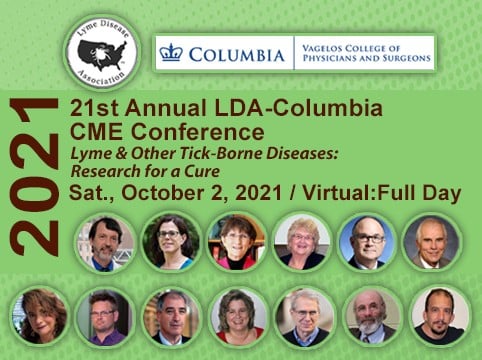
On October 2, I attended the 21st annual scientific conference put on by the Lyme Disease Association and Columbia University’s Vagelos College of Physicians & Surgeons. The virtual event was entitled Lyme & Other Tick-Borne Diseases: Research for a Cure.
Pat Smith, President of the Lyme Disease Association, welcomed the audience and reviewed the huge body of research the LDA has funded. A recent highlight: a paper showing that changes in the eye may serve as a biomarker for Lyme disease.
She also discussed how the CDC’s criteria for listing states as low-incidence leads to underreporting of Lyme disease. (This topic was also featured in the Summer 2021 issue of The Lyme Times.)
I especially enjoyed Pat’s introduction of Dr. Brian Fallon, of Columbia University, which included pictures and stories of their many collaborations since 1995.
The conference was divided into four sessions and was moderated by Dr. Fallon and Monica Embers, PhD, of Tulane University.
Session 1
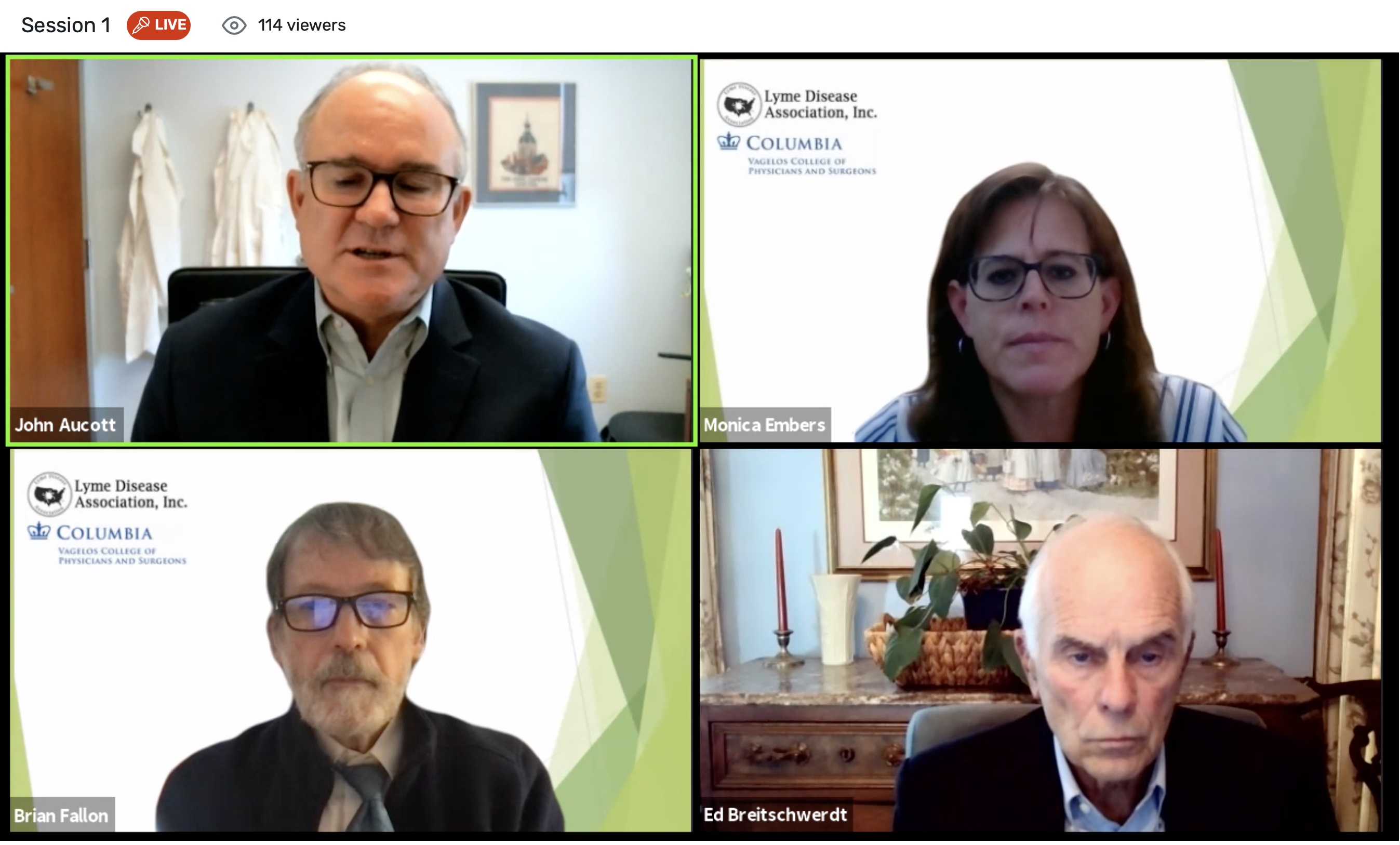
The first speaker was John Aucott, MD, of Johns Hopkins University. He spoke on Long Haulers: Lessons from Lyme Disease, ME/CFS, and COVID-19.
Summary: The COVID-19 pandemic has drawn attention to the varied outcomes that may follow acute infectious diseases. COVID long haulers present another example of a patient group that fails to recover their normal health after the initial phase of infection has passed. Long haulers in COVID 19 and Lyme disease share many clinical features including extreme fatigue, cognitive difficulties and chronic pain. The current COVID-19 pandemic may present insights and research discoveries that help understand the underlying mechanisms involved in such persisting symptoms. Understanding the cause of these chronic symptoms is the first step to future treatments and recovery.
Dr. Aucott is currently collaborating with several of the following researchers to investigate the proposed mechanisms of chronic Lyme including: persistent infection, immune dysregulation due to by-products of past infection, auto-inflammation, auto-immunity, and neural network alteration. (I will be writing more about these mechanisms in my next article.)
Next up was Dr. Fallon’s talk: Depression, Suicidal Behaviors, and Lyme: Results from a Nationwide Study in Denmark.
Summary: This presentation reviewed the results of Dr. Fallon’s recent U.S.- Denmark collaboration to determine whether in fact mental disorders and suicidal behaviors are increased after the diagnosis of Lyme disease. Although cases reports, small series, and office-based practice chart reviews have been published suggesting an association, these studies all had methodological limitations which left these questions unanswered.
Using a nationwide sample of people living in Denmark between 1994 and 2016 (n=6,945,837) and data from the Danish registries of hospital-based diagnoses, they investigated whether the rates of mental disorders, affective disorders, suicide attempts, and suicide were each higher after a hospital diagnosis of Lyme borreliosis compared to the rest of the Danish population without a registered diagnosis of Lyme borreliosis. They examined whether temporal proximity to the diagnosis and number of episodes increased the rates of these adverse mental health outcomes.
The researchers found that individuals with Lyme disease had a 28% higher rate of mental disorders, 42% higher rate of mood disorders and 75% higher rate of death by suicide when compared to the non-Lyme controls.
The third speaker of the morning was Ed Breitschwerdt, DVM, of North Carolina State University. He spoke on: Bartonella Bacteremia and Neuropsychiatric Illnesses.
Summary: In the past two decades, over 40 Bartonella species have been discovered, many of which have been implicated in association with a spectrum of disease in animals and human patients. The extent to which, or the mechanisms by which Bartonella infection contributes to neuropsychiatric illnesses has not been systematically studied. However, microbiological detection of the DNA of several species of Bartonella in blood supports a potential role for these bacteria in neuropsychiatric diseases such as Pediatric Acute Onset Neuropsychiatric Syndrome (PANS) and schizophrenia.
In 2021, Dr. Breitschwerdt and his lab published the initial results of a pilot study showing that out of 17 patients with schizophrenia, 12 tested positive for Bartonella in their blood. They now have funding to proceed with a larger study that will include diagnosis and treatment for Bartonella.
Q and A
At the end of Session 1, Dr. Embers moderated the questions and answers session. I found it enlightening to have these high-level researchers and clinicians answering questions from the audience, including other scientists.
I asked a question about co-infections: “It appears both Lyme and Bartonella patients are prone to psychiatric illness. Has anyone looked at or compared the number of patients who have both? Do we know if these [Fallon study] Lyme patients have Bartonella, or do we know how many of the Bartonella patients [Breitschwerdt study] have Lyme?”
Dr. Breitschwerdt said it is important to track this and that the work coming out of his lab as well as Embers’ work is helping to elucidate. Embers added:
“Borrelia may be comparable to AIDS, in its ability to suppress the immune system and these co-infections definitely warrant further study.”
 Session 2
The first speaker of session two was Brandon L. Jutrus, PhD, of Virginia Tech. The title of his talk: Not just another brick in the wall.
Summary: The unusual peptidoglycan of Borrelia burgdorferi. The peptidoglycan sacculus is a mesh-like bag that protects bacterial cells from bursting. Virtually all bacteria have similar peptidoglycan structure. Borrelia burgdorferi—the Lyme disease agent— produces peptidoglycan with extremely unusual chemical features. Further, during growth, peptidoglycan is shed and is capable of causing arthritis. He discussed how the Jutras lab is exploiting the unusual properties of B. burgdorferi peptidoglycan to understand and diagnose Lyme disease.
Dr. Jutrus presented some unpublished data that may lead to an early diagnostic test and targeted treatment for Lyme.
The next speaker was Catherine A. Brissette, PhD, of the University of North Dakota School of Medicine and Health Sciences. The title of her talk: Borrelia colonization of the dura mater induces inflammation in the CNS.
Summary: “Lyme disease, which is caused by infection with Borrelia burgdorferi, can lead to inflammatory pathologies affecting the joints, heart, and nervous systems including the central nervous system (CNS). Laboratory mice have been used to define the kinetics of B. burgdorferi infection and host immune responses in other tissues, but similar studies are lacking for the CNS of these animals. Previously, we reported the ability of B. burgdorferi to colonize the dura mater of mice during late disseminated infection. We now show acute and persistent extravascular B. burgdorferi colonization of the dura mater after both needle inoculation and tick transmission, accompanied by increases in expression of inflammatory cytokines. These increases in inflammatory gene expression are similar to what is observed with B. burgdorferi stimulation of human astrocytes, microglia, brain endothelial cells, and choroid plexus epithelial cells in vitro. In addition, we observe a robust interferon response in the dura mater. Dura colonization is associated with perivascular leukocyte infiltration and meningitis, demonstrating for the first time that B. burgdorferi-infected mice can develop meningitis. We also observe an increase in interferon-stimulated genes in both the cortex and hippocampus of infected mice, despite a lack of detectable bacteria in the brain parenchyma. Combined with the increases in inflammatory gene expression and down-regulation of genes involved in maintenance of blood-brain and blood-CSF barriers in both mice and human cell culture models, these results could provide insights into the mechanism of B. burgdorferi dissemination into the CNS and the damage associated with this pathogen.”
The last speaker of Session 2 was Adrian Baranchuk, MD, FACC, FRCPC, FCCS, FSIAC, of Queen’s University in Ontario, Canada. The title of his talk: All you need to know about Lyme carditis…and more.
Summary: Lyme disease (LD) is a tick-borne bacterial infection caused by Borrelia burgdorferi. It is the most reported vector-born disease in North America, and its incidence has risen dramatically in recent years. In up to 10% of cases, bacterial dissemination of LD may lead to cardiac tissue inflammation and early disseminated Lyme carditis. The most common clinical presentation of Lyme carditis is high-degree atrioventricular block (AVB) which can progress rapidly over minutes, hours, or days. Most AVB in Lyme carditis resolves with appropriate antibiotic treatment without the need for a permanent pacemaker.
Dr. Baranchuk, encourages medical providers to do an ECG on all patients with cardiac symptoms and to consider Lyme carditis when heart block is observed.
Another Q & A
At the end of Session 2, there was another question and answer time, moderated by Dr. Fallon. Let me just say the work coming out of the labs of Dr. Jutrus and Dr. Brissette is groundbreaking. I will definitely be writing more about what I learned from this session.
 Session 3
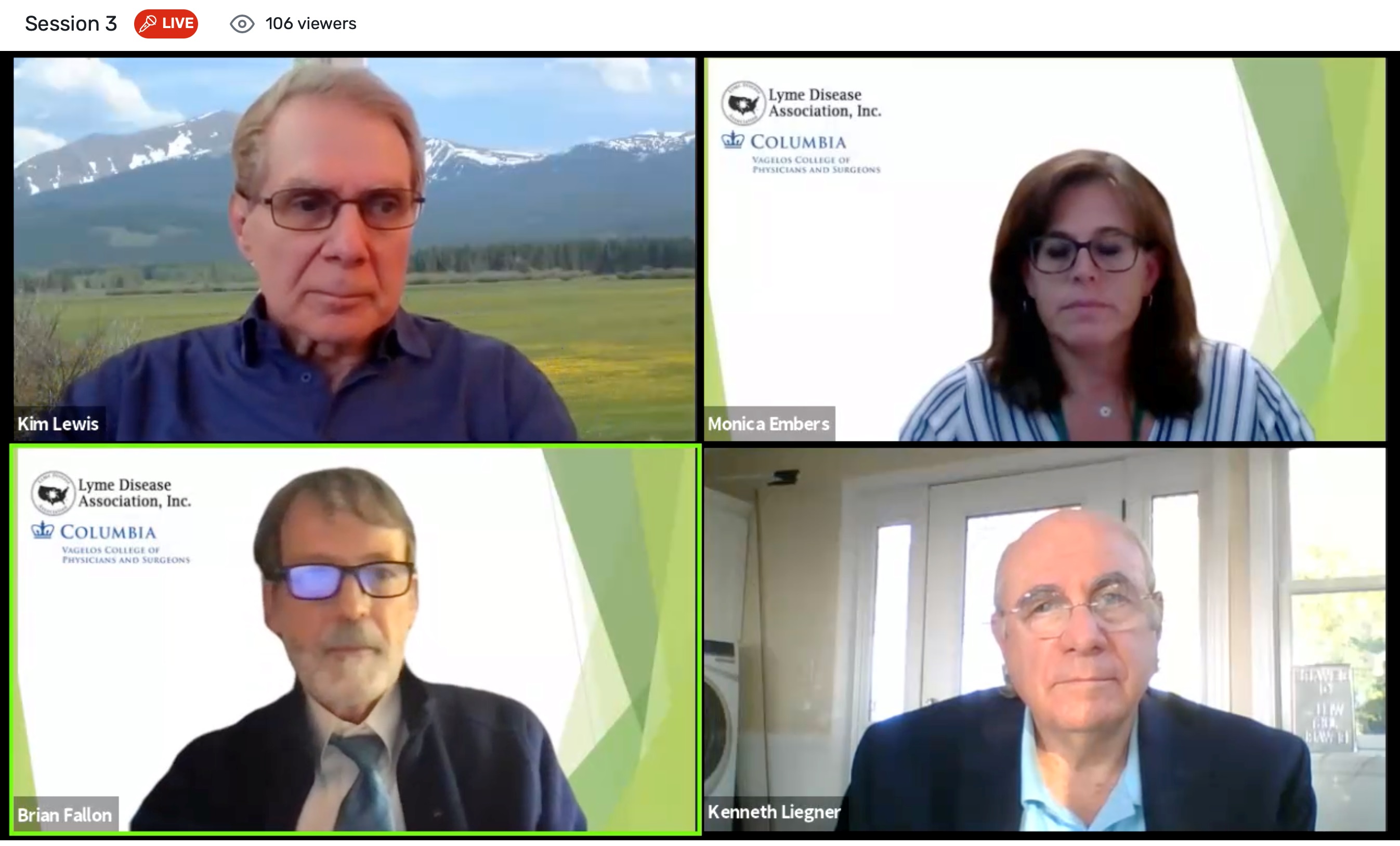
The first speaker for session three was Dr. Monica Embers, on the topic of Combined Antimicrobial Therapy for Eradication of B. burgdorferi.
Summary: Given the potential for standard antibiotic treatment regimens for Lyme disease to fail to eradicate persisters, we aim to discover a drug combination that can eliminate B. burgdorferi infection. The goals of this project are to: (1) using a library of FDA-approved drugs, identify the optimal antimicrobial combinations that could kill B. burgdorferi in vitro; and (2) test them in animal models of Lyme disease for cure of infection. The most effective combinations of drugs that kill the bacteria have been identified with in vitro studies. These were then evaluated in B. burgdorferi-infected mice, using long-term infection to allow for regrowth of persisters. Finally, the most effective regimens are being assessed in nonhuman primates. Importantly, we have refined the selection of drugs to those that can be administered orally.
Next, Kim Lewis, PhD, of Northeastern University, spoke about Developing therapies for Lyme disease.
Summary: Symptoms of Post-Treatment Lyme Disease Syndrome (PTLDS) are experienced by approximately 10% of patients after antibiotic therapy for an acute B. burgdorferi infection. The underlying causes of PTLDS symptoms have remained unclear. We reasoned that the gut microbiome may play an important role in PTLDS given the overlapping symptoms associated with a dysbiotic microbiome, including mood, cognition, and autoimmune disorders. Using sequencing data from stool of a cohort of PTLDS patients, we identified a gut microbiome signature characterized primarily by high relative abundance of Blautia species and reduction in levels of the symbiotic Bacteroides genus. These findings suggest that Lyme disease should be treated with selective antibiotics that will not harm the microbiome. We find that hygromycin A selectively kills B. burgdorferi and cures the acute disease in a mouse model without affecting the microbiome.
The last speaker for session three was Kenneth B. Liegner, MD, discussing Disulfiram in the Treatment of Lyme disease: Promise & Perils.
Summary: Some four years have elapsed since disulfiram was first knowingly applied in the treatment of persons with Lyme disease. Dr. Liegner reviewed several trial cases of patients with Lyme disease who responded positively to disulfiram. He cautioned that the drug comes with a strong warning against alcohol use/proximity, and cross-reactions to certain other medications.
Learn more about disulfiram and why is it sparking excitement in Lyme community.
Q and A
The Q&A segment at the end of session 3 was moderated by Dr. Fallon. It was really fantastic to have Dr. Liegner who has been treating Lyme patients for the past 30 years, be able to interact with these researchers who are both currently working hard to finding a cure for Lyme disease. Dr. Fallon made a point of stating the use of disulfiram is experimental and not currently approved for Lyme disease.
 Session 4
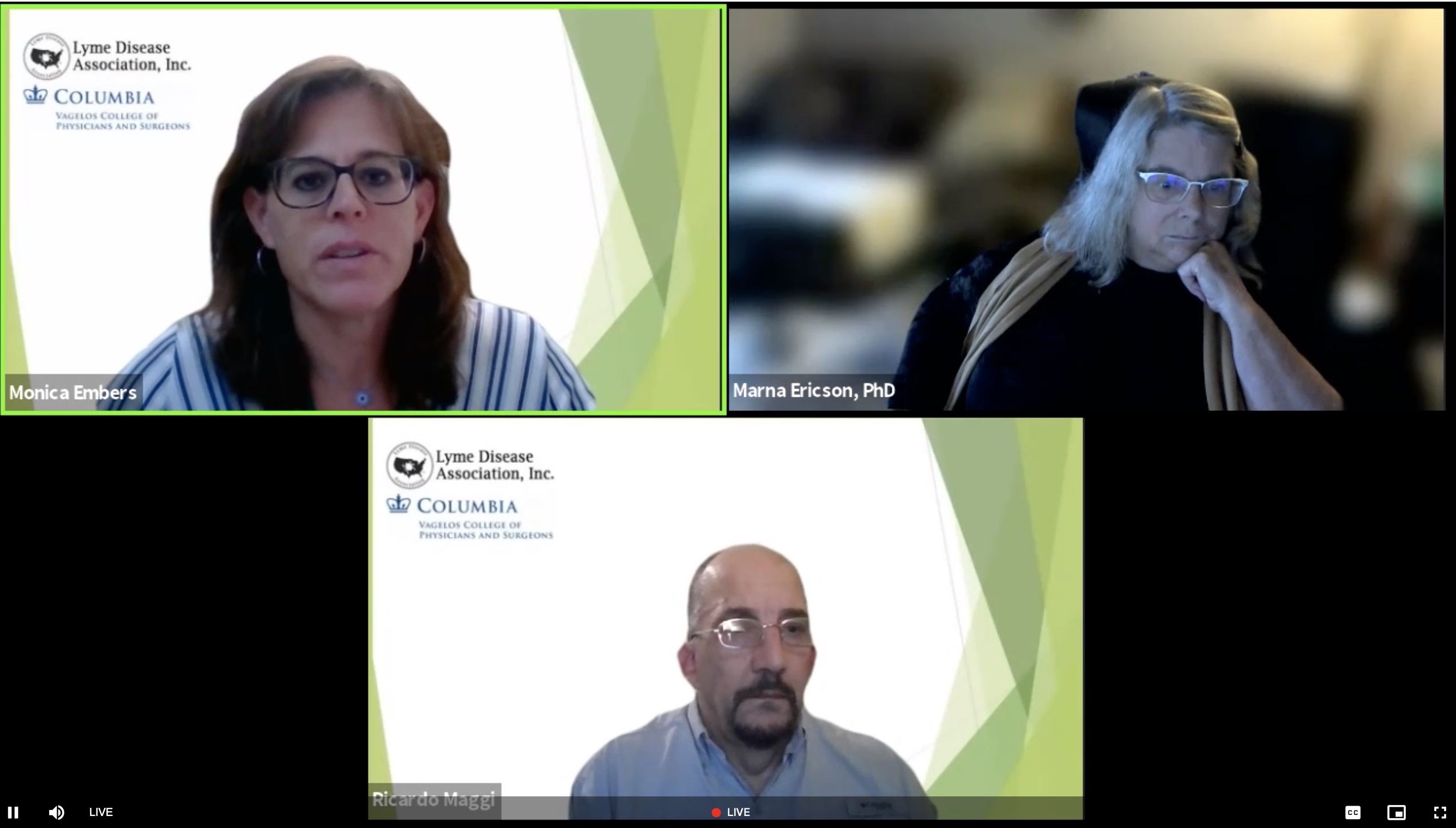
Session four began with Marna Erricson, PhD, of the University of Minnesota. She spoke on Bartonella henselae Detected in Malignant Melanoma
Summary: Bartonella bacilliformis (B. bacilliformis), Bartonella henselae (B. henselae), and Bartonella quintana (B. quintana) are bacteria known to cause verruga peruana or bacillary angiomatosis, vascular endothelial growth factor (VEGF)‐dependent cutaneous lesions in humans. Given the bacteria’s association with the dermal niche and clinical suspicion of occult infection by a dermatologist, we determined if patients with melanoma had evidence of Bartonella spp. infection. Within a one‐month period, eight patients previously diagnosed with melanoma volunteered to be tested for evidence of Bartonella spp. exposure/infection. Subsequently, confocal immunohistochemistry and PCR for Bartonella spp. were used to study melanoma tissues from two patients. Blood from seven of the eight patients was either seroreactive, PCR positive, or positive by both modalities for Bartonella spp. exposure. Subsequently, Bartonella organisms that co‐localized with VEGFC immunoreactivity were visualized using multi‐immunostaining confocal microscopy of thick skin sections from two patients. Using a co‐culture model, B. henselae was observed to enter melanoma cell cytoplasm and resulted in increased vascular endothelial growth factor C (VEGFC) and interleukin 8 (IL‐8) production. Additionally, the two tissues also were found to have BRAF mutations, an oncogene expressed in up to 70% of melanomas. Findings from this small number of patients support the need for future investigations to determine the extent to which Bartonella spp. are a component of the melanoma pathobiome. Being at the frontier of understanding the role of the microbiome in cancer, we will discuss some new papers on this topic and future research plans.
The final speaker of the day was, Richard Maggi, PhD, North Carolina State University. His topic: Simultaneous detection and absolute quantification of Babesia, Bartonella and Borrelia by droplet digital PCR.
Summary: This presentation describes the development, optimization, and validation of a ddPCR assay for the simultaneous detection of Babesia, Bartonella, and Borrelia spp. DNA from several sample matrices, including clinical blood samples from animals and patients, vectors (ticks, fleas, sandflies), as well as samples from human and animal cell lines and tissues from animal models (infected with Bartonella and/or B. burgdorferi). The multiplex ddPCR assay (BBB ddPCR), developed based upon a recently published a Bartonella ddPCR assay using the QX200 system from Bio-Rad, is able to detect 31 Bartonella spp. (including 8 previously uncharacterized species), 8 Borrelia spp, and 24 Babesia spp. (including 8 previously uncharacterized species). The assay is also able to detect 2 Theilaria spp. (T. equi and T. cervi) and well as C. felis from naturally infected wildlife species. The BBB ddPCR assay, based on the QX One ddPCR system from Bio-Rad, showed to be able to perform the simultaneous detection and absolute quantification of multiple vector-borne pathogens (such as Babesia, Bartonella and Borrelia) from clinical samples.
Q & A
The Q&A at the end was moderated by Dr. Embers. The research presented by these two was highly technical, but I can say their work will provide better diagnostics that will lend to each of the previous researcher work.
 LymeSci is written by Lonnie Marcum, a Licensed Physical Therapist and mother of a daughter with Lyme. She serves on a subcommittee of the federal Tick-Borne Disease Working Group. Follow her on Twitter: Email her at: lmarcum@lymedisease.org.