Archive for the ‘research’ Category

Frankinbugs

93716629

https://www.sciencenews.org/article/gene-drives-spread-their-wings  Proponents claim that diseases like malaria and Lyme Disease could be wiped out, along with invasive species, herbicide-resistant weeds and pesticide-resistant bugs.  Dream come true?  Even animals with harmful viruses could be immunized easily due to gene drives, which are clever bits of engineered DNA designed to propel themselves into the DNA of a pesky or troubled organism. It is a targeted contagion intended to spread within species, forever altering the offspring, and purposely upending natural selection.

With the emergence of CRISPR (clustered regularly interspaced short palindromic repeats), gene drives have become a reality. Geneticist Hugo Bellen claims, “Everything is possible with CRISPR.” “I’m not kidding.”

In 2012, researchers figured out how to literally cut and paste nearly any gene into any organism. Usually, organisms have a 50 percent chance of passing a gene to an offspring. The gene drive makes sure the gene gets passed more often due to it being copied into the chromosomes from both parents.

Biologists Gantz and Bier reported online in Science that they had created a gene drive in fruit flies to turn them yellow. The experiment worked the first time, but it wasn’t perfect. Four percent of the females had patches of both normal and yellow cells. They called it a “mutagenic chain reaction,” but it was the first time a CRISPR gene had been deployed.

The fly in the ointment could be releasing all of this into the wild. So far, researchers have kept the gene drives in the lab, where there are obvious limitations and containment, but theoretically, just one of these engineered organisms could wipe out an entire population, where international boundaries would not be respected.

http://singularityhub.com/2015/11/29/gene-drives-can-eliminate-transmissible-diseases-for-good-but-whats-the-price/  Dr. George Church, a gene drive researcher at Harvard, believes there needs to be failsafe mechanisms, which in essence involves another gene drive – a kind of reversal should something go wrong. It’s only worked in yeast, so far.

http://www.nature.com/news/crispr-the-disruptor-1.17673  “It is essential that national regulatory authorities and international organizations get on top of this — really get on top of it,” says Kenneth Oye, a political scientist at the Massachusetts Institute of Technology and lead author of the Science commentary. “We need more action.” The US National Research Council has formed a panel to discuss gene drives, and other high-level discussions are starting to take place, but Oye is concerned that regulatory changes may happen only after a high-profile gene-drive release, in other words, after it’s too late. (For a five minute audio of reporter Kerri Smith investigating the meteoric rise of CRISPR click on the link above.

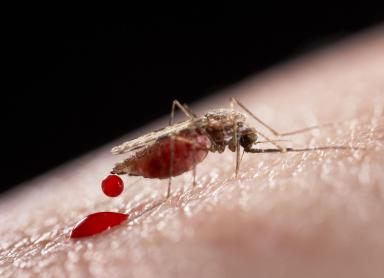
Gene drives can be tricky. In the case of malaria, for instance, researchers had to inject Cas9 and guide bits of RNAs and DNA containing the gene drive into a mosquito egg, which is less than a millimeter long. Another difficult issue is knowing which gene or genes to disrupt or incapacitate in a pest.

On top of those difficulties, scientists do not know how all of this will affect ecosystems and are unclear if the gene drives could spread to closely related species. Ecologist Allison Snow also doubts that weeds could be gene-drive engineered to eliminate herbicide resistance. “These early predictions are rosy,” she says. Other scientists claim it’s going to be many years before anything is released into the wild.

Recently, the European Union ruled that CRISPR plants are GMO’s and should be similarly strictly regulated:  https://www.technologyreview.com/the-download/611716/in-blow-to-new-tech-europe-court-decides-crispr-plants-are-gmos/

“It means for all the new inventions … you would need to go through the lengthy approval process of the European Union,” Kai Purnhagen, an expert at Wageningen University in the Netherlands, told Nature.

http://www.the-scientist.com/?articles.view/articleNo/41027/title/Opinion–On-the-Irreversibility-of-Gene-Drives/  Noam Prywes, PhD candidate in chemistry at Harvard, points out that scientists have addressed destructive invasive species before with bad results. He remembers the introduction of cane toads to take care of the gray-backed cane beetle, and that Australia still suffers – with these toads actually reducing native reptiles, while hardly putting a dent in the beetle population. He claims that CRISPR/Cas-9-based gene drives will “add a twist – introducing one gene drive after another to correct unforeseen consequences as they are discovered,” and that “decisions by researchers would become permanently written into the genomes of entire wild populations.” He also adds that there are alternative ways to wipe out local populations of mosquitoes carrying disease that are much safer.

In this same vein, David Burwitz of Tel Aviv University, feels that gene drive research should be classified to prevent weapon development, and he’s not alone.

http://nextstageprep.com/gene-drivesthis-next-weapon-mass-destruction/  In theory, a terrorist could create a handful of insects with a gene for making a toxin, and power it with a gene drive. Pretty soon, all of these insects would make the toxin, and every insect bite would be lethal.  However, according to Austin Burt, who proposed the theoretical method for making gene drives, the gene drives only work in sexually reproducing species, unlike the vast majority of genetically engineered microbes which produce asexually and they’ve only been shown to work for one generation – so far.

Eradicate Lyme Disease or decimate the ecosystem?  I’m chuckling because I know what most of you would say.
ILADS Videos Available

http://ilads.org/ilads_media/2015-ft-lauderdale-individual-conference-videos/

If you are interested in hearing what LLMD’s had to say at the ILADS conference in October, you may purchase the videos at the above link.

Stevia and Bb


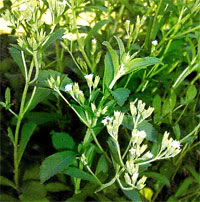
Stevia[URL=http://media.photobucket.com/user/cintaherbal/media/Stevia.jpg.html][IMG]http://i605.photobucket.com/albums/tt140/cintaherbal/Stevia.jpg[/IMG][/URL]


http://doi.org/10.1556/1886.2015.00031

Abstract

“Lyme Disease is a tick-bourne multi systemic disease caused by Borrelia burgdorferi (Bb).  Administering antibiotics is the primary treatment for this disease; however, relapse often occurs when antibiotic treatment is discontinued.  The reason for the relapse remains unknown, but recent studies suggested the possibilities of the presence of antibiotic resistant Borrelia persister cells and biofilms.

In this study, we evaluated the effectiveness of whole leaf Stevia extract against B. burgdorferi spirochetes, persisters, and biofilm forms in vitro.  The susceptibility of the different forms was evaluated by various quantitative techniques in addition to different microscopy methods.  The effectiveness of Stevia was compared to doxycycline, cefoperazone, daptomycin, and their combinations.  Our results demonstrated that Stevia had significant effect in eliminating B. burgdorferi spirochetes and persisters.  Subculture experiments with Stevia and antibiotics treated cells were established for 1 and 14 days yielding, no and 10% viable cells, respectively compared to the above-mentioned antibiotics and antibiotic combination.  When Stevia and the three antibiotics were tested against attached biofilms, Stevia significantly reduced B. burgdorferi forms.  Results from this study suggest that a natural product such as Stevia leaf extract could be considered as an effective agent against B. burgdorferi.”


Lyme Research Project

https://www.lymedisease.org/ldo-launches-mylymedata/

Please consider taking part in the mylymedata project – a large-scale study of chronic Lyme Disease, as it’s been over 15 years since the NIH has funded a treatment trial for chronic Lyme.

The MyLymeData registry allows patients to pool their health information through a secure website. “Big data” projects use advanced technology to gather and analyze huge amounts of patient data, which can assist researchers in studying disease patterns and answering important questions such as Why do some people recover from Lyme disease, while others remain ill?

“Patients have more at stake in the diagnosis and treatment of Lyme disease than anyone else involved in their healthcare,” says Lorraine Johnson, JD, MBA, Chief Executive Officer of LymeDisease.org. “Analyzing large amounts of data can provide insight into how the disease progresses and how effective certain treatments are.”

Big data projects look at the actual care ordinary patients are prescribed by their treating physicians. “This is real-world research. We need to find out what treatments are the most effective in actual clinical practice and what factors affect treatment response,” says Dr. Raphael Stricker, a Lyme disease specialist in San Francisco.

In addition to analyzing disease patterns, MyLymeData hopes to attract researchers interested in launching clinical trials. Patient privacy is critical. To ensure data is protected and secure, LymeDisease.org has partnered with PatientCrossroads, the leading provider of patient registries for the National Institutes of Health.

https://www.youtube.com/embed/FtUVvrJilx8“>http://

Nobel Prize awarded to Doctors Who Discovered Artemisinin and Ivermectin

http://articles.mercola.com/sites/articles/archive/2015/10/31/parasite-fighting-therapies.aspx?e_cid=20151031Z1_DNL_art_2&utm_source=dnl&utm_medium=email&utm_content=art2&utm_campaign=20151031Z1&et_cid=DM89176&et_rid=1195196480

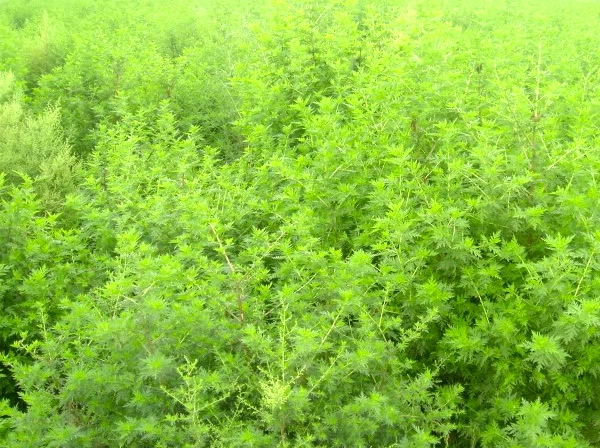
Caythanhhaohoavang-nguyenlieuchinhdechietxuatArtemisinin

The 2015 Nobel Prize in Physiology or Medicine has been jointly awarded to Drs. Youyou Tu, William C. Campbell, and Satoshi Omura for their discoveries of Artemisinin and Avermectin, natural substances that treat parasitic diseases.

Campbell from Duke University and Omura of Kitasato University in Japan are sharing half of the $960,000 Nobel Prize award to develop Avermectin which has greatly reduced lymphatic filariasis which causes chronic swelling and “elephantiasis,” and river blindness – both caused by parasitic worms. The purified version was named Avermectin and was later developed into the anti-parasitic drug Ivermectin which is used in both animals and humans to treat a variety of parasites.

Youyou Tu, a pharmacologist turned to traditional Chinese herbal medicine when chloroquine’s effectiveness was waning with malaria on the rise. She had to go back to the ancient literature to successfully extract the active component from Artemisia annua. Artemisinin is able to rapidly kill malaria parasites at an early stage of development and is highly effective in both animals and humans. When used in combination therapy, Artemisinin is estimated to reduce malaria deaths by more than 20 percent overall and more than 30 percent in children which amounts to more than 100,000 lives saved each year in Africa alone.

Dr. Klinghardt addresses parasitic infections first in his MISIDS patients by giving them wormwood (Artemisinin), phospholipids, vitamin C, and various herbs.

Also, eating raw garlic that has been smashed first to activate the beneficial properties and raw pumpkin seeds may also help. Maintaining a health GI is paramount and using fermented foods and taking high-quality pro and prebiotics may help to prevent and eradicate parasitic infections.