Published on Feb 5, 2016
Dr. Bobbi Pritt, Mayo Clinic, discuss how Mayo Clinic researchers, in collaboration with the Centers for Disease Control and Prevention (CDC) and health officials from Minnesota, North Dakota and Wisconsin, have discovered a new bacterial species that causes Lyme disease in people. The new species has been provisionally named Borrelia mayonii (named after Will and Charlie Mayo who founded Mayo Clinic). Prior to this finding, the only species believed to cause Lyme disease in North America was Borrelia burgdorferi.
Read this encouraging story of Ellie who had been diagnosed with everything from MS to Lupus to Fibromyalgia but had undiagnosed Lyme Disease (MSIDS – multi systemic infectious disease syndrome). When she wasn’t in bed she was in her wheelchair. Finally 15 years into it, she moved to California to die. Less than a week after moving she was attacked by a swarm of Africanised bees who evidently decided her number wasn’t up yet.
After this experience, Ellie decided to do apitherapy – or Bee Venom Therapy (BVT). Three years later Ellie seems to have completely recovered.
You will be happy to know that she is collecting venom for Lyme researcher Eva Sapi, Associate Professor of Biology and Environmental Science at the University of New Haven, who says the melittin, a potent antimicrobial from the venom, looks “very promising.”
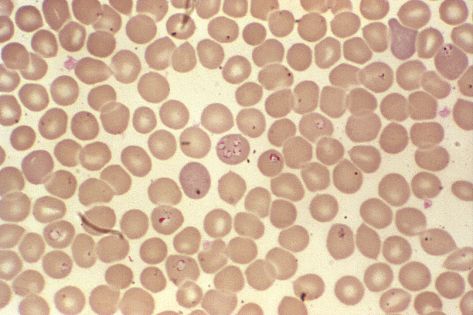
Photo Credit: Content Providers(s): CDC/ Steven Glenn; Laboratory & Consultation Division – This media comes from the Centers for Disease Control and Prevention’s Public Health Image Library (PHIL), with identification number #5943.
Approx. 2 min. Published on May 8, 2012 Brittany Goff found out that not only was she suffering from Lyme disease, she also had Babesiosis, a parasite that invades red blood cells.
Approx. 2:50 min on Jul 28, 2009 This 3 minute video demonstrates the life cycle of Babesia microti, starting in the blood of white-footed mice. Follow the parasite as it is ingested by deer ticks, and finally is transmitted to humans through tick saliva. Special thanks to Rick Smith at The University of Rhode Island for narration; Rick’s brother was recently diagnosed with Lyme disease.
Babesia is a genus of protozoan that enters red blood cells at the sporozoite state causing a parasitic, hemolytic disease. Over 100 species have been identified but only a few have been documented to infect humans, although Dr. Schaller states that there are new Babesia species emerging every one to four months with a new protozoan that while it looks like Babesia, when genetically sequenced, isn’t – it’s a new infection entirely called FL1953 or Protomyxzoa Rheumatica. Horowitz says studies are showing a worldwide epidemic of babesiosis, and similar to Lyme, can persist. http://www.ncbi.nlm.nih.gov/pmc/articles/PMC1925019/http://lymebytes.blogspot.com/2011/09/bartonella-and-babesia-symptom.html
http://www.lymediseaseblog.com/babesia-common-lyme-disease-coinfection/ In the red blood cell, the protozoa continue to split until the cell bursts and releases the micro-organisms into the blood where the freed protozoa find new red blood cells to keep producing. This causes decreased oxygen, and hemoglobin is released into the blood plasma which can cause jaundice. Broken cell fragments can start to accumulate which can cause serious hyper coagulation (thick blood).Proper treatment needs to address these issues to be effective.
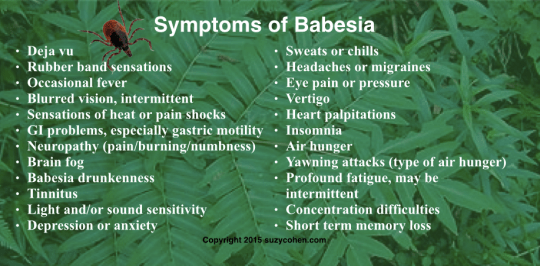
*Irregular and/or high fever and chills in some patients
*Severe fatigue and lethargy
*Global headaches, like a hat is too tight (severe pressure-like headaches – sometimes in ears
*Eye pain
* Sensitivity to light, touch, sound, or smells
*Body aches, muscle pain
*Fevers of up to 104 degrees
*Chills, sweats, especially night sweats
*Breathing problems, “air hunger” or shortness of breath, or frequent sighing
*Occasional dry cough
*Chest pain
*Poor balance
*Encephalopathy (brain disease, damage or malfunction)
*Hemolytic anemia (red blood cells burst apart)
*Hypercoagulation (thick blood often requiring a blood thinner as the patient can’t get enough oxygen which can cause fatigue not to mention the inability to get nutrients and antimicrobials where they need to go) http://www.anapsid.org/cnd/diffdx/hypercoagulation.html
*jaundice
*hemoglobinuria (free hemoglobin in the urine – resulting in a reddish-yellow to fairly dark red color)
*Mood disorders such as depression, mood swings, and anxiety are worsened
*Flushing
*Nightmares and/or vivid dreams
*Insomnia
*Loss of Appetite
*Abdominal pain
*Enlarged liver
*Swollen spleen
Going back to 1998, it was known that when a patient has Lyme and Babesia, Lyme is found three-times more frequently in the blood, causing greater symptoms, disease severity, and duration of illness: https://reference.medscape.com/medline/abstract/8637139
The number of symptoms and duration of illness in patients with concurrent Lyme disease and babesiosis are greater than in patients with either infection alone
http://www.lymepa.org/c07%20Lyme%20disease%20and%20Babesiosis%20coinfection.pdfIt also suggests a synergistic inflammatory response to both a parasitemia and an increased spirochetemia. In addition, babesial infection enhances Lyme disease myocarditis in mice, which suggests that coinfection might also synergize spirochete-induced lesions in human joints, heart, and nerves.
Telling quote:
Persistent and debilitating fatigue characterized coinfection.
Animal studies also show enhanced severity with Lyme & Babesia
https://www.sciencedirect.com/science/article/abs/pii/S0020751918302406 Similar to humans, B. microti coinfection appears to enhance the severity of Lyme disease-like symptoms in mice. Coinfected mice have lower peak B. microti parasitaemia compared to mice infected with B. microti alone, which may reflect attenuation of babesiosis symptoms reported in some human coinfections. These findings suggest that B. burgdorferi coinfection attenuates parasite growth while B. microti presence exacerbates Lyme disease-like symptoms in mice.
Dr. Horowitz warns that due to this immune suppression, patients with Rheumatoid Arthritis or Lupus and are on immunosuppressant drugs, if they have Babesia, could get much worse. The strain, B. divergens, causes a higher mortality rate and more severe symptoms, and if left untreated, this strain can develop into shock-like symptoms with pulmonary edema and renal failure.
The challenge with diagnosis, as always, is the testing which is poor as these organisms are not often found in high enough numbers in the blood, as well as people present subclinically. In other words, their Lyme case is more severe and they have malarial-type symptoms, but they can’t find Babesia in the blood in a Giemsa stain. It takes a trained eye to identify Babesia, which produces a Maltese Cross form, which may or may not be present in a particular smear. Also, doctors have been taught that besides the day and night sweats and chills, patients are supposed to get hemolytic anemia and their liver functions go up or their platelet count might go down (thrombocytopenia). The fly in the ointment is that only certain strains of Babesia do this. Many strains do not cause these symptoms – but doctors aren’t educated on these finer points. Also, to hide from the immune system, the various species produce offspring that have different exterior proteins, or genotypes.http://www.townsendletter.com/July2015/babesia0715_2.html According to Schaller, there is immense variation and pre-2015 treatments were “weak and showed ignorance of the power of Babesia – it is vastly harder to kill than malaria.”
According to Dr. Horowitz there is a form of Babesia called ARDS, acute respiratory distress syndrome, or adult respiratory distress syndrome. There are cases of folks with this in the hospital who were given steroids, which suppress the immune system, and have died. (Steroids suppress the immune system and are NOT to be given when a person has a raging infection such as Babesia, Lyme, or other TBI) https://madisonarealymesupportgroup.com/2019/01/11/22-with-babesia-8-develop-acute-respiratory-distress-syndrome-3-die/
The challenge with treatment is most doctors are under the impression that 10 days of an antimalarial will cure babesiosis. Horowitz states that Babesia is one of the most dangerous and tenacious co-infections he deals with and treats for 9-12 months.
Babesia Treatment: (FOR EDUCATIONAL PURPOSES ONLY. PLEASE DISCUSS ALL TREATMENTS WITH YOUR MEDICAL PROFESSIONAL)
In order to beat Babesia it is important to improve the immune system, correct sleep issues, supplement any imbalances with vitamins, minerals, bioidentical hormones, remove yeast, and decrease pain.
Standard treatment used to be clindamycin and quinine for seven days – the same treatment for malaria; however the side effects are as bad as the disease and due to the need to often treat for months rather than days, new regimens were discovered out of necessity. Also, length of treatment for Babesia is similar to all the other tick borne infections and can take much longer than the 7-10 day course the CDC specifies. In fact Buhner (2015) states, “Failure to treat for longer than 7-10 days risks disease recurrence, often with worsening symptoms, including death.”
The most recent research shows that the antimalarial drug Tafenoquine & the anti-fungal/anti-parasite drug Atovaquone achieves radical cure and confers sterile immunity in experimental models of human Babesiosis. Two points to keep in mind: 1) this work was done on cultured human cells in a petri dish and then in a mouse model. The jury’s out on how it performs in actual humans. 2) Babesia rarely comes alone and patients typically have other pathogens requiring different medications for a longer period of time.
According to Dr. Marty Ross, Babesia treatment requires four to five months – one month longer than the average length of time a red blood cells lives after it is made by the bone marrow. And similarly to his Bartonella treatment he has three tiers of treatment, each with varying success. Horowitz advises 9 months to a year of treatment.
Also in this update he addresses Babesia microtispecifically and that tafenoquine, a newer anti-malaria medication approved in 2018 has good effects against in the lab and in a recent case report.
He also states that research on those who have Babesia WITH Lyme is nonexistent. Most LLMD’s treat Babesia for 3 weeks on and one week off treatment.
Tier 1: (85% success rate)
Atovaquone/proquannil 250mg/100mg. Start atovaqune/proquanil at 2 pills 2X/day for 3 days then decrease to 1 pill 2 times a day. Combine with one of the following:
*azithromycin (Zithromax) 500mg 1 time a day,
*clarithromycin (Biaxin) 500mg 1 pill 2 times a day,
*doxycycline 100mg 2 pills 2 X/day, or *minocycline 100mg 1 pill 2 times a day.
In addition if these combinations are not working he sometimes adds:
*sulfamethoxazole/trimethoprim 800mg/160mg (Bactrim DS or Septra DS) 1 pill 2 times a day to create a 4 drug regimen. (Atovaqone/proquanil (Malarone) is two drugs in one pill)
Atovaquone Combination
Atovaquone (Mepron) 750mg/5ml 5ml two times a day. In 1 to 2 months if night sweats or other babesia symptoms are not improving then increase the dose to 10ml two times a day. Combine it with one of the following:
*azithromycin (Zithromax) 500mg 1 time a day,
*clarithromycin (Biaxin) 500mg 1 pill 2 times a day,
*doxycline 100mg 2 pills 2X/day, or
*minocycline 100mg 1 pill 2 times a day.
In addition if these are not working he sometimes adds:
*sulfamethoxazole/trimethoprim 800mg/160mg (Bactrim DS or Septra DS) 1 pill 2 times a day to create a 4 drug regimen. (Atovaquone/proquanil (Malarone is two drugs in one pill)
*Atovaquone can cause temporary liver damage. Blood tests for liver function must be used regularly. Some recommend omitting CoQ10, ALA, and vitamin E because they are fat soluble antioxidants that some think neutralize the pro-oxidance effects of atovaqyone against Babesia. Some doctors disagree with this. Be sure to take atovaquone with enough fat to avoid nausea or diarrhea and to increase absorption. Choices include cheeses, avocados, nuts, nut butters, oils, and yogurt.
**Update** Here’s a 2002 study showing that doxycycline and artemisinin may together work synergistically against malaria. The authors speculate that much of the problem with drug resistance in malaria is due to the long half-life of many drugs and that drugs with a short half-life like art and doxy (or its derivatives) would be advantageous. Doxy and art work more slowly and that is helpful with slow growing and dividing pathogens like malaria and quite possibly Babesia. Please remember this study is in vitro:https://www.ncbi.nlm.nih.gov/pmc/articles/PMC126969/
Tier Two: (75-80% success rate)
Artemisinin 100mg. Start with 2-3 pills 2 or 3X/day for 3 days then take 11 days off. Continue this 14 day cycle. The goal is to take 5 pills 3X/day on the 3 days the medication is taken. Ross states that there is an enzyme in the intestine that destroys Artemisinin if it is used longer than 3 days. He also combines it with atovaquone, atovaquone/proquanil, or mefloquine if it is not working well.
Mefloquine 250mg (Lariam) – start at 1 pill daily for 5 days and then take 1 pill every 5 days. Since Mefloquine is stored in fat, it only needs to be taken every 5 days after the initial daily dose.
Combine it with one of the following:
*azithromycin (Zithromax) 500mg daily,
*clarithromycin (Biaxin) 500mg 1 pill 2 times daily,
*doxycycline 100mg 2 pills 2 times a day, or
*minocycline 100mg 1 pill 2 times a day.
If those combinations are not working he sometimes adds:
*sulfamethoxazole/trimethoprim 800mg/160mg (Bactrim DS or Septra DS) 1 pill 2 times a day to create a 4 drug regimen. (Atovaquone/proquanil (Malarone is two drugs in one pill).
*Mefloquine can cause depression, hallucinations, or psychosis. Ross only uses it if there aren’t other affordable options.
Cryptolepis, according to Ross, works about 75% of the time. Take 5ml 3 times a day.
Artemether/lumefantrine 20mg/120mg (Coartem) – take 4 pills 2X/day for 3 days. On the first day take the second dose 8 hours after the first dose. On the 2nd day and 3rd day take each dose 12 hours apart. The 1st dose of the day on all three days should be at the same time. Coartem can be repeated every 2, 3, or 4 weeks. He usually starts every 2 weeks and increases the time between each cycle as long as symptoms do not return on the off antibiotic days.
Tier Three: (Success 75-85%)
Nitazoxanide 500mg (Alinia) 1 pill 2X/day.
Clindamycin 300mg (Cleocin) and either Hdroxychloraquine 200mg (Plaquenil) or Quinine Sulfate 324mg
Option 1: Clindamycin 300mg 2 pills 3 times a day and Quinine Sufate 324mg 2 pills 2X/day. If muffled hearing or other neurologic symptoms other than ringing in the ears develop, then decrease the quinine sulfate to 1 pill 2 times a day.
Option 2: Clindamycin 300mg 2 pills 3X/day and Plaquinil 200mg 1 pill 2 times a day.
Relapse Prevention:
In Ross’ experience, 95% of people with Babesia and Lyme can be cured of it; however, some do relapse. If a person recovers but then relapses, he will put the patient on a preventative program.
Option 1: Atovaquone/Proquanil 250mg/100mg (Malarone) 1 pill daily.
Option 2: Cryptolepis 5ml 3X/day for 2 or 3 weeks on each 4 weeks. Find the frequency that works best.
Option 3: Artemisinin 100mg 2 or 3 pills 3 times a day for 3 days in a row of each 14 days. Repeat cycle continuously.
Dr. Horowitz’s Latest treatments for Babesia:(Horowitz. “Why Can’t I Get Better? Solving the Mystery of Lyme and Chronic Disease.” 2013, pp, 468-469)
Mepron 750mg 1-2 tsp 2X/day, with high fat meal and Zithromax 500mg daily (or Biaxin 500mg 2X/day), Plaquenil 200mg 2X/day, and nystatin tablets 500,000 U 2X/day.
Septra DS one 2X/day may be added if resistant (only if not allergic to sulfa) or if Bartonella is involved. Antimalarial herbs such as artemisinin (approx 1 3X/day), cryptolepis (1 tsp 3X/day – lower if sensitive, 3X/day), or neem (30 drops 3-4X/day) may be layered onto this regimen, again if a case is resistant. Dosing varies by weight. These herbs are typically used one at a time and may be rotated.
Malarone 4 tablets a day for three days as a loading dose, followed by one tablet two times per day. Some with severe symptoms require two tablets 2X/day – Horowitz has not seen adverse effects with this higher dosage. Malarone may be used alone but Mepron should always be used with a macrolide to prevent drug resistance.
Patients who fail Mepron or Malarone should be rotated to clindamycin. Cleocin 300mg, 2 2X-3X/day with plaquenil 200mg, 1 2X/day, Zithromax 250 mg 2X/day, and nystatin 500,000 U 2X/day +/- Septra DS 1 2X/day is one effective combination. Mepron, Malarone, and/or herbs can be layered onto this regimen for severe symptoms or resistance.
Coartem can be used alone or with Daraprim 25mg, 2 daily for three days in the severely ill and/or in combination with doxycycline.
*He recommends lowering the parasitic load by rotating the drug regimens.
*Another “standard,” used by LLMD’s is using a three weeks on, one week off Babesia medications.
http://aac.asm.org/content/48/1/236.full.pdf
Similarly with Bartonella, some respond miraculously to Heparin, which is a blood thinner. In the above link, heparin was found to inhibit Babesia growth. Horowitz also found it helps clear the parasites from the body.
*According to Buhner, (2015) Babesia infection depletes the body of arginine. Supplementing with L-arginine counters this, but it also helps the endothelial cells to produce NO (nitric oxide), a potent innate antimicrobial substance. He states that studies have shown that just supplementing with L-arginine in itself will reduce or eliminate Babesia.
http://buhnerhealinglyme.com Master Herbalist, Stephen Buhner’s Babesia protocol: take 1/4-1/2 tsp of each 3X/day (Source: Woodland Essence)
Sida acuta
Cryptolepis
Alchornea cordifolia or
C.S.A. Formula (Crypto, Sida, and Alchorn blend) – 1/4-1/2tsp 3X/day
*You can also add Artemisinin tablets to hit all angles
**Artemisinin has been found to fight Mycobacterium tuberculosis by attacking a molecule called heme found in the Mtb oxygen sensor which stops the disease’s ability to sense how much oxygen it is getting, prohibiting it from becoming dormant in response to a low oxygen environment. The use of Artemisinin for Mtb is hoped to shorten the course of therapy because it can clear out the dormant, hard-to-kill bacteria. http://www.nature.com/nchembio/journal/vaop/ncurrent/full/nchembio.2259.html
https://www.springboard4health.com/notebook/nutrients_artemisinin.html Dr. Rowan reports that Chinese researchers claim Artemesia’s success against Malaria is due to a peroxide linkage in its active molecule which kills the malarial parasite due to the excess iron that accumulates in the parasite which eventually become free, allowing the artemisinin to work like a bomb against the parasite. Dr. Singh found 100% of breast cancer cells in vitro were killed in hours by Artemesia: https://www.spandidos-publications.com/10.3892/ijo.18.4.767
Artemisinin has anticancer activity in a wide variety of laboratory cultured cancer cells, but shows no resistance.
Read the Dr. Rowan’s springboard link above for more information about cancer therapies. He recommends the Allergy Research Brandof Artemisininhttp://www.allergyresearchgroup.com/quality-artemisinin, which is what my husband and I used with great success against Babesia along with Mepron and Azithromycin. http://www.nejm.org/doi/full/10.1056/NEJM200011163432004. Even though it appears to have cured Babesia in 3 months (no parasites seen in microscopy) in the research, it is a tenacious pathogen which Dr. Horowitz says is the worst coinfection he deals with. Since it is persistent many recommend treatment of 9 months to a year.
We used the 3 weeks on, 1 week off approach. I too recommend the Allergy Research Brand of Artemisinin (I have no financial interests). It’s very powerful. We took 500mg twice a day. I had herxes that felt like heart-attacks and it gives you a metallic taste in your mouth. We did pulse ART MWF so it gave me a chance to recover in between doses and boy was I thankful for that.
Along with the pulsed artemisinin, we took Mepron daily750mg 1-2 tsp 2X/day, with a high fat meal as well as pulsed an intracellular drug that worked against both Babesia as well as Lyme. We also pulsed in Tinidazole on TH and FR as well as diflucan 1-2 times a week to mop up any yeast.
Regarding Tinidazole:https://www.dovepress.com/evaluation-of-in-vitro-antibiotic-susceptibility-of-different-morpholo-peer-reviewed-article-IDRMetronidazole led to reduction of spirochetal structures by ~90% and round body forms by ~80%. Tigecycline and tinidazole treatment reduced both spirochetal and round body forms by ~80%–90%.In terms of qualitative effects, only tinidazole reduced viable organisms by ~90%. Following treatment with the other antibiotics, viable organisms were detected in 70%–85% of the biofilm-like colonies.
For a great article on air-hunger, a common Babesia symptom: https://madisonarealymesupportgroup.com/2018/03/22/what-is-air-hunger-anyway/ My husband and I also had chest pressure/pain and dizziness. I felt like a vice was squeezing me like a giant bear hug around my arms and chest. (Imagine someone picking you up by grabbing around your arms and lifting you up – only it never let up)
Babesia is no simple pathogen and coupled with Lyme and/or other coinfections like Bartonella, Mycoplasma, and various viruses it’s one tough mother. I want to offer hope here as both my husband and I treated this for a solid year and have NO Babesia symptoms. We have been symptom-free from Babesia for years now with no relapses. Experience has shown me that Dr. Horowitz is spot on by stating Babesia needs a solid 9-12 months of treatment. I’ve also heard that once you start treating for it, you should continue until you are finished because stopping part way through makes it tougher to treat in the future.
Dr. Samuel Shor, FACP is the new ILADS president, and the three new members on the ILADS Board of Directors are Dr. Sam Rahbar, Dr. Phillip DeMio, and Dr. Stephen Bock.
636 papers were listed on PubMed in 2015 that were either related to Lyme Disease, borreliosis, or Borrelia burgdorferi. This is good news as medical professionals commonly use PubMed to look for research.
Upcoming opportunity:
Dr. Brian Fallon’s group at Columbia University is about to launch a new study that includes comprehensive assessment of patients with chronic post-treatment Lyme pain as well as treatment. They’re hoping to be able to find alternative treatment for patients with persistent pain who have already had considerable antibiotic therapy. The assessment includes multiple modalities, including a functional MRI and MR Spectroscopy component. The treatment involves two medication therapies – one that impacts the neuroepinephrine pathways for chronic pain and the other which targets the glutamatergic pathways. The assessments and treatment are free of charge to the patient.
In order to come up with the best strategy it’s first important to know thy enemy.
http://townsendletter.com/July2015/bartonellosis0715_3.html Fifteen species of gram-negative aerobic Bartonella are known to infect humans; however Dr. Ricardo Maggi’s statement is quite telling, “This case reinforces the hypothesis that any Bartonella species can cause human infection.”
http://www.medicinenet.com/script/main/art.asp?articlekey=5848 History records one strain, Bartonella quintana, as causing Trench Fever, a major problem in the military that often resembled typhoid and influenza; however, urban trench fever still occurs in the homeless, alcoholics, and in injection drug users. The unusual rickettsial organism multiplies in the gut of the body louse and is spread by rubbing infected louse feces into dry skin or eyes. http://www.nejm.org/doi/full/10.1056/NEJM199901213400303 Among the homeless in France, B. quintana infections presented with nonspecific symptoms or no symptoms. It hasalso been found responsible for a disease called bacillary angiomatosis(purple lesions on or under the skin, subcutaneous tissue, bone, or other organs) in people infected with HIV and the immunocompromised and for infection of the heart and great vessels (endocarditis) with bloodstream infection (B. henselae can do this as well & importantly can cause subacute endocarditis – infection of heart valves, which is often negative upon culturing). Trench fever is also called Wolhynia fever, shin bone fever, quintan fever, five-day fever, Meuse fever, His’ disease, His-Werner disease, Werner-His disease. Symptoms of Trench Fever: Fever that comes and goes in a 5-day cycle, headache, pain behind the eyes, pain in the shin bones, general body aches, classic rash – pink-red patches and small bumps that appear and disappear, usually on the chest, as the fever comes and goes.
http://www.scielo.br/scielo.php?script=sci_arttext&pid=S1413-86702008000200013 Another strain, B. henselae causes Cat Scratch disease, has caused aseptic meningitis(often viruses that cause inflammation of the lining of the brain), neuroretinitis(inflammation of the retina and optic nerve), and regional lymphadenopathy(swollen lymph node(s) in one local area) in one patient. Others have had vision problems, headaches, resistant neurological deficits, and seizures. Bacillary peliosis causes vascular lesions in the liver and spleen.
While swollen lymph nodes (lymphadenitis) is considered a hallmark symptom, this study https://www.ncbi.nlm.nih.gov/pubmed/26551620, looking at 100 cases of confirmed B. henselae infection found that nearly half lacked the typical abscesses only identifiable by microscopy but rather mimicked other reactive (acute or chronic) infectious lymphademopathies.
https://www.ncbi.nlm.nih.gov/pmc/articles/PMC4835656/#__ffn_sectitle Here a 6 year old had fevers up to 101, a dry cough, intermittent periumbilical abdominal pain, and night sweats. Misdiagnosed with a urinary tract infection, only to return to the ER with persistent fevers and cough. She was sent home after a chest radiograph showed perihilar peribronchial thickening and was told she had atypical pneumonia. Back to the ER she went with persistent fevers. Upon hospital admittance tests discovered an echogenic liver and enlarged spleen with lesions as well as a positive Bartonella henselae titer. Previously a kitten had scratched her on her chest.
Bartonella has an affinity for endothelial cells, red blood cells, microglial cells, macrophages, and CD34 progenitor cells hindering nutrient, oxygen, and antibiotic delivery to tissues. This causes fatigue, pain, and cognitive and mood issues. They hide in red blood cells to evade the immune system and utilize hemin, and can cause persistent infection, with some species actually deforming red blood cells. Some remain in the cells for the life of the cell while others kill the cell outright. Every 3-6 days there is a new infection wave.
Various strains have been found in eye fluid, the heart(myocarditis and endocarditis), and cysts, and can infect by nearly anything puncturing the skin and exchanging bodily fluids – including needles. Evidence also suggests congenital transmission.
https://wwwnc.cdc.gov/eid/article/22/3/15-0269_article This article identified 6 species in patients with chronic, subjective symptoms who were bitten by ticks. While three strains were B. henselae (Cat scratch fever), 3 were associated with animal infections (B. doshiae, B. schoenbuchensis, and B. tribocorum). They also found hemangioendothelioma(vascular tumors) in 2 case patients. The authors stated that Bartonella spp. may be the cause of unclear and undiagnosed chronic illness in humans previously bitten by ticks.
Dr. Ed Breitschwerdt, professor of internal medicine at North Carolina State University, discusses recent research into the Bartonella bacteria. Animals and humans can both become infected with the bacteria from insect bites. It may be possible for an infected mother to pass the bacteria to her unborn child in utero, the professor has found. To download a transcript of the complete 25-minute interview in PDF format, visit http://ncsu.edu/project/nsaudiovideo/…
Published on Oct 15, 2014
Dr. Breitschwerdt talked about Bartonella at the NorVect conference 2014. This is an excerpt of his presentation: Bartonellosis: A One Health Approach to An Emerging Infectious Disease.
https://www.youtube.com/watch?v=2s2o_oPGYM8 Approx. 12.30 min
Published on Oct 14, 2015
Dr. Mozayeni talks about Bartonella as one of the major co-infections of Lyme disease. It’s more prevalent than Lyme, as there are many more ways to contract the disease (eg. flees, cats). In a study, that Dr. Breitschwerdt and Mozayeni published in The Journal of Emerging Diseases, about 60% of Lyme patients tested positive for Bartonella. Dr. Mozayeni also talks about the importance of looking at Biofilm when treating Lyme, Bartonella etc. as biofilm can harbor many of these microbes and be the cause of many symptoms.
Symptoms are largely associated with where the blood flow is compromised. The reason many have pain in the soles of their feet is due to inflammation caused by microvascular trauma. It has been known to cause cysts around dental roots leading to chronic and hard to diagnose head and face pain as well as root canals. This microvascular trauma is also to blame for brain issues causing psychological issues such as anxiety, anger, and suicidal thoughts, since the small vessel disease affects executive function. A cog is literally caught in the wheel. As neurotransmitters become depleted due to overstimulation, depression rears its ugly head. A vicious cycle ensues.
Due to the cyclical nature of Bartonella and that it exists in very low amounts in human blood, blood tests are unreliable. It also has a long division time between 22-24 hours and requires a special growth environment. There is a Triple Draw through Galaxy which collects blood over 8 days to maximize the test, stating a 90% reduction in false negatives.
http://townsendletter.com/July2015/bartonellosis0715_3.html Mode of Transmission: Arthropod vectors including fleas and flea feces, biting flies such as sand flies and horn flies, the human body louse, mosquitoes, and ticks; through bites and scratches of reservoir hosts; and potentially from needles and syringes in the drug addicted. Needle stick transmission to veterinarians has been reported. There is documentation that cats have received it through blood transfusion. 3.2% of blood donors in Brazil were found to carry Bartonella in their blood. Bartonella DNA has been found in dust mites. Those with arthropod exposure have an increased risk, as well as those working and living with pets that have arthropod exposure. 28% of veterinarians tested positively for Bartonella compared with 0% of controls. About half of all cats may be infected with Bartonella – as high as 80% in feral cats and near 40% of domestic cats. In various studies dogs have close to a 50% rate as well. Evidence now suggests it may be transmitted congenitally from mother to child – potentially leading to birth defects.
Bartonella Treatment: This is for educational purposes only. Please discuss treatment options with your health care practitioner.
The predominant antimicrobial drugs for Bartonella are intracellular; however, while reducing symptoms there are relapses. According to IDSA, the best drugs are erythromycin and doxycycline with clarithromycin or azithromycin as alternatives. A combination therapy of doxy and rifampin is preferred for those with CNS involvement and those with repeated relapses may need indefinite treatment.
Also, due to the nature of the organism some have responded miraculously to blood thinners such as heparin or Lovenox – or other agents that reduce clot formation, including alkalinizers such as apple cider vinegar, vegetables and vitamin C. Reducing the stickiness of the blood by taking fish oil or a low-dose baby aspirin also may help. Boluoke, lumbrokinase, serrapeptase, Wobenzym, and InflaQuell may also help.
The following have been found to be helpful:
doxycycline
erythromycin
rifampin
doxy with rifampin
doxy with gentamycin
gentamicin and ceftriazone with or without doxy, chloramphenicol, ciprofloxacin, or streptomycin
azithromycin or doxy combined with rifampin, clarithromycin, or a fluoroquinolone
According to Dr. Ross one needs to correct sleep, decrease inflammation, improve the immune system, correct hormonal imbalances, provide nutrients, and remove yeast in order to beat Bartonella. He also feels it is best to use antibiotic combinations as do Drs. Horowitz and Jemsek. Ross has three tiers, with tier 1 working 90% of the time, tier 2 at about 80%, and tier 3 (herbs) working 70%of the time or less (Dr. Horowitz has found this to be true of herbs as well).
**UPDATE 2022**
Dr. Ross’s Bartonella treatment update includes information about:
fluconazole (Diflucan) or itraconazole (Sporonax) to kill persisters and growing bartonella
liposomal Cinnamon, Clove and Oregano Oil to kill bartonella persisters which is better than oregano oil alone
lumbrokinase to treat Bartonella-fibrin nests.
Tier 1: Rifampin 300 mg 2 pills 1 time a day with one of the following:
Minocycline 100mg 1 pill 2 times a day
bactrim DS 1 pill 2 times a day or
azithromycin 500mg 1 pill per day
Doxycycline 100mg 1 or 2 times a day can be substituted for the mino but rifampin decreases doxy levels in the blood. Clarithromycin 500mg 1 pill 2 times a day can be substituted for azith but rifampin also decreases clarith blood levels.
Levofloxacin 500mg 1 pill 2 times a day or ciprofloxacin 500mg 1 pill 2 times a day with one of the following:
minocycline 100mg 1 pill 2 times a day,
doxycycline 100mg 1 to 2 pills 2 times a day, or
bactrim DS 1 pill 2 times a day
Clarith and azith are not used with flouroquinolones because they may cause heart rhythm problems.
Clarithromycin 500mg 1 pill 2 times a day and Bactrim DS 1 pill 2 times a day
Tier 2:Clarithromycin 500mg 1 pill two times a day, or
Azithromycin 500mg 1 pill two times a day Combine these with a tetracycline:
doxycycline 100mg 1 or two pills 2 times a day,
minocycline 100mg 1 pill 2 times a day, or
tetracycline 500mg 1 pill 3 times a day
Tier 3: Start Houttuynia at 5 drops 2 times a day and increase daily by 1 drop per dose till at 30 drops 2 times a day. Take Sida Acuta concurrently at 1/4tsp 2 times a day and after 1 week if tolerating, increase to 1/2 tsp 3 times a day.
According to Ross, treatment requires 4-6 months with an exception of levofloxacin which usually requires 1-3 months. Treat until most symptoms are resolved. His experience is that 95% recover from Bartonella when using the immune supports and either tier one or two.
*Long-term tendon damage and ruptures, retinal detachment, and other symptoms have been connected with fluoroquinolones – resulting in fluoroquinolone toxicity syndrome – or being “floxed,” however, one of the most experienced LLMD’s in Wisconsin has noted that he has used these drugs for over 30 years without this ever happening. The fluoroquinolones are made with fluoride and go deep into muscle tissue, which is what makes them so effective. Often, the best usage is using a fluoroquinolone that paves the way for other antibiotics to do their jobs better.
Dr. Singleton also reports that in his experience tendonitis is rare, but if it happens – stop – until symptoms are resolved and then restart in a few days at a lower dose. He also suggests putting the patient on 600-1,000mg of magnesium for a few weeks prior to treatment with a fluoroquinolone to prepare tendons and muscles and to continue taking through treatment, separating it by three or more hours. And, as always, drink plenty of water to help the body detox.
*Many react strongly to Rifampin, perhaps due to a rapid metabolism of sterol hormones, which causes severe symptoms with low adrenals and low cortisol. In the very ill, Dr. Mozanyeni starts with herbal antimicrobials and assists the adrenals until the patient is able to tolerate antibiotics. When the antibiotic regimen is finished he puts them back on more natural antimicrobials if treatment is needed long term.
Dr. Mozanyeni uses clarithromcin or azithromycin, later adding rifampinwith clarithromycin. If a patient is on meds that impact rifampin, he may then use Mycobutin. He has not found the need to use IV therapies except in cases where patients can not take pills. He has noted that antibiotics used for Lyme may push Bartonella further into cells making treatment more challenging.
While the current drugs for treating bartonellosis, include rifampin, erythromycin, azithromycin, doxycycline, and ciprofloxacin, they had very low minimal inhibitory concentration (MIC) against growing B. henselae, they had relatively poor activity against stationary phase B. henselae, except aminoglycosides
aminoglycosides (gentamicin and streptomycin, amikacin, kanamycin)
amifostine (Ethyol)
antiviral Lopinavir/ritonavir
colistin
nitroxoline
nitrofurantoin
verteporfin
pentamidine
berberine
aprepitant
olsalazine
clinafloxacin
clofoctol
Pyrvinium pamoate, daptomycin, methylene blue, clotrimazole, and gentamicin and streptomycin at their respective maximum drug concentration in serum (Cmax) had the capacity to completely eradicate stationary phase B. henselae after 3-day drug exposure in subculture studies.
The identified FDA-approved agents with activity against stationary phase B. henselae should facilitate development of more effective treatments for persistent Bartonella infections.
**Personal experiment**
As my husband and I have always relapsed with Bartonella symptoms and have always responded to and herxed from the combined usage of rifampin and clarithromycin. While I did not record the exact dosages, I found this which is near to if not identical to our protocol. Rifampin (10-20mg per kg per day) or 300mg – 600mg twice a day and Clarithromycin – 500mg twice a day. Following this protocol for 2-3 months sets us right every, single time – in fact, even better than we were previously.
Keep in mind this protocol for a Bartonella relapse came after intensive combination therapy for FIVE, long years. We treated for Lyme and focused on Babesia for an entire year. Rotating, pulsing many antibiotics, taking numerous herbs, doing ozone, having mercury amalgams removed, focusing on the gut, addressing inflammation, etc. were all a part of what we did. Nothing about it was simple or easy!
I also decided to try Berberine when I developed severe lower back pain out of the blue. I tried numerous combinations but after further reading about MIC levels, I decided upon 500mg three times a day to keep it in the blood stream. I’m happy to report I herxed immediately and later had the direct response of diminished pain. Time will tell but Berberine appears to help substantially. Please see: https://draxe.com/nutrition/berberine/, https://articles.mercola.com/sites/articles/archive/2015/06/22/berberine-benefits.aspx
Master Herbalist, Stephen Buhner’s Bartonella protocol – research is ongoing, but this is the most up to date. The following herbs are to be taken for 30 days. If the symptoms come back when the protocol is stopped the dosage was probably not high enough – so the protocol should be modified and continued until the blood cell infection is gone. He recommends Woodland Essence for all the tinctures. Remember – herb dosages are extremely individual.
Sida acuta tincture – 1/4tsp 3Xday
Hawthorn tincture, same
Japanese knotweed, same (or 2 capsules 3Xday from Green Dragon Botanicals)
EGCG (green tea extract) 400mg/day – approximately 4 cups of green tea
Houttuynia 1 Tbs daily (Yu Xing Cao – 1st Chinese Herbs, powder – use Lyme code at checkout for 10% off) L-arginine 5000 mg daily in divided doses Milk Thistle seed, standardized, 1200 mg daily
PLEASE NOTE: If you have active herpes, chicken pox, or shingles DO NOT USE L-arginine.