Archive for the ‘research’ Category

Lyme Bug Stronger Than Antibiotics in Animals and Test Tubes. Now Study People.

https://www.huffingtonpost.com/entry/59fa4fdbe4b09afdf01c4023

Lyme bug stronger than antibiotics in animals and test tubes. Now study people.

11/02/2017 07:45 pm ET Updated 13 hours ago

PHOTO PROVIDED
Monica Embers, shown in her lab at Tulane University, is one of several researchers who have demonstrated that the Lyme pathogen survives antibiotic treatment.


The words “sleeper cell” may not conjure thoughts of the bacterium that causes Lyme disease. But for thousands of people worldwide, this powerful single cell is as destructive as a covert terror group – and far more common.

The “sleeper cell” term was used in a recent science journal article that described the considerable ability of the Lyme disease pathogen to change shapes, develop protective films, and otherwise survive assault by antibiotics, only to strike again when least expected. The organism, which infects more than 300,000 Americans annually and some 200,000 in western Europe, has repeatedly demonstrated “tolerance to otherwise lethal doses of antimicrobials,” the article said.

Lyme disease is one of the most controversial diagnoses in medicine, with debate centering on why some 10 to 20 percent of patients remain ill after treatment. In offering a possible explanation for that, the sleeper cell article, published last month in Environmental Microbiology journal, challenges mainstream contentions that the infection is almost always eliminated by short courses of antibiotics. Lyme patient advocates see the article as a potential watershed moment in Lyme thought. Here’s why:

 First, as a review of the scientific literature, the article contextualizes and pays tribute to a growing body of research demonstrating that some Lyme pathogens, called “persisters,” survive antibiotic onslaught in test-tube and animalexperiments. Such research, which has fought for recognition amid criticism from established researchers, could upend prevailing treatment dogma, which holds that common antimicrobials readily kill the pathogen.

 As significant, the article’s authors — experts in microbiology, pathology, and cell biology – come from New York Medical College, which is also home to leading physician-researchers who wrote the prevailing guidelines of Lyme diagnosis and treatment. The article, and the research it supports, unquestionably challenges that model, which dictates Lyme disease care in the United States and many other countries and has been used to discipline doctors who practice outside them.

In lab tests, the Lyme pathogen has repeatedly demonstrated ‘tolerance to otherwise lethal doses of antimicrobials.’ — From ‘Sleeper cells: the stringent response and persistence in the Borreliella (Borrelia) burgdorferi enzootic cycle.’

The authors of the sleeper cell article, led by Felipe Cabello in the college’s Department of Microbiology and Immunology, had reported in 2002 and 2005 on the ability of the Lyme pathogen, called Borrelia burgdorferi, to activate or turn off selected genes, thereby speeding or slowing its growth or altering basic functions of reproduction and metabolism. These changes are called the “stringent response” and are thought to allow Borrelia to survive under conditions of nutritional and environmental stress in everything from the bellies of ticks to the bloodstreams of mammals.

Key to lingering infection?

The stringent response, the group’s new article hypothesizes, may also be what allows the Lyme pathogen to survive standard doses of medicine’s best antibiotics. Among the article’s nearly 200 citations is the work, since 2014, of scientists from Johns Hopkins, Northeastern and Tulane universities who have shown that doxycycline, amoxicillin and other common Lyme disease drugs leave behind persister cells. Those researchers sometimes tried dozens of antibiotics, in combination or in repeated rounds called pulsing, and still had difficulty eradicating the pathogen in test tubes.

Persistence after treatment is shared by other bacteria; penicillin was found in 1942 to leave behind 1 percent of streptococcal cells. But the phenomenon in B. burgdorferi, the bacterium that causes Lyme disease, is seen as a potential explanation for lingering symptoms of some 30,000 to 60,000 Americans annually. Treated Lyme pathogens, for one, produce more persisters, for example, than treated E. coli.

Brian Fallon, director of the Lyme & Tick-borne Diseases Research Center at Columbia University Medical Center and author of a new book, “Conquering Lyme Disease,” said the article and the considerable research it summarizes “should give hope to patients.”


“These investigations demonstrate that an increasing number of scientists not only regard Borrelia persistence to be an indisputable fact that is essential to its biology,” he wrote in an email, “but also that the persistence of these organisms may be playing an important role in persistent symptoms that plague some patients despite standard antibiotic therapy.”

Since the late 1990s, laboratory experiments have found evidence of ongoing post-treatment infection in dogs, mice, and, in particular, monkeys, from which Tulane University researchers recovered intact Lyme spirochetes. In a mouse study at the University of California, Davis, similarly, the infection resurged a year after treatment, although the spirochetes could not be cultured.


“While still a matter of dispute,” the sleeper cell article stated, “there are numerous reports of antimicrobial treatment unable to completely eliminate B. burgdorferi from the tissues of experimentally infected rodents and non-human primates.”

Monica Embers, the Tulane researcher who reported finding Lyme spirochetes in treated rhesus monkeys, believes hers and other research suggests current Lyme disease treatments should be reconsidered.

“From my own research in the nonhuman primate model of Borreliosis,” she told me, “I am of the opinion that doxycycline monotherapy is insufficient for treatment of disseminated infection and that new approaches are certainly needed.”

Clinical trials needed

Indeed, many antibiotics fail to rout the Lyme pathogen, according to studies by Ying Zhang at Johns Hopkins, whose lab has tried other types of drugs, such as leprosy and sulfa drugs, with some success. Most recently, his team used natural essential oils, finding that a component in oregano oil was highly effective at killing Lyme persisters. Having used a persister drug called pyrazinamide in studies of intractable tuberculosis, he believes future Lyme disease treatment will involve a combination of antibiotics and other such treatments.

“It is possible to develop more effective treatment regimens for persistent Lyme disease,” he said, adding that patient trials were needed.

However robust the findings of Borrelia persistence are, mainstream Lyme disease researchers have resisted the notion that test-tube and animal experiments on the Lyme pathogen apply to infection in people. Despite the New York Medical College article, they show no sign of changing course.

The guidelines for Lyme disease care were issued by the Infectious Diseases Society of America (IDSA) in 2001 and 2006 and, having been removed from the National Guidelines Clearinghouse as outdated, are currently undergoing revision. Many Lyme physicians believe any new guidelines should acknowledge the pitfalls of testing and the possible need for antibiotics longer than 10 to 28 days.

Doxycycline alone ‘is insufficient for treatment of disseminated infection.’ — Monica Embers, Tulane Lyme researcher.

I asked Paul Auwaerter, president of the 9,000-member IDSA and a Lyme physician-researcher, if the literature review suggested Lyme disease can be chronic and that additional antibiotic rounds may sometimes be needed. He wrote in an email: “There is yet to be a compelling reason to shift recommendations regarding treatment at this time. Clinical trials would be needed to see if different antibiotic strategies, for example, during treatment of early Lyme disease has any impact on people who go on to develop longer-term symptoms.” Many Lyme scientists and advocates are clamoring for such trials. Results of the last such trial, one of four in the U.S., were published in 2008.

There is no ‘compelling reason to shift recommendations regarding treatment.’ — Paul Auwaerter, president, Infectious Diseases Society of America.

Auwaerter was a co-author of a 2015 Johns Hopkins article with Zhang that reported the challenge of killing Lyme cells by dosing the organisms with various antibiotics and other drugs. “The work I have participated was all in vitro,” Auwaerter wrote, referring to test-tube experiments, “so certainly far from the human condition as these were manipulated cultures.”

PHOTO PROVIDED
Ying Zhang, a researcher at Johns Hopkins University, believes new treatments for Lyme disease need to be developed.


Proving whether the organism acts the same way in people as it does in animals and test tubes is key to unraveling why a share of Lyme patients remains ill. Indeed, some are debilitated to the point of being unable to work; suffer chronic pain, fatigue and loss of cognitive function, and manifest depression and other mental health disorders.

Kim Lewis, director of Northeastern University’s Antimicrobial Discovery Center who has led several studies on the failures of antibiotics to vanquish Borrelia, said his team is exploring the mechanics behind the persistence phenomenon. “Stringent response is on our radar,” he said.

_________________

**Comment*

Great work – although coinfections were not mentioned and certainly play an important role in the reason why folks aren’t getting better.  This fact needs to be addressed in any treatment guidelines as doxycycline won’t do a thing to many of these infections:  https://madisonarealymesupportgroup.com/2017/05/01/co-infection-of-ticks-the-rule-rather-than-the-exception/

https://madisonarealymesupportgroup.com/2017/07/01/one-tick-bite-could-put-you-at-risk-for-at-least-6-different-diseases/ The number is over 16.
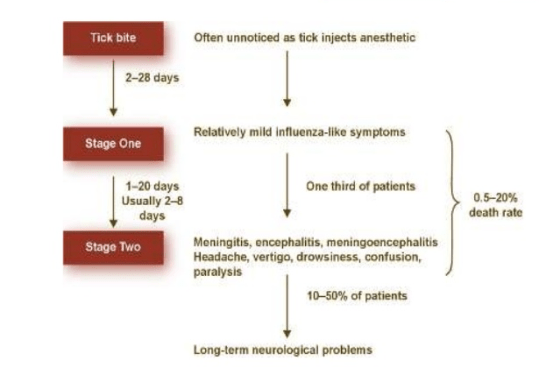
Tick-borne Encephalitis Found in Serbian Dogs, Horses, Wild Boar, and Roe Deer

Molecular Detection and Serological Evidence of Tick-Borne Encephalitis Virus in Serbia

Authors:  Potkonjak Aleksandar, Petrović Tamaš, Ristanović Elizabeta, Lalić Ivica, Vračar Vuk, Savić Sara, Turkulov Vesna, Čanak Grozdana, Milošević Vesna, Vidanović Dejan, Jurišić Aleksandar, Petrović Aleksandra, and Petrović Vladimir. Vector-Borne and Zoonotic Diseases.

https://doi.org/10.1089/vbz.2017.2167

Online Ahead of Print: October 24, 2017
Serbia
E-mail: ale@polj.uns.ac.rs

ABSTRACT
Tick-borne encephalitis (TBE) is a zoonotic flaviviral infection that is a growing public health concern in European countries. The aims of this research were to detect and characterize tick-borne encephalitis virus (TBEV) in Ixodes ricinus ticks at presumed natural foci in Serbia, and to determine seroprevalence of TBEV IgG antibodies in humans and animals.

A total of 500 I. ricinus ticks were examined for the presence of TBEV by real-time RT-PCR, and conventional nested PCR and sequencing. To determine TBEV seroprevalence, 267 human sera samples were collected, as were 200 sera samples from different animal species. All sera samples were examined by ELISA for the presence of anti-TBEV antibodies. To exclude cross-reactivity, all sera samples were tested for anti-West Nile virus (WNV) antibodies and all human sera samples were also tested for anti-Usutu virus antibodies by ELISA.

Results of this preliminary study indicated TBEV activity in Serbia at two microfoci. Several decades after the previous documentation of TBEV in Serbia, we have demonstrated the presence of TBEV in I. ricinus questing nymphs (prevalence 2% and 6.6% at the two different localities) and anti-TBEV antibodies in humans (seroprevalence 0.37%). Moreover, we show for the first time TBEV seroprevalence in several animal species in Serbia, including dogs (seroprevalence 17.5%), horses (5%), wild boars (12.5%), cattle (2.5%), and roe deer (2.5%). None of the goats tested was positive for anti-TBEV IgG antibodies. TBEV isolate from I. ricinus tick in this study belonged to the Western European subtype. To understand the true public health concern in Serbia, detailed epidemiological, clinical, virological, and acarological research are required. This is important for implementation of effective control measures to reduce the incidence of TBE in Serbia.

___________________

http://authoritycure.com/tick-borne-encephalitis-tbe/TBE (Tick-borne encephalitis) Treatment   Therapeutic approaches for viruses can only support the body in its fight against the pathogen by alleviating symptoms and preventing long-term damage; however, TBE patients can suffer from life-threatening symptoms and need to be closely monitored.

Tick-borne-encephalitis-symptoms

It is only in the second stage of disease that early meningoencephalitis can be detected by laboratory tests (blood, brain and spinal fluid).

https://www.cdc.gov/vhf/tbe/index.html  Other Flaviviridae viruses closely related to TBEV:  Omsk hemorrhagic fever virus in Siberia, Kyasanur Forest disease virus in India and its close relative, Alkhurma virus in Saudi Arabia, Louping ill virus (United Kingdom) that causes disease primarily in sheep but has been reported as the cause of a TBE-like illness in laboratory workers and persons with contact to sick sheep (e.g., veterinarians, butchers), and Powassan virus in the USA and Russia, is responsible for encephalitis in humans.

More on Powassan:  https://madisonarealymesupportgroup.com/2016/02/21/powassan-virus/

Viruses in general: https://madisonarealymesupportgroup.com/2016/03/28/combating-viruses/

https://madisonarealymesupportgroup.com/2017/10/15/vaccines-and-retroviruses-a-whistleblower-reveals-what-the-government-is-hiding/  Since the 1970’s scientists have done disease research in the same labs manufacturing vaccines.  They erroneously believed that mouse viruses and human viruses would not interact, or travel from one part of the research facility to another. This belief was proven wrong in 2009 by Dr. Judy Mikovits and other scientists who discovered that a retrovirus called XMRV (xenotropic murine retrovirus) and other related retroviruses were now present in 6% of Americans and that this retrovirus was appearing in a very high percentage of people with diseases such as prostate cancer, Chronic Fatigue Syndrome, autism, Lou Gehrig’s Disease, treatment resistant Lyme disease, and Parkinson’s Disease.


Clinical Trial Shows Most Kids With Autism Are Not Born With it

http://soundchoice.org/wp-content/uploads/Dawson_2017_Autism_autoUCB.pdf  Stem Cells Translational Medicine

GERALDINE DAWSON, JESSICA M. SUN, KATHERINE S. DAVLANTIS, MICHAEL MURIAS, LAUREN FRANZ, JESSE TROY,  RYAN SIMMONS, MAURA SABATOS-DEVITO, REBECCA DURHAM, JOANNE KURTZBERG

Autologous Cord Blood Infusions Are Safe and Feasible in Young Children with Autism Spectrum Disorder: Results of a Single-Center Phase I Open-Label Trial

ABSTRACT

Despite advances in early diagnosis and behavioral therapies, more effective treatments for children with autism spectrum disorder (ASD) are needed. We hypothesized that umbilical cord blood derived cell therapies may have potential in alleviating ASD symptoms by modulating inflammatory processes in the brain. Accordingly, we conducted a phase I, open-label trial to assess the safety and feasibility of a single intravenous infusion of autologous umbilical cord blood, as well as sensitivity to change in several ASD assessment tools, to determine suitable endpoints for future trials.

Twenty-five children, median age 4.6 years (range 2.26–5.97), with a confirmed diagnosis of ASD and a qualified banked autologous umbilical cord blood unit, were enrolled. Children were evaluated with a battery of behavioral and functional tests immediately prior to cord blood infusion (baseline) and 6 and 12 months later. Assessment of adverse events across the 12-month period indicated that the treatment was safe and well tolerated.

Significant improvements in children’s behavior were observed on parent-report measures of social communication skills and autism symptoms, clinician ratings of overall autism symptom severity and degree of improvement, standardized measures of expressive vocabulary, and objective eye-tracking measures of children’s attention to social stimuli, indicating that these measures may be useful endpoints in future studies. Behavioral improvements were observed during the first 6 months after infusion and were greater in children with higher baseline nonverbal intelligence quotients. These data will serve as the basis for future studies to determine the efficacy of umbilical cord blood infusions in children with ASD.

___________

**Comment**

**UPDATE July, 2022**

Roughly 1 in 30 children and adolescents ages 3-17 were diagnosed with an autism spectrum disorder in 2020, according to a JAMA Pediatrics research letter, which referenced a new study showing a 53% increase in ASD in young Americans since 2017.

According to the documentary Trace Amounts as of 2014, 1 in 68 children have Autism. That’s 1 Million US children.

http://soundchoice.org/wp-content/uploads/notbornwithit-2.pdf According to Sound Choice Pharmaceutical Institute, the Duke study is remarkable in that 60-70% or more of children with Autism have de novo gene mutations (not found in either parent) that must have occurred after birth according to the results, not in the egg, sperm or early utero development as previously, and erroneously assumed.

This new finding reveals research should now be geared to finding out what environmental damage after birth leads to these mutations and/or what pathogens are acting as triggers.

Autism like Lyme/MSIDS is an epidemic and according to one Wisconsin LLMD, 80% of his Autistic patients are also infected with Lyme/MSIDS.

For more:  https://madisonarealymesupportgroup.com/2017/09/19/autism-aluminum-adjuvant-link-corroborated/

https://madisonarealymesupportgroup.com/2017/09/21/aluminum-flawed-assumptions-fueling-autoimmune-disease-and-lyme/

https://madisonarealymesupportgroup.com/2016/12/08/mercury-and-autism/

https://madisonarealymesupportgroup.com/2017/03/27/vaccines-revealed-8-watch-trace-amounts-for-free-until-9pm-tonight/  I highlight the documentary Trace Amounts

Lyme Wars – Part 3

http://www.nbcnewyork.com/on-air/as-seen-on/Lyme-Wars-Part-III-How-Science-Could-Overcome-Lyme_New-York-453167163.html  (Click on link for news video)

Erica Byfield reports on a Johns Hopkins University research center dedicated to curing the tick-borne illness. This is the third in our five-part series on Lyme disease and the debate over the controversial diagnosis of chronic Lyme.

_____________

**Comment**

Christine Heidt of the University of Alberta has written a clear treatise on the issue of the persistence of Lyme (borrelia) TheCaseforthePersistenceofLymeDiseaseAfterAntibioticTherapy

In a study published over 20 years ago, it was reported that “Antibiotic therapy with penicillin, doxycycline, and ceftriaxone has proven to be effective for the treatment of Lyme borreliosis. In some patients, however, it was noticed that borreliae can survive in the tissues in spite of seemingly adequate therapy.”(14) Interestingly, recent studies support this same conclusion. Additionally, researchers have observed that either of the two antibiotics that were administered in the IDSA studies were found to initiate the transformation of the LD spirochete into treatment resistant persister cells and other bacterial forms.(5,6,9,10,11,12,13,14,15,16) Ironically, the four clinical trials meant to support the IDSA’s PTLDS model actually serve to support this recent research, which in turn supports ILADS assertion of reversion to persistent bacteremia causing ongoing symptoms, rather than the IDSA’s expert opinion that the infection has been eradicated and residual symptoms remain indefinitely….

A recent research article co-authored by, Dr Paul Auwaerter (President-elect of the IDSA), entitled “Drug Combinations against Borrelia burgdorferi Persisters In Vitro: Eradication Achieved by Using Daptomycin, Cefoperazone and Doxycycline” suggests that perhaps even the IDSA’s own members are not fully convinced of the IDSA’s version of chronic Lyme disease.(10) While Auwaerter asserts that the cause of PTLDS is unknown, he admits that “findings that suggest the continued presence of B. burgdorferi in some form indicate that current Lyme disease treatment may not sufficiently eliminate B. burgdorferi persisters or that the immune system fails to clear persisting organisms or bacterial debris, which may be the underlying cause for those who suffer from unresolved Lyme disease symptoms.”

Prior to this publication, Dr Auwaerter co-authored a publication with IDSA LD Guidelines members entitled “ Antiscience and ethical concerns associated with advocacy of Lyme disease” where he and the other authors attempt to discredit any research that does not support the IDSA’s PTLDS theories, with statements such as “Some activists portray Lyme disease, a geographically limited tick-borne infection, as a disease that is insidious, ubiquitous, difficult to diagnose, and almost incurable; they also propose that the disease causes mainly non-specific symptoms that can be treated only with long-term antibiotics and other unorthodox and unvalidated treatments. Similar to other antiscience groups, these advocates have created a pseudoscientific and alternative selection of practitioners, research, and publications and have coordinated public protests, accused opponents of both corruption and conspiracy, and spurred legislative efforts to subvert evidence-based medicine and peer-reviewed science.”(21)  

The truth is that over 50% of the IDSA’s guidelines are based on “expert opinion” rather than “evidence-based medicine” as their publication suggests. A further 31% of the IDSA guidelines are based on observational studies. Only a meagre 29% of the IDSA Guidelines fit into “evidence-based medicine”.(22,23,24,25,27) Importantly, the IDSA’s own research supports these very findings.(22) Furthermore, various IDSA members that co-authored the “Antiscience and ethical concerns” publication(21) were also involved with the creation of the Lyme Guidelines although they, themselves hold competing interests. Some members hold patents for LD products, some own shares in companies that have vested interests with the diagnosis and treatment of LD and some act as “expert witnesses in malpractice litigation” against any Dr that dares to question their “expert opinion”.(22,26) Rather than sharing information and learning from others, the IDSA continues to belittle, publicly attack and/or attempt to jail any Dr or researcher that does not endorse their Lyme disease Guidelines and policies.(22) 

Animal studies have also shown detectable borrelia DNA:  Straubinger’s dog study (persist & reactivate).pages

B. burgdorferi disseminates through tissue by migration following tick inoculation, produces episodes of acute arthritis, and establishes persistent infection. The spirochete survives antibiotic treatment and disease can be reactivated in immunosuppressed animals.

http://archives.republicans.foreignaffairs.house.gov/112/HHRG-112-FA16-WState-BartholdS-20120717.pdf  by Stephen W. Barthold, DVM, PhD

It’s been demonstrated in dogs, mice, and monkeys that non cultivable spirochetes persist following antibiotic treatment.  So, researchers have been able to detect borrelia DNA but they have not been able to culture it from tissues.  This has led many researchers to conclude that after treatment with antibiotics, spirochetes are viable but not infectious.

http://www.hoajonline.com/infectdis/2052-5958/1/2

Stricker and Johnson state that the Embers et al. monkey study provides animal evidence for persistent infection when three quarters failed antibiotic treatment and had persistent infection showing up in tissues at necropsy using PCR.  It’s also important to note that “small numbers of intact spirochetes were recovered by xenodiagnosis from treated monkeys.”  https://www.ncbi.nlm.nih.gov/pmc/articles/PMC3256191/

What this means is researchers put ticks void of infection upon the monkeys after treatment.  After a blood meal they removed the ticks and found spirochetes in them proving there were still spirochetes in the treated monkeys.

This has been done in humans too:  https://www.ncbi.nlm.nih.gov/pmc/articles/PMC3952603/

Dr. Betty Maloney states that the positive xenodiagnostic test in a persistently ill post-treatment subject is highly significant evidence of persistence infection; however, she feels the authors went to great lengths to discount the significance and only questioned whether the recovered DNA was just dead remnants that happened to be in the tick bite site, or due to patient noncompliance with previous therapy, inadequate blood levels of antibiotics, or re-infection.  https://www.lymedisease.org/TheLymeTimes-V26-3/index.html#25/z  The authors concluded there was insufficient evidence.

To read Dr. Horowitz’s comment about episode 3 on his FB page:  https://www.facebook.com/drrichardhorowitz/posts/1524119334343526 He too lists studies as well as the fact treating physicians have found antibiotics to significantly help improve the quality of life of patients and that recent peer-reviewed studies have shown borrelia can persist like TB and leprosy due to biofilms and dormant forms.

https://madisonarealymesupportgroup.com/2017/08/18/drexel-prof-lyme-persists/

https://madisonarealymesupportgroup.com/2016/12/21/dr-zhang-on-persisters/

https://madisonarealymesupportgroup.com/2015/09/19/proof-of-borrelia-persistence/

https://madisonarealymesupportgroup.com/2017/08/25/sleeper-cells-the-stringent-response-and-persistence-in-the-borreliella-burgdorferi-enzootic-cycle/

And so the circle goes round and round without end.  The IDSA states none of this proves infection.  We ALL want to know why folks are still sick.

And the IDSA wants to have us believe Lyme disease is simple.  Really?


Opthalmic Manifestations of Bartonella Infection

Ophthalmic manifestations of bartonella infection

Abstract

Purpose of review 

The eye is commonly affected in disseminated cat scratch disease (CSD) caused by Bartonella species. This article reviews recently published data on epidemiology of CSD, clinical features of ocular involvement, diagnosis and treatment.

Recent findings 

The annual incidence of CSD has been estimated as 4.7 per 100, 000 in the United States. It occurs predominantly in the southern states, with a peak in January, and disproportionately affects children. Retinal infiltrates, neuroretinitis and branch retinal artery occlusions have been reported as common manifestations of ocular bartonellosis in recent series. The use of different antigens for serodiagnosis and new real-time PCR assays for molecular diagnosis have been described. Despite lack of a standard treatment, good visual outcomes were generally reported in patients with ocular bartonellosis.

Summary 

Bartonella infections continue to be a burden worldwide and epidemiologic features may guide preventive measures in high-risk regions and populations. An increased awareness of diverse posterior segment manifestations will lead to an early diagnosis of ocular bartonellosis. Laboratory diagnostic methods continue to evolve and may be applied to the investigation of ocular fluids for a definitive diagnosis of ocular bartonellosis. Well designed clinical trials are required to establish the optimum treatment of especially sight-threatening manifestations.

_____________

For more on Bartonella:

https://madisonarealymesupportgroup.com/2016/01/03/bartonella-treatment/

https://madisonarealymesupportgroup.com/2017/07/21/bartonella-and-neuroretinitis/

https://madisonarealymesupportgroup.com/2017/04/06/ocular-bartonellosis/

https://madisonarealymesupportgroup.com/2016/08/09/a-bartonella-story/


https://madisonarealymesupportgroup.com/2017/05/20/bartonella-endocarditis-opportunistic-infection-in-cancer-patients-and-eye-inflammation/

https://madisonarealymesupportgroup.com/2017/07/31/shedding-light-on-bartonella/

https://madisonarealymesupportgroup.com/2017/08/02/neurological-and-immunological-dysfunction-in-two-patients-with-bartonella-henselae-bacteremia/