Archive for the ‘research’ Category

Tens of Thousands Likely to Get TBD in Massachusetts This Year

https://www.bostonglobe.com/metro/2018/05/07/state-expert-tens-thousands-likely-will-get-tick-borne-disease-mass-this-year

Tens of thousands likely to get tick-borne disease in Mass. this year
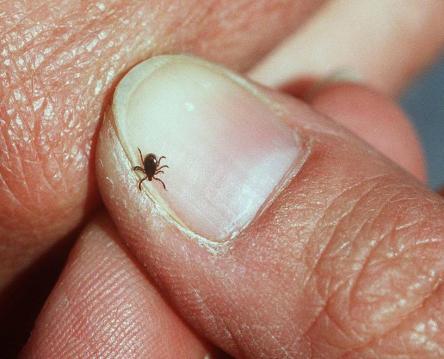
06252007_25tick-5985597An adult deer tick.  MARK WILSON/GLOBE STAFF/FILE

By Felice J. Freyer and Martin Finucane GLOBE STAFF MAY 07, 2018

Few experiences are creepier than finding a tick attached to your body — except, perhaps, pondering the harmful germs the eight-legged critter may be injecting.

But ponder no more: If you send a tick to the University of Massachusetts Amherst, you can find out exactly what manner of microbe may have infected it — and possibly, you. Lyme disease is the most prevalent, but ticks carry several other viruses, parasites, and bacteria.

People who find a tick on their body can put it in a plastic bag — dead or alive — and mail it to the UMass lab. For a fee, confidential results come by e-mail within three days.

The germs ticks carry are a matter of growing concern: Last week, the Centers for Disease Control and Prevention said that reported illnesses from mosquito, tick, and flea bites more than tripled from 2004 to 2016.

In Massachusetts in 2017, some 8,692 people tested positive for Lyme disease, up from 5,829 four years earlier. But most cases are not reported, so Dr. Catherine M. Brown, deputy state epidemiologist, estimates that about 87,000 people a year are getting Lyme disease in the state.

Anaplasmosis/ehrlichiosis, the second most common tick-borne disease, was reported 341 times in 2013, and rose to 1,226 in 2017. That’s a 260 percent increase.

“So many people in Massachusetts are being impacted by at least one of these diseases,” Brown said. “It’s increasing dramatically.”

Stephen Rich, a microbiology professor and director of the Laboratory of Medical Zoology at UMass Amherst, said the increases probably reflect both more illness and more awareness. The biggest changes are in areas, such as upstate New York, where ticks are just starting to move in, he said.

In Massachusetts, ticks are always abundant statewide, so fluctuations in the tick population have little meaning, he said. People need to think of protecting themselves from bites in the same way they put on sunscreen at the beach — a necessary precaution, every year. To avoid tick bites, wear clothing treated with permethrin, apply DEET to the skin, check for ticks after being outside, and treat your yard and pets.

The TickReport program at UMass, which Rich runs, tested 14,000 ticks last year and expects to see many more in 2018. The program, which has received ticks from all 50 states, demonstrates the power of crowdsourcing, by gathering a wealth of information on the location of different tick species and the disease-causing microbes they carry, he said.

The only other way to track ticks is to drag a cloth over bushes and test the ticks that stick to it, he said. But that just gives a snapshot of a limited area on a given day. “That doesn’t reflect the ticks that are biting people,” Rich said.

TickReport goes directly to the source — the ticks’ human targets.

People who send a tick pay $50, $100, or $200, depending on how many microbes are being tested for.

A $100,000 federal grant announced Monday will subsidize those tests for Massachusetts residents. The goal is to get a better idea of the prevalence of the 23 potentially disease-causing microorganisms that ticks can carry.

Along with a discount added by the laboratory, the federal grant will lower the cost of the $100 test to $15 for the first 1,000 ticks the lab receives; then it will lower the $50 test to $15 for the next 1,500 ticks.

TickReport has been testing ticks since 2006. About 43 percent come from Massachusetts but not evenly across the state. Rich hopes to get more ticks from underrepresented areas, particularly the North Shore, the Berkshires, and Worcester County.

The tests don’t diagnose a person but they provide information that can guide medical decisions, Rich said.

TickReport has a partnership with another crowdsourcing project — TickSpotters at the University of Rhode Island, which is free:  http://www.tickencounter.org/tickspotters

With TickSpotters, people e-mail photos of bugs they think are ticks and provide basic information such as how long each was attached. The URI group identifies the species of tick and describes the risk of illness. Often the bugs pictured aren’t even ticks — the program has received photos of weevils and lice, said Thomas N. Mather, director of URI’s TickEncounter Resource Center:  http://www.tickencounter.org

Once participants get the basics from TickSpotters, those who want to know more are urged to send the tick to TickReport to find out if it was infected.

For example, a Rhode Island woman recently sent TickSpotters a photo of a tick that had been attached to her for less than a day, Mather said. The program identified it as an adult, female, black-legged tick, and advised that the risk of infection was low because the tick hadn’t been attached long enough to transmit illness. Still concerned, the woman sent the tick to UMass, where it was found to be infected with Lyme disease.

That doesn’t mean the woman has Lyme disease. A tick must feed for 36 to 48 hours before it transmits Lyme disease. (Please see my comment below)

“If I were her, I would just be alert for symptoms. But we try to stay out of it at this point,” Mather said. The rest is up to the woman and her physician.

After years of trying to educate the public about ticks and the risk of illness, and finding that misinformation remains rampant, Mather has found TickSpotters to be a useful educational tool.

“I don’t think there’s anyone more engaged in learning about ticks than someone who has had a tick on them,” he said. “We’re personalizing education, approaching people at their most needy and receptive.”

TickSpotters, which started in 2014, has received nearly 46,000 submissions, collecting a wealth of data about locations of different species of ticks nationwide — data no one has had time to analyze, Mather said.

_____________

**Comment**

While I love the work going on here a huge faux pax has been made regarding transmission times – and it’s a big deal:  https://madisonarealymesupportgroup.com/2017/04/14/transmission-time-for-lymemsids-infection/  

Transmission Time: Only one study done on Mice. At 24 hours every tick had transmitted borrelia to the mice; however, animal studies have proven that transmission can occur in under 16 hours and it occurs frequently in under 24 hours. No human studies have been done and https://www.dovepress.com/lyme-borreliosis-a-review-of-data-on-transmission-time-after-tick-atta-peer-reviewed-article-IJGM no studies have determined the minimum time it takes for transmission.
There’s also the issue of partially fed ticks transmitting more quickly: http://iai.asm.org/content/61/6/2396.full.pdf Ticks can spontaneously detach – and the authors of this study found that they did so 15% of the time in mice. They also state that about a tenth of questing nymphs appear distended with partially fed sub-adult ticks being common. This quicker transmission is due to spirochetes presiding in the salivary glands rather than the mid-gut.

https://madisonarealymesupportgroup.wordpress.com/2016/12/07/igenex Bob Giguere of IGeneX states a case of a little girl who went outside to play about 8:30a.m. and came inside at 10:30 with an attached tick above her right eye. By 2 o’clock, she had developed the facial palsy. At the hospital she was told it couldn’t be Lyme as the tick hadn’t been attached long enough. They offered a neuro-consult…..By 4pm she couldn’t walk or talk.
A Lyme literate doctor trained by ILADS met the family in his office on a Saturday, gave her an intramuscular injection of antibiotics and within 2 hours the palsy was gone. He continued her treatment for approximately 4 weeks.

Do NOT take a “wait and see” approach when it comes to this plague.  Get on it and get on it now.  The longer you wait the greater the potential for it to embed deep within the body including the brain.  Every SINGLE attached tick should be taken as seriously as a heart attack.  Please spread the word about this.  The myths must END!

Natural Compound Deters Lone Star Tick Larvae

https://entomologytoday.org/2017/12/07/natural-compound-deters-lone-star-tick-larvae/

Natural Compound Deters Lone Star Tick Larvae

by Leslie Mertz

lone star tick adult femaleA botanical compound called p-anisaldehyde has been found to have deterrent properties on the larval stage of lone star ticks (Amblyomma americanum). The effects on nymphal and adult (shown above) stages of the lone star tick have yet to be tested, however. (Photo credit: Dr. Amanda Loftis, Dr. William Nicholson, Dr. Will Reeves, Dr. Chris Paddock, via CDC Public Health Image Library)

A naturally occurring botanical compound found in anise, fennel, vanilla, and cranberries is effective in deterring one of the major human and livestock pests, according to research by scientists at the U.S. Department of Agriculture’s Agricultural Research Service (USDA-ARS).  The study showed that the botanical compound called p-anisaldehyde fends off the larva of the lone star tick (Amblyomma americanum), which is one of the most prevalent ticks in the southeastern and south-central United States. Not only does the lone star tick parasitize cattle, horses, goats, dogs, and many other animals, but it is also the most frequently reported tick species to bite humans in those regions of the country, and it can transmit diseases such as erhlichiosis, spotted-fever rickettsiosis, tularemia, and protozoan infections, according to Allan Showler, Ph.D., research entomologist at the USDA-ARS Knipling-Bushland U.S. Livestock Insects Research Laboratory in Kerrville, Texas, and lead author of a study on the subject published in October in the Journal of Medical Entomology:  https://academic.oup.com/jme/article-abstract/55/1/200/4344918?redirectedFrom=fulltext

“This tick is problematic anywhere there are a lot of host animals. For instance, on the east Texas coastal plains, you have turkey and white-tailed deer, as well as other large ungulates like feral nilgai antelope, all running around hosting ticks. That’s in addition to the domesticated livestock, such as cattle, that are ranging out there. So, anytime humans go hunting or hiking or otherwise go out into these areas, they might pick up a tick,” Showler says.

Making matters worse, all three life stages in three-host tick species—the larvae, nymphs, and both adult males and females—bite. The larval tick climbs onto low vegetation and waits (the wait is called “questing”). When a host animal happens by, it gloms on, finds a vulnerable spot, and sinks its mouthparts into the skin to begin feeding. “Once it becomes replete with blood, it will drop off and become a nymph,” Showler describes. The process repeats with the nymph questing, feeding and dropping off to become an adult, and with the adult repeating the process. When the adult female drops off the host, she lays her eggs. (In one-host tick species, such as the southern cattle fever tick, all three mobile life stages feed on the same host without dropping off.)

Showler has been interested in “more organic, greener, less-toxic-to-humans approaches for tick repellency and tick control, but when it comes to many of the botanicals, it’s kind of a crapshoot,” he says, explaining that many have not been thoroughly tested on different pest species. “I started out with a number of different botanicals that might bear something out in pilot studies. And while the other ones weren’t so interesting, p-anisaldehyde was.” He found studies showing that this compound disoriented mosquitoes but was an attractant for certain other insect species and was toxic to others. “It was really curious, so we decided to just give it a go on these ticks and see what happened,” he remarks.

Specifically, he and co-author Jessica Harlien, who is also a USDA-ARS researcher, tested various formulations and treatments of p-anisaldehyde on lone star ticks (Amblyomma americanum). “What jumped out at us more than anything else was its deterrence or repellency,” he says. The two are different: A deterrent causes the target species to avoid a compound, while a repellant actually drives the tick away. “We’re pretty sure that p-anisaldehyde is a deterrent, at least on lone star tick larvae.” They also found that the compound is lethal to the ticks if they are immersed in certain concentrations and that exposure of adult females to sublethal concentrations reduced egg production.

allan-showler

Allan Showler, Ph.D., research entomologist at the U.S. Department of Agriculture’s Agricultural Research Service, is the lead author of a new study reporting that a naturally occurring botanical compound is effective in repelling larval lone star ticks. (Photo credit: Allan Showler, Ph.D.)

So far, they have conducted all of their deterrence and repellency tests of p-anisaldehyde on larval ticks. “Part of the reason is the larvae tend to be more vulnerable because they’re smaller, so it’s a good place to begin,” he says, noting that they will start testing repellency on nymphs and adults soon.

“When it comes to botanicals, I know some people like to say it’s been done to death, but it’s the opposite. Actually most of the studies stop where we stopped: We make a discovery, but now someone else has to take the reins and develop it into a commercial product,” he explains. “What we’ve done in this study is report that p-anisaldehyde looks to have lethal (contact) properties on lone star tick larvae, and it has deterrent properties against larvae, but, as far as how it might be formulated and applied in an economically feasible way for use on humans or other animals, that is something that has yet to be developed.”

Beyond lone star ticks, the researchers are also running tests on other pest species, notably house flies and selected biting flies. “We’ve got some really good preliminary information,” he says, adding that they hope to publish those results soon. As another teaser of his work, he adds, “Without divulging anything, we’re working right now on something that, at least in the laboratory, is knocking these lone star ticks dead really fast. I can’t give any more details because we’re still in the middle of the study, but hopefully that’s coming soon.”

______________

**Comment**

This work is a year old but holds promise for action against the Lone Star Tick which is responsible for transmitting the Alpha-gal (red meat) allergy, ehrlichiosis, Rocky Mountain Spotted Fever, Tularemia, and STARI, a Lyme-like illness that they keep insisting isn’t Lyme but every patient claims looks, acts, and smells just like Lyme.

More on Alpha-gal:  https://madisonarealymesupportgroup.com/2018/05/04/arkansas-woman-develops-deadly-meat-allergy-after-tick-bite/

https://madisonarealymesupportgroup.com/2018/04/08/novel-viruses-found-in-lone-star-american-dog-black-legged-ticks/

https://madisonarealymesupportgroup.com/2018/05/04/in-tick-management-species-matters/

Lactoferrin for Lyme?

https://www.ncbi.nlm.nih.gov/pubmed/29669808

J Biol Chem. 2018 Apr 18. pii: jbc.RA118.003145. doi: 10.1074/jbc.RA118.003145. [Epub ahead of print]

Lactoferrin is a natural inhibitor of plasminogen activation.

Zwirzitz A1, Reiter M2, Skrabana R3, Ohradanova-Repic A2, Majdic O2, Gutekova M4, Cehlar O3, Petrovčíková E5, Kutejova E5, Stanek G2, Stockinger H6, Leksa V7.

Abstract
The plasminogen system is essential for dissolution of fibrin clots, and in addition, it is involved in a wide variety of other physiological processes, including proteolytic activation of growth factors, cell migration, and removal of protein aggregates. On the other hand, uncontrolled plasminogen activation contributes to many pathological processes, e.g. tumor cells’ invasion in cancer progression. Moreover, some virulent bacterial species, e.g. Streptococci or Borrelia, bind human plasminogen and hijack the host’s plasminogen system to penetrate tissue barriers. Thus, the conversion of plasminogen to the active serine protease plasmin must be tightly regulated. Here, we show that human lactoferrin, an iron-binding milk glycoprotein, blocks plasminogen activation on the cell surface by direct binding to human plasminogen. We mapped the mutual binding sites to the N-terminal region of lactoferrin, encompassed also in the bioactive peptide lactoferricin, and kringle 5 of plasminogen. Finally, lactoferrin blocked tumor cell invasion in vitro and also plasminogen activation driven by Borrelia. Our results explain many diverse biological properties of lactoferrin, and also suggest that lactoferrin may be useful as a potential tool for therapeutic interventions to prevent both invasive malignant cells and virulent bacteria from penetrating host tissues.

________

For More:  https://madisonarealymesupportgroup.com/2018/03/05/how-proteolytic-enzymes-may-help-lyme-msids/

https://madisonarealymesupportgroup.com/2016/04/22/systemic-enzymes/

https://madisonarealymesupportgroup.com/2018/01/03/the-invisible-universe-of-the-human-microbiome-msm/

Lyme Hangout with Dr. Cameron – How to Treat for a Tick Bite – May 8, 2018

http://danielcameronmd.com/lyme-hangout-registration/#form-wrap

Featured Topic: Guidelines for treating a tick bite

Doctors are divided over the best treatment for a tick bite. The Infectious Diseases Society of American (IDSA) advises a single 200mg dose of doxycycline for an adult patient and 4m/kg up to 200 mg for a child at least 8 years of age based on a single study. The International Lyme and Associated Disease Society (ILADS) is opposed to a single dose of doxycycline for a tick bite. There is no evidence that a single dose of antibiotics is effective to prevent complications of Lyme disease or co-infections. I will review what we know, what we don’t know and what I do in practice.

When:  Tuesday, May 8th, 2018 at 8PM EST.

______________

For more:

https://madisonarealymesupportgroup.com/2017/03/24/one-pill-of-doxy-only-reduces-prevalence-of-rash-not-lyme-disease/

High-Resolution Ecological Niche Modeling of Ixodes scapularis Ticks Based on Passive Surveillance Data at the Northern Frontier of LD Emergence in North America

www.liebertpub.com/doi/abs/10.1089/vbz.2017.2234#utm_source=ETOC&utm_medium=email&utm_campaign=vbz

High-Resolution Ecological Niche Modeling of Ixodes scapularis Ticks Based on Passive Surveillance Data at the Northern Frontier of Lyme Disease Emergence in North America

Soucy Jean-Paul R., Slatculescu Andreea M., Nyiraneza Christine, Ogden Nicholas H., Leighton Patrick A., Kerr Jeremy T., and Kulkarni Manisha A.

Published Online:1 May 2018https://doi.org/10.1089/vbz.2017.2234

Abstract

Background: Lyme disease (LD) is a bacterial infection transmitted by the black-legged tick (Ixodes scapularis) in eastern North America. It is an emerging disease in Canada due to the expanding range of its tick vector. Environmental risk maps for LD, based on the distribution of the black-legged tick, have focused on coarse determinants such as climate. However, climatic factors vary little within individual health units, the level at which local public health decision-making takes place. We hypothesize that high-resolution environmental data and routinely collected passive surveillance data can be used to develop valid models for tick occurrence and provide insight into ecological processes affecting tick presence at fine scales.

Methods: We used a maximum entropy algorithm (MaxEnt) to build a habitat suitability model for I. scapularis in Ottawa, Ontario, Canada using georeferenced occurrence points from passive surveillance data collected between 2013 and 2016 and high-resolution land cover and elevation data. We evaluated our model using an independent tick presence/absence dataset collected through active surveillance at 17 field sites during the summer of 2017.

Results: Our model showed a good ability to discriminate positive sites from negative sites for tick presence (AUC = 0.878 ± 0.019, classification accuracy = 0.835 ± 0.020). Heavily forested suburban and rural areas in the west and southwest of Ottawa had higher predicted suitability than the more agricultural eastern areas.

Conclusions: This study demonstrates the value of passive surveillance data to model local-scale environmental risk for the tick vector of LD at sites of interest to public health. Given the rising incidence of LD and other emerging vector-borne diseases in Canada, our findings support the ongoing collection of these data and collaboration with researchers to provide a timely and accurate portrait of evolving public health risk.

_____________

**Comment**

Just remember ticks can be everywhere and the high infection rates reflect that.  We can map ticks all the day long but at the end of the day it’s all about knowing they are moving into turf they’ve never been documented in before.

More on ticks:  https://madisonarealymesupportgroup.com/2017/10/27/israeli-kids-get-lyme-disease-from-ticks-in-caves/

https://madisonarealymesupportgroup.com/2018/04/23/tick-borne-relapsing-fever-found-in-austin-texas-caves/

https://madisonarealymesupportgroup.com/2017/03/13/ticks-found-on-rocks/

https://madisonarealymesupportgroup.com/2017/08/17/of-birds-and-ticks/

https://madisonarealymesupportgroup.com/2018/04/21/ticks-from-hell-survived-the-winter/

https://madisonarealymesupportgroup.com/2018/01/26/forget-ebola-sars-and-zika-ticks-are-the-next-global-health-threat/