Archive for the ‘research’ Category

Vitamin D Increases Protection Against Infection, New Model Suggests

https://medicalxpress.com/news/2019-12-vitamin-d-infection.html

Vitamin D increases protection against infection, new model suggests
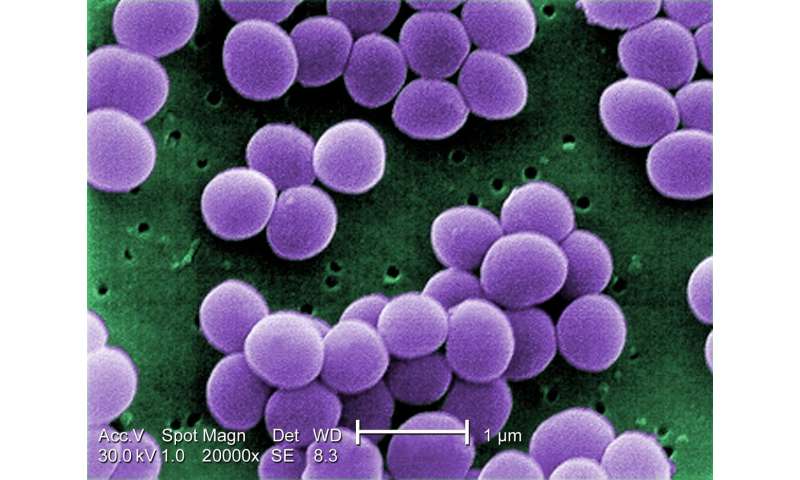
Vitamin D increases protection against infection, new model suggests

Oregon State University researchers have led the development of a new model for studying vitamin D’s role in infection prevention, and tests using the model suggest that vitamin D treatment can dramatically reduce the number of disease-causing bacteria in skin wounds.

In addition to shedding light on potential, the study is important because it established a new way to probe the mechanisms through which D regulates an important antimicrobial peptide in the body.

Findings were published in the Journal of Steroid Biochemistry and Molecular Biology.

Vitamin D, which is fat-soluble and present in very few foods—including the flesh of fatty fish, beef liver, cheese and egg yolks—promotes calcium absorption in the gut and is needed for bone growth. Vitamin D, manufactured by the body when triggered by sunlight, is also important for , neuromuscular function, and reduction of inflammation.

OSU scientist Adrian Gombart and collaborators have been probing the vitamin’s role in combating infection, with past studies involving loading wound dressings and sutures with vitamin D.

The current study examines the bioactive form of vitamin D’s role in promoting the body’s production of the cathelicidin antimicrobial peptide, typically abbreviated to CAMP. A peptide is a compound consisting of two or more amino acids linked in a chain, and CAMP is made by and cells that provide a barrier against infection, such as skin and gut cells.

The gene that codes for CAMP is present in humans and other primates. Other mammals including mice have a similar gene, Camp, but vitamin D does not trigger it.

To study how vitamin D and CAMP work together to help thwart infection, Gombart and his research team developed a line of mice that carry the CAMP gene but not Camp. They bred mice engineered to carry human CAMP to mice with their Camp gene knocked out, resulting in mice with an antimicrobial peptide gene regulated by the bioactive form of vitamin D.

The scientists believe the novel model will be useful as research into vitamin D-induced expression of CAMP progresses, involving diseases caused by microorganisms and also conditions that are “non-pathogenic,” such as .

In this study, researchers showed that the with the human CAMP gene had increased resistance to gut infections, and that staph infections on their skin could be successfully treated with the bioactive form of the vitamin.

“Vitamin D3 regulates the expression of the CAMP, and Staphylococcus aureus is an important human pathogen that causes skin infections,” said Gombart, professor of biochemistry and biophysics in OSU’s College of Science and a principal investigator at the university’s Linus Pauling Institute. “With our mouse model, we showed that treating a skin wound infected with S. aureus with the bioactive form of vitamin D significantly reduced the number of bacteria in the wound.”
The finding, Gombart said, suggests vitamin D can be used to increase protection against infection via increased CAMP levels.

Lyme Disease Prevalence: Does Sex Matter?

https://www.lymedisease.org/lyme-disease-prevalence-gender-bias/

Gender bias is now a widely recognized problem in research. Sometimes this happens because women haven’t been studied in the first place. Even when they have been included in the research, their results may not be analyzed separately from those of men. Because of this, we don’t know much about how women differ from men in how they contract a disease, are diagnosed, or respond to treatment.

Is this an issue in Lyme disease? Are women more likely to get Lyme disease, more difficult to diagnose, or more prone to treatment failure? We decided to launch a research study using data from the MyLymeData patient registry. To kick off the study, we asked Dr. Raphael Stricker to explain how males and females with Lyme disease might differ. His video presentation is included below.

Lyme Disease Gender Differences

Dr. Stricker identified four major areas in Lyme disease where males and females are not alike:

  • Women may attract more ticks and have more atypical Lyme rashes than men (Josek 2019).
  • Commercial two-tier Lyme testing favors men over women, because men have more positive ELISA tests and more positive Western blots (Feder 1992, Rebman 2015, Schwarzwalder 2010).
  • Women have an exaggerated response to Borrelia infection, with more inflammatory and inhibitory cytokines than men. This may promote the evolution of chronic Lyme disease. (Jarefors 2006).
  • Women may have a higher treatment failure rate.

Lyme Tests Are Biased To Detect More Males

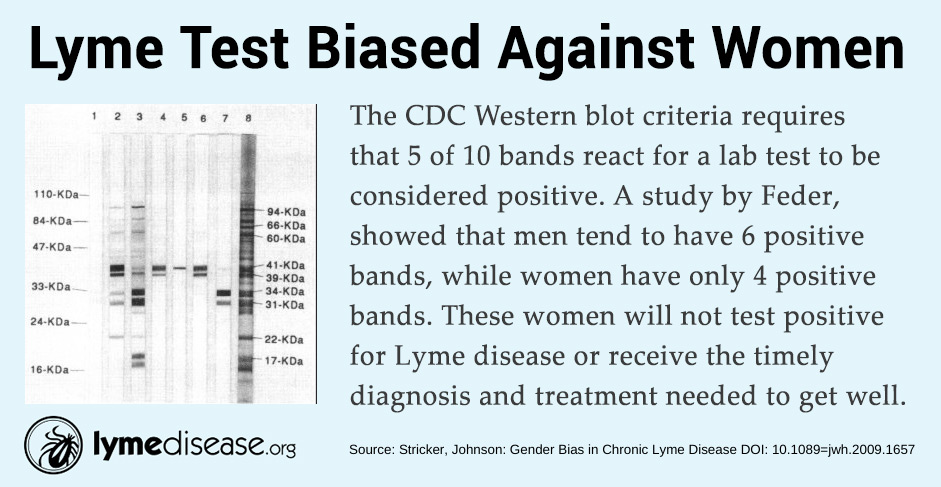
The CDC Western blot criteria requires that 5 of 10 bands react for a lab test to be considered positive. A study by Feder, showed that men tend to have 6 positive bands, while women have only 4 positive bands. These women will not test positive for Lyme disease or receive the timely diagnosis and treatment needed to get well (Stricker, Johnson 2009).

Lyme Disease Prevalence — Almost Twice As Many Females As Males

According to the CDC, most reported surveillance cases are male—58% males vs 42% females. The CDC statistics also show a bimodal distribution of Lyme disease — with children and adults over 50 reporting the most cases. Both of these assumptions have recently been called into question by other big data studies.

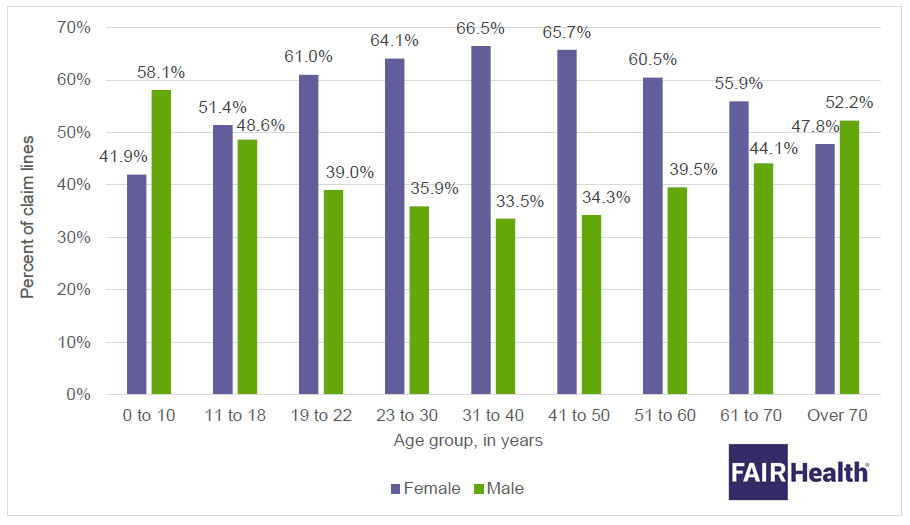
For example, FAIR Health, one of the largest insurance claims data bases, recently released a report on Lyme disease that shows more insurance claim lines with Lyme disease diagnoses were submitted for females than males and females do not have a bimodal age distribution. In fact, between the ages of 23-50, there were almost twice as many females as males with Lyme disease. (FAIR Health 2019).

Lyme Disease Prevalence - for some ages (23-50), there were almost twice as many females as males with Lyme disease

Atypical Presentation of Lyme Neuroborreliosis Related Meningitis & Radiculitis

https://www.ncbi.nlm.nih.gov/pubmed/31871602/

2019 Dec 2;11(4):8318. doi: 10.4081/ni.2019.8318. eCollection 2019 Nov 29.

Atypical presentation of Lyme neuroborreliosis related meningitis and radiculitis.

Abstract

Lyme disease related central and peripheral nervous system manifestations can occur in isolation or together. Radiculitis or inflammation of the nerve root can be seen 3-5% of the time in acute neuroborreliosis affecting the PNS with a typical presentation and meningitis affecting the CNS is usually seen 1% of the time. The appropriate diagnosis and management of neuroborelliosis can be challenging and require meticulous medical approaches. Herein we present a unique case of Lyme disease with neurologic manifestations including both radiculitis and meningitis due to its atypical and challenging clinical presentation and management with updated literature review.

_______________

**Comment**

I assure you, Meningitis and Radiculitis are NOT atypical with Lyme. The problem is many cases just do not get into the literature for a variety of reasons. Again, to get into research studies they often mandate an EM rash and a positive on testing, which is like winning the lottery.

https://madisonarealymesupportgroup.com/2017/09/06/spinal-meningitis-from-tick-bite/

Meningitis is an inflammation (swelling) of the protective membranes covering the brain and spinal cord. A bacterial (such as Lyme) or viral infection of the fluid surrounding the brain and spinal cord usually causes the swelling. However, injuries, cancer, certain drugs, and other types of infections also can cause meningitis.  https://www.cdc.gov/meningitis/index.html  This link also states that parasites, fungus, and amoebas can cause it (all of which can play a part in tick-borne illness).

Radiculitis may occur with Lyme disease as infection causes a localized inflammatory reaction in the root of a nerve or somewhere along the nerve itself.  https://lymediseaseguide.net/lyme-disease-neuropathy-prognosis-treatment

Ironically, this 2017 states both can be presentations of Lyme:  https://n.neurology.org/content/88/16_Supplement/P1.311

Excerpt:  Classic symptoms of Lyme neuroborreliosis include radiculoneuritis, cranial nerve abnormalities, and meningitis. Without a higher clinical suspicion for Lyme disease or other concomitant signs or symptoms, the diagnosis can be easily missed…..Lyme disease is well-known to have symptoms of radiculitis and should be considered in the assessment of cervical pain. A typical early syndrome due to neuroborreliosis has been characterized as a triad of the symptoms mentioned above including radicular pain, cranial or peripheral paresis, and lymphocytic meningitis and is called “Bannwarths syndrome” (Bannwarth, 1941).

And here we see a cluster of Bannwarth cases right here in Wisconsin and Minnesota:  https://madisonarealymesupportgroup.com/2018/02/07/cluster-of-lyme-cases-manifesting-as-bannwarth-syndrome/


A Clinical Diagnostic System For Late-Stage Neuropsychiatric Lyme Borreliosis Based Upon An Analysis of 100 Patients

https://www.mdpi.com/2227-9032/8/1/13

A Clinical Diagnostic System for Late-Stage Neuropsychiatric Lyme Borreliosis Based upon an Analysis of 100 Patients

Healthcare 2020, 8(1), 13; https://doi.org/10.3390/healthcare8010013 (registering DOI)
Received: 8 December 2019 / Revised: 23 December 2019 / Accepted: 3 January 2020 / Published: 6 January 2020
Many late-stage chronic Lyme disease clinical findings are neuropsychiatric. A total clinical assessment is critical in diagnosis, especially since controversy surrounds the reliability of laboratory testing. The clinical findings of one hundred Lyme disease patients with chronic neuropsychiatric symptoms were entered into a database. The prevalence of each clinical finding pre-infection and post-infection was compared and calculated within the 95% confidence interval. Patients had minimal symptoms pre-infection, but a high post-infection prevalence of a broad spectrum of acquired multisystem symptoms. These findings included:
  • impairments of attention span
  • memory
  • processing
  • executive functioning
  • emotional functioning
  • behavior
  • psychiatric syndromes
  • vegetative functioning
  • neurological
  • musculoskeletal
  • cardiovascular
  • upper respiratory
  • dental
  • pulmonary
  • gastrointestinal
  • genitourinary
  • other symptoms

The most prevalent symptoms included:

  • sustained attention impairments
  • brain fog
  • unfocused concentration
  • joint symptoms
  • distraction by frustration
  • depression
  • working memory impairments
  • decreased school/job performance
  • recent memory impairments
  • difficulty prioritizing multiple tasks
  • fatigue
  • non-restorative sleep
  • multitasking difficulties
  • sudden mood swings
  • hypersomnia
  • mental apathy
  • decreased social functioning
  • insomnia
  • tingling
  • word finding difficulties
  • name retrieval
  • headaches
  • sound hypersensitivity
  • paresis
  • anhedonia
  • depersonalization
  • cold intolerance
  • body temperature fluctuations
  • light sensitivity
  • dysfluent speech

The average patient had five symptoms pre-infection and 82 post-infection. Pattern recognition is critical in making a diagnosis. This study was used to develop three clinical assessment forms.

________________

**Comment**

A simple perusal of these symptoms reveals how insidious this complex disease is. This is not what authorities have been telling us Lyme causes. Lyme/MSIDS is a systemic illness that can affect every single organ of the human body – and often collectively.  The idea that 21 days of an antibiotic are going to take care of this is pure comedy if you study it for any length of time at all. It is not uncommon for patients to see numerous specialists for the wide array of issues they must contend with.

Time for mainstream medicine to awaken from its coma.

For more:  https://madisonarealymesupportgroup.com/2019/09/17/ignoring-psychiatric-lyme-disease-at-our-peril/

https://madisonarealymesupportgroup.com/2015/10/18/psychiatric-lymemsids/

https://madisonarealymesupportgroup.com/2018/08/25/neuropsychiatric-lyme-borreliosis-an-overview-with-a-focus-on-a-specialty-psychiatrists-clinical-practice/

https://madisonarealymesupportgroup.com/2018/06/04/ld-diagnosis-took-forever-because-of-mental-health-stigma/

https://madisonarealymesupportgroup.com/2019/08/11/the-unfortunate-connections-between-lyme-disease-mental-illness/

https://madisonarealymesupportgroup.com/2019/08/15/am-i-losing-my-mind-or-is-it-lyme-disease/

https://madisonarealymesupportgroup.com/2017/08/07/understanding-and-treating-depersonalization-and-derealization/

https://madisonarealymesupportgroup.com/2019/11/30/cope-with-depression-anxiety-when-you-have-lyme/

https://madisonarealymesupportgroup.com/2018/03/09/aggressiveness-violence-homicidality-homicide-lyme-disease/

https://madisonarealymesupportgroup.com/2018/03/07/obsessive-compulsive-symptoms-in-adults-with-ld/

https://madisonarealymesupportgroup.com/2017/11/01/lyme-mental-illness-dr-jane-marke/

Pros & Cons of Doxycycline For Children With Lyme Disease

https://danielcameronmd.com/pros-and-cons-doxycycline-children-lyme-disease/

PROS AND CONS OF DOXYCYCLINE FOR CHILDREN WITH LYME DISEASE

There are times when doctors need to consider whether or not to prescribe doxycycline for children with Lyme disease. The antibiotic is indicated for other tick-borne illnesses including Rocky Mountain Spotted Fever, Ehrlichia and Anaplasmosis. But doctors often avoid prescribing doxycycline to young children for fear that it may cause tooth staining, particularly when used in children less than 8 years old.

Tetracyclines, including doxycycline, are typically not recommended for treating young children with tick-borne diseases because the antibiotic may cause permanent staining of the teeth, explains Wormser and colleagues in a recently published article, “Is Doxycycline Appropriate for Routine Treatment of Young Children With Erythema Migrans?” ¹

In the article, Wormser discusses the risk to benefit ratio of prescribing the antibiotic.

“Tetracycline-induced dental staining does not spontaneously resolve, may have adverse psychological effects, and families may incur considerable expense to correct the problem.”

This risk is greatest for younger children, he explains. “Because calcification of permanent teeth is largely complete by 5–6 years of age, children who are <4 years of age are at highest risk.”

Doxycycline introduced

However, the risk of dental staining was expected to be less after doxycycline, a tetracycline derivative, was introduced to the market.

“Doxycycline was reported to bind calcium less avidly than does tetracycline, which could explain why doxycycline may be less likely to cause dental staining,” writes Wormser.

In 2 small studies, which enrolled 89 children, doxycycline did not lead to dental staining. However, the studies were of short duration and used lower doses of the antibiotic than is typically prescribed for tick-borne illnesses.

“These new studies led to the recommendation in 2018 by the Committee on Infectious Diseases of the American Academy of Pediatrics (AAP) that a course of treatment with doxycycline (for up to 21 days) is safe to prescribe for young children with any infection responsive to this agent, specifically including early Lyme disease,” writes Wormser.

Risk to benefit ratio

“The recommendation to use doxycycline in young children with early Lyme disease should be based on assessment of the risk to benefit ratio of use of this drug compared with that of other recommended antibiotics,” writes Wormser.

“The recommendation to use doxycycline in children <8 years of age should require an assessment of how much doxycycline had previously been taken by a patient, including total dosage, because the risk of dental staining is directly related to cumulative exposure,” he adds.

Based on the number of Lyme disease cases reported each year and the percentage of children likely affected, Wormser estimates that “more than 30,000 children <8 years of age could potentially be treated with doxycycline each year.

If the risk of dental staining were even just 1 in 1000 (0.1%),” he explains, “this would translate to >30 children annually who would develop dental staining from taking doxycycline for erythema migrans.

Use of doxycycline clearly is indicated to treat young children with Rocky Mountain Spotted Fever or with other very serious infections for which doxycycline is preferred,” he adds.

Single dose of doxycycline for a tick bite

In addition, the authors discuss treating a deer tick bite with a single dose of doxycycline to prevent Lyme disease. “It seems unlikely that one dose would cause dental staining in young children,” writes Wormser.

However, the authors fail to mention that no studies have demonstrated the effectiveness of a single dose of doxycycline in preventing chronic manifestations of Lyme disease.

Other antibiotics, including amoxicillin, remain an alternative for patients who do not have Rocky Mountain Spotted Fever, Ehrlichia or Anaplasmosis.

Editor’s note: I use a risk to benefit ratio approach in my practice when treating Lyme disease.

References:
  1. Wormser GP, Strle F, Shapiro ED. Is Doxycycline Appropriate for Routine Treatment of Young Children With Erythema Migrans? Pediatr Infect Dis J. 2019 Nov;38(11):1113-1114.

__________________

For more:  https://madisonarealymesupportgroup.com/2017/03/24/one-pill-of-doxy-only-reduces-prevalence-of-rash-not-lyme-disease/

Excerpt:  

Daniel J. Cameron, MD MPH, states there has only been one study (Nadelman et al) on the effectiveness of 1 pill of doxycycline and only found a reduction in the number of erythema migraines (EM) rashes compared to the placebo group.  According to him, the IDSA 1 pill of doxy approach started in 2006 despite the fact that three previous prophylactic antibiotic trials for a tick bite had failed.

https://madisonarealymesupportgroup.com/2016/11/16/will-two-pills-of-doxy-prevent-lyme/

Excerpt:

Only one study in 2001 tested this hypothesis at one hospital in New York.

For the study, the bullseye rash was the diagnostic criteria to determine if doxy prevented LD. The study actually showed that people bitten by nymphs were more likely to develop a bullseye rash and therefore diagnosed with LD in comparison with those bitten by an adult tick. None of those bitten by adult ticks developed a bullseye rash.

The Bullseye is a poor indicator of LD.

Only 50% with LD got any kind of rash and only 9% developed a bullseye.

Two pills used at the time of tick bite by a nymph prevented people from getting the bullseye – so they were not diagnosed as having LD and were excluded from the study.

So, will 2 pills of doxy prevent Lyme?

No.