Archive for the ‘Psychological Aspects’ Category

The Supportive Spouse – The Unsung Hero

This article is spot on.  A hearty thanks to all of you spouses, mothers, fathers, children, family, and friends who stand by those with tick-borne illness.  You are more important than you will ever know.  And to all of you single patients, please know we have absorbed you into the family.  You are ALL valued and needed.  Chins up!

https://www.lymedisease.org/unsung-heroes-lyme-disease/

Lyme disease brings both unavoidable losses and unsung heroes
By Donna Falcone

Picture a couple raising two sons, hundreds of miles from any other family. The husband comes home from work and finds his wife lying in bed right where he left her that morning… again.  He asks “What did you do today?”

Because she is feeling inadequate, the wife hears unspoken commentary on the mountains of laundry downstairs, the loss of income she’s caused, a reminder that tonight is Open House at school and dinner isn’t ready and homework hasn’t been done, and on and on and on. They argue. She cries. The children cook dinner.

Life with Lyme

Life with Lyme goes on and, with the help of treatment and a really good therapist, she begins to flip her perspective. She considers that while her life had been completely derailed, his life was also feeling quite over… quite disrupted… quite out of control.

She realizes that his question of “what did you do today” was courageous, framed in the stubborn hope of hearing she did anything other than stay in bed all day, even if it was just getting the mail… any glimmer to indicate his bride was starting to rebound.

He is terrified, but he doesn’t want to burden her with that. Everything is slipping away and there is nothing to do that isn’t being done, and he wonders how he will raise the boys alone because it’s looking more and more possible that her heart will simply stop beating. They both think it, but neither will say it, fearing that even uttering these words will break a fragile magic spell that is keeping her alive.

A family journey

Lyme disease takes a toll on more than the body of the inflicted. It’s a family journey.

There was a new normal, and it kept changing and I imagine it’s that way for a lot of Lyme patients. Maybe you started going to bed earlier and earlier after work and eventually stopped waiting for night to fall.

Maybe you couldn’t go to work anymore, or grocery shop, or make dinner. Maybe you couldn’t hold a baby because your arms kept falling asleep. Maybe it took all day to fold a single load of laundry because that missing sock sent you into a sobbing rage.

Maybe family finances were dwindling as your medical expenses climbed.

When life changes so drastically, it’s hard on everyone, and the downward spiral seems endless. We find ourselves caught up in an illness that the medical world is warring over while we grow sicker by the day so, some of us wonder – are we losing our minds or dying, or both?

In the face of medical denial, the wounding of illness is magnified. Perhaps the worst part about having Lyme disease is that it is Lyme disease and not something else, equally horrific.

Forging ahead

By the time we find a doctor willing to dig deeply for a diagnosis and offer treatment, we are exhausted, feeling increasingly isolated. More than a little stunned while also filled with hope, we forge ahead into treatment and recovery.

In my case, my husband (also stunned and hopeful) forged ahead right along with me, helping to navigate the minefield that is Lyme disease.

To say it was disorienting would be an understatement, and it was difficult to for me to fully appreciate my husband’s struggle. I unrealistically and desperately needed him to understand what was happening to me. I needed him to believe this disease was real.

Over time, this new normal terrified me and I ached for him to stay but was so afraid he wouldn’t. Was I at all like the girl he married way back in 1991?

There were times I would translate his inability to know exactly what I was going through as an unwillingness to walk in my shoes even though, in rational thought, I knew he would walk through fire in my shoes if it meant I wouldn’t have to wear them again.

Misinterpreting the code

I translated words that used to make me blush, like “you look beautiful,” as assaults on my credibility. “What did you do today?” was misinterpreted as code for did you even bother to leave the sofa this afternoon you lazy freeloading sloth?

In such upheaval, my view of everything was distorted through thick Lyme-green lenses. I was, at times, unreasonable and explosive towards him and our sons, which filled me with shame and a powerful need to protect them from me – the person who loved them more than life.

While it’s true that my sense of competence and security had been hit with substantial blows, it took some time for me to deeply recognize that my husband had absorbed some pretty big hits as well.

With the help of a therapist, I began observing our life together, seeing the whole surreal scene with all the players. I could see that even though I felt isolated, I wasn’t alone – my husband had been traveling alongside me the whole time.

My husband is my hero.

Unavoidable consequences

Not every relationship outlived my illness. I’ve given up trying to figure out why or how this happens, but the truth is we all carry burdens no one can see.

I grieve these losses, naturally, but no longer harbor ill will. Instead, I see our parting as an unavoidable consequence of circumstances, knowing that at any moment life may or may not bring us back together again. It’s out of my hands.

In some cases, the better option has been to re-envision important relationships, adjust expectations, and hope to preserve something precious still remaining.

But, where would we be without our heroes? Whether they drive us to appointments, decipher dosing schedules, catch us up on the latest gossip, offer treatment at their own professional peril, or just sit and sip tea now and then, those who stay are the unsung heroes of the Lyme Wars.

Donna Falcone was diagnosed with Lyme and other tick-borne diseases in 2008. She is illustrator of the children’s book, A is for Azure: the Alphabet in Colors, written by L.L. Barkat; contributor to Lyme INFECTED/INSPIRED: Lyme Disease Art Anthology by Christina Baggett; and, founder of The Brighter Side Blog. You can find Donna on Twitter as @poetryofLyme and her website: www.DonnaZFalcone.com

___________________

**Comment**

Beautifully and heart-fully written.  I need a Kleenex…..


Dr. Bransfield Presents on Lyme to Welsh Parliament

 Approx. 15 min.

Dr. Robert Bransfield: Presentation on Lyme for Welsh Parliament

Published on Nov 24, 2018

“Many patients with [Lyme and other] tick-borne illnesses are given other diagnoses and are told their impairments cannot be cured and can only be managed. As a result, some of these patients are given the diagnosis of multiple sclerosis, motor neuron disease, myalgic encephalomyelitis / chronic fatigue syndrome, bodily distress syndrome, and a number of mental illnesses and these diagnostic errors obstructs access to more effective treatments.
Caution must be used in considering the symptoms as having a psychogenic basis, such as hypochondriasis, somatization disorder, or a psychosomatic condition.
If a complex, progressive multisystemic illness begins in a person who had been reasonably healthy throughout most of their life, the likelihood that this is psychosomatic or has some other psychogenic basis is very remote.”
_____________________
For more:


Gone Baby Gone – Christopher Gillberg on PANDAS/PANS

https://gnc.gu.se/english/gillberg-s-blog/gone-baby-gone?

1514077_gnc

Gone baby gone

post by Christopher Gillberg 2nd October 2018

It has been 25 years since Susan Swedo described the condition now referred to as PANDAS* (which, more recently, has come to be included as a subgroup of the somewhat larger group PANS**). Swedo had herself previously examined children who after bouts of rheumatic fever (brought on by streptococcus infection) had developed Sydenham’s chorea, a condition characterised by abnormal motor movements of the face, hands and feet, and in many cases speech difficulties, slowed cognitive processing, obsessive-compulsive thoughts, concentration difficulties, hyperactivity and other psychiatric symptoms as well. Onset of Sydenham’s chorea is usually quite acute, but typically only occurs many months after a streptococcus infection has concluded.

PANDAS/PANS is similar to Sydenham’s chorea in all relevant aspects where mental symptoms are concerned, but they manifest more dramatically; motor control issues, however, are much less pronounced or completely absent. Onset is often extremely acute – from one day to the next, or at the very least from one week to the next. A child who has previously only shown minimal or moderate signs of autism, ADHD or other ESSENCE problems (problems mild enough to generally not warrant any diagnosis) are suddenly stricken with severe separation anxiety, obsessive-compulsive thoughts and actions, tics, concentration difficulties, emotional withdrawal, tantrums, crying spells or even severe psychosis-like symptoms. Quite often they also start wetting themselves and acting as though their development has regressed by several years. Some children with this dramatic symptomatology have recently gone through a streptococcus infection (in which case it might be reasonable to consider PANDAS), whereas in other cases there is no proven link to infection whatsoever (whether streptococcus or otherwise). There are some cases where, even without any clear link to streptococcus infection, penicillin treatment still appears to reduce symptoms. However, the reason for this is unknown.

The CNC/GNC is conducting a research study on PANS in children and adolescents and the first results are currently being published.

There are a number of things that I would like to strongly emphasise now that we have completed this study on PANS, the first Swedish study of its kind aimed only at children, adolescents and their families:

1. PANS exists and is not “a hoax” or “fabricated”.
2. PANS has nothing to do with Münchhausen syndrome, which is to say that this is not something that sick or weird parents have come up with.
3. The child has usually had some minor problems before the frightening deterioration occurs.
4. Immune diseases among close family members are not uncommon.
5. We know almost nothing about the causes behind it.
6. We do not know how common it is.
7. We do not know how closely related it is to regressive autism, Sydenham’s chorea or Landau-Kleffner syndrome.

All of this means that continued research on PANS should be a top priority, especially at institutions equipped with both knowledge and an interest in expanding that knowledge base, such as the CNC/GNC in Gothenburg and the OCD team/Astrid Lindgren Children’s Hospital in Stockholm.

Anyone who feels that their child has suddenly been “spirited away” without any explanation must have some avenue towards help and understanding. Most importantly, we need to figure out what is best for all the children who one day start acting in an unrecognisable manner, almost as if their old selves were “gone”. Almost nothing can be worse in this situation than to meet so-called experts who do nothing but mistrust and question one’s account of the symptoms and the circumstances surrounding their onset.

Families living with PANS know how terrible it can be to suddenly feel as though they have “lost a healthy child”. By allowing these families to meet doctors and psychologists who are knowledgeable in the field, we can at least give them a chance to feel like they “got their child back”.

*PANDAS=Pediatric Autoimmune Neuropsychiatric Disorder Associated with Streptococcal infection
**PANS=Pediatric Acute-onset Neuropsychiatric Syndrome

Christopher Gillberg will be one of the speakers at the SANE Sweden 2019 PANS Conference. For more information, please visit the following link!

___________________

More on PANDAS/PANS:  https://madisonarealymesupportgroup.com/2018/07/28/stories-of-pandas/

https://www.mercurynews.com/2014/04/19/misdiagnosed-bipolar-one-girls-struggle-through-psych-wards-before-stanford-doctors-make-bold-diagnosis-and-treatment/

https://madisonarealymesupportgroup.com/2017/10/01/panspandas-steroids-autoimmune-disease-lymemsids-the-need-for-medical-collaboration/

https://madisonarealymesupportgroup.com/2018/09/26/more-awareness-needed-for-childrens-neurological-conditions/

https://madisonarealymesupportgroup.com/2018/09/05/pans-autism-the-immune-system-an-interview-with-expert-neurologist-dr-richard-frye/

https://madisonarealymesupportgroup.com/2018/10/10/pans-pandas-awareness/

https://madisonarealymesupportgroup.com/2017/06/30/child-with-lymemsidspans-told-by-doctors-she-made-it-all-up/

https://madisonarealymesupportgroup.com/2018/08/01/the-3-pans-myths-that-are-ruining-lives/

https://madisonarealymesupportgroup.com/2017/10/08/misdiagnosed-how-children-with-treatable-medical-issues-are-mistakenly-labeled-as-mentally-ill/

Gestational Lyme & Other Tick-borne Diseases – Dr. Jones

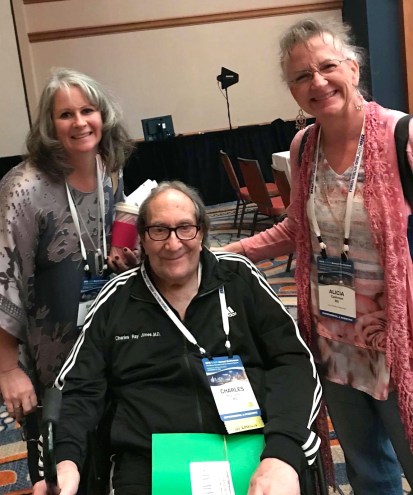
Dr. Charles Ray Jones – Rock Star

FB_IMG_1541741969447From left, Sherry Sievewright, Wisconsin Lyme Network, Dr. Charles Ray Jones, Alicia Cashman, Madison Lyme Support Group

Dr. Charles Ray Jones specializes in treating Lyme/MSIDS patients.  He has treated over 12,000 children with Lyme/MSIDS, and spoke recently at the Chicago ILADS convention.

Here is the executive summary of his presentation:

  • Borrelia burgdorferi (Bb) can be transmitted via ticks, gestationally, breast milk, and semen (yes, that means sexually).  While there isn’t a large NIH double-blind study, clinically LLMD’s are finding infected couples.  For more data on animals:  https://madisonarealymesupportgroup.com/2017/02/24/pcos-lyme-my-story/  (Scroll down to info on sexual transmission)


  • Gustafason & Burgess demonstrated gestational Bb infection in dogs.  Of the inoculated bitches, 80% became infected who then birthed mostly infected pups.1


  • A retrospective study showed 480 children with gestational Lyme/MSIDS. Diagnosis was based on clinical physical and history. 3


  • About 10% of Dr. Jones’ patients are infected gestationally.


  • Two cases of in vitro fertilization caused embryonic infection.


  • Mothers not treated resulted in 50% gestational transmission compared to mothers treated with 1 antibiotic resulting in a 25% transmission.  70% of infected mothers reported a difficult pregnancy.  ALL children improved with appropriate antibiotic treatment.  


  • Antibiotic treatment for Pregnant mothers:
  1. Amoxil 1000mg every 8 hours
  2. Ceftin 500 mg every 12 hours
  3. Omnicef 300 mg-600mg twice daily
  4. Mepron 750mg twice daily
  5. Zithromax 500mg twice daily
  • Other options for those who can not tolerate oral antibiotics:
  1. Bicillin 1.2 million units IM 1-3 times weekly
  2. Ceftiaxone 2 gms IV daily
  3. Cefotaxime 6 gms daily either continuous infusions or 2gms IV every 8 hours
  • Top 6 gestational Lyme symptoms:
  1. 90% low muscle tone (delays in motor skills, excess flexibility, drooling)
  2. 80% irritability (impulsive, risky behavior, interrupts, anger/mood swings)
  3. 72% fatigue
  4. 69% pain
  5. 60% low grade fevers with pale skin & dark circles under eyes
  6. 50% painful joints with stiffness & decreased range of motion
  • Coinfection rate found in study.3
  1. 30% Bartonella
  2. 20% Babesia
  3. 7% Strep
  4. 6% Ehrlichiosis
  5. 5% Leptospirosis
  • Male Child Case Study Findings.  Daily fevers between 101-102 degrees with severe joint pain, could not process stimuli, and poor muscle control.  Mother was infected with Bb during pregnancy and child had numerous tick bites.  Was initially diagnosed with a virus and was told he’d “grow out of it.”  Grandparents in desperation hired a priest to exorcise him.  Within 3 months of a clinical diagnosis of Bb (Western Blot positive) and multiple TBI’s (Babesia, Bartonella, Mycoplasma) and appropriate antibiotic treatment, he was doing well in school & athletics, and improved on all perimeters.  Treatment is ongoing.


  • Gestational treatment options:
  1. Combination of penicillin, cephalosporins, macrocodes, atovaquone (tetracycline, doxycyline & minocycline not usually used in those under 8) 


  • A 1995 study by Gardner showed 15% abnormal babies in treated mothers vs 67% of abnormal babies in mothers not treated.4


  • A 1989 study by MacDonald showed the following Lyme infection outcomes during pregnancy.5
  1. prematurity
  2. fluid in the brain
  3. blindness
  4. Sudden infant death syndrome
  5. blood infection
  6. Fetal death
  7. cardiovascular system anomalies
  8. growth retardation
  9. respiratory distress
  10. excess of bilirubin in the blood

References:

  1. Gustafson, J.M., E.C Burgess, et al.(1993). “Intrauterine transmission of Borrelia burgdorferi in dogs. “Am J Vet Res 54(6): 882-890
  2.  Xiao, J., et al. 2011. “How Different Strains of Parasite Infection Affect Behavior Differently”. Infection and Immunity. March 2011 . Quoted in science daily, March 22, 2011.
  3.  Jones, Charles Ray, Smith, Harold, Gibb, Edina and Johnson, Lorraine JD, MBA, “Gestational Lyme Disease Case Studies of 102 Live Births, Lyme Times, 2005”. 
  4. Gardner, T. (1995). Lyme disease. Infectious disease of the fetus and newborn infant. J. S Remington and J.O Klein. Philadelphia, Saunders. Chapter 11:447- 528. 
  5. MacDonald, A.B. (1989) “Gestational Lyme Borreliosis. Implications for the fetus. “Rheum Dis Clin North Amer 15(4): 657-677. 
  6. Goldenberg, R.L and C. Thompson (2003) “The infectious origin of stillbirth”. Am J Obstet Gynecol 189(#): 861-873.

____________________

More on Pregnancy with Lyme/MSIDS:

https://madisonarealymesupportgroup.com/2018/06/19/33-years-of-documentation-of-maternal-child-transmission-of-lyme-disease-and-congenital-lyme-borreliosis-a-review/

https://madisonarealymesupportgroup.com/2018/05/24/new-berlin-mom-given-life-altering-lyme-disease-diagnoses-after-pregnancy/

https://madisonarealymesupportgroup.com/2017/10/15/pregnancy-in-lyme-dr-ann-corson/

https://madisonarealymesupportgroup.com/2018/07/24/congenital-transmission-of-lyme-myth-or-reality/

https://madisonarealymesupportgroup.com/2018/02/26/transplacental-transmission-fetal-damage-with-lyme-disease/  (Great videos here)

https://www.lymedisease.org/lyme-basics/lyme-disease/children/  Great read on Lyme/MSIDS in children.

https://www.lymedisease.org/wp-content/uploads/2014/08/Image15-Jones-ABT.pdf  “Rationale for Prolonged Antibiotic Therapy in Treating Lyme Disease.”  By Charles Ray Jones, M.D.

Neurological Presentations of Bartonella henselae Infection

https://www.ncbi.nlm.nih.gov/m/pubmed/30368695/

Neurological presentations of Bartonella henselae infection.

Canneti B, et al. Neurol Sci. 2018.

Abstract

OBJECTIVE: Neurological symptoms in patients with cat-scratch disease (CSD) have been rarely reported. The aim of this study is to analyze the frequency of neurological CSD (NCSD) and describe the disease clinical presentation, management and outcome.

MATERIAL AND METHODS: We retrospectively selected patients with a CSD syndrome and Bartonella IgG titers > 1:256. Data regarding epidemiological, clinical, management, and follow-up features were analyzed and discussed. A comparison between NCSD and non-neurological CSD (NNCSD) was established.

RESULTS: Thirty-nine CSD patients were selected. NCSD frequency was 10.25%. No children were found affected in the NCSD group. A 65.7% of NNCSD and the entirety of the NCSD group had a history of cat exposure. Immunosuppression was only present in the NNCSD group (8.6%).

NCSD presentations were as follows:

  1. neuroretinitis (50%)
  2. isolated aseptic meningitis (25%)
  3. isolated optic neuritis (25%)

A greater proportion of patients in the NCSD group had fever and raised levels of acute phase reactants and white blood cells.

  • 85.7% of NNCSD had a complete recovery
  • only 50% of the NCSD patients experienced a full recovery

CONCLUSION: NCSD may be a distinctive group compared to NNCSD due to its later age of presentation, the more intense systemic response, and the poorer outcome.

___________________

**Comment**

This study shows what is being experienced in Lyme-land.  Bartonella is a big player and complicates things exponentially.  This study shows that Bartonella alone is a formidable pathogen.  It doesn’t even consider Lyme Disease as a co-factor but rather studies Bartonella alone.  Together, they are a “one, two punch,” and you are down for the count.  Throw in Babesia, a few viruses, and nematodes (all of which can be transmitted by the same bite of a singular tick) and it becomes pretty evident why patients are not improving – especially on the CDC’s mono therapy of doxycycline.  https://madisonarealymesupportgroup.com/2018/10/30/study-shows-lyme-msids-patients-infected-with-many-pathogens-and-explains-why-we-are-so-sick/

Please notice that only 50% of those with neurological “cat scratch disease,” (NCSD) experienced full recovery.  Imagine the percentage if Lyme was taken into account….

Also, please note the eye involvement (neuroretinitis & optic neuritis).  There are 1,000 other presentations of Bartonella as well.  Almost every patient I work with has NCSD.  Many with severe psychiatric presentations.

More on Bartonella:  https://madisonarealymesupportgroup.com/2016/01/03/bartonella-treatment/

https://madisonarealymesupportgroup.com/2018/09/07/bartonella-infectious-endocarditis-associated-with-cryoglobulinemia-multifocal-proliferative-glomerulonephritis/

https://madisonarealymesupportgroup.com/2017/01/04/endocarditis-consider-bartonella/

https://madisonarealymesupportgroup.com/2017/05/11/bartonella-henselae-in-children-with-congenital-heart-disease/

https://madisonarealymesupportgroup.com/2018/11/05/skull-infection-due-to-bartonella/

https://madisonarealymesupportgroup.com/2017/10/23/opthalmic-manifestations-of-bartonella-infection/

https://madisonarealymesupportgroup.com/2017/08/02/neurological-and-immunological-dysfunction-in-two-patients-with-bartonella-henselae-bacteremia/

I could seriously go on to infinity but will stop here.