Archive for the ‘Psychological Aspects’ Category

Sex & Chronic Illness Podcast

https://superpowerexperts.com/slsp-sex-and-chronic-illness/

When you suffer from a chronic illness, your sexual life can involve a complicated mix of emotions and feelings. A lot of people who are diagnosed with chronic illness can feel loss and grief. In this episode of Sex, Love, and SuperPowers, host Tatiana Berindei is joined by Cindy Kennedy. Cindy is a Nurse Practitioner and has worked in women’s health for over 21 years. She practiced gynecology and has cared for thousands of patients ranging in age from 15-99. Listen in as Tatiana and Cindy find an integrative approach to health and treatment modalities to assist in cellular support, detoxification, and chronic diseases to improve your sexual life.

 

Hello everyone and welcome to the Sex, Love and SuperPowers podcast show. I am your host, Tatiana Berindei. and today my guest is Cindy Kennedy, and we are going to be talking about sex and chronic illness.

Let me tell you a little bit about Cindy before we dive into our conversation today. Cindy Kennedy is a Nurse Practitioner and has worked in women’s health for over 21 years. She practiced gynecology and has cared for thousands of patients ranging in age from 15 all the way to 99. Unbeknownst to her several years ago, she contracted Lyme’s disease. Her symptoms were subtle at first and then in 2011 her disease struck with a vengeance. Even as a knowledgeable healthcare professional struggles to find a cause became overwhelming. She came to feel the same sinking feeling that other Lyme sufferers must bear. The endless walk down the frightening path of misdiagnoses, shattered hope, and disappointment. With the love and support of her husband and three daughters, Cindy has made great strides in improving her health. Though she’s still reminded that she has lasting effects from the illness.

She’s passionate about providing education about Lyme disease, co-infections, treatment options, and most importantly Living with Lyme. Her podcast, Living with Lyme has offered expert advice from many sought after practitioners and researchers. Her compassionate education has given her the opportunity to open her own practice to find upstream reasons for chronic issues. She works alongside of her daughter, “Kerah”, who is a functional registered dietician with the same focus on care.

The Pursue Wellness Center is slated to open spring of 2020. It will offer an integrative approach to health and treatment modalities to assist in detoxification, cellular support, meditation, parasympathetic support, and the therapeutic yoga center.

Welcome to the show Cindy.

Well, thank you. Thank you for having me and that was a great introduction. I can’t wait to go to the center.

Yeah, it sounds great. Before we jump in here, will you tell our listeners what your superpowers are?

I had to think about this. I think that I’m fortunate enough that I just go about… It’s myself. My superpower is definitely humor. It takes out a lot of different forms. It’s also part of being compassionate. Sometimes just making the situation light when that person across the table from you is struggling. And just breaking that up a little bit with some silly face or some silly little words. I really feel that that is the biggest gift that God has given me and it’s just that giggle. It’s wonderful.

I think humor really is a power and is greatly healing. I remember hearing a story years ago about a man who was diagnosed with cancer and decided that he was just going to… He was given like three months or something. He decided he was just going to rent the funniest movies that he could find and just spend the rest of his days on the couch with his family laughing. And he ended up curing himself from cancer with just laughter.

Great. Great. It’s that positive. Yeah.

I don’t know that everyone would have the same outcome, and that wasn’t what he was necessarily going for. He thought he was dying, but there was something in the surrender and in the joy. I think it’s a really health-giving thing that laughter.

It is. It is. And you know, trying to use it appropriately. I’ve put my foot in my mouth a couple of times.

I’m sure. That’s part of… Well I think humor is really a skill, and I think we do have to shove our foot in there a few times to get what’s going to land well.

Yeah, yeah, yeah. Well, especially when someone looks at you and all you want to go and say is, “Oh, bada boom, bada bang.”

Yeah. So, I was really intrigued to have you on the show because this is a topic that I haven’t covered at all. Most of this show is for people who either have an engaging sex life or who are struggling but more for emotional or communication reasons. And so, I was really curious to talk about what living with chronic illness and having a sexual life was like.

So, I guess I would just love to hear… We only have a few minutes before we have to go to a break. So, I’m trying to figure out like what’s the best way to dive into this conversation because I know it’s going to be deep and I don’t want to just like cut us off in the middle of something really important.

Maybe you could start out by telling us a little bit about your journey with Lyme’s and what were some of the most surprising elements to you in contracting this chronic illness?

Well, I guess I’m half the problem is finding that diagnosis because the whole time you feeling awful. And it’s kind of like Groundhog Day where you wake up and you think, “Oh, maybe tomorrow will be better.” And it’s exactly the same as the day before. And so there’s always that struggle personally and it really does change your personality. And for some people it’s a struggle neurologically and it’s a disconnect because Lyme can certainly affect the brain. And when you have that disconnect, it’s hard. You can’t even figure out sometimes if you’re coming or going and then you’re looking at your partner or your spouse. I mean, some people can hold their own for quite a while and then there are others that are like well when are you going to feel better? Because your crabby and your distant and things like that because you’re constantly focusing on how awful you feel. So, when you have somebody that has a cold or a belly bug or something, you know that they’re going to get better.

Right. You know there’s an end point.

… period of time. But when you’re struggling and the fatigue is incredible and you’re sleeping so much, it’s very difficult for your sex partner to kind of figure out like when to approach you for this. And I will tell you there’s a huge loss for people who suffer from Lyme for their own personal wellbeing as well as their support systems. People just kind of walk away, and they walk away because they probably don’t know what to do. They also walk away because they think you’re crazy. We’re all just like one insect bite away from a psychiatric diagnosis because we pretty much look well, but we aren’t well.

Yeah, I’ve heard about especially… I mean, this is kind of going in a different direction, but I know I’ve read some articles about, especially when women go into a doctor’s office complaining of symptoms, it can be really hard to even get the testing done because there’s more assumption that women are creating things psychosomatically and kind of in the medical field that there’s this like the hysteria of time’s gone by is still present in the medical psyche in terms of how we treat patients. And I’ve definitely seen that with Lyme’s. I mean, Lyme is huge in New England where you live and where I used to live. It’s almost like an epidemic issue at this point.

It’s a pandemic, but here it’s incredible. And mainstream medicine does not get it. They’re narrow-minded. They think it is a bacteria that a round of antibiotics will take care of. And they also think that the standard two tier testing is perfect, but it is not. It’s not specific enough. It’s sensitive enough. So people will go along their path after their doctor has said, “Well, your tests are negative.” And they’re unaware. Both these physicians, medical providers as well as these poor patients that these tests are not accurate. And so that’s where that big gap is.

Mm-hmm. Like I said, we do need to go to a quick break, but I really do want to dive into sort of navigating sexuality and romantic and intimate partnership while living with chronic illness when we get back.

Before we go to break, will you tell our listeners where they can go to find out more about you and your wellness center and your podcast and all that?

Oh, absolutely. Absolutely. You can find us at pursuewellness.us. The wellness center is slated to open in East Longmeadow, Massachusetts come spring of 2020. My own podcast is located on every place you get your podcasts, but the website is livingwithlyme.us. Lots of resources. How to test a tick, not yourself, but where to send it. And it’s valuable because people who are looking for information can go to one place.

Awesome. Thank you so much. So, we’re talking with Cindy Kennedy about sex and chronic illness. More when we get back. Stay tuned.

To listen to the entire show click on the player above or go to the SuperPower Up! podcast on iTunes.

Music Credit: All instruments played by Amanda Turk. Engineered and produced by Tatiana Berindei and Daniel Plane reelcello.com

_____________________

For more:  https://madisonarealymesupportgroup.com/2019/04/10/sex-when-you-are-sick/

https://madisonarealymesupportgroup.com/2018/12/22/s-e-x-lyme-msids/


Top 5 Herbs to Fight Free Radicals and Boost Your Immunity

https://vitalplan.com/blog/top-5-herbs-to-fight-free-radicals-and-boost-your-immunity?

Top 5 Herbs to Fight Free Radicals and Boost Your Immunity

By Dr. Bill Rawls Posted 04-24-2020

A strong immune system has always been essential for good health, and it’s even more vital in these uncertain times. Not only do we need solid internal defenses to fight viruses and other illnesses, they also help keep us healthy while we manage the increasing amounts of psychological stress we’re all dealing with — from a bleak news cycle, worry about our loved ones or ourselves, disrupted routines, close quarters, and a number of other things out of our control.

While there are many ways to bolster your immune system, one approach is through controlling or balancing free radicals. You probably have a general sense of what free radicals are — as well as their “opposite,” antioxidants. At least, perhaps, you understand that free radicals are usually “bad” and antioxidants are “good.”

But the story is much more nuanced, and it’s worth understanding the details in order to take a strategic approach to improving immunity.

Free Radicals: The Good, The Bad, The Ugly

Here, five must-know facts about free radicals:

1. Your Body Needs Free Radicals to Live.

The human body uses oxygen to make a specialized type of free radical called reactive oxygen species. These act as a sort of catalyst, plucking electrons off carbohydrate and fat molecules to destabilize them, which allows your body to more easily convert those nutrients into usable fuel for energy. Without them, you’d die.

2. Free Radicals Indiscriminately Break Down Molecules.

The problem is that mitochondria — the power plants of cells — and every other part of the body are made of similarly high-energy organic molecules like fats and carbohydrates. And so they’re equally susceptible to being destabilized by free radicals.

In other words, the free radicals the body produces to help it more easily generate energy can destabilize whatever other molecules are in the vicinity. That means they also end up breaking down mitochondria and affecting DNA — it’s the price of generating energy.

3. The Immune System Employs Free Radicals for Its “Cleanup Crew.”

Free radicals are deployed by your immune system to break down old cells and other cellular “debris.” That makes it easier for your body to clear them from your system.

Similarly, the immune system uses free radicals to help attack, destabilize, and dispose of harmful microbes in your system. In short, we have to put up with a certain amount of free radical damage in order to both produce energy and keep our bodies from becoming a sludge pile of cellular waste and harmful microbes.

That residual damage is essentially what ages us over time or contributes to illness. It’s why older adults are often more vulnerable when they get sick: More of their mitochondria and DNA have burned out from free radical damage, and more cells have died.

As for the cells that remain, they don’t produce as much energy, and DNA doesn’t reproduce as healthy of cells — including cells of our immune system. So, in older folks, immune systems don’t hum along at quite the same pace as they do in younger people.

4. Antioxidants Help Maintain Balance.

Antioxidants that the body produces and that you get from plants like fruit, vegetables, and herbs help control free radicals by neutralizing their activity; they donate an electron so that the free radical can’t pluck it off a cell. They essentially help police the free radicals so that there’s enough activity to do their job of breaking down fuel and debris while minimizing the damage to healthy tissue, mitochondria, and DNA.

5. Damaging Free Radicals Are All Around Us.

Along with the free radicals your body naturally produces, there are a number of other sources and types we’re exposed to. For example, the refined fats in many processed foods are very brittle and break apart easily, and those pieces then turn into damaging free radicals.

city view hidden my smog

Other aspects of processed foods, as well as pollutants and toxins in the air and pesticides in food, likewise act as free radicals in our system. Psychological stress can also set off a chain of events that trigger excess free radicals and damage.

The Free Radical-Inflammation Cycle

When cells are under stress from free radicals, they must work harder and produce more energy to try to keep up. But the harder cells have to work and the more energy they produce, the more free radicals they produce. That then also leads to more waste byproducts.

What’s more, because it’s the job of the immune system to clear up that waste — which it uses free radicals to do — more free radicals flood your system, creating a vicious cycle. All together, it puts an enormous amount of strain and pressure on your body’s systems, and particularly your immune system.

What starts happening: The immune system can’t keep up with the buildup of cellular debris and other waste. And, it’s so preoccupied, it can’t manage the waste and byproducts generated by your body’s microbes, either. All of that waste builds up around cells, creating what we think of as harmful inflammation — it’s as if your body’s sewer system gets clogged and starts backing up.

Conversely, under more normal circumstances, the healthy action of free radicals leads to some inflammation. When it’s kept in check, it’s a controlled burn. Think of how forest rangers might set small fires under safe conditions to help maintain the health of a forest and reduce the risk of larger fires down the road. The same is true in your body: A normal inflammatory response is not only good, it’s necessary for life.

fire growing in dark image

But just as with forest fires, problems occur when the flames rage uncontrolled. When free radicals overwhelm your antioxidant defenses and waste builds up, it triggers chronic or uncontrolled inflammation.

And that can ravage your system over time, contributing to a whole host of problems. For example, it can increase your risk of heart disease, stroke, chronic illness, and more, as well as accelerating the breakdown of cells — including immune cells.

Maintaining Balance is Key.

The goal, then, is to limit external sources of free radicals and maintain a careful balance of internal sources of free radicals. You can’t stop those produced from cells as they generate energy, and you need those produced by the immune system to clean up our body’s waste byproducts.

But you can reduce the influx of free radicals from external sources, and you can take other actions to protect your cells from becoming stressed and keep your microbiome in balance, which curbs runaway inflammation. Here’s how:

Freshen Up Your Diet

Minimize your intake of processed and high-carb foods, which increase free radical activity and inflammation. Instead, load up on more fresh, antioxidant-rich fruits, vegetables, and other plant foods.

Iridescent food. Creative composition made of fruits and vegetables in rainbow colors on white background, flat lay

Brightly colored fruits and veggies, especially, like berries and leafy greens, as well as certain spices and herbs are loaded with antioxidants shown to fight free radical stress and inflammation. One review in the American Journal of Clinical Nutrition specifically found that higher intakes of fruits and veggies both reduce harmful inflammation and enhance immune cells.

Avoid Toxins.

Try to spend as little time as possible in highly polluted areas, which are known to trigger inflammation and cell death. In addition, use gentle, naturally sourced cleaning products, and eat organic foods whenever possible to minimize toxin intake.

Stay Active.

Moderate exercise helps reduce inflammation, as well as helps control inflammation-stoking stress. One study, for example, found that even just 20 minutes of activity could reduce inflammation and strengthen your immune system.

Mind Your Microbes.

An impressive 70% of your immune system is housed in your gut. The more you can feed your good gut bacteria foods that are fresh, fiber-rich, and plant-based, the better. The microbes will be less stressed, and better able to help send and receive messages, enabling your immune system to more effectively respond to threats and control unnecessary inflammation.

Taking herbs known to balance the good microbes in your gut and support your immune system is also a great strategy. Three of my favorite herbs for balancing the microbiome are andrographis, cat’s claw, and berberine.

The Power of Herbs

In addition to consuming antioxidant-rich produce, nuts, and other plant foods, herbs offer an excellent line of defense against free radicals and extra support for your immune system. Here’s why.

Over the centuries, all plants developed antioxidant defenses to protect themselves from various environmental stressors. And that’s especially true of herbs, many of which are still cultivated in the wild, where they’ve been able to retain naturally high levels of antioxidants and other beneficial compounds. Or, they’ve been specifically cultivated for potency, not for taste.

Herbs with alternative medicine herbal supplements and pills

So, which herbs are best for fighting free radicals? All of them do, to some extent, but there are two smart strategies you can use when picking herbs to optimize your benefits.

First, combine synergistic herbs that come from different environments. If the environment in which an herb evolved and the stress factors it deals with informs its defenses system, it makes sense to consume herbs that come from both high and low altitudes, warm and cool climates, for example. That will give you the broadest action and support possible.

Second, consider herbs’ other properties beyond being effective antioxidants. For example, look for herbs that also help balance hormones or your microbes, or that shore up communication between parts of the immune system. That way, you not only address the damage done by free radicals, but you get the additional supportive benefits as well.

5 Antioxidant, Immune-Supporting Herbs

While many different herbs could be on this list, these five provide potent and broad benefits, not only in terms of their antioxidant power, but in their overall ability to support your immune system, health, and longevity.

1. Rhodiola

Rhodiola rosea blossom by springtime at solar day.Beautiful green background

An adaptogen that grows primarily in harsh, Northern climates including Siberia, rhodiola helps the body manage and become more resistant to stress — both physical and emotional. It also supports and protects immune function and cells, helps balance hormones, and may enhance energy and stamina. One review, for example, noted that the herbal extract has been found to have both anti-inflammatory and immune-stimulating properties.

2. Reishi Mushroom

reishi mushrooms growing on wood

Although a fungi, reishi is often referred to as an herb because of its range of benefits. As a fungi, though, it naturally confronts excess stress from microbes, which gives it specialized powers to help rev up our own immune system against pathogenic microbes. That helps keep our microbiome — and, by extension, our immune system — balanced and healthy.

Research also suggests reishi may help increase the activity of immune cells and boost production of cytokines, cells in the immune system that act as messengers or effectors of other cells. Other studies have found reishi extract bolsters the activity of two of our body’s natural antioxidant enzymes — superoxide dismutase and catalase — which help fight damaging reactive oxygen species.

3. Turmeric

Turmeric powder in white cup.

This spice, which gives curry its bright yellow color, is loaded with antioxidants called polyphenols. While these antioxidants are effective at controlling free radicals, researchshows what traditional medicine practitioners have known for centuries: That turmeric is also a potent anti-inflammatory. That means, while it controls inflammation through its effect on free radicals, it’s also helping to regulate the messaging systems of the immune system and your body’s inflammatory response.

Over-the-counter anti-inflammatories like ibuprofen, for example, do this by blocking an enzyme called COX-2, which “turns on” inflammation. But these drugs don’t do anything to stop the source of the inflammation, and they also block COX-1, a beneficial enzyme that helps protect our stomach.

Turmeric, on the other hand, decreases the formation of COX-2 in the long term, while its antioxidants help address the cause of inflammation. It also doesn’t impact COX-1. So, in the long run, turmeric helps better regulate and normalize the body’s inflammatory response.

4. Shilajit

black shilajit powder pile in front of mountain view

Another example of an “herb-adjacent” compound — meaning not technically a herb but often discussed with other herbs or referred to as one — shilajit is actually a herbomineral substance. Found in the Himalayan, Ural, and Caucasus Mountains, it seeps out from between rocks as a gummy substance (before it’s processed and purified into a useable form), the result of plant materials being compressed into the earth and decomposing.

Because of that, shilajit is concentrated with antioxidants from a variety of different plant sources. Much of its antioxidant properties comes from fulvic acid, which is produced from organisms in the soil.

In addition to its antioxidant powers, the acid may help regulate immune function and improve gastrointestinal function, according to research. It’s also known to help improve resistance to stress and guard against inflammatory conditions.

5. Gotu Kola

green Got Kola leaves

Unlike many of the other herbs and substances mentioned here, gotu kola grows primarily in tropical and subtropical locations, including the South Pacific, Southeast Asia, and India. The herb itself is a member of the carrot family, although it’s closely related to and resembles parsley. In India, it’s even eaten as a leafy green, and it’s known for its content of antioxidant nutrients, including vitamin C and carotenoids.

However gotu kola contains other powerful antioxidant phytochemicals, too, including triterpenes. It’s also a natural mood stabilizer that may help balance and manage the stress response by revitalizing the central nervous system and promoting production of GABA, a neurotransmitter linked to calm and relaxation, suggests a paper the journal Evidence-Based Complementary and Alternative Medicine. For those and other reasons, it’s traditionally been used as a general longevity and brain tonic.

While there are a lot about these times we can’t control, one thing you can do is take care of your immune system. Support it, so that it can better support you and keep you healthy now and for the long-term.

References
1. Srivastava, Kaushal K. and Kumar, Ratan. “Stress, Oxidative Injury and Disease.” Indian J Clin Biochem. 2015 Jan; 30(1): 3–10.
2. Pahwa, Roma et al. “Chronic Inflammation.” StatPearls. Retrieved from: https://www.ncbi.nlm.nih.gov/books/NBK493173/
3. Serafini, Mauro and Peluso, Ilaria. “Functional Foods for Health: The Interrelated Antioxidant and Anti-Inflammatory Role of Fruits, Vegetables, Herbs, Spices and Cocoa in Humans.” . 2016 Dec; 22(44): 6701–6715.
4. Harvard Women’s Health Watch. “Foods that Fight Inflammation.” 2018, November 7. Retrieved from: https://www.health.harvard.edu/staying-healthy/foods-that-fight-inflammation
5. Hosseini, B. et al. “Effects of fruit and vegetable consumption on inflammatory biomarkers and immune cell populations: a systematic literature review and meta-analysis.” Am J Clin Nutr. 2018 Jul 1;108(1):136-155.
6. Lodovici, Maura and Bigagli, Elisabetta. “Oxidative Stress and Air Pollution Exposure.” J Toxicol. 2011; 2011: 487074.
7. Dimitrov, S. et al. “Inflammation and exercise: Inhibition of monocytic intracellular TNF production by acute exercise via β2-adrenergic activation.” Brain Behav Immun. 2017 Mar;61:60-68.
8. Li, Yonghong et al. “Rhodiola rosea L.: an herb with anti-stress, anti-aging, and immunostimulating properties for cancer chemoprevention.” Curr Pharmacol Rep. 2017 Dec; 3(6): 384–395.
9. Guggenheim, Alena G. et al. “Immune Modulation From Five Major Mushrooms: Application to Integrative Oncology.” Integr Med (Encinitas). 2014 Feb; 13(1): 32–44.
10. Cor, Darija et al. “Antitumour, Antimicrobial, Antioxidant and Antiacetylcholinesterase Effect of Ganoderma Lucidum Terpenoids and Polysaccharides: A Review.” Molecules. 2018 Mar; 23(3): 649.
11. Hewlings, Susan J. and Kalman, Douglas S. “Curcumin: A Review of Its’ Effects on Human Health.” Foods. 2017 Oct; 6(10): 92.
12. Menon, VP and Sudheer, AR. “Antioxidant and anti-inflammatory properties of curcumin.” Adv Exp Med Biol. 2007;595:105-25.
13. Winkler, John and Ghosh, Sanjoy. “Therapeutic Potential of Fulvic Acid in Chronic Inflammatory Diseases and Diabetes.” J Diabetes Res. 2018; 2018: 5391014.
14. Erdogan Orhan, Ilkay. “Centella asiatica (L.) Urban: From Traditional Medicine to Modern Medicine with Neuroprotective Potential.” Evid Based Complement Alternat Med. 2012; 2012: 946259.

How T. Gondii Infection Causes Seizures, and Psychiatric Illness For Some

https://neurosciencenews.com/t-gondii-infection-seizure-mental-health-16063how-t-gondii-infection-causes-seizures-and-psychiatric-illness-for-some/

How T. gondii infection causes seizures, and psychiatric illness for some

iu-51

Summary: Study shows how Toxoplasma parasitic infections promote the loss of inhibitory signaling in the brain by altering the behavior of microglia.

Source: Virginia Tech

Think about traffic flow in a city – there are stop signs, one-way streets, and traffic lights to organize movement across a widespread network. Now, imagine what would happen if you removed some of the traffic signals.

Among your brain’s 86 billion neurons are the brain’s own version of stop signals: inhibitory neurons that emit chemicals to help regulate the flow of ions traveling down one cell’s axon to the next neuron. Just as a city without traffic signals would experience a spike in vehicle accidents, when the brain’s inhibitory signals are weakened, activity can become unchecked, leading to a variety of disorders.

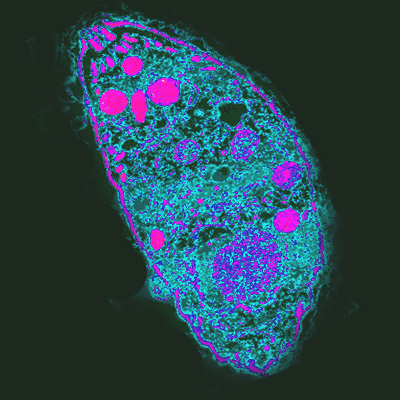
In a new study published in GLIA on March 11, Virginia Tech neuroscientists at the Fralin Biomedical Research Institute at VTC describe how the common Toxoplasma gondii parasite prompts the loss of inhibitory signaling in the brain by altering the behavior of nearby cells called microglia.

The Centers for Disease Control and Prevention estimates that 40 million Americans have varying levels of Toxoplasma infection, although most cases are asymptomatic. Commonly passed to humans via exposure to farm animals, infected cat litter, or undercooked meat, the parasitic infection causes unnoticeable or mild, to flu-like symptoms in most healthy people. But for a small number of patients, these microscopic parasites hunker down inside of neurons, causing signaling errors that can result in seizures, personality and mood disorders, vision changes, and even schizophrenia.

“After the initial infection, humans will enter a phase of chronic infection. We wanted to examine how the brain circuitry changes in these later stages of parasitic cyst infection,” said Michael Fox, a professor at the Fralin Biomedical Research Institute and the study’s lead author.

The parasite forms microscopic cysts tucked inside of individual neurons.

“The theory is that neurons are a great place to hide because they fail to produce some molecules that could attract cells of the immune system,” said Fox, who is also director of the research institute’s Center for Neurobiology Research.

Fox and his collaborator, Ira Blader, recently reported that long-term Toxoplasma infections redistribute levels of a key enzyme needed in inhibitory neurons to generate GABA, a neurotransmitter released at the specialized connection between two neurons, called a synapse.

Building on that discovery, the scientists revealed that persistent parasitic infection causes a loss of inhibitory synapses, and they also observed that cell bodies of neurons became ensheathed by other brain cells, microglia. These microglia appear to prevent inhibitory interneurons from signaling to the ensheathed neurons.

“In neuropsychiatric disorders, similar patterns of inhibitory synapse loss have been reported, therefore these results could explain why some people develop these disorders post-infection,” Fox said.

Fox said the inspiration for this study started years ago when he met Blader, a collaborating author and professor of microbiology and immunology at the University at Buffalo Jacobs School of Medicine and Biomedical Sciences, after he delivered a seminar at Virginia Tech. Blader studied Toxoplasma gondii and wanted to understand how specific strands of the parasite impacted the retina in mouse models.

Working together, the two labs found that while the retina showed no remarkable changes, inhibitory interneurons in the brain were clearly impacted by the infection. Mice – similar to humans – exhibit unusual behavioral changes after Toxoplasma infection. One hallmark symptom in infected mice is their tendency to approach known predators, such as cats, displaying a lack of fear, survival instincts, or situational processing.

“Even though a lot of neuroscientists study Toxoplasma infection as a model for immune response in the brain, we want to understand what this parasite does to rewire the brain, leading to these dramatic shifts in behavior,” Fox said.

This shows a head
The parasite forms microscopic cysts tucked inside of individual neurons. The image is in the public domain.

Future studies will focus on further describing how microglia are involved in the brain’s response to the parasite.

Among the research collaborators is Gabriela Carrillo, the study’s first author and a graduate student in the Translational Biology, Medicine, and Health Program. Previously trained as an architect before pursuing a career in science, Carrillo chose this topic for her doctorate dissertation because it involves an interdisciplinary approach.

“By combining multiple tools to study infectious disease and neuroscience, we’re able to approach this complex mechanistic response from multiple perspectives to ask entirely new questions,” Carrillo said. “This research is fascinating to me because we are exposing activated microglial response and fundamental aspects of brain biology through a microbiological lens.”

The study’s other contributing authors include Valerie Ballard, a Roanoke Valley Governor’s School high school student; Taylor Glausen, a graduate student working in Blader’s laboratory at the University at Buffalo; Zack Boone, a Virginia Tech undergraduate student; Cyrus Hinkson, a fourth-year Virginia Tech Carilion School of Medicine student; and Elizabeth Wohlfert, an assistant professor of microbiology and immunology at the University at Buffalo.

Source:
Virginia Tech
Media Contacts:
Whitney Slightham – Virginia Tech
Image Source:
The image is in the public domain.

Original Research: Closed access
“Toxoplasma infection induces microglia‐neuron contact and the loss of perisomatic inhibitory synapses”. Gabriela L. Carrillo, Valerie A. Ballard, Taylor Glausen, Zack Boone, Joseph Teamer, Cyrus L. Hinkson, Elizabeth A. Wohlfert, Ira J. Blader, Michael A. Fox.
GLIA doi:10.1002/glia.23816.

Abstract

Toxoplasma infection induces microglia‐neuron contact and the loss of perisomatic inhibitory synapses

Infection and inflammation within the brain induces changes in neuronal connectivity and function. The intracellular protozoan parasite, Toxoplasma gondii, is one pathogen that infects the brain and can cause encephalitis and seizures. Persistent infection by this parasite is also associated with behavioral alterations and an increased risk for developing psychiatric illness, including schizophrenia. Current evidence from studies in humans and mouse models suggest that both seizures and schizophrenia result from a loss or dysfunction of inhibitory synapses. In line with this, we recently reported that persistent T. gondii infection alters the distribution of glutamic acid decarboxylase 67 (GAD67), an enzyme that catalyzes GABA synthesis in inhibitory synapses. These changes could reflect a redistribution of presynaptic machinery in inhibitory neurons or a loss of inhibitory nerve terminals. To directly assess the latter possibility, we employed serial block face scanning electron microscopy (SBFSEM) and quantified inhibitory perisomatic synapses in neocortex and hippocampus following parasitic infection. Not only did persistent infection lead to a significant loss of perisomatic synapses, it induced the ensheathment of neuronal somata by myeloid‐derived cells. Immunohistochemical, genetic, and ultrastructural analyses revealed that these myeloid‐derived cells included activated microglia. Finally, ultrastructural analysis identified myeloid‐derived cells enveloping perisomatic nerve terminals, suggesting they may actively displace or phagocytose synaptic elements. Thus, these results suggest that activated microglia contribute to perisomatic inhibitory synapse loss following parasitic infection and offer a novel mechanism as to how persistent T. gondii infection may contribute to both seizures and psychiatric illness.

Feel Free To Share This Neuroscience News.

________________

For more:  https://madisonarealymesupportgroup.com/2016/05/21/toxoplasmosis/ T. gondii is responsible for about 1/5 of schizophrenia cases.  

https://madisonarealymesupportgroup.com/2019/04/06/toxoplasmosis-outbreak-due-to-undercooked-deer-meat-from-illinois/

https://madisonarealymesupportgroup.com/2018/06/20/brazil-569-confirmed-cases-of-toxoplasmosis-of-which-50-are-pregnant-women

https://madisonarealymesupportgroup.com/2018/08/01/risky-business-linking-t-gondii-entrepreneurship-behaviors/

https://madisonarealymesupportgroup.com/2020/02/27/global-prevalence-of-toxoplasmosis-in-cats-a-systematic-review-meta-analysis/

https://madisonarealymesupportgroup.com/2019/12/31/psychiatric-disorders-are-infectious-agents-to-blame/

Toxoplasmosis causes many mental issues and psychiatrist E. Fuller Torry believes that 75% of schizophrenia is associated with infections, with Toxo a significant portion.


Marsy’s Law in Light of Lyme Disease

A federal judge did not delay Wisconsin’s presidential primary but he stated those voting absentee be given an extra six days.  Deadline for absentee ballots is now 4 p.m. on April 13. Deadline for voters to request absentee ballots is today at 5 p.m.  Voting in person is Tuesday, April 7.  https://apnews.com/e36c3adc0c7474014f3e7ab566071303

On the ballot is a referendum called Marsy’s Law.  

Please study this for yourself:  https://ballotpedia.org/Wisconsin_Marsy%27s_Law_Crime_Victims_Rights_Amendment_(April_2020)

Marsy’s Law, meant with good intentions, would present grave risks to the constitutional protections for citizens of Wisconsin accused of crimes.

Here’s some information that should be taken into consideration.

  • Voters are asked to make a substantial constitutional change without text of the proposed amendment.
  • The Montana Supreme Court struck it down as unconstitutional as it contains multiple amendments, each of which should require a separate vote.
  • Section 9m, article I of the Wisconsin Constitution already provides victims with many of the same constitutional rights, making Marsy’s Law redundant.
  • South Dakota reportedly spent a half-million dollars in the first year alone responding to the constitutional mandates created by Marsy’s Law.
  • Wisconsin judges, prosecutors, law enforcement agencies and victim rights coordinators would have to interpret unclear mandates, creating additional burdens on justice officials and taxpayers.

Lastly, the one that really trumps all others:

Because Lyme/MSIDS is a systemic infection that can and often affects the brain and cognitive behavior of patients, they can unfortunately have run-ins with the law due to erratic behavior.

A few cases:

  1. https://www.foxnews.com/story/can-lyme-disease-lead-to-insanity-violent-tendencies
  2. https://madisonarealymesupportgroup.com/2019/03/21/bartonella-sudden-onset-adolescent-schizophrenia-a-case-study/
  3. https://madisonarealymesupportgroup.com/2017/08/24/dutch-lyme-patients-accused-of-child-abuse/
  4. https://madisonarealymesupportgroup.com/2018/07/28/stories-of-pandas/  Children with PANS often have an underlying tick-borne illness.
  5. Dr. Bransfield states that YES, Lyme disease CAN cause violent behavior & substance abuse:  https://madisonarealymesupportgroup.com/2019/09/17/ignoring-psychiatric-lyme-disease-at-our-peril/

To this day authorities won’t recognize the connection between tick-borne illness and mental issues:  https://madisonarealymesupportgroup.com/2018/06/04/ld-diagnosis-took-forever-because-of-mental-health-stigma/

So, back to Marsy’s Law….hopefully it’s clear that tick-borne illness can cause violent and erratic behavior which could lead to being accused of crimes. Accusers wouldn’t have to present any evidence.  

Patients would be guilty until proven innocent.
For patients struggling cognitively, accusers would have unfair advantage.

Lastly, please read this:

The U.S. Constitution and all 50 state constitutions guarantee defendants’ rights because they are rights against the state, not because they are valued more by society than victims’ rights. Defendants’ rights only apply when the state is attempting to deprive the accused – not the victim – of life, liberty, or property. They serve as essential checks against government abuse, preventing the government from arresting and imprisoning anyone, for any reason, at any time.

Victims’ rights are not rights against the state. Instead, they are rights against another individual. The Marsy’s Law formula includes the rights to restitution, to reasonable protection, and to refuse depositions and discovery requests, all of which are enforced against the defendant. Such rights do nothing to check the power of the government. In fact, many of the provisions in Marsy’s Law could actually strengthen the state’s hand against a defendant, undermining a bedrock principle of our legal system — the presumption of innocence.  https://www.aclu.org/blog/criminal-law-reform/victims-rights-proposals-marsys-law-undermine-due-process

How To Stay Sane in Uncertain Times

https://www.linkedin.com/pulse/how-stay-sane-uncertain-times-lori-dennis-ma-rp/?

How to stay sane in uncertain times

Lori Dennis, MA,RP

Lori Dennis, MA,RP

Registered Psychotherapist, Speaker, Author of Lyme Madness

These are times of great uncertainty. Uncharted, unprecedented times that require a sense of calm, creativity and connection.

I wish it weren’t so but the truth is that my family, along with tens of millions worldwide, have been living a similar medical nightmare for years. While chronic Lyme disease and the Coronavirus have many distinctions, the experience is parallel in many ways.

For both, there is an inability to get properly tested, a lack of access to proper care for far too many, frustration with the CDC for their lack of transparency, not enough support or resources to manage this pandemic, no viable treatment or cure, the fear of how this will impact all of us financially.

The Coronavirus, like chronic Lyme, is an experience unlike the world has ever seen and, for the most part, we are being asked to navigate this in the dark.

Here are a few simple suggestions to help you find some light in the dark:

Turn anxiety into action – High anxiety can be paralyzing. While we are certainly entitled to feel a sense of angst, unease, and even gloom and doom, it’s not productive to stay stuck in these feelings. The best way to combat these strong, often destructive emotions is to turn your angst into action.

When I was feeling paralyzed about our chronic Lyme crisis, I resolved my ‘stuckness’ by researching daily, writing a book on the subject, giving talks, blogging and creating an online platform where I could connect with and help others.

How you take action is entirely up to you and your own strengths, needs and preferences. But taking action, without a doubt, is the best way I know to take back your power in a very powerless situation.

Practice self care – When we’re experiencing tough times, we tend to forget about our own personal needs, often putting them on the back burner. This is the time to take walks, go for a run, meditate, journal, eat well, sleep well, create daily rituals that feed your body, mind and soul.

Stay connected – Whether introverted or extraverted, we are all social beings. This time of social distancing requires us to discover more creative ways to stay connected. Staying in touch with family, friends, and colleagues is critical to our health and well-being. Make more time to nurture relationships — even from a distance. Help others when possible. We are all in this collective experience together.

Reframe crisis into opportunity – The Chinese character for crisis is opportunity. Get creative. Think of ways to reframe your struggles – emotional, physical, spiritual, financial — by creating healthy new habits, developing new family rituals, designing new business practices that can benefit you and others.

I’ll be writing more about how to navigate these dark waters in the weeks to come.

Until then, stay well and stay safe. ❤️

LORI DENNIS, MA, Registered Psychotherapist. Author LYME MADNESS, Speaker, Activist, For more information, feel free to message me on LinkedIn, or email me at loridennis@talktherapy.ca