Lyme Disease, Autoimmune Encephalopathy, & Basal Ganglia Encephalitis
http:// Approx. 1 hour, 15 Min.
Nov. 23, 2020

http:// Approx. 1 hour, 15 Min.
Nov. 23, 2020
https://www.lymedisease.org/amy-scher-bubble-of-fear/
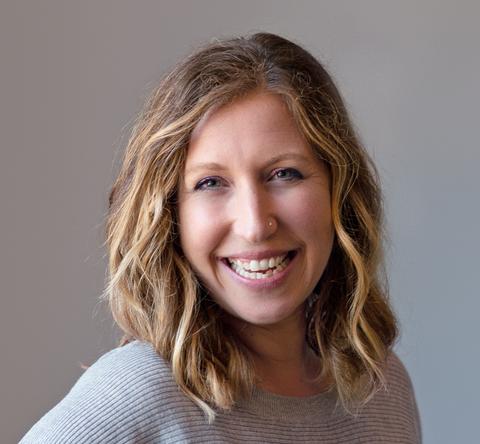
By Amy B. Scher
In order to fully heal, you are going to have to let go and lighten up (mostly on yourself).
That’s what I tell people when they are trying to micro-manage every itty bit of themselves and their protocols in order to heal. It may seem like an easy suggestion to follow after all they’ve been through. However it was personally one of the most difficult parts of healing for me to embrace.
I lived in a bubble of fear, worried that everything I did or didn’t do would make or break my healing. But eventually, it became clear to me that healing will not (and cannot) happen in a bubble of fear. Fear is contradictory to the environment that is needed for wellbeing.
While much went into my ultimate recovery from Lyme, the act of lightening up and letting go had one of the most profound impacts on my journey.
When we suppress ourselves, we can end up feeling anxious, depressed, and sick. If healing is all about getting free to experience a full life again, we must also pay attention to freeing ourselves from the patterns and behaviors that no longer serve us.
Lightening up does not always come easy, but it’s so worth it, and it does come if we let it.
 My parents raised me with all the love and silliness you’d expect from the hippies that they were. They always praised me as smart, sweet, artistic, and kind.
But instead of taking these compliments as truth, the part of me that analyzed and internalized everything contorted them into a rule: I must be perfect.
With no one else requiring this of me, I took perfection on as my calling, my purpose. As I grew older, the pressure of this piled on me like a thousand pounds. I strived to be the one who made everyone happy and was celebrated for great things, but I also longed to be one whose faults went unnoticed.
When I strayed from the person I thought I should be—by not getting perfect grades, not being the perfect friend, or making a mistake—my insides would clench. I spent a lot of time rehearsing in my head what things I could have done differently, better. Even though my parents didn’t seem bothered by any of my imperfections, I worried I might somehow be less of a shining star to them.
By the time I’d been suffering with chronic illness and my body had been falling apart for a good long while, I had assigned much of the blame to myself. Somehow, I must have not done this life thing good enough, perfect enough. Now, perfection was something I owed to the people around me as an apology for being the glaring burden I felt myself to be. I tried hard to convince myself I deserved mercy in this new small life, yet still, even on my near-deathbed, I felt I wasn’t doing sick perfect enough.
The truth is this: I was unloved by myself long before my physical body went astray. And it had become painfully obvious that this pattern was crushing my being and assaulting my immune system. At some point, I decided that if I didn’t lighten the f**k up, this pattern of perfection was going to kill me. I sensed that maybe it had already started to in some way.
You cannot bully yourself into doing enough good or being good enough to feel good—and good enough to be loved, especially by yourself. That’s just not how it works.
Thanks to Stanford University’s Center for Compassion and Altruism Research and Education, we now have scientific data that shows us how and why self-criticism isn’t healthy. (Although we probably didn’t need scientific proof on this one). Self-criticism “makes us weaker in the face of failure, more emotional, and less likely to assimilate lessons from our failures.”
In fact, in a 2012 study published in the US National Library of Medicine, a link between self-compassion and negative states such as depression and anxiety was apparent across 20 studies. Because self-compassion is associated with lower levels of self- criticism, and self-criticism is known to be an important predictor of anxiety and depression, this is where we’re going to start our work.
Even outside of these examples, there has been much information that’s emerged over the years on how positive emotions, including love and acceptance, have a direct impact on your physiology, particularly your nervous system. If you beat yourself up all the time about what you are or aren’t doing, it makes sense that your system would read that self-criticism as danger and stress and react to it in just that way.
The practice of self-compassion is learning to lighten up on yourself just as you would with someone close to you who you loved and cared for. You’ve probably been criticizing yourself for a long time. If this hasn’t worked yet, it’s probably time to try something new
 During my experience with illness, I spent a lot of time obsessing over every new sensation in my body. I was in a state of constant overdrive, trying to figure out what each symptom was from or how to make it go away. I always alerted my doctors, who also seemed perplexed by what they meant, which of course made me feel even more worried.
Ultimately, I started to approach my body and its symptoms as not warning signs of something severe (as long as my doctor had already been notified), but as just something my body was doing that may not have a clear-cut explanation. I learned how, sometimes, to just let my symptoms be, releasing the massive amounts of energy I spent consumed by trying to solve them.
This is what I learned: sometimes they mean nothing.
We spend so much time analyzing our symptoms, guessing what they could mean, and obsessing over when they’ll go. And sometimes, we need to do that. But other times, we need a break. The truth is that despite all of our incessant “figuring out,” sometimes we just won’t know what our body is doing. We also won’t always know what healing might be taking place despite the raging symptoms. I had my worst month of symptoms came just before I turned a corner toward healing.
I spent most of my life in California, where I ate organic food, held my breath when I walked by a smoker, and focused on controlling my environment to control my health. After I was diagnosed with chronic Lyme, I became even more attuned to my lifestyle and surroundings—afraid that every misstep would kill me.
The turning point for me happened when I was in India in 2007, where I had traveled for stem cell treatment. That was my first hint that I needed to learn to let go. I had to. No choice. No time to get used to an entirely different world and medical system.
At the request of one of the nurses, I had given the staff at the hospital a list of foods I could and could not eat. On the could list: protein and veggies. On the could not list: everything else. Over the years, my brain had been programmed with messages like dairy is bad because it causes inflammation, sugar feeds the Lyme bacteria, and carbs are evil. And while maybe some of that has truth to it, being ridiculously strict about my diet only caused me more intense stress.
When the doctor saw the list, she came to my room with it and asked, “But what about your healthy cells? They need some sugar. Dairy is not bad for them. Carbs are okay in moderation! Each night, you can have a small amount of red wine and chocolate. You need some pleasure too.” All I could think was, Are you trying to kill me?
 It wasn’t until I was squatting on a mud-smudged grocery store floor that what she said began to sink in. My whole existence for years had been dedicated to “killing” Lyme. I had built my entire life around Lyme disease, the one thing that I didn’t want. What about the rest of me?
“Mom! Look!” I had found a packaged chocolate lava cake, the kind where you add hot water to the plastic tray full of batter and it magically puffs up into dessert. It was inflatable chocolate cake, and it was a miracle in a country that was hard for me to find food I enjoyed.
This is when I had an epiphany that informed the rest of my healing journey:
What if, in my furious effort to find the cure, I had been missing something critically important all along? What if I loosened the death grip I had on my own life? What if healing is beyond what you eat and how perfectly you take your supplements? What if enjoying life and lightening up didn’t look like healing, but was a tiny step toward it?
Chocolate cake, just like the other lessons I learned, would become part of my protocol; one that brought me joy and helped to teach me that the healing journey doesn’t always look like perfection. Sometimes it looks like lightening and loosening up.
Amy B. Scher, an energy therapist, has written several books on healing, including: This Is How I Save My Life: Searching the World for a Cure – A Lyme Disease Memoir (When doctors have all but given up, when a diagnosis eludes you, and when every test result raises more questions than answers, how do you save yourself?); How To Heal Yourself From Depression When No One Else Can (Scher’s accessible approach to helping anyone struggling with depression to reclaim a joyful life). How To Heal Yourself From Anxiety When No One Else Can (A unique, go-at-your-own-pace book, full of hands-on techniques and guidance that illustrate one profound truth: healing from anxiety is possible). She can be found online at amybscher.com.
__________________
**Comment**
Some great advice in here. I couldn’t help considering the COVID debacle that’s been thrust upon us. The same advice about being unable to heal while in a ‘bubble of fear’ is also true for a virus. Fear is an emotion that will zap your strength and lower your immune system by putting you in hyper-drive, yet this is precisely what our corrupt public health ‘authorities’ have foisted upon an unsuspecting public.
Firstly, accepting death is #1 on the list toward living fully while on planet earth. Secondly, (despite the denial by public health authorities and a complicit main stream media) there are effective treatments for both COVID and Lyme/MSIDS. Obtaining good medical help is crucial, and in my experience Lyme literate doctors (LLMD’s) are probably your best bet for both illnesses as they are open-minded, up to date on the science, and willing to go outside the box. When I felt like I was on death’s door from COVID, my LLMD utilized his knowledge once again and squared me away. I write about the treatment that worked here. Within 1-2 doses I felt like a new person – demonstrating the importance of effective treatment.
These attributes are what make a good doctor, yet for both diseases we are clearly seeing the monopolization of medicine where doctors not following the narrative are censored, bullied, maligned, and persecuted.
https://www.lymedisease.org/hospitalized-teens-lyme-depression/
June 10, 2021

By Daniel A. Kinderlehrer MD
Last month I posted an article on this website describing Diane, a teen-age girl suffering from anorexia nervosa.1 As it turned out, she had Lyme disease and was co-infected with Babesia, Bartonella and Mycoplasma. She responded well to antibiotics and three years later she still has no evidence of an eating disorder.
Dr. Nancy Brown, a colleague, was in my office during one of Diane’s appointments, and I commented to Nancy, “Wouldn’t it be great if we could test a group of people who suffer from anorexia nervosa for tick-borne infections?”
“Well,” she told me, “I’m the medical consultant at a residential treatment center for adolescents with mental health issues. Let’s see if I can get permission to do this.”
We did receive cooperation from the residential center. In addition, IGeneX Laboratory agreed to test a dozen patients free of charge for Lyme, Bartonella, and tick-borne relapsing fever (TBRF). Moleculera Labs also generously agreed to test our patients with the Cunningham Panel. (The Cunningham Panel is a blood test which measures the levels of circulating autoantibodies associated with certain neurologic and psychiatric symptoms.)
It was not difficult to get 10 volunteers at the residential center. None had eating disorders, since the center was not equipped to deal with that, but all 10 were diagnosed with DSM-5 Major Depressive Disorder, seven were additionally diagnosed with Generalized Anxiety Disorder, and three had made serious suicide attempts.
With the exception of one subject previously diagnosed with celiac disease, none had a known physical disorder. All of these teens had severe psychological dysfunction requiring intensive residential treatment—they could not hack it at home or go to school.
Here is what we found2:
Autoimmune encephalitis is the medical term for ‘Brain on Fire’: inflammation in the brain that can result in serious mood, behavioral and cognitive disorders.
Susan Swedo at the National Institute of Mental Health first described this condition in children who developed neuropsychiatric symptoms shortly after a strep infection. She termed it Pediatric Autoimmune Neuropsychiatric Disorder Associated with Streptococcal Infections—PANDAS.3,4
Not long afterwards, it became clear that other microbes besides Streptococcus can trigger autoimmune encephalitis. Hence, the name was broadened to Pediatric Acute-Onset Neuropsychiatric Disorder—PANS.
The microbes that thus far have been shown to trigger PANS include several viruses including Epstein-Barr, the common cold, influenza, and chicken pox as well as Bartonella, Mycoplasma and mold.5-7
There was a recent report out of Italy describing two boys in whom SARS-CoV-2, the virus that causes Covid-19, triggered PANS.8 It is likely, but not definitive at this time, that Borrelia burgdorferi, the Lyme pathogen, also triggers PANS.
In 2013, the PANS collaborative consortium published criteria for the diagnosis of PANS.9 These include the sudden onset of obsessive-compulsive disorder (OCD) or severely restricted food intake, without a known medical disorder that would account for these symptoms. In addition, the case definition requires two of the following seven criteria to make the diagnosis:
It is important to have clear diagnostic criteria so that researchers studying this condition are always studying the same population of subjects, but not all kids with autoimmune encephalitis will fulfill these criteria. In particular, most of my patients do not have an acute—i.e, sudden—onset of their symptoms. Instead, the onset may be stuttering or slow.
According to the National Institutes of Mental Health, nearly one-third of all adolescents ages 13 to 18 will experience an anxiety disorder, and 8% of those will become severely impaired.10
The NIMH also reported that the prevalence of major depressive disorder in adolescents in 2017 was 13.3%, with nearly three-quarters of those becoming severely impaired.11 Suicide has replaced homicide as the second most common cause of death for teenagers ages 10 to 19 in the United States.12
In other words, we have an epidemic of mental illness in adolescents.
Clearly there is a need for more investigation, but I suspect that many of the teens afflicted with mental illness in the U.S. are suffering from brains on fire. Their illness may present as emotional, but the cause may be organic. In the next installment I will discuss the diagnosis and treatment of PANS.
Dr. Daniel Kinderlehrer is an internal medicine physician with a private practice in Denver, Colorado, devoted to treating patients with tick-borne illness. He is the author of Recovery From Lyme Disease: The Integrative Medicine Guide to the Diagnosis and Treatment of Tick-Borne Illness.
_______________________
**Comment**
Very, very important work being done here with a dire need for more. Unfortunately researchers are choosing to go with the more popular and lucrative work surrounding “climate change,” despite the fact credible, independent work has been done disproving it of having anything to do with tick and disease proliferation.
Few understand the dark underpinnings of our public health ‘authorities’ and the research they pay for and control and the fact they own patents on everything from the organism, to the tests that reveal it, to the vaccines against it.
For more:
https://www.globallymealliance.org/blog/what-helps-improve-cognitive-function-for-lyme-patients

https://www.globallymealliance.org/blog/the-impatient-patient
When would I get better? Why was I not seeing improvement every day?
Recently a friend’s toddler son asked her for a snack. Holding his baby sister, my friend told her son he’d need to wait a minute. He looked at her squarely and asked, “Does anyone like to wait?” Kids have a way of telling it like it is. The truth is, no one is great at patience, especially when we’re hungry, tired, or anticipating a big event. Perhaps the hardest time to wait is when we’re sick. “Patients” are ironically named because when we’re stuck in bed waiting to feel better, waiting for medication to work, waiting to live, we become very impatient.
I was impatient even before I got sick. A high-achieving lifestyle and the pressures that come with it always made me feel like I needed to hurry up and reach the next goal. If I didn’t, I might miss an important opportunity. I felt that if something didn’t happen right away, it might never happen at all. Then I got sick with chronic active Epstein-Barr virus, Lyme disease, babesiosis, ehrlichiosis, and possible Bartonella and all that forward motion and achievement came to a grinding halt. I was bedridden, hooked up to an IV, with nothing to do but wait. When would I get better? Why was I not seeing improvement every day?
Unfortunately, it often takes a long time for late-stage tick-borne illnesses to develop (for me, it took eight years to get an accurate diagnosis), which means it can take a long time to get better. Due to Herxheimer’s reactions, trial and error periods to figure out each person’s individual protocol, and setbacks from factors that are both in and out of our control, recovering from tick-borne illness is not a linear process. It can be especially hard to be patient when you feel like you’re taking two steps forward and one step back, or even one step forward and two steps back. Whether you’re three or ninety-three, no one likes to be slowed down.
When days, months, and even years of our lives are lost to illness, we feel increased urgency. We’re afraid that we’re losing precious time, as I discussed in my post “ A Lymie’s View from 39”. Illness-induced FOMO—fear of missing out—naturally manifests as impatience. A natural response to this impatience is to push our bodies to do more than they can so that we don’t miss out entirely. The minute I started to feel a little bit better, I’d go out and spend that energy. And while I enjoyed whatever I did, I paid for it with a flare of symptoms that sent me back to bed for days.
Not waiting caused damage, just as if my friend had not asked her son to wait, she might have dropped the baby or spilled the snack. She told him to wait because she had everyone’s well-being in mind. In just a few minutes, her son got his snack, and no one was hurt in the process. Patience paid off. Still, waiting—especially when it involves resting—goes against everything society has taught us about leading productive, meaningful lives. Though work-life balance has become more valued, busyness and achievement are still seen as badges of honor.
What bothered me most as an impatient patient was that I wasn’t doing anything. A friend who’d spent years recuperating from a traumatic brain injury helped reframe my thinking by telling me, “Your body is working really hard to heal right now. In order to let it do its job, you need to rest.” This realization helped me be more patient and loving with my sick body, more willing to give it what it needed—rather than fight against it—so that I could achieve my long-term goal of health.
Now that I have achieved and retained remission, I still can be impatient; it’s simply my nature. But I have learned to slow down; to pace myself; to trust my doctors, medications, and body; and most of all, to trust the process. I can’t get back the years I lost to illness. But I’m enjoying the ones I have now—which I wouldn’t have gotten if I’d pushed through the sicker years—and it truly does feel like the life I was meant to live is unfolding in its own time. I have to trust that it will continue to do so, as long as I am patient.
For more blogs, click here


