Archive for the ‘Parasites’ Category

How Proteolytic Enzymes May Help Lyme/MSIDS

Approx. 15 Min.

Systemic Proteolytic Enzymes–What works, What Doesn’t and Why

Written by: Jon Barron  https://jonbarron.org/article/proteolytic-enzyme-formula

Proteolytic enzyme supplements, or systemic enzymes, work to clean out the blood, optimize blood flow, control inflammation throughout the body, as well as repair and rebuild the cardiovascular system.  Although they may have some cancer protective benefits–and there are indeed cancer therapies based on proteolytic enzymes, not to mention a number of studies that support those therapies–the primary benefits we’re looking for when taking systemic, proteolytic enzymes center around their ability to:

  • Control inflammation throughout the body, not just in your joints.
  • Repair and rebuild the cardiovascular system.
  • Optimize blood flow & cleanses blood of debris
  • Prevent and dissolve blood clots by dissolving fibrin
  • Dissolve plaque in your arteries and dental plaque in your mouth.
  • Clean up your immune system.
  • Minimize the impact of allergies but breaking down and removing circulating immune complexes.
  • Improve the ability to exercise and speed up recovery times.
  • Kill bacteria, viruses, and other pathogens.
  • Accelerate recovery from sprains, strains, fractures, bruises & surgery
  • Help with arthritis
  • Help with detoxification
  • Improve body alkalinity
  • Help with sinusitis and asthma
  • Help reduce MS symptoms

And all of these benefits stem from one simple ability: proteolytic enzymes facilitate the breakdown of rogue proteins in your bloodstream and in the soft tissues of your body. In this video, we’re going to take a look at exactly what systemic, proteolytic enzymes are, what they do, how they do it, and what the ideal proteolytic formula looks like.

More info: https://jonbarron.org/article/proteol…

______________

**Comment** 

Great info here.  At 2:26 he discusses how these enzymes break down protein bonds in invading viruses as well as have the ability to digest and destroy the protein based defense shield of each and every pathogen, allergen, and rogue cell, leading to their elimination.

Can you see how this would help Lyme/MSIDS patients?

Not to mention the foreign protein invaders from the food we eat.  Many Lyme/MSIDS patients have food sensitivities and Mast Cell disorders that if not addressed will cause many symptoms that look identical to Tick borne illness (TBI).  This is why some patients do not improve after taking sufficient antimicrobials.  Antimicrobials will not fix this.

At 6:55 he discusses how research has shown systemic enzymes support healthy blood viscosity and blood platelet aggregation.  Since many TBI’s infect the blood cells of our body, this assistance is extremely helpful.  Parasitemia can cause hyper coagulation, and things like blood thinners help some patients just as much as antibiotics.  Speaking of blood thinners, nattokinase’s ability to balance the clotting ability of the blood is as good as Warfarin’s but without the side effects.  Research has shown it reduces blood pressure as well.  It also dissolves amyloid fibrils, which means it very well may help with Alzheimer’s, and most Lyme/MSIDS patients understand the connection there.

At 7:30 he mentions that papain has been shown to be as effective as the pharmaceutical drugs Butadion and Indomethacin as an anti-inflammatory and that it is even used for treating parasitic worms, another common MSIDS issue.

Talk over Systemic Enzymes with your doctor.  It may very well be the thing that helps you turn the corner in your journey.

For more on Systemic Enzymes:  https://madisonarealymesupportgroup.com/2016/04/22/systemic-enzymes/

Generating 1st Transgenic Ticks to Help Fight Tick-borne Diseases

https://www.unr.edu/nevada-today/news/2018/cabnr-lab-generates-transgenic-ticks

2/21/2018 | By: Robyn Feinberg

Generating first-ever transgenic ticks to help fight tick-borne diseases

College of Agriculture, Biotechnology, and Natural Resources lab receives grant from National Institute of Health for tick research
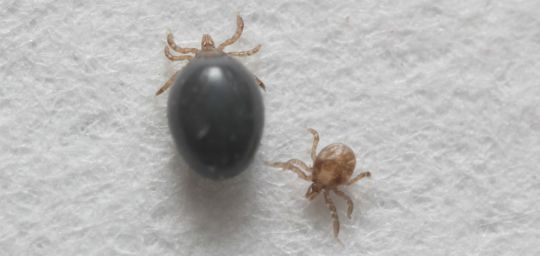
Tick1180x560Unfed and blood fed larvae, an example of the ticks used in Gulia-Nuss’ lab that demonstrate the differences between an unfed and blood fed larvae. Photo taken by Andrew Nuss, assistant professor at the University of Nevada, Reno.

For those who are active hikers, or find themselves outdoors often, the reality of a tick bite is not unusual, nor are its potential consequences. Ticks are known for transmitting many diseases in animals and humans, especially the deer tick, which is a known carrier of diseases such as Lyme disease, babesiosis, and anaplasmosis.

Monika Gulia-Nuss, assistant professor in the Department of Biochemistry and Molecular Biology at the University of Nevada, Reno, is working on generating transgenic ticks in her lab, the first of their kind, in order to explore new targets for vector control. Vector control is any strategic method used to limit organisms that spread disease pathogens.Monika Gulia-Nuss in her lab

Gulia-Nuss’ lab works specifically on the deer tick and has received a $407,000 grant from the National Institute of Health to continue studies.

“Our focus is to be able to manipulate these ticks in the lab so that we can understand the functions of different genes,” Gulia-Nuss said. “This way we can have a better approach for finding new vaccine, drug or insecticide targets.”

“This particular project that we just got awarded from the National Institute of Health is to develop methods for generating transgenic ticks for functional studies,” Gulia-Nuss said.

Transgenic in this sense means deleting or over-expressing a gene in an organism – in this case the tick. Generating transgenic ticks will not only help the Gulia-Nuss lab explore new areas of vector control, but also help in understanding genes involved in tick-pathogen interactions.

“One of the major impediments in tick research is that we do not have any genetic tools to dissect out the functions of their genes,” Gulia-Nuss said.

The lab knows the functions of certain genes in other organisms, but those specific tools are not readily available when studying ticks, so Gulia-Nuss and her team are building tools.

Originally a mosquito biologist, Gulia-Nuss moved into tick research with little experience with the bloodsucking arachnids. Studying ticks has previously proven difficult for many labs and researchers in terms of time.

“I didn’t know that the tick life cycle is two years,” Gulia-Nuss said. “That was a surprise for me, because with mosquitoes, I was used to 10 days of life cycle, and here I had this organism that takes two years, which is another impediment in tick research.”

Gulia-Nuss’ first move in her transgenic research was to shorten the life cycle of the ticks she was working on.

“When I set up my lab here at the University in 2016, my first goal was to cut the life cycle short to a more manageable time,” she said. “We were able to bring it down to five months from two years, which was a big step forward for us.”

The lab was able to do this by placing the ticks in an incubator set to a higher temperature, increasing their metabolism and therefore causing them to molt faster.

The second step for Gulia-Nuss was to inject tick embryos, something that no one else had ever done before.

“We didn’t even know what manipulation we needed to inject embryos,” Gulia-Nuss said.

Gulia-Nuss’ collaborator and the co-investigator on this grant, Robert Harrell, is an expert in transgenic insects and manages the Insect Transformation Facility at the University of Maryland. Together, they used their expertise in mosquito embryo injections and translated it into the tick research.

“We were able to inject tick embryos, so the shortened life cycle and our ability to demonstrate that we could inject tick embryos were the two main steps that really helped us get this grant,” Gulia-Nuss said.

The hypothesis behind the work

The major hypothesis behind the lab’s research lies in disrupting insulin signaling in ticks so as to affect parasite development.

“If we disrupt insulin signaling in ticks, that will influence their physiology and their behavior, and potentially the development of the pathogen they carry,” Gulia-Nuss said.

Insulin signaling is extremely important for nutrient metabolism, which is in turn, important for all organisms including ticks.

“Nutrients are important for a parasite developing inside an organism because the parasite requires all of their nutrients from the host,” Gulia-Nuss said. “To get those nutrients, the insulin signaling of the host should be in perfect order, but if we disturb the insulin signaling in the host, that might affect parasite development.

The lab is planning to use a technology called CRISPR-Cas9, which has the ability to manipulate genes in different organisms without them needing to be a model organism. With this technology, the lab will be able to knock-out genes in the ticks and understand their functions better, such as insulin signaling or other targets.

“It’s easier than the previous generation’s tools,” Gulia-Nuss said. “It’s not easy, but definitely easier.”

Lyme disease and public health

“Lyme disease is one of the most important vector-borne disease in the United States,” Gulia-Nuss said. “CDC reports around 300,000 new cases of Lyme disease annually, mostly in the 14 states in the Northeast and Midwest.”

Lyme disease is a tick-borne disease as the bacteria that causes it is carried by the tick. Ticks are blood-feeding organisms and they must feed on vertebrate blood at every developmental stage.

“Ticks go from eggs to larvae, to nymphs to adults, and at every developmental stage, they have to take a blood meal; it’s the only thing that they eat, they do not feed on anything else,” Gulia-Nuss said.

When ticks take this blood meal, they are likely to become infected with pathogens including the Lyme disease bacteria from an infected vertebrate, and transmit it during their next feed.

While Lyme disease is treatable through an antibiotics course, it can be fatal and lead to neuro-degenerative disorders if left untreated. Though Lyme disease is a serious problem, it is not the sole focus of the lab.

“Lyme disease is not the only disease that these ticks carry,” Gulia-Nuss said. “They also carry a number of different viruses, and understanding the tick-pathogen interaction on a molecular level will allow the research community to find new targets for tick control or blocking pathogen transmission.”

Gulia-Nuss’ lab already has support from the research community and this proposal was supported by researchers working on ticks as well as tick-pathogen interactions through letters of support. Once Gulia-Nuss’ lab have these tools made, they are hoping that it will not only help the tick research community, but also public health in general.

“This grant really puts us on the path forward, we are able to hire more staff for the lab, including a graduate student and a post-doctorate, and it will provide money for the next two years for things such as supplies, related costs to the ongoing project and also travel,” Gulia-Nuss said.

Gulia-Nuss received her bachelor’s, masters and doctorate degrees in biosciences from Maharshi Dayanand University in Rohtak, India. She was a research scientist at Purdue University before moving to the University of Nevada, Reno as an assistant professor in 2016.


Wolbachia-Laced Mosquitoes Being Released & Why Lyme/MSIDS & Other Chronically Ill Patients Might be Negatively Affected

 Inside Edition Published Feb. 11, 2018

https://www.naturalnews.com/2018-02-11-mosquitoes-infected-with-natural-bacteria-prevent-reproduction-released-in-miami.html

The Miami-Dade Country Mosquito Reduction Test Program, a collaboration between the University of Kentucky and biotech company MosquitoMate, is releasing lab-bred mosquitoes infected with Wolbachia into the wild to supposedly depopulate Aedes aegypti mosquitos that carry dengue fever, yellow fever, and Zika. They are conducting an initial test phase to see if it can become operational.

Wolbachia stops mosquitoes from reproducing.  The eggs die before they hatch.

Here are some potential problems:

  1. What if Wolbachia causes mutations?
  2. Evidently, consent has not been given.  Humans live here.
  3. Dogs treated for Heart Worm have severe inflammation due to released Wolbachia in the blood stream
  4. Wolbachia enhances other pathogens

https://madisonarealymesupportgroup.com/2017/07/10/wolbachia-the-next-frankenstein/  Wolbachia, a Gram-negative bacterium of the family Rickettsiales first found in 1924 and in 60% of all the insects, including some mosquitoes, crustaceans, and nematodes (worms). It was largely unknown until the 90’s due to its evasion tactics.  It has been used in human diseases such as elephantiasis and River Blindness, both caused by filiarial nematodes.

Wolbachia’s favorite hosts are filarial nematodes and arthropods.

Here’s where it gets tricky.  It is commonly known that nematodes (worms) are often a part of the Lyme/MSIDS patient picture & explains the importance of the following animal study.

Dogs treated for heart worm (D. immitis) have trouble due to the heart worm medication causing Wolbachia to be released into the blood and tissues causing severe Inflammation in pulmonary artery endothelium which may form thrombi and interstitial inflammation. Wolbachia also activates pro inflammatory cytokines. Pets treated with tetracycline a month prior to heart worm treatment will kill some D. immitis as well as suppress worm production. When given after heart worm medication, it may decrease the inflammation from Wolbachia kill off.  http://www.critterology.com/articles/wolbachia-and-their-role-heartworm-disease-and-treatment
The words worms and inflammation should cause every Lyme/MSIDS patient to pause. Many of us are put on expensive anthelmintics like albendazole, ivermectin, Pin X, and praziquantel to get rid of worms and are told to avoid anything causing inflammation due to the fact we have enough of it already. We go on special anti-inflammatory diets and take systemic enzymes and herbs to try and lower inflammation. https://madisonarealymesupportgroup.com/2016/04/22/systemic-enzymes/

Seems to me, many MSIDS/LYME patients when treated with anthelmintics, will have Wolbachia released into their blood and tissues causing wide spread inflammation, similarly to dogs.

And that’s not all.

According to a study by Penn State, mosquitoes infected with Wolbachia are more likely to become infected with West Nile – which will then be transmitted to humans.“This is the first study to demonstrate that Wolbachia can enhance a human pathogen in a mosquito,“ one researcher said. “The results suggest that caution should be used when releasing Wolbachia-infected mosquitoes into nature to control vector-borne diseases of humans.” “Multiple studies suggest that Wolbachia may enhance some Plasmodium parasites in mosquitoes, thus increasing the frequency of malaria transmission to rodents and birds,” he said. https://www.sciencedaily.com/releases/2014/07/140710141628.htm

So besides very probable wide spread inflammation, and that other diseases may become more prevalent due to Wolbachia laced mosquitoes, studies show Wolbachia enhances Malaria in mosquitos.

Lyme/MSIDS patients are often co-infected with Babesia, a malarial-like parasite that requires similar treatment and has been found to make Lyme (borrelia) much worse.

Lastly, with Brazil’s recent explosion of microcephaly, the introduction of yet another man-made intervention (Wolbachia laced mosquitos) should be considered in evaluating potential causes and cofactors. And while the CDC is bound and determined to blame the benign virus, Zika, there are numerous other factors that few are considering – as well as the synergistic effect of all the variables combined. Microcephaly could very well be a perfect storm of events.
https://madisonarealymesupportgroup.com/2016/12/21/how-zika-got-the-blame/, https://madisonarealymesupportgroup.com/2016/03/04/health-policy-recap/, https://madisonarealymesupportgroup.com/2016/03/08/fixation-on-zikapolio/

I hate bugs as much as the next person, but careful long-term studies of Wolbachia are required here.

Hopefully it is evident that many man-made interventions have been introduced into the environment causing important health ramifications: Wolbachia laced mosquitoes and eggs, GMO mosquitoes including CRISPR, and in the case of Zika in Brazil, whole-cell pertussis vaccinations (DTap) for pregnant women up to 20 days prior to expected date of birth, a pyriproxyfen based pesticide applied by the State in Brazil on drinking water, as well as aerial sprays of the insect growth regulators Altosid and VectoBac (Aquabac, Teknar, and LarvX, along with 25 other Bti products registered for use in the U.S.) in New York (Brooklyn, Queens, Staten Island, and The Bronx) to combat Zika. “We feel it’s critical that the scientific community consider the potential hazards of all off-target mutations caused by CRISPR, including single nucleotide mutations and mutations in non-coding regions of the genome … Researchers who aren’t using whole genome sequencing to find off-target effects may be missing potentially important mutations. Even a single nucleotide change can have a huge impact.http://articles.mercola.com/sites/articles/archive/2017/06/13/crispr-gene-editing-dangers.aspx?utm_source=dnl&utm_medium=email&utm_content=art3&utm_campaign=20170613Z1_UCM&et_cid=DM147520&et_rid=2042753642

All of this is big, BIG business.

Is the introduction of Wolbachia another puzzle piece in the perfect storm of events causing or exacerbating human health issues?
The jury’s still out, but it’s not looking good – particularly for the chronically ill.

https://articles.mercola.com/sites/articles/archive/2018/02/13/lab-made-mosquitoes-released-in-miami.aspx?  “If preventing Zika was their aim, government officials missed the boat on this one; although Miami-Dade County was previously designated as a Zika cautionary area, that designation was removed June 2, 2017.  No Zika virus disease cases have been reported with illness onset in 2018 in the U.S., while in 2017 there were only four cases of Zika virus reported that were presumably acquired via local mosquitoes (two in Florida and two in Texas).  There is a major push to combat mosquito-borne diseases in the continental U.S. with the use of lab-made and GE mosquitoes, even though in the U.S. mosquito-borne illnesses are not a grave threat, especially compared to other major public health crises like the opioid epidemic.”

And I will add the tick borne illness crisis, which truly is a pandemic.

https://www.ncipmc.org/connection/?p=4065  Excerpt:

On Nov. 3, 2017, the Environmental Protection Agency registered a new mosquito biopesticide – ZAP Males® – that can reduce local populations of the type of mosquito (Aedes albopictus, or Asian Tiger Mosquitoes) that can spread numerous diseases of significant human health concern, including the Zika virus.

ZAP Males® are live male mosquitoes that are infected with the ZAP strain, a particular strain of the Wolbachia bacterium. Infected males mate with females, which then produce offspring that do not survive. (Male mosquitoes do not bite people.) With continued releases of the ZAP Males®, local Aedes albopictus populations decrease. Wolbachia are naturally occurring bacteria commonly found in most insect species.

This time-limited registration allows MosquitoMate, Inc. to sell the Wolbachia-infected male mosquitoes for five years in the District of Columbia and the following states: California, Connecticut, Delaware, Illinois, Indiana, Kentucky, Massachusetts, Maine, Maryland, Missouri, New Hampshire, New Jersey, Nevada, New York, Ohio, Pennsylvania, Rhode Island, Tennessee, Vermont, and West Virginia. Before the ZAP Males® can be used in each of those jurisdictions, it must be registered in the state or district.

When the five-year time limit ends, the registration will expire unless the registrant requests further action from EPA.


Connecting the Dots of Yolanda’s Lyme Experience

https://www.lymedisease.org/touchedbylyme-yolanda-hadid-book/  by Dorothy Kupcha

TOUCHED BY LYME: Connecting the dots of Yolanda’s Lyme experience

yo2-198x300

I first learned about the Lyme disease experiences of Yolanda Hadid (then known as Yolanda Foster) via Twitter.

At that point, Yolanda was a cast member of the “Real Housewives of Beverly Hills” TV show, a former high fashion model, wife of millionaire music mogul David Foster, and mother to three children who would themselves go on to high profile careers in modeling.

I admit, her story hooked me right away and I immediately started following her Twitter posts. Her tweets offered a trail of tantalizing bread crumbs. They alluded to hyperbaric oxygen, stem cells, hyperthermia treatments and various cleanses and detoxification protocols. Yet, details were non-existent. She never gave the reader any solid information about her symptoms, nor her wide and varied treatment protocols.

Eventually, she would write blogs for the Bravo website, in connection with the Housewives show. These occasionally mentioned Lyme disease. There were media interviews that spoke of some of her difficulties, and a brilliant speech at the 2013 Time for Lyme Gala in Connecticut.

But mostly, her story dribbled out as a string of cryptic comments on social media. They typically raised more questions than they answered.

Now, Yolanda has connected the dots for us in her book, “Believe Me: My Battle with the Invisible Disability of Lyme Disease.” (St. Martin’s Press, 2017)

It’s a compelling read. Lyme patients will identify with many of its elements: troubling physical symptoms that can’t be explained; a long, traumatic search for an accurate diagnosis, with plenty of missteps by top medical doctors; the difficulties of treatments, both traditional and alternative.

Not everything is something the rest of us might relate to, however. Before she gets sick, Yolanda and David Foster inhabit a glamorous, jet-setting realm, which includes her involvement with the “Real Housewives” TV show.

However, all that changes as her health fails and she must marshal every ounce of inner strength she has to save her life and her sanity. Yolanda falls further and further away from the dazzling world of the entertainment industry, and eventually her marriage collapses as well.

Her willingness to keep searching for answers is a major theme of “Believe Me.” By this time, two of her children are also being treated for Lyme disease. She fights for their lives as well as her own. And in the midst of it, she loses her dear friend Ellie to the ravages of ALS—a severe emotional blow.

Through it all, Yolanda perseveres. She crisscrosses the globe to try out an astonishing array of alternative and ancillary treatments. She has metal-based crowns removed from her teeth and toxin-leaking implants removed from her breasts. She pursues the mystery of intestinal parasites, eventually expelling some gnarly looking rope worms. (Color photos included!)

I don’t view “Believe me” as a road map for Lyme disease treatment. Rather, it’s an inspiring description of her personal journey. Despite many twists and turns, it ultimately leads her to a good place.

I salute Yolanda for the grace, courage, and fortitude with which she endured an incredibly difficult stage of her life. And I thank her for so generously sharing what she has learned along the way.

TOUCHED BY LYME is written by Dorothy Kupcha Leland, LymeDisease.org’s VP for Education and Outreach. She is co-author of When Your Child Has Lyme Disease: A Parent’s Survival Guide. Contact her at dleland@lymedisease.org

____________

**Comment**

I have not read Hadid’s book yet but am thankful the parasite/worm issue was broached as many Lyme/MSIDS patients improve after taking anthelmintics such as Albenza, Ivermectin, and pin worm medication. Microbiologist Tom Greer shows that Burgdorferi and miyamotoi are associated with amyloid plaques in Alzheimer’s brainsBorrelia found in Lewy Body Dementia, nematodes (worms) found in Alzheimer’s brains, and Borrelia found in five deadly brain tumors (Glioblastoma multiform).  https://madisonarealymesupportgroup.com/2016/08/09/dr-paul-duray-research-fellowship-foundation-some-great-research-being-done-on-lyme-disease/

Pathologist Alan McDonald has found three strains of borrelia living in parasitic nematode worms, worm eggs, or larvae in the brain tissue of 19 autopsies.
MacDonald states that both worms and borrelia can cause devastating brain damage and that “while patients are wrongly declared free of Lyme and other tick-borne infections, in reality, too often they contract serious neurodegenerative diseases which can kill them.”  

Lyme discoverer, Willy Burgdorfer, wrote of finding nematodes in tick guts way back in 1984 and in 2014 University of New Haven researcher, Eva Sapi, found 22% of nymphs and 30% of adult Ixodes ticks carried nematodes.  https://madisonarealymesupportgroup.com/2016/06/03/borrelia-hiding-in-worms-causing-chronic-brain-diseases/  

Parasite treatment:  https://madisonarealymesupportgroup.com/2017/10/03/removing-parasites-to-fix-lyme-chronic-illnesses-dr-jay-davidson/

After reading about symbionts found in ticks and worms,  https://madisonarealymesupportgroup.com/2017/05/01/co-infection-of-ticks-the-rule-rather-than-the-exception/, I am concerned the use of Wolbachia (a symbiont) as a biocontrol as it could cause widespread inflammation in Lyme/MSIDS patients:  https://madisonarealymesupportgroup.com/2017/07/10/wolbachia-the-next-frankenstein/  Dogs treated for heart worm (D. immitis) have trouble due to the heart worm medication causing Wolbachia to be released into the blood and tissues causing severe Inflammation in pulmonary artery endothelium which may form thrombi and interstitial inflammation. Wolbachia also activates pro inflammatory cytokines.

Misdiagnosed: How Children With Treatable Medical Issues Are Mistakenly Labeled as Mentally Ill

https://www.huffingtonpost.com/entry/misdiagnosed-how-children-with-treatable-medical-issues_us_59d6b302e4b0705dc79aa68f by A. Elizabeth Washington, Writer, Advocate, Mother

Misdiagnosed: How Children With Treatable Medical Issues Are Mistakenly Labeled as Mentally Ill

10/05/2017 

In the fall of 2015, eleven-year-old Sophia Cahill* began blinking her eyes. Though an eye doctor dismissed the blinking as a symptom of dry eyes, her parents would look back later and realize the blinking was a tic. Sophia was otherwise healthy and unbothered by the blinking so life carried on as usual. The simple tic would unfortunately foreshadow much darker days to come.

As Sophia entered seventh grade the following year, she enjoyed spending time with friends and family, performed well academically, and excelled in several sports. She played softball and skied black-diamond slopes with ease. With a love of horseback riding, she had spent two weeks the prior summer at an overnight riding camp. Independent and responsible, she had flown alone across the country to see her cousins and was a trustworthy babysitter for her siblings. Sophia was happy and healthy, with a precocious sense of humor and an easygoing demeanor. Sophia’s parents, both medical doctors, had no concerns about her behavior or health that could have predicted that her life would soon be dramatically and abruptly turned upside down.

Shortly after the school year started, Sophia became sick with a virus and then pneumonia. The illnesses would have been easily forgotten were it not for the troubling episodes that began the following month. Out of the blue and generally in the evenings, Sophia would become extremely distressed and inconsolable, crying for hours at a time. In a state of extreme anguish, she’d rip up boxes of Kleenex, pound her fists on the bed, and repeat bizarre and senseless phrases. Her pupils would dilate and with sheer terror in her eyes and panic on her face, she would scream “Mommy! Mommy, help me!” but no amount of consoling could ease her suffering. Eventually, her hysterical sobbing was punctuated with the disturbing sight and sound of the usually calm twelve-year-old banging her head against the wall. By the wee hours of the morning, she would collapse from utter exhaustion and fall sleep.

The morning after each episode, Sophia would awake in good spirits showing no signs of the turmoil that had transpired the night before. A few nights would pass before another episode would occur. Gradually the episodes became more frequent and began lasting longer. Within three months, she had racked up a number of mental health diagnoses from several different doctors and had started an SSRI, yet her mental health continued to deteriorate.

Shortly after the New Year, the distressing symptoms that Sophia had exhibited only intermittently in the prior months turned into an around-the-clock nightmare for her and her family. With the addition of peculiar involuntary movements and constant moaning that would later be recognized as a vocal tic, Sophia was admitted into the hospital.

While hospitalized, her mother received a call from the pediatrician. The strep titers that she had asked the pediatrician to order were positive. This indicated that Sophia had likely had a fairly recent strep infection. Coupled with her dramatic neuropsychiatric deterioration, the pediatrician believed her mother’s suggestion that Sophia might have pediatric autoimmune neuropsychiatric disorders associated with streptococcal infections, commonly referred to as PANDAS, was likely accurate. She asked that Sophia’s mother discuss the possibility with the doctors at the hospital. Because Sophia also had a virus and pneumonia in the month before her symptoms began, pediatric acute-onset neuropsychiatric syndrome, or PANS, was also a consideration. PANDAS, a subset of PANS, requires documentation of previous strep infection. Diagnosis of PANS does not require identification of a specific trigger.

Sophia’s parents shared the labs and their suspicions with the hospital, but the attending physicians were adamant that Sophia did not have PANS. Relentlessly symptomatic, Sophia was transferred to an inpatient child and adolescent unit at another hospital with a diagnosis of anxiety. Here too, her symptoms continued to worsen and she developed an extreme startle response, jerking violently at the slightest sound. One week passed and high doses of anti-psychotics, beta-blockers, and other medications as well as additional investigation into medical causes produced no relief. Desperate for help, Sophia’s parents brought her back to the first hospital.

An MRI, EEG, and lumbar puncture provided no insight into what might be wrong and a neurologist reported she could find nothing amiss neurologically. After seeing another psychiatrist, Sophia picked up yet another diagnosis. This time her parents were told she had a conversion disorder and that they were to bring her home and behave as though nothing was wrong with her. With that, Sophia was discharged from the hospital.

At home, she continued to moan around the clock, jerked her arms uncontrollably, screamed hysterically, and was frequently catatonic. Frantic for answers, Sophia’s parents took her to yet another psychiatrist. This time she was diagnosed with a panic disorder, and though the psychiatrist admitted he honestly was not sure what was wrong with her, he prescribed two different anti-psychotics in an effort to stabilize her.

The attempt failed and by February, Sophia had refused to eat or drink for a full week. Treated for dehydration and released by the hospital, she was sent to an in-patient psychiatric facility. She was initially placed on an eating disorder unit and then moved to the OCD and anxiety unit. The two psychiatrists who evaluated her quickly encouraged her parents to have Sophia evaluated by a doctor who specialized in PANS and PANDAS. Sophia and her parents traveled out of state to see a specialist. With a virus and pneumonia preceding her initial neuropsychiatric symptoms, as well as positive streptococcus titers, the specialist confidently diagnosed Sophia with PANS and its subset PANDAS. Returning to the psychiatric facility with a proper diagnosis and treatment plan in place, Sophia was discharged.

Still suffering horrifically, Sophia tried to end her own life two days later. She was rushed back to the same hospital that had encouraged her parents to take her home and behave as though nothing was wrong the month before.

Now open to the possibility of PANS, hospital physicians agreed to treat her with intravenous immunoglobulin, or IVIG. Derived from the plasma of over a thousand donors, IVIG is used to treat a number of serious and life threatening medical conditions, including PANS. Sophia also underwent plasmapheresis, a procedure in which the plasma is separated from the blood cells, treated to remove auto-antibodies that may be attacking the body, and then returned to the body. Next she received Rituximab, a medication that halts autoimmune disorders by targeting and destroying B-cells, a type of blood cell responsible for antibody production

Though patients receiving these treatments often wait eight or more weeks for relief, Sophia was well enough to leave the hospital by the end of the month. Just as she was beginning to resume a few normal activities, pharyngitis caused relapse and she was readmitted to the hospital for an additional six weeks of aggressive immunomodulatory therapies, antibiotics, tonsillectomy and adenoidectomy. This time, the treatment would provide complete remission.

Four months after her final release from the hospital, Sophia is functioning just as well today as she had been prior to the onset of PANS. She is content, doing well academically, and on the school volleyball team. Surrounded by friends to celebrate her thirteenth birthday last month, Sophia showed no evidence of the year-long nightmare she had endured.

To understand how the physicians of a highly regarded hospital system could repeatedly misdiagnose Sophia, it is helpful to understand the history of PANS and PANDAS. National Institute of Mental Health researcher, Dr. Susan Swedo, first recognized what would come to be called PANDAS more than 25 years ago. While researching Sydenham’s chorea and obsessive-compulsive disorder (OCD), the mother of a patient with severe OCD and tics mentioned that her son had strep throat less than two weeks before his onset of symptoms. She had also noticed her older son’s tics would worsen a couple days before the start of a sore throat and positive strep test. As Dr. Swedo investigated further, she became aware that other infections also triggered OCD, tics, psychiatric issues, and behavioral problems in certain children.

Focusing early research on strep-triggered cases of obsessive-compulsive and tic disorders, Dr. Swedo published a paper in 1998 that provided clinical description of the first 50 children she had observed with PANDAS. All cases were characterized by an abrupt onset of OCD or tics following a strep infection. Many of the children also suffered from emotional lability, changes in school performance, personality changes, bedtime fears, separation anxiety, irritability, sensory defensiveness, impulsivity, distractibility, deterioration in handwriting and math skills, oppositional defiant behaviors, and nightmares (1).

A small handful of neurologists were swift to criticize the research. Quickly labeled as controversial, Dr. Swedo and other researchers would find themselves defending the concept of PANS for decades to come. Ruthless in their attack of PANS and PANDAS, several critics published a paper in 2012 in the Journal of Pediatrics titled “Moving From PANDAS to CANS (2).” Despite a large body of evidence to the contrary, they again called into question the scientific evidence for its existence. They also criticized the use of antibiotics to treat children with abrupt onset OCD and tics despite evidence that the health of many children with PANS was restored with antibiotic treatment.

After the paper was published, it was revealed that three of the authors, Dr. Roger Kurlan, Dr. Harvey Singer, and Dr. Donald Gilbert, failed to disclose that they had received financial support from the pharmaceutical company Psyadon (3). The company manufactures a medication for tics, providing a possible motive for their persistent criticism of the concept of PANS and use of inexpensive antibiotics to treat it.

Despite the frequent negative publicity, significant progress has been made in the understanding and treatment of PANS. In 2012, Lucile Packard Children’s Hospital at Stanford started a program treating children with PANS. In 2013, they hosted a conference with a number of experts from prestigious medical institutions and published a paper with clear diagnostic guidelines (4). In February 2015, an entire edition of the Journal of Child and Adolescent Psychopharmacology (5) was dedicated to PANS and PANDAS and in 2017, the same journal published three articles detailing full treatment guidelines (6). The articles were co-authored by an incredible team of experts like Dr. James Leckman, Professor of Child Psychiatry at Yale University, who served as the Director of Research for the Yale Child Study Center for more than twenty years; Dr. Mark Pasternack, infectious disease doctor and Associate Professor of Pediatrics at Harvard University; Dr. Jennifer Frankovich, PANS rheumatologist and Director of the PANS Program at Stanford; and more than two dozen other experts from prominent institutions.

Though experts consider the controversy to be resolved, the vast majority of pediatricians, child psychiatrists, and neurologists are unapprised of the latest research and continue to misdiagnose children who have PANS with any number of mental health disorders. The PANDAS Physician Network, an organization that educates medical professionals and sponsors research of the disorder, lists only one or two physicians who treat PANS in many states. Considering that by National Institute of Mental Health estimates, at least 350,000 children in the United States have PANS, the number of doctors who recognize and treat it is woefully inadequate to meet the needs of suffering children.

For now, many children with PANS continue to wait for the medical community to catch up to what experts have known for decades. We can only hope they’ll be as lucky as Sophia and receive proper medical attention before it’s too late.


*Name has been changed to protect privacy.


References

1. Swedo, Susan E., et al. “Pediatric autoimmune neuropsychiatric disorders associated with streptococcal infections: clinical description of the first 50 cases.” American Journal of Psychiatry 155.2 (1998): 264-271.

2. Singer, Harvey S., et al. “Moving from PANDAS to CANS.” The Journal of pediatrics 160.5 (2012): 725-731.

3. Singer, Harvey S., et al. “Moving from PANDAS to CANS.” The Journal of pediatrics 160.5 (2012): 725-731. (see correction)

4. Chang, Kiki, et al. “Clinical evaluation of youth with pediatric acute-onset neuropsychiatric syndrome (PANS): Recommendations from the 2013 PANS Consensus Conference.” Journal of Child and Adolescent Psychopharmacology 25.1 (2015): 3-13.

5. Chang, Kiki, Harold S. Koplewicz, and Ron Steingard. “Special issue on pediatric acute-onset neuropsychiatric syndrome.” Journal of child and adolescent psychopharmacology 25.1 (2015): 1-2.