Episode #88: Brain Under Attack with Maria Rickert Hong, CHHC, AADP
Created: 04 January 2019
In this episode, you will learn about PANS, PANDAS, and related developmental disorders.
About My Guest
My guest for this episode is Maria Rickert Hong. Maria Rickert Hong, CHHC, AADP is a former Wall Street sell-side equity research analyst who is now a Certified Holistic Health Counselor. She is the author of the bestselling book, “Almost Autism: Recovering Children from Sensory Processing Disorder, A Reference for Parents and Practitioners” and the co-author of “Brain Under Attack: A Resource for Parents and Caregivers of Children with PANS, PANDAS, and Autoimmune Encephalitis”. As a health coach, she helps parents make diet and lifestyle changes to recover their children from symptoms of Sensory Processing Disorder, autism, PDD-NOS and ADHD. She has recovered her two boys from SPD, asthma, and acid reflux. Maria is a board member, Media Director, and blogger for Epidemic Answers, a 501(c)3 non-profit that lets parents know that recovery is possible and is the sponsoring non-profit of “The Documenting Hope Project”. Maria is also a board member of Parents as Partners.
Key Takeaways
What is the difference between PANDAS and PANS?
When does PANS generally present?
What are the symptoms of PANS?
What is the role of inflammation in PANS?
Do PANS and autism overlap?
What leads to a blood-brain barrier breach in PANS?
What is the role of EMFs in PANS?
What role do glutamate, phenolics, and salicylates play in PANS?
What are some of the triggers for PANS?
Does mold exposure play a role in PANS?
What tests are done to explore the potential for PANS?
What is the Epidemic Answers Four Step Healing plan?
Why is detoxification and drainage key in PANS recovery?
Disclaimer: The content of this show is for informational purposes only and is not intended to diagnose, treat, or cure any illness or medical condition. Nothing in today’s discussion is meant to serve as medical advice or as information to facilitate self-treatment. As always, please discuss any potential health-related decisions with your own personal medical authority.
A mother is calling for greater awareness of a little-known condition she believes changed her easy-going son overnight.
Alison Maclaine fears some children are being misdiagnosed with autism and mental health issues when they are really suffering an infection which can be treated simply with antibiotics.
Her eight-year-old son Jack suffered distressing personality changes and “lost a year of his life”.
And she said she was left “in despair” that she and her family had “no quality of life”.
Now Alison believes he was suffering from Paediatric Acute-onset Neuropsychiatric Syndrome (PANDAS), triggered by a streptococcal infection – a condition that can be treated with simple antibiotics and anti-inflammatories.
Something wrong
Jack went to bed one Friday in January last year, looking forward to a football tournament he was playing in the next day.
But on arrival at the venue on Saturday morning he became overwhelmed with anxiety. After several attempts, he was unable to enter the building.
At home in Dumfries, Alison realised something was very wrong.
She told the BBC: “He started to repeatedly apologise. He said he didn’t deserve to have fun, didn’t deserve to have friends, didn’t deserve to have nice things, didn’t deserve to play football.
Alison Maclaine knew her son’s diagnosis was not right and did her own research into his symptoms
“That eventually led to ‘I don’t deserve to live, when I get home I am just going to sit outside until I freeze to death’.”
When it came to bedtime, Jack refused to have covers and pillows and started to repeat that he needed to die, until he fell asleep.
The following day saw his behaviour sink further.
Alison said: “One of the worst things in the world must be listening to your child telling you he wanted to die and asking you to help him.”
What is PANS/PANDAS?
According to the charity PANS PANDAS UK, PANS (Paediatric Acute-onset Neuropsychiatric Syndrome) is a neuropsychiatric condition which is triggered by a misdirected immune response which results in an inflammation of a child’s brain.
PANDAS is a subset of PANS, triggered by a misdirected immune response to a streptococcal infection which results in an inflammation of a child’s brain.
Happening very quickly, this can cause a child to exhibit symptoms including anxiety, aggressive behaviour, depression, clumsiness, insomnia and the onset of obsessive-compulsive disorder.
It was first recognised in the United States in 1998 where PANS PANDAS charities estimate as many as one in 200 children could be affected.
In 2018, the World Health Organisation recognised the condition, but in the UK it is not widely known.
There is no clear test for the condition so doctors often have to rule out psychiatric conditions. The immediate response to antibiotic or anti-inflammatory treatment is often what confirms the condition.
The charity PANS PANDAS UK said a failure to understand the condition in the UK means that children are regularly wrongly referred to Child and Adolescent Mental Health Services (CAMHS).
‘Absolute despair’
Jack then became aggressive and withdrew from his beloved younger sister Cara. He would become irritable and angry and started to regress, playing with baby toys.
Over the next several months he was repeatedly diagnosed as having autism and severe anxiety.
But Alison, herself a psychiatrist, disagreed.
She said: “It got to the point where I really felt absolute despair.
“I felt that he had no quality of life, we had no quality of life. There were times when I contemplated things.”
His family feels that Jack is “back”
That despair led to Alison doing her own research and the discovery of PANS and PANDAS.
Alison said reading the symptoms was like reading a description of her son and his behavioural changes.
Jack was finally diagnosed privately by a consultant paediatrician in England and treated with simple antibiotics.
They worked overnight and Alison had her son back.
She said: “Jack responded dramatically to the treatment. He hadn’t left the street in five months except for school. After two days on antibiotics he wanted to come to Morrisons with me and Cara. It felt like Jack was back.”
Dr. Tim Ubhi finally diagnosed PANDAS in Jack
Alison is frustrated now, believing if Jack had been given got antibiotics when he first presented to the GP in January, the outcome would have been different.
She said: “It is so frustrating knowing the treatment was so simple. Now I hate to think there are other children in the situation that they have this disorder that has not been picked up on and have been sent down a mental health/psychological route which can’t fix the problem.”
Dr Tim Ubhi, who diagnosed Jack’s condition, said: “The problem here is if we do not recognise this condition and we ignore it, potentially there are children out there who are suffering who could actually get treated and actually improve their symptoms.
“So we have a responsibility as physicians to think about this as a condition and do the work to actually create an awareness of what the condition is doing in the UK.”
A Scottish government spokeswoman said: “We appreciate that watching any loved one suffer is heartbreaking, even more so when it is a child.
“We are working together with partners to improve the outcomes and support for adults and children with rare conditions, and ensure that everyone receives the appropriate treatment.
“Ministers are unable to make or influence clinical decisions or definitions, and it would not be appropriate for them to do so.”
If you, or someone you know, have been affected by mental health issues, these organisations may be able to help.
___________________
**Comment**
These stories are repeated over and over worldwide. Time for doctors to get on board and learn about it so they can recognize and treat this.
Please take note of the plethora of symptoms and the tandem workings of PANDAS/PANS with Lyme/MSIDS. A highly respected LLMD here in Wisconsin has found that 80% of his PANS kids also have Lyme/MSIDS(borrelia and other coinfections).
Urgent Childhood and Adult Psychiatric Details So Often Overlooked
So many kids these days have rages, OCD, tics, aggressive behavior, prolonged tantrums and anxietyall living downstream from PANS, PANDAS and Autoimmune Encephalitis.
If these profound and puzzling symptoms prevail you must look into PANS (Pediatric Acute-onset Neuropsychiatric Syndrome), PANDAS (Pediatric Autoimmune Neuropsychiatric Disorders Associated with Strep) and Autoimmune Encephalitis – especially if your child exhibited sudden behavioral changes or a markedly unpredictable developmental regression.
Listen up; Maria spells out your options.
Autism, ADHD, Executive Function, and Sensory Processing Disorder
Even kids with autism, ADHD and Sensory Processing Disorder should be evaluated for this condition as some practitioners believe that nearly 2/3 of kids with neurodevelopmental disorders also suffer from PANS. As you listeners know, and those of you who have followed our updates over the years, immunity is a relentless and ubiquitous focus in my offices for treatment failure for many years.
The good news: if you identify it correctly and take the necessary steps treatment failure will often, quite surprisingly, turn around.
Note Well
PANS is an umbrella term that includes diagnoses such as Lyme disease, PANDAS, PITANDS (Pediatric Infection-Triggered Autoimmune Neuropsychiatric Disorders), and Autoimmune Encephalitis — all of which describe a condition marked by concerning psychiatric and physical symptoms that often, but now always, appear suddenly.
Children in the U.S. now suffer from PANS at a very concerning rate – it’s far more prevalent than many assume.
In this CBJ/292 Episode, We Discuss
What PANS, PANDAS and Autoimmune Encephalitis are and why so many children are being diagnosed with these conditions.
What causes PANS.
Why PANS is so commonly seen in children with autism.
How PANS is treated.
How to get to the root cause(s) of PANS.
What parents of children with PANS have done to bring their children back to good health.
What leading PANS experts have to say about the cause and treatment of PANS.
Maria co-wrote this book with remarkable colleagues at Epidemic Answers: Beth Lambert, Roseann Capanna-Hodge, Lauren Stone and Jennifer Giustra-Kozek. We’re excited to present this resource to you in your quest for improving your child’s health!
Connections
Book: Brain Under Attack– Rickert-Hong et al., Oct. 2018 Global Amazon Link – Strongly recommended very well written.
Our CBJ hosting objective is critical: upgrade mind and brain data through informed dialogue with neuroscience experts to build more predictable, more comprehensive, more understandable solutions for you and your family. Today’s technology drives significantly improved mind-prognosis – beyond traditional psychiatric measures. Inaccurate labels, speculation, and guesswork are out – critical thinking, data, and measurement are in. Let’s work together to connect advanced biomedical wisdom with everyday street reality.
PANS/PANDAS is still misunderstood and undiagnosed. Many doctors are completely clueless. According to one Wisconsin doctor, 80% of his PANS/PANDAS patients also have Lyme/MSIDS. Often an infected tick bite can trigger it. It’s a perfect storm of events that can hijack your child. Please learn all you can and share the information prolifically. Children are losing their childhoods to this monster.
A doctor battles to save children with disabling mental illness.
Could the answer be simpler than everyone thinks?
Nine-year-old Kathryn was a normal, healthy child. She was a star student, athlete and dancer. In a matter of days, she would become totally dysfunctional. Kathryn had alarming rapid-onset OCD refusing to eat or drink. She had tremendous separation anxiety and would become panicked if her parents were not in sight. She had trouble sleeping and showed signs of age regression in vocabulary and handwriting.
How did this happen?
More than 30 years ago, a doctor discovered that an undiagnosed strep infection was the cause of one child’s disabling illness. More and more evidence was found: Strep was linked to symptoms normally chalked up to psychiatric illness. Modern medicine has been very slow to adopt this new idea.
“My Kid is Not Crazy,” a film by Tim Sorel, tracks the journey of six children and their families as they become tangled in the nightmare of a medical system that lacks the compassion and knowledge to treat these children.
MY KID IS NOT CRAZY IS THE CINEMATIC, PEDIATRIC EQUIVALENT OF BRAIN ON FIRE-MEETS-INFECTIOUS MADNESS. A FILM THAT WILL CHANGE THE WAY WE LOOK AT MENTAL ILLNESS FOREVER. -CHICAGO NOW
This 2018 study shows that over 1/3 of kids with PANS have hallucinations and are more impaired than those without psychotic symptoms. The authors admonish clinicians to screen for abrupt-onset of a symptom cluster including OCD and/or food refusal, with neuropsychiatric symptoms (enuresis, handwriting changes, tics, hyperactivity, sleep disorder).
_______________
**Comment**
I post articles and videos on PANS/PANDAS, Autism, and other illnesses with an autoimmune label due to the fact that tick borne illness can be a part of this picture and a trigger which starts the downward cascade.
Please educate your loved ones about this potential as children are losing their childhoods to unbelievable misdiagnosis and suffering.
Asymptomatic girls after receiving Gardasil activated dormant Bartonella which was confirmed by testing.
https://madisonarealymesupportgroup.com/2017/10/15/vaccines-and-retroviruses-a-whistleblower-reveals-what-the-government-is-hiding/Data suggests that 6% of the U.S. population is harboring a retrovirus in their bodies that can develop into an acquired immune deficiency. This is not the well-known AIDS caused by HIV, but Acquired Immune Deficiency Syndrome (AIDS) associated with other retroviruses.These non-HIV retroviruses were unintentionally introduced into humans over the past 75 years.It began with trials of polio vaccines and yellow fever vaccines given in the early 1930s. This is when the first recorded cases of Chronic Fatigue Syndrome and autism appeared. It involved the use of laboratory mice to prepare vaccines for human use. [1]

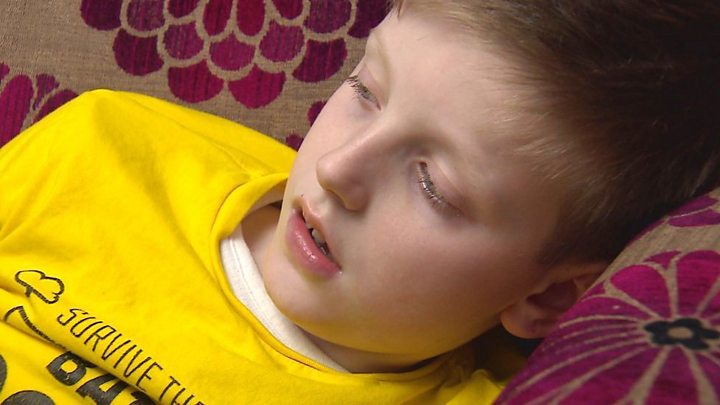
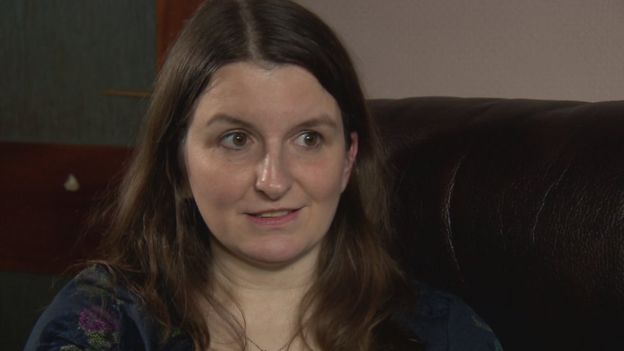
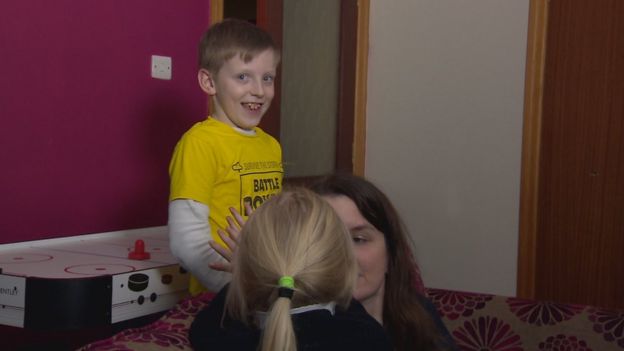
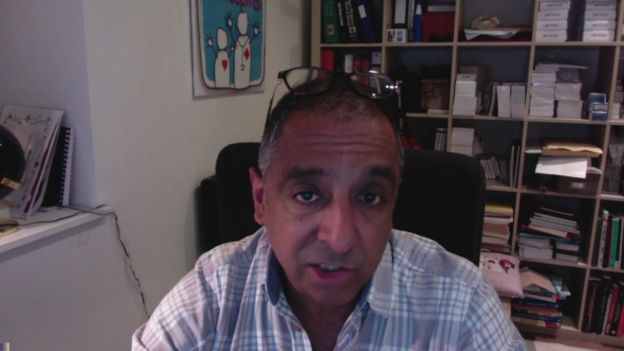
 Photo by


