Archive for the ‘Lyme’ Category

A Significant Step Forward in Lyme Disease Research (Don’t Hold Your Breath)

https://giving.massgeneral.org/stories/a-significant-step-forward-in-lyme-disease-research

A Significant Step Forward in Lyme Disease Research

The newly funded multidisciplinary Lyme disease program will improve patient care and seek new breakthroughs in early detection, treatment and prevention.

By Nancy Kilburn

11/27/23

Excerpts:

To address this public health challenge, Mass General is establishing a Multidisciplinary Lyme Disease Clinical Research Program. Made possible with the support of Phillip H. Morse, Vice Chairman of the Boston Red Sox, the program will bring together experts from infectious diseases, neurology, rheumatology and other departments across the hospital to provide more coordinated care for patients and advance research toward new treatments and methods for early detection and prevention.

In all, the Morse family’s transformational gift provides funding for an endowed chair — recently awarded to Dr. Steere — and the creation of a multidisciplinary clinic with a Lyme disease research program.

The Morse Endowed Chair in Medicine, the highest academic honor Mass General can give, provides Dr. Steere with flexible funding to pursue high-impact work. As Chair, Dr. Steere is launching the Lyme disease clinical research program, alongside Jacob Lemieux, MD, PhD, a leading physician-scientist who studies the genetics of Lyme and other tick-borne illnesses. “Jake represents the next generation of Lyme research and this gift will help us realize the vision of what they can accomplish in the future,” says Dr. Steere.  (See link for article)

______________

SUMMARY:

  • One of the goals is that patients will receive “coordinated” care in one location.
  • The article erroneously states that a “small subset” of patients go on to suffer with persistent symptoms. (This myth must be destroyed or patients will never get the attention they deserve)
  • The article states patients are frustrated by the slow rate of progress in treating long-Lyme. (Ya think?!)
  • Regarding the NIH, research into persistent symptoms as been a “hard sell.” (This is the understatement of the year!)
  • Due to this FACT, research into persistent symptoms would not be possible without philanthropic support. (They fully admit that doing ANY research with government grants is a WASTE OF TIME.  Please remember this when you read about Lyme advocates clamoring for more government money/research. It is never yielded anything productive for patients and it never will unless the accepted narrative is replaced by reality)

It remains to be seen if this new interdisciplinary group is any different from the same-o-same-o of the past.  I’m not holding my breath.  The juggernaut of corrupt research institutions in academia as well as in ‘public health’ agencies is very real and only appears to be worsening.

For more:

I think we have our answer about this already. I’d love to be wrong.

Zooming With Congress For More Lyme Funding Which Will Yield Zilch for Patients

‘Insanity is doing the same thing over and over again and expecting different results.” ~ usually attributed to Alfred Einstein

https://www.lymedisease.org/zooming-with-congress-fly-in/

By Dorothy Kupcha Leland

2/22/24

Zooming with Congress for more Lyme funding

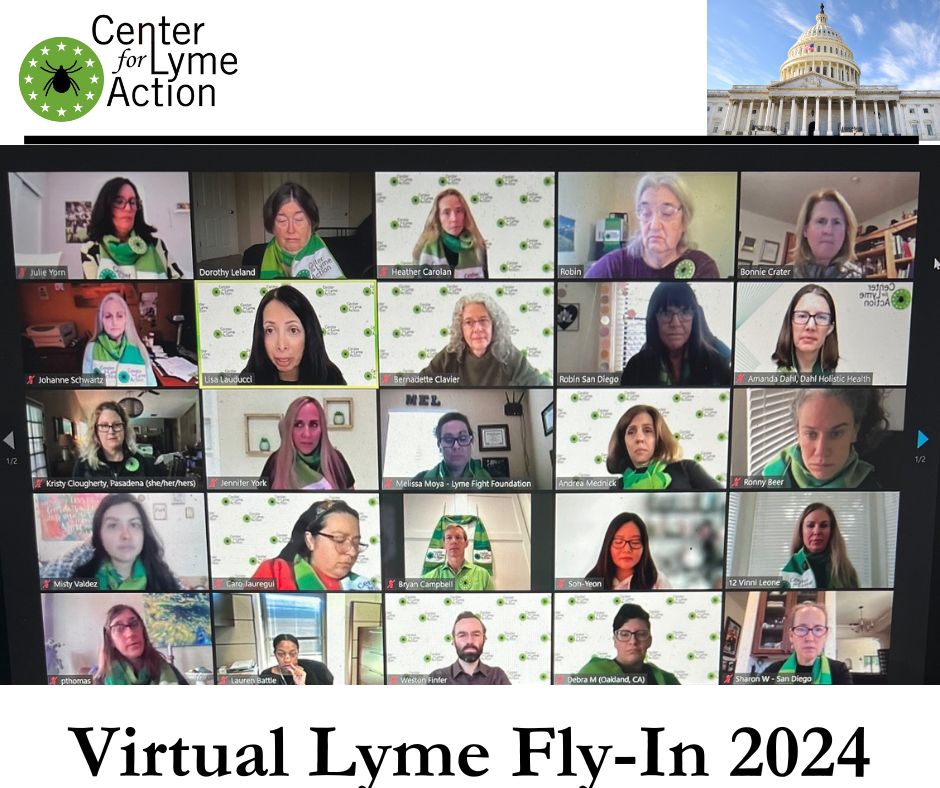
More than 380 Lyme disease advocates from 45 states put on their special green neck scarves and zoomed with congressional offices this week.

Their goal? To educate their elected representatives and urge them to increase federal funding for Lyme disease research.

This is the fifth year the Center for Lyme Action has sponsored the annual Lyme Fly-in, and the fourth year it’s been held virtually. Since the CLA formed in 2019, federal funding for Lyme disease has increased $282 million. (A good start, but much more is needed!)

The virtual Lyme Fly-In is also a chance for Lyme advocates to connect with each other–and spread the word on social media. Here are some of my favorite posts I found online: (Go to link for article)

_____________

**Comment**

I’m all about educating.  That is rarely unfruitful unless your audience is so completely biased and/or corrupt that it refuses to entertain anything but a regurgitated narrative.  What is a waste of time is increasing government grant money for a highly polarized illness that hasn’t been dealt with properly since it was ‘discovered.’  Not sure when the memo will reach advocates, but it’s time to move on from this fruitless endeavor.

History has shown that the only forward progress in Lymeland has been from the hard work of independent researchers who are typically invested personally and who are driven and open-minded enough to find real answers.

The Senate rejected an inquiry into whether Lyme started in a Pentagon lab.  Do we really expect transparency from the very agencies that may be behind it all but refuse to be investigated?  Seriously?

Further, the old political debate over chronic/persistent infection has yet to be accepted in mainstream medicine and media – but is embraced by those who accept the world wide research and reality.  This fly in the proverbial ointment proves little has changed and funding the same agencies will yield nothing productive for patients.

For more:

Lyme Disease Triggers Autoimmune Disease – Lupus

https://danielcameronmd.com/lyme-autoimmune-disease/

LYME DISEASE TRIGGERS AUTOIMMUNE DISEASE – LUPUS

lyme-autoimmune-disease

An increasing number of studies indicate that Lyme disease may ignite an autoimmune reaction in some individuals or symptoms may mimic an autoimmune disease.

In their article “Lyme Borreliosis as a Trigger for Autoimmune Disease,” Yehudina and colleagues present a unique case in which an infection with Borrelia burgdorferi (the bacteria which causes Lyme disease) triggered the autoimmune condition, systemic lupus erythematosus (SLE), also referred to as lupus.¹

As the authors point out, “long-term exposure of the host’s immune system to [Borrelia] spirochetes can contribute to the development of [a new onset] chronic autoimmune disease.”

This case report describes a 35-year-old woman who developed pain in the joints of her hand, episodes of low-grade fever, general weakness and fatigue and skin rashes on her hands and trunk. The woman reported having an insect bite prior to the onset of her symptoms.

“The patient consulted a dermatologist, who prescribed topical treatment (ointment containing steroids) for dermatitis for one month but with no response,” the authors state.

She then consulted with a rheumatologist, who ordered Lyme disease testing, which was positive by Western blot.

The woman was diagnosed with Lyme disease and prescribed a 28-day course of antibiotic treatment with doxycycline.

“Following therapy, her general condition improved with resolution of joint pain, weakness, normalization of body temperature, and decrease in rashes,” the authors state.

“There is strong evidence of the presence of an immune-mediated process in patients with antibiotic resistant [Lyme disease].”

However, 2 months after completing treatment, the woman exhibited new symptoms. She developed low-grade fevers, a butterfly-like bilateral erythema on the cheek, hair loss, pain, morning stiffness in her hands and wrist joints, weight loss and pronounced chilliness of the fingers.

“Taking into account the change in the clinical manifestations, further investigations were conducted to exclude systemic connective tissue diseases and lymphoma,” the authors state.

A skin biopsy was performed and revealed that the woman, in fact, had lupus, an autoimmune disease.

After treatment for the autoimmune disease, her symptoms improved significantly.

The authors conclude, “Long-term exposure of the host’s immune system to spirochetes can cause chronic autoimmune disease.”

“One possible explanation for antibiotic-resistant [Lyme disease] or subsequent autoimmune reactions and diseases is the generation of autoimmunity directly or indirectly mediated by the pathogen and based on molecular mimicry,” the authors point out.

References:
  1. Yehudina Y, Trypilka S. Lyme Borreliosis as a Trigger for Autoimmune Disease. Cureus. 2021 Oct 10;13(10):e18648. doi: 10.7759/cureus.18648. PMID: 34786243; PMCID: PMC8578812.

________________

**Comment**

The article only mentions treatment for autoimmune disease, but not treatment for infection which would deal with the root of the problem – which is ongoing infection after the abysmal, unscientific CDC mono therapy of doxycycline.  It also doesn’t mention that patients are typically coinfected with many pathogens that all require different medications.

This is a perfect example of the continued biased and limited propaganda still heralding from government funded research, and a perfect example of why we should not give one more dime to it. Any Lyme/MSIDS advocate who says otherwise is either ignorant of the sordid history or a part of the problem, but it’s seriously time to wake up.

Brain on Fire: Neuropsychiatric Disorders in Children

https://www.lymedisease.org/alain-mass-brain-on-fire/

Brain on fire: neuropsychiatric disorders in children

By Alain Mass, MD

2/13/24

Nearly one in six children between the ages of 2 and 6 years old (17.4%) has a diagnosed mental, behavioral or developmental disorder.

More than 17 million children in the United States have or have had a diagnosable mental illness.

Mental disorders are either primary or secondary. Primary mental illnesses are rather treatable than curable and the treatment is most of the time lifelong.  If you ignore that behind the well-made diagnosis, there may be a deeper reason for the symptoms, you accept the fate of what a primary mental health disorder is about.

The expression “brain on fire” means that the child has only a brain inflammation as opposed to having a true psychiatric disorder, where the psychiatric disorder is only a symptom and not the disease.

The causes of neuroinflammation are numerous and often combined with each other. Many extra-psychiatric conditions may cause psychiatric disorders. The most common ones are infections, auto-immune encephalitis, toxicity including but not limited to mold, heavy metals, or pesticides.  Metabolic or nutritional factors may also contribute to mental disorders.

Lyme disease and neuropsychiatric disorders in children

Children develop more central nervous system symptoms while adults develop more symptoms from the peripheral nervous system.

The most common manifestations of Lyme disease in children are emotional, cognitive and behavioral. The change of personality is definitely the number one symptom of Lyme disease in children.

Lyme disease may be responsible, according to Robert Bransfield, M.D, psychiatrist, for a wide spectrum of neuropsychiatric symptoms. These may include: developmental disorders, autism spectrum disorders, schizoaffective disorders, bipolar disorder, depression, anxiety disorders (panic disorder, social anxiety disorder, generalized anxiety disorder, OCD), intrusive thoughts, eating disorders, sleep disorders, addiction, cognitive impairment, brain fog, seizure disorders, suicide, violence, social withdrawal, depersonalization, dissociative episodes, and derealization. 20-25% of autistic children in the US have been shown to have Lyme disease.

Children may have difficulty with attention and concentration, speed and efficacy of processing information, learning and memory, auditory processing and language expression. Sleep disorder is common or return to bedwetting or loss of daytime bladder control.

Teenagers may have mood swings, depression, suicidal thoughts, personality changes, sleep problems, poor concentration, cognitive disorder, a loss of interest in school and school activities and interest in family values.

Most children who present with cognitive or psychiatric disorders do not remember a tick bite. They are already in the late phase of the disease. The initial phase may be missing.

The symptoms and severity of symptoms can vary from day to day. A child may feel well enough to go to school one day, but not the next. A psychiatric disorder may be the only symptom. Brian Fallon, M.D, Director of the Lyme and Tick-Borne Diseases Research Center at Columbia University, writes, “Psychiatrists who work in endemic areas need to include Lyme disease in the differential diagnosis of any atypical psychiatric disorder.”

Basal ganglia autoimmune encephalitis (PANDAS/PANS)

Auto-immune encephalitis is characterized by an abrupt onset, often from one day to the next and by the correlation in time between the evidence of an infection and a sudden and acute new onset of a neuropsychiatric disorder.

PANDAS refers to encephalitis due to streptococcal infections, whereas PANS to other infections. The diagnostic criteria of PANDAS/ PANS are to have an abrupt, dramatic onset or recurrence of OCD, acute onset of anorexia and/or severe restrictive eating disorders with at least two of the following symptoms.

  • Anxiety, including new onset of separation anxiety, or hyper-alertness.
  • Behavioral regression (baby talk, tantrums),
  • Emotional lability including suicidal depression, hallucination,
  • Irritability, aggression, raging, severe oppositional behaviors.
  • Hypersensitivity to light, noise, or touch. The child may not tolerate his/her clothing
  • Tics, involuntary movements.
  • Handwriting change
  • Deterioration in school performance and cognitive changes, (difficulty focusing)
  • Sleep disturbances (difficulty falling asleep, night terrors, refusal to sleep alone)
  • Urinary frequency or urgency, new onset of bedwetting

Toxicity

Heavy metals (such as mercury and lead), mycotoxins released by mold, and other environmental toxicants are neurotoxic and may also be responsible for neuropsychiatric disorders.

Post COVID 

Anxiety and depression may be common six months after COVID-19 recovery.

Nutritional and metabolic factors

Glutamate, GABA, histamine, oxalate, copper, zinc, selenium, vitamin Bs in excessive or insufficient amounts, the inability to process folic acid as seen in those who have MTHFR mutations,  have also been associated with mental disorders.

Gut inflammation

The gut-brain axis (GBA) consists of bidirectional communication between the central and the enteric nervous system, linking emotional and cognitive centers of the brain with peripheral intestinal functions. Gut inflammation can cause cognitive and mental health disorders, too.

Conclusion

Wondering whether a mental disorder is either primary or secondary, even when the disorder is well categorized as well known mental disease is the only way to give a chance to convert a lifelong, treatable but not curable, mental illness into a curable disease, to relieve from the social and medical burden of a psychiatric illness.

Dr. Alain Mass is board-certified in family medicine, with a practice in Suffern, New York. He is a member of the International Lyme and Associated Diseases Society (ILADS), the International Society of Environmentally Acquired Illnesses (ISEAI), and the PANDAS Physician Network (PPN). His website is massfunctionalmd.com.

For more:

Autophagy Treatment For Spike Protein Damage and Beyond (Lyme/MSIDS?)

https://www.sciencedirect.com/science/article/pii/S2666396124000074

Exploring autophagy in treating SARS-CoV-2 spike protein-related pathology

https://doi.org/10.1016/j.endmts.2024.100163Get rights and content
Under a Creative Commons license
open access
 

Abstract

Fasting, a practice with historical roots in various cultures, has recently garnered significant interest in the field of medicine. In this article, we delve into the mechanisms underlying fasting-induced autophagy and its therapeutic applications for spike protein associated pathology. We explore the therapeutic potential of fasting on spike protein-related pathology and the role of interventions to upregulate autophagy, including compounds like spermidineresveratrolrapamycin, and metformin.

In conclusion, fasting, coupled with an understanding of its nuances, holds promise as a therapeutic intervention for SARS-CoV-2 spike protein related diseases; with broad implications for human health. This review presents the therapeutic possibility of using autophagy to treat spike protein related diseases, and details the interventions to deploy this therapeutic modality(See link for article)

_____________

**Comment**

Finally a treatment that is FREE and will actually save you money.  

I personally believe fasting helps everything – even if you are ‘healthy.’  It gives the body, a hard working machine, a well-deserved rest.  It isn’t fun, but with patience and practice, it can yield results nothing else can compare to.

I highly recommend reading: https://www.greenleafbookgroup.com/titles/starving-to-heal-in-siberia

In Starving to Heal in Siberia, Dr. Michelle Slater takes us on her journey from her bed, where she was sidelined much of the time, to Siberia, where she was cured of the debilitating effects of advanced Lyme disease. After a years-long struggle with extreme chronic fatigue, brain fog, joint pain, and other mysterious symptoms that ultimately prevented her from teaching and doing simple tasks like reading and driving, Michelle began considering assisted suicide. She had tried every known treatment, from aggressive allopathic methods to holistic remedies, without success. In a last-ditch effort to save her life, she found a radical alternative treatment offered by the world’s leading expert on dry fasting and traveled to Siberia to give it a chance.

http://  Approx. 32 Min

She recovered completely from Lyme disease, regaining her memory and returning to researching, writing, hiking, and running. Since 2017, she has not experienced a single symptom.

Here’s where you can find her: https://michelleslater.com/ https://www.instagram.com/michellesla… https://LifestyleLocker.com/Michelle_… 

For more: