Archive for the ‘Lyme’ Category

A- To – Z Guide to Lyme Treatments: Webinar With Dr. Rawls

https://rawlsmd.com/webinars/a-z-lyme-treatment/?  Reserve Seat Here

Live Webinar: The A -to- Guide to Lyme Treatments With Dr. Bill Rawls

Wed. Sept. 18th 8pm EDT

Chronic Lyme disease is often lumped in the “mystery illness” category because it’s so challenging to diagnose and treat. In fact, there are dozens of conventional and alternative Lyme remedies available — and tons of debate about which ones work best and whether the costs and side effects are worth it.

So once you know or suspect you have Lyme disease, how do you determine which treatment options will deliver the best results, safely, and without costing a small fortune?

Join a live webinar with best-selling author Dr. Bill Rawls, who knows firsthand what it’s like to struggle to find a cure for Lyme disease, as he reviews and rates more than 26 different chronic Lyme treatments, both mainstream and uncommon.

You’ll learn which remedies to try and trust, which are best avoided, and how to make the right decisions for your health any time you’re considering a new treatment regimen.

PLUS: Don’t miss an exclusive gift for those who attend the live webinar, and have your questions ready for a LIVE Q&A on chronic Lyme treatments with Dr. Rawls.

In this webinar, Dr. Rawls will also discuss:

  • The effectiveness of medical treatments such as antibiotics, hyperthermia, stem cell therapy, and UV light blood irradiation
  • Bee venom therapy, CBD oil, ozone and rife therapy, and other alternative remedies for Lyme disease
  • Whether lifestyle habits like a ketogenic diet, rebounding, qigong, and yoga can offer significant relief
  • Dr. Rawls’ grades for 26+ different treatment options based on their efficacy, safety, and cost, plus how to apply these three key criteria in your life
  • Numerous insights during the live Q&A with Dr. Rawls


Kids & Lyme Disease, Part 2. Common Cognitive Symptoms & How They May Present In School

https://globallymealliance.org/kids-and-lyme-disease-cognitive-symptoms-and-school

KIDS AND LYME DISEASE, PART 2. THIS BLOG ADDRESSES SOME COMMON COGNITIVE LYME DISEASE SYMPTOMS AMONG CHILDREN AND HOW THEY MAY PRESENT IN SCHOOL
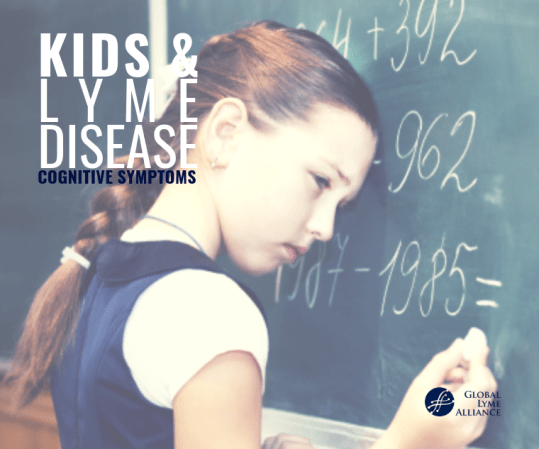
kids-lyme-disease_cognitive-symptoms

Summer is over and schools are back in session. As your kids adjust from spending summer days outdoors to being in the classroom again, have you noticed anything different about their behavior? Are they, for example, having trouble focusing? Is it harder getting back into the school routine this year? Are they suddenly forgetting about homework assignments? Do they seem more easily irritable than usual? Are they so exhausted they’d rather hang on the couch than play with friends after school?

It’s easy to dismiss any of these changes as momentary blips—and sometimes they aren’t more than that. But if this isn’t your child’s typical behavior, he or she may be suffering from a tick-borne infection like Lyme disease, which can take several weeks or months after a tick bite to develop. Meaning a tick bite that either went unnoticed over the summer, or even one that was treated, could result in symptoms now. With that time delay parents might not so readily connect the child’s symptoms to a tick bite. This opens the door for the disease to advance from an acute to disseminated or late stage form before it’s even detected.

Early stage Lyme disease is usually diagnosed based on physical symptoms, such as a bulls-eye rash, fevers, headaches, tiredness, joint, muscle pains, etc. But Lyme can also cause many psychiatric and cognitive symptoms that can be easily missed or confused with attention deficit/hyperactivity disorder (ADHD), juvenile rheumatoid arthritis, gastritis or learning disabilities.

kids lyme disease_common cognitive symptomsUnlike adults, children with Lyme disease often can’t always explain what feels wrong. They suffer when their bodies hurt, when they can’t get enough sleep at night, when they struggle in school, when they don’t feel like playing. Typically, says Daniel Cameron, M.D., M.P.H., children and adolescents suffering with Lyme disease will often have intense headaches that can last for days, mood problems, and they may experience an inability to engage in activities they once enjoyed. A happy child can become sad or weepy, an active child can become passive, a calm child may start acting aggressively for no reason.

On the other hand, some of the symptoms can be so subtle, Dr. Cameron says, that parents and clinicians can mistakenly blame behavioral or cognitive symptoms on a variety of factors such as the child’s developmental stage, mononucleosis, depression, or even spending too much time on cell phones. Too often, and this can be tragic, it can take years of misdiagnoses and misunderstanding before parents know what’s troubling their child, and by then the disease has become chronic.

Because some of their symptoms, such as irritability, joint aches and difficulty concentrating, can mirror “growing pains,” legitimately sick children are often overlooked, told that their problems are “all in their heads.” Parents and teachers may suspect the child or adolescent is simply trying to avoid schoolwork, daydreaming, or acting up, when, in fact, one or more insidious tick-borne illnesses might be the cause.

If a child’s behavior is out of character that could be a clue that Lyme disease needs to be seriously considered,” says Dr. Cameron. “Too many kids in schools today are needlessly suffering without a proper diagnosis.”

It’s important for a child to get tested for Lyme disease when unusual symptoms manifest. If you suspect your child may be suffering from Lyme symptoms, he or she should see a physician who is trained to evaluate, diagnose and treat tick-borne disease. The impact Lyme symptoms have on a child can be quite devastating and should not be underestimated.


ALSO READ: Kids and Lyme Disease, part 1: Physical Symptoms in Early-Stage Lyme Disease

Kids and Lyme Disease–Cognitive Symptoms: Helpful Resources

_________________

**Comment**

Great article and reminder.  For more:  https://madisonarealymesupportgroup.com/2015/10/18/psychiatric-lymemsids/

https://madisonarealymesupportgroup.com/2019/06/07/lyme-disease-in-children-how-to-navigate-symptoms-testing-and-treatment/

https://madisonarealymesupportgroup.com/2019/05/27/have-you-been-told-its-all-in-your-head-the-new-biology-of-mental-illness/

https://madisonarealymesupportgroup.com/2019/09/05/school-nurse-documents-nineteen-lyme-disease-case-studies-misdiagnosis-is-rampant/

https://madisonarealymesupportgroup.com/2019/08/23/mommy-i-just-want-to-die-mother-recalls-daughters-fight-against-lyme-disease/

https://madisonarealymesupportgroup.com/2019/08/20/wisconsin-girl-loses-battle-with-lyme-disease/

https://madisonarealymesupportgroup.com/2019/03/17/happy-90th-to-dr-jones-the-rock-star-whos-treated-over-15000-kids-with-lyme/

https://madisonarealymesupportgroup.com/2018/11/11/gestational-lyme-other-tick-borne-diseases-dr-jones/

https://madisonarealymesupportgroup.com/2018/06/19/33-years-of-documentation-of-maternal-child-transmission-of-lyme-disease-and-congenital-lyme-borreliosis-a-review/

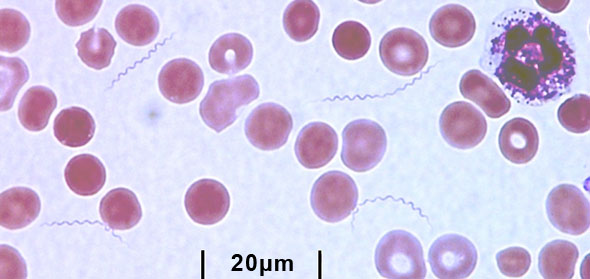
 

“Herxing”: Why Does It Occur?

https://www.galaxydx.com/what-is-herxing-lyme-disease/

By Galaxy Lab

“Herxing”: Why does it occur?


A New Complication of Lyme Disease; Spinal Muscular Atrophy (SMA)

article_ejbps_volume_6_august_issue_8_1564794140

ejbps, 2019, Volume 6, Issue 8, 464-468.

http://www.ejbps.com

Year: 2019

A NEW COMPLICATION OF LYME DISEASE; SPINAL MUSCULAR ATROPHY (SMA)

Barbaros ÇETİN*

Dokuz Eylül University, Faculty of Science, Department of Biology, Izmir, Turkey.

*Corresponding Author: Barbaros ÇETİN

ABSTRACT

Lyme borreliosis is well known multisystem disease and can produce a wide array of neurological abnormalities in humans. It can effect both the central and peripheral nervous system. Spinal muscular atrophy (SMA) a leading genetic cause of infant death, is a neurodegenerative disease characterised by the selective loss of particular groups of motor neurones in the anterior horn of the spinal cord with concomitant muscle weakness. Spinal muscular atrophy (SMA) is also a neuromuscular disease caused by abnormally low cellular levels of the ubiquitous protein SMN. Recent study finds connection between ALS and SMA. Respiratory failure due to bilateral diaphragm palsy as an early manifestation of ALS. Diaphragmatic paralysis and respiratory failure as a complication of Lyme disease. Lyme –associated diaphragm weakness from phrenic nerve palsy is rare. One of the rarest manifestations of phrenic nerve disorder is neuroborreliosis. I report two cases.

  1. When she was 2 months baby, she had diagnosed with SMA. After three years, her LTT-Borrelia test result is positive. CD57+/CD3-(NK cells) % 0.48, (20 mm 3 ), very low. C3 Compleman test result is low. Her mother’s (38 years old), LTT-Borrelia test result also positive. It is documented that transplacental transmission of the spirochete from mother to fetus is possible.
  2. 13 years old son. He had diagnosed Emery-Dreifuss muscular dystrophy (EDMD),when he was 6 years old. He had, LTT-Borrelia positive test result, after 5 years. His father lyme test result was positive, when he was 57 years old.

Eventually, these results reveal the need for consideration of Lyme borreliyosis in patients diagnosed with SMA for the first time.

People who are diagnosed with SMA, DMD, ALS and similar neurodegenerative diseases have a great benefit in performing Lyme tests.

______________

**Comment**

I highly doubt that SMA is a “new” complication of Lyme disease – but rather is newly published information. Again, with all the under reporting going on, we haven’t a clue about prevalence in patients.

This article also highlights congenital transmission of Lyme disease – something the CDC doesn’t even recognize to date: https://madisonarealymesupportgroup.com/2018/06/19/33-years-of-documentation-of-maternal-child-transmission-of-lyme-disease-and-congenital-lyme-borreliosis-a-review/

Which brings up the potential of sexual transmission as well: https://madisonarealymesupportgroup.com/2017/02/24/pcos-lyme-my-story/

It continues to battle me why authorities will not do the appropriate studies on much needed practical issues such as sensitive testing, appropriate treatment, and whether or not Lyme/MSIDS can be transmitted by numerous means: https://madisonarealymesupportgroup.com/2019/04/02/transmission-of-lyme-disease-lida-mattman-phd/

https://madisonarealymesupportgroup.com/2019/05/24/microbiology-professor-im-convinced-lyme-disease-is-transmittable-from-person-to-person/

Latest Paper Reviewing The Proposed IDSA Guidelines on Lyme Disease and Psychiatric Illnesses

https://www.mdpi.com/2227-9032/7/3/105  Go here for full paper)

Open AccessReview

Proposed Lyme Disease Guidelines and Psychiatric Illnesses

1
Department of Psychiatry, Rutgers-Robert Wood Johnson Medical School, Piscataway, NJ 08854, USA
2
Independent Researcher, Dorset BH23 5BN, UK
3
General Counsel Red Paladin, Piscataway, NJ 08854, USA
*
Author to whom correspondence should be addressed.
Healthcare 2019, 7(3), 105; https://doi.org/10.3390/healthcare7030105 (registering DOI)
Received: 6 August 2019 / Revised: 3 September 2019 / Accepted: 4 September 2019 / Published: 9 September 2019
(This article belongs to the Special Issue Lyme Disease and Related Tickborne Infections)
The Infectious Disease Society of America, American Academy of Neurology, and American Academy of Rheumatology jointly proposed Lyme disease guidelines. Four areas most relevant to psychiatry were reviewed—the disclaimer, laboratory testing, and adult and pediatric psychiatric sections. The disclaimer and the manner in which these guidelines are implemented are insufficient to remove the authors and sponsoring organizations from liability for harm caused by these guidelines. The guidelines and supporting citations place improper credibility upon surveillance case definition rather than clinical diagnosis criteria. The guidelines fail to address the clear causal association between Lyme disease and psychiatric illnesses, suicide, violence, developmental disabilities and substance abuse despite significant supporting evidence.
If these guidelines are published without very major revisions, and if the sponsoring medical societies attempt to enforce these guidelines as a standard of care, it will directly contribute to increasing a national and global epidemic of psychiatric illnesses, suicide, violence, substance abuse and developmental disabilities and the associated economic and non-economic societal burdens.
The guideline flaws could be improved with a more appropriate disclaimer, an evidence-based rather than an evidence-biased approach, more accurate diagnostic criteria, and recognition of the direct and serious causal association between Lyme disease and psychiatric illnesses.View Full-Text
_________________
**Comment**
In plain English this means the latest Lyme Guidelines once again place too much emphasis on criteria used for surveillance (positive blood serology, EM rash, etc) and not enough on symptoms used for clinical diagnosis: https://madisonarealymesupportgroup.com/2017/09/05/empirical-validation-of-the-horowitz-questionnaire-for-suspected-lyme-disease/
On top of this, the paper states the guidelines fail to address a clear causal association between Lyme disease and psychiatric illness.
If they are implemented as stands, we are in a world of trouble.

Please share with those in your sphere of influence. Suffering for 40 years is long enough.