Archive for the ‘Lyme’ Category

Lyme in the South: 4 Kids Infected at 1 Camp

https://danielcameronmd.com/lyme-in-the-south-children-infected-camp/

LYME DISEASE IN THE SOUTH: 4 CHILDREN INFECTED AT ONE CAMP

lyme in the south

Some doctors have questioned the existence of Lyme disease in the south, but in their “Morbidity and Mortality Weekly Report,” published January 2020, the Centers for Disease Control and Prevention (CDC) describe 4 cases of Lyme disease in young children who attended a wilderness day camp in North Carolina. [1]

The number of tick-borne diseases, including Lyme, has been steadily rising in the South as tick populations expand into new territories. One study reports, “The trends in these data paint a clear picture of southward expansion of Lyme disease.” As a result, communities once considered non-endemic for Lyme disease will be at risk, including those in the south, the study warns. [2]

The CDC recently reported several children infected with Lyme disease at a single camp, located in the south. The children, who were between the ages of 6 and 8, attended the wilderness day camp at least 1 day a week in the Fall and Spring. Three of the four children were homeschooled but attended the camp. Three children had ticks removed.

“Further investigation identified an earlier camp participant who had received a diagnosis of Lyme disease in 2017,” the authors explain.

READ MORE: Culture Evidence of Lyme disease in antibiotic-treated patients living in the Southeast

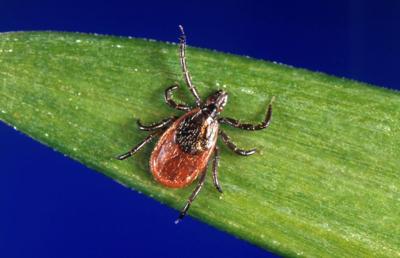
Using a “flagging and dragging” method across 0.27 acres of the camp, investigators collected 37 Ixodes Scapularis ticks, commonly called deer ticks.

Study Results

Out of 35 ticks tested, 6 were positive for B. burgdorferi sensu stricto, the causative agent of Lyme disease.

“Results indicated that nymphal ticks collected at the campsite had a B. burgdorferi infection prevalence of 17%,” the authors write.

Additionally, 1 of the 6 ticks tested positive for Borrelia miyamotoi.

None of the ticks tested positive for the pathogens responsible for Anaplasmosis or Babesia microti.

In 3 of the 4 children, blood tests confirmed a Lyme disease diagnosis. Two of the children had an erythema migrans (bull’s eye) rash. One was considered probable because the test was positive by ELISA and IgM Western blot but not IgG Western blot.

Symptoms and Treatment

The clinical presentations included brief, recurrent attacks of joint swelling, arthralgia, fever, headaches, loss of appetite, and fatigue. One had radiculoneuropathy and Bell’s palsy.

All were treated with doxycycline. The authors did not indicate how long they treated the young children or the outcome of treatment.

Authors Conclude

“Clinicians should be aware of the risk for transmission of Lyme disease in North Carolina and consider recommended diagnostic testing and treatment.”

Other studies have also identified ticks infected with the causative agent of Lyme disease in the south. One study reports, “The trends in these data paint a clear picture of southward expansion of Lyme disease.” As a result, communities once considered non-endemic for Lyme disease will be at risk, including the southeastern United States, the study warns. [2]

Editor’s note: I hope this cluster of cases in children attending a single camp in North Carolina will remind doctors of the tick-borne problems in the Southeastern USA.
References:
  1. Barbarin AM, Seagle SW, Creede S. Notes from the Field: Four Cases of Lyme Disease at an Outdoor Wilderness Camp — North Carolina, 2017 and 2019. MMWR Morb Mortal Wkly Rep. 2020 Jan 31; 69(4): 114–115.
  2. Lantos PM, Nigrovic LE, Auwaerter PG, et al. Geographic Expansion of Lyme Disease in the Southeastern United States, 2000–2014. Open Forum Infectious Diseases. 2015;2(4):ofv143. doi:10.1093/ofid/ofv143. Available at https://www.ncbi.nlm.nih.gov/pmc/articles/PMC4629694/

_________________

**Comment**

Lyme disease still is not recognized for the pandemic it truly is. This study demonstrates how authorities are still hanging on to ancient data that never was accurate to begin with.

  1. It demonstrates a Southerly tick expansion.  We’ve been told ad nauseam that ticks are expanding Northward due to climate change. Well, it’s already hot in the South so there goes that theory.  Also, independent research has already blown that theory out of the water some time ago, yet it isn’t accepted because it doesn’t fit the narrative: https://madisonarealymesupportgroup.com/2018/11/07/ticks-on-the-move-due-to-migrating-birds-and-photoperiod-not-climate-change/ This researcher claims the narrative is widely held because researchers working at institutions need ‘accepted’ topics to receive funding for their work.  In essence, those with little research experience call the shots. Ticks laugh at the weather. They just don’t care. They will find a way to survive.  https://madisonarealymesupportgroup.com/2019/06/17/ontario-public-health-officials-called-out-on-shoddy-biased-research-utilizing-an-erroneous-climate-change-model-to-program-a-futuristic-tick-problem/
  2. Lyme disease STILL isn’t widely accepted and treated appropriately.  It’s even worse in the South: https://madisonarealymesupportgroup.com/2019/04/22/its-just-crazy-why-is-lyme-disease-treatment-so-difficult-to-find-in-mississippi/https://madisonarealymesupportgroup.com/2016/09/24/arkansas-kids-denied-lyme-treatment/https://madisonarealymesupportgroup.com/2018/05/31/no-lyme-in-the-south-guess-again/
  3. Even with a 17% tick infection rate with Bb, 4 kids got infected. It isn’t always a linear connection between tick infection rates and human infection rates. Trust me, if you’re the sorry sucker who gets infected – it matters!
  4. Notice not all found ticks, got the EM rash, and tested positive on serology – yet those parameters are still held like an iron curtain in mainstream medicine to prove infectivity.
  5. The symptoms these kids had are hallmark Lyme symptoms.

Top 10 Myths About Lyme Disease

https://globallymealliance.org/top-ten-myths-about-lyme-disease/

by Jennifer Crystal

Lyme is an enormously complex disease. To properly understand its symptomology, diagnostic issues, and treatment options, you’ve got to do a good deal of research. And thats just for Lyme; there are many other tick-borne infections such as babesia, ehrlichia, and bartonella that cause their own complications and require different treatments. Then theres the politics of Lyme. Theres a lot of misunderstanding surrounding tick-borne illness, and many myths. This blog seeks to enumerate—and hopefully put to rest—the top ten myths I’ve heard about Lyme:

10. People get over Lyme: Yes, some people get over Lyme, especially when their infections are diagnosed and treated immediately, and their prognosis is not complicated by co-infections. Even so, some 20% of those patients go on to experience continuing symptoms after treatment. Other patients who were not treated immediately often suffer long-term, severe symptoms, especially once the Lyme bacteria has crossed into the central nervous system. My own case went undiagnosed for eight years. My status was called Stage 3 Lyme, also known as Late Disseminated Lyme Disease, and while Ive battled symptoms into remission, the infection is not fully eradicated from my body. Therefore, I am not cured.

9. All cases of Lyme are the same: In fact, no two cases of Lyme are alike. There is no typical” case of Lyme disease, especially once it enters the late chronic stage. Every case runs a different course; every case requires different treatmentand every case can have a different outcome. Lyme manifests on a broad spectrum.

8. People with Lyme are just anxious or depressed: Lyme disease can cause anxiety and depression. These are two psychological manifestations of the disease, not its cause. Patients may also experience situational depression and anxiety from being isolated, sick, and disbelieved. But anxiety and depression are secondary to the root tick-borne infection. A positive outlook, talk therapy, and psychiatric medications can help mediate anxiety and depression, but they cannot treat its root cause, which is Lyme disease.

7. Lyme patients would feel better if they just got out of the house/worked/volunteered: Lyme disease is not a mentality, nor is it a mental illness. It is a physical bacterial infection whose symptoms include serious fatigue, joint and muscle aches, brain fog, and other neurological difficulties. It cannot be cured with a mind over matter” approach. It requires antibiotic treatment and rest, like many other illnesses. Naturally, patients with Lyme disease dont want to be sick. They want to be working and making a living; they want to be exercising; they want to be enjoying their time with friends and family. But they are simply too sick to do so. And pushing themselves before they are well will in the long run only make them relapse. That’s what happened to me.

6. Lyme patients just need to exercise more: In fact, exercising before the infection has resolved enough can just worsen your spirochete activity (the bacteria itself) and make you feel worse, not better. This is especially true for people suffering from the co-infection babesia, which depletes oxygen in your red blood cells. When I tried physical therapy before my babesia was adequately treated, thirty seconds—not minutes, but seconds!—on a stationary bike gave me a migraine that sent me to bed for a week. Once a Lyme patient is ready, light exercise, but nothing too strenuous can be beneficial. Pushing yourself before it’s time will only worsen your condition.

5. Theres no such thing as chronic Lyme disease: Chronic is a disputed word, often replaced by Post Treatment Lyme Disease Syndrome (PTLDS). But as its name implies, PTLDS only applies to patients who have been diagnosed with and treated for Lyme disease. Many patients whose infections become chronic were never treated at all. In my case, I became chronic precisely because for eight years I didnt receive a proper diagnosis or treatment. The Lyme bacteria, and two of its co-infections babesia and ehrlichia, ran unchecked in my body. Obviously, the pathogens then became much more serious and difficult to treat. The appropriate term for this kind of case is Late Stage Disseminated Lyme Disease. Whatever the nomenclature though, the fact is that long-term cases of tick-borne illness do exist and there’s definitive scientific research to prove it.

4. People who think they have Lyme disease actually have something else:

Again, Lyme disease isn’t a choice. Nor is it a catch-all disease for those who can’t otherwise be diagnosed. A patient should never determine on their own whether they have Lyme disease, in the same way that you shouldn’t self-diagnose any ailment based on an internet search. The internet is full of misinformation. Only a Lyme Literate Medical Doctor (LLMD) can make an accurate diagnosis of tick-borne illness, and they do so through both specialized testing and clinical assessment. They rule out many, many other possibilities and make diagnoses after careful consideration of a patient’s symptoms and medical history.

3. There isnt scientific evidence to support chronic/late stage/PTLDS: In fact, there’s a lot of evidence. There are peer-reviewed studies and important research coming out of reputable institutions like Columbia University, University of New Haven, Stony Brook University, and the University of Massachusetts. There are many books and articles written by prominent physicians and researchers demonstrating clinical evidence of long-term, treatment-resistant Lyme disease. Global Lyme Alliance has supported a great deal of this research

2. You can only get Lyme in the woods of New England, and its only carried by deer:Cases of Lyme disease are now documented in all 50 U.S. states. There are also tick-borne diseases such as Rocky Mountain Spotted Fever, and Southern Tick Associated Rash Illness (STARI), that are endemic to other areas of the country. While ticks are especially prevalent in wooded areas, they also live in tall grasses, wood piles, gardens, leaf piles, and any moist or shady area. In addition to deer, they also feed on mice, chipmunks, birds, shrews, and other small mammals. Remember, pets can bring them inside your house, too.

And the Number One myth I hear about Lyme disease:

1. Its called Lymes disease: People might think Lyme, like many other diseases, is named for people who either discovered or suffered from them, i.e. Lou Gehrigs disease (ALS) or Hashimotos disease. The scientific name of the Lyme spirochete, borrelia burgdorferi, was named for the man who discovered it, Willy Burgdorfer. But the popular name comes from the town in which the first cluster of cases was discovered and studied in the 1970s: Lyme, Connecticut. 

The next time someone questions the validity of your Lyme or other tick-borne disease, perhaps you can hand them this top ten list, and teach them several truths about tick-borne illness in one quick lesson.

Related Posts:
You’re Not Crazy—You Have Lyme
Dealing With Brain Fog
The Importance of Digging Deep
Partisan Politics in Lyme Disease


jennifer crystal_2

Opinions expressed by contributors are their own.

Jennifer Crystal is a writer and educator in Boston. Her memoir about her medical journey is forthcoming. Contact her at lymewarriorjennifercrystal@gmail.com.

___________________

**Comment**

Great points.  My only caution is the continued false narrative of only 20% going on to experience long-term symptoms.  According to microbiologist Holly Ahern, that number is more like 40-60% of patients because the 20% only includes those diagnosed and treated early. There is another important subset of patients (in fact, everyone I work with) that smolders for months to years undiagnosed and untreated.  https://madisonarealymesupportgroup.com/2019/02/25/medical-stalemate-what-causes-continuing-symptoms-after-lyme-treatment/

Again, this is important because this subset is large and desperately needs research.  Nearly all research to date has been done with very faulty and limited study parameters and the false narrative that this is a simple disease that a couple of weeks of antibiotics will cure. https://madisonarealymesupportgroup.com/2017/01/13/lyme-science-owned-by-good-ol-boys/

https://madisonarealymesupportgroup.com/2019/02/22/why-mainstream-lyme-msids-research-remains-in-the-dark-ages/

Nothing could be further from the truth as more and more people are finding out.

Anaplasma in Early Lyme Manifested by EM Skin Lesions

https://pubmed.ncbi.nlm.nih.gov/32247015/

[Online ahead of print]

Assessment of Anaplasma Phagocytophilum Presence in Early Lyme Borreliosis Manifested by Erythema Migrans Skin Lesions

Abstract

Background: To investigate to what extent early Lyme borreliosis patients with erythema migrans are infected with Anaplasma phagocytophilum.

Methods: 310 patients from Poland with erythema migrans were included in the study. One hundred and eighty-three patients (59%) agreed to have both skin biopsy and blood samples analysed for Borrelia burgdorferi, A. phagocytophilum and ‘Candidatus Neoehrlichia mikurensis’, with PCR. Positive samples were confirmed with sequencing.

Results:

  • B. burgdorferi DNA was detected in 49.7% of the skin samples 
  • B. b was detected in 1.1% of the blood samples
  • A. phagocytophilum DNA was found in 7.1% blood samples
  • A. phagocytophilium was found 8.2% of the skin biopsies
  • in four patients, A. phagocytophilum DNA was detected only in blood
  • in one case A. phagocytophilum DNA was found simultaneously in blood and skin and additionally in this patients’ blood Borrelia DNA was detected.
  • in four skin samples B. burgdorferi DNA was detected simultaneously with A. phagocytophilum DNA, indicative of a co-infection.

Conclusions: A. phagocytophilum may be present in early Lyme borreliosis characterized by erythema migrans and should always be considered as a differential diagnostic following a tick bite and considered in treatment schemes, as these differs (in early stage of Lyme borreliosis doxycycline, amoxicillin, cefuroxime axetil and azithromycin are recommended, while in anaplasmosis the most effective courses of treatment are doxycycline, rifampin and levofloxacin). Consequently, the role of A. phagocytophilum in erythema migrans should be further studied.

__________________

**Comment**

Please note that only 1% of patients had Bb in the blood – yet blood tests are precisely what our renowned CDC uses as the determination of infection.  Having the EM rash is clinical PROOF you have Lyme disease.  Period.  No testing required. End of discussion. Unfortunately, many never have the rash:  https://madisonarealymesupportgroup.com/2019/02/22/why-mainstream-lyme-msids-research-remains-in-the-dark-ages/

Also note that one again the EM rash IS required criteria for the study as well as being an early Lyme patient.

There’s oodles and oodles of research on this patient group. What we desperately need is for researchers to wake up and do work on those who don’t get the rash and are left to smolder for months and years before being diagnosed.

As to the rash, anywhere from 25%-80% get it despite the CDC stating 80% get it:  https://madisonarealymesupportgroup.com/2019/02/22/why-mainstream-lyme-msids-research-remains-in-the-dark-ages/ and 1976circularletterpdf (first ever patient group – only 25% had the rash)

Rashes-larger-blog-3

For more:  https://madisonarealymesupportgroup.com/category/lyme-disease-treatment/

https://madisonarealymesupportgroup.com/2016/03/08/anaplasmosis/

https://madisonarealymesupportgroup.com/2018/10/30/study-shows-lyme-msids-patients-infected-with-many-pathogens-and-explains-why-we-are-so-sick/


How Do Lyme Disease Symptoms Persist Long Term?

https://danielcameronmd.com/lyme-disease-symptoms-persist-long-term/

HOW DO LYME DISEASE SYMPTOMS PERSIST LONG TERM?

woman with Lyme disease symptoms long term has headacheding her head

Multiple studies have shown that as many as 34% to 62% of patients have Lyme disease symptoms that persist long term despite treatment. [1,2] These patients can suffer for years with debilitating symptoms.

According to one study, at their six-month follow-up visit, “36% of patients reported new-onset fatigue, 20% widespread pain, and 45% neurocognitive difficulties.” [3]

So, how could Lyme disease symptoms persist long term? There have been many theories, including recent findings that suggest persistent symptoms may be due to antigenic variation.

A new study reports that antigenic variation may explain why some Lyme disease patients continue to have chronic symptoms. CLICK TO TWEET

In their article “Changing of the guard: How the Lyme disease spirochete subverts the host immune response,”Chaconas and colleagues [4] explain how antigens, or proteins on the surface of the spirochetal bacteria, play a sort of “cat and mouse” game with the immune system.

Other pathogens use antigen variation 

Antigen variation is not unique to Lyme disease, Chaconas writes. Rather, it’s a “common pathogenic ruse employed by several bacterial, protozoan, and fungal pathogens.”

In fact, “Many bacterial and protozoal pathogens have developed antigenic variation systems in which surface antigens can be continually altered as a means of evading the constant onslaught of adaptive antibody and T cell responses,” Chaconas writes.

The immune system is designed to recognize these antigens and kill the spirochete. But, the spirochetal bacteria can change these antigens, thereby evading the immune system’s attack.

“This process involves changes in a prominent surface antigen such that it is no longer recognized by the host acquired immune response,” Chaconas writes.

Altering the immune response

By changing the antigens, the spirochetes buy time. This may explain why Lyme disease symptoms continue long term in some individuals. As the authors explain, “By the time the host has assembled and produced antibodies to clear an infecting organism, new variants have appeared, which fly under the radar in terms of immune surveillance.”

The process is like a cat-and-mouse game, “which can often continue for the long haul, resulting in persistent infection by pathogenic organisms, and provides an efficient mechanism whereby they can avoid clearance by the host immune system.”

Spirochetes buy even more time by changing the antigens yet again. “By the time a new generation of antibody molecules has been fashioned to clear the variant pathogens, yet another collection of organisms with prominent but unrecognizable surface antigens has appeared,” the authors write.

Vls gene responsible for antigenic variation

The gene vls locus enables antigenic variation.

“The vls system is required for long-term survival of Lyme Borrelia in infected mammals and represents an important mechanism of immune evasion,” writes Norris in Microbiology Spectrum. [5]

“The vls locus is akin to a perpetual motion machine for antigenic variation in Lyme Borrelia species,” Norris writes.

Authors conclude: Additional studies are needed to examine vls locus, given there have been reports of persistent infections in treated animals.

“If there is a link, then the development of a drug blocking recombinational switching at vlsE would offer a promising response to drug-surviving spirochetes and would provide a direct block to the development of long-term persistence.”

References:
  1. Shadick NA, Phillips CB, Logigian EL, et al. The long-term clinical outcomes of Lyme disease. A population-based retrospective cohort study. Ann Intern Med. 1994;121(8):560-567.
  2. Asch ES, Bujak DI, Weiss M, Peterson MG, Weinstein A. Lyme disease: an infectious and postinfectious syndrome. J Rheumatol. 1994;21(3):454-461.
  3. Aucott JN, Rebman AW, Crowder LA, Kortte KB. Post-treatment Lyme disease syndrome symptomatology and the impact on life functioning: is there something here? Qual Life Res, 22(1), 75-84 (2013).
  4. Chaconas G, Castellanos M, Verhey TB. Changing of the guard: How the Lyme disease spirochete subverts the host immune response. J Biol Chem. 2020 Jan 10;295(2):301-313.
  5. Norris SJ. vls Antigenic Variation Systems of Lyme Disease Borrelia: Eluding Host Immunity through both Random, Segmental Gene Conversion and Framework Heterogeneity. Microbiol Spectr. 2014 Dec;2(6).

___________________

**Comment**

Please take note of the following:

Multiple studies have shown that as many as 34% to 62% of patients have Lyme disease symptoms that persist long term despite treatment. [1,2]

This is a far cry more than the oft touted 10-20% stated by authorities.

This is important for two reasons: 1) there are many more suffering than is commonly thought 2) this should translate into more research dollars going toward this exact issuenot irrelevant climate data.

According to this article, up to 60% of all Lyme patients go onto develop long-term if not life-long symptoms:  https://madisonarealymesupportgroup.com/2019/02/25/medical-stalemate-what-causes-continuing-symptoms-after-lyme-treatment/


Skin Deep: The Battle of Morgellons Q & A

Skin Deep: The Battle of Morgellons Q & A

March 31, 2020

In this video Pi Ware, the Director/Editor of Skin Deep: The Battle Over Morgellons, hosts a Question & Answer session with Dr. Ginger Savely (author of Morgellons: The Legitimization of a Disease) and Edward Hu (a former federal prosecutor who contracted Morgellons disease and whose brother–a doctor–initially recommended psychiatric treatment for Edward). Both guests appear in the documentary film Skin Deep: The Battle Over Morgellons which is now available at MorgellonsMovie.org

This Q&A originated on Crowdcast.io/piware on March 31, 2020. Questions were asked on that platform and a text chat ran alongside the Q&A.

The documentary Skin Deep: The Battle Over Morgellons is available at https://MorgellonsMovie.org