Archive for the ‘Inflammation’ Category

5 Things You Can Do to Support Your Lyme Diagnosis With Nutrition

https://www.globallymealliance.org/blog/5-things-you-can-do-to-support-your-lyme-diagnosis-with-nutrition

Part 2 of the Lyme and Nutrition Series, sponsored by RxSugar®
Learn how to manage Lyme disease by improving gut health, reducing inflammation, and incorporating specific dietary changes, as well as the five actionable diet tips for a healthier Lyme journey.

Lyme disease might be the diagnosis, but it’s not always the name of the game. It is an addition to a trifecta between immune function, inflammation and gut health. These three pieces have a direct influence on each other, but now, Lyme disease makes it into a “quadrifecta”.

There is an interdependent link between the health of our gut, where the majority of our immune system lives, and inflammation; this is amplified by Lyme disease. Treatment can also play a role in this as well if antibiotics are used, which also affect the health of our gut. This diagram shows the interconnected relationship between the four pieces, the “Lyme Quadrifecta:”
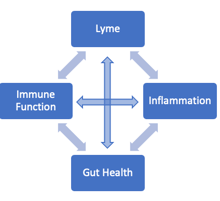
Lyme "quadrafecta" graphic

A disruption of our gut’s bacterial balance, known as gut dysbiosis, intensifies inflammation, weakening our immune system and complicating recovery from Lyme disease. Since a significant portion of our immune system resides in our gut, maintaining its health becomes paramount when combating Lyme disease.

I promised to share five diet tips to help with your Lyme diagnosis, but it’s not just about the list itself. Making sure you understand why I’m suggesting things is just as important. I want you to grasp why these tips are helpful. When we know the “why”, we can take charge of our own health better. Knowing the reasons behind these suggestions gives you the power to make smart decisions about what you eat and how you take care of yourself. It will help you follow through on the changes you’re looking to make.

My Lyme journey began in April 2014, following a tick bite. It all started with exhaustion, a sore throat, and knee pain. Within a few months, it spread to my joints and tendons. Despite seeing a rheumatologist for several months, my symptoms didn’t fit neatly into any diagnosis.

By spring 2015, the joint and muscle pain, along with swelling, were overwhelming. With no answers from doctors, I decided to take matters into my own hands. I switched gears, putting on my dietitian hat and becoming my own patient zero. After days of researching science journals, I presented my findings to my family doctor. It wasn’t about the supplements or the lack of diagnosis; it boiled down to focusing on my gut health. This was something I could do. And something I had full decision power over. It was empowering to take control back.

I embarked on a strict elimination diet, fine-tuning it over time to be able to share a more practical approach. I was my own experiment. I learned a lot about my body; gluten turned out to be a big trigger for joint pain and inflammation – that was the first step. Cutting out sugar was next, and I noticed of the inflammation easing up.

I incorporated more plant-based foods, ancient grains, and fermented foods. These changes naturally led to steps four and five, which I’ll discuss below. By taking these steps, I was strengthening my gut. When it was time for treatment, this turned out to be the most beneficial thing I could have done. In my other blog about Lyme, the gut microbiome and inflammation, I discussed the results of testing I had done on my gut health immediately after I had been on pulsed antibiotics for 1.5 years; I did it right. I unlocked key pieces to this puzzle when I started all of that work with my own diet in 2015. And this is the exact system I am passionate about sharing with others.

Imagine the pyramid below as a game of Jenga. As you begin to remove or weaken a piece (symbolizing a decline in that particular bodily function), the stability of the entire structure becomes compromised, eventually leading to its possible collapse. Gut health has been a buzz word for a number of years now, so first, let’s have a look at why it matters for our overall health.
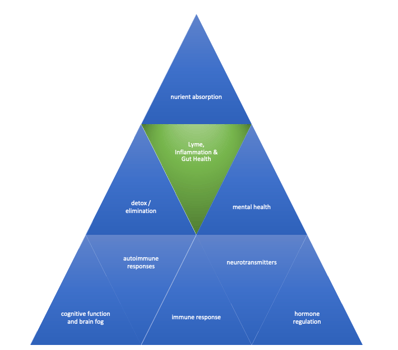
Pyramid of the gut functions

What does the gut do?

  • Digestion and Nutrient Absorption: The gut is responsible for breaking down food, absorbing nutrients, and eliminating waste products.
  • Immune System Support: A balanced gut microbiota helps regulate the immune response.
  • Mental Health and Brain Function: The gut and brain communicate through the gut-brain axis. Neurotransmitters and other signaling molecules are produced in the gut and they can affect mood, cognition, and behavior. Imbalances in gut bacteria have been linked to undesirable mental health outcomes.
  • Inflammation: An imbalance in gut microbiota can lead to chronic inflammation, which is associated with various diseases, including Lyme disease, inflammatory bowel disease, autoimmune conditions, and metabolic disorders.

Now that you understand how these building blocks stack together, let’s look at five ways you can support your Lyme diagnosis with food and nutrition, giving you actionable steps to strengthen your gut health, manage inflammation, and enhance your journey towards managing and healing from Lyme disease:

1. Remove gluten
When you have Lyme disease, you may have more inflammation in your body, and gluten can trigger an inflammatory response, potentially worsening symptoms such as joint pain, fatigue, and neurological issues associated with Lyme disease.

Gluten can contribute to gut inflammation and hyper-permeability of the intestinal barrier, commonly known as “leaky gut”, allowing large particles into the blood stream that shouldn’t have been able to pass through. This can further heighten inflammation and immune dysregulation, which are already intensified in Lyme disease.

The relationship between gluten and Lyme disease symptoms is unique to everyone, but minimizing or eliminating gluten intake may be beneficial for individuals with Lyme disease, particularly those who experience heightened inflammation, gut issues, or gluten sensitivities.

 2. Remove added sugar

The average daily intake of sugar is reported to be around 68 grams (17 teaspoons), but this figure may underestimate reality. Consider the sugar content in some common food and drink options:

  • A 16oz bottle of Cola contains 44 grams (11 tsp) of sugar.
  • A 12oz bottle of Gatorade contains 21 grams (5.25 tsp).
  • One cup of oat milk contains about 6 grams (1.5 tsp).
  • A tall lavender oat latte from Starbucks has 15 grams (3.75 tsp).
  • Honey Nut Cheerios, a popular gluten-free cereal, contains 9 grams (2.25 tsp) in ¾ cup.
  • Silk Vanilla Non-Dairy yogurt has 11 grams (2.75 tsp) in ¾ cup.
  • One tablespoon of Silk Vanilla Coffee Cream contains 4 grams (1 tsp).

While cola and Gatorade aren’t likely staples, the other items are typical common treats or pantry staples. It’s crucial to recognize how quickly added sugar can accumulate throughout your day, especially since it’s often concealed in packaged foods like condiments, salad dressings, frozen meals, crackers, cereals, and more. But why should you aim to cut back on added sugar?

Eating too much sugar can contribute to inflammation in your body in several ways:

  • First, it can lead to oxidative stress and inflammation in the body by reacting with proteins in a process called glycation, forming advanced glycation end products (AGEs). AGEs contribute to inflammation.
  • Second, it can activate inflammatory signals. High amounts of sugar can turn on inflammation pathways in the body that lead to inflammatory molecules called cytokines, causing your body to produce more substances that make it swell and hurt, and well… stay inflamed.
  • Third, it can contribute to an imbalance in the microbes living in the gut. Too much sugar can tip the balance of good bacteria in your gut, leading to what we call “dysbiosis” and inflammation of the gut which can contribute to “leaky gut” and immune dysregulation, and it can also contribute to inflammation throughout the whole body.
  • Fourth, eating lots of sugar can make your body less sensitive to insulin (aka “insulin resistance”) and that can trigger pro-inflammatory cytokines, contributing to systemic, whole-body inflammation. This can also lead to more metabolic effects that we would rather avoid.

Hopefully, you can now see how there is an overlap between why gluten and sugar can be harmful when you’re trying to eat to support your Lyme diagnosis.

If you would like to learn more about how to identify sugar on food labels and quickly know exactly how many teaspoons are in a serving? Grab my Lyme Friendly Recipe Book and I’ll send you a few emails to help you learn how to do this yourself in the simplest way possible.

3. Aim for 30+ plant foods per week

Our gut has trillions of tiny living microorganisms that make up our own unique internal ecosystem. These microorganisms can affect our health and cause diseases or help prevent it and improve disease states.

Each person’s gut has its own unique mix of these microorganisms, which usually stays pretty consistent over time, but can change from day to day. What we eat can have a big impact on the types of microorganisms living in our gut, this affects the composition of our gut microbiota, and suggests that dietary changes could alter microbial diversity, composition, and stability.

Eating a diverse range of plant-based foods offers numerous benefits for improving gut microbiome health. The greater the variety of plant foods in our diet, the wider array of benefits we can experience:

Fiber: Plant foods contain several types of fiber, which serve as “prebiotics” – these feed the beneficial bacteria in the gut. By fermenting the fiber we eat, gut bacteria produce short-chain fatty acids (SCFAs) such as acetate, propionate, and butyrate. SCFAs play essential roles in gut health, including nourishing colon cells, reducing inflammation, and regulating metabolism.

Polyphenols: These are antioxidants that are found in fruits, vegetables, nuts, seeds, and whole grains and they also have prebiotic effects on the gut microbiota. They can help the growth of beneficial bacteria and inhibit the growth of harmful pathogens, contributing to a healthier gut environment.

Resistant Starch: You’ll find this in foods like legumes, whole grains, and green bananas. These starches escape digestion in the small intestine and reach the colon intact, where they serve as fuel for beneficial gut bacteria. Fermentation of resistant starch produces SCFAs, promoting gut health.

You can actually boost the amount of resistant starch in your diet a technique called “retrogradation” in starchy foods like rice and potatoes. This happens when these foods are cooked, cooled and reheated. The starch undergoes structural changes: they gelatinize, and upon cooling, some of the starches retrograde, forming resistant starches.

The process of cooking, cooling, and reheating foods to increase resistant starch content is particularly beneficial for individuals looking to support gut health and optimize the nutritional benefits of their diet. Including a variety of foods rich in resistant starches, both cooked and cooled, can contribute to a healthier gut microbiome and overall well-being.

Diverse Nutrients: Plant foods provide a wide range of vitamins, minerals, and phytonutrients that support overall health and microbial diversity in the gut. A diverse diet rich in different types of plant foods ensures that the gut microbiota receives a variety of nutrients needed for optimal function.

Overall, consuming a diverse array of plant foods ensures a rich and varied supply of nutrients and compounds that promote the growth of beneficial gut bacteria, enhance SCFA production, and support overall gut microbiome health. Adding in a variety of plant foods doesn’t need to be complicated.

Go for colorful fruits and vegetables, and consider adding nuts and seeds to your meals – sprinkle them onto salads or blend them into smoothies. If you can tolerate grains, they make a great alternative to store-bought bread and pasta (yes, even those gluten-free options). Quinoa, rice, millet, and amaranth are all excellent choices. Don’t forget about herbs and spices! Adding parsley or cilantro to your dishes or salads can boost flavor and nutritional impact. Experiment with seasonings like turmeric, ginger, and cinnamon, they can add a variety of health benefits to your meals too.

If you’re curious for more about this, you can check out this post on my Instagram where I list out 30 different plant foods you can incorporate in a week. It’s not as overwhelming as it sounds, I promise!

4. Incorporate More Anti-Inflammatory Foods

Certain foods possess anti-inflammatory properties due to their rich content of nutrients and compounds that fight inflammation. These foods can hinder inflammatory pathways, regulate the immune system, and scavenge free radicals, neutralizing and removing highly reactive molecules that can cause cellular damage and contribute to oxidative stress.

Choose foods high in antioxidants like vitamins A, C, and E, selenium, anthocyanins, beta-carotene, and flavonoids. Antioxidants play a crucial role in neutralizing free radicals. To add more of these beneficial nutrients into your diet, include foods such as berries, leafy greens, nuts, seeds, colorful vegetables, spices, beans, lentils, and chickpeas.

Prioritize foods rich in omega-3 fatty acids such as salmon, mackerel, sardines, flaxseeds, chia seeds, and walnuts. These foods can reduce the production of pro-inflammatory compounds such as certain prostaglandins and cytokines while promoting the production of anti-inflammatory compounds.

Polyphenols, another class of antioxidant plant compounds, are abundant in foods like berries, green tea, matcha, dark chocolate, and olive oil. They contain flavonoids which can help neutralize harmful free radicals and reduce oxidative stress and inflammation.

As discussed previously, fiber plays a significant role in lowering inflammation by promoting a healthy gut microbiome. By nourishing beneficial gut bacteria, fiber facilitates the production of short-chain fatty acids (SCFAs), which have anti-inflammatory effects in the body.

Additionally, incorporating herbs and spices such as turmeric, ginger, cinnamon, and garlic can be beneficial due to their compounds with anti-inflammatory properties. In summary, including a diverse array of whole, nutrient-rich foods in your diet can fight inflammation and support overall health and well-being throughout your journey with Lyme and beyond.

Considering points three and four, it becomes obvious that many foods overlap between the two categories. The benefits of a diet focused on whole foods that are minimally processed and rich in nutrients can simultaneously improve gut health and reduce inflammation.

If diving into the intricacies of gut health and inflammation isn’t your priority and you prefer a straightforward approach, the next point may resonate with you. Follow this next approach, and you’ll naturally be supporting yourself in a simplified way.

5. Focus on lots of different whole foods

Emphasizing whole foods simplifies the steps mentioned above. By reducing packaged foods (even gluten free ones), you naturally gravitate towards gluten-free options and foods without added sugars. Opting for whole foods, in their natural state, also helps you to achieve your goal of consuming 30 plant-based foods per week. You’ll naturally eat more fiber that will help function as a prebiotic in your body. And lastly, as you incorporate a variety of colorful whole foods into your diet, you’re not only increasing nutrient density but also benefiting from their inherent antioxidant and anti-inflammatory properties.

Lyme is complicated, but nutrition doesn’t have to be.

***

Thank you to RxSugar® for being the Official Sponsor of our Lyme and Nutrition Series. RxSugar® Certified Allulose products are a great natural sugar alternative to refined sugar. Allulose is the only natural sugar with metabolic benefits and supports the body’s production of GLP-1 and GLP-2 (which helps to mitigate the impact of leaky gut). RxSugar®‘s Plant-based Certified Sugar, Syrup and Chocolate Snacks are USDA Organic, Keto Certified, Grain & Gluten-free, FODMAP Friendly Certified, Vegan with zero blood sugar impact. Use discount code GLA20 at checkout at https://rxsugar.com/ 

*GLA Contributor and Author not compensated by brand for this post

GLA Contributor

Sara Brunner, RD

GLA Contributor

Opinions expressed by contributors are their own. Sara Brunner is a Registered Dietitian (RD) hailing from Canada. In 2014, Sara experienced a significant health challenge after being bitten, initially diagnosed as a spider bite. Despite seeking medical advice, she remained untreated and eventually found herself bed-bound within two years. Throughout this period of undiagnosed illness and escalating symptoms, Sara took proactive measures to manage her health, drawing upon her expertise as a Registered Dietitian. In 2016, Sara received a Lyme+ diagnosis, marking the beginning of her journey towards recovery. It wasn’t until 2022 that she began to witness significant improvements. Despite the prolonged and challenging nature of her journey, Sara remained determined. During this time, she focused on developing The Universal Lyme Diet (ULD), a self-paced online course designed to empower individuals with Lyme disease to create personalized nutrition management plans. Scheduled for release in late 2024, the ULD offers a systematic framework tailored to each individual’s needs. In the interim, you can join the waitlist for the ULD by visiting: https://training.sarabrunner.com/uldwaitlist For more insights and practical tips on navigating your Lyme journey, follow Sara on Instagram: @thelymedietitian

________________

For part 1:  https://www.globallymealliance.org/blog/lyme-disease-the-gut-microbiome-and-inflammation-the-dos-and-donts


Two Plants in Plaintain Family Show Antioxidant and Bb Inhibiting Properties

https://www.mdpi.com/1422-0067/25/13/7112

Plantago major and Plantago lanceolata Exhibit Antioxidant and Borrelia burgdorferi Inhibiting Activities

by Pille-Riin Laanet, Olga Bragina, Piia Jõul and Merike Vahe*
Department of Chemistry and Biotechnology, Tallinn University of Technology, Akadeemia tee 15, 12618 Tallinn, Estonia
*Author to whom correspondence should be addressed.
Int. J. Mol. Sci. 202425(13), 7112; https://doi.org/10.3390/ijms25137112
Submission received: 18 May 2024 / Revised: 15 June 2024 / Accepted: 20 June 2024 / Published: 28 June 2024

Abstract

Lyme disease, caused by Borrelia burgdorferi sensu lato infection, is the most widespread vector-borne illness in the Northern Hemisphere. Unfortunately, using targeted antibiotic therapy is often an ineffective cure. The antibiotic resistance and recurring symptoms of Lyme disease are associated with the formation of biofilm-like aggregates of B. burgdorferi. Plant extracts could provide an effective alternative solution as many of them exhibit antibacterial or biofilm inhibiting activities. This study demonstrates the therapeutic potential of Plantago major and Plantago lanceolata as B. burgdorferi inhibitors. Hydroalcoholic extracts from three different samples of each plant were first characterised based on their total concentrations of polyphenolics, flavonoids, iridoids, and antioxidant capacity. Both plants contained substantial amounts of named phytochemicals and showed considerable antioxidant properties. The major non-volatile constituents were then quantified using HPLC-DAD-MS analyses, and volatile constituents were quantified using HS-SPME-GC-MS. The most prevalent non-volatiles were found to be plantamajoside and acteoside, and the most prevalent volatiles were β-caryophyllene, D-limonene, and α-caryophyllene. The B. burgdorferi inhibiting activity of the extracts was tested on stationary-phase B. burgdorferi culture and its biofilm fraction. All extracts showed antibacterial activity, with the most effective lowering the residual bacterial viability down to 15%. Moreover, the extracts prepared from the leaves of each plant additionally demonstrated biofilm inhibiting properties, reducing its formation by 30%.
_______________
**Comment**
Both plants are in the plantain family, which is a diverse family of flowering plants and herbs and includes snapdragons, foxglove, particularly the broadleaf or greater plaintain (Plantago major) which is considered an herb, and narrowleaf plantain or ribwort (Plantago lanceolata).  You will find the former to be a common weed that is often found along the edge of the road.  This is handy because if you react to bee/wasp stings you can chew these leaves which are highly anti-inflammatory and them put it directly on the sting until you get home.  I’ve had to do this.  The tea is also excellent for bronchitis.  While narrowleaf plantain is has supposedly been introduced in WI, I don’t believe I’ve ever seen it and I consider myself a plant freak.
For more:

Word of warning: many think herbs are always safe.  I know of patients who messed themselves up pretty badly with herbs.  Herbs are strong medicine.  Never forget that.  For some they make all the difference.  For others, not so much.  Make sure you learn all you can about these powerful plants and as always – use with caution – as with any treatment.  I’m certainly not trying to dissuade you, just remind you to take heed, do your homework, and preferably work with experienced herbalists.  Nothing beats experience.

Guide to Kill & Prevent Yeast

https://www.treatlyme.net/guide/kills-yeast-a-brief-guideKills & Prevents Yeast: A Brief Guide

Updated: 7/15/24

By Dr. Marty Ross

The Problem with Intestinal Yeast and Lyme, Bartonella or Babesia Treatment

Too many yeast in the intestines (yeast overgrowth) is a common problem that occurs in those with chronic Lyme disease, Bartonella, and Babesia. This problem occurs during treatment, or prior to beginning treatment. Prescription antibiotics, and to a much lesser degree herbal antibiotics, lead to intestinal yeast excess. Immune suppression prior to starting antibiotics can also cause yeast overgrowth.

The Problem. Yeast overgrowth can result in an ongoing systemic allergic reaction to the yeast that can suppress the immune system. Yeast overgrowth also leads to inflammatory cytokine excess that causes many of the Lyme, Bartonella, and Babesia symptoms and pain. Food allergies and sensitivities are the result of yeast overgrowth, too. Learn more about cytokines in Control Cytokines: A Guide to Fix Lyme Symptoms & The Immune System.

In this article, I lay out several natural and prescription medicine options to treat yeast and to prevent future problems with yeast overgrowth. These options have three basic steps using a feed, seed and weed approach. For best results take the feed, seed and weed steps simultaneously and throughout treatment.

  • Feed your intestinal microbiome to promote gut health;
  • Seed your intestinal microbiome with the right probiotic based on your intestinal health; and
  • Weed your intestinal microbiome to decrease your intestinal yeast germ load.

How to Diagnose Yeast Overgrowth in Lyme Disease

For information about diagnosing too many yeast, read A Silent Problem—Is It Yeast?

Step 1. Feed your intestinal microbiome with polyphenols and prebiotic fibers *

It is important to do the actions in Step 1. throughout your herbal or prescription antibiotic treatment with or without intestinal yeast overgrowth.

Option 1. Use Supplements

  • Polyphenol 2 capsules one time a day. I prefer Polyphenol Booster by Pendulum.*
  • Prebiotic non-digestible sugars 1 to 2 pills 3 times a day. I prefer MegaPre by Multibiome Labs.*

Option 2. Eat a Plant-forward Whole Food Diet

  • Include polyphenols and prebiotic plant fibers in your diet by eating a whole food diet rich in colorful berries and fruits, vegetables, beans, legumes, nuts and seeds. Aim for at least 30 grams of plant-based fiber a day which you can track using an app like MyFitnessPal or by having at least 5 servings a day of the various foods types listed above. In choosing a whole-foods plant-forward diet, it is ok to use animal proteins or plant-based proteins for your protein source.

Here are some resources to help you eat a plant-forward whole food diet.

An elimination diet is another diet to consider starting if you are very reactive to several foods. For detailed information, see Elimination Diet to Find Food Problems(See link for article)

______________

**Comment**

Excellent information.  I caution on an entirely vegan diet.  I have found food choice to be extremely important to healing, but every patient is different in what they can tolerate.  If you are unequipped on this topic, consider going to a nutritionist and/or a naturopath who is at least Lyme-friendly, and very experienced.  This topic alone can make THE difference in your journey.  Don’t underestimate it.

Wheelchair Bound CEO Walks After Lyme Disease Treatment

https://danielcameronmd.com/wheelchair-bound-ceo-regains-ability-to-walk-after-lyme-disease-treatment/

WHEELCHAIR-BOUND CEO REGAINS ABILITY TO WALK AFTER LYME DISEASE TREATMENT

walk-lyme-disease

Lyme arthritis is characterized by joint swelling lasting for weeks to months and potentially causing permanent joint damage. It can worsen symptoms in patients with existing joint conditions such as osteoarthritis and may go undiagnosed, leading to unnecessary surgeries.

In this case report, “Exacerbation of Osteoarthritic Joint Pain by Lyme Disease,” Bennani and colleagues demonstrate the importance in identifying an underlying tick-borne infection, as appropriate treatment can dramatically improve a patient’s quality of life.¹

A 63-year-old man, who was wheelchair-bound, presented to his clinician’s office with severe pain in both knees, which had been progressively worsening over several months.  He had previously undergone bilateral knee arthroscopies for meniscal tears and recently received corticosteroid injections, which did not alleviate his pain.

The authors suggest that while corticosteroids can reduce inflammation and alleviate pain, the bacterial infection can continue to proliferate and destroy knee tissue.

“Before treatment, our patient was wheelchair-bound due to the combination of existing osteoarthritis and the manifestation of Lyme disease in his knees.”

“The patient did report that he was recently on erythromycin for an upper respiratory infection (URI) and indicated that his knees felt better while he was taking erythromycin,” the authors state.

Furthermore, the patient, who worked as a chief executive officer (CEO) of a company, was an avid hunter and reported that his dog had Lyme disease.

Given that the patient’s dog had Lyme disease, Lyme IgG and Lyme IgM studies were ordered.

Testing for Lyme disease was positive and the patient began treatment with doxycycline.

“Upon completion of doxycycline therapy, our patient noted significant improvement in his knee pain,” the authors state.

His improvement was so significant that the patient no longer needed the use of a wheelchair and was able to cancel his bilateral knee replacement surgery.

Authors conclude: 

  • “Our patient was able to avoid a costly, high-risk surgical procedure with the detection and treatment of his Lyme disease.”
  • “Lyme disease should always be a consideration in the differential diagnosis of patients who have lived or have traveled to areas that are endemic to the disease and who tend to have outdoor lifestyles.”
References:
  1. Bennani A Z, Chegwidden B, Lambroussis C G, et al. (April 29, 2024) Exacerbation of Osteoarthritic Joint Pain by Lyme Disease. Cureus 16(4): e59318. doi:10.7759/cureus.59318

_______________

**Comment**

The first thing my mind said to this was duh!  Of course the man felt extremely better when being on erythromycin!  But, alas, this is where we are in 2024 – after 40 years of mythology about tick-borne illness.

Nothing’s changed.

If you want real help, you must go outside the mainstream medicine (MSM) paradigm, and get to a Lyme literate doctor (LLMD) even though MSM still calls them quacks.

A few important points:

  • He’s an avid hunter and is outside.  This raises the risk for tick-borne infections but you can still get infected in your own backyard.
  • His dog has Lyme.  This happened in our family as well.  Dogs are sentinels and a warning shot over the bow.  Testing for animals appears to be much better than for people and if your pet is infected – be on guard.  Estimates for Lyme based on canine models and human seroprevalence data is far higher than ‘official’ data.
  • While corticosteroids are loved by doctors for reducing inflammation and pain, they are a double-edged sword for patients who are infected.  Since they dampen the immune system they allow infections to worsen which is why identifying underlying infections is imperative.
  • I’m sorry but by NOW, if a patient improves while on antibiotics, the FIRST thing they should consider is tick-borne infections.  I mean really, this nonsense has gone on for far too long.
  • This man was lucky in that he tested positive.  What about the sorry suckers who don’t?  I’ll tell you what happens – they are kicked to the curb and allowed to languish for years and years and years until their lives are destroyed and it kills them.  Not a very happy ending but it’s happening to thousands upon thousands.
  • Notice the miraculous turn around of this patient.  This often happens – but sometimes it doesn’t because the WRONG treatment is used and it’s a different pathogen to blame.  There is nuance to treating this and MSM is woefully uneducated and unprepared.  Run away from MSM as fast as you can and get to someone who knows what they are doing.  I’m serious.  Don’t mess around with this.  You will thank me later.

For more:

Japan Ahead of the Curve: mRNA Blood Transfusion Risk

https://expose-news.com/2024/05/27/potential-deadly-risks-of-blood-transfusions/

Researchers Call for Urgent Action to Address Mass Contamination of Blood Supply

By Dr. Joseph Mercola

May 27, 2024

In a recent meta-analysis1,2 posted on preprints.org, Japanese researchers warn of potentially deadly risks to patients who receive blood from people who have taken mRNA covid injections and call for urgent action to ensure the safety of the global blood supply. According to the authors:3

Blood From Injected Donors May Pose Risk to Neurological Health

One particular risk addressed in this paper is the implications of blood tainted with prion-like structures found within the spike protein. Prions are misfolded proteins that can cause neurodegenerative diseases, such as Creutzfeldt-Jakob Disease (“CJD”) in humans, by inducing the misfolding of normal proteins in the brain.

Prion diseases are characterised by a long incubation period, followed by rapid progression and high mortality. The suggestion that the spike protein of SARS-CoV-2, especially from certain variants, might contain prion-like domains raises concerns for several reasons:

  • Transmission risk – If spike proteins with prion-like structures can be transmitted through blood transfusions, there might be a risk of inducing prion diseases in recipients. Prion diseases are notoriously difficult to diagnose early, have no cure and are fatal, making any potential transmission through blood products a significant safety concern.
  • Detection and removal challenges – Current blood screening processes do not specifically test for prions, partly because prion diseases are rare and partly due to the technical challenges in detecting prions at low concentrations. If spike proteins with prion-like properties are present in the blood of covid injected people, existing blood safety protocols may not be adequate to prevent transmission.
  • Long-term safety concerns – Prion diseases have long latency periods, meaning that symptoms can appear years or even decades after exposure. This delay complicates efforts to trace the source of an infection back to a blood transfusion and assess the safety of blood supplies over time.
  • Impacts on blood supply management – Concerns about the potential risks associated with prion-like structures in spike proteins might lead to changes in donor eligibility criteria or the implementation of additional screening measures. These changes could impact the availability of blood products, which are critical for routine medical procedures.
  • Public confidence – Public awareness of these potential risks, even if they are theoretical or have a very low likelihood of occurring, could affect people’s willingness to donate or receive blood transfusions, thereby lowering blood donation rates and the overall trust in the safety of blood transfusions.

The authors stress the need for comprehensive studies to better understand the implications of these prion-like structures in the spike protein, not only for mRNA jab safety but also for the broader implications for public health measures like blood transfusion practices.

Other Potential Health Hazards of Contaminated Blood

Contaminated blood may also pose other serious health risks, including:

1. Reduced immune function among blood recipients – It’s been shown that the more doses of the covid “vaccine” you’ve received, the more likely you are to suffer future infections, either by SARS-CoV-2 or other viruses, due to antibody-dependent enhancement.

Blood donations from people who have received several doses of mRNA injections may not provide adequate immunity against common infections, resulting in subclinical infections and diseases in recipients.

2. Formation of blood clots and amyloid aggregates – If the immune system of a blood recipient isn’t strong enough to neutralise spike protein, blood clots and amyloid aggregates may also form.

3. Chronic inflammation – Prolonged exposure to the antigens from the covid-19 injections can trigger the generation of IgG4 antibodies, resulting in chronic inflammation and immune dysfunction.

IgG4 antibodies are often associated with chronic exposure to antigens, such as those seen in persistent infections, certain cancers, and prolonged exposure to allergens. IgG4 antibodies are also associated with a unique condition known as IgG4-Related Disease (IgG4-RD), a fibro-inflammatory condition characterised by swellings or masses in affected organs.4

Blood Transfusions and the Risk of Autoimmune Diseases

The authors also raise concerns about the potential of contaminated blood to cause autoimmune diseases in recipients. Recent research found that the RNA pseudouridylation, a process in which uracil is swapped out for synthetic methylpseudouridine, can cause frameshifting, basically a glitch in the decoding, which can trigger the production of off-target aberrant proteins.

The antibodies that develop as a result may, in turn, trigger off-target immune reactions. In addition to that, lipid nanoparticles (“LNPs”), a key component of the covid injections, have been identified as highly inflammatory and possessing more potent adjuvant activity compared to traditional vaccine adjuvants, which further increases the risk of an autoimmune response. As reported in the featured paper:5

Proposals for Managing Blood Collection

The authors outline several specific proposals for managing blood collection and blood products from individuals who have received genetic “vaccines.” Given the variety of blood-related abnormalities observed post-injection, the researchers argue that rigorous and precautionary measures in blood handling and transfusion practices have now become a necessity.

A key part of the proposal involves conducting thorough interviews with potential blood donors. These interviews should cover their vaccination status, number of doses received, their covid-19 infection history, and any symptoms they might be experiencing that could indicate conditions like post-vaccination syndrome (“PVS”), long covid or other complications.

The researchers also recommend deferral periods for blood collected from covid injection recipients – 48 hours for mRNA shots and six weeks for AstraZeneca DNA jab recipients. A series of tests are also proposed to ensure the safety of collected blood, including:

Mass spectrometry to measure spike protein content PCR for detecting the presence of spike protein mRNA and DNA
Testing for markers associated with autoimmune disorders Enzyme-linked immunosorbent assay (ELISA)
Immunophenotyping Liquid biopsies combined with proteomics to detect and quantify spike protein and its mRNA

The authors also note that policies and procedures must be constantly revised as new risks and problems with blood products derived from mRNA and DNA injection recipients are identified.

Ensuring Safety of Current Blood Products

The paper also reviews strategies to ensure the safety of blood products already collected, highlighting the complex challenges that medical institutions, regulatory bodies, and the broader healthcare ecosystem must navigate in the wake of the widespread use of mRNA injections.

The primary concern is the risk posed to patients by the use of blood products from donors who have received gene-based injections without confirming the presence or absence of spike proteins or modified mRNA. To ensure their safety, methods to quantify potential contaminants must be developed and implemented as soon as possible.

Another critical issue that must be addressed is the current lack of reliable methods to remove spike proteins or modified mRNA from blood products. The authors warn that, given the potential persistence, low solubility, heat resistance and radiation resistance of these components, current methodologies are inadequate for the job. The only solution, they say, is to discard all blood products found to contain these contaminants until effective removal techniques are established.

Researchers Call for Widespread Blood Testing

Additionally, the researchers call for widespread testing of both injected and non-injected to assess the potential transmission of spike proteins through exosomes (so-called shedding).

As noted by the authors:

Ensuring the traceability of blood products and establishing a rigorous legal and regulatory framework to manage the myriad issues arising from the use of blood products derived from covid-injected individuals are also paramount. This includes creating systems for the registration of all potential donors, ensuring the traceability of blood products and conducting recipient outcome studies.

Call to Pause: Evaluating the Risks and Benefits of Genetic Vaccines for a Safer Future

In conclusion, the authors point out that if we continue using mRNA-LPN-based platforms to replace conventional vaccines or create new ones, then the risks to our blood and bone marrow supply will be augmented further.

“The impact of these genetic vaccines on blood products and the actual damage caused by them are unknown at present,” they write.6

Sources and References

About the Author

Dr. Joseph Mercola is the founder and owner of Mercola.com, a Board-Certified Family Medicine Osteopathic Physician, a Fellow of the American College of Nutrition and a New York Times bestselling author.  He publishes multiple articles a day covering a wide range of topics on his website Mercola.com.

_______________

Japan Ahead of the Curve

Japan appears to be ahead of the curve not only in showing the seriousness of the mRNA injection issues, but politically as well.  Recently, Kazuhiro Haraguichi, former Japanese Minister for Internal Affairs has become the first major politician to apologize to the unvaccinated for the tsunami of deaths occurring among the ‘vaccinated.’  After getting two out of three COVID shots which were from ‘lethal’ batches, he developed a rapidly progressing form of cancer.  Three of his colleagues were also severely affected, but they haven’t spoken out.  He states those that do are censored.  He has urged people to stand united in challenging the government.

Thelibertybeacon.com reports: One of the key points in Haraguchi’s speech was his criticism of the ban on Ivermectin, a drug developed by Dr. Satoshi Omura, which he believed could have played a significant role in combating the pandemic. Haraguchi questioned the motives behind the ban, suggesting that economic interests were prioritized over public health.