Archive for the ‘Heart Issues’ Category

Tick-borne Pathogens Bartonella spp., Borrelia Burgdorferi Sensu Lato, Coxiella Burnetii & Rickettsia Spp. May Trigger Endocarditis

https://www.ncbi.nlm.nih.gov/pubmed/31374162/

2019 Jul;28(7):957-963. doi: 10.17219/acem/94159.

Tick-borne pathogens Bartonella spp., Borrelia burgdorferi sensu lato, Coxiella burnetii and Rickettsia spp. may trigger endocarditis.

Abstract

BACKGROUND:

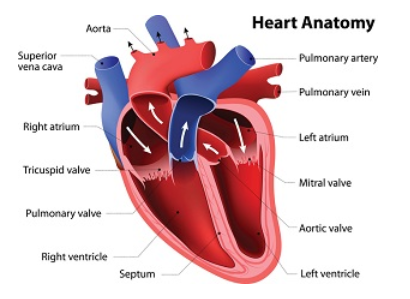
Infections caused by tick-borne pathogens such as Bartonella spp., Borrelia burgdorferi s.l., Coxiella burnetii and Rickettsia spp. are capable of causing serious lesions of the mitral and aortic valves, leading to a need for valve replacement.

OBJECTIVES:

The aim of the study was to determine whether such cases are sporadic or frequent. An additional goal was to establish effective diagnostic methods to detect these infections.

MATERIAL AND METHODS:

The study involved 148 patients undergoing valve replacement. Blood samples were drawn for serological testing. Samples of the removed mitral and aortic valves were tested with PCR and immunohistochemical staining.

RESULTS:

Specific antibodies to

  • Bartonella spp. were detected in 47 patients (31.7%) and in 1 of the healthy controls (1%) (p < 0.05)
  • B. burgdorferi spirochetes were found in 18 of the patients (12.2%) and in 6 blood donors from the control group (5.8%) (p < 0.1)
  • Rickettsia spp. were detected in 12 (8.1%) 
  • C. burnetii phase I and II antigens in the serum of 1 patient. All the participants in the control group were seronegative to C. burnetii and Rickettsia spp. antigens.
  • PCR tests for detection of Bartonella spp., B. burgdorferi s.l., C. burnetii and Rickettsia spp. DNA in the valve samples were all negative.

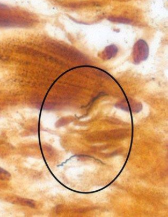
Inflammation foci with mononuclear lymphoid cells in the aortic and mitral valves were seen in sections stained with hematoxiline and eozine. In sections dyed using the indirect immunofluorescence method with hyperimmune sera, Bartonella spp. and Rickettsia spp. were found.

CONCLUSIONS:

The results obtained indicate that laboratory diagnostics for patients with heart disorders should be expanded to include tests detecting tick-borne zoonoses such as bartonelloses, Lyme borreliosis, rickettsioses and Q fever.

________________

**Comment**

This article shows that tick borne pathogens are common with patients needing heart valve replacements. Unfortunately, testing still isn’t accurate. Finding antibodies, authorities would argue, doesn’t mean a person has symptoms; however, this issue desperately needs further research as finding antibodies does indicate the presence of pathogens.

A point to be made about the low percentage of those testing positive for Lyme might be due to the fact they only tested one strain: Borrelia burgdorferi sensu lato.  There are 300 strains worldwide and 100 in the U.S. (and counting).

Bartonella is similar in the fact that a recent article pointed out that a 14-year-old boy with PANS caused by Bartonella henselae infection was NOT seropositive. Only one of the three blood samples tested positive before culturing and only two tested positive after culturing. A single blood draw might have missed confirming a diagnosis of bartonellosis.

How many doctors are going to hunt these infections to ground? How many have the time and doggedness it requires to find them? It’s far more likely they will take the results from a singular test, close the book, and move onto the next patient.

We desperately need accurate tests that pick up ALL the pathogens.


Infective Endocarditis Without Biological Inflammatory Syndrome: Description of a Particular Entity

https://www.ncbi.nlm.nih.gov/pubmed/31303461

2019 Jul 11. pii: S1875-2136(19)30078-6. doi: 10.1016/j.acvd.2019.02.005. [Epub ahead of print]

Infective endocarditis without biological inflammatory syndrome: Description of a particular entity.

Abstract

BACKGROUND:

Bacterial infective endocarditis (IE) is rarely suspected in patients with a low C-reactive protein (CRP) concentration.

AIMS:

To address the incidence, characteristics and outcome of left-sided valvular IE with low CRP concentration.

METHODS:

This was a retrospective analysis of cases of IE discharged from our institution between January 2009 and May 2017. The 10% lowest CRP concentration (<20mg/L) was used to define low CRP concentration. Right-sided cardiac device-related IE, non-bacterial IE, sequelar IE and IE previously treated by antibiotics were excluded.

RESULTS:

Of the 469 patients, 13 (2.8%; median age 68 [61-76] years) had definite (n=8) or possible (n=5) left-sided valvular IE with CRP<20mg/L (median 9.3 [4.7-14.2] mg/L). The median white blood cell count was 6.3 (5.3-7.5) G/L. The main presentations were heart failure (n=7; 54%) and stroke (n=3; 23%). Transthoracic echocardiography (TTE) showed vegetations (n=5) or isolated valvular regurgitation (n=4). Overall, eight patients (62%) had severe valvular lesions on transoesophageal echocardiography (TOE), and nine patients (69%) underwent cardiac surgery. All patients survived at 1-year follow-up. Bacterial pathogens were documented in eight patients using blood cultures, serology or valve culture and/or polymerase chain reaction analysis.

  • streptococci
  • coagulase-negative Staphylococcus
  • Corynebacterium jeikeium
  • HACEK group (Haemophilus, Aggregatibacter, Cardiobacterium, Eikenella, Kingella)
  • Coxiella burnetii
  • Bartonella henselae

CONCLUSIONS:

Left-sided valvular IE with limited or no biological syndrome is rare, but is often associated with severe valvular and paravalvular lesions. TOE should be performed in presence of unexplained heart failure, new valvular regurgitation or cardioembolic stroke when TTE is insufficient to rule out endocarditis, even in patients with a low CRP concentration.

_________________

**Comment**

A low CRP concentration means there isn’t inflammation. Typically, bacterial infections raise CRP, so this study is important because it shows that patients can be infected but NOT have a high CRP. 

For more on Baronella and Heart issues:  https://madisonarealymesupportgroup.com/2019/06/04/how-vector-borne-diseases-impact-heart-health/

https://madisonarealymesupportgroup.com/2019/04/25/case-of-endocarditis-caused-by-bartonella-after-mitral-valve-repair/

https://madisonarealymesupportgroup.com/2017/05/11/bartonella-henselae-in-children-with-congenital-heart-disease/

https://madisonarealymesupportgroup.com/2017/01/04/endocarditis-consider-bartonella/

https://madisonarealymesupportgroup.com/2018/09/28/bartonella-infective-endocarditis-with-dissemination-a-case-report-literature-review/

https://madisonarealymesupportgroup.com/2018/09/07/bartonella-infectious-endocarditis-associated-with-cryoglobulinemia-multifocal-proliferative-glomerulonephritis/

https://madisonarealymesupportgroup.com/2018/07/10/infective-endocarditis-associated-with-bartonella-henselae-a-case-series/

Regarding Coxiella burnetti, or Q-Fever:

https://madisonarealymesupportgroup.com/2019/02/14/impact-of-pre-operative-antimicrobial-treatment-on-microbiological-findings-from-endocardial-specimens-in-infective-endocarditis/

The brown dog tick, Rocky Mountain Wood tick, and the Lone Star Tick are all vectors and Q-fever is endemic throughout the U.S.  Treatment is doxycycline.

https://phc.amedd.army.mil/PHC%20Resource%20Library/QFever_FS_18-048-0317.pdf  This document states Q-Fever is a category B agent (moderately easy to disseminate).

Humans are very susceptible to the disease and few organisms are required to cause
infection. In rare instances, people may acquire Q fever via the ingestion of raw milk or eggs, by tick bites, or by human-to-human transmission.

https://www.ncbi.nlm.nih.gov/pmc/articles/PMC88923/  Interestingly, even as far back as the 30’s, Q-fever was noted to have properties of both viruses and rickettsiae. This document states Q fever may occur in patients without any animal contact due to it’s ability to be spread by wind.  The same document states human Q-fever cases have occurred in the following:

  • An OB after an abortion on an infected woman
  • transplacental transmission
  • autopsies
  • intradermal inoculation
  • blood transfusion
  • tick bite
  • sexually in infected mice
  • possibly from infected dogs
  • infected cats

The real kicker on that last one was the 1984 report of 13 people who developed febrile respiratory disease by playing poker in a room where a cat had delivered kittens.  Abstract here:

Kosatsky T. Household outbreak of Q-fever pneumonia related to a parturient cat. Lancet. 1984;ii:1447–1449. [PubMed]

Symptoms were:

  • bradycardia (slow heart rate)
  • fever
  • palatal petechiae (red or purple spots on mouth palate)
  • rapidly enlarging bilateral pulmonary infiltrates (fluid in both lungs)

When Lyme Kills

https://elemental.medium.com/when-lyme-kills

Illustration by Anuj Shrestha

When Lyme Kills

The extremely rare complication you should know about

This story is part of “Tickpocalypse,” a multi-part special report.

Joseph Elone just felt tired at first, like he wasn’t sleeping well. Soon, however, Joseph developed cold symptoms — a cough, a sore throat, head and body aches, digestive problems, and a low-grade fever.

The doctor saw little reason for concern. Joseph likely had the flu, he said. He prescribed the standard regimen — rest, fluids, and the like — and suggested they give it time.

But a few days later, Joseph’s symptoms worsened. He was feeling light-headed and said he was sensitive to bright light. He returned to the same doctor, who ordered blood tests for strep throat, Lyme disease, and another tick-borne illness called anaplasmosis. The results were all negative.

It would take at least four months and several incorrect diagnoses to determine the cause of Joseph’s death, but ultimately, examinations revealed the presence of Lyme bacteria in several of his organs, including his heart.

(See link for entire article)


This story is part of “Tickpocalypse,” a multi-part special report.

__________________

**Comment**

Well, if this isn’t heartbreaking, I don’t know what is.

There are numerous points that should be mentioned:

  1. The media, researchers, and doctors need to refrain from the word “RARE” on pretty much anything regarding tick-borne illness. Notice out of one side of his mouth, the author states the same year Elone died, the CDC released a report of three other deaths related to Lyme, “which led to further inquiries that uncovered numerous additional instances in New York state…leading experts to wonder if Lyme deaths might actually be more common than previously thought.”  Then, out of the other side of his mouth he announces with certainty that it’s rare. This is illogical and undermines the seriousness of this. All I can say is Zika was handled very differently.
  2. Please take note that spirochetes riddled his body. They were all over. How many dead bodies have to pile up before the CDC/IDSA/NIH believe Lyme is serious and that those with persistent symptoms just might be chronically infected, with spirochetes riddling our bodies? Instead, we have bone-heads saying we have MUS (medically unexplained symptoms), which essentially means he believes we are psychosomatic:  https://madisonarealymesupportgroup.com/2019/06/11/dr-eugene-shapiro-medically-unexplained-symptoms/  Video of Shapiro stating he believes our symptoms are completely unrelated to Lyme, i.e. – MUS. He also states the parents weren’t happy with his findings….gee, I wonder why?
  3. Again, regarding only 20% of patients being in the PTLDS group: https://madisonarealymesupportgroup.com/2019/02/25/medical-stalemate-what-causes-continuing-symptoms-after-lyme-treatment/, microbiologist Holly Ahern states that number is incorrect and only includes those patients diagnosed and treated early. When you add the 10-20% in this category with the 30-40% NOT diagnosed and treated, you get a whopping potential 60% of ALL patients who go on to develop chronic/persistent symptoms.  This is HUGE and downplayed. Little to no research exists on this patient group and yet they are in the majority.
  4. If you want to take a peek at the number of people DYING from Lyme: http://whatislyme.com/rip-lyme-friends-memorial/  Collected by Lyme patient and advocate Lisa Hilton, she’s also made a chart and listing of Lyme deaths: http://whatislyme.com/is-lyme-disease-fatal/, based upon 219 Lyme deaths.  
Is that still considered rare?


How Vector-Borne Diseases Impact Heart Health

https://www.galaxydx.com/bartonella-lyme-impact-heart-health/

How Vector-Borne Diseases Impact Heart Health

LET’S SUFFICE IT TO SAY, HEART ISSUES WITH TICK BORNE ILLNESS IS NOT RARE.


Lyme Carditis Presenting as Atrial Fibrillation

https://casereports.bmj.com/content/12/4/e228975

Lyme carditis presenting as atrial fibrillation

Zainal A, Hanafi A, Nadkarni N, et al.
Online issue publication 
April 29, 2019

Abstract

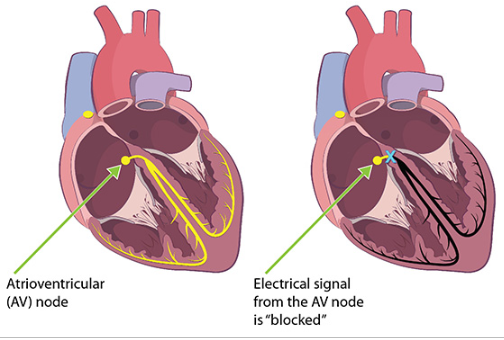
The incidence of Lyme disease in the USA is 8 per 100 000 cases and 95% of those occur in the Northeastern region. Cardiac involvement occurs in only 1% of untreated patients. We describe the case of a 46-year-old man who presented with chest pressure, dyspnoea, palpitations and syncope. He presented initially with atrial fibrillation with rapid ventricular response, a rare manifestation of Lyme carditis. In another hospital presentation, he had varying degrees of atrioventricular block including Mobitz I second-degree heart block. After appropriate antibiotic treatment, he made a full recovery and his ECG normalised. The authors aim to urge physicians treating patients in endemic areas to consider Lyme carditis in the workup for patients with atrial fibrillation and unexplained heart block, as the associated atrioventricular nodal complications may be fatal.

___________________

**Comment**

A better statistic would be that in 2017, the CDC estimated the number of NEW cases of Lyme disease to be approximately 430,000 – which is 6 times the prevalence of HIV/AIDS and nearly twice as prevalent as breast cancer.  The numbers have only increased since that time.

As to cardiac involvement only occurring in 1% of untreated patients & atrial fibrillation with rapid ventricular response being rare, I highly doubt it.  Testing misses over half of all cases with research ignoring chronically infected patients since inception and nobody’s keeping score because cases aren’t being diagnosed, treated, researched, and recorded.

Heart involvement with Lyme is not new:  https://madisonarealymesupportgroup.com/2019/03/10/when-lyme-hurts-your-heart-warning-signs-solutions/

https://madisonarealymesupportgroup.com/2018/09/17/lyme-carditis-heart-block-other-complications-of-ld/

https://madisonarealymesupportgroup.com/2019/02/13/mitral-valve-endocarditis-a-supposed-rare-manifestation-of-lyme-disease/

https://madisonarealymesupportgroup.com/2018/06/03/heart-problems-tick-borne-disease/

https://madisonarealymesupportgroup.com/2019/02/14/impact-of-pre-operative-antimicrobial-treatment-on-microbiological-findings-from-endocardial-specimens-in-infective-endocarditis/

https://madisonarealymesupportgroup.com/2017/06/07/early-onset-lyme-carditis-concurrent-disseminated-erythema-migrans/

https://madisonarealymesupportgroup.com/2019/02/21/diagnosis-treatment-of-lyme-carditis/