This great Tedx Talk reminds us we have far more control over the destiny of our health than we realize. If you need encouragement to change your health habits – this is it.
Approx. 10 Min
What’s with Wheat? | Cyndi O’Meara | TEDxWilmington
In this talk Cyndi O’Meara discusses challenges with wheat.
Cyndi O’Meara is a nutritionist, film maker – ‘What’s With Wheat?’, best-selling author, international speaker and founder of Changing Habits. Cyndi graduated with a BSc majoring in Nutrition in 1984, her special interest was ancestral foods. After graduating, she became disillusioned by the global ‘standard’ nutritional guidelines that she paved her own path. Cyndi started Changing Habits in 1990, from her regular newspaper column on nutrition. Her ground breaking book Changing Habits Changing Lives (1998) became an instant best seller and from there she has grown a successful organic food company, certified online education program, a ground breaking documentary and is currently building a 60-acre organic food bowl which will be used as an education centre for sustainable farming practices. This talk was given at a TEDx event using the TED conference format but independently organized by a local community. Learn more at https://www.ted.com/tedx
______________
**Comment**
Being a native Iowan myself, I found O’Meara’s brief family history interesting. Spraying arsenic, lead & DDT on corn & wheat due to a locust plague was not too shocking considering I lived on the Mississippi River where Dupont and Clinton Corn were huge manufacturing plants employing many of the town folk. Today, all my old girlfriends have thyroid and endocrine disease and there is a lot of cancer.
The micro biome of the soil is just as important as the micro biome of the human body. When farmers use things that disrupt the soil – beware. It’s just a matter of time before the human body micro biome gets trashed.
Being a Lyme/MSIDS patient myself and understanding the challenges, this talk will give you simple and practical steps you can actively take to help regain your health. If it’s overwhelming, do 1 thing until you are able to take on more. Remember – no guilt. Just start somewhere and feel happy about it, knowing you are making life-long changes that will make a difference.
When able, get to know the farmers at the local market and develop a relationship with them. Raising crops in a healthy way is what these folks have devoted their lives to. They are springs of information and are quite willing to share it.
If you suspect wheat, go off it for 6 weeks and see if symptoms improve. Many have found this one step to be a turning point. My PT, after listening to my symptoms one day, asked, “Have you considered gluten? I have nearly every symptom you just mentioned and when my wife, who’s a nutritionist, put me on a gluten-free diet, every symptom disappeared.” Interestingly, he was so reactive that he had to use his own eating utensils and keep them separate from the family’s as he reacted even to microscopic amounts of gluten remaining on washed utensils others used to eat gluten with. This shows that for many Lyme/MSIDS looks an awful lot like Lyme/MSIDS. It can cause joint pain, brain fog, and many other similar symptoms.
Be a label reader. Find out what’s inside and what is being sprayed on your food.
When you shop, stay on the perimeter of the store where the real food is.
Get back in the kitchen and make your own food.
For another straight-forward talk on how to change your body and health with food: https://madisonarealymesupportgroup.com/2017/05/20/minding-your-mitochondria/Diagnosed with MS, Dr. Terry Wahls received the best standard medicine had to offer. After declining to the point of being in a wheel chair, she took matters into her own hands and learned how to properly fuel her body. Using the lessons she learned at the subcellular level, she used diet to cure her MS and get out of her wheelchair.
REMOVING PARASITES TO FIX LYME AND CHRONIC ILLNESSES
by Dr. Jay Davidson
Article Summary
Parasites are more common than you might think. About 50% of the western world has parasites. Importantly, parasites can play a part in almost every common illness, and they can prevent the effective treatment of chronic disease.
Parasites can range from microscopic creatures, to huge tapeworms. Anyone can be affected by parasites, but there are some patients, such as those with poor immune systems and Lyme sufferers, who are more risk-prone.
The symptoms of parasites and Lyme are often very similar. It may be easy for many people to overlook the presence of a parasite in their body. Common symptoms range from insomnia and bruxism, to anemia, skin conditions, and more.
Parasites and Lyme disease go hand in hand. When parasites are within your system, it is impossible to remove Lyme. Some studies have even found that parasites can protect the bacteria of Lyme inside themselves.
Treating parasites can also mean treating chronic illness. Often, treatment for parasitic infections will begin with a careful consideration of diet. Make sure to remove grains, sugars, and pork from your diet. You should also consider adding substances like garlic, diatomaceous earth, and coconut oil.
One of the most powerful treatments for Lyme and parasites is Mimosa Pudica. This substance paralyzes parasites and flushes them from the system.
Management for parasite die-off will be necessary during a cleanse. Removing Lyme and parasites from your body can be an exhausting process.
DO YOU HAVE PARASITES?
It is difficult to think that there might be parasites crawling around inside you. The concept is nerve-wracking, and just plain disgusting. Experts believe that more than 50% of people in the Western world will suffer from a parasitic infection in their lifetime. It is easy to understand why this is the case when the human body is crawling with bacteria. The digestive tract holds more than three pounds of bacteria alone.
Although some bacteria can be good for your body, improving nutrient absorption and digestion, other bacteria can be devastating. When the bacteria in your system gets out of balance it creates a perfect place for parasites to thrive.
Parasites can enter your body in many ways and eating lot of fructose and glucose feeds the parasites helping them multiply. Pharmaceuticals, such as antibiotics, can also deplete the digestion system of bacteria and encourage parasitic growth.
For people with chronic Lyme, the problem is that they may not know they have a parasitic infection. This can mean that you are attempting to rid the body of disease while the parasites inside you are still acting as a host for Lyme disease itself. Researchers believe that parasites could play a part in every common illness. If you want to get rid of a chronic disease, you need to start by killing parasites.
The first step, of course, is recognizing that you have parasites in your body. The disturbing truth is that you probably do. Studies indicate that most people have parasites – especially those with chronic illnesses like Lyme.
The Symptoms of Parasites: What to Watch For
Parasites are complex creatures. Almost always associated with inflammatory diseases, including chronic Lyme, they actively prevent good health. A parasitic infection can range all the way from tiny microscopic organisms, to tapeworms that are several feet long. A parasite can enter your body through water, food, or even just skin contact.
The key thing to remember is that anyone can have a parasites. These creatures are not just common for impoverished countries and unhygienic environments. Parasites are a common all over the world, including the United States.There are factors that can mean you have a greater level of risk.
Factors that can increase your risk of parasite infection include:
You frequently swallow water from ponds, lakes, rivers, or other unhygienic sources.
Your immune system is compromised, perhaps because you’re suffering from chronic Lyme.
You work in a medical environment that might include direct contact with feces and bodily fluids
You travel frequently to tropical regions where parasitic infections are more common.
The symptoms involved with parasitic infections are varied. Many involve skin problems, such as hives, rashes, eczema, and psoriasis. According to Parasite expert, Dr. Todd Watts, one of the most common problems links back to trouble sleeping. Many of his patients suffer from insomnia and “bruxism”.
Bruxism, or the grinding of teeth, can happen because parasites are more active at night. Additionally, parasites can also be responsible for anemia and blood sugar problems. Before you begin treating your parasites, you may need to come to terms with some of the common symptoms. For chronic Lyme sufferers, pinpointing symptoms can be particularly difficult. Lyme symptoms and the signs of parasites are often very similar.
Some signs that you may have a parasitic problem include:
Insomnia, consistent fatigue, and poor sleeping habits
Lowered immune systems, the appearance of new allergies, and constant illness
Rashes, itching, and skin problems such as sores, or eczema and Psoriasis
Mental problems such as brain fog, anxiety, or depression
Food cravings
Joint and muscle pains
Eye spots or difficulties with sight
Anemia, low blood sugar, or adrenal fatigue
Parasites and Chronic Lyme Disease
It is an uncomfortable truth that the human body is crawling with hundreds of strains of bacteria. When properly balanced, the right bacteria can be beneficial. However, when bacteria falls out of balance, problems begin to occur. In chronic Lyme disease patients, imbalance is a significant problem.Ongoing inflammation within the body, and issues with the immune system can throw the entire system into chaos.
In many circumstances, parasites enter the body because we create the ideal environment for them. With a compromised immune system from Lyme disease, consistent gut problems, and exposure to various chemicals, we are welcoming parasites in. Experts, like Dr. Watts, believe that to overcome chronic infections such as Lyme, we need to first address parasites.
Without a protocol that takes parasites into consideration, treatments for Lyme disease may be temporary, or completely ineffective. While it is possible that treatments that do not engage parasites might lead to some improvements in your symptoms, many problems will remain or return later on. This is because parasites allow Lyme disease to persist within the body, inside the parasites, even after treatment.
On top of the problems that parasites impose when it comes to Lyme, they also cause a range of problems in general with your health. Simply ignoring the presence of parasites in your body could mean overlooking solutions that could allow you to achieve optimum health.
Treating Parasitic Infections to Treat Chronic Illness
Treatment for parasitic infection can come in numerous forms. There are a range of natural treatments that can help to eliminate parasites and prepare the body for better health. Most of the time the best solutions for parasitic infections involve changing your diet and using the right supplement at the right time.
People suffering from parasitic problems in combination with Lyme can make the problem worse by consuming sugars. It is often recommended that you remove all sugars and grains from your diet during a parasitic removal so you are not feeding the parasites as you try to eliminate them. Dairy can also present problems for some patients, although you should seek out guidance from a professional.
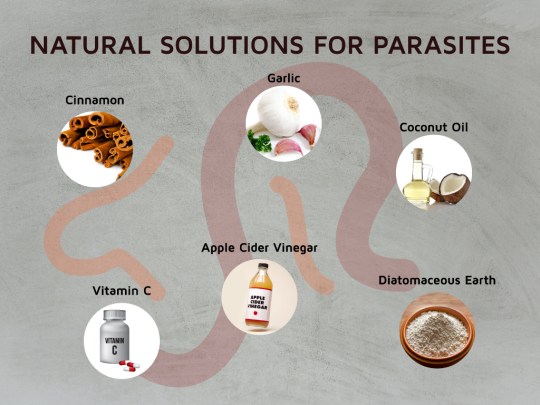
Natural Solutions For Parasites:
Just as there are foods that can worsen parasitic infections, there are other foods that can help your circumstances. For instance, pumpkin seeds help to fight off parasitic infections. There are also a range of other solutions that are commonly recommended, including:
Garlic: Garlic can be a powerful solution when removing yeast and parasites. It is a natural source of health-boosting nutrients. To use garlic, simply mince two cloves into a glass of water.
Cinnamon: Cinnamon can be a fantastic remedy for a range of different illnesses. Cinnamon can break down a parasite infestation and kill fungus in the body.
Vitamin C: Vitamin C is wonderful for boosting your immune system. While fighting Lyme disease, Vitamin C can give your body the antioxidants it needs to thrive. For the purpose of parasite removal, it is best to take around 5,000mg per day.
Coconut oil: Coconut oil is a naturally nourishing anti-fungal substance. You can consume coconut oil throughout the day to support parasitic removal and soothe your gut.
Apple cider Vinegar: A rich source of B-vitamins, apple cider vinegar is useful for neutralizing the pH in your gut, which can help to make the intestines healthier. By boosting your microbiome health, you can improve digestion, and remove parasites at the same time.
Diatomaceous Earth: Effective at killing parasitic eggs, and parasites, Diatomaceous earth is great for improving your digestive tract.
Foods To Avoid:
Banishing parasitic infections is a complicated process. Generally, you’ll need to focus on introducing positive substances into your diet, while removing dangerous substances. There are some foods that will naturally help parasites to thrive. Since your aim will be to remove parasites at all costs, stay away from:
Pork: Pork is one of the most common sources of parasites. Because pigs consume and process food differently to humans, there are toxins present within the flesh of the animal. It is crucial to avoid pork when cleansing your body of parasites.
Grains: Wheat and many other grains containing gluten can quickly break down into sugar. Sugar not only feeds parasites, but also leads to intestinal inflammation.
Processed foods: Processed foods are bad for your health because they contain a lack of nutrition. However, it is worth noting that these foods also contain a great deal of sugar.
Alcohol: Alcohol impairs the immune system and many other elements in the body. To improve your body functioning during a parasite cleanse, avoid alcohol.
Sugar: Sugar reduces the functioning of the immune system, and feeds parasites.
MIMOSA PUDICA AND KILLING PARASITES
One of the best treatment solutions for removing parasites is a Mimosa Pudica (Para 1) protocol. The best supplier of premier, fat soluble, additive free Mimosa Pudica, is Microbe Formulas. Importantly, while there are other Mimosa Pudica options on the market, the Organic Mimosa Pudica offered by Microbe Formulas is the most pure form for treating parasitic infections. https://microbeformulas.com/collections/frontpage/products/microbe-formulas-mimosa-pudica
Mimosa Pudica actively paralyzes parasites and forces them to fall away from their position on intestine walls. This means that parasites can be effectively flushed from your system.
With Mimosa Pudica, patients have seen huge improvements in their lives, thanks to the removal of parasitic infections. The good news about this substance, is that it is a powerful tool to include in any parasite protocol. This means that regardless of what your parasitic treatment includes, Mimosa Pudica (Para 1) could enhance your protocol.
The system fits into every GI and GAP protocol, because it helps to create a healthier gut microbiome. To make the gut system more effective, it is crucial to get all the mucus, parasites, and other dangerous substances out of your stomach and intestines. Whether mucoid plaque or parasites, you need to begin by clearing out your microbiome.
Mimosa Pudica supplements should be used for at least six months. The supplement mentioned above is particularly effective because it plays multiple parts in recovery. Not only does it bind the toxins in the body, but it also repairs cell membranes. On top of that, it delivers positive nutrients into the blood and digestive system.
Importantly, if you are considering using Mimosa Pudica, you will need to deal with issues of constipation first. If you’re struggling to pass bowel movements, this can be a serious problem for any parasite or detox program. Although the substance itself can cause a little constipation at first by releasing things throughout the body, it is important for patients to manage their bowel movements. Make sure that you use enemas, magnesium, and frequent water consumption to push your bowel movements through.
Managing Parasite Die-Off
As we bring this conversation about parasites and Lyme disease to a close, one important thing to mention is parasite die-off. Crucially, as you move forward with your parasite cleanse, you may notice that you begin to suffer from a range of symptoms caused by the death of parasites in your system.
Regardless of the cleanse you choose, the process of removing parasites and Lyme from your body is exhausting. It is crucial to make sure that you get plenty of rest. Sometimes its best to take some time off of work if possible to reduce stress and recover faster. On the other hand, you might consider using a gentler cleanse to help acclimatize your body. Some of the symptoms you might expect during die-off include:
Headaches: Pain and headaches are common with parasite die-off. Sometimes, these pains are a result of a change in your internal environment. In some cases, headaches can also be a result of parasites moving around in your head.
Crawling sensations: A parasite cleanse is an uncomfortable experience for your unwanted guests. This means that the parasites might begin to move around in your body. The truth is that many patients will not be able to feel this movement. However, you may convince yourself that you can notice a crawling sensation.
Issues with digestion: When parasites are living in your body, digestive problems are common. In some cases, as you begin to rid the parasites from your body, you might find that the symptoms appear to get worse. You may experience issues like diarrhea and bloating as your body eliminates toxins.
Skin sores: As mentioned above, skin problems are a symptom of parasites. However, sores can also occur when the body tries to remove toxins and parasites too fast. The skin can suffer from breakages and sores over time.
Problems with emotional stability: Parasites thrive on your nutritional income. A parasite can also steal away the nutrients and minerals that you need to enjoy good mental health. You might struggle from periods of anxiety and depression during die-off.
Cravings: As mentioned above, parasites thrive on sugars and other types of food. It is important to remove these foods from your diet during a parasite cleanse. However, doing so could leave you with specific cravings. Make sure that you do not give in to them!
Respiratory effects: Killing parasites in the body can mean that your system takes drastic measures to rid you of the infection. Increasing the flow of mucous is a common way to respond to contaminants. There’s a chance that you’ll experience respiratory symptoms similar to the common cold.
Frequent bruising: When parasites begin to feel threatened, they can move around. Sometimes, the restlessness of parasites in your body can cause them to move closer to the skin. When this happens, you might find that you see more bruises on your body.
Ultimately, it is fair to say that removing parasites from your body can be a difficult and uncomfortable process. However, if you want to overcome Lyme for good, it is essential to start by killing parasites.
If you leave parasites unattended in your body, they can contribute to a range of illnesses and diseases, including chronic Lyme. On top of that, it is simply impossible to live in good health with a buildup of parasites in your body.
Dr. D. KLINGHARDT PROTOCOL – To be used only under the direct supervision of qualified medical practitioners.
The following represents only PART of Dr. K.’s protocol. Other herbs and therapies comprise the complete protocol. They can be found in the “A Deep Look Beyond Lyme” in the note book. That information is from 2011 and is being updated as Dr. K and other physicians learn more.
The following drugs are used for a year in rotation to kill parasites.
Biltricide 600 mg – twice daily (q. 12 hours) for two days
Absorption increases most when taken with a high carb meal. A high fat meal increases it almost as much. Take with grapefruit juice to increase absorption also.
Ivermectin 12 mg – one 12 mg (or four 3 mg) tablet(s) four times per day for fourteen days (take at the same time as Pyrantel Pamoate) on an EMPTY stomach.
Pyrantel pamoate (liquid – 4 teaspoons) 1000 mg per day at bedtime for fourteen days.
Albenza 400 mg – Two 200 mg tablets twice per day for fourteen days (after completing fourteen days on Ivermectin and Pyrantel). Take with food. (every 12 hours)
Alinia 1000 mg – Two 500 mg tablets twice per day for fourteen days (after completing Albenza) every 12 hours
(A’s addition from Dr. Clark’s Book – Levimasole 100 mg (3 times/day) before meals)
THEN 2 HERBS:
Mimosa Pudica (Biopure) – ½ teaspoon 2x/day for fourteen days mixed drink, milk or juice
Arteminisin (Biopure) – 200mgs 2x/day for fourteen days.
ALWAYS take with 4 oz. of grapefruit juice 30 minutes before meals.
REPEAT ENTIRE SEQUENCE 4 TIMES.
_____________
According to Dr. Lee Merritt, parasites are what we call cancer.
Go here for Dr. Lee Merritt’s parasite guide. She mentions pathologist Dr. Alan McDonald, an outspoken supporter of chronic/persistent Lyme/MSIDS, and his autopsies of MS patients. 100% had parasites in the brain and spinal cord.
“Dr. Klinghardt has suggested that when it comes to parasites, this is where some of the pharmaceutical options really shine and are often necessary.” –Quote from Better Health Guy.com. Our family had to learn this the very hard way (See 5 years and thousands of dollars in the previous section).
I no longer believe that you can get rid of parasites in humans without prescription medications. If I could do it all over again, here is a list of what I would do, in order from first to last:
http://www.wormbook.org/chapters/www_anthelminticdrugs/anthelminticdrugs.html Here we learn an inconvenient truth about nearly ALL coinfections including nematodes: Despite the prevalence of parasitic worms, anthelmintic drug discovery is the poor relation of the pharmaceutical industry. The simple reason is that the nations which suffer most from these tropical diseases have little money to invest in drug discovery or therapy. It comes as no surprise therefore that the drugs available for human treatment were first developed as veterinary medicines. There is thus a pitifully small repertoire of chemotherapeutic agents available for treatment (see Table 1). In some respects, this situation has been exacerbated by the remarkable success of ivermectin over the last twenty years (Geary, 2005), which has decreased motivation for anthelmintic drug discovery programmes (Geary, Sangster and Thompson, 1999). This prompts concern, as anthelmintic resistance has been widely reported in livestock and it may also only be a matter of time before this phenomenon occurs in parasites of humans.
The drug industry just isn’t attracted to these pathogens. Frankly, treatment is in the stone ages on all things TBI.
It seems that about every other day uncovers some sort of fraud when it comes to public health and “accepted” science. At the end of the article I give links to more fraud – directly related to research being done on Lyme Disease and other tick borne illnesses. This article by GM Watch is the recent discovery that the author of a retracted study by Gilles-Eric Seralini, which shows the toxic effects of Roundup, entered into a contract with Monsanto shortly before the retraction.
The study clearly showed that very low doses of Roundup had toxic effects on rats including liver and kidney damage and initiated cancer tumors.
“Monsanto scientist David Saltmiras admitted to orchestrating a third party campaign in which scientists who were apparently independent of Monsanto would bombard the editor-in-chief of the journal Food and Chemical Toxicology with letters demanding he retract the study.”
“Now that Monsanto’s involvement in the retraction of the Séralini paper is out in the open, FCT and Hayes should do the decent thing and issue a formal apology to Prof Séralini and his team. FCT cannot and should not reinstate the paper, because it is now published by another journal. But it needs to draw a line under this shameful episode, admit that it handled it badly, and declare its support for scientific independence and objectivity.”
The third party campaign tactic was used in the tobacco industry and I believe it is also being used in research regarding tick borne illness. The people doing the CDC/NIH studies and the people sticking up for them are all in a group I like to call The Cabal. Most receive money for patents for everything from vaccines to test kits, keep pushing the same agenda (Borrelia isn’t persistent and 21 days of doxy will cure everyone), keep research from being published that does not agree with their agenda, and foster an environment of fear in the research community which essentially states, “Conform or you will be ridiculed.”
It appears the days of scientific integrity are gone.
Dr. Jay Davidson interviews functional medicine expert, Dr. Todd LePine. They walk through Lyme disease, parasites, the importance of mitochondria, nutrition, infrared technology, parasites, and much more!
Show Details:
1:12 – Dr. Todd LePine’s Background 5:50 – Top Testing Dr. LePine Uses for his Functional Medicine Approach 8:25 – Dr. LePine’s Preferred Lyme Disease Specific Testing 11:00 – Genetic Testing 14:40 – Mitochondria and Your Health 17:15 – Courtagen- Genetic Testing Related to Mitochondria 18:10 – Exercise and Nutrition Impacting Your Mitochondria 20:00 – PQQ Supplement for Mitochondria 20:40 – Mitochondria as Bacteria 21:30 – Evolution of Nutrition and Cycling Your Diet 25:30 – Intermittent Fasting 25:30 – Circadian Rhythm 28:55 – Lyme Disease aka “Tick-Bourne Illness” 32:45 – The Role of Antibiotics in Lyme 36:25 – Probiotics 38:30 – Parasites 40:10 – Treatments and Protocols for Lyme 42:15 – Chronic Lyme and Lack of Fevers 43:30 – Infrared Therapy 44:15 – Book Recommendation by Dr. LePine: Plague Time: The New Germ Theory of Disease 45:00 – Chronic Conditions and the Immune System 45:50 – Last Thoughts from Dr. Lepine on Lyme Disease: “The Great Mimicker” 48:30 – Visit Dr. LePine’s Website: http://www.drlepine.com or additional educational resources at: Genova Diagnostics — https://www.gdx.net/
Membrane Lipid Replacement is the use of functional, oral supplements containing mixtures of cell membrane glycerolphospholipids, plus fructooligosaccharides (for protection against oxidative, bile acid and enzymatic damage) and antioxidants, in order to safely replace damaged, oxidized, membrane phospholipids and restore membrane, organelle, cellular and organ function. Defects in cellular and intracellular membranes are characteristic of all chronic medical conditions, including cancer, and normal processes, such as aging. Once the replacement glycerolphospholipids have been ingested, dispersed, complexed and transported, while being protected by fructooligosaccharides and several natural mechanisms, they can be inserted into cell membranes, lipoproteins, lipid globules, lipid droplets, liposomes and other carriers. They are conveyed by the lymphatics and blood circulation to cellular sites where they are endocytosed or incorporated into or transported by cell membranes. Inside cells the glycerolphospholipids can be transferred to various intracellular membranes by lipid globules, liposomes, membrane-membrane contact or by lipid carrier transfer. Eventually they arrive at their membrane destinations due to ‘bulk flow’ principles, and there they can stimulate the natural removal and replacement of damaged membrane lipids while undergoing further enzymatic alterations. Clinical trials have shown the benefits of Membrane Lipid Replacement in restoring mitochondrial function and reducing fatigue in aged subjects and chronically ill patients. Recently Membrane Lipid Replacement has been used to reduce pain and other symptoms as well as removing hydrophobic chemical contaminants, suggesting that there are additional new uses for this safe, natural medicine supplement. This article is part of a Special Issue entitled: Membrane Lipid Therapy: Drugs Targeting Biomembranes edited by Pablo Escríba-Ruíz.
The article also noted that while glycerolphospholipid absorption in the upper intestines was over 90%, after a large meal, and transported into the blood within 6 hours, dietary MLR polyunsaturated phospholipids are oxidized and degraded during storage, ingestion, digestion, and absorption and need to be protected from acid degradation in the gut and bile salts and hydrolysis from the pancreas and gut microflora in the small intestines. The researchers found an answer to this problem by complexing MLR phospholipids with specific fructooligosaccharides (Inulins), which protect from oxidation and high temps, acidity, and phospholipases and bile salts.
Plants such as legumes or cabbage are good sources for MLR supplementation but in order to get a daily dose of 1.8 g of membrane phospholipids you’d have to have an intake of 15 kg of beans!
The most convenient, efficient, safe and cost effective method of membrane phospholipid administration in humans has been the use of daily oral lecithin supplements [1]; [2]; [3] ; [6]. Most oral lecithin supplements are rather crude soy, egg yolk or marine preparations that lack oxidation, bile and phosphatase protection. In addition, most of these oral supplements have not been carefully analyzed for phospholipid composition, and in particular for lipid degradation products. However, there are oral MLR phospholipid supplements, such as NTFactor® and NTFactor Lipids®, that fulfill the requirements for efficacy, oxidation and degradation protection, safety and convenience[1]; [2] ; [3]. The NTFactor® lipid supplements, and their use in clinical studies, will be discussed in more detail in 8, 9, 10 ; 11. NTFactor®, which also contains probiotic bacteria, growth media and other ingredients, and NTFactor Lipids®, without these additives, come in several oral forms, but almost all contain from 1–2 g of phospholipids per dose[1]; [2] ; [3]. The recommended optimal daily oral dose of NTFactor Lipids® for most clinical conditions has been estimated at 2–4 g per day, and more recently at least 4 g per day, whereas its anti-aging use has been proposed at 2 g per day [2]. Some updates in these recommendations will be discussed in Section 12.
A table in the article shows uses for MLR supplements such as fatigue, infections, autoimmune, and chemical detox and revised dose levels. These are issues nearly every Lyme/MSIDS patient has. The dosages for these issues are upwards of 4g/day, showing the intensive mitochrondrial damage these issues cause in the body.
Due to intense detoxification efforts by the liver, many Lyme/MSIDS patients have high liver titers. The good news is that patients with advanced liver cirrhosis were given oral MLR phospholipids and after just 3 months had normal blood results for liver function. They are also safe to use during pregnancy and have in fact been used in high risk pregnancies with success.
**The authors are part-time consultants to Nutritional Therapeutics, Inc. and Allergy Research Group, Inc.



 Madison Area Lyme Support Group