Archive for the ‘Anaplasmosis’ Category

Anaplasmosis Nightmare

http://www.berkshireeagle.com/stories/jeffrey-l-diamond-my-tick-bite-nightmare-part-1,519151  Jeffrey L. Diamond: My tick bite nightmare: Part 1, September 12, 2017 

RICHMOND — Anaplasmosis. What in God’s name is Anaplasmosis? Until I was stricken, I had never heard of this sometimes deadly tick-borne disease. Sure, everybody knows about Lyme disease, but few of us know anything about the other dozen or so tick-borne infections including Anaplasmosis.

Since 1999, the Center for Disease Control has tracked tens of thousands of cases fueling concern that it’s snowballing into a nationwide epidemic. Anaplasmosis is caused by a bacterium called Anaplasma phagocytophilum that’s carried by a blacklegged tick. The onset of symptoms usually takes a little over a week. Some people weather the infection without ever being diagnosed only suffering cold or flu-like symptoms. Others are diagnosed from a blood test and are placed on a regimen of doxycyline and never think twice about it.

But five percent of us suffer far more dangerous symptoms requiring hospitalization. And about one percent die from Anaplasmosis within a month. I was one of those five percent who landed in the hospital and probably would have died from the disease without the quick thinking of my primary care physician.

My nightmare began sometime in late May — though I have no memory of being bitten and never found the tick. I live on a mountain in Richmond surrounded by dense forest and thick underbrush. I love taking long walks through the woods and often spend hours on my back porch with a cup of coffee engrossed in a good book.

It was Saturday, June 3, when my first symptoms appeared. My wife, Amy, and I were at my granddaughter’s sixth birthday in Brooklyn, N.Y. I developed a mild headache and didn’t think much about it nor the fact that my breathing was labored. I suffer from chronic asthma, so I used my emergency inhaler to control the wheezing.

After the party, I drove home in a fog, my chest growing tighter, my breathing getting worse. After a late dinner I sat down in our library to watch a baseball game, but I couldn’t follow the action or understand the announcer.

Trip to the ER

So I made my way to our bedroom, the room spinning, the furniture appearing to move as I stripped off my clothes. I slept fitfully for a few hours before waking, my head pounding, my body shaking. I remember stumbling out of bed and walking directly into the wall.

Amy awoke and flipped on a lamp then asked me what was wrong. Blinded by the light, I told her I wasn’t feeling well then headed to the bathroom where I took two Motrin, splashed water on my face, and staggered back to bed.

I slept fitfully until 9 a.m., when I got up in a pool of sweat, my headache worse. I remember grabbing onto the furniture so I wouldn’t fall as I looked for a digital thermometer. That’s when I discovered I had a fever of a 101, so I took two more Motrin and slept another four hours, before Amy came into the bedroom and handed me a cup of coffee. Feeling weaker, I remember looking into her eyes and saying that I needed to go to the emergency room.

I don’t remember the 20-minute drive to Berkshire Medical Center, but I do remember needing Amy’s help to walk into the hospital. The next five hours were dreamlike as a parade of people examined me. A nurse drew blood and whisked it off to the lab. Another nurse took my blood pressure, checked my pulse and oxygen levels and my temperature which was just over 100. Then an ER doctor listened to my labored breathing through a stethoscope. I couldn’t focus on her questions, so Amy took over and explained my symptoms and that I suffered from asthma, the doctor ordering a chest x-ray to see if I had pneumonia and a nasal swab to check if I had the flu.

Hours passed as I lay on a gurney in a deathlike sleep wondering what was wrong, before the doctor told us there was no bacterial infection. But she said my blood test showed a low platelet count and an elevated D-Dimer, so she ordered a CAT SCAN to check for blood clots in my lungs. But the CAT SCAN, like the chest X-ray, was negative, and after five hours of waiting, we were told I probably had a virus that would run its course in a couple of days, and that she was sending me home without an antibiotic.

I was too sick to argue, but Amy protested that I needed to be hospitalized for more testing, that I was sicker than she’d ever seen me. But the doctor just repeated there was no reason to keep me overnight. Did she make a mistake? In my view, the answer is yes.

But even more confounding, I was never tested for a tick-borne disease even though my symptoms were classic and the problem is epidemic in the Berkshires.  I asked a BMC spokesperson why this isn’t a standard test, but to date I’ve received no answer.

If my emergency room doctor had only acted on these basic warning signs, I might have avoided the medical crisis that was soon to follow.

http://www.berkshireeagle.com/stories/jeffrey-l-diamond-my-tick-bite-nightmare-part-2,519235  Jeffrey L. Diamond: My tick bite nightmare: Part 2, September 13, 2017 

RICHMOND — My battle with the tick-borne disease, Anaplasmosis, is a warning for all of us here in the Berkshires. Unlike Lyme disease, Anaplasmosis often strikes with crippling speed, and if not treated quickly, can snowball out of control.

That’s what happened to me when I came down with the infection this spring. I pick up my story after being sent home undiagnosed from the emergency room at Berkshire Medical Center on June 4.

My condition continued to deteriorate the next day, the pounding in my head intensifying, my breathing more labored, my temperature soaring to 103. That’s when my wife, Amy, made an appointment with my primary care physician, Dr. Karen Prestwood.

As we left our home in Richmond on Tuesday, June 6, I could barely stand. I have vague memories of stumbling into the doctor’s office and of Dr. Prestwood sitting at the computer reviewing the test results from my visit to the emergency room two days before.

After noting the timeline of my symptoms, she told us I might be suffering from a tick-borne disease — the first time a doctor had raised that possibility. So she ordered a blood test to confirm her suspicion and placed me on doxycyline, a decision that probably saved my life.

The following day, June 7, was a nightmare. My mind, ravaged by the high fever, was delusional, spiraling from one hallucination to the next. Amy moved me down to the guest bedroom on the first floor worried I could no longer manage the steps. I spent most of the day sleeping, waking at 2 a.m. Thursday morning needing to use the bathroom. I remember climbing out of bed, the room spinning, then wobbling across the floor and into the bathroom. That’s when I fell for the first time, landing in the bathtub.

I remember calling Amy for help, but she was upstairs and couldn’t hear me. I began coughing uncontrollably, my lungs burning as I steadied myself against a wall, climbed out of the tub, and headed to the toilet. That’s when a

new dangerous symptom reared its ugly head. Even with my bladder about to burst, I could only pass a trickle of urine.

Later that day, June 8, my fever climbed to 103.5 and my lungs began filling with fluid. Amy placed a call to my pulmonologist at Brigham and Women’s Hospital, who asked me if I was strong enough to make the trip to Boston so he could examine me, but I was so incoherent, he stopped me mid-sentence and told me to head straight back to the emergency room.

New crisis point

So we made our second trip to Berkshire Medical Center, Dr. Prestwood calling ahead to tell them to expect me. I was processed immediately and taken to an exam room. A nurse hooked me up to an IV, took my vitals, then drew blood. I remember being in a daze and desperately needing to urinate. The nurse gave me a urinal, but all I passed was a stream of blood. I had reached a new crisis point. My renal system was hemorrhaging.

I remember Amy racing out of the room for help and returning a few minutes later with the doctor. He immediately ordered a catheter to empty my bladder and said I was going into kidney failure — though he still had no idea why I was sick. He decided to continue the doxycyline treatments ordered by Dr. Prestwood for a possible tick bite infection as he awaited the results of her blood test — still not back from the lab after three days — and admitted me to the hospital for observation.

It wasn’t until the next morning, Friday, June 9, almost a week after I first got sick, that the attending doctor in the hospital confirmed what Dr. Prestwood had suspected, that I was suffering from Anaplasmosis. Finally, I knew what was wrong with me.

I spent the next four days in the hospital, my body slowly healing. By late Saturday, June 10, I was breathing better, my kidneys were improving, there was no blood in my urine, and my fever and headache were gone. Then on Monday, June 12, the catheter was removed and my bladder began working on its own. The doxycyline had done its job. Later that day, I was discharged to the Kimball Farms Nursing Care Center where I spent three days building upper body strength and learning to walk again.

Now almost three months after coming down with Anaplasmosis, I’m still suffering lingering side effects. I’m always exhausted, have double vision from a condition called optic neuritis, and face months before I fully recover.

So my experience with this tick bite nightmare is a warning for all of us. Many in the medical community are ill-equipped to deal with the problem, and if my wife hadn’t insisted I see my primary care physician after I was turned away from the emergency room on that first day I was sick, I might have died from the infection.

So the lesson here is simple. We all need to understand the dangers. In the end, it could save your life.

An author, award-winning producer, and director, Jeffrey L. Diamond has 40 years of experience in television news.

_______________

**Comment**

A harrowing story for sure.  Please spread the word about all things TBI (tick borne illness).  Mainstream medicine is ill equipped for sure, not recognizing and understanding that a tick’s gut can contain numerous pathogens which complicate our cases exponentially.  https://madisonarealymesupportgroup.com/2017/07/01/one-tick-bite-could-put-you-at-risk-for-at-least-6-different-diseases/ (There are many more than 6)

 The CDC/IDSA mono therapy of 21 days of doxy only works for acute cases, and sometimes not even then.

Besides numerous pathogens adding to the complexity, the CDC STILL does not recognize Bb (Borrelia burgdorferi – the causative agent of LD) is pleomorphic and shape shifts, requiring various antibiotics to kill each form as well as the role of biofilms, a colony-like form protecting the pathogens, that few antibiotics can penetrate.

More on Anaplasma Treatment:  https://madisonarealymesupportgroup.com/2016/03/08/anaplasmosis/

For more on Lyme treatment:  https://madisonarealymesupportgroup.com/2016/02/13/lyme-disease-treatment/
 

Start Treatment if TBI’s are Suspected

http://www.mdedge.com/ccjm/article/141387/dermatology/tickborne-diseases-other-lyme-united-states  Cleveland Clinic Journal of Medicine. 2017 July;84(7):555-567

KEY POINTS

  • Tickborne illnesses should be considered in patients with known or potential tick exposure presenting with fever or vague constitutional symptoms in tick-endemic regions.
  • Given that tick-bite history is commonly unknown, absence of a known tick bite does not exclude the diagnosis of a tick-borne illness.
  • Starting empiric treatment is usually warranted before the diagnosis of tickborne illness is confirmed.
  • Tick avoidance is the most effective measure for preventing tickborne infections.

____________________________________________________________________________

The article delineates symptoms, transmission, reservoirs, testing, and treatment of the following TBI’s:  Rocky Mountain Spotted Fever, Rickettsiosis, Ehrlichioses, Babesiosis, Tickborne relapsing fever, Borrelia miyamotoi, Southern Tick-associated Rash illness, Tularemia, and Tickborne viral infections.

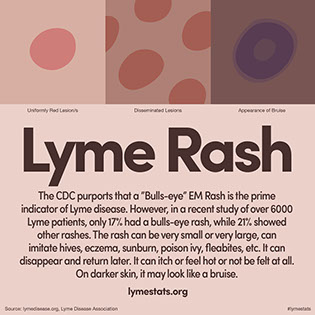
101_emrash316x316

47_rash316x316

I need to address the following statements at the end of the article:

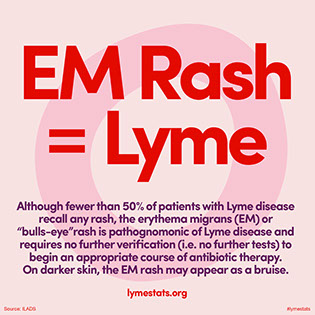
“Knowledge of the geographic locations of potential exposure is paramount to determining which tickborne infections to consider, and the absence of a tick bite history should not exclude the diagnosis in the correct clinical presentation.

Clinicians need to tread carefully here.  Many patients have been denied testing and treatment due to a map.  These maps should be viewed with the same suspicion as the testing.  

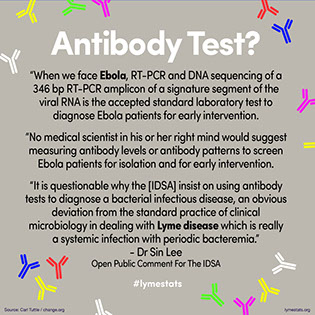
25_antibody316x316

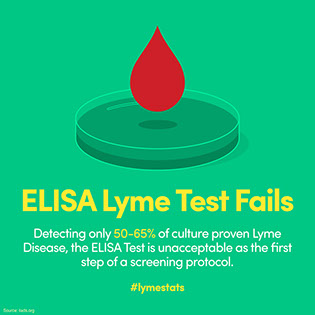
01_test_petri316x316

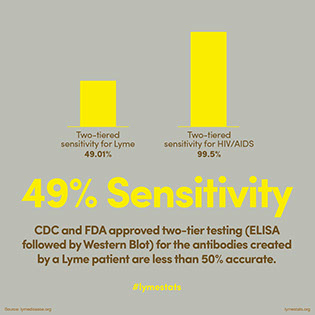
38_sensitive316x316

Until you tell the fox, squirrel, bird, deer, lizards, and hundreds of other reservoirs to stay put, ticks will be traveling everywhere along with the pathogens they carry.  Since Lyme Disease (borrelia) has been found in every continent except for Antarctia (it will be found there too), you can assume that means ticks are there too.  

I’m glad the authors stated this:

In addition, it is important to recognize the limitations of diagnostic testing for many tickborne infections; empiric treatment is most often warranted before confirming the diagnosis.”132_fail316x316

For those of us in this war, this “empiric treatment” by mainstream medicine is new.  Patient after patient has had to wait for test results before doctors will treat them.  Often, since the testing is so poor, it comes back negative and the patient is sent packing, even if the patient has every symptom in the book.  The next step is for authorities to admit and acknowledge that diagnosis of Tick borne infections is a clinical one.  This means doctors need to learn a whole lot more.  For docs willing to learn, please see:  https://www.lymecme.info

Even the CDC admits the tests suck: https://madisonarealymesupportgroup.com/2017/07/01/good-morning-america-cdc-advises-multiple-lyme-tests-due-to-false-negative-results/ CDC spokesperson at end of video.

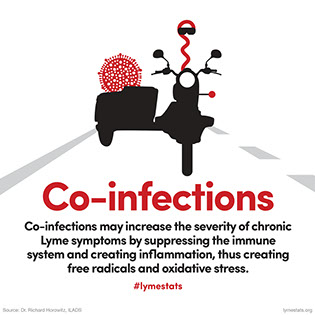
Another very important point needs to be made.  The CDC has pushed this one pathogen for one tick mantra for too long.  Many patients are co-infected making cases infinitely more complex and challenging to treat.  Lyme literate doctors trained by ILADS understand this and treat accordingly.  Until mainstream medicine realizes and admits people can have numerous pathogens, and treat for them, people will not get better.  This is why all the doxycycline in the world will not help some patients.

32_co316x316

One last point is that mycoplasma, Bartonella, and other pathogens are not included here but are quite common in patients.  Many of these pathogens are persistent and are adept at surviving.  More research needs to be done on these co-infections.

Please see:

https://madisonarealymesupportgroup.com/2017/05/01/co-infection-of-ticks-the-rule-rather-than-the-exception/  If ticks are co-infected, so are patients.

https://madisonarealymesupportgroup.com/2017/07/01/one-tick-bite-could-put-you-at-risk-for-at-least-6-different-diseases/

https://madisonarealymesupportgroup.com/2016/03/20/why-we-cant-get-better/


One Tick Bite Could Put You at Risk For at Least 19 Different Diseases

http://www.businessinsider.com/deer-tick-can-carry-lyme-disease-powassan-virus-babesiosis-and-more-2017-6 by Kevin Loria, June 28,2017

The deer tick, also known as the blacklegged tick, is a fascinating but nasty little creature, and it’s spreading.

The tiny arthropods carry Lyme disease — the serious illness that we most associate them with — but that’s not the only pathogen they spread.

“One thing that people really need to be aware of is that Lyme disease is not the only pathogen that’s out there — there’s quite a few of them, [including] probably quite a few that we haven’t discovered yet,” says Rafal Tokarz, an associate research scientist at Columbia University’s Mailman School of Public Health.

And the deer tick, which as far as we know carries more illnesses than any other tick, “has been expanding its range enormously in the last 30 years,” says Durland Fish, professor emeritus of epidemiology at the Yale School of Public Health. Before the early 70s, it was largely unknown outside the Northeast, but now it has spread north, south, and west.

The diseases that we know deer ticks spread are all serious:

1. Lyme disease, which is transmitted by ticks infected with the bacterium Borrelia burgdorferi, infects roughly 300,000 Americans every year. It can be treated with antibiotics if caught early, but can cause severe inflammation, nerve, and joint pain,among other symptoms, if left untreated.

2. When people are infected with babesiosis, parasites infect and destroy red blood cells. Not everyone shows symptoms but it can be life-threatening for some at-risk patients. It’s “like tick-borne malaria,” says Fish, and is the most important contaminant of the blood bank right now, he says.

3. Anaplasmosis is spread by another bacteria carried by deer ticks. It usually shows up a week or two after a bite and can cause fever, headaches, nausea, and general malaise, among other symptoms. If untreated it can be severe, leading to hemorrhage, renal failure, and for a small fraction of even healthy patients, potentially can be fatal.

4. Deer ticks can also spread the Borrelia miyamotoi bacteria, which Fish says is similar to the one that causes Lyme. Symptoms include joint pain, fatigue, fever, chills, and headache.

5. A relatively recently discovered disease that’s spread by deer ticks as well as dog and Lone Star ticks is ehrlichiosis, caused by a bacteria in the same family as the one responsible for Rocky Mountain spotted fever. Symptoms often present like the flu.

6. Powassan virus has been around for a while but has received more attention recently, especially since the deer tick (which frequently bites humans) started spreading it — the ticks that transmitted the first reported cases in the 1950s rarely bite people. Unlike Lyme, which often takes many hours or even a couple days before it’s transmitted, Powassan infection can occur in as little as 15 minutes. Not everyone who gets bitten by an infected tick gets sick, but if they do, it’s a serious problem since there’s no treatment. In those (still rare) cases, Fish says that there’s about a 50% chance of permanent neurological damage and a 10% chance of death.

The broad range of potential conditions means that doctors don’t even necessarily know what to look for. Even worse, “ticks can frequently be co-infected with more than one pathogen,” says Tokarz. That’s especially true in certain locations, like on Long Island. One bite could transmit both Lyme disease and babesiosis, conditions that would normally be treated quite differently.

It’s also possible that having two or more illnesses could change the way the disease manifests. “We still don’t know whether co-infection exacerbates a disease or doesn’t make a difference,” says Tokarz.”Studies have shown both.”

Unfortunately, we don’t have any good way to control ticks and to stop the ongoing expansion, which will lead to more people getting sick.

In the places where people are at risk of picking up a tick “it is a very important, very severe problem, but the only thing that can be done is to educate people on the dangers of coming into contact with ticks,” says Tokarz.

If you get one on you, pull it off right away — don’t bother with urban legends about needing to burn it off. And protect yourself if you are going to be hiking or spending time in a place where ticks are common. Use permethrin-treated clothing for outdoors work and use insect repellent that contains DEET.

________________________________________________________________________________________

**My letter to the author**

Dear Mr. Loria,

Thank you for your piece on ticks and the pathogens they carry. I just wanted to add to your list; however, as there are many more pathogens carried by ticks. Also, they are discovering a variety of ticks carry pathogens, and if you think about it logically for a moment, ticks have similar habits and mouth parts, and require blood meals to survive, which technically makes every tick suspect. Unfortunately, geographical maps and entomology information (which ticks spread what) have been used to deny patients diagnosis and treatment. A doctor will look at the CDC map and claim, unequivocally, that since such and such isn’t supposed to be in that state, it isn’t TBI’s (tick borne infections). https://madisonarealymesupportgroup.com/2016/09/24/arkansas-kids-denied-lyme-treatment/ and then eventually they have to admit they are wrong: https://madisonarealymesupportgroup.com/2017/03/02/hold-the-press-arkansas-has-lyme/

How many went undiagnosed through the years?

https://www.lymediseaseassociation.org/about-lyme/other-tick-borne-diseases

  • Babesiosis
  • Bartonellosis
  • Borrelia miyamotoi
  • Bourbon Virus
  • Colorado Tick Fever
  • Crimean-Congo hemorrhagic Fever
  • Ehrlichiosis/Anaplasmosis
  • Heartland Virus
  • Meat Allergy/Alpha Gal
  • Pacific Coast Tick Fever: Richettsia philipii
  • Powassan Encephalitis
  • Q Fever
  • Rickettsia parkeri Richettsiosis
  • Rocky Mountain Spotted Fever (RMSF)
  • SFTS: Severe Fever with Thrombocytopenia Syndrome 
  • STARI: Southern Tick-Associated Rash Illness
  • Tickborne meningoencephalitis
  • Tick Paralysis
  • Tularemia

I run a physical support group here in Wisconsin, 4th in the nation for TBI’s, and nearly all of us are co-infected, and while Tokarz states he doesn’t know whether coinfection exacerbates a disease, we all do. http://danielcameronmd.com/babesia-and-lyme-its-worse-than-you-think/.  Each pathogen necessitates different medications so the CDC mono therapy of doxycycline won’t do a thing against many of the other pathogens.

Babesia can increase the severity of Lyme disease. Coinfected patients were more likely to have experienced fatigue, headache, sweats, chills, anorexia, emotional lability, nausea, conjunctivitis, and splenomegaly more frequently than those with Lyme disease alone. [7]
Babesia can also increase the duration of illness with Lyme disease. Babesia patients can remain symptomatic for years with constitutional, musculoskeletal, or neurological symptoms. One study found that 50% of coinfected patients were symptomatic for 3 months or longer, compared to only 4% of patients who had Lyme disease alone. [7] Meanwhile, one-third of patients with a history of both Babesia and Lyme disease remained symptomatic an average of 6 years. [2]

“The clinical pictures for 3 out of our 4 coinfected patients included a large number of symptoms, and 1 coinfected patient had persistent fatigue after treatment,” according to a study by Steere and colleagues. [8]”

https://madisonarealymesupportgroup.com/2016/03/20/why-we-cant-get-better/

https://madisonarealymesupportgroup.com/2017/05/01/co-infection-of-ticks-the-rule-rather-than-the-exception/

https://madisonarealymesupportgroup.com/2014/11/14/studies-show-why-its-tough-to-treat-lyme-and-co/

https://madisonarealymesupportgroup.com/2015/05/08/interview-with-dr-horowitz/

For a fantastic book on all of this and more, read science journalist and past Executive Editor of Discover Magazine, Pam Weintraub’s work, Cure Unknown: Inside the Lyme Epidemic. http://www.astralgia.com/pamelaweintraubresume18.pdf

Sincerely,
Alicia Cashman
Madison Lyme Support Group
https://about.me/lymecoordinator56
lymecoordinator56@gmail.com
https://madisonarealymesupportgroup.com

Review of Tick Attachment Time For Different Pathogens

http://dx.doi.org/10.3390/environments4020037

Environments 2017, 4(2), 37; https://doi.org/10.3390/environments4020037

Do Tick Attachment Times Vary between Different Tick-Pathogen Systems?

Abstract

Improvements to risk assessments are needed to enhance our understanding of tick-borne disease epidemiology.

We review tick vectors and duration of tick attachment required for pathogen transmission for the following pathogens/toxins and diseases: (1) Anaplasma phagocytophilum (anaplasmosis); (2) Babesia microti (babesiosis); (3) Borrelia burgdorferi (Lyme disease); (4) Southern tick-associated rash illness; (5) Borrelia hermsii (tick-borne relapsing fever); (6) Borrelia parkeri (tick-borne relapsing fever); (7) Borrelia turicatae (tick-borne relapsing fever); (8) Borrelia mayonii; (9) Borrelia miyamotoi; (10) Coxiella burnetii (Query fever); (11) Ehrlichia chaffeensis (ehrlichiosis); (12) Ehrlichia ewingii (ehrlichiosis); (13) Ehrlichia muris; (14) Francisella tularensis (tularemia); (15) Rickettsia 364D; (16) Rickettsia montanensis; (17) Rickettsia parkeri (American boutonneuse fever, American tick bite fever); (18) Rickettsia ricketsii (Rocky Mountain spotted fever); (19) Colorado tick fever virus (Colorado tick fever); (20) Heartland virus; (21) Powassan virus (Powassan disease); (22) tick paralysis neurotoxin; and (23) Galactose-α-1,3-galactose (Mammalian Meat Allergy-alpha-gal syndrome).

Published studies for 12 of the 23 pathogens/diseases showed tick attachment times. Reported tick attachment times varied (<1 h to seven days) between pathogen/toxin type and tick vector. Not all studies were designed to detect the duration of attachment required for transmission. Knowledge of this important aspect of vector competence is lacking and impairs risk assessment for some tick-borne pathogens.

**Highlights**

The researchers point out that unlike mosquitoes which rely on saliva for transmission, ticks can transmit via saliva, regurgitation of gut contents, and also via the cement-like secretion used to secure itself to the host (hard ticks).  Published data on transmission times relies upon rodent studies showing 15–30 min for Powassan, anywhere from 4-96 hours for bacteria, 7–18 days for the protozoan Babesia microti, and 5-7 days for neurotoxin (Tick Paralysis). For soft ticks, attachment time of 15 sec–30 min was required for transmission of Borrelia turicata (Tick Relapsing Fever).

The challenge with these studies, and there are many, is that most placed multiple ticks on multiple rodents.  Multiple ticks may be transmitting different pathogens.  It has also been shown that ticks feeding on mice coinfected with B. microti and B. burgdorferi were twice as likely to become infected with Bb compared to B. microti, suggesting that coinfection can amplify certain pathogens – which is another reason to only use one rodent and one pathogen to separate out multiplying factors to muddy the waters.  Also, rarely do studies record the titer of both tick and host – again, making it nearly impossible to determine what’s what.  It was also noted that transmission times are unknown for many pathogens.

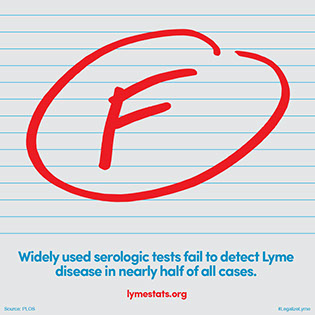
**And as always:  if you are the ONE person who contracted Lyme Disease in 10 minutes, all these numbers are essentially meaningless.  The frightening truth is that these numbers, along with geographical information regarding tick habitats, are often used against patients.  It is beyond time for doctors to listen, educate themselves, and treat patients with the respect they deserve – not to mention it’s time for them to treat patients clinically and not based on tests that are wrong over half the time and with the knowledge that ticks are spreading everywhere and bringing the pathogens with them. (In other words, throw the maps away!)

The review essentially gives the following transmission times for various pathogens. Again, please know these numbers are not definitive and many, many cases have proven this fact.

Take each and every tick bite seriously and don’t mess around and take a “wait and see approach.”  There is too much at stake.

Transmission Times noted in review:

Anaplasmosis: 24 hours and increased dramatically after 48-50 hours.  It is possible for it to be transmitted transovarially (from mom to baby tick) and it inhabit’s the salivary glands more frequently than the mid-gut.

Babesiosis:  Greater than 36 hours, 17% after 48 hours, and 50% after 54 hours.  Can be transmitted transovarially and transstadially (pathogen stays with tick from one stage to the next).  Ticks feeding on mice coinfected with B. microti and B. burgdorferi were twice as likely to become infected with Bb compared to B. microti.

Lyme Disease (Borrelia burgdorferi):  24 hours; however, the researchers comment that there are questions regarding previous transmission studies.  They also commented that there may be a difference in attachment time between nymphs and adult females. Transovarian transmission is unknown.

Tick Relapsing Fever (Borrelia turnicatae, B. hermsii):  15 and 30 seconds respectively.  Transovarian transmission is unknown.

Borreliosis (Borrelia mayonii):  24 hours.  Transovarian transmission is unknown.

Borrelia myamotoi Disease:  24 hours.  Transovarial transmission occurs.

Tularemia (Francisella tularensis):  Not assessed.  Can be transmitted mechanically by deer flies, horse flies, mosquitoes, aerosol/ingestion when processing/eating infected animal tissues.  Can be transmitted transtadially and transovarially.

Rocky Mountain Spotted Fever (Rickettsia rickettsii):  10-20 hours.  Can be transmitted transovarially.

Heartland Virus:  Not assessed.  Can be transmitted transovarially and transstadially.

Powassan Virus:  15 Minutes; however, it is possible it was sooner since the first they checked for transmission was 15 minutes.  Can be transmitted transovarially.

Tick Paralysis (Neurotoxin):  2-6 days.

Alpha Gal/Mammalian Meat Allergy (Galactose-a-1,3-Galactose):  Not assessed.  Transovarian transmission is unknown.

For more on transmission times, please read:  https://madisonarealymesupportgroup.com/2017/04/14/transmission-time-for-lymemsids-infection/


Co-infection of Ticks: The Rule Rather Than the Exception

http://journals.plos.org/plosntds/article?id=10.1371/journal.pntd.0004539

Sara Moutailler, Claire Valiente Moro, Elise Vaumourin, Lorraine Michelet, Florence Hélène Tran, Elodie Devillers, Jean-François Cosson, Patrick Gasqui, Van Tran Van, Patrick Mavingui, Gwenaël Vourc’h, Muriel Vayssier-Taussat
Published: March 17, 2016  https://doi.org/10.1371/journal.pntd.0004539

Abstract

Introduction

Ticks are the most common arthropod vectors of both human and animal diseases in Europe, and the Ixodes ricinus tick species is able to transmit a large number of bacteria, viruses and parasites. Ticks may also be co-infected with several pathogens, with a subsequent high likelihood of co-transmission to humans or animals. However few data exist regarding co-infection prevalences, and these studies only focus on certain well-known pathogens. In addition to pathogens, ticks also carry symbionts that may play important roles in tick biology, and could interfere with pathogen maintenance and transmission. In this study we evaluated the prevalence of 38 pathogens and four symbionts and their co-infection levels as well as possible interactions between pathogens, or between pathogens and symbionts.

Methodology/principal findings

A total of 267 Ixodes ricinus female specimens were collected in the French Ardennes and analyzed by high-throughput real-time PCR for the presence of 37 pathogens (bacteria and parasites), by rRT-PCR to detect the presence of Tick-Borne encephalitis virus (TBEV) and by nested PCR to detect four symbionts. Possible multipartite interactions between pathogens, or between pathogens and symbionts were statistically evaluated. Among the infected ticks, 45% were co-infected, and carried up to five different pathogens. When adding symbiont prevalences, all ticks were infected by at least one microorganism, and up to eight microorganisms were identified in the same tick. When considering possible interactions between pathogens, the results suggested a strong association between Borrelia garinii and B. afzelii, whereas there were no significant interactions between symbionts and pathogens.

Conclusion/significance

Our study reveals high pathogen co-infection rates in ticks, raising questions about possible co-transmission of these agents to humans or animals, and their consequences to human and animal health. We also demonstrated high prevalence rates of symbionts co-existing with pathogens, opening new avenues of enquiry regarding their effects on pathogen transmission and vector competence.

Author Summary

Ticks transmit more pathogens than any other arthropod, and one single species can transmit a large variety of bacteria and parasites. Because co-infection might be much more common than previously thought, we evaluated the prevalence of 38 known or neglected tick-borne pathogens in Ixodes ricinus ticks. Our results demonstrated that co-infection occurred in almost half of the infected ticks, and that ticks could be infected with up to five pathogens. Moreover, as it is well established that symbionts can affect pathogen transmission in arthropods, we also evaluated the prevalence of four symbiont species and demonstrated that all ticks were infected by at least one microorganism. This work highlights the co-infection phenomenon in ticks, which may have important implications for human and animal health, emphasizing the need for new diagnostic tests better adapted to tick-borne diseases. Finally, the high co-occurrence of symbionts and pathogens in ticks, reveals the necessity to also account for these interactions in the development of new alternative strategies to control ticks and tick-borne disease.

To which we all said AMEN!

A few notes on the study:  To see a chart showing exactly what coinfections and symbionts they looked at, go to the link for the study.  They looked at 6 strains of borrelia (Lyme), Anaplasma, Ricketssia helvetica, Bartonella, Babesia, and Neoehrlichia mikurensis (Order: Rickettsiales, Family: Anaplasmataceae).  The symbiots looked at were:  Wolbachia, Spiroplasma, Acinetobacter, and Midichloria mitochondri.

While I am unfamiliar with most of the symbionts, Wolbachia concerns me as scientists are actively inserting Wolbachia into mosquitoes and releasing them into the wild in efforts of eradicating Dengue Fever, Chikungunya, yellow fever, and possibly even Malaria.  While scientists claim Wolbachia, a gram-negative bacterium in the family of Rickettsiales, can not infect humans, they can and do infect worms which cause human disease.  Since nematodes have been found in ticks and many Lyme/MSIDS patients have to treat for worms, the question begs to be asked, “Does Wolbachia play a role in Lyme/MSIDS?”  This is a question I plan on writing about, but the answer could very well be, “Yes.”  I certainly pray that more research on Wolbachia in relation to Lyme/MSIDS is done as this could definitely be a fly in the proverbial ointment.

Lastly, I believe recorded coinfection numbers to be abysmally low.  My own LLMD doesn’t even test for them, he feels the tests are that poor.  Also, probably the numbers reflect the most severe cases – leaving many out.  As you are aware, coinfections are notorious for presenting differently than the textbook presentations that most doctors are familiar with. Dr. Horowitz writes and speaks about this often.

Published on Nov 3, 2014
At the “Symposium on Tick-borne Diseases” held May 17, 2014

37:30 You will only find a positive test for Babesia if the level of parasitima in the blood is greater than 5%.  38:05 Medical textbooks also state you should have hemolytic anemia, thrombocytopenia, and renal failure if you have Babesia.  Dr. Horowitz states he has not had one Lyme/MSIDS patient present this way.  

How many doctors are going to think outside their medical textbooks?