Archive for the ‘Activism’ Category

Aluminum, Flawed Assumptions Fueling Autoimmune Disease and Lyme

The reason I post information about vaccines to Lyme/MSIDS patients is you are confronted on nearly a daily basis to get the poke, and if you are like any normal person this confrontation will leave you feeling guilty if you don’t sprint to your local pharmacy for the latest “free” vaccine.
Please know that similarly to the Lyme controversy, there is a very real vaccine controversy with more and more medical practitioners speaking out about the very real concerns for safety, efficacy, and implications.  This is true for everyone, but particularly for those who are chronically ill with a pathogen invasion of the worst kind.  Please be informed and take the time to learn about the debate just as you learn about the debate on Lyme/MSIDS.  LLMD’s believe autoimmunity plays an important role in Lyme/MSIDS.  No one knows what part vaccinations play in a chronically ill person who already has autoimmunity.
   Dr. Suzanne Humphries July, 2017,
Approx. 5:30 Min
The Real Reason Aluminum is in Vaccines
  Injecting Aluminum Official Trailer  Approx. 2:30
https://madisonarealymesupportgroup.com/2017/09/19/autism-aluminum-adjuvant-link-corroborated/  Dr. Christopher Shaw and colleagues have established convincing biological evidence linking aluminum adjuvant used in vaccines to autism.  “This is the paper I have been waiting for. This paper reports measurements of cytokines in the brains of animals injected with aluminum adjuvant as neonates. The same cytokines are elevated as in human autism. IL-6 and CCL2/MCP-1 are elevated for example. Male animals are more strongly affected. It’s a perfect match to human autism.”


https://www.researchgate.net/publication/318045518_Flawed_assumptions_fuel_autoimmune_disease_The_sorry_state_of_vaccine_safety_science  June, 2017 by Vinu Arumugham, Independent researcher

Flawed assumptions fuel autoimmune disease: The Sorry State of Vaccine Safety Science Infection, Vaccination and Autoimmune disease

Wraith et al.1 observe that there is a high probability that microbial antigens can induce cross-reactive immune responses against self-antigens. They explain that we have evolved fail-safe mechanisms that usually protect us from developing autoimmune disease following infections.

They write: “Here we analyse our understanding of how infections can lead to autoimmune disease and thus assess the relative risk of autoimmune disease arising as a consequence of vaccination.” and “These fail-safe mechanisms apply equally to the host response to vaccination. ”

Mojsilovic2 writes: “Moreover, one must not overlook the fact that vaccines only mimic natural infections, and infectious agents themselves can elicit the same immune phenomena. Indeed, the risk of developing immunemediated diseases by acquiring natural infection is even greater than the risk of the same diseases to develop by vaccine- associated reactions.”

Unfortunately, neither Wraith et al. nor Mojsilovic, provide any explanation, evidence or reference to literature supporting this fundamental assumption that fail-safe mechanisms operative during infections are active during host response to vaccination.

This fundamental assumption is easily demonstrated to be false. Live attenuated influenza vaccine (LAIV, Flumist) and live oral rotavirus vaccines come closest to natural infection and have routes of administration that match natural infection. So the immune pathways triggered may be similar. Even so, considering that the vaccines do not cause disease, one cannot guarantee that all immune pathways triggered by natural infection are also triggered by the vaccine. So the autoimmune fail-safe mechanisms cannot be assumed to have been operational.

Many vaccines administered today are subunit vaccines. They are administered through intramuscular or subcutaneous routes. Neither matches the route of natural infection. So they trigger different immune pathways. Subunit vaccines primarily contain one or more antigens from the target organism. These antigens are poorly immunogenic and the host response is weak. This weak immune response is part of the autoimmune fail-safe mechanism at work.

To make the vaccine work, adjuvants such as aluminum salts or toxoids are needed to boost the immune response. In other words, adjuvants, by definition, defeat the fail-safe mechanism.

Mojsilovic writes: “The main role of adjuvants is to trick the immune system in perceiving vaccine antigen as a serious threat, and thus initiate innate and consecutively adaptive response mechanisms, including long-term immune memory to that antigen.”

This artificial immune response was NOT engineered to mimic a natural infection. It was a serendipitous discovery (immunology’s dirty secret), tuned empirically3,4. The mechanisms of action involved in an adjuvant induced response is still not understood and is an active area of research. So there is no scientific basis to make the claim that the natural autoimmune fail-safe mechanisms are operational in the case of adjuvanted subunit vaccines either.

Fever is common during natural infections5 . Fever is rare with subunit vaccines6 . Even the rare vaccine induced fever is suppressed with the (controversial and changing) recommendation of using acetaminophen following vaccination, to overcome injection site pain. Acetaminophen may affect inflammatory pathways.7,8 Fever impacts immune system behavior including IL-6 and heat shock protein related pathways5 . Clearly, natural infection and vaccines DO NOT produce the same immunological effect. Therefore autoimmune fail-safe mechanisms operational during natural infection, CANNOT be assumed to be operational during a vaccine-induced host response. So, the Wraith et al. observation that there is a high probability that microbial antigens can induce crossreactive immune responses against self-antigens, needs serious consideration in the context of vaccines. And we see strong evidence of vaccines inducing numerous autoimmune diseases.9–17

In Biotechnology and Safety Assessment (2003)18, immunotoxicology expert Dr. François Verdier with vaccine maker Aventis Pasteur (now Sanofi Pasteur), writes: “Helicobacter pylori catalase was excluded from the screening of vaccine antigens because first it showed sequence homology with human catalase and second human catalase is reported to be an autoantigen in inflammatory bowel disease”

If Wraith et al. were right about “These fail-safe mechanisms apply equally to the host response to vaccination. “, an H. pylori catalase vaccine should have the same risk of causing autoimmune disease as the H. pylori infection. But as Dr. Verdier points out, the H. pylori catalase vaccine was considered unsafe and was excluded.

But unfortunately, numerous other vaccines contaminated with catalase, were inexplicably approved and are in widespread use.19 This can explain the epidemic of inflammatory bowel disease.

Tricking the immune system gets tricky

We understand very little about the immune system but we have decided to trick it. It is not a story you expect to end well.

Mojsilovic writes: “The main role of adjuvants is to trick the immune system in perceiving vaccine antigen as a serious threat, and thus initiate innate and consecutively adaptive response mechanisms, including long-term immune memory to that antigen.”

Vaccines are of course contaminated with non-target viral, bacterial antigens, numerous growth media proteins including casein, ovalbumin, yeast, bovine serum albumin etc.20 Example: the Pandemrix vaccine contained influenza hemaggluttinin proteins (target) and influenza nucleoproteins (contaminant).16

By tricking the immune system into perceiving ALL of the above proteins as a serious threat, adjuvants predictably produce numerous off-target immune responses such as food allergies21, asthma22 and disable the autoimmune fail-safe mechanism, producing autism11,23 and other autoimmune disorders19 .

The fact that adjuvanted vaccines work is proof that they create allergy and autoimmune diseases as well. This is a fundamental flaw in current vaccines.

Vaccine safety recommendations are ignored

Wraith et. al. call for autoimmune serology during vaccine trials. Vaccine trials have ignored that recommendation. No autoimmune serology is performed during vaccine trials.6,24–26 .

Serology is used only to check titers of antibodies against the target antigen. Checking for other antibodies such as IgE and IgG4 against self and contaminating antigens could easily identify vaccine-induced allergies, asthma, autism and autoimmunity.10,27–30

The fact that Pandemrix induced narcolepsy was only discovered after sickening numerous patients is proof that safety mechanisms required during vaccine design and testing, to avoid autoimmune diseases, are absent or dysfunctional.

Wraith et al. say autoimmune disease manifestation takes years. Yet vaccine trials last a few months. And post-marketing manifestation is easily dismissed with the statement: “Because these events were reported voluntarily from a population of uncertain size, it is not possible to reliably estimate their frequency or to establish a causal relationship to vaccine exposure.”31

Adjuvant and vaccine safety claims are premature

Vaccines and the adverse events they induce can be separated by decades.

In one mechanism, vaccine induced autoantibodies in women, attack the fetal brain and cause autism.11 With decades between vaccine induced autoantibodies and the adverse event affecting a different individual than the one vaccinated, there is no chance that vaccine surveillance mechanisms will ever find this type of adverse event or help in determining root cause.

This is the fundamental limitation of the “safety by testing” methodology. We need “safety by design”. Testing should be used to catch design errors. But current vaccines are empirically derived using trial and error. The result is fundamentally unsafe vaccines.

Mojsilovic: “Some of the first adjuvants discovered back then, on empirical basis of trial and error, are still in widespread use today, but only recently some light on the molecular mechanisms of their action has been shed.”

Immunological effects of current adjuvants were not designed. They are empirical, trial and error based. So no claim can be made that autoimmune fail-safe mechanism operative during natural infection are active during adjuvanted vaccine driven immune responses.

Diseases like cerebral infarction (CI), diabetes mellitus (DM), cardiovascular diseases (CVD) develop over the long-term due to inflammation32. There is evidence that they may have an autoimmune basis12,33. These diseases may been caused by aluminum adjuvanted vaccines decades ago. So the safety claims being made for aluminum adjuvants or vaccines are premature. The real cause and autoimmune basis of these adverse events is just surfacing now.

The autoimmune basis of many diseases are still being elucidated and researched.9,34–39. How can we rule out aluminum adjuvant and/or vaccines being the causative agent? It is therefore premature to make any claim about the safety of aluminum adjuvants or vaccines.

Tissue damage

Wraith et al. “Based on first principles, one could argue that a killed vaccine would be less likely than a liveattenuated vaccine to activate the innate immune response or cause tissue disruption.”

Not true. A live-attenuated influenza vaccine can at least be administered without tissue disruption. On the other hand, killed or subunit vaccine administration through intramuscular or subcutaneous routes involve tissue disruption. Vaccine antigens mimicking self antigens being present in the vicinity of tissue damage is therefore a very common occurrence with current vaccines. So the risk of autoimmune disease induction is greater with killed or subunit vaccines.

Further, killed or subunit vaccines are poorly immunogenic. As Mojsilovic points outs, “Adjuvants do that by triggering the same evolutionary conserved mechanisms that innate immunity utilizes to detect danger. By inducing innate immune reaction, adjuvants can concurrently provoke some undesirable immune response”. Even if the killed or subunit vaccines by themselves were less likely to activate the innate immune response or cause tissue disruption as Wraith et al. claim, the adjuvant used to fix the problem of poor immunogenicity, works by activating the innate immune response and causing tissue damage.40

Intramuscular or subcutaneous vaccine administration results in tissue damage due to the injection itself and further tissue damage caused by adjuvants. This results in Danger Associated Molecular Pattern (DAMP) receptor signals being asserted. Next, vaccine antigens trigger Pathogen Associated Molecular Pattern (PAMP) receptor signals. With natural infection, the signaling is reversed. The pathogen is detected before any tissue damage occurs. Any tissue damage due to infection and associated DAMP signaling follows. This is another difference between vaccines and natural infection. What effect does this have on the immune response and the autoimmune fail-safe mechanism?

Atopy and autoimmune disease

Wraith et al. state that atopy is unrelated to autoimmunity. Again they provide no references. This is an incorrect notion. We know that IgE antibodies are created to just about every type of protein that is injected.41,42 Once sensitized to IgE, we know that prolonged exposure to the antigen causes the synthesis of IgG4 to the same antigen.43–46 We know that one cause of autism is folate receptor alpha autoantibodies (FRAA)34,36. A majority of FRAA are of the IgG4 isotype.36 Many vaccines are contaminated with cow’s milk that contains the folate receptor protein. So we have an example of atopy, where induction of IgE to folate receptor proteins in milk contaminated vaccines is the first step in an autoimmune disease. Continuing exposure to dietary milk results in the induction of IgG4 autoantibodies causing this type of autism which is an autoimmune disease.47

So there are no clear delineations between atopy and autoimmune diseases.

Similarly, injection of yeast (Saccharomyces cerevisiae) contaminated vaccines can be expected to cause IgE mediated sensitization. Atopic dermatitis patients react to S. cerevisiae.48,49 Subsequent prolonged exposure to yeast will result in IgG4 induction.50 Many autoimmune diseases are associated with anti-saccharomyces cerevisiae autoantibodies (ASCA)51–53,9 .

Pertussis vaccine and autoimmune disease

The FDA made the flawed assumption that the acellular pertussis vaccine prevented transmission of disease, when they approved the vaccine. The acellular pertussis vaccine does not prevent transmission. The vaccine does not provide mucosal immunity.54 Vaccinated individuals are colonized by B. pertussis and spread the disease to infants too young to be vaccinated.55 This B. pertussis airway colonization has been linked to multiple sclerosis, an autoimmune disorder.54 To protect neonates against pertussis via passive immunity, the Advisory Committee on Immunization Practices (ACIP) has recommended the Tdap vaccine for every pregnant woman. However, this increases the risk of autoimmune responses against the fetus.11,47

Vaccines are assumed safe until proven otherwise

The Infanrix vaccine package insert says: “The role of the different components produced by B. pertussis in either the pathogenesis of, or the immunity to, pertussis is not well understood.”6

The Flumist flip-flop by the ACIP, is more evidence that vaccines are poorly understood. So it makes no sense to assume that vaccines are safe until proven otherwise. Instead, with vaccines being powerful immunomodulatory interventions, we MUST assume that vaccines are unsafe until proven otherwise. Here’s an example of the unintended consequences. The pertussis vaccine enables subclinical colonization by B. pertussis. The consequences of colonization include Alzheimer’s disease. 56

In the WHO methodology described by Wraith et al. Vaccines are assumed safe until proven otherwise. This does not make any sense. With widespread molecular mimicry between vaccine antigens, contaminants and self antigens, vaccines can impact numerous functions in the human body. Therefore, if any disease occurs after vaccine administration, vaccines MUST be assumed to be the cause unless one can prove otherwise.

The only way to ensure that all the immune pathways required for natural autoimmune fail-safe mechanisms are triggered is to make the vaccine produce the disease. Therefore any useful vaccine cannot be guaranteed to trigger the autoimmune fail-safe mechanisms. Therefore, all vaccines must be considered autoimmune disease causal agents unless proven otherwise. The WHO approach of assuming vaccines are safe until proven otherwise is wrong and unsupported by scientific evidence.

The bar for vaccine safety has been set too low.

The scientific process has failed

Peer review has failed to identify these problems that have continued to persist for decades with devastating consequences. In the case of the acellular pertussis vaccine, reality’s rude awakening in the form of pertussis infections, at least led to the FDA/CDC acknowledging the problem.

Theory vs. Practice

Mojsilovic on an advantage of adjuvants:

“… including the possibility to restrict the number of antigens present in a vaccine, and thus further reduce any risk of undesired (cross-reactive) immune responses to self tissues.”

Pandemrix was adjuvanted but the manufacturer failed to restrict the number of antigens thus triggering narcolepsy. So a theoretical advantage of adjuvants backfired in practice due to a sloppy vaccine design. Coupled with sloppy vaccine testing which was not designed to catch such problems, the consequences were devastating.

Regulatory failure

Mojsilovic: “By carefully monitoring the rare adverse events and scrupulously studying their mechanism of development, regulatory agencies, vaccine manufacturers, and researchers are participating in a joint endeavor to identify the specific factors that contribute to these events and to develop even safer vaccines.”

Mojsilovic: “there are carefully elaborated regulatory mechanisms to ensure that risks of such adverse reactions are kept at minimum.”

Unfortunately, Mojsilovic cites no references to support these claims.

How can one assume that adverse events are rare? It may be as common and widespread as obesity or atherosclerosis caused by vaccine-induced autoantibodies.12,16,57,33 If above claims by Mojsilovic are true, why did Pandemrix induce narcolepsy? Why no autoimmune serology in clinical trials, as suggested by Wraith et al.? Wraith et al.

“Criteria underpinning the assessment of adverse events of vaccines have been established by the WHO”

But WHO has no criteria for designing vaccines to avoid autoimmune diseases in the first place?

Vaccine risk vs. disease risk

Wraith et al. “However, the degree of vaccine-related risk should always be compared with that associated with the corresponding natural infection, either for the whole population or for a specific subgroup.”

The touted benefit of a vaccine is the avoidance of natural infection and its sequelae. So it is unacceptable for a vaccine to have the same risk of autoimmune disease as the natural infection. Depending on the disease, natural infection may be rare (say tetanus). But everyone is going to get a tetanus vaccine, multiple times. This increased exposure must be accounted in risk evaluation.

Wraith et al. “potential molecular and immunological mimicry between vaccine antigens and host components should be extensively analysed through a combination of bioinformatics and immunological studies.”

Never happens. Pandemrix induced narcolepsy could have been avoided if this homework was done.17 Where are studies establishing safety of these cases of mimicry?11–16

Accounting for antigen exposure dependent autoimmune disease

Autoimmunity caused by molecular mimicry to food antigens could result in severe illness due to ongoing exposure to food antigens. An example of this is cow’s milk contaminated vaccines inducing folate receptor autoantibodies that block folate receptors and cause autism spectrum disorders.34,47 A milk-free diet reduces autism symptoms.34,58 Similarly, vaccine induced autoimmunity caused by molecular mimicry to bacterial or viral antigens could be transient and only manifest itself upon re-exposure to that bacteria or virus. Studies that don’t account for such details will come to the wrong conclusion.

Conclusion

Whitaker et al.59 write: “the promise of adversomics is to understand the mechanisms behind vaccine adverse events in order to improve vaccine safety”

200 years after Dr. Jenner’s vaccines, understanding the mechanisms behind vaccine adverse events remains a novel concept? Proof that root cause analysis is an alien concept in vaccine research and industry.

Whitaker et al. write: “If vaccine adverse events are noted, then further studies will need to be conducted to determine whether the adverse event is related to the adjuvant, to the antigens in the vaccine, or to an adjuvantantigen combination.”

Applying that statement to aircraft, accentuates the absurdity:

“If air crash occurrences are noted, then further studies will need to be conducted to determine whether the crash is related to the engine, to the airframe of the aircraft, or to an engine-airframe combination.”

Explains why Pandemrix caused narcolepsy. If “further studies” can be performed, you don’t wait for people to get hurt but you should perform them before the product hurts people.

With little root cause analysis, little design for safety, the vaccine industry has been stuck tinkering with trial and error for over 200 years. The devastating consequences are predictable. This is no way to build a product that has such an enormous impact on people’s lives. It is doubtful if any other safety critical industry can get away with such a callous disregard for human safety.

References

1. Wraith DC, Goldman M, Lambert P-H. Vaccination and autoimmune disease: what is the evidence? Lancet (London, England). England; 2003 Nov;362(9396):1659–66.

2. Mojsilovic SB. Immunological effects of adjuvants, their mechanisms, and relevance to vaccine safety. Cent Eur J Paediatr Vol 13, No 1 Cent Eur J Paediatr. 2017;

3. Garçon N, Di Pasquale A. From discovery to licensure, the Adjuvant System story. Hum Vaccin Immunother. Taylor & Francis; 2017 Jan 16;13(1):19–33.

4. Gayed PM. Toward a modern synthesis of immunity: Charles A. Janeway Jr. and the immunologist’s dirty little secret. Yale J Biol Med. United States; 2011 Jun;84(2):131–8.

5. Evans SS, Repasky EA, Fisher DT. Fever and the thermal regulation of immunity: the immune system feels the heat. Nat Rev Immunol. 2015 Jun 15;15(6):335–49.

6. Glaxo Smith Kline. Infanrix package insert [Internet]. Available from: https://www.fda.gov/downloads/biologicsbloodvaccines/vaccines/approvedproducts/ucm124514. pdf

7. Lewis K, Cherry JD, Sachs MH, Woo DB, Hamilton RC, Tarle JM, et al. The effect of prophylactic acetaminophen administration on reactions to DTP vaccination. Am J Dis Child. United States; 1988 Jan;142(1):62–5.

8. Prymula R, Siegrist C-A, Chlibek R, Zemlickova H, Vackova M, Smetana J, et al. Effect of prophylactic paracetamol administration at time of vaccination on febrile reactions and antibody responses in children: two open-label, randomised controlled trials. Lancet (London, England). England; 2009 Oct;374(9698):1339–50.

9. Rinaldi M, Perricone R, Blank M, Perricone C, Shoenfeld Y. Anti-saccharomyces cerevisiae autoantibodies in autoimmune diseases: From bread baking to autoimmunity. Clinical Reviews in Allergy and Immunology. 2013. p. 152–61.

10. Wang B, Shao X, Wang D, Xu D, Zhang J-A. Vaccinations and risk of systemic lupus erythematosus and rheumatoid arthritis: A systematic review and meta-analysis. Autoimmun Rev. Netherlands; 2017 Jul;16(7):756–65.

11. Arumugham V. Strong protein sequence alignment between autoantigens involved in maternal autoantibody related autism and vaccine antigens [Internet]. 2017. Available from: https://www.researchgate.net/publication/316785758_Strong_protein_sequence_alignment_between_autoantigens_involved_in_maternal_autoantibody_related_autism_and_vaccine_antigens

12. Arumugham V. Strong protein sequence alignment between autoantigens involved in atherosclerosis-related coronary artery disease, cerebral infarction, diabetes mellitus and vaccine antigens [Internet]. 2017. Available from: https://www.researchgate.net/publication/317328568_Strong_protein_sequence_alignment_between_autoantigens_involved_in_atherosclerosisrelated_coronary_artery_disease_cerebral_infarction_diabetes_mellitus_and_vaccine_antigens

13. Arumugham V. Significant protein sequence alignment between Saccharomyces cerevisiae proteins (a vaccine contaminant) and Systemic Lupus Erythematosus associated autoepitopes [Internet]. 2017. Available from: https://www.researchgate.net/publication/316785919_Significant_protein_sequence_alignment_between_Saccharomyces_cerevisiae_proteins_a_vaccine_contaminant_and_Systemic_Lupus_Erythematosus_associated_autoepitopes

14. Arumugham V. Significant protein sequence alignment between vaccine antigens and Alopecia Areata associated autoantigen [Internet]. 2017. Available from: https://www.researchgate.net/publication/317177119_Significant_protein_sequence_alignment_ between_vaccine_antigens_and_Alopecia_Areata_associated_autoantigen

15. Arumugham V. Strong protein sequence alignment between autoantigens involved in cardiac arrhythmias and vaccine antigens [Internet]. 2017. Available from: https://www.researchgate.net/publication/317973476_Strong_protein_sequence_alignment_betw een_autoantigens_involved_in_cardiac_arrhythmias_and_vaccine_antigens

16. Arumugham V. Strong protein sequence alignment between vaccine antigens and adiponectin: an autoantigen involved in atherosclerosis-related coronary artery disease, cerebral infarction, diabetes mellitus and obesity. 2017;

17. Ahmed SS, Volkmuth W, Duca J, Corti L, Pallaoro M, Pezzicoli A, et al. Antibodies to influenza nucleoprotein cross-react with human hypocretin receptor 2 (ABSTRACT ONLY). Sci Transl Med. 2015;7(294):294ra105–294ra105.

18. Verdier F. Chapter 14 – Preclinical Safety Evaluation of Vaccines. In: Thomas JA, Fuchs RL, editors. Biotechnology and Safety Assessment (Third Edition). Third Edition. San Diego: Academic Press; 2003. p. 397–412.

19. Arumugham V. Vaccine induced autoimmunity: The price we pay for a flawed vaccine design and safety process [Internet]. 2017. Available from: https://www.researchgate.net/publication/317336265_Vaccine_induced_autoimmunity_The_pric e_we_pay_for_a_flawed_vaccine_design_and_safety_process

20. Vaccine Excipient & Media Summary [Internet]. 2015 [cited 2016 Jan 16]. Available from: http://www.cdc.gov/vaccines/pubs/pinkbook/downloads/appendices/B/excipient-table-2.pdf

21. Arumugham V. Evidence that Food Proteins in Vaccines Cause the Development of Food Allergies and Its Implications for Vaccine Policy. J Dev Drugs. 2015;4(137):2.

22. Arumugham V. Medical muddles that maim our children with allergies, asthma and autism [Internet]. Unpublished; 2017. Available from: https://www.researchgate.net/publication/313918596_Medical_muddles_that_maim_our_childre n_with_allergies_asthma_and_autism

23. Fox-Edmiston E, de Water J Van. Maternal anti-fetal brain IgG autoantibodies and autism spectrum disorders: current knowledge and its implications for potential therapeutics. CNS Drugs. 2015 Sep;29(9):715–24.

24. Engerix B Package Insert [Internet]. [cited 2016 May 8]. Available from: http://www.fda.gov/downloads/BiologicsBloodVaccines/Vaccines/ApprovedProducts/UCM2245 03.pdf

25. Recombivax HB Package Insert [Internet]. [cited 2016 May 8]. Available from: http://www.fda.gov/downloads/BiologicsBloodVaccines/Vaccines/ApprovedProducts/UCM1101 14.pdf

26. MMR II Vaccine Package Insert [Internet]. [cited 2016 May 3]. Available from: http://www.fda.gov/downloads/BiologicsBloodVaccines/Vaccines/ApprovedProducts/UCM1237 89.pdf

27. Nakayama T, Kumagai T, Nishimura N, Ozaki T, Okafuji T, Suzuki E, et al. Seasonal split influenza vaccine induced IgE sensitization against influenza vaccine. Vaccine. 2015 Nov 9;33(45):6099–105.

28. Davidsson A, Eriksson JC, Rudblad S, Brokstad KA. Influenza specific serum IgE is present in non-allergic subjects. Scand J Immunol. 2005 Dec;62(6):560–1.

29. Smith-Norowitz T a, Wong D, Kusonruksa M, Norowitz KB, Joks R, Durkin HG, et al. Long term persistence of IgE anti-influenza virus antibodies in pediatric and adult serum post vaccination with influenza virus vaccine. Int J Med Sci. 2011;8(3):239–44.

30. Yamane H. N. U. Serological examination of IgE- and IgG-specific antibodies to egg protein during influenza virus immunization. Epidemiol Infect. 1988;100(2):291–9.

31. Gardasil Package Insert [Internet]. Available from: http://www.fda.gov/downloads/BiologicsBloodVaccines/Vaccines/ApprovedProducts/UCM1112 63.pdf

32. Balaji C, Kevinkumar V, Aravindhan V. Long term persistence of inflammation in children vaccinated with Salmonella conjugate vaccine is associated with augmented Th9-Th17 cytokine. Cytokine. 2017 Mar;91:128–31.

33. Hiwasa T, Zhang X-M, Kimura R, Ohno M, Chen P-M, Nishi E, et al. Elevated Adiponectin Antibody Levels in Sera of Patients with Atherosclerosis-Related Coronary Artery Disease, Cerebral Infarction and Diabetes Mellitus. J Circ Biomarkers. SAGE Publications Ltd STM; 2016 Jan 1;5:8.

34. Frye RE, Sequeira JM, Quadros E V, James SJ, Rossignol D a. Cerebral folate receptor autoantibodies in autism spectrum disorder. Mol Psychiatry. 2012;18(3):369–81.

35. Frye RE, Sequeira JM, Quadros E, Rossignol DA. Folate Receptor Alpha Autoantibodies Modulate Thyroid Function in Autism Spectrum Disorer. North Am J Med Sci. 2014;7(1):1–7.

36. Ramaekers VT, Blau N, Sequeira JM, Nassogne MC, Quadros E V. Folate receptor autoimmunity and cerebral folate deficiency in low-functioning autism with neurological deficits. Neuropediatrics. 2007;38:276–81.

37. Moretti P, Sahoo T, Hyland K, Bottiglieri T, Peters S, del Gaudio D, et al. Cerebral folate deficiency with developmental delay, autism, and response to folinic acid. Neurology. 2005;64(6):1088–90.

38. Braunschweig D, Krakowiak P, Duncanson P, Boyce R, Hansen RL, Ashwood P, et al. Autismspecific maternal autoantibodies recognize critical proteins in developing brain. Transl Psychiatry. Nature Publishing Group; 2013 Jul 9;3(7):e277.

39. Bresson D, Pugnière M, Roquet F, Rebuffat SA, N-Guyen B, Cerutti M, et al. Directed Mutagenesis in Region 713-720 of Human Thyroperoxidase Assigns 713KFPED717 Residues as Being Involved in the B Domain of the Discontinuous Immunodominant Region Recognized by Human Autoantibodies. J Biol Chem . 2004 Sep 10;279 (37 ):39058–67.

40. Awate S, Babiuk LA, Mutwiri G. Mechanisms of Action of Adjuvants. Front Immunol. Frontiers Media S.A.; 2013 May 16;4:114.

41. Stratton K, Ford A, Rusch E, Clayton EW. Adverse Effects of Vaccines : Evidence and Causality. Injury. 2011. 0-24 p.

42. Arumugham V. Professional Misconduct by NAM Committee on Food Allergy. 2016;

43. Homburger HA, Mauer K, Sachs MI, O’Connell EJ, Jacob GL, Caron J. Serum IgG4 concentrations and allergen-specific IgG4 antibodies compared in adults and children with asthma and nonallergic subjects. J Allergy Clin Immunol. 1986;77.

44. Savilahti EM, Rantanen V, Lin JS, Karinen S, Saarinen KM, Goldis M, et al. Early recovery from cow’s milk allergy is associated with decreasing IgE and increasing IgG4 binding to cow’s milk epitopes. J Allergy Clin Immunol. 2010;125.

45. Vickery BP, Lin J, Kulis M, Fu Z, Steele PH, Jones SM, et al. Peanut oral immunotherapy modifies IgE and IgG4 responses to major peanut allergens. J Allergy Clin Immunol. 2013;131(1).

46. Du Toit G, Roberts G, Sayre PH, Bahnson HT, Radulovic S, Santos AF, et al. Randomized trial of peanut consumption in infants at risk for peanut allergy. N Engl J Med. 2015;372(9):803–13.

47. Arumugham V. Autism Spectrum Disorders: A special case of vaccine-induced cow’s milk allergy? [Internet]. 2017. Available from: https://www.researchgate.net/publication/313524429_Autism_Spectrum_Disorders_A_special_c ase_of_vaccine-induced_cow%27s_milk_allergy

48. Kortekangas-Savolainen O, Lammintausta K, Kalimo K. Skin prick test reactions to brewer’s yeast (Saccharomyces cerevisiae) in adult atopic dermatitis patients. Allergy. Blackwell Publishing Ltd; 1993;48(3):147–50.

49. Arumugham V. Atopic dermatitis caused by vaccine-induced allergy to Saccharomyces cerevisiae? [Internet]. 2016. Available from: https://www.researchgate.net/publication/305905780_Atopic_dermatitis_caused_by_vaccineinduced_allergy_to_Saccharomyces_cerevisiae

50. Oshitani N, Hato F, Jinno Y, Sawa Y, Nakamura S, Matsumoto T, et al. IgG subclasses of anti Saccharomyces cerevisiae antibody in inflammatory bowel disease. Eur J Clin Invest. England; 2001 Mar;31(3):221–5.

51. Mokrowiecka A, Gasiorowska A, Malecka-Panas E. pANCA and ASCA in the diagnosis of different subtypes of inflammatory bowel disease. Hepatogastroenterology. Greece; 2007;54(77):1443–8.

52. Israeli E, Grotto I, Gilburd B, Balicer RD, Goldin E, Wiik A, et al. Anti-Saccharomyces cerevisiae and antineutrophil cytoplasmic antibodies as predictors of inflammatory bowel disease. Gut. 2005;54(9):1232–6.

53. Krause I, Blank M, Cervera R, Font J, Matthias T, Pfeiffer S, et al. Cross-Reactive Epitopes on beta2-Glycoprotein-I and Saccharomyces cerevisiae in Patients with the Antiphospholipid Syndrome. Ann N Y Acad Sci. 2007;1108(1):481–8.

54. Rubin K, Glazer S. The potential role of subclinical Bordetella Pertussis colonization in the etiology of multiple sclerosis. Immunobiology. 2015 Dec 18;

55. Zhang Q, Yin Z, Li Y, Luo H, Shao Z, Gao Y, et al. Prevalence of asymptomatic bordetella pertussis and bordetella parapertussis infections among school children in China as determined by pooled real-time PCR: A cross-sectional study. Scand J Infect Dis. 2014;46(4):280–7.

56. Rubin K, Glazer S. The pertussis hypothesis: Bordetella pertussis colonization in the pathogenesis of Alzheimer’s disease. Immunobiology. 2017 Feb;222(2):228–40.

57. Machida T. Elevated Levels of Autoantibodies against ATP2B4 and BMP-1 in Sera of Patients with Atherosclerosis-related Diseases. Zhang X-M, editor. Immunome Research. OMICS International.,; 2015. p. 1–9.

58. Ramaekers VT, Sequeira JM, Blau N, Quadros E V. A milk-free diet downregulates folate receptor autoimmunity in cerebral folate deficiency syndrome. Dev Med Child Neurol. 2008;50(5):346–52.

59. Whitaker JA, Ovsyannikova IG, Poland GA. Adversomics: a new paradigm for vaccine safety and design. Expert Rev Vaccines. 2015 Jul 2;14(7):935–47.

One such experience with atoimflammatory syndromes induced by adjuvants:  http://www.thevaccinereaction.org/2017/08/autoinflammatory-syndromes-induced-by-adjuvants-a-case-for-pfapa/

More on vaccines:  https://madisonarealymesupportgroup.com/2017/03/30/ty-bollinger-the-truth-about-vaccines-series/


Should I Tell My Employer – I have Lyme Disease?

https://globallymealliance.org/howwhen-should-i-tell-my-employer-i-have-lyme-disease/  by Jennifer Crystal

THE CHRONIC ILLNESS CONUNDRUM. WHEN PERSONAL ISSUES ENTER THE WORKPLACE.

One of the many factors that led to my 2007 relapse was a huge research project I was doing for the magazine I was working for at the time. The incredible amount of energy and brain power that I put into the project caused my neurological symptoms to flare, until I was physically and mentally overwhelmed. My doctor suggested I take a week or two off work while I restarted antibiotics.

“But my editor doesn’t know I have Lyme,” I replied sheepishly.

“Why not?” he asked.

“I didn’t want her to think I’m not capable of doing my job.”

My decision to be secretive was born of fear: I was afraid of being judged, afraid of being defined by my illness, afraid of being seen as unreliable, afraid of losing the job I needed to help pay my medical bills. The irony was that by not telling my boss the truth about my health—and my limitations—I had worked myself into a situation in which  I was incapable of doing my job.

Angst over when or if to tell an employer about one’s illness is a common and scary struggle for patients of any chronic malady. It’s especially tricky with a relapsing disease like Lyme, which can flare, and impact work ability, without warning.

I was lucky because I worked from home. I set my own hours, so as long as I met my deadlines, it didn’t matter what time of day I did my work. I could write and edit articles from my couch, in my pajamas, and my boss was none the wiser. I napped in the afternoon and no one knew.

Not everyone has the same flexibility. Some Lyme patients find themselves struggling to look alive from nine to five, wishing they could curl up under their desks. They come home exhausted, unable to do anything but sleep.

The flexibility of my job, however, had its downsides.  I was paid by the hour. It was easy to forego social plans in favor of doing another couple hours of research. I lost my sense of work-life balance. How could I give myself downtime if I could be doing work and making money? The more hours I put in, the more money I made; the more money I made, the smaller the medical bills became, but the larger the medical issues grew.

After restarting antibiotics, I had such a bad Herxheimer reaction that I became bedridden and incapacitated. I couldn’t perform the daily tasks of living, let alone the duties of my job. I had no choice but to tell my boss the truth.

As I hesitantly explained my situation to her over the phone, she stopped me and said, “Oh, I knew you had Lyme…I read that article you wrote about it.” After attending my college roommate’s wedding in Florida in 2006—just as I went into remission—I’d written a piece about that experience for our college alumni magazine. I’d forgotten that my editor had gone to the same college, and received the publication. “I remembered that piece and have been so amazed with how much work you’ve been able to do in spite of all you’ve been through,” she said.

She offered to have me slow down for a few weeks, and when even that was too much, she hired a temp to cover me for a month. She didn’t sound annoyed, or frustrated, or put out, or any of the negative reactions which I’d imagined. Instead she said, “You are a critical part of this operation. I want to work with you through this. Just tell me how I can best help you and respect your needs.”

Had I been upfront with my boss in the first place, I would have saved myself the stress and anguish that contributed to my relapse.

It goes without saying that not everyone has such an understanding boss. Not everyone is able to take time off without jeopardizing their career, and not everyone can remain financially afloat if they do take a leave of absence. Many Lyme patients are the chief breadwinners for their families. In addition to their paychecks, they desperately need the health insurance their job provides, even though the work itself can lead to a relapse of the illness that requires insurance coverage in the first place.

It’s quite a conundrum, with no set answer.

One thing that is true across the board, though, is that Lyme sufferers and other patients of chronic illness are not in these difficult positions by choice. When I expressed to my doctor my concerns about telling my boss about Lyme, he said, “Having Lyme isn’t anything to be ashamed of. It’s not like a secret addiction or something you did to yourself. You were bitten by a tick—it could have happened to anyone. I think, if anything, your boss should be impressed that you’ve been able to do so much while managing this illness.”

He was right! Lyme disease wasn’t my fault. It wasn’t anything to feel guilty or embarrassed about. A good boss will understand that.

Ultimately I had to quit my job at the magazine. Unable to care for myself or pay my bills, I moved back in with my parents at 28- years of age. I was very lucky to have their help, but the move was a blow to my independence and my pride.

I kept my doctor’s words in mind, though, as I wrestled myself back into remission. Once I was well enough to work again, I understood the process, slowly, first volunteering, then taking on small freelance projects. I also reevaluated my interests and capabilities. I knew I couldn’t work in a pressured editorial position again, and I knew I couldn’t keep a traditional schedule. So what could I do? What was I passionate about? What was a career that offered a more flexible schedule?

My readers know the answer: I channeled my medical experiences into writing and teaching, et voilà, here I am penning this post. Do I still have fears that I’ll relapse and not be able to keep my commitments? Of course. But I’m upfront with my colleagues. And, most importantly, I’m upfront with myself about my limitations, and that honesty has made me capable of more than I ever could have imagined.


Opinions expressed by contributors are their own.

Jennifer Crystal is a writer and educator in Boston. She is working on a memoir about her journey with chronic tick-borne illness. Contact her at jennifercrystalwriter@gmail.com

_____________________________________________________________________________

**Comment**

For the other side of the story and reasons why you may NOT want to tell your employer:  https://madisonarealymesupportgroup.com/2017/10/11/why-you-may-not-want-to-tell-your-employer-you-have-lymemsids/

I stand in amazement at patients who are able to continue to slog through work while in treatment.  For those of you who do, please take this article to heart.  You are in-between a rock and a hard place for sure, no question.

I’m thankful that more workplaces are becoming more flexible allowing people to work from home or have flexible hours.  Chronically ill people need this flexibility.

The other issue that begs to be pointed out is the importance of educating others about this disease(s) as chances are they too will experience it personally or with someone they know.  By sharing your experiences, you will inadvertently be educating more people and since mainstream medicine still has its head in the sand, if we want others to be informed, we have to do it.  


It’s All in Your Head – Until Finally a Lyme Diagnosis

https://www.lymedisease.org/circuitous-route-lyme-diagnosis/

Jackie-Golan-300x289

My circuitous route to a Lyme diagnosis  

By Jacquelyn Golan

Two years ago, if you had asked me to tell you about myself, it would have gone something like this: I am 30 years old. I co-own an event design company. I have a husband who is a successful songwriter and the love of my life. I have a pug named Peter who I adore. I like traveling to new places, trying new restaurants and hanging out with my friends and family. I just finished a six-month cooking course for fun. I love my life.

Worst Two Years Of My Life
Now, let me tell you about myself today. I am 32 years old. I have an incredible husband, loving friends and family who have stood by my side through the worst two years of my life. I am not able to work.

It is a huge accomplishment if I make it out of my house at all in a day. Cooking, once my favorite hobby, seems daunting and I must constantly search for foods that do not cause an allergic reaction. Everyday tasks that once seemed easy, now take every ounce of my energy to complete.

Two years ago, my life took a devastating turn. I had been feeling “off” for a few months. I was losing weight quickly and felt like the issue was stemming from my stomach. So, I went to a GI specialist. After my blood panel came back normal, he said whatever it is will pass and recommended I resume normal activity.

Shortly after, I went on vacation with my husband and in-laws. Then, all hell broke loose. I felt painfully weak and fatigued and began to have panic attacks, which I had never had before. It felt like they were triggered by something in my stomach.

I Really Thought I Was Going To Die
By the end of the trip, I was too sick to fly. We rented a car and drove 19 hours home. I really thought I was going to die. I kept asking my body to stay strong enough to make it home so I could die in my bed.

By the time we arrived, I had an array of symptoms: severe aches and pains, a burning sensation all over my body, brain fog, shortness of breath, severe fatigue, and heart palpitations.

For the next year and a half, I was primarily house-bound, except for doctor visits. I went back to the GI specialist, who now said I had small intestinal bacterial overgrowth (SIBO). I could not tolerate the antibiotics he prescribed. I stopped them and went to an internist who said I had leaky gut and started me on that protocol.

With little improvement, I went to yet another GI specialist who could also not find anything wrong with my blood panel. He said my SIBO was not bad enough to cause the symptoms I was experiencing.

He then suggested it was all in my head. As did the next internist I saw. That’s the worst, isn’t it? Why would I make this up? I loved my life. This is the last thing I wanted to happen.

I was so weak and malnourished, I felt like I was dying. Why could no one help me? I felt like giving up. If not for my strong support system, I might have.

Many more doctor visits followed. Cardiologists, endocrinologists, energy healers, acupuncturists. You name it, I tried it. Still, no improvement and no answers.

Finally, A Breakthrough
I then stumbled upon an integrative GI doctor who changed everything. I went there not expecting him to tell me anything different then the last specialist, but he did. He said my symptoms sounded like Lyme disease, and that he was sure my test would reflect that.

I was not convinced. I had been tested for Lyme twice before and both tests had been negative. I did the testing again anyway and there it was—positive for Lyme.

A range of emotions came over me. Sad, angry that I hadn’t been tested properly before, skepticism, relieved that I finally had a diagnosis.

He referred me to a Lyme-literate doctor and that is when I slowly started getting better. The LLMD put me on immune-boosting supplements, Lyme-killing agents and weekly ozone IV treatments, which would knock me out for days on end.

Today
Six months later, I am better but not yet back to myself. I still have setbacks. I have brain fog, aches and pains, food and chemical sensitivities, anxiety and fatigue. I continue with weekly IV treatments and take more supplements than I can count.

I still have days consumed by tears because of how much my life has changed. I still face excruciating thoughts rolling through my head. Is this my new normal? It can’t be. I won’t let it be.

I do think the worst is behind me and my goal is that when I am strong enough, I will dedicate my time to helping those with Lyme and co-infections. We need to build awareness. It is misdiagnosed way too often. Lyme hides. Proper testing Is essential. We need to make treatment readily available and affordable for those in need.

Until then, stay strong my fellow Lymies. And know that you are not alone.

Jacquelyn Golan lives in Los Angeles.

____________________________________________________________________________________________

**Comment*

This story has a common theme:  vague symptoms that doctors completely underestimate which grow unabated over time leaving a person a shell of who they were before.

In this day and age with all the information that has come out about ticks moving everywhere, of stories such as this one, of the CDC finally admitting there are 300,000 NEW cases of Lyme per year with the actual number being much higher, and finally telling doctors to treat empirically without waiting for test results https://madisonarealymesupportgroup.com/2017/07/12/start-treatment-if-tbis-are-suspected/, you would think TBI’s (tick borne infections) would be nearly the FIRST thing that goes through a doctor’s mind particularly in an endemic area.

Yes, Lyme isn’t everything but LYME CAN BE ANYTHING.

This is another story and example of how unprepared most doctors are to diagnose and treat one of the most complex illness(es) known to man.  The writer does not mention coinfections but the fact she is so ill would indicate to me by experience that there is involvement, making her case even more complex.  Also, it is widely known in the Lyme world that borrelia has many strains – one discovered recently – and the symptomology can present differently. https://madisonarealymesupportgroup.com/2017/09/11/new-borrelia-strain-lanei-discovered-named-after-dr-lane/

Please remember that current 2-tiered CDC testing uses ONE STRAIN.  Can you see why so many test negatively?  https://www.lymedisease.org/lyme-basics/lyme-disease/diagnosis/

For more:  https://madisonarealymesupportgroup.com/2016/02/13/lyme-disease-treatment/

Night at the Blood Sucking Creature Museum

http://www.kitv.com/story/36375179/a-museum-of-blood-sucking-nightmares-the-us-national-tick-collection

A museum of blood-sucking nightmares: the US National Tick Collection

Posted: Sep 15, 2017 9:18 AM CDT

Susan Scutti, CNN –


To get to the US National Tick Collection, visitors to the campus of Georgia Southern University must descend into the bowels of the Math/Physics Building, where sunlight is absent and locked doors with unpronounceable signs prohibit entry.

Curator Dr. Lorenza Beati, a smiling woman in wire-rimmed glasses and blue jeans, a woman who radiates the same vibe as a kindly, eccentric aunt, welcomes anyone who has daring enough spirit.

Inside the collection, an elaborate camera for shooting closeups of ticks has made its home in a cramped room. It has a strobe-light effect to capture precise images of individual ticks splayed on white backgrounds, and as she operates the camera, Beati’s palce face appears in shadow and light.

She leads the way to a large abandoned-looking space where retro scientific fume hoods, glass beakers and microscopes reside. A narrow hallway is made even more congested by filing cabinets lining both walls. In turn, they are crammed with dusty files and yellowed correspondence from another century.

The main room of the collection is a brightly lit, cheerful place with coloring books and temporary tick tattoos available for the youngest visitors, and immaculate white-metal cabinets holding countless drawers.

Open the drawers to find bottles upon bottles of tick specimens, an endless variety of small, dark forms permanently suspended within clear liquid — a science-fantasy version of prison or hell, depending on a visitor’s horror movie associations.

A trip through tick world

The national tick collection is part of the Smithsonian Institution and is the world’s largest, by every account. Housed at Georgia Southern University in Statesboro since 1990, the collection contains over a million specimens representing 96% of the world’s 900 recognized tick species, including all those found in the United States.

“We keep our ticks preserved in 90% ethanol,” Beati says, emphasizing the word “we.” When kept in ethanol, specimens can last hundreds of years, she says. Dry ticks pinned like butterflies have been known to last 200 years; these should keep even longer.

The collection’s birthplace was Rocky Mountain Laboratories in Hamilton, Montana, in 1905. Some of the specimens are historical artifacts — ticks found on presidents’ dogs or on animals shot by Teddy Roosevelt — but it doesn’t take a fancy pedigree to wow Beati.

“To me, the most basic dog tick can be interesting,” says Beati, also an associate professor of biology at Georgia Southern. All ticks are blood-feeders — that’s their only food, she explains. Some will feed on any of the many terrestrial vertebrates, a category that includes birds, reptiles, mammals and amphibians. Yet other ticks are finicky eaters, such as the rat snake tick, which feeds only on the blood of that particular serpent.

To most of us, ticks may appear to be just another bug, but this is not the case. Unlike insects with segmented bodies that include distinct heads, thoraxes and abdomens, ticks are more like “a unique bag containing all their organs,” Beati says. “Ticks are not insects; they are arachnids.”

With eight legs, they are closely related to spiders and scorpions. Ticks are also mites, a diverse subclass of arachnids. “Ticks are probably the group of mites best known because they transmit diseases,” Beati says.

In fact, the core of the collection was formed in 1905 when scientists discovered that ticks could transmit illness, she explains.

First reaction of visitors

The ancient Egyptians used large ticks with bright, colorful spots on their backs as inspiration for jewelry, Beati says. African ticks feed on large animals and so become the most decorated and most colorful — in some cases, a pure gold hue — among their species, she explains.

Children from the Statesboro area who make the trek to the collection, shepherded by their teachers, often love the colorful ticks, Beati says. They also like the big ticks, those reaching a size of three-quarters of an inch or more.

” ‘Can ticks explode?’ That’s one of the questions they have, because they see them so big,” Beati says. “No. Ticks cannot explode. They know when to stop.

“Ticks are never a favorite of anyone. Usually the first reaction — it’s always, ‘Bew, what are these things?!’ But when we show them how diverse ticks are, how important they are for public health, they become more interested,” she says.

She herself took to ticks only after learning more about them.

“I’m an M.D., and I started studying parasitology in Switzerland, and the specialty of the laboratory where I was studying parasitology was vectors — so all the attributes that transmit diseases to humans or domestic animals, and in particular, ticks,” Beati, a Swiss native, says. “They were discovering at that time Lyme disease in Europe. So it was a really hot topic.”

From the Institute of Zoology in Neuchâtel, Switzerland, Beati’s interest in ticks led her to the World Health Organization’s Collaborative Center for Rickettsial Diseases and Arthropod-borne Bacterial Diseases in Marseilles, France, and then the US Centers for Disease Control and Prevention in Atlanta. She was working at Yale University in New Haven, Connecticut, when the opportunity to curate the tick collection arose.

Beati — whose name means “blessed”In Italian — jumped at the chance. After all, the collection is an active resource that researchers from all corners of the Earth make the trek to see.

“They compare their specimens to ours to decide whether or not they are dealing with already described species or new ones,” Beati explains.

Previously unknown ticks, then, are sometimes identified at the collection by way of these comparisons. Along with taxonomy, scientists and students work on gaining a better understanding of tick biology and tick-borne diseases.

Ticks cause “many, many diseases,” Beati says. “Lyme disease is probably the most popular in the US.” Ixodes scapularis, the deer tick, transmits Lyme.

Another “very important disease” in America is Rocky Mountain spotted fever, which is transmitted by Dermacentor variabilis, or the dog tick. This disease has spread farther than its name would suggest, Beati notes: “There were some really deadly cases of Rocky Mountain spotted fever in the Native American reservations in Arizona and New Mexico.”

“Probably the most dangerous disease transmitted by ticks is Crimean-Congo hemorrhagic fever,” she says, explaining that Hyalomma ticks found in desert areas of Africa and the Middle East transmit it.

Once one person is infected, a tick is no longer required for this illness to be passed from person to person. “You bleed, and it can be deadly,” Beati says, shaking her head sadly. “It’s a bad disease.”

Global citizens

There are different opinions about when ticks first appeared on the planet, with hypotheses ranging from 200 million to 400 million years ago, Beati says. Yet all scientists agree on one thing: Ticks have evolved to adapt to an enormous number of habitats on all continents.

“So you can find them in Antarctica, and you can find them deep in the Sahara desert,” Beati says, adding that their blood habit has led to some unique characteristics.

For example, one family of ticks “can survive without feeding for decades,” she says. “They just go dormant, and their metabolism is very slowed down, but you open the box, you blow on the box, and they start moving around, and they are fine.”

Some of these ticks have been kept alive in the laboratory for over 12 years without any food: blood.

“If you think about ticks, they are parasites, but unlike a mosquito, a tick has to feed for a long time,” Beati said. “It’s not one second and it’s gone.” Instead, a tick has to fight the host’s immune system, and so it has developed a diverse array of molecules, she explains.

“They inject anesthetics so that you don’t feel anything,” Beati says. “They inject anticoagulants so that the blood will keep flowing where they are biting and it doesn’t clog. They inject antihistamines so that you don’t feel the itch when they bite, and they also inject molecules that really fight your immune system, so you are immune-suppressed where they bite you.”

Scientists have begun work synthesizing similar molecules in their labs to use as human medicines, she says. Recent molecular work focuses on the genetic material found in ticks. In fact, tick DNA is a gold mine of information.

“DNA extracted from a tick will contain both the DNA of the tick plus the DNA of the pathogens in the tick, or the DNA of the blood of the animal that was the last host of the tick,” Beati says. “You can basically have the list of every single bacterium that goes on in a tick. In one tick, you can find hundreds and hundreds of bacteria.”

With the field of tick-related science moving very fast, “we will discover lots of new microorganisms,” she says. The newest molecular tools and techniques help scientists predict the possibility of disease. “New diseases transmitted by ticks — people call them emerging diseases — have been popping up on a regular basis,” she says.

Whether you’re a scientist or a citizen, safety remains key when you encounter — or are bitten by — a tick.

Through her eyes

Depending on the species — and how well-fed they are — female ticks “can lay thousands of eggs. Two thousand. Three thousand,” Beati says. This is why people who wade into long grass and disturb a batch of larvae may find hundreds of ticks clinging to them.

“One of the important things we tell people when they want to remove ticks is, don’t break the tick,” Beati says. She explains that if you do so, any bacteria in the tick could end up on your skin. If you have an open wound, whether from the tick bite or not, the tick juice might infect you. “So always, when you remove ticks, make sure you disinfect well your hands and your fingers.”

For a tick to grab hold of you, you have to touch them, and then they will climb on you and decide whether you are an animal they like, Beati explains. If so, they will find a place on your body where they feel comfortable enough to feed.

This is usually a “darker place where they can hide,” Beati says. “So if you find a tick crawling on you, you have a bit of time before they actually start biting you.” Even after an infected tick bites, hours may pass — up to 24 after the initial bite — before you become susceptible to disease.

*Please see my comment at end of article*

Beati herself is no stranger to their bite. It happens all the time, she says: “I actually love that. It helps me collect.” That said, not every tick she discovers in this way finds its way to a home in one of her specimen jars.

Disease may be frightening, but fear is not uppermost in Beati’s mind when she sees a tick.

“If you look at any tick under the microscope, you will find something beautiful about them,” this renowned scientist says. “They look like beautiful wood.”

0riginal story: http://www.cnn.com/videos/health/2017/08/31/tick-lady-orig.cnn

**Comment**
As to transmission time to infection:  https://madisonarealymesupportgroup.com/2017/04/14/transmission-time-for-lymemsids-infection/ (Excellent video by microbiologist Holly Ahern)
Only 1 mouse study has been done that showed by 24 hours every tick had transmitted infection; however, animals studies have proven it can occur in under 16 hours and frequently in under 24.  NO HUMAN STUDIES HAVE EVER BEEN DONE, and no studies have determined minimum time required for transmission.  There is also the issue of partially fed ticks which can transmit more quickly as spirochetes are already in their salivary glands.  Also, Anaplasma and other tick borne infections can be spread in minutes.
One other point:  No ticks can’t fly, but they can blow in the wind.  They state they can’t drop from trees, but let’s use our gray matter for a moment.  If a tick comes off a bird or rodent in a tree, who is to say it can’t fall or drop and infect a person beneath.  Many patients insist they became infected this way.  https://madisonarealymesupportgroup.com/2017/07/13/tv-anchor-speaks-out-about-lyme-disease/ (one such story here but I’ve heard of many, many more)

800K to MyLymeData

https://www.lymedisease.org/nsf-mylymedata/

National Science Foundation awards $800K to study MyLymeData research

The National Science Foundation (NSF) has awarded a three-year, $800,000 grant to explore predictive analytic techniques using data collected by the MyLymeData patient registry.

Researchers at the University of California Los Angeles (UCLA) and Claremont McKenna College will collaborate with LymeDisease.org on the big data project.

NSF to support Lyme disease research from MyLymeData

Lyme disease, a bacterial infection transmitted by the bite of a tick, can be difficult to diagnose and treat. Many patients diagnosed with Lyme disease remain ill after treatment, while others improve. Precision medicine uses predictive analytic tools and artificial intelligence to identify and target treatment approaches to those patients most likely to respond.

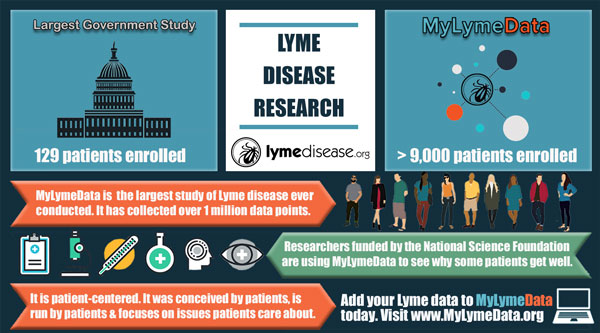
LymeDisease.org, a national patient advocacy organization, launched MyLymeData in 2015. The project has enrolled over 9,000 patients since then, putting it in the top 5% of patient-led registries in the nation. 

FasterCures, a non-profit organization that promotes innovation in medical research, recently surveyed patient-led registries. Out of over 110, only two had enlisted more than 10,000 people. MyLymeData is on the brink of 10,000 patients enrolled.

More than one million data points have been collected, related to the nature and severity of symptoms, how long it has taken patients to be diagnosed and what treatments have been most effective. According to Lorraine Johnson, CEO of LymeDisease.org and Principal Investigator of MyLymeData, the registry expects to be the largest study of Lyme disease ever conducted.

“Big data research is key to advancements in Lyme disease,” said Johnson. “The largest government-funded study of chronic Lyme patients enrolled just 129 patients. Our goal is not only to gather data to help find a cure, but also to help recruit patients for clinical trials.”

The research effort will be led by Drs. Deanna Needell (Professor of Mathematics at UCLA) and Blake Hunter (Assistant Professor, Claremont McKenna College). The team has extensive experience with big data synthesis, analytics, and deep learning approaches.

“The NSF grant will allow us to develop cutting-edge mathematical tools,” said Dr. Needell. “Validation of these tools requires a large real-world database, and MyLymeData fits the bill perfectly.”

Patient registries play a vital role in the progress of data-driven science. “MyLymeData is part of an essential shift in research recognizing the importance of precision science, precision diagnostics and precision medicine,” said Dr. Raphael Stricker, a San Francisco internist and co-principal investigator on MyLymeData. “Without advancements in these areas, the research environment in Lyme disease will stagnate.”

MyLymeData is open to patients diagnosed with Lyme disease who reside in the United States. Additional information can be found on the LymeDisease.orgwebsite.Johnson will present preliminary results from MyLymeData later this week at the annual Columbia University/Lyme Disease Association meeting in Philadelphia. https://www.lymedisease.org/mylymedata-ldacolumbia/

About MyLymeData:MyLymeData is a longitudinal study that tracks patients’ progress over time. It is an ongoing process where patients contribute their experiences so that trends are defined. Patients at all stages of the illness, as well as those who have recovered, are encouraged to join. Family members of deceased patients can report information on their loved ones’ behalf.

About LymeDisease.org: Since 1989, LymeDisease.org has advocated nationally for quality accessible healthcare for patients with Lyme and other tick-borne diseases. We are committed to shaping healthcare policy through science-based advocacy.

About the National Science Foundation: Created by the U.S. Congress in 1950, the NSF promotes the progress of science, advances national health, prosperity, and welfare, and works to secure our national defense.

—————————————————————————————————————————————–

For More:
Johnson presents results from MyLymeData (April, 2017)
This informative talk has some telling graphs.
At 5:12 Johnson explains a graph which shows the disproportionate amount of money going toward Lyme Disase research versus other diseases. Only 3 small clinical trials on the treatment of chronic Lyme disease were funded by the NIH – the most recent was 15 years ago. Fifty one percent of infectious disease trials are funded by industry – but industry isn’t interested in Lyme Disease.
At 10:36 using standard government questions used by the CDC and the NIH, she then explains another graph showing that those suffering with chronic Lyme disease have a worse quality of life than those with MS, Fibromyalgia, and even congestive heart failure. This finding is in agreement with two other studies.
22:38 A graph shows that according to the survey about half were on antibiotics and about half were on alternative therapies. The most popular and successful alternative treatment was herbal protocols. Interestingly, 331 people did stem cells treatments but only 3% found them to be effective. Sixty-nine percent stated that rife was not effective or they were unsure.
Thousands are taking the MyLymedata surveys giving important data that we can take to legislators to drive change.
Please enroll today. The only way things are going to change is if WE do it. Everyone is needed.  https://www.mylymedata.org
https://madisonarealymesupportgroup.com/2017/05/04/sick-lyme-patients-causing-scientists-to-feel-threatened/  Here’s the dealeo: Start doing meaningful, unbiased research. Problem solved.