Archive for the ‘Activism’ Category

Counterpoint: We Don’t Take Lyme Seriously Enough

http://thechronicleherald.ca/opinion/1577953-counterpoint-we-don’t-take-lyme-seriously-enough#.WybeW46-8U4.linkedin

COUNTERPOINT: We don’t take Lyme seriously enough

by JIM WILSON

Published June 16, 2018

Diagnosis, treatment is still lacking in Nova Scotia
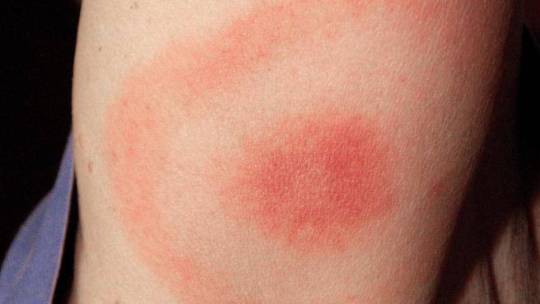
B97808243Z.120180615163154000GK8L2CS6.11The bullseye rash, like the one pictured on a woman’s arm above, is often associated with the early stages of Lyme disease. (JAMES GATHANY)

Re: your June 9 Letter of the Week: “Stop pushing the Lyme disease panic button.” I think it is time for a different take than what’s offered in this letter and the June 3 news article it stemmed from, “Public health failing to address Lyme disease crisis, says author.”

Born in Nova Scotia, I contracted Lyme disease in Dartmouth in 1991.

Little has improved since then, except for awareness.

Diagnosis and treatment are still very poor. Testing for Lyme disease is not even recommended until at least two to three weeks after infection because the current testing protocols used Canada-wide are indirect tests — checking to see if the patient has developed detectable levels of antibodies to the bacterium that causes Lyme disease (borreliosis), and it takes that long for us to develop the antibodies. By then, the disease has moved into deep tissue.

Lyme disease is not easily preventable; it requires daily due diligence and even then you can still become infected.

It may require landscaping redesign of your property, separating tick habitat from your living space.

Ticks, especially those that transmit Lyme disease, are tiny and not easily seen. Frequently, if you see one tick on you, you may miss other ticks that are in areas of the body not easily observed, including under the hair and in private parts.

Also, Canada says it is keen on prevention. Yet a majority of countries have approved products for sale designed to prevent ticks from attaching, such as permethrin-soaked clothing and eucalyptus oil with icaridin. Only after years of asking, Health Canada finally approved permethrin-soaked clothing to be sold here, but strangely only to prevent insect bites, not tick attachments (unlike 45 other countries).

Also, the eucalyptus-oil-based products containing icaridin (also called picaridin) that have been shown to be very effective have not been approved for sale in Canada either. So is Canada truly concerned about prevention? It appears not.

Rhode Island, a tiny U.S. state, has 9,000-plus cases per year, using the United States Center for Disease Control model of 10 times the confirmed cases (due in large part to poor tests, poor medical education and other reasons).

It is illogical to blame the individual for not taking precautions, which is the implication in the article and in this letter.

The fact is, even with the best of precautions and awareness, people are still becoming infected in record numbers, as there is a large amount of under-reporting.

The article and the letter also fail to point out that ticks do not only transmit Lyme disease.

Our motto at the Canadian Lyme Disease Foundation (CanLyme.org) is No Tick Is A Good Tick.

That’s because we must be concerned about all species of ticks that will attach to humans. They are all capable of transmitting various diseases (ehrlichiosis, babesiosis, rocky mountain spotted fever, etc.) — some requiring only a short period of attachment — and they can deliver serious neurotoxins such as tick paralysis (from the Dermacentor ticks commonly known in the west as the wood tick and in eastern and central Canada, the dog tick).

According to the original article, “Heather Fairbairn, a spokeswoman with the province’s public health department, states Lyme disease is easily curable both in the early and later states of the disease.”

That is simply an irresponsible statement that flies in the face of all credible evidence-based, grade-level science.

If caught very early, it can usually be cured with antibiotics. Sadly though, most cases are not diagnosed early — and typically it is only those who present with a nicely defined bull’s-eye rash who are.

But most people do not get that rash.

You can easily apply the “10 times of reported confirmed cases” estimate to Nova Scotia as well, putting the likely number of cases at around 4,000 per year — not around 400 — showing clearly that it is not easily prevented.

Later-stage Lyme disease is very difficult to treat in many cases — again a well-known fact supported by all studies done on animals and thousands of individuals’ testimony (similar to the 100 people who testified on camera at the 2016 Lyme disease conference sponsored by the Public Health Agency of Canada as required by federal legislation enacted with all-party, unanimous support).

The legislation came about due to misinformation by government and medical authorities over decades.

Physicians are improperly educated and not given the true picture of Lyme borreliosis and other tick-borne diseases. People do not have access to adequate diagnosis and treatment.

Jim Wilson is president of the Canadian Lyme Disease Foundation.

_____________

**Comment**

Bravo, Jim.  You are spot on.

33 Years of Documentation of Maternal-Child Transmission of Lyme Disease and Congenital Lyme Borreliosis – A Review

https://www.lymehope.ca/news-and-updates/33-years-of-documentation-of-maternal-child-transmission-of-lyme-disease-and-congenital-lyme-borreliosis-a-review-by-sue-faber-rn-bscn

33 Years of Documentation of Maternal-Child Transmission of Lyme Disease and Congenital Lyme Borreliosis – A Review

by Sue Faber, RN, BScN

6/16/2018

‘Transplacental transmission, adverse outcomes and reports of congenital infection of Borrelia Burgdorferi have been clearly documented over the last 33 years (1985 to 2018) by multiple international physicians, researchers, scientists and other experts. As entire families worldwide are affected by Lyme borreliosis resulting in serious debilitating illness and complex multi-systemic chronic infection, we must take this alternate mode of transmission – from mother to child in pregnancy, seriously.

For Lyme disease to be passed from mother to child in pregnancy drastically changes the narrative, we know that, it opens up new issues and challenges – however, recognizing it for what it is, is the right thing to do. It means upheaval and reordering and re-prioritizing in what has been taught and rethinking many areas of concern which perhaps have been looked over – but we must remember – we have no choice but to act with the highest integrity and honesty.

We have no option but to constructively engage, discuss and determine solutions and a clear path forward which will be a light for those who suffer, a beacon of Hope and healing. We need to prevent more miscarriages, stillbirths and babies from being born with Lyme and tick-borne illnesses – potentially leading to chronic pervasive, persistent and often disabling illness’. Sue Faber, RN.

https://www.lymehope.ca/uploads/8/4/2/8/84284900/updated_june_16_2018_-_32_years_of_literature_review_march_18_2018.pdf  (Excerpt below.  Please see link for more studies)

“Now we have found a spirochete capable of spreading transplacentally to the organs of the fetus, causing congenital heart disease and possible death of the infant.”

Dr. Willy Burgdorfer – The Enlarging Spectrum of Tick-Borne Spirochetoses: R. R. Parker Memorial Address, Reviews of Infectious Diseases. Vol 8, No 6. November-December 1986.

“It is clear that B. Burgdorferi can be transmitted in the blood of infected pregnant women across the placenta into the fetus. This has now been documented with resultant congenital infections and fetal demise. Spirochetes can be recovered or seen in infant’s tissues including the brain, spleen and kidney. The chronic villi of the placenta show and increase in Hofbauer cells as in luetic placentitis. Inflammatory changes of fetal or neonatal changes are not as pronounced as in the adult, but cardiac abnormalities, including intracardiac septal defects, have been seen. It is not known why inflammatory cells are so sparse from maternal transmission, but it is possible that an immature immune system plays a role.”

Dr Paul Duray and Dr Allen Steere – Clinical Pathologic Correlations of Lyme Disease by Stage. 1988.

“It is anticipated that more infants and fetuses with complications related to gestational Lyme borreliosis will be diagnosed in the future as the diagnosis is more frequently considered; it eventually will be possible to better describe the various clinical manifestations of congenital Lyme borreliosis.

“..in order for infants with congenital Lyme borreliosis and therefore initiation of prompt antibiotic therapy of the congenitally infected infant usually depend on suspicion or confirmation of Lyme borreliosis in the mother. Therefore, in order for infants with congenital Lyme borreliosis to be recognized, it is essential for clinicians caring for newborns and infants to become familiar with the various manifestations of Lyme borreliosis in the adult, as well as in the congenitally infected infant.”

“(serology) does not appear to be a sensitive method of diagnosis and reliance on sero-positivity leads to misdiagnosis of the majority of congenitally infected infants.”

“Large-scale, prospective studies of sufficient numbers of patients with Lyme borreliosis with follow-up to determine the pregnancy outcome of each enrolled patient; B burgdorferi-specific evaluation of any fetal or neonatal demise; and long-term follow-up of each infant born to determine the occurrence of possible early and late sequelae are needed.”

Dr. Tessa Gardner, Pediatric Infectious Disease MD, trained at Harvard University, 2001. Gardner, T. Lyme disease. In: Remington JK, J. editor. Infectious Diseases of the Fetus and Newborn. 5th ed: Saunders; 2001

“Transmission of Borrelia infection occurs via both zoonotic vectors and other humans. Congenital transfer is an established fact. Maternal to fetal transfer of Borrelia, can furthermore be clinically silent or unrecognized, and if not successfully treated, infection can be life long and latency, late activation and reactivation can occur.”

O’Brien J, Hamidi O. Lyme Disease (www.smgebooks.com). Infection with Borrelia: Implications for Pregnancy, Nov. 2017.

“Intra-human transfer of Borrelia can be initially silent or unrecognized’

‘The similarities of the clinical presentation of congenital syphilis to pregnancies with acute Lyme disease helps guide ante partum management. Due to the severity of previously documented cases, there should be a low threshold of suspicion to diagnose cases of Lyme disease in pregnancy.”

O’Brien J, Hamidi O. ‘Borreliosis Infection during Pregnancy’. Ann Clin Cytol Pathol 3(8). Oct. 2017.

“Pregnant women who are acutely infected with Borrelia burgdorferi (the primary cause of Lyme disease) and do not receive treatment have experienced multiple adverse pregnancy outcomes including preterm delivery, infants born with rash and stillbirth.”

“In obstetric patients acutely infected during the first trimester, a fetal echocardiogram is reasonable, given the demonstrated high potential of fetal cardiac abnormalities.’

O’Brien J, Baum, J. Case Report. The Journal of Family Practice. Vol 66, No 8, Aug, 2017.

“It was stated and proved transplacental transfer of borrelia”

“We need serious studies among pregnant women and newborn children in endemic regions…and in the future such patients should be monitored throughout pregnancy and after childbirth. Children born to these women should be examined for tick-borne infections at least during the first two years of life.”

Utenkova EO. Lyme disease and Pregnancy. Kirov State Medical Academy, Kirov Russia. Journal of Infectology, Volume 8, Number 2, 2016. *translated from Russian

“a new acronym is needed to include other, well-described cause of in utero infection: syphilis, enteroviruses, varicella zoster virus, HIV, Lyme disease (Borrelia burgdorferi) and parvovirus.”

“In utero infection and intrapartum infections may lead to late-onset disease. Such infections may not be apparent at birth but may manifest with signs and symptoms weeks, months or years later.”

Maldonado Y, Nizet V, Klein J et al. Current Concepts of Infections of the Fetus and Newborn Infant (Chapter 1). Found in Remington and Klein’s Infectious Diseases of the Fetus and Newborn Infant, 8th ed., 2016.

“Histological observations have confirmed the presence of Bb in children with congenital Lyme disease. It is interesting that spirochetes may exist in the spleen, kidney, bone marrow and nervous system.”

“The ability of long term survival of Bb sl in tissues and spreading of spirochetes in the body despite antibiotic treatment can contribute to intergenerational infection with Lyme disease.”

Jasik K, Okla H, Slodki J et al. Congenital Tick-Borne Diseases, is this an alternative route of transmission of tick- borne pathogens in mammals? Vector- Borne and Zoonotic Diseases, Volume 15, Number 11, 2015.

“these documented cases strongly suggest that transplacental transfer occurred via identification of Borrelia Burgdorferi in fetal tissues by culture, immunohistochemistry or indirect immunofluorescence.”

“the outcome of a pregnancy affected by Lyme disease remains relatively unknown and unstudied. However, it is still important to equip obstetrical patients with information that will help protect them against Lyme disease and provide treatment options if a suspected case of Lyme disease occurs during pregnancy.”

O’Brien JM, Martens MG. Lyme disease in Pregnancy, a New Jersey Medical Advisory. MD Advisor, 2014;7:24- 27.

“Borrelia Burgdorferi does appear to cross the placenta and infect the fetus. There are data to suggest an increased incidence of spontaneous abortion, stillbirth and congenital malformations associated with Lyme disease.”

“Adverse pregnancy outcomes are also more likely in women with untreated Lyme disease.”

Dotters-Katz S, Kuller J, Heine P. Arthropod-Borne Bacterial Diseases in Pregnancy. Obstetrical and Gynecological Survey, Vol 68(9). 2013.

“The parents of the five children in the study could not pinpoint an exact date of infection, but their treating physician suggested that the Bb bacteria could have been transmitted congenitally since all five of their mothers were diagnosed with Lyme disease and Bb has been shown to be transmitted congenitally in infected mothers. If the Bb bacteria were transmitted congenitally and this latency period presented itself in the infected children it could lead to an explanation of their late onset autistic symptomology.”

Kuhn M, Grave S, Bransfield R, Harris S. Long term antibiotics therapy may be an effective treatment for children co-morbid with Lyme Disease and Autism Spectrum Disorder. Medical Hypothesis (2012)

“The clinical picture of a fetus infected by B Burgdorferi is similar to that seen in the course of a syphilis infection. Most frequently they are: premature birth, intrauterine foetus death and malformation

“In the second stage of the illness, B. Burgdorferi traverses the placental barrier. Apart from foetal death, the following occur most frequently: syndactyly, sight loss, premature birth, neonatal rash, heart, liver, kidney damage or damage to the central nervous system.”

Relic, M, Relic, G. Lyme borreliosis and pregnancy. Vojnosanit Pregl 2012; 69(1):994-998. *translated from Polish

For more:  https://madisonarealymesupportgroup.com/2018/02/26/transplacental-transmission-fetal-damage-with-lyme-disease/

https://madisonarealymesupportgroup.com/2018/05/24/new-berlin-mom-given-life-altering-lyme-disease-diagnoses-after-pregnancy/

https://madisonarealymesupportgroup.com/2017/10/15/pregnancy-in-lyme-dr-ann-corson/


7 Signs and Symptoms of LD That Are Way Too Easy to Ignore

https://www.prevention.com/health/health-conditions/a21097669/lyme-disease-symptoms/

7 Lyme Disease Symptoms That Are Way Too Easy to Ignore

Lyme disease can do more than cause a rash—and if you don’t notice the symptoms right away, you’re at risk for major complications.

By Marygrace Taylor
Jun 7, 2018
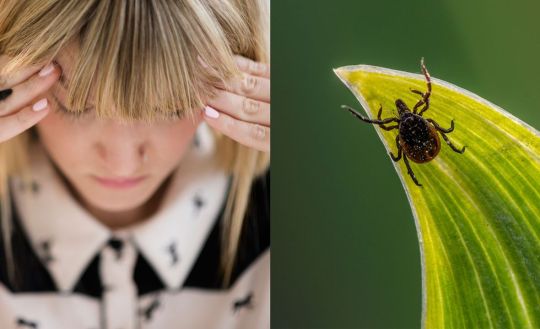
lyme-disease-symptoms-1528314206LYME DISEASE SYMPTOMSGETTY IMAGES

Lyme disease is the most commonly reported insect-transmitted disease in the United States, affecting an estimated 300,000 people a year, according to the Centers For Disease Control and Prevention (CDC). In certain parts of the country (like the northeast or upper Midwest), checking for ticks is practically a summertime rite of passage.

Experts know that Lyme disease is caused by the bacteria Borrelia burgdorferi, which is transmitted from the bite of an infected tick. But diagnosing the condition isn’t always so straightforward. Once inside your body, the bacteria can wreak havoc in a number of ways. Yes, that can include the classic bullseye-shaped rash. But many of the other symptoms of Lyme disease aren’t as well known, and they can be frustratingly vague.

That’s why it’s important to familiarize yourself with the signs and seek medical assistance if you think you or a loved one may have Lyme. The disease is easy to treat as long as you know what to look for.

Early symptoms of Lyme disease

The first signs of Lyme can strike anywhere from 3 to 30 days after getting bitten by an infected tick. They can include:

A red rash
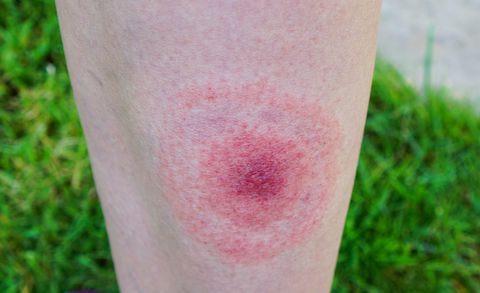
lyme-disease-bulls-eye-1524676364

lyme disease rash – GETTY IMAGES

Up to 80 percent of people will develop a red rash in the days or weeks after contracting Lyme disease. It usually forms at the site of the tick bite, and the redness is basically an allergic reaction to the tick’s saliva, says Nikhil Bhayani, MD, an infectious disease specialist at Texas Health Hurst-Euless-Bedford.

Lyme disease rashes will often be bullseye-shaped, but they can also just be a red blotch. The rash will usually expand with time and can get as big as 12 inches. It might feel warm to the touch or look a little crusty in the center where you were bitten, but it won’t be itchy or uncomfortable.

Flu-like symptoms

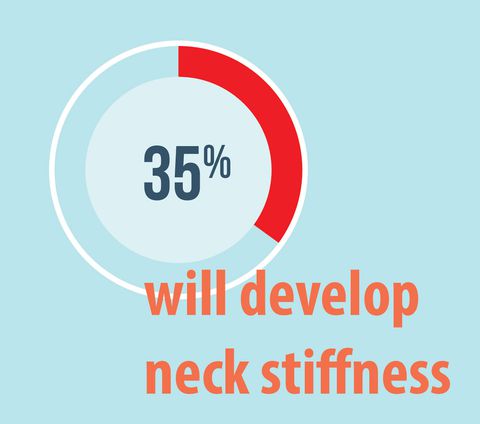
Not everyone experiences a full laundry list of flu-like symptoms. But there’s a good chance you’ll notice at least a few, Dr. Bhayani says. Here’s how commonly specific symptoms affect Lyme patients:

Fatigue: 54 percent
Fever: 16 percent
Muscle pain: 44 percent
Headache: 42 percent
Neck stiffness: 35 percent
Swollen lymph nodes: 23 percent

The flu-like symptoms are a result of your immune system’s attempt to fight off the bacterial infection and help you get better, says Kalpana D. Shere-Wolfe, MD, an infectious disease specialist the University of Maryland Medical Center Midtown Campus.

Of course, these kinds of symptoms could indicate many different illnesses. One clue that a tick bite caused them? With Lyme disease, you won’t experience the coughing or congestion that often comes with the actual flu, Dr. Shere-Wolfe says.
neck-stiffness-1528384202

Later Lyme disease symptoms

After a month or so, people infected with Lyme disease may start showing additional symptoms. These can include:

Larger or additional rashes

As the Lyme disease infection spreads throughout the body, your rash might start to expand even more. You might also develop new, smaller rashes nearby. Like the early rash, these might be bullseye-shaped. But they can also just look splotchy or blob-like, according to the CDC. They might even take on a slightly bluish tint in the middle.

Exhaustion, fuzzy thinking, and other neurocognitive problems

Borrelia burgdorferi is one of the few bacteria that can cross the blood-brain barrier and infect the central nervous system, explains Timothy J. Sellati, PhD, Chief Scientific Officer for the Global Lyme Alliance. That can lead to inflammation of the brain, which can affect your central nervous system function in a few different ways.

One of those is extreme fatigue, which affects as many as 76 percent of people with advanced Lyme disease, according to research. Trouble concentrating, loss of coordination, and short-term memory loss are other possible problems, occurring in up to 24 percent of people. In extreme cases where the disease is left untreated for extended periods, you might even develop facial weakness and behavioral changes, Sellati says.

Intense headaches

The same inflammation that causes fatigue and fuzzy thinking can also lead to headaches, which findings suggest could strike in up to 70 percent of people with Lyme disease.

Usually, these feel intense and more similar to a migraine than your run of the mill tension headache, Dr. Bhayani says. In addition to throbbing pain, you might also experience hypersensitivity to noise or light.

Severe pain, numbness, or tingling in your joints and muscles

Around 60 percent of patients will develop joint pain or even arthritis as their Lyme disease progresses, according to a Johns Hopkins University School of Medicine study. Usually, it starts in the joints closest to where you were bitten and can spread from there, especially to areas like the knees. The pain isn’t usually constant, though. Experts don’t fully understand why, but “the symptoms can wax and wane over a period of weeks or months,” Sellati says.

Over time, the disease can attack the cartilage in the joints and lead to tissue damage, says Linda Yancey, MD, an infectious disease specialist with Memorial Hermann Katy Hospital in Katy, TX.

Like many of the other problems caused by Lyme disease, this one is also triggered by inflammation. “The damage to tissues, bone, and cartilage is caused by the production of pro-inflammatory proteins, the same protein responsible for damage caused by rheumatoid arthritis,” Sellati says.

joint-pain-1528383554

GETTY/DANA LEIGH SMITH

Heart palpitations, dizziness or shortness of breath

In addition to invading the central nervous system, Borrelia burgdorferi can make its way into heart tissue. That can cause the tissue to become inflamed, leading to heart palpitations, Sellati explains. It might feel like your heart is pounding, fluttering, or beating faster than usual. Usually, it becomes more noticeable with vigorous exercise or stress. The problem isn’t all that common, affecting only around 11 percent of patients. Still, it can be serious. “If [palpitations] occur frequently, seem to get worse, or are accompanied by chest pain, fainting, severe shortness of breath, or dizziness, you should seek immediate medical attention,” Sellati says.

One thing to note: Generally, shortness of breath is most likely to strike when you’re exerting yourself, but with Lyme that isn’t always the case. “A Lyme disease patient can experience shortness of breath during normal activity that in the past might not have resulted in this response,” Sellati explains.

⚠️ If you notice symptoms of Lyme disease, call your doctor right away

It’s best to seek medical attention sooner rather than later. The longer Lyme disease goes untreated, the more likely you are to develop severe complications like intense joint pain, heart problems, or cognitive issues.

Lyme disease treatment: Your doctor should refer you to an infectious disease specialist, who can evaluate your symptoms and decide whether you need testing, Dr. Yancey says. If you test positive, you’ll be given antibiotics to fight the infection.

False-negatives: If your test comes back clean, but you’re convinced that Lyme disease is the culprit, ask to be retested. False negatives are common early on since it takes a few weeks for your immune system to build up antibodies to the bacteria.

________________

**Comment**

This article has some good information mixed in with some very bad information.  The article states as up to 80% have the “classic” bullseye rash.  Hogwash.  ILADS states fewer than 50% see a tick bite or a rash:  http://www.ilads.org/lyme/about-lyme.php  Hardly anyone I work with has seen either.

As to the appearance of any rash that might occur:  “This emphasis on target-like lesions may have inadvertently contributed to an underappreciation for atypical skin lesions caused by Lyme disease.” — Some Visible Signs of Lyme Disease Are Easily Missed or Mistaken, Science Daily, Apr 22, 2013 https://www.sciencedaily.com/releases/2013/04/130422132507.htm?utm_source=feedburner&utm_medium=email&utm_campaign=Feed%3A+sciencedaily%2Fhealth_medicine%2Flyme_disease+%28ScienceDaily%3A+Health+%26+Medicine+News+–+Lyme+Disease%29

As to flu-like symptoms, a case of a little girl outside playing got bit by a tick and within about 6 hours couldn’t walk or talk.  She never got flu-like symptoms but quickly advanced to late stage symptoms WITHIN HOURS:  https://madisonarealymesupportgroup.com/2016/12/07/igenex-presentation/  All my initial symptoms were gynecological:  https://madisonarealymesupportgroup.com/2017/02/24/pcos-lyme-my-story/

Again, as to “Later Lyme Disease Symptoms,” people can jump from one stage to another quickly – within hours and seemingly bypass certain stages.  This is an important detail that if practitioners aren’t aware of, will dismiss patients entirely if they don’t present initially with a bullseye rash and flu-like symptoms.  The little girl’s case I mention is a prime example.  Regular doctors dismissed her entirely.  They rushed her to Dr. Jones, a well-known, respected, and experienced doctor with tick borne illness.  After the treatment he gave, the girl was right as rain.  I cringe when I consider the alternative.  She would join the increasing ranks of “Chronically infected” patients.

The article again, states “larger or additional rashes,” in this category but many fail to have any, ever.  

I am thankful the article mentions heart issues, pain, numbness, tingling, dizziness, shortness of breath, and headaches as these are symptoms many experience.  What they fail to mention is the involvement of other pathogens that could cause these very same symptoms and require different medications.

I’m also thankful they state to call your doctor right away.  Here’s the problem.  Most doctors don’t know what they hell they are doing and infectious disease “specialists” are often the worst offenders!  They are believing, regurgitating, and following the same ancient mythical advice that’s been going around like a bad case of the flu for over 40 years!  Don’t waste your time and money on these folks.  Contact your local lyme support group for Lyme literate physicians trained by ILADS.  Please point regular practitioners to this:  https://madisonarealymesupportgroup.com/2018/06/06/lyme-education-for-healthcare-professionals/ and https://madisonarealymesupportgroup.com/2018/02/19/calling-all-doctors-please-become-educated-regarding-tick-borne-illness-heres-how/

Case in point:  They state that those who get treated promptly fare much better, yet the video within the article (go to link) states to take a “wait and see” approach.  In other words, you get bit, and then you just wait around on pins and needles to SEE if you experience symptoms.  Anyone else out there see the Russian Roulette approach here?  It’s a damned if you do, damned if you don’t scenario, with you losing in the end.

Each and every tick bite needs to be taken as seriously as a heart attack and treated, in my opinion.  Why risk it?  As a patient and advocate who’s infected as well as her husband, and has spent over $120K out of pocket for over 4.5 years of treatment and needing to regularly maintain this health, I can attest to how this illness(es) can take everything you own and have.  It will rock your world like nothing else. The official ILADS word on this is that there IS NO black and white answer as to treating a tick bite prophylactically but if you live in an endemic area (as I do) you should definitely consider it because a high percentage of ticks are infected.  They also state IF you decide to be treated, it should be for NO LESS than 3 weeks.  This treatment will prevent the body from mounting an antibody response, which means subsequent testing for Lyme WILL BE NEGATIVE.  To which I say, what does that matter if you become sicker than a dog?  TREAT THIS SUCKER AND TREAT IT NOW!  http://www.ilads.org/lyme/what-to-do-if-bit-by-tick.php

If you are unfamiliar with what appropriate Lyme treatment looks like:  https://madisonarealymesupportgroup.com/2016/02/13/lyme-disease-treatment/

You can type the other pathogens into the search bar for their treatments.  (i.e. Babesia, Bartonella, Mycoplasma, Viruses, etc)


ECU Researcher Gets Money From NIH to Develop Medication for Lyme

http://www.wnct.com/news/health-news/ecu-researcher-tries-to-find-better-way-to-treat-lyme-disease/1239691985

ECU researcher, MD A. Motableb has obtained  $1.7 million from the National Institutes of Health (NIH) to study borrelia, the causative agent of Lyme Disase in the human body.

The hope is to develop a medication.

The article goes on to state deeply entrenched myths about initial symptoms such as the bullseye rash that do not represent many patients.

For more on Lyme:  https://madisonarealymesupportgroup.com/2016/02/13/lyme-disease-treatment/

Psychological symptoms of Lyme:  https://madisonarealymesupportgroup.com/2015/10/18/psychiatric-lymemsids/

I’m not holding my breath for this hoped for medication.  The first thing that has to be acknowledged by main stream medicine and researchers is this is NOT a one pathogen one drug illness.  Patients are often infected with a plethora of pathogens – some viral, some bacterial, some fungal, even nematodes (worms).  They all take different medications.  https://madisonarealymesupportgroup.com/2017/07/01/one-tick-bite-could-put-you-at-risk-for-at-least-6-different-diseases/  The actual number is 18 and counting.

Besides this crucial fact, these pathogens cause all sorts of havoc within the body including inflammation and an autoimmune response.  Many have mast cell issues, newly developed sensitivities, hormonal imbalances, adrenal issues, and on and on to infinity.

This is the perfect storm and it’s complicated to say the least.


Tribute to the Men of Lyme

https://globallymealliance.org/tribute-men-lyme/

MyLymeLife_2-78

by Jennifer Crystal

In my blog post “Gender and Lyme: Is Tick-Borne Disease Different for Women?”, I cited a study by John Aucott, M.D., of Johns Hopkins University which found that more men than women test positive for Lyme. Men are more likely to have their clinical diagnoses of tick-borne illness confirmed by lab tests, even though the tests themselves are faulty, and are also more likely to have their symptoms validated, because women’s medical complaints are dismissed more frequently than men’s.

Male Lyme patients may have it easier in terms of diagnosis, but they also have particular struggles that can be overlooked. Moreover, male caretakers of Lyme patients don’t always get the credit they deserve. As Father’s Day approaches and we celebrate the dads, grandfathers, uncles, and other father figures in our lives, I want to give a special shout-out to the Men of Lyme.

While many symptoms of tick-borne illness are not gender-specific, some are. Women’s symptoms tend to increase during menstruation due to hormonal fluctuations. Hormones can also play a role in the way men to respond to Lyme treatment. In his book Why Can’t I Get Better? Solving the Mystery of Lyme & Chronic Disease, Richard Horowitz, M.D., explains that low testosterone levels can increase inflammation—and remember that Lyme is an inflammatory disease!—and impact immune response. Low testosterone can cause decreased energy, lethargy, anemia, insomnia, short-term memory loss, depression and anxiety. Dr. Horowitz writes that while these and other symptoms are often associated with aging, he’s found that many of his Lyme patients present with them, too. Therefore, men who are experiencing treatment resistance to Lyme should have their testosterone levels checked, to see if that might be a contributing factor.[1]

Physical symptoms aside, male Lyme patients may have an especially hard time getting the emotional support they need. Lyme as a disease is all too often dismissed or misunderstood by family, friends, and doctors. But men can be more reserved about sharing their feelings, and sometimes wrestle with stigmas that men aren’t “supposed” to ask for help or be “weak”, so their battles with tick-borne illness can be particularly lonely.

Some men have the additional stress of being unable to provide for their families when they are stricken with tick-borne disease. This is, of course, an issue that also affects women; loss of income is a major stressor for anyone who takes ill, especially for families that depend on two incomes and suddenly lose one. But more often than not, the emails I get about financial concerns are from men who are the chief breadwinners of their households and suddenly find their ability to provide usurped by a tiny black-legged tick.

Chronic illness upsets previously established family roles, but it also can bring out the best in partners and parents. Moms are often given credit as caretakers—and that’s well-deserved!—but there are so many men out there who are fighting the good Lyme fight on behalf of their loved ones. Some of them are battling tick-borne illness themselves. Others are working full time jobs while also being full time caregivers for bedridden spouses or children. They are attending support group meetings, organizing fundraisers, and paying medical bills.

I wouldn’t be where I am today if it weren’t for my dad, whose support makes my life possible. I’m grateful to my uncle who passes my blog posts along to other Lyme patients; to another favorite uncle who, along with my aunt, gave me space to convalesce in his home when I was at my sickest; to my male friends who make me laugh, who send supportive notes, and who do fundraising walks for me. I am especially grateful to my late friend Patrick Kelly, who was my most stalwart support during my darkest days.

Men of Lyme, you face your own particular set of struggles with this illness. You don’t always get the support you need or the recognition you deserve. But please know that this female patient hears you and acknowledges you, with gratitude. This Father’s Day, I celebrate you!

[1] Horowitz, Richard I. MD. Why Can’t I Get Better? Solving the Mystery of Lyme & Chronic Disease. New York: St. Martin’s Press, 2013 (294-296).

Jennifer Crystal is a writer and educator in Boston. She is working on a memoir about her journey with chronic tick-borne illness. Contact her at jennifercrystalwriter@gmail.com