Archive for the ‘Activism’ Category

New Yorkers Brace for Self-cloning Asian Longhorned Tick

https://news.columbia.edu/news/new-yorkers-brace-self-cloning-asian-longhorned-tick

New Yorkers Brace for Self-cloning Asian Longhorned Tick

By
Adam Piore
March 28, 2019

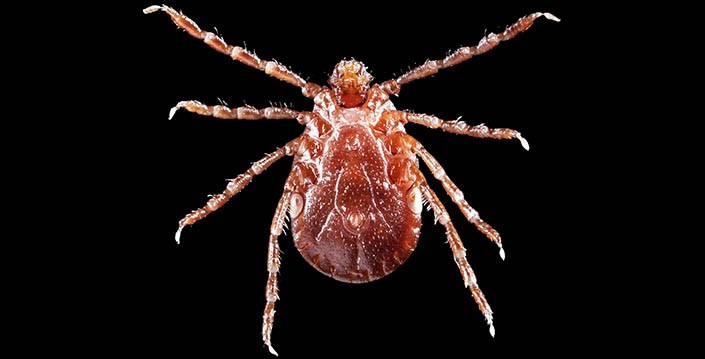
Staten Island residents have another reason to apply insect repellent and obsessively check for ticks this spring and summer: the population of a new, potentially dangerous invasive pest known as the Asian longhorned tick has grown dramatically across the borough, according to Columbia University researchers. And the tick—which unlike other local species can clone itself in large numbers—is likely to continue its conquest in the months ahead.

“The concern with this tick is that it could transmit human pathogens and make people sick,” explains researcher Maria Diuk-Wasser, an associate professor in the Columbia University Department of Ecology, Evolution and Environmental Biology, who studies ticks and human disease risk.

In a new study appearing in the April issue of the journal Emerging Infectious Diseases, Diuk-Wasser and colleagues provide the most exhaustive local census of the new species to date—and suggest the Staten Island infestation is far more advanced than previously known.

The researchers found the species Haemaphysalis longicornis in 7 of 13 parks surveyed in 2017 and in 16 of 32 in 2018. In one park, the density of the ticks per 1000 square meters rose almost 1,698 percent between 2017 and 2018, with the number of ticks picked up in the sample area rising from 85 to 1,529. They also found the ticks on anesthetized deer from the area.

The news comes less than a year after the New York City Department of Health announced the discovery of the first member of the species in the city—a single tick—found on southern Staten Island last August.

The tick, native to Asia and Australia, had been identified in the months prior to the Staten Island sighting in New Jersey, West Virginia, North Carolina and Arkansas and just a few weeks earlier in Westchester County. The Westchester sighting prompted a number of state senators to send a letter urging state health officials to act aggressively to stop the spread of the new species.

Public health officials are particularly concerned because the longhorned tick is notorious for its ability to quickly replicate itself. Unlike deer ticks, the common local variety known for carrying Lyme disease, the female Asian longhorned can copy itself through asexual reproduction in certain environmental conditions, or reproduce sexually, laying 1,000-2,000 eggs at a time. They are typically found in grass in addition to the forested habitats that  deer ticks prefer, adding a new complication to public health messaging. The Columbia analysis suggests that the public warnings may have come too late.

“The fact that longhorned tick populations are so high in southern Staten Island will make control of this species extremely  difficult,” says Meredith VanAcker, a member of Diuk-Wasser’s lab who collected the data as part of her Ph.D. thesis. “And because females don’t need to find male mates for reproduction, it is easier for the population to spread.”

The threat these new arrivals pose to human health is still unknown. In Asia, there have been reports of ticks passing on a virus that can cause a number of diseases, including hemorrhagic fever and ehrlichiosis, a bacterial illness that can cause flu-like symptoms and lead to serious complications if not treated.

The arrival of the species on Staten Island adds another unwelcome dimension to the region’s tick woes, which have grown dramatically in recent years. Thanks to an expanding deer population, Lyme disease spread through deer ticks has reached epidemic proportions in some areas of the Northeast. Deer ticks (also called black-legged ticks) are capable of disseminating six other human pathogens.

The first Asian long-horned tick in the U.S. was identified in New Jersey in 2013. A large population was later found on sheep in Mercer County, New Jersey. Diuk-Wasser became aware of the potential danger when a doctor at a Westchester clinic removed a tick from a patient and sent it in for identification. The discovery of the first human bite prompted widespread alarm.

By then, the Columbia team was already in the midst of an extensive “tick census” on Staten Island to determine how the landscape connectivity between urban parks influenced the spread of disease.

The Asian longhorned is easy to miss because it resembles a rare native species of rabbit tick. VanAcker spent months combing areas of Staten Island for ticks, dragging a square-meter corduroy cloth over leaf litter and examining it every 10 to 20 meters Diuk-Wasser, post-doctoral student Danielle Tufts and other members of the Diuk-Wasser lab found huge numbers of them on the bodies of unconscious deer that had been captured and anesthetized by wildlife authorities.

VanAcker found her collections were overflowing with the new species, leading to publication of the current study in Emerging Infectious Diseases. Her work on landscape connectivity, slated to appear in the June issue of the same journal, drives home the difficult decisions facing policymakers as they attempt to arrest the spread of the new species and others like it.

“The easier it is for deer to maneuver through urban landscapes between parks, the more likely the ticks are to spread to new areas,” Diuk-Wasser says. “This suggests that the emphasis on urban wildlife corridors has a previously unappreciated downside for human health.”

This study was supported by the Centers for Disease Control and Prevention.  


For media inquiries or more information, contact Carla Cantor at 212-854-5276 or carla.cantor@columbia.edu.

__________________

**Comment**

This right here is why this recent study done on grass length is terrible.  This study on the Asian tick showed they like GRASS and forested habitats  :https://madisonarealymesupportgroup.com/2019/04/06/an-abysmal-study-on-ticks-grass-length/

The study only looked for the Black-legged tick when there are hundreds of others that carry disease.  According to Canadian tick researcher John Scott, the black legged tick alone can transmit 11 diseases: Ticks, associated tick-borne pathogens

  1. Borrelia burgdorferi (Lyme disease)
  2. Borrelia miyamotoi (relapsing fever group spirochete)
  3. Bartonella spp. (e.g., B. henselae)
  4. Babesia spp. (e.g., B. duncani, B. microti)
  5. Mycoplasma spp. (e.g., M. fermentans)
  6. Anaplasma spp. (e.g., A. phagocytophilum)
  7. Francisella tularensis (tularemia)
  8. Ehrlichia muris eauclairensis (canine granulocytic ehrlichiosis, but also infects humans)
  9. Hemocytic Rickettsia-like organisms
  10. Deer Tick Virus (Powassan group virus)
  11. tick paralysis (from fully engorged female)

And there are 18 and counting diseases spread by other ticks:  https://madisonarealymesupportgroup.com/2017/07/01/one-tick-bite-could-put-you-at-risk-for-at-least-6-different-diseases/

No Tick is a good tick, and there’s no such thing as an “irrelevant” tick bite!

More on the Asian Longhorned tick:  https://madisonarealymesupportgroup.com/2018/09/12/three-surprising-things-i-learned-about-asian-longhorned-ticks-the-tick-guy-tom-mather/

https://madisonarealymesupportgroup.com/2018/08/08/an-invasive-new-tick-is-spreading-in-the-u-s/

https://madisonarealymesupportgroup.com/2019/04/01/asian-longhorned-tick-maria-diuk-wasser-phd/

https://madisonarealymesupportgroup.com/2018/11/05/hawk-found-carrying-asian-long-horned-tick-the-one-that-drains-cattle-of-all-their-blood/

https://madisonarealymesupportgroup.com/2018/10/03/1st-person-bitten-by-east-asian-longhorned-tick/


An Abysmal Study on Ticks & Grass Length

Please see my comment after article.

https://www.sciencedaily.com/releases/2019/04/190403155411.htm

Think the tick threat grows with the grass? Not necessarily!

April 3, 2019
Source:
USDA Forest Service – Northern Research Station
Summary:
Scientists report on their quest to get to the bottom of a common assumption about the urban landscape: ticks like long grass. In 144 tick drags in 16 suburban lawns in Springfield, Mass., researchers looking at mowing frequency and native bees did not find a single tick.

In a study published in the journal PLOS ONE, USDA Forest Service researchers Susannah Lerman and Vince D’Amico report on their quest to get to the bottom of a common assumption about the urban landscape: ticks such as the blacklegged tick (pictured) like long grass.  Credit: Vince D’Amico, USDA Forest Service

When Susannah Lerman talked with fellow researchers and friends about her study of the effects of less frequent lawn mowing to improve habitat for native bees, the response she heard most had nothing to do with bees.

“The first thing people said was that letting the grass get longer would invite ticks,” said Lerman, a research ecologist with the USDA Forest Service’s Northern Research Station. “It was clear that before we could make the case for promoting lawns as bee habitat, we had to understand the tick risk.”

In a study published today in the journal PLOS ONE, Lerman and her Northern Research Station colleague, Research Entomologist Vince D’Amico, report on their quest to get to the bottom of a common assumption about the urban landscape: ticks like long grass. As part of a study to evaluate whether less frequent lawn mowing in residential lawns in Springfield, Mass., could promote floral resources and hence, serve as viable habitat for native bees, Lerman and her partners surveyed for blacklegged ticks (Ixodes scapularis, also known as deer ticks) as well as bees every three weeks. In 16 suburban Springfield lawns over the course of two summers, Lerman and colleagues documented 111 bee species, which equates to roughly one-quarter of all bees documented in Massachusetts. As for blacklegged ticks? In 144 tick drags in lawns of various lawn mowing frequencies and grass heights, Lerman and her colleagues found not a single one.

“There are obvious limitations to this study in terms of establishing the risk of ticks,” Lerman said. “We sampled for a single species of tick, and our study was limited to 16 residential lawns in a single city. Still, our study has two significant take-aways: you do not necessarily invite ticks if you mow the lawn every other week instead of every week, and common assumptions about nature are always worth investigating; scientists may be surprised by what we find.“

Blacklegged ticks are notorious as carriers of Lyme disease, a tick-borne infection with significant human health risks that is prevalent in the Northeast. While blacklegged ticks are no doubt lurking in people’s yards, D’Amico said that the grassy part of a property is probably too dry for the tick.

“This species needs near 100 percent humidity for at least part of the day,” D’Amico said. “Where we have leaf litter, the ticks do very well.”

In the United States, an estimated 40 million acres of residential lawn managed by homeowners, businesses, government agencies and cemeteries have the potential to become habitat for beleaguered native bee species, if people can put aside a very reasonable fear and loathing of ticks. In this study, Lerman and her team found good reason to do so.

Story Source:

Materials provided by USDA Forest Service – Northern Research Station. Note: Content may be edited for style and length.


Journal Reference:

  1. Susannah B. Lerman, Vincent D’Amico. Lawn mowing frequency in suburban areas has no detectable effect on Borrelia spp. vector Ixodes scapularis (Acari: Ixodidae). PLOS ONE, 2019; 14 (4): e0214615 DOI: 10.1371/journal.pone.0214615

_________________

**Comment**

I love bees, don’t get me wrong but there is a ton of data showing that ticks like humidity and seek out leaf litter, snow, or anything that will keep them from drying out.  This study, in hopes of helping bees, is quite premature regarding the effects on ticks.  Sampling for one one species of tick was a huge mistake, and to put information out like this gives people a false sense of security when ticks are a real risk.  Other states are finding different results:  https://madisonarealymesupportgroup.com/2019/03/06/alumnus-works-to-protect-people-from-west-nile-virus-lyme-disease/

In this study we find the most ticks –

ALONG THE EDGES OF SOCCER FIELDS WITH WOODLINES.

This is a scary thought for all the Wisconsin youth playing sports outside.  I would hesitate to say that nearly EVERY soccer field in WI has a woodline close by!

Regardless of grass length, pet owners have nearly 2 times the risk of finding ticks:  https://madisonarealymesupportgroup.com/2017/08/12/pet-owners-have-nearly-2-times-the-risk-of-finding-ticks/

My advice:  keep your grass short, don’t invite wildlife into your yard, spray an acaricide, treat ALL pets, and wear permethrin treated clothing while doing any and all yard work.  It’s not worth the risk!  For more prevention ideas:  https://tickencounter.org/prevention

Treat yourself, pets, and yard – period, and throw this study into the trash.

Please remember the climate has nothing to do with this and ticks are ecoadaptive.  When conditions are harsh they climb under leaf litter and snow:  https://madisonarealymesupportgroup.com/2018/08/13/study-shows-lyme-not-propelled-by-climate-change/

Let’s not cut our nose off despite our face.  Protect yourself and your family from ticks.


Study Shows Berberine Induces Cell Death in Leukemia

https://science.news/2019-03-21-berberine-induces-cell-death-in-leukemia-cells-study.html

Berberine induces cell death in leukemia cells – study

A study published in The American Journal of Chinese Medicine revealed that a compound called berberine induces cell death in leukemia cells. In this study, the subcellular localization and the apoptotic mechanisms of berberine were investigated.

  • Berberine is an isoquinoline alkaloid found in medicinal plants used in traditional and folk medicines.
  • In the study, researchers at Nagasaki International University in Japan first treated human promyelocytic leukemia cells with berberine, then examined its antiproliferative activity.
  • Five to 15 minutes after treatment, berberine exhibited powerful antiproliferative activity in the cells.
  • Then, the researchers investigated the effect of berberine on inducing cell death and found that the compound induced cell death in leukemia cells.
In conclusion, these findings suggest that berberine can induce cell death in leukemia cells immediately after administration.

Journal Reference:

Okubo S, Uto T, Goto A, Tanaka H, Nishioku T, Yamada K, Shoyama Y. BERBERINE INDUCES APOPTOTIC CELL DEATH VIA ACTIVATION OF CASPASE-3 AND -8 IN HL-60 HUMAN LEUKEMIA CELLS: NUCLEAR LOCALIZATION AND STRUCTURE–ACTIVITY RELATIONSHIPS. The American Journal of Chinese Medicine. 6 October 2017; 45(7): 1497-1511. DOI: 10.1142/S0192415X17500811

___________________

**Comment**

Berberine is a chemical found in several plants including European barberry, goldenseal, goldthread, Oregon grape, phellodendron, and tree turmeric.  It might cause stronger heartbeats which might help heart conditions.  It also helps regulate how the body uses sugar in the blood which may help with diabetes. It also might also be able to kill bacteria and reduce swelling.  https://www.webmd.com/vitamins/ai/ingredientmono-1126/berberine

https://draxe.com/berberine/  According to Dr. Axe, research on berberine shows benefit for the following conditions:

  • Anti-aging
  • Diabetes
  • Gastrointestinal infections
  • Heart disease
  • High cholesterol
  • Hypertension (high blood pressure)
  • Immune challenges
  • Joint problems
  • Low bone density
  • Weight control

Another great article by Dr. Mercola:  https://articles.mercola.com/sites/articles/archive/2015/06/22/berberine-benefits.aspx

Berberine was able to control blood sugar and lipid metabolism as effectively as metformin, with researchers describing berberine as a “potent oral hypoglycemic agent.”4

A separate meta-analysis also revealed “berberine has comparable therapeutic effect on type 2 DM [diabetes mellitus], hyperlipidemia and hypertension with no serious side effect.”5

There is also evidence for reducing inflammation, oxidative stress, tumor growth, & depression and helping with infections, all of which Lyme/MSIDS patients can struggle with.

Brussels Becomes First Major City to Halt 5G Due to Health Effects

https://takebackyourpower.net/brussels-first-major-city-to-halt-5g-due-to-health-effects/

Great news. A Belgian government minister has announced that Brussels is halting its 5G plans — at least for now — due to concerns about health effects.

The statement was made by Céline Fremault, the Minister of the Government of the Brussels-Capital Region, responsible for Housing, Quality of Life, Environment and Energy. From an interview last Friday, with L’Echo:

“I cannot welcome such technology if the radiation standards, which must protect the citizen, are not respected, 5G or not. The people of Brussels are not guinea pigs whose health I can sell at a profit. We cannot leave anything to doubt.”

– Céline Fremault, Minister of the Government (Brussels-Captial Region), responsible for Housing, Quality of Life, Environment and Energy

Ms. Fremault accurately identified that a 5G pilot project is not compatible with Belgian radiation safety standards (9 V/m, or 95 mW/m2 according to this online converter), and stated that she does not intend to make an exception. (In the Building Biology guidelines, the threshold for extreme concern is 1 mW/m2. However, many government agencies still only consider thermal effects, instead of the cumulative body of thousands of peer-reviewed scientific studies.)

Perhaps with Brussels heading up the European Union, and with one of the two major 5G appeals being addressed to the EU, officials there are better informed and motivated to protect themselves.

May support increase for Ms. Fremault and all officials who are hearing the call to sanity and prioritizing the people over the technocratic oligarchy.

2-MINUTE ACTION: To send a brief note of support to Ms. Fremault, go here; and to Brussels city councilors, go here. Encourage them of the importance to keep this ban permanent, despite industry’s forthcoming pressure.

The 5G Situation in Summary

There is almost no question that a 5G-world would place us all under an unprecedented level of surveillance and control; granting unheard-of powers to soulless corporate algorithms.

That should be enough to permanently delete the agenda right there, filed under “useful technology gone bad.”

Though perhaps an even bigger question for our time is: does 5G pose a major threat to all biological life? The independent evidence overwhelmingly indicates that it does.

That is, unless you ask wireless industry sources, who own the FCC and who recently put out this CNBC propaganda/commercial in a thinly-veiled attempt to quash pushback.

The talking heads of the wireless industry even brashly admit — when forced, in a US senate hearing — that they have not done any safety studies… and they don’t plan to.

The fact is, hundreds of scientists are trying everything to sound the alarm.

One such voice, Dr. Martin Pall, the WSU Professor Emeritus whose research actually lays out the mechanism of how wireless radiation causes harm in our cells, calls 5G “the stupidest idea in the history of the world.”

However, within the corporatized halls of government, there is a well-worn pattern of voices of reason being drowned out by the frothed frenzy of technocratic corporations, who envision 5G as an unprecedented economic opportunity for the full-on commercial exploitation of reality.

But 5G pushback is starting to get viral. The compilation of truth assembled in videos on 5G like this one provides a much-needed reality-check on the shocking state of greed and depravationamong the agenda-pushers in our world.

While it may sound stark, after observing this for a long while, to me it honestly now appears that those pushing this agenda are stuck in a type of hive-mind syndrome, so frenzied with dollar-signs and “us-versus-them” progress-obsessions that they are in a mode incapable of self-corrective thought. Or at the very least, incapable of seeing where all of this is obviously heading — for them and their kids, too.

When the industry sheep are being presented with an avalanche of scientific evidence for a catastrophe-in-the-making, and yet they refuse to listen and instead continue to tow the profit-pushing line, what becomes visible is the shadow-expression of utter disdain for life. That may sound harsh, but I encourage you to consider this deeply.

Perhaps it’s the global, unconscious ‘death wish’ that is at the core of the 5G push. Perhaps this is also at the core of the desire to darkly exit the human condition via AI and transhumanism. Apparently this thought-form sees its escape and salvation through technology, instead of through humanity and/or our connection with divinity.

In any case, to any sane human with normal values, the situation is indeed bewildering. Though once we get over the distress, we are called into a kind of soul-led response. Perhaps it’s first a resolve to be sovereign in our thoughts, and to be steward of our mind. Then, inspiration and true Connectedness come when we become involved in manifesting the bigger solution — the choice of a positive future.

On this path, our root challenge is to remember: the power in our individual reality is truly within each of us, because who we are is not limited to the realms of duality and separation that we experience here.

If you’re reading this, be welcomed into the humanity protector’s club. 🙂

Where You Live: The Pushback Against 5G is Going Viral

While Brussels becomes the first major international city to block 5G, dozens of local governments have passed legislation to prevent or restrict 5G rollouts due to health effects. Environmental Health Trust lists legislation from 21 local governments in the USA.

And on March 13, the Portland (OR) city council demanded that the FCC update its research on the health and environmental impacts of 5G.

Websites such as EMF Safety Network, WhatIs5G.info and My Street, My Choice provides guidelines for how to put the brakes on 5G where you live.

This industry-promoted summary of state-by-state 5G legislative actions is also useful, and gives an insight into their modus operandi.

Below is a partial list of resources where you can learn more and get involved. We applaud everyone out there who is taking the reins and leading from their heart.


Brussels story – sources:

Scientific Evidence on 5G Harm

Grassroots Communities & Organizations

Note: Several of the organizations listed below are still promoting actions limited to contacting your elected representatives and pleading for help. With that being said, there is a resounding increase in awareness that a firmer response is now required.

“UN Staff Member: 5G Is War on Humanity” (6 mins, 2019)
Documents the UN Secretary General being notified of harm from 5G and wireless proliferation.

Thanks to Dafna Tachover of We Are The Evidence for helping to break this story.


Be a Victor Not a Victim

https://globallymealliance.org/be-a-victor-not-a-victim/

by Jennifer Crystal

Many patients of tick-borne disease take years to get diagnosed. A lucky few ones find a bull’s-eye rash or an embedded tick, go to a physician who just happens to be Lyme literate, and get started on antibiotics right away. If they respond well to initial treatment, they can be cleared of Lyme in a month’s time.

Most patients are not this lucky. Even of those who do get treated right away, 10-20% go on to suffer after treatment. And for people who are not immediately treated, Lyme bacteria and quite possibly other co-infections the tick has introduced to ones body can spread through their bodies and brains for months, years, even decades before they are  accurately diagnosed. By the time of diagnosis, the person is often bedridden, plagued by exhaustion, joint aches, migraines, brain fog, and other neurological impairments. The unluckiest can suffer paralysis or schizophrenia.

When you’re a victim of unbearable physical and neurological suffering and you’re fighting to get a diagnosis, it can be the most natural thing in the world to also fall victim to a woe-is-me mentality. In some respects, you have to. Just to get people to take you seriously. If you’re like me, you might be used to putting on a good face even in the toughest times.

I’ve always been a glass-half-full person, an optimist fundamentally, but in order to get people to really understand what was going on under my mask of a smile, I had to complain. I was doing myself no favor by remaining stoic. Some might say I was throwing a pity party. But I needed to do so in order to be heard.

When I finally did get accurately diagnosed with Lyme and two of its co-infections, babesia, and ehrlichia, I wanted to shout from the rooftops, “Hey world, guess what? I have Lyme disease!” After eight years battling mystery symptoms, two years being utterly bedridden, and countless pointless doctors appointments where I was told, “Maybe it’s all in your head” or “You just need to exercise more,” I finally felt validated, I had a true physical disease—multiple diseases, in fact three of them—and the tests and clinical diagnoses to prove it.

Getting that validation can make you want to go back to all those naysayers and gleefully howl, “I told you so.” But many of those same people are the ones you will still need support from, whether it’s emotional or financial support from friends and family or medical support from physicians. For that reason, you have to take the moral high road. You have to extend understanding to those people, recognizing that they simply didn’t know enough about tick-borne diseases. Yet you have to educate them so they can meet you where you are and help you the manner best suited for your illness.

Inside, you may be very angry indeed. You may feel like a victim for all you’ve been through. When you start having Herxheimer reactions and start feeling worse than ever, you may even curse the tiny tick that did all this to you, the doctors who wouldn’t listen to you, the friends or family who didn’t advocate for you. You may curse the world for not understanding your suffering.

I say you may only to suggest that this could happen, but also to give you permission to have these feelings. It’s okay to be angry. It’s okay to be sad. It’s okay to be frustrated. It’s okay to mourn the months or years of your life that you’ve lost.

It’s not okay to stay in that place. It’s not okay to get stuck in your own anger. For then, you indeed become a victim, you become bitter. The tick, the disease(s) it carried, and the naysayers all win, because you’ve let them get the best of you. Please don’t do this. You are better than that.

You are a fighter. You deserve to regain your health. But your body cannot heal if you weigh it down with toxic emotions. You can have them, sure; that’s only natural. But at some point you must need to move beyond them. You must release yourself from them, so that your body has a real fighting chance to heal.

Don’t send your body the message that you’re a victim because it will believe you. Send your body the message that you are going to treat it kindly, be patient with it, and support it every step of the way on its journey to health.

Be a victor instead of a victim.


jennifer crystal

Opinions expressed by contributors are their own.

Jennifer Crystal is a writer and educator in Boston. She has written a memoir about her journey with chronic tick borne illness, for which she is seeking representation. Contact her at: 

lymewarriorjennifercrystal@gmail.com. 

_________________
**Comment**
Great, great reminder.  You can have all those emotions but don’t stay in that place forever.  Rise above it.  Come to support group and vent.  That’s what we are here for.
One point that is important – way more than 10-20% of us have chronic symptoms.  Microbiologist Holly Ahern wrote an incredible piece pointing out it’s more like 60%: https://madisonarealymesupportgroup.com/2019/02/25/medical-stalemate-what-causes-continuing-symptoms-after-lyme-treatment/  This is a prime example of how this plague has been downplayed using statistics and wrong definitions.  
We need to issue well known as it is being used against patients. Researchers are taking the falsely skewed statistic of 10-20% and making this sound rare – when it is not.
Please get the word out.  This PTLDS definition must change.