Archive for the ‘Activism’ Category

Deadly Germs, Lost Cures: A Mysterious Infection, Spanning the Globe in a Climate of Secrecy

https://www.msn.com/en-us/news/world/deadly-germs-lost-cures-a-mysterious-infection-spanning-the-globe-in-a-climate-of-secrecy

Deadly Germs, Lost Cures: A Mysterious Infection, Spanning the Globe in a Climate of Secrecy

MATT RICHTEL and ANDREW JACOBS

Last May, an elderly man was admitted to the Brooklyn branch of Mount Sinai Hospital for abdominal surgery. A blood test revealed that he was infected with a newly discovered germ as deadly as it was mysterious.

Doctors swiftly isolated him in the intensive care unit. The germ, a fungus called Candida auris, preys on people with weakened immune systems, and it is quietly spreading across the globe.

Over the last five years, it has hit a neonatal unit in Venezuela, swept through a hospital in Spain, forced a prestigious British medical center to shut down its intensive care unit, and taken root in India, Pakistan and South Africa.

Recently C. auris reached New York , New Jersey and Illinois, leading the federal Centers for Disease Control and Prevention to add it to a list of germs deemed “urgent threats.”

The man at Mount Sinai died after 90 days in the hospital, but C. auris did not. Tests showed it was everywhere in his room, so invasive that the hospital needed special cleaning equipment and had to rip out some of the ceiling and floor tiles to eradicate it.

“Everything was positive — the walls, the bed, the doors, the curtains, the phones, the sink, the whiteboard, the poles, the pump,” said Dr. Scott Lorin, the hospital’s president. “The mattress, the bed rails, the canister holes, the window shades, the ceiling, everything in the room was positive.”

C. auris is so tenacious, in part, because it is impervious to major antifungal medications, making it a new example of one of the world’s most intractable health threats: the rise of drug-resistant infections.

For decades, public health experts have warned that the overuse of antibiotics was reducing the effectiveness of drugs that have lengthened life spans by curing bacterial infections once commonly fatal. But lately, there has been an explosion of resistant fungi as well, adding a new and frightening dimension to a phenomenon that is undermining a pillar of modern medicine.

“It’s an enormous problem,” said Matthew Fisher, a professor of fungal epidemiology at Imperial College London, who was a co-author of a recent scientific review on the rise of resistant fungi. “We depend on being able to treat those patients with antifungals.”

Simply put, fungi, just like bacteria, are evolving defenses to survive modern medicines.

Yet even as world health leaders have pleaded for more restraint in prescribing antimicrobial drugs to combat bacteria and fungi — convening the United Nations General Assembly in 2016 to manage an emerging crisis — gluttonous overuse of them in hospitals, clinics and farming has continued.

Resistant germs are often called “superbugs,” but this is simplistic because they don’t typically kill everyone. Instead, they are most lethal to people with immature or compromised immune systems, including newborns and the elderly, smokers, diabetics and people with autoimmune disorders who take steroids that suppress the body’s defenses.

Scientists say that unless more effective new medicines are developed and unnecessary use of antimicrobial drugs is sharply curbed, risk will spread to healthier populations. A study the British government funded projects that if policies are not put in place to slow the rise of drug resistance, 10 million people could die worldwide of all such infections in 2050, eclipsing the eight million expected to die that year from cancer.

In the United States, two million people contract resistant infections annually, and 23,000 die from them, according to the official C.D.C. estimate. That number was based on 2010 figures; more recent estimates from researchers at Washington University School of Medicine put the death toll at 162,000. Worldwide fatalities from resistant infections are estimated at 700,000.

Antibiotics and antifungals are both essential to combat infections in people, but antibiotics are also used widely to prevent disease in farm animals, and antifungals are also applied to prevent agricultural plants from rotting. Some scientists cite evidence that rampant use of fungicides on crops is contributing to the surge in drug-resistant fungi infecting humans.

Yet as the problem grows, it is little understood by the public — in part because the very existence of resistant infections is often cloaked in secrecy.

With bacteria and fungi alike, hospitals and local governments are reluctant to disclose outbreaks for fear of being seen as infection hubs. Even the C.D.C., under its agreement with states, is not allowed to make public the location or name of hospitals involved in outbreaks. State governments have in many cases declined to publicly share information beyond acknowledging that they have had cases.

All the while, the germs are easily spread — carried on hands and equipment inside hospitals; ferried on meat and manure-fertilized vegetables from farms; transported across borders by travelers and on exports and imports; and transferred by patients from nursing home to hospital and back.

C. auris, which infected the man at Mount Sinai, is one of dozens of dangerous bacteria and fungi that have developed resistance. Yet, like most of them, it is a threat that is virtually unknown to the public.

Other prominent strains of the fungus Candida — one of the most common causes of bloodstream infections in hospitals — have not developed significant resistance to drugs, but more than 90 percent of C. auris infections are resistant to at least one drug, and 30 percent are resistant to two or more drugs, the C.D.C. said.

Dr. Lynn Sosa, Connecticut’s deputy state epidemiologist, said she now saw C. auris as “the top” threat among resistant infections.

“It’s pretty much unbeatable and difficult to identity,” she said.

Nearly half of patients who contract C. auris die within 90 days, according to the C.D.C. Yet the world’s experts have not nailed down where it came from in the first place.

“It is a creature from the black lagoon,” said Dr. Tom Chiller, who heads the fungal branch at the C.D.C., which is spearheading a global detective effort to find treatments and stop the spread. “It bubbled up and now it is everywhere.”

‘No need’ to tell the public

In late 2015, Dr. Johanna Rhodes, an infectious disease expert at Imperial College London, got a panicked call from the Royal Brompton Hospital, a British medical center outside London. C. auris had taken root there months earlier, and the hospital couldn’t clear it.

“‘We have no idea where it’s coming from. We’ve never heard of it. It’s just spread like wildfire,’” Dr. Rhodes said she was told.

She agreed to help the hospital identify the fungus’s genetic profile and clean it from rooms.

Under her direction, hospital workers used a special device to spray aerosolized hydrogen peroxide around a room used for a patient with C. auris, the theory being that the vapor would scour each nook and cranny. They left the device going for a week. Then they put a “settle plate” in the middle of the room with a gel at the bottom that would serve as a place for any surviving microbes to grow, Dr. Rhodes said.

Only one organism grew back. C. auris.

It was spreading, but word of it was not. The hospital, a specialty lung and heart center that draws wealthy patients from the Middle East and around Europe, alerted the British government and told infected patients, but made no public announcement.

“There was no need to put out a news release during the outbreak,” said Oliver Wilkinson, a spokesman for the hospital.

This hushed panic is playing out in hospitals around the world. Individual institutions and national, state and local governments have been reluctant to publicize outbreaks of resistant infections, arguing there is no point in scaring patients — or prospective ones.

Dr. Silke Schelenz, Royal Brompton’s infectious disease specialist, found the lack of urgency from the government and hospital in the early stages of the outbreak “very, very frustrating.”

“They obviously didn’t want to lose reputation,” Dr. Schelenz said. “It hadn’t impacted our surgical outcomes.”

By the end of June 2016, a scientific paper reported “an ongoing outbreak of 50 C. auris cases” at Royal Brompton, and the hospital took an extraordinary step: It shut down its I.C.U. for 11 days, moving intensive care patients to another floor, again with no announcement.

Days later the hospital finally acknowledged to a newspaper that it had a problem. A headline in The Daily Telegraph warned, “Intensive Care Unit Closed After Deadly New Superbug Emerges in the U.K.” (Later research said there were eventually 72 total cases, though some patients were only carriers and were not infected by the fungus.)

Yet the issue remained little known internationally, while an even bigger outbreak had begun in Valencia, Spain, at the 992-bed Hospital Universitari i Politècnic La Fe. There, unbeknown to the public or unaffected patients, 372 people were colonized — meaning they had the germ on their body but were not sick with it — and 85 developed bloodstream infections. A paper in the journal Mycoses reported that 41 percent of the infected patients died within 30 days.

A statement from the hospital said it was not necessarily C. auris that killed them. “It is very difficult to discern whether patients die from the pathogen or with it, since they are patients with many underlying diseases and in very serious general condition,” the statement said.

As with Royal Brompton, the hospital in Spain did not make any public announcement. It still has not.

One author of the article in Mycoses, a doctor at the hospital, said in an email that the hospital did not want him to speak to journalists because it “is concerned about the public image of the hospital.”

The secrecy infuriates patient advocates, who say people have a right to know if there is an outbreak so they can decide whether to go to a hospital, particularly when dealing with a nonurgent matter, like elective surgery.

“Why the heck are we reading about an outbreak almost a year and a half later — and not have it front-page news the day after it happens?” said Dr. Kevin Kavanagh, a physician in Kentucky and board chairman of Health Watch USA , a nonprofit patient advocacy group. “You wouldn’t tolerate this at a restaurant with a food poisoning outbreak.”

Health officials say that disclosing outbreaks frightens patients about a situation they can do nothing about, particularly when the risks are unclear.

“It’s hard enough with these organisms for health care providers to wrap their heads around it,” said Dr. Anna Yaffee, a former C.D.C. outbreak investigator who dealt with resistant infection outbreaks in Kentucky in which the hospitals were not publicly disclosed. “It’s really impossible to message to the public.”

Officials in London did alert the C.D.C. to the Royal Brompton outbreak while it was occurring. And the C.D.C. realized it needed to get the word to American hospitals. On June 24, 2016, the C.D.C. blasted a nationwide warning to hospitals and medical groups and set up an email address, candidaauris@cdc.gov, to field queries. Dr. Snigdha Vallabhaneni, a key member of the fungal team, expected to get a trickle — “maybe a message every month.”

Instead, within weeks, her inbox exploded.

Coming to America

In the United States, 587 cases of people having contracted C. auris have been reported, concentrated with 309 in New York, 104 in New Jersey and 144 in Illinois, according to the C.D.C.

The symptoms — fever, aches and fatigue — are seemingly ordinary, but when a person gets infected, particularly someone already unhealthy, such commonplace symptoms can be fatal.

The earliest known case in the United States involved a woman who arrived at a New York hospital on May 6, 2013, seeking care for respiratory failure. She was 61 and from the United Arab Emirates, and she died a week later, after testing positive for the fungus. At the time, the hospital hadn’t thought much of it, but three years later, it sent the case to the C.D.C. after reading the agency’s June 2016 advisory.

This woman probably was not America’s first C. auris patient. She carried a strain different from the South Asian one most common here. It killed a 56-year-old American woman who had traveled to India in March 2017 for elective abdominal surgery, contracted C. auris and was airlifted back to a hospital in Connecticut that officials will not identify. She was later transferred to a Texas hospital, where she died.

The germ has spread into long-term care facilities. In Chicago, 50 percent of the residents at some nursing homes have tested positive for it, the C.D.C. has reported. The fungus can grow on intravenous lines and ventilators.

Workers who care for patients infected with C. auris worry for their own safety. Dr. Matthew McCarthy, who has treated several C. auris patients at Weill Cornell Medical Center in New York, described experiencing an unusual fear when treating a 30-year-old man.

“I found myself not wanting to touch the guy,” he said. “I didn’t want to take it from the guy and bring it to someone else.” He did his job and thoroughly examined the patient, but said, “There was an overwhelming feeling of being terrified of accidentally picking it up on a sock or tie or gown.”

The role of pesticides?

As the C.D.C. works to limit the spread of drug-resistant C. auris, its investigators have been trying to answer the vexing question: Where in the world did it come from?

The first time doctors encountered C. auris was in the ear of a woman in Japan in 2009 (auris is Latin for ear). It seemed innocuous at the time, a cousin of common, easily treated fungal infections.

Three years later, it appeared in an unusual test result in the lab of Dr. Jacques Meis , a microbiologist in Nijmegen, the Netherlands, who was analyzing a bloodstream infection in 18 patients from four hospitals in India. Soon, new clusters of C. auris seemed to emerge with each passing month in different parts of the world.

The C.D.C. investigators theorized that C. auris started in Asia and spread across the globe. But when the agency compared the entire genome of auris samples from India and Pakistan, Venezuela, South Africa and Japan, it found that its origin was not a single place, and there was not a single auris strain.

The genome sequencing showed that there were four distinctive versions of the fungus, with differences so profound that they suggested that these strains had diverged thousands of years ago and emerged as resistant pathogens from harmless environmental strains in four different places at the same time.

“Somehow, it made a jump almost seemingly simultaneously, and seemed to spread and it is drug resistant, which is really mind-boggling,” Dr. Vallabhaneni said.

There are different theories as to what happened with C. auris. Dr. Meis, the Dutch researcher, said he believed that drug-resistant fungi were developing thanks to heavy use of fungicides on crops.

Dr. Meis became intrigued by resistant fungi when he heard about the case of a 63-year-old patient in the Netherlands who died in 2005 from a fungus called Aspergillus. It proved resistant to a front-line antifungal treatment called itraconazole. That drug is a virtual copy of the azole pesticides that are used to dust crops the world over and account for more than one-third of all fungicide sales .

A 2013 paper in Plos Pathogens said that it appeared to be no coincidence that drug-resistant Aspergillus was showing up in the environment where the azole fungicides were used. The fungus appeared in 12 percent of Dutch soil samples, for example, but also in “flower beds, compost, leaves, plant seeds, soil samples of tea gardens, paddy fields, hospital surroundings, and aerial samples of hospitals.”

Dr. Meis visited the C.D.C. last summer to share research and theorize that the same thing is happening with C. auris, which is also found in the soil: Azoles have created an environment so hostile that the fungi are evolving, with resistant strains surviving.

This is similar to concerns that resistant bacteria are growing because of excessive use of antibiotics in livestock for health and growth promotion. As with antibiotics in farm animals, azoles are used widely on crops.

“On everything — potatoes, beans, wheat, anything you can think of, tomatoes, onions,” said Dr. Rhodes, the infectious disease specialist who worked on the London outbreak. “We are driving this with the use of antifungicides on crops.”

Dr. Chiller theorizes that C. auris may have benefited from the heavy use of fungicides. His idea is that C. auris actually has existed for thousands of years, hidden in the world’s crevices, a not particularly aggressive bug. But as azoles began destroying more prevalent fungi, an opportunity arrived for C. auris to enter the breach, a germ that had the ability to readily resist fungicides now suitable for a world in which fungi less able to resist are under attack.

The mystery of C. auris’s emergence remains unsolved, and its origin seems, for the moment, to be less important than stopping its spread.

Resistance and denial

For now, the uncertainty around C. auris has led to a climate of fear, and sometimes denial.

Last spring, Jasmine Cutler, 29, went to visit her 72-year-old father at a hospital in New York City, where he had been admitted because of complications from a surgery the previous month.

When she arrived at his room, she discovered that he had been sitting for at least an hour in a recliner, in his own feces, because no one had come when he had called for help to use the bathroom. Ms. Cutler said it became clear to her that the staff was afraid to touch him because a test had shown that he was carrying C. auris.

“I saw doctors and nurses looking in the window of his room,” she said. “My father’s not a guinea pig. You’re not going to treat him like a freak at a show.”

He was eventually discharged and told he no longer carried the fungus. But he declined to be named, saying he feared being associated with the frightening infection. 


FREE Tick Testing for Pennsylvanians

https://www.ticklab.org

Have you been bitten by a tick & Want it Tested?

The Pennsylvania Tick Research Lab can analyze your tick, testing for tick-borne diseases. Order your test online by clicking link above.

If the tick is a deer tick (Ixodes scapularis), the following 4 pathogens are tested for:

  • Borrelia burgdorferi (Lyme disease)
  • Anaplasma phagocytophilum (anaplasmosis)
  • Babesia microti (babesiosis)
  • Powassan virus Lineage II (Deer tick virus).

If the tick is a non-deer tick, the following 4 pathogens are tested for:

  • Borrelia burgdorferi (Lyme disease)
  • Ehrlichia chaffeensis (ehrlichiosis)
  • Rickettsia general species (RMSF)
  • Francisells tularensis (tularemia)

Out of State residents may also have a basic panel for $50 which includes 3 tests depending upon the tick species, $100 for an advanced panel which includes 6 tests, and $175 for the comprehensive panel which covers all pathogens related to the tick species.

There are options to upgrade to advanced and comprehensive testing panels at discounted rates for Pennsylvanian residents. If you want the advanced/comprehensive testing a check needs to be included with the tick.

Once they receive the tick, test results are obtained within three business days.

Please feel free to email wildlifedna@esu.edu or call 570-422-7892 if you have any questions.

_________________

**Comment**

Tick testing is a great service; however, testing isn’t always 100% accurate and it’s also possible to have symptoms before the results come back.

In this case, a little girl couldn’t walk or talk within 4-6 hours of tick attachment:  https://madisonarealymesupportgroup.com/2016/12/07/igenex-presentation/. Great video by microbiologist Holly Ahern on transmission times. The longer the tick is attached, the greater the risk, however….

Minimum time required to transmit Lyme disease has never been determined as well as transmission times for many other pathogens. Coinfection is common

https://madisonarealymesupportgroup.com/2018/10/30/study-shows-lyme-msids-patients-infected-with-many-pathogens-and-explains-why-we-are-so-sick/


Red Cross Didn’t Want ‘Chronic Lyme’ Blood a Decade Ago

https://www.facebook.com/lymebook/photos/a.685927581612624/969609259911120/?type=3&theater

56527814_969609263244453_7613922386588467200_n

Screenshot from the American Red Cross taken by a savvy patient one decade ago. Evidently they didn’t want your blood if you had CHRONIC LYME (something that supposedly doesn’ even exist). They also didn’t blood from treated patients for up to a year afterwards.

The men in black must have paid them a visit to change their minds.


iu-9


Three Alternative Strategies That Can Address Severe Chronic Pain

https://articles.mercola.com/sites/articles/archive/2019/04/07/essential-oils-for-chronic-pain.aspx?

Three Alternative Strategies That Can Address Severe Chronic Pain

 Approx. 1 Hour

Written by Dr. Joseph Mercola

STORY AT-A-GLANCE

  • Dr. Mark DeBrincat, a chiropractor also known as the “Good News Doctor,” recovered from severe injuries that kept him in severe chronic pain for 15 years using neurofeedback, essential oils and pulsed electromagnetic field (PEMF) treatments
  • With the use of eight essential oils, DeBrincat was able to remodel the tissue in his spine, reducing his pain from a 10 to a 5, and then to zero
  • The neurofeedback device consists of a cap with 19 leads hooked to a computer that register neural activity, giving you a three-dimensional map of your neurology
  • Once dysregulated areas of your brain have been identified, they can be targeted to increase neuroplasticity. Once neuroplasticity kicks in, you start growing new tissue
  • Essential oils are volatile compounds found in grasses, trees, roots, bark, leaves and flowers. Essential oils in general are about 50 to 70 times more powerful than herbs, and should be used sparingly

Dr. Mark DeBrincat, a chiropractor and natural health physician also known as “The Good News Doctor,” has a most amazing story of recovery from one of the worst chronic debilitating pain syndromes that I’ve ever heard of, so I asked him to share his journey with you, in the hopes it may motivate you to seek natural approaches to pain.

Many see opiates as the only option for severe pain, which can have severe health consequences. Opioids are extremely addictive and 130 Americans die from opioid overdoses each and every day.1The death toll from opioids is so great it has actually contributed to lowered life expectancy in the U.S.

A Terrible Accident

Twenty-one years ago, traveling from Georgia to Florida to attend a chiropractic conference, DeBrincat and his wife were in a terrible car accident. That they both survived was a miracle in itself. His wife ended up with whiplash and fractured C3 through 5.

“I remember laying in the hospital and threatening her doctor that if he didn’t put a perfect curve into her neck or if he fused all her bones together, he’d never hear the end of my name,” DeBrincat says.

“He literally took the titanium plate home and pounded in a nice curve for me. Here, 21 years later, she’s got a beautiful cervical lateral curve and she still has her joint below a fusion, which is just amazing.

She healed in just a few months and then took care of me for years. I was a hot mess. Bracing my legs on the dashboard on impact saved my life, but also literally split my pelvis in half. The pubic bone snapped in the front, and my sacrum cracked top to bottom in the back.

I ripped the muscles off most of my legs [on] both sides … Then I lost my sigmoid and descending colon in all of that, amongst many other injuries. I spent months confined to a hospital bed. It took me several years to be able to go back to work again as a chiropractor. I had to become my own patient …

By 2010, I was permanently disabled and confined to a wheelchair. I had stabbing pain from my neck, all the way to my tailbone. I had no feeling in my arms or legs, but my hands and feet felt like burning broken glass all the time. I was trying everything.”

Remembering the Body’s Self-Healing Capacity

Raised by holistic parents, DeBrincat was determined to heal from his injuries without drugs, but after seven back surgeries and years of pain, he succumbed to Oxy, Soma and Xanax.

“I let them just throw any medication at me that would take my pain level from a 10 down,” he says. “We found the combination of narcotics, muscle relaxers and anti-anxiety pills that would take me from a 10 to an 8. That was survivable; 10 was just — you cannot live in that environment for the rest of your life.”

Eventually, he also had a computer implanted in his spinal cord at T10, which when turned on would numb his entire spine. “It was basically radar-jamming the pain so that I could move my limbs and actually start to be a little bit independent. That was a big breakthrough,” he says. Still, even this device was not enough to get him off the narcotics. It signified a turning point though. Fifteen years after the accident, he had an epiphany.

“I remembered back in school we talked about healing, getting better and overcoming anything. It’s always innate. We heal from the inside out. We get harmed from the outside in. I really started studying more epigenetics.

In studying the health of our cells, something clicked one day and I thought to myself, ‘You know, every cell has a turnover rate. If I can just simply make the next version of my cells be better than this one, I think I might actually be able to overcome this problem …

Our eyes only take two days. Our gums take two weeks. All the cells are replaced. Our throat takes two months. The lining in our lungs takes eight days. I started having hope, [thinking] ‘I can start doing more things now to impact the health of the cell. The new versions of these cells are going to be better than the last.’”

Step 1: Aggressive Neurofeedback Training

One of the strategies he used was neurofeedback, which is also recommended for people recovering from traumatic brain injuries. For years, he’d been doing quantitative electroencephalography (qEEGs) and neurofeedback training, but only for 30 minutes, two to three times a week. “We were told that you could never do more than that because your brain can’t handle it. You’ll fatigue and it’ll cause more problems,” he says.

During the time he was wheelchair bound, his brain map indicated neural overactivity, and the neurofeedback training wasn’t correcting that. He then heard a lecture in which it was stated that patients addicted to narcotics for pain need very aggressive neurofeedback training. DeBrincat immediately began doing hours of neurofeedback each day.

“In a few short months, my ability to feel more in my legs, to do more for myself and get myself dressed, was amazing. It was like I’d had the answer all along. I didn’t know I could be tapping into that. With my newfound freedom of, ‘I’m growing new cells, now I can grow new cells in my brain and spine where I have all this damage,’ that was super exciting.”

Discovering Essential Oils

Shortly after that, he met a woman who gave him a bottle of an essential oil. “She says, ‘Honey, just put this wherever it hurts and all your pain is going to go away’ … I remember putting it in my bag and rolling away thinking, ‘Come on. I’ve got the best doctors in the world who get me the best, strongest medications. And your little oil, it’s kind of a joke to me,’” DeBrincat says.

He admits he knew nothing about essential oils, and the oil sat in his bag, untouched, for five weeks. During a vacation, his wife ended up using it while giving him a massage one day. Remarkably, it eased his pain. That was five years ago, and for the first time, he felt no pain anywhere.

“I just sat bawling and crying,” he says. He’d been in pain for so long, he’d forgotten what it felt like to be pain free. With the computer in his spine, he could normally walk 20 to 30 steps max at a time. If he pushed further, he’d be bedridden for days.

That day, he set the pedometer on his watch and started walking. “I walked 5,700 steps,” he says. “I could not believe it.” The next morning, he was still pain free. From there, he went on to study essential oils.

“I found eight different oils that remodeled all the tissue in my spine. I put them on and it would bring me to a pain level 5 from a 10,” he says. “Then somebody who knew a whole lot more about oils looked at my list and goes, ‘You know what? Just turn your list upside down and do it in the other order. When you do it that way, it’s going to have a much greater effect on you.’

I did that and, oh my goodness, it went to pain level zero. Now, I could be pain-free completely for literally 12 hours before any pain came back. I would do it twice a day …

The body is remodeling itself. The oils that are helping remodel tissue are literally getting in there with the DNA when it makes 3 billion copies of itself before it finds the cleanest one to go into the new cell. It helps take out debris, damage, toxins, scars … so that you can give back to your root cell, which is the purest form before you had all your problems …

I did this back protocol for 90 days, then stopped. Within 24 hours, I was right back in this horrible pain again … I went another 90 days and then stopped, and made it four days before any pain came back. Now, this was a second epiphany, because now I really, honest to God, believed I was getting better … [I did] another 90 days and then stopped. That was August 2014. I’ve never had to do that protocol for my back since.”

He used peppermint, Siberian fir, and cypress for his essential oils, Remarkably, the stenosis in his neck and low back is now gone, herniations throughout his spine are gone, as is his arthritis. Even the scars on his back have radically improved.

“I got my life back. I was so passionate. I could teach again. Anybody who saw me walking was like, ‘This is an absolute true miracle. I can’t believe what I’m seeing. Are you a twin brother?’ I taught continuing education in a wheelchair for a lot of years. For them to see me walking was astonishing.”

PEMF — Another Breakthrough

He still had limitations though. He couldn’t exercise, lift weights or stretch, for example, and his feet would go numb when walking. His next breakthrough came when he discovered pulsed electromagnetic field (PEMF) therapy. After five weeks of PEMF treatments, his blood circulation dramatically improved, resolving the remaining limitations.

“My kids grew up with me in a wheelchair most of the years, especially during all their middle school years, and that was so crucial. To be able to have this amazing abundant life with them now and to be able to mountain bike, snow ski, dirt bike, snowmobile, hike and all the wonderful fun things we love doing, it’s just a dream come true.

We’re always looking for products and things that impact us, that give us hope again. That’s why I’ve been known as the ‘Good News Doctor.’ People say, ‘You know what? I always get bad news from my doctor. You’re the first one who’s given me hope again.’

When you’ve been through any major health crisis and you come out the other end, your purpose kind of changes. It evolves into, I guess, how God wants to use you to help people. From being in a wheelchair for so many years and coming out, our main passion is helping people with neurofeedback.

We do the brain mapping … in the privacy of their own home … We can literally give [patients] two years of care in one month, aggressively, and then make those breakthroughs happen over and over again. That’s so exciting.”

While DeBrincat’s story may sound too good to be true, it’s important to realize he did a lot of work on himself throughout. He juiced every day, ate whole food, avoided toxins, and would do his own physical therapy for three to four hours a day for all those years. Still, his recovery is astounding, considering the extent of his injuries and the time spent in disability.

Neurofeedback Explained

The neurofeedback device basically consists of a cap with 19 leads that hook to a computer. The leads can be likened to very sensitive microphones that register neural activity. Placed around the head, you end up with a three-dimensional image or map of your neurology.

Once the dysregulated areas of your brain have been identified, those areas can be targeted to increase neuroplasticity in that region. Once neuroplasticity kicks in, you start growing new tissue.

“This is inspiring for those who are stuck in pain, because you have what’s called a pain network. When that network is not functioning right, you are experiencing pain through your nervous system and you can’t just turn it off …

Knowing there’s technology that can pinpoint a specific network and grow tissue to help that network, this has given us so much hope to help people who are needlessly suffering in pain, because honestly, there’s no drug that’s going to heal them …

I think doctors who don’t either refer out to this or don’t have [neurofeedback] in their practice have a big black hole in trying to help people, because there’s so much information that we’re getting from the brain …

It really should be the foundation, and part of the initial examination … We need to see how well your brain’s functioning, because that’s controlling everything … A great starting point is to get everything back online, then everything else you’re doing after that will work better.”

Essential Oil Benefits

Essential oils are volatile compounds found in grasses, trees, roots, bark, leaves and flowers. Essential oils in general are about 50 to 70 times more powerful than herbs, so must be used sparingly. Quality and purity are of the utmost importance when seeking medicinal benefits, so it’s important to do your homework.

“Some of them help wake you up, like peppermint oil. One drop of peppermint on your hand, rub your hands together, hold it in front of your nose; in 15 seconds, you’re going to have about 20 percent more oxygen in your brain.

Some of these oils are so small they can go right through your blood-brain barrier and actually enhance your mood and change the way you’re feeling. That’s phenomenal as far as people who are depressed and have anxiety and so forth.”

DeBrincat found there’s a definite synergy between the brain mapping and the oils. Using qEEG, he could see the effect of an essential oil on the brain, often in as little as 30 seconds, either calming down an overexcited area or waking up a low-functioning region.

Essential oils also work as adaptogens. For example, the same oil that works to calm anxiety will work to ease depression, which are two poles on the spectrum. Helichrysum is a blood adaptogen. “I put that over my heart every day,” DeBrincat says.

“If my blood’s too thick, it’s going to thin it. If my blood’s too thin, it’s going to help thicken it. Oils are very intuitive in nature to know what properties you need. The way it does that is by using different vibrations on both sides of the active ingredient to be able to illicit different responses with the same oil.”

More Information

You can get more information about DeBrincat and his practice on TheGoodNewsDr.com. He takes care of patients all across the U.S. In closing, he stresses the importance of neurofeedback for getting more rapid results when you’re trying to address severe pain. You have a number of options for that. You can try doing an online search for local doctors that provide the service. Some will offer home units for rent, which is the most ideal option if you’re going to use it daily.

_____________________

For more on pain relief:

CBD: https://madisonarealymesupportgroup.com/2018/10/08/thc-vs-cbd-for-pain-the-differences-interactions/

Medical marijuana: https://madisonarealymesupportgroup.com/2018/01/24/medical-marijuana-for-lyme-a-doctors-perspective/

https://madisonarealymesupportgroup.com/2018/11/30/medical-cannabis-superior-to-opioids-for-chronic-pain-study-finds/

DMSO/MSM: https://madisonarealymesupportgroup.com/2018/03/02/dmso-msm-for-lyme-msids/

LDN: https://madisonarealymesupportgroup.com/2016/12/18/ldn/, https://madisonarealymesupportgroup.com/2017/06/12/ldn-reduced-pro-inflammatory-cytokines-in-fm-after-eight-weeks/

Magnetic Fields:https://madisonarealymesupportgroup.com/2018/08/15/treating-pain-with-magnetic-fields/

Laser Therapy: https://madisonarealymesupportgroup.com/2018/02/27/march-2018-support-group-laser-therapy/, https://madisonarealymesupportgroup.com/2018/04/08/class-iv-laser-therapy/

Heat: https://madisonarealymesupportgroup.com/2018/09/28/hotter-bodies-better-at-fighting-disease/

Enzymes:  https://madisonarealymesupportgroup.com/2018/03/05/how-proteolytic-enzymes-may-help-lyme-msids/

 Acupuncture:  https://madisonarealymesupportgroup.com/2018/11/06/acupuncture-beats-injected-morphine-for-pain-groundbreaking-study/

Essential Oils:  https://www.healthyandnaturalworld.com/essential-oils-to-relieve-pain/  Studies are given for the following oils helping pain: chamomile, lavender, sweet marjoram, eucalyptus, peppermint, rosemary, thyme, clary sage, sandalwood, juniper, ginger, frankincense, yarrow, wintergreen, vetiver, helichrysum, black pepper oil, lemongrass, rose geranium, bergamot.  Directions are given for making massage oils, bath soaks, compresses, & inhalation techniques.

PEMF:  https://pulsedenergytech.com/pemf/

https://blog.bulletproof.com/pemf-therapy/

https://www.drpawluk.com

https://www.drpawluk.com/category/education/pemf-information/


Toxoplasmosis Outbreak Due to Undercooked Deer Meat From Illinois

http://outbreaknewstoday.com/toxoplasmosis-outbreak-reported-quebec-hunters-74794/

Toxoplasmosis outbreak reported in Quebec hunters

April 1, 2019

Quebec health officials reported an outbreak of the parasitic infection, toxoplasmosis, in a at least six hunters who consumed the deer meat they killed during a hunting trip to the United States last November-December.

Fawn whitetail deer. Image/Lynn Betts, USDA Natural Resources Conservation Service.

According to their Mar. 2019 health bulletin (computer translated), in December 2018, they received a report of a person presenting with severe headache, fever, myalgia and arthralgia, and who was coming back from the deer hunt. He required hospitalization for a few days

This hunter had left with nine other hunters, including five others who have also presented with symptoms. The similarity of symptoms and clinical signs of  the six sick hunters exhibited a common etiology.


The source of the contamination was identified to be undercooked meat from white-tailed deer harvested in Illinois.

Testing was performed for leptospirosis, hepatitis E, brucellosis, tularemia and toxoplasmosis. The results of the serologies were compatible with an acute Toxoplasma gondii infection in all cases (presence of IgM antibodies or seroconversion of antibodies IgG negative to positive; the avidity of IgG, when tested, was low, indicating a recent infection).

This is the first case of toxoplasmosis outbreak in Quebec associated with the consumption of deer meat.

__________________________

More on Toxoplasmosis:  https://madisonarealymesupportgroup.com/2016/05/21/toxoplasmosis/  In 2009 it was found in Ixodes ricinus ticks (endemic in Europe, also called the castor bean tick). Fact sheet:  https://ecdc.europa.eu/en/disease-vectors/facts/tick-factsheets/ixodes-ricinus

https://madisonarealymesupportgroup.com/2018/06/20/brazil-569-confirmed-cases-of-toxoplasmosis-of-which-50-are-pregnant-women/

https://madisonarealymesupportgroup.com/2018/08/01/risky-business-linking-t-gondii-entrepreneurship-behaviors/

So this is frightening for Wisconsinites as infection can be obtained by eating undercooked deer meat as well as it’s been found in Castor bean ticks which can potentially be spread here by migrating birds.

Furthermore, this study on the castor bean tick found “Borrelia lusitaniae, Borrelia spielmanii, Borrelia garinii, Anaplasma phagocytophilum,and Rickettsia helvetica in both midgut and salivary glands with Rickettsia felis only detected in salivary glands suggesting that the migration of these pathogens between these two organs might not be triggered by the blood meal.  https://parasitesandvectors.biomedcentral.com/articles/10.1186/s13071-019-3418-7.

Plain English – transmission could happen much more quickly.

This pdf explains transmission:  http://www.cfsph.iastate.edu/Factsheets/pdfs/ixodes_ricinus.pdf

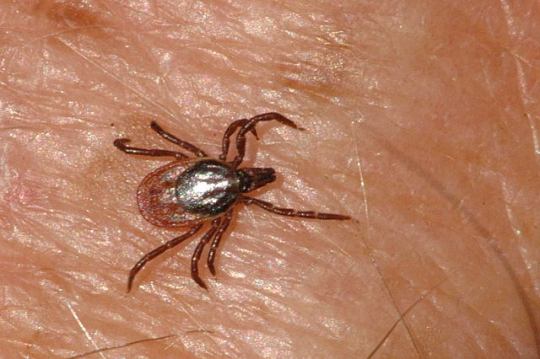
I. ricinus can also transmit a number of pathogens including Babesia divergens (babesiosis), louping ill virus, tick-borne encephalitis virus, Borrelia burgdorferi (Lyme disease) and Anaplasma phagocytophila (tick-borne fever of ruminants, human granulocytic anaplasmosis).

Castor Bean TickIxodes.ricinus.searchingJames Lindsey at Ecology of Commanster, CC BY-SA 3.0, https://commons.wikimedia.org/w/index.php?curid=1669738