Diagnosed with multiple sclerosis, documentarian Matt Embry takes viewers on a transnational journey — from Italy to Canada, and from the lab to the home — in order to examine the politics of the condition.
_________________
**Comment**
I’ve not seen the entire film but it looks promising. Please know that many MS cases may have an underlying infectious cause like Lyme disease. Treat the infection and the MS symptoms get better or disappear altogether.
LOS ANGELES (CBSLA) – Los Angeles city and county leaders announced Monday they have purchased 20,000 coronavirus testing kits from a South Korean biotech company.
The L.A. City Council and the L.A. Board of Supervisors jointly spent $1.25 million to immediately purchase 20,000 tests from Seegene Technologies, the two agencies said in a news release.
__________________
**Comment**
This should never have had to happen. Because our conflict-riddled CDC insists upon having their own tests so they can patent them for profit, the U.S. STILL doesn’t have a reliable test for COVID-19.
The CDC has a long and sordid history of dissing any tests but their own. They want to design the test for their purposes so ultimately they can create a vaccine and other patentable products.
ILADS Launches Registry and Crowd-Solving Platform: One Health Lyme
Chevy Chase, MD – March 26, 2020 – The International Lyme and Associated Diseases Society (ILADS) is launching a new registry and crowd-solving platform, One Health Lyme, which will provide valuable resources to healthcare providers who are treating patients with Lyme and related diseases. In the planning stages for a while, the launch of the One Health Lyme initiative is being pushed forward expeditiously in response to the COVID-19 pandemic.
One Health Lyme will give Lyme healthcare providers a unique opportunity to track and communicate the impact of COVID-19 on this specific group of patients. The unique immunological lesions of these patients will help us gain insights of general importance in the battle against COVID-19.
Similar to initiatives operated by specialty societies that treat autoimmune diseases, this project will collect data from physicians about patient experiences and treatments. The goal is to create a vast repository of information about lyme that physicians and researchers can use to study and treat it and related diseases. “Doctors are in the best position to provide insights into patient experiences and treatment efficacy,” says Dr. Robert Mozayeni, president of ILADS. “Our members are medical professionals who treat these vulnerable patients. One Health Lyme gives them a place to collect and centralize treatment response data.”
One Health Lyme will also be used to provide educational material and support crowd-sourcing solutions—such as aggregating information about the efficacy of a new treatment. “Not only do we hope that it will provide real time educational information, but we also hope it will quickly supply data about what works for various subgroups of patients,” says Mozayeni.
Other Lyme organizations, such as MyLymeData, have been collecting patient-focused information, and ILADS plans to seek a partnership with them, allowing medical professionals to benefit from both initiatives.
The initiative is a collaborative effort with Groopit.co, whose software is designed specifically to collect data in real time from members of an extended team. Allowing loosely connected people to work together efficiently, Groopit helps organizations crowd solve, bring people together, and get quick results.
Now is a particularly important time to be collecting this information. ILADS members are in a unique position to understand how COVID-19 affects their patients. By centralizing and sharing their observations and data, ILADS hopes that the One Health Lyme will not only inform how lyme disease patients are cared for, but it may provide insights into COVID-19 itself. “It may be that what we learn from our patients will help everyone,” notes Mozayeni.
About ILADS
ILADS is a nonprofit, international, multi-disciplinary medical society, dedicated to the diagnosis and appropriate treatment of Lyme and its associated diseases. ILADS promotes understanding of Lyme through research and education and strongly supports physicians and other healthcare professionals dedicated to advancing the standard of care for Lyme and its associated diseases. For more information, visit: www.ilads.org
Espionage and Trade Theft: 3 Charged in China-Related Cases
By Dr. Mercola
March 23, 2020
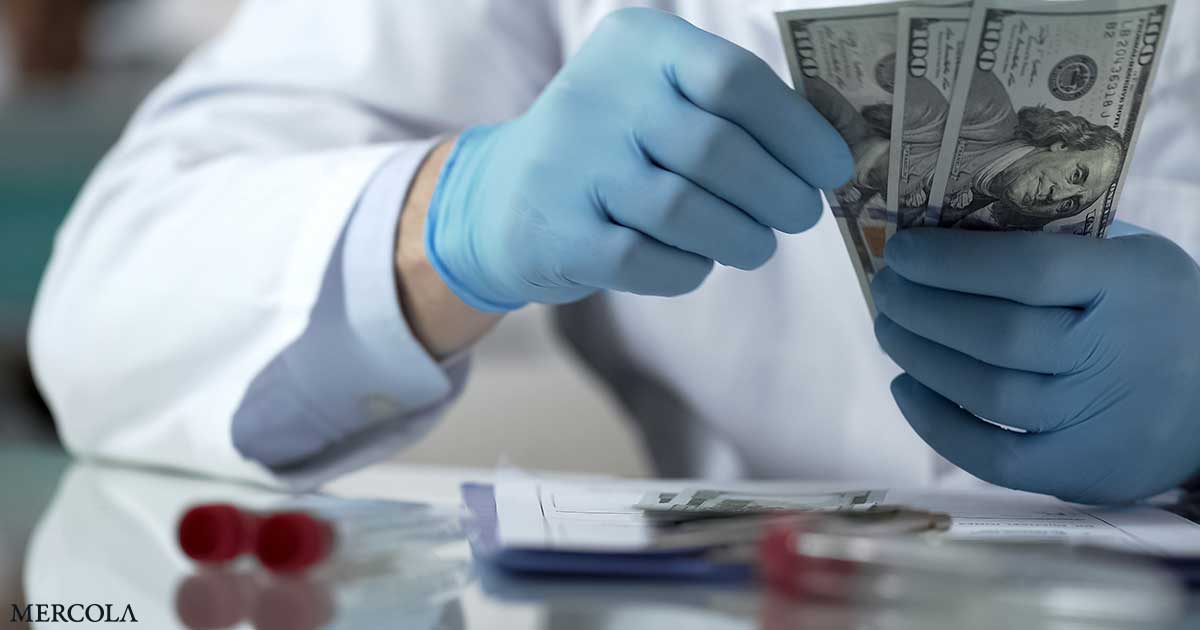
It may sound like a “Mission Impossible” movie plot but, in reality, truth again proves stranger than fiction, with the arrests of two Chinese nationals and a Harvard professor, all charged with espionage, theft of trade secrets and hacking.
The U.S. Department of Justice announced in late January 2020 that an investigation spanning several years had culminated in charges against the three. Charles Lieber, chairman of Harvard’s department of chemistry and chemical biology, was charged with “making a materially false, fictitious and fraudulent statement.” He allegedly also received $50,000 a month from China’s Wuhan University of Technology (WUT) and other financial perks to establish a research lab at WUT — all while employed at Harvard.
Yanqing Ye was indicted for “visa fraud, making false statements, acting as an agent of a foreign government and conspiracy;” Zaosong Zheng was arrested in December at Boston’s airport and charged with smuggling goods from the United States and making false, fictitious or fraudulent statements.
Together, the three are suspected of colluding with China’s Wuhan University of Technology in various ways to “seek to lure Chinese overseas talent and foreign experts to bring their knowledge and experience to China and reward individuals for stealing proprietary information.” Additionally, Zheng admitted to stealing 21 vials of biological research and attempting to smuggle them out of the United States aboard a flight destined for China.
What was in those vials has not been publicly divulged, but the very idea that such a thing happened in such close proximity to the coronavirus outbreak leaves an open door for more questions and all kinds of possibilities.
It’s not like things like this haven’t happened elsewhere in other scenarios, especially with university professors double-dipping with payments from nefarious sources. Take University of Florida’s Kevin Folta, for example, who vehemently denied ever receiving any money from Monsanto, was caught doing just the opposite when his email correspondence was released in response to a freedom of information (FOIA) request by US Right to Know.
Folta received a $25,000 unrestricted grant from Monsanto, and Folta wrote back to a Monsanto executive saying: “I am grateful for this opportunity and promise a solid return on the investment.” Subsequently, Folta laid out a three-tiered program that included training the trainers, engaging the public and on-campus training at the University of Florida — all with the intent of hiding important health information about Monsanto’s Roundup herbicide.
That said, the health care industry itself is part of the plot to deny the public the real truth about what some drugs can or cannot do. A ProPublica analysis revealed nearly 9 in 10 cardiologists, and 7 in 10 internists and family practitioners, included in their study receivedpayments from drug or device companies in 2014.
ProPublica analyzed the prescribing habits of doctors who wrote at least 1,000 prescriptions in the Medicare Part D drug program. The doctors belonged to five common specialties: psychiatry, cardiovascular disease, family medicine, internal medicine and ophthalmology.
Not only was the receipt of drug-company money associated with a higher percentage of brand-name drug prescriptions, but the prescriptions rose with the amount of money received.
And, to make matters worse, it appears that sometimes even those who are supposed to be making and enforcing laws are not immune to bribes and buy-offs. Investigations have also shown that when lobbyists for huge corporations want to donate to the associations that fund attorneys general (AG) political campaigns, they can, and do — and in so doing gain greater access to the AG for their favorite causes.
For example, when CBS News investigated in 2018, they found that to attend a lavish four-day retreat with state AGs, corporate lobbyists only needed to donate $125,000. At one such retreat on Kiawah Island, South Carolina, lobbyists could golf, play pool and enjoy yoga on the beach, sign up for a dolphin tour and enjoy an open bar with the top law enforcement officials of each state, CBS said.
It’s certainly a lucrative business for both the givers and the takers — where the only loser is the public. It isn’t right. It isn’t fair. And, in many cases it isn’t for the public good. That’s why it’s important to keep your eyes open and question everything.
Now declared as a pandemic, COVID-19 continues to take its toll on people’s health, and thousands have already fallen victim to this mysterious illness. But as the virus spreads quickly, so does the misinformation surrounding it. In these trying times, you must learn to separate fact from fiction so you can take the right measures to safeguard your health.
__________________
**Comment**
Clearly Science needs an overhaul. Turns out cartoons we watched as children where the mad scientist tries to take over the world is closer to reality than fiction.
Epidemiologist Neil Ferguson, who created the highly-cited Imperial College London coronavirus model, which has been cited by organizations like The New York Times and has been instrumental in governmental policy decision-making, offered a massively downgraded projection of the potential deathtoll on Wednesday. (See link for article)
___________________
**Comment**
A few key quotes:
Ferguson’s change of tune comes days after Oxford epidemiologist Sunetra Gupta criticized the professor’s model.
“I am surprised that there has been such unqualified acceptance of the Imperial model,” Gupta said, according to the Financial Times.
The important issue Gupta’s team raises is that COVID-19 was spreading much earlier than suspected and concludes that as many as half of the people in the United Kingdom have already been infected by COVID-19.
Which brings up the probability of this happening in the U.S. as well.
My entire family, as well as many neighbors and friends feel we’ve already had COVID-19 earlier this year and live to tell the tale.
But, like The Wall Street Journal’s writers point out, it is quite possible that “A universal quarantine may not be worth the costs it imposes on the economy, community and individual mental and physical health” and that statisticians should be called upon to “evaluate the empirical basis of the current lockdowns.”