Author Archive

Moose Ticks Are Dining on Local Deer

https://www.telegram.com/story/sports/2020/10/29/outdoors-moose-ticks-dining-our-deer/

Moose ticks are dining on local deer

Back-breaking work begins after succeeding in hunt
By Mark Blazis
Correspondent
Tufts University infectious disease authority Dr. Sam Telford collects a vial of engorged moose ticks from a local white-tailed deer.Tufts University Infectious disease authority Dr. Sam Telford Collects a vial of engorged moose ticks from a local white-tailed deer.Photo/Mark Blazis

Any time you shoot a deer that’s heavier than you are is worthy of celebration. So I was ecstatic when I dropped a big buck with my arrow last Monday evening. Few events are more exciting than finally getting a deer you’ve worked hard for. But once he’s down, the reality of potentially backbreaking work just begins.  (See link for article)

_____________________

**Comment**

Excerpt:  

Besides the ubiquitous moose ticks — also called winter ticks — there were many lice, louse flies and only male deer ticks, which are of no value to Sam’s research. “The female deer ticks must have already engorged and dropped off,” Sam concluded disappointingly.

This article mentions a very practical tip: spraying the area under dead bucks with permethrin or other acaricide right away to kill any females that drop off that could lay 2,000-3,000 eggs infesting your yard.
Hanging deer in the backyard can unintentionally spread ticks and disease.

Laying the ground with an insecticide-sprayed tarp is the answer to this.

Telford states that moose ticks in Northern New England suck the blood of 1st year moose enough to cause over half of them to die every winter. He states they don’t prefer human blood but the native Americans had an expression for them that translates, “bite like fire,” so they evidently DO bite humans!

Moose ticks also typically spend their entire life on one host.

The article states there were abundant, wingless louse flies or keds – which unfortunately Telford did not collect. The female releases her young on the forest floor where they attach to bedded deer, which they feed on almost exclusively.  Again, the article states they don’t care for humans but they CAN carry bacteria and their potential disease threat remains unclear.

Yet, the following articles show THEY DO TRANSMIT TO HUMANS:

It’s truly unfortunate that transmission studies remain in infancy.  The one all the researchers refer to has an inch of dust on it.

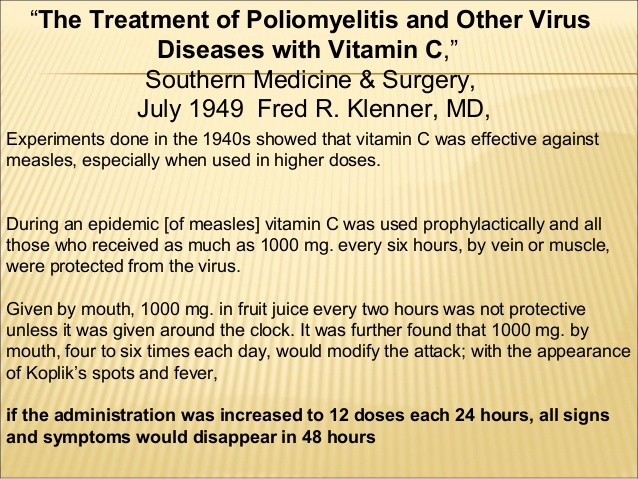
Vitamin C on COVID-19 Works

https://vimeo.com/475349585?ref=em-share    Video Here:  Approx. 17 Min.

Dr. Victor Marcial Vega

Dr Vega, MD gives info on vit C in COVID-19. He is a radiation oncologist, board certified. Interesting (8.00 min), he plans to treat in a clinical study students in high school with oral vit C, so he can prove schools can stay open with vit C. 

He informs about studies and treatment with high dose intravenous vitamin C and oral vit C in COVID-19 and other virus-related diseases.

For more:

Global Repository For Research into the Collateral Effects of COVID-19 Measures

https://collateralglobal.org  Go here for studies

A global repository for research into the collateral effects of the COVID-19 lockdown measures

iu-3

The aim of Collateral Global is to provide a resource for scholarship and research into the collateral effects of responses to the COVID-19 pandemic. There are two main facets to this:

  • on the one hand we need to understand how effective the response strategies to COVID-19 have been against their original objectives, and
  • on the other hand to build an understanding of the effect of these strategies on public health, the economy and how people live their lives.

Our aim is to gather this information from around the world and provide the data, research and other supporting material as a resource to inform public policy in the years ahead.

Study Shows Cloth Dragging for Ticks Only Catch A Minority

https://pubmed.ncbi.nlm.nih.gov/33128644/

One out of ten: low sampling efficiency of cloth dragging challenges abundance estimates of questing ticks

Affiliations expand

Abstract

Hard ticks (Acari: Ixodidae) act as important vectors of zoonotic pathogens. For instance, Borrelia burgdorferi s.l. spirochetes pose a severe health risk as aetiological agents of Lyme borreliosis. Commonly, to study the abundance of questing (host-seeking) ticks, a 1 m2 piece of cloth is dragged over vegetation for a determined distance. Here, we designed a tick-sampling study to estimate the sampling efficiency of this standard method. We established 10 m dragging transects in a hemiboreal mixed forest patch in SW Finland for a 5-day monitoring period.

  • Five of the transects were cloth-dragged 3× a day,
  • whereas another five transects were dragged 6× a day in a manner that after each morning, midday and afternoon dragging, a second dragging was conducted on the same transect immediately.

Captured Ixodes ricinus ticks were subsequently analyzed for tick-borne pathogens. The initial population size of nymphal ticks on a transect was approximated by the accumulated nymph catch from the dragging sessions. The sampling efficiency of the cloth dragging was low, as

  • a single dragging in a previously untouched vegetation strip always caught less than 12% (mean 6%) of the estimated population of active nymphs that were assumed to be questing during the study.
  • Clear results were not found for daily activity rhythm, as ticks were caught in all daily dragging sessions.
  • Approximately every third nymph and every second adult carried a pathogen, but nothing indicated that the occurrence of a pathogen affected the likelihood of the tick being caught by cloth dragging.
Our results suggest that only a minority of active ticks can be caught by a single cloth dragging. The abundance estimates in many tick investigations might thus be downward biased.

____________________

**Comment**

Cloth dragging to estimate tick prevalence has been used worldwide.  Similarly to the CDC’s past vastly low estimates of those infected with Lyme disease, and then having to increase this number 10-fold (which is still probably low), this study reveals tick prevalence to be much higher than we’ve been told due to single cloth dragging missing many ticks.  This in turn means there are more infected ticks that can transmit disease to animals and humans.

Such a simple study, yet profound in its findings.

COVID Vaccines Will Make People More Sick

https://blogs.mercola.com/sites/vitalvotes/archive/2020/11/02/covid-vaccines-will-make-people-more-sick.

COVID Vaccines Will Make People More Sick

A new study examining how informed consent is given to the COVID vaccine trial participants found that disclosure forms were not sufficient for the participants to understand that the vaccine could make them more susceptible to worse disease later.

“COVID‐19 vaccines designed to elicit neutralizing antibodies may sensitize vaccine recipients to more severe disease than if they were not vaccinated,” study authors said.

“Vaccines for SARS, MERS and RSV have never been approved, and the data generated in the development and testing of these vaccines suggest a serious mechanistic concern: that vaccines designed empirically using the traditional approach … may worsen COVID‐19 disease via antibody‐dependent enhancement (ADE).

“This risk is sufficiently obscured in clinical trial protocols and consent forms for ongoing COVID‐19 vaccine trials that adequate patient comprehension of this risk is unlikely to occur, obviating truly informed consent by subjects in these trials.”

SOURCE: The International Journal of Clinical Practice October 28, 2020

For more: