
https://news.northeastern.edu/2023/05/26/lyme-disease-treatment/
Could ‘new’ antibiotic treatment prevent chronic Lyme disease?
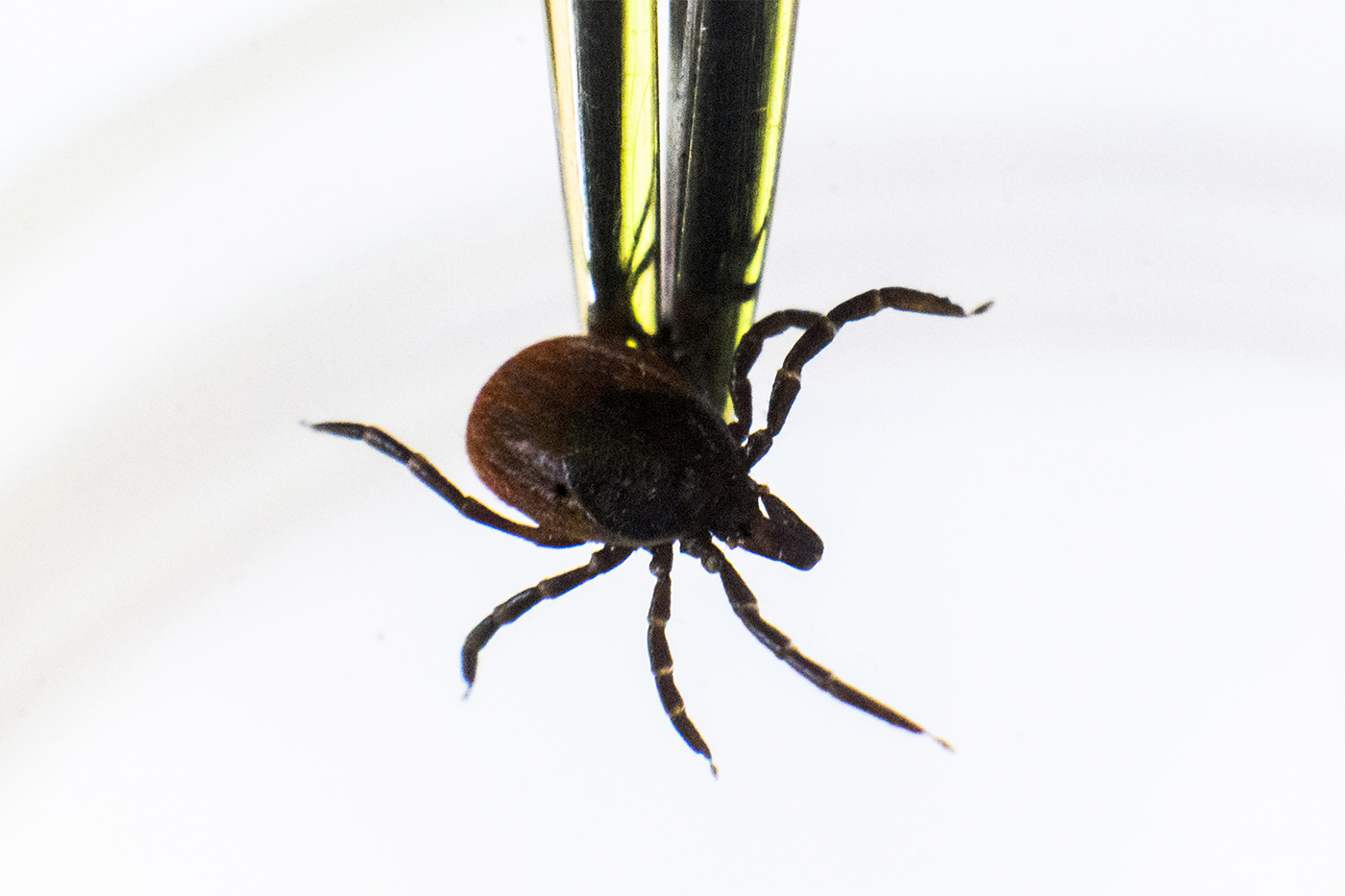
Every year, tens of thousands of new Lyme disease patients find that their symptoms persist even after the standard course of antibiotic treatment.
Instead of being cured, they find their lives upturned by chronic Lyme, also called persistent or post-treatment Lyme. Symptoms include bone-deep fatigue, cognitive difficulties, arthritis, muscle and joint pain and intermittent fevers, chills and sweats that can go on for months or years.
While medical solutions have proved elusive, a researcher at Northeastern University says he has developed a treatment for Lyme disease that could prevent chronic Lyme from developing in the first place.
Kim Lewis, distinguished professor of biology and director of Northeastern’s Antimicrobial Discovery Center, says human trials of his discovery may begin as early as next year.
Final toxicity trials will continue this summer, but so far the treatment—an antibiotic known as hygromycin A—has not been toxic in animals and has effectively cleared Lyme disease in mice, Lewis says.
He says the real promise of hygromycin A in preventing chronic Lyme is that it is a targeted antibiotic that selectively kills Lyme disease-causing bacteria without damaging the beneficial bacteria in the patient’s microbiome.
According to Lewis’ theory, the broad spectrum antibiotics traditionally prescribed for Lyme disease, doxycycline and amoxicillin, cause havoc in the gut by wiping out the healthy balance of bacteria.
“The microbiome has now been linked to almost every aspect of our health, especially the development of the immune system,” Lewis says.
(See link for article)
________________
A few points:
- While Lewis regurgitates that only 10% go on to develop chronic Lyme, the Bay Area Lyme Foundation, states that it’s closer to 34%. Microbiologist Holly Ahern shows it may be 60% or more. This matters because the greater the number, the more research money will be designated for it.
- Hygomycin A is found in the soil and it is weak against most bacteria but very potent against spirochetes.
- The final stage of animal toxicity studies will take place this summer and human trials may start next year.
For more:
- https://madisonarealymesupportgroup.com/2016/02/13/lyme-disease-treatment/
- https://madisonarealymesupportgroup.com/2022/02/02/promising-lyme-antibiotics-in-development/
- https://madisonarealymesupportgroup.com/2020/06/26/new-treatments-for-lyme-disease-on-the-horizon/
- https://madisonarealymesupportgroup.com/2020/03/14/potential-treatment-for-lyme-disease-kills-bacteria-that-may-cause-lingering-symptoms-study-finds-in-a-petri-dish-mice/
- https://madisonarealymesupportgroup.com/2020/12/28/4-distinct-post-treatment-lyme-disease-syndromes/
 Madison Area Lyme Support Group