By Marjo Valonen, MD
It was the happiest moment of my life, to hold my twin babies for the first time. I am so glad that I didn’t know what was ahead of me: that I would be bedridden and seriously ill for years. That I couldn’t walk, play with my kids, or have the strength to sing to them. Even smiling at them would require all the energy I could muster.
Ever since I was six years old, I wanted to be a doctor. Everything about humans and human health interested me. My first dream was to be a brain surgeon, but when I was actually working as a surgeon, I realized that this wasn’t quite what I wanted. I aspired to understand the whole human body, instead of settling for any single specialty. My thirst for knowledge drove me instead into looking at traditional Chinese medicine and then integrative medicine.
Unexplained symptoms
So, when I fell so ill after giving birth to our twin boys and one and a half years later to our daughter, I was confused. Confused, because I thought that I already knew so much. I consulted countless colleagues, the best in their field, but no one knew what was wrong with me. And sadly, it seems that not knowing, is for many doctors, too difficult a burden to bear. They didn’t think: oh wow, this is something I don’t know, let’s study more and find out! Instead, they got angry at the patient that dared to have symptoms or illness that they didn’t have answers for.
My symptoms included extreme fatigue. Even keeping my eyes open felt like too much work. If I tried to get up and walk, I fainted. So, confined to my bed, I relied on my husband for everything. He brought me my food, carried me to the bathroom, took care of our three small children and maintained his own work outside the home. He is the real hero of this story!
Wracked with pain, I had sinus infections – with pus constantly oozing out of my sinus cavities – for which I underwent numerous operations. However, when doctors couldn’t find anything wrong with my lab tests, they told me that I was just imagining it all, that it was all in my head, and that I was causing myself to be ill. One colleague even said to me, “You’re just lazy. You don’t want to work.”
The search for a cure
The worst of it lasted about two years. After that, I was able to sit and walk a bit, but I still couldn’t do much. I started searching for answers on the Internet and reading recommended books. I did everything I could think of: I healed my gut, I found many food intolerances, balanced my hormones, and supported my thyroid and adrenals.
Finally, I ran into the question of chronic infections. I ran tests on myself and confirmed my suspicion of having Lyme disease. It turns out I had loads of other infections, as well. That started me on the next step of my journey back to health: finding out how to treat these infections.
Initially, I was told that I had to treat it with antibiotics. This didn’t sit well with me – with how I think about life and how we should treat our bodies. But I eventually decided to try antibiotics, since that was the conventional procedure. ILADS is doing great work regarding Borrelia, and I tried the combination of antibiotics suggested by ILADS. But they were too hard on my gut. My system just couldn’t handle them.
The Cowden Protocol
I started looking at herbal solutions. I loved learning about the many different ways herbs can help and support us. I tried many different protocols but none of them worked very well for me. Then, I heard from my colleague Dr. Armin Schwarzbach about the support protocol developed by Dr. Lee Cowden, called CSP (Cowden Support Program). Imagine my joy and gratitude when after a month or two I started feeling better. I could walk and hug my kids and enjoy life!
Sharing my own healing with others
At last, after such a long period of professional inactivity, I began seeing patients again. As I encountered those who had the same problems that I had, I used the Cowden Protocol with them. We’re still amazed at how well it works! I’m glad that I was able to find a way to help my patients without having to use antibiotics.
Typically, patients don’t have many positive test results at first. These usually appear after a short period of initial treatment. When you give patients herbs, their immune system starts fighting against the infection. Some patients are so sick when they first come to my office that their immune system is totally shut down and can’t fight anything. In that situation, all results will be negative.
If their doctor doesn’t know this and understand the underlying mechanisms, they will just look at the negative lab results and declare the patient healthy, when in fact these are the sickest cases needing the most help and support. That is why the diagnosis needs to be based on clinical picture and symptoms, not just lab results.
Of the symptoms, pain and fatigue are typically the worst part of being ill. We ask them to rate both between 0 and 10, with 10 being the worst imaginable. We do this at the beginning of treatment, and we then follow their self-assessments.
Sometimes, both objective lab results and subjective self-assessments improve at more or less the same rate. When that happens, we’re really happy and can trust that the treatment is working. One or the other isn’t enough. If the lab results are great, but the patient is fatigued and in pain, then the infection might just be hiding somewhere. Then, you have to sort of dig it out.
Cure or remission?
Can Lyme disease be fully cured? Or, must we be content with tolerable remission of active symptoms? This is a good question.
I think that we can get our patients cured in such a way that Lyme doesn’t affect their life anymore. The question of whether or not we can ever be totally rid of Borrelia microbes cannot really be answered, since they can spread everywhere within the body. However, we all carry all sorts of microbes and parasites within us, at all times. That’s life. The question is, “Who is in charge: you, or the microbes within you?”
I agree with the assessment of the American cardiologist Dr. Thomas Levy: namely, that Borrelia is normally a commensal bug, requiring an already compromised autonomic nervous system to become infectious.
I contracted Lyme in the womb, from my mother. I carried it within me throughout my early years without noticing it. After the twin pregnancy and the birth of my daughter, during which I had many complications, my immune system took a hard hit. And, that’s when “the enemies” got the upper hand, moving from the incubation state to the acute one.
The immune system is key
I am convinced that my role as a doctor is fundamentally to support my patients’ immune systems. Only then can these microbes be defeated. Sometimes my patients express their concerns about ticks being everywhere. I remind them at those times that we can’t live in a bubble. Some have famously tried it, but it isn’t a very good solution. We neither can nor should stop our children from running and playing in the woods. The best thing is to take care of our own body and immune system so that we are strong enough to resist all of this.
This leads to the whole idea of preventative wellness. This is where medicine is seen not so much as treating diseases as helping people so they do not become ill in the first place. That’s one of the reasons why I think Dr. Cowden’s program is simply genius, because the use of antimicrobial herbs is constantly changing, affecting different kinds of microbes – not just Borrelia, but also the co-infections. The antimicrobial herbs, moreover, are complemented by detoxifying and anti-inflammatory ones, as well as herbs that support energy production. Some people think that it’s enough to take antibiotics or even antimicrobial herbs. But, that’s just killing pathogens. I advocate a much wider approach, one that supports the whole system. Uprooting is not enough. You have to replant.
What happens after symptoms disappear?
Our patients receive an ongoing maintenance program from us for the rest of their lives. By the time that they are fully functional again, we’ve known them for several months or, in the harder cases, several years. So, we usually have acquired a good idea of their genetic composition and their ability to withstand these things on their own. Hence, someone with a robust constitution may need only a basic multi-vitamin and some detox and supporting herbs.
On the other hand, a very fragile person might need other things to support them. I myself have genetic problems with my immune and detox systems, but I’m doing fine with herbs. I am still taking selected herbs as well as some important immune supporting supplements and I’ll never give them up! By taking care of myself, I can live a normal life.
In fact, I travel throughout Europe teaching about herbs. When I speak at conferences and other venues, I like to share patient cases. They are real life, allowing me to demonstrate what we are doing and how well it’s working. I give detailed information on what herbs I use and in what dosages. My mission, the reason why I’m going around Europe, and now also the States, talking about herbs, is to teach other professionals how to help others in the same way.
So, what began as my own personal interest has become my life’s work.
The future of medicine
I believe we’re living already the future of medicine. It’s so great that we have researchers like Professor Eva Sapi, of the University of New Haven. So, we’re constantly getting more information on how herbs work. Of course, there are always those people who think that herbs can’t possibly be that effective. They need to be reminded that the Nobel Prize for Medicine was given in 2015 to Professor Tu Youyou, a pharmacologist at the China Academy of Chinese Medical Sciences in Beijing, in recognition of her work with the herb Artemisia annua. Also, about 50% of conventional medicines are developed from natural substances, including herbs. But, since you can’t patent something derived from nature, then medical companies have to change or break these substances in order to obtain patents and then charge big prices for their products.
On antibiotics
Returning to the question of antibiotics, I think we often use them irresponsibly, which leads to the loss of their efficacy. Bacterial resistance has become a big problem. It is much more difficult for bacteria to develop resistance to an herb, though, which may have tens or even hundreds of different substances with which it fights bacteria.
It’s quite easy for a bacterium to develop resistance to an antibiotic, since it is just this one thing against which it has to fight. But when you send hundreds of things against that bacterium, it has a much harder time developing effective resistance.
I don’t think it’s wrong to use antibiotics when they are needed. The problem is when we use too much of them, for minor conditions. We’re also giving them to our livestock, which results in indirect antibiotic exposure for us. What was designed to help us is really hurting us.
Bringing back hope
Lyme and co-infections can be devastating. Not just to the person who falls ill, but for their loved ones as well. Our family has been through it, and that is why I want to share my story and share my knowledge. I don’t want anyone to have to go through as much pain and suffering as I had to.
With the herbal and supplemental protocols that we use at our clinic, we’ve been able to help even the worst cases of Lyme and co-infections. Even those that have been taking antibiotics for years, without getting better. So, I don’t want anyone to lose hope – there is still lots that can be done. It may take some detective work to find the right protocols, but I am a living proof that it is possible!
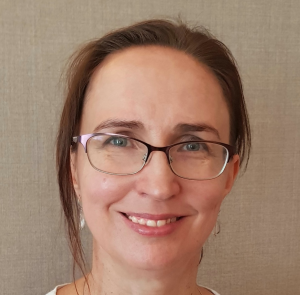
Marjo Valonen, MD, is medical director of Astris Medical Center in Helsinki, Finland. Her clinic specializes in tick-borne and other chronic infectious illnesses. She has also lectured widely at Lyme-related conferences.
_________________
For more: https://madisonarealymesupportgroup.com/2016/02/13/lyme-disease-treatment/ Herbal options are listed in the treatment section.
https://madisonarealymesupportgroup.com/2019/02/07/which-herbs-for-inflammation/
https://madisonarealymesupportgroup.com/2018/10/24/herbs-habits-to-revive-your-gut/
https://madisonarealymesupportgroup.com/2018/04/02/cant-sleep-18-plants-herbs-can-help/



 Madison Area Lyme Support Group