Archive for April, 2019

Why I Use the Term “Fascism” & Why I Am Unafraid To Do So

https://jameslyonsweiler.com/2019/04/16/why-i-use-the-term-fascism-and-why-i-am-unafraid-to-do-so/

Why I Use the Term “Fascism” and Why I Am Unafraid To Do So

By James Lyons-Weiler, PhD

4/16/2019

WHEN GOVERNMENT AND CORPORATIONS WORK TOGETHER to advance and perpetuate their power and wealth at the cost of the average citizen’s well-being, we have a few terms that we can use. Some use “corporatism”, but, in a capitalist society, being pro-corporation has a positive sheen. It’s intermingled with being “pro-American”.

The corporatism that has a stranglehold on our regulatory bodies has occured via a process call “regulatory capture”, which means nothing less that a take-over of certain arms of the executive branch of government. Regulatory agency directors are appointed, not elected, and thus pro-corporate policies can take hold and stay in place as long as the officials in the agency remain in place. That’s why CDC can get away with scientific fraud, with not doing the right science, or even with not doing more of the wrong science. They are guarding the bodies – and this will eventually be their legacy: criminals acting at the behest of corrupt and greedy corporations hiding behind the guise of protecting public health, when, in reality, they are protecting contracts for aging and increasingly ineffective vaccines.

One step that is taken by fascist dictators is to dissolve the separatation of powers. The National Vaccine Injury Compensation Program (aka “Vaccine Court”) is administered by the HHS. They are an arm of the executive branch that expresses HHS (executive) policy. This is wrong. There is a move afoot to increase the use of “Special Masters” in many areas of law that impact liability – and when corporations write the rules, they remove themselves as defendants, make the government the defendant, and the corporatist government arm that is the defendant (as HHS is in every vaccine injury case), the defendant oversees the “judges”. That turns my stomach.

Every American citizen whose grandfather or grandmother fought European fascism in World War II should bristle and act upon how corporations have all but consumed US regulatory agencies. Those who stand to profit from this neofascism actually applaud regulatory capture. But in a US in which corporations can make unlimited donations to political candidates, including via dark-money organizations and SUPER PACS, either we work to change the rules, or will submit to a new form of government of the corporation, by the corporation and for the corporation.

It’s all too easy to throw the term “fascism” across party lines, as if undue corporate influences that better the position of candidates in one party is more evil than the same level of undue corporate influences that better the positions of candidates in another party. As fascists keep the people separarated and confused along “party lines” defined by token divisive variations on social norms, partisans tend to fall into the trap of demonizing their fellow citizens across party lines without being able to see the puppet strings of those who want to keep the populus separated, numb and uninformed to the chronic pilfering of our wealth, and our health.

I honestly wonder if modern fascists realize they are fascists?

**Comment**

While this was written about the vaccine fraud occurring in our country, this same issue is alive and well across the board – but particularly in how Lyme/MSIDS is being handled.  If you are new to this nightmare, please read the following articles:

https://madisonarealymesupportgroup.com/2018/05/15/news-release-on-57-1-million-lyme-disease-lawsuit-filed-against-cdc/  Instead of implementing Dr. Lee’s science-based direct DNA test for improving patient care, the CDC has chosen to use its regulatory power to block widespread application of this highly reliable direct DNA test and channel public funds to promote CDC’s own patented, but immature indirect metabolomics technology for Lyme disease diagnosis, a technology known to be prone to false positives.

https://madisonarealymesupportgroup.com/2019/03/05/patient-lawsuit-against-idsa-insurers-moves-forward-in-texas/  In the crosshairs of the case are six major architects and proponents of the guidelinesthat have dogmatically ruled Lyme disease care for two decades: Raymond J. Dattwyler, John J. Halperin, Eugene Shapiro, Leonard Sigal, Allen Steere, and Gary P. Wormser. (A seventh, Robert Nadelman, died in 2018.)

Beyond that A-list of Lyme actors, the lawsuit also accuses eight insurers of conspiring with the IDSA and the Lyme architects to advance treatment protocols that limited care options to the 25 named plaintiffs, two deceased, for whom the protocols did not work.

The companies are Blue Cross And Blue Shield Association, Anthem, Inc., Blue Cross And Blue Shield Of Texas, Aetna Inc., Cigna Corporation, Kaiser Permanente, Inc., United Healthcare Services, Inc., and Unitedhealth Group Incorporated.

https://madisonarealymesupportgroup.com/2017/12/13/suppression-of-microscopy-for-lyme-diagnostics-professor-laane/  So why are there several indications of the active repression and sabotage of new, better and direct ways to diagnose Lyme? Is professor Laane’s story unique or showing a doisturbing pattern?

“This never happened before on any topic in the history of science in Norway”, Laane said in his interview with the makers of ‘Under Our Skin Emergence’.

Yet also in other countries scientists have been attacked for working on promising new and direct Lyme tests.

In 2014, French lab director Schaller was fined with paying 280,000 euro to the government and was sentenced to nine months in jail. Also in 2014 the American Centers for Disease Control and Prevention (CDC) publicly attacked the credibility of Advanced Laboratory Services, which had developed a culture-based test for Lyme disease diagnosis. The basis for the CDC’s attack has since been proven wrong, yet the CDC has never retracted the article in which the errant criticism was made.

A direct and ‘no false-positive’ DNA test for Lyme was no longer made available to the general public, after its inventor was fired from a Connecticut hospital in 2010. And recently media attacked the tests of specialised labs in Germany, using undercover reporters and twisted patients’ stories, claiming they were not ‘FDA approved’. As professor Ahern explained in her recent interview, none of the tests promoted by the CDC or your national Health agencies are ‘FDA approved’.
And the beat plays on in Lymeland…….

Human Bartonellosis: An Underappreciated Public Health Problem?

https://www.mdpi.com/2414-6366/4/2/69

Trop. Med. Infect. Dis. 2019, 4(2), 69; https://doi.org/10.3390/tropicalmed4020069

Human Bartonellosis: An Underappreciated Public Health Problem?

Published: 19 April 2019
(This article belongs to the Special Issue Recent Advancements on Arthropod-Borne Infectious Diseases)

Abstract

Bartonella spp. bacteria can be found around the globe and are the causative agents of multiple human diseases. The most well-known infection is called cat-scratch disease, which causes mild lymphadenopathy and fever. As our knowledge of these bacteria grows, new presentations of the disease have been recognized, with serious manifestations. Not only has more severe disease been associated with these bacteria but also Bartonella species have been discovered in a wide range of mammals, and the pathogens’ DNA can be found in multiple vectors. This review will focus on some common mammalian reservoirs as well as the suspected vectors in relation to the disease transmission and prevalence. Understanding the complex interactions between these bacteria, their vectors, and their reservoirs, as well as the breadth of infection by Bartonella around the world will help to assess the impact of Bartonellosis on public health. View Full-Text

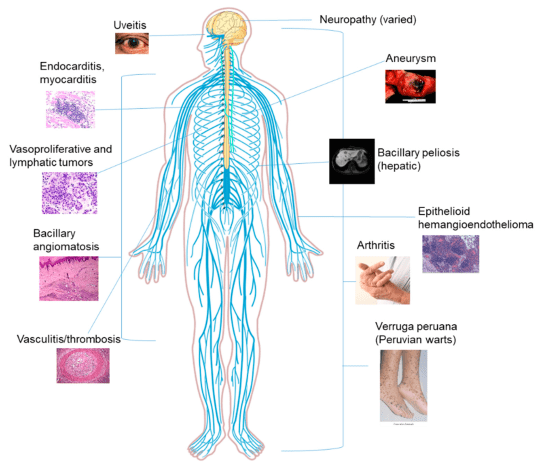
tropicalmed-04-00069-g001
Figure 1  The Clinical Manifestations of Bartonellosis
Excerpt from full-text
Known diseases caused by Bartonella infections include:
  • Carrion’s disease
  • cat-scratch disease
  • chronic lymphadenopathy
  • trench fever
  • chronic bacteraemia
  • culture-negative endocarditis
  • bacilliary angiomatosis
  • bacilliary peliosis
  • vasculitis
  • uveitis [1,2,4,6,7,9,10,11].
Recently, Bartonella infections have been linked to more diverse manifestations such as:
  • hallucinations
  • weight loss
  • muscle fatigue
  • partial paralysis
  • pediatric acute-onset neuropsychiatric syndrome (PANS)
  • other neurological manifestations [6,8,10].

A few case studies have also documented Bartonella in tumors, particularly vasoproliferative and those of mammary tissue [12,13,14]. The potential involvement of this pathogen in breast tumorigenesis is both disconcerting and warrants significantly more research.

Bartonella spp. are zoonotic pathogens transmitted from mammals to humans through a variety of insect vectors including the sand fly, cat fleas, and human body louse [4,5]. New evidence suggests that ticks, red ants, and spiders can also transmit Bartonella [15,16,17,18]. Bed bugs have been implicated in the transmission cycle of B. quintana and have been artificially infected [19]. B. quintana was found in bed bug feces for up to 18 days postinfection [19]. The diversity of newly discovered Bartonella species, the large number and ecologically diverse animal reservoir hosts, and the large spectrum of arthropod vectors that can transmit these bacteria among animals and humans are major causes for public health concern.

Regarding ticks….

3.2. Arachnids (Spiders and Ticks)

Over the last 10 years, the topic of ticks transmitting Bartonella species has been widely debated. Evidence exists to support the transmission of Bartonella through many different species of ticks.

Ixodid ticks, also known as hard ticks, appear to be the main type of tick associated with these bacteria. Tick cell lines have been used to show that Bartonella can replicate and survive within:

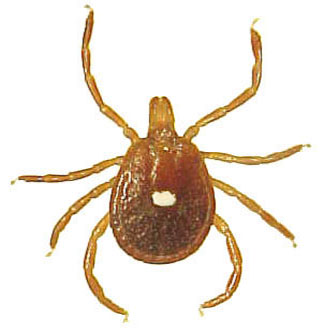
  • Amblyoma americanum (Lone Star Tick)
  • Rhipicephalus sanguineus (Brown Dog Tick)
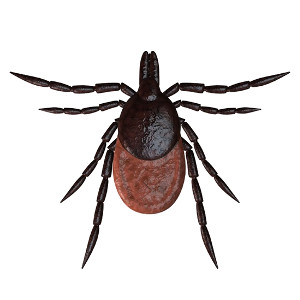
  • Ixodes scapularis cells [77] (Deer Tick)

In California, questing ticks of

  • Ixodes pacificus (Western Black legged Tick)
  • Dermacentor occidentalis (Pacific Coast Tick)
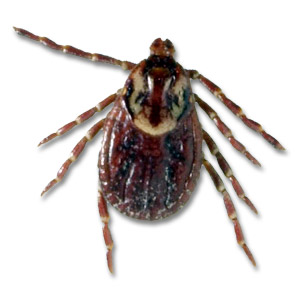
  • Dermacentor variabilis (American Dog Tick)

were collected when in the adult and nymphal stages and tested for Bartonella by PCR for the citrate synthase gene. [78]. All types of ticks were found to contain Bartonella DNA, although in varying percentages and locations. These data alone do not prove that ticks can transmit Bartonella spp. Bacteria; however, the results do show Bartonella DNA occurring naturally in these wild ticks.

In Palestine,

  • Hyalomma spp. (Genus of hard-bodied tick) found in Asia, Europe, & North and South Africa.
  • Haemphysalis spp. (The Asian Long-horned tick is an example)
  • Rhipicephalusspp. (Hard-bodied tick native to tropical Africa)

ticks were collected from domestic animals and tested by PCR for the Bartonella intergenic transcribed spacer (ITS) region [38]. These ticks were infected with 4 strains of Bartonella: B. rochalimae, B. chomelii, B. bovis, and B. koehlerae [38]. While this study tested a collection of ticks found on domestic animals, the results suggest that individuals in close contact with these animals should be aware of the potential for transmission through tick bites.

In a sampling of ticks (Ixodes scapularis and Dermacentor variabilis) and rodents (Peromyscus leucopus) from southern Indiana, the midgut contents of the tick species and rodent blood were analyzed by 16S sequencing. Bartonella was present in a moderate percentage (26% in D. variabilis and 13.3% in I. scapularis) of larvae and nymphs of both tick species, even those scored as unengorged, but was present in the majority (97.8%) of the rodents tested [79].
A survey of ticks from 16 states in the U.S. revealed that the overall prevalence of Bartonella henselae in Ixodes ticks was 2.5% [80].
Interestingly, the highest rate of both Borrelia spp. (63.2%) and B. henselae (10.3%) was found in Ixodes affinis ticks collected from North Carolina.
Ixodes ricinus has been the focus of studies that support tick transmission of Bartonella spp. in Europe. This is because I. ricinus is an important vector for tick-borne diseases in Europe [81]. I. ricinus have been collected in the larval, nymphal, and adult stages in Austria [82]. The analyses revealed that 2.1% of all ticks were infected with Bartonella spp., with the highest rate in ticks derived from Vienna (with a 7.5% infection rate), and that adult ticks had a higher prevalence than other stages [82].
B. henselae, B. doshiae, and B. grahamii DNA were amplified, and this was the first study to find Bartonella-infected ticks in Austria [82].
A recent One Health perspective review on Bartonella indicated that the overall presence of Bartonella in ticks (combining evidence from multiple surveillance studies) was approx. 15% [83].
B. henselae DNA has also been isolated from I. ricinus removed from an infected cat. However, whether the cat gave the tick Bartonella or vice versa cannot be established, so the vector competence of these ticks for transmission cannot be determined [30].
A lab in France has studied the relationship between I. ricinus and Bartonella transmission. One study focused on the ability of ticks to maintain infection from one life stage to the next and tested a vertical transmission from adults to eggs. The authors used B. henselae and found that a transstadial transmission was possible and that a transovarial transmission was not likely [84]. The researchers also supplied evidence to support the vector competency of I. ricinus by amplifying B. henselae DNA from the salivary glands of infected ticks and by amplifying DNA from blood 72 h after infected ticks fed through an artificial system [84]. Although the evidence strongly suggests the ability of ticks to transmit these bacteria, the system employed artificial means for feeding; therefore, one major critique has been that it is not representative of a natural blood meal from a host.
To address this issue, another experiment was performed to the assess vector competency of I. ricinus to transmit Bartonella birtlesii [85]. Mice were infected with B. birtlesii through an intravenous injection via a tail vein, and once mice were infected, naïve ticks were fed on the mice and kept for 3 months to molt. Nymphal ticks were shown to transmit B. birtlesii to naïve mice, and adult ticks were shown to infect blood through a feeder method [85]. B. birtlesii was identified in the blood of the recipient mice through PCR and immunofluorescence [85]. This evidence strongly supports the transmission of these bacteria by ticks. However, the limitation is that this only supports I. ricinus’ ability to transmit a very specific strain of Bartonella, B. birtlesii, which is not linked to human disease.
Concerns such as these related to vector competence and transmission can only be quelled by repeated studies utilizing multiple strains of Bartonella and differing tick species.
An interesting case study provided evidence of spiders transmitting Bartonella. A mother and two sons suffered from neurological symptoms following bites suspected from woodlouse hunter spiders [18]. Bartonella henselae DNA was amplified from the blood of the family as well as from a woodlouse and a woodlouse hunter spider near the family’s home [18]. It cannot be determined if the family contracted the bacteria from the woodlouse or the woodlouse hunter spider or if the lice and spiders contracted the bacteria from the family. This case study points to the importance for diagnosticians to test for bacterial infections after suspected arachnid bites. It also emphasizes the lack of knowledge on the possible vectors that transmit Bartonella as well as the range of manifestations by infection with Bartonella.

___________________

**Comment**

I think we can safely state that Bartonella IS an under appreciated health problem.


Tick Data – 76% Infected With One Organism, 20% Have Three or More Pathogens

https://www.tickcheck.com/statistics?

Each tick submitted for testing contributes to the research being conducted at TickCheck. By keeping records of all the results generated, we have been able to gain valuable insights into disease prevalence and co-infection rates. The comprehensive testing panel has been especially helpful in contributing to this research by ensuring all diseases and coinfections are accounted for when examining a tick.

Our current research shows:
  • 76% of ticks tested have at least one disease causing organism
  • 49% are co-infected with two or more organisms
  • 20% carry three or more
  • 9% of the ticks tested carry four or more

Infection Visualization by Tick Species

All Ticks Tested
76% Positive for Infection
Negative (24%)
_____________________________
  • 93% Positive for Infection
  • Negative (7%)
  • 63% Positive for Infection
  • Negative (37%)
  • 48% Positive for Infection
  • Negative (52%)

Coinfection Visualization

  • 2+ coinfection 49%
  • No coinfection 51%

Pathogenic Prevalence

The information below shows the positive/negative prevalence ratio of selected pathogens we test for. These pathogens were observed in ticks from the United States and Canada. Data set includes tests performed since TickCheck’s founding in 2014 and is updated in real time. (

Go to link at beginning to filter by state.  I’ve added the 3 listed for Wisconsin next to the entire sample size.  Please note the small sample sizes of WI ticks. 

Borrelia burgdorferi (deer tick) associated with Lyme disease

Sample size of 3,280 ticks.           70 Wisconsin ticks
  • 30% postive                                           33% positive
  • 70% negative                                         67% negative

Borrelia burgdorferi (western blacklegged tick) associated with Lyme disease

Sample size of 279 ticks.
  • 4% positive
  • 96% negative

Borrelia burgdorferi (lone star tick) associated with Lyme disease

Sample size of 899 ticks.
  • 8% positive
  • 92% negative

Borrelia burgdorferi (American dog tick) associated with Lyme disease

Sample size of 901 ticks.
  • 2% positive
  • 98% negative

Anaplasma phagocytophilum associated with anaplasmosis

Sample size of 2,146 ticks.           36 Wisconsin ticks
  • 8% positive                                           11% positive in Wisconsin
  • 92% negative                                        89% negative in Wisconsin

Babesia microti associated with babesiosis

Sample size of 1,894 ticks.           32 Wisconsin ticks
  • 4% positive                                            6% positive
  • 96% negative                                        94% negative

Bartonella spp. associated with bartonellosis

Sample size of 1,060 ticks.
  • 47% positive
  • 53% negative

Ehrlichia chaffeensis associated with ehrlichiosis

Sample size of 857 ticks.
  • 2% positive
  • 98% negative

Rickettsia spp. associated with Rocky Mountain spotted fever

Sample size of 944 ticks.
  • 23% postive
  • 77% negative

Francisella tularensis associated with tularemia

Sample size of 1,028 ticks.
  • 1% positive
  • 99% negative

Borrelia miyamotoi associated with B. miyamotoi

Sample size of 1,091 ticks.
  • 6% postive
  • 94% negative

Borrelia lonestari associated with STARI

Sample size of 831 ticks.
  • 19% postitive
  • 81% negative

Babesia spp. associated with babesiosis

Sample size of 564 ticks.
  • 5% positive
  • 95% negative

Mycoplasma spp. associated with Mycoplasma spp.

Sample size of 948 ticks.
  • 8% positive
  • 92% negative

Borrelia spp. associated with Borrelia spp.

Sample size of 612 ticks.
  • 17% postive
  • 83% negative

Powassan virus Lineage II associated with Deer tick virus

Sample size of 102 ticks.
  • 24% positive
  • 76% negative

Borrelia mayonii associated with Lyme disease

Sample size of 376 ticks.
  • 100% negative

Ehrlichia ewingii associated with ehrlichiosis

Sample size of 283 ticks.
  • 100% negative

Rickettsia amblyommii associated with Rocky Mountain spotted fever

Sample size of 177 ticks.
  • 46% positive
  • 54% negative

__________________

For more about Tickcheckhttps://www.tickcheck.com/about

You can request free tick identification by sending in a quality picture of your tick. Using real-time PCR (Polymerase Chain Reaction), Tickcheck can determine the presence of certain pathogens with an accuracy level of over 99.9%.  All information about how to send in your tick, costs of various tests, time for results, etc. is found here:  https://www.tickcheck.com/info/faq

Jonathan Weber is the founder and CEO of TickCheck and became acutely aware of the dangers of tick-borne diseases after his father caught Lyme during a family trip on the Appalachian Trail.

___________________

**Comment**

This information supports current research showing many patients are infected with numerous pathogens causing more severe illness & requiring far more than the CDC’s mono therapy of doxycycline:  https://madisonarealymesupportgroup.com/2018/10/30/study-shows-lyme-msids-patients-infected-with-many-pathogens-and-explains-why-we-are-so-sick/

It also supports previous work showing coinfections within ticks:  https://madisonarealymesupportgroup.com/2017/05/01/co-infection-of-ticks-the-rule-rather-than-the-exception/

What I want to know is WHY nothing’s being done about this?  Why are people STILL given 21 days of doxycycline when that particular med will not work on numerous pathogens?
Lastly, a word about statistics – this tick data should be used with caution & never to turn sick patients away due to a statistic. If you are the sorry sucker who gets bit by that ONE tick carrying a “statistically insignificant” pathogen, you still got bit and have to deal with it.  
Shame on doctors for turning sick people away due to statistics and maps.
There’s no such thing as an “insignificant” tick bite!

But, Patients are STILL being turned away:  https://madisonarealymesupportgroup.com/2019/04/22/its-just-crazy-why-is-lyme-disease-treatment-so-difficult-to-find-in-mississippi/

https://madisonarealymesupportgroup.com/2019/03/19/jacksonville-family-shares-daughters-9-month-diagnosis-of-rare-disease-which-isnt-rare-lyme/

https://madisonarealymesupportgroup.com/2018/05/31/no-lyme-in-the-south-guess-again/

https://madisonarealymesupportgroup.com/2017/10/24/no-lyme-in-oklahoma-yeah-right/

https://madisonarealymesupportgroup.com/2016/09/24/arkansas-kids-denied-lyme-treatment/  “They had the classic symptoms, they had the bulls eye rash, they had the joint pain, they had fevers and had flu like symptoms, yet we were denied treatment for at least two of them and I don’t understand how this is legal,” said Bowerman.

According to Dr. Naveen Patil, Director of the Infectious Disease Program, ADH,

“We don’t have Lyme Disease in Arkansas, we have the ticks that transmit Lyme Disease but we don’t have any recorded cases of Lyme Disease.” 

Bowerman also received a letter from the clinic stating doctors would no longer treat her children because she consistently questioned their medical advice and recommendations.

This is getting to be way beyond ludicrous.


Three-Antibiotic Cocktail Clears “Persister” Lyme Bacteria in Mouse Study

https://yubanet.com/scitech/three-antibiotic-cocktail-clears-persister-lyme-bacteria-in-mouse-study/

Three-Antibiotic Cocktail Clears “Persister” Lyme Bacteria in Mouse Study

Scientists isolate slow-growing variant Lyme bacteria forms that caused severe symptoms, resisted standard single-antibiotic Lyme treatment in the mouse model

The study, published March 28 in Discovery Medicine, also found that these “persister” Lyme bacteria were resistant to standard single-antibiotic Lyme treatments currently used to treat Lyme patients, while a three-antibiotic cocktail eradicated the Lyme bacteria in the mouse model.

For their study, the scientists isolated slow-growth forms of the Lyme bacterium, Borrelia burgdorferi. They found that, compared to normal fast-growth forms, the slow-growing forms caused more severe arthritis-like symptoms and resisted standard antibiotic treatment in test tube as well as in a mouse model. The scientists found that a combination of three antibiotics—daptomycin, doxycycline and ceftriaxone—cleared the Lyme infection in the study mice. The scientists now hope to test the combination in people with persistent Lyme disease.

“There is a lot of excitement in the field, because we now have not only a plausible explanation but also a potential solution for patients who suffer from persistent Lyme disease symptoms despite standard single-antibiotic treatment,” says study senior author Ying Zhang, MD, PhD, professor in the Department of Molecular Microbiology and Immunology at the Bloomberg School.

Lyme disease afflicts about 300,000 people in the United States every year. It is caused by Borrelia bacteria that live inside common species of ticks and are transmitted to humans by tick bites. Treatment with a single antibiotic—either doxycycline, amoxicillin or cefuroxime—for two to four weeks clears infection and resolves symptoms in most patients. However, some 10 to 20 percent of Lyme patients who are treated continue to suffer persistent symptoms including fatigue, muscle and joint aches, and brain fog that can six months or longer.

This post-treatment Lyme disease syndrome has been controversial among many doctors, in part because studies of these patients usually have failed to show that Borrelia bacteria can be cultured from their blood, especially after treatment—a standard method for revealing the presence of an infection or relapse. However, Borrelia, like many bacteria, can switch under low-nutrient conditions or other stresses from their normal fast-growth mode to variant forms as in “stationary phase” with little or no growth.

Studies also have hinted that these stationary-phase variants can be killed with the right drugs. Research by Zhang and colleagues has shown that a combination of daptomycin, doxycycline and cefoperazone reliably kills cultures of B. burgdorferi that include stationary-phase variant forms.

In this new study, Zhang and colleagues grew stationary-phase B. burgdorferi and isolated two distinct no-growth forms, called microcolony and planktonic forms. They confirmed that these forms are resistant to standard antibiotics such as doxycycline and even two-drug combinations used for treating Lyme disease. They also showed that these stationary-phase forms, compared to normal-growing spiral forms of B. burgdorferi, cause worse Lyme disease-like symptoms in mice—chiefly inflammation and joint-swelling. However, treating these mice with the combination of daptomycin, doxycycline and ceftriaxone effectively eradicated the infection.

“A lot of physicians have been wanting to do clinical trials of antibiotic combinations in post- treatment Lyme disease syndrome patients, and now we have results in animals that support the idea of such trials,” Zhang says.

He and his colleagues are making plans for their own trial of the persister drug combination against post-treatment Lyme disease syndrome. They note that the idea of persister bacteria causing severe and persistent infections with varying susceptibilities to different drugs might apply to other infectious diseases in which symptoms sometimes persist, despite standard treatment.

“Stationary Phase Persister/Biofilm Microcolony of Borrelia burgdorferi Causes More Severe Disease in a Mouse Model of Lyme Arthritis: Implications for Understanding Persistence, Post-Treatment Lyme Disease Syndrome (PTLDS), and Treatment Failure” was written by Jie Feng, Tingting Li, Rebecca Yee, Yuting Yuan, Chunxiang Bai, Menghua Cai, Wanliang Shi, Monica Embers, Cory Brayton, Harumi Saeki, Kathleen Gabrielson, and Ying Zhang.

Funding for the research was provided by the Steven and Alexandra Cohen Foundation, Global Lyme Alliance, LivLyme Foundation, NatCapLyme, and the Einstein-Sim Family Charitable Fund.

_________________

**Comment**

The 10-20% being used to identify those with remaining symptoms is inaccurate and NEEDS to change. For a great read explaining this:  https://madisonarealymesupportgroup.com/2019/02/25/medical-stalemate-what-causes-continuing-symptoms-after-lyme-treatment/

In short, Microbiologist Holly Ahern recently wrote that the arbitrary label “Post Treatment Lyme Disease Syndrome,” or PTLDS, which the CDC estimates to be 10-20% of patients only truly represents a subgroup of patients who have been diagnosed early, treated with standard short-term antibiotics, and whom remained symptomatic or developed new symptoms. It does not and should not include a third group who were misdiagnosed or undiagnosed beyond the first few weeks of infection. She states estimates based on existing research show this unaccounted for group makes up 30-40% of Lyme disease patients. By combining the PTLDS group with the third group, there are 60% of patients ending up with chronic symptoms, a number that more closely matches my experience as a patient advocate (9)  https://madisonarealymesupportgroup.com/2019/02/22/why-mainstream-lyme-msids-research-remains-in-the-dark-ages/

This is important because 60% is much bigger than 10-20% and reveals the vast suffering and the dire need for research on this neglected subgroup of patients.

Recently, this came out regarding treatment:  https://madisonarealymesupportgroup.com/2019/04/17/global-lyme-alliance-doing-kick-butt-research/

Dr. Kim Lewis and his team at Northeastern University, independently, discovered that Disulfiram, used for treating alcoholism, was extremely effective in culture and in mice in to killing burgdorferi in all forms.

This is promising as it won’t destroy the gut like antibiotics.


Help for Tic Disorders, OCD, Tourett’s, PANS & PANDAS

https://xn123.infusionsoft.app/app/page/maria-rickert-hong-webinar?

webinar signup

Victoria Barrios hosts the Thriving with a Tic Disorder online summit, which explores the root causes of tic disorders.

In this webinar, she’ll discuss highlights from what she’s learned from experts in her summit such as:

•William Walsh MD of the Walsh Research Institute

•Robert Melilo DC, developer of the Brain Balance program

•Jane Hersey of the Feingold Association

•Anke Zimmerman, homeopath

•Mark Blaxill, author of “The Age of Autism”


We’ll talk about things such as:

•Triggers of tics such as food additives and medication

•Nutritional deficiencies/imbalances

•Oxidative stress

•Neurotransmitter deficiencies/imbalances

•The role of stress and anxiety

•Homeopathy

•Drug-free approaches


Join us to ask your own questions!

RSVP at link above.

As a child, Victoria Barrios was diagnosed with Tourette Syndrome, a neurological disorder that involves uncontrollable, repetitive movements or tics.

After cutting out any and all added and artificial sugars and preservatives, her symptoms were no longer controlling her and she was able to function in society again.

Her world later shifted when she discovered that within two weeks of eliminating any and all dairy products she had not ONE sign of acne. 

She finally understood how food could either be our nourishment or our destruction.

She is now a health coach who is the host of the Thriving with a Tic Disorder online summit.

**Be sure to sign up, even if you can’t attend in person so you can get the replay when it comes out the next day.** 

___________________
**Comment**
According to a prominent WI LLMD, 80% of his Autistic and PANS patients have Lyme/MSIDS.