Archive for April, 2019

New Yorkers Brace for Self-cloning Asian Longhorned Tick

https://news.columbia.edu/news/new-yorkers-brace-self-cloning-asian-longhorned-tick

New Yorkers Brace for Self-cloning Asian Longhorned Tick

By
Adam Piore
March 28, 2019

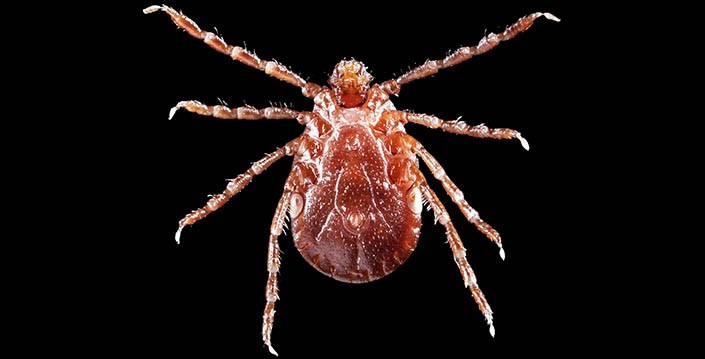
Staten Island residents have another reason to apply insect repellent and obsessively check for ticks this spring and summer: the population of a new, potentially dangerous invasive pest known as the Asian longhorned tick has grown dramatically across the borough, according to Columbia University researchers. And the tick—which unlike other local species can clone itself in large numbers—is likely to continue its conquest in the months ahead.

“The concern with this tick is that it could transmit human pathogens and make people sick,” explains researcher Maria Diuk-Wasser, an associate professor in the Columbia University Department of Ecology, Evolution and Environmental Biology, who studies ticks and human disease risk.

In a new study appearing in the April issue of the journal Emerging Infectious Diseases, Diuk-Wasser and colleagues provide the most exhaustive local census of the new species to date—and suggest the Staten Island infestation is far more advanced than previously known.

The researchers found the species Haemaphysalis longicornis in 7 of 13 parks surveyed in 2017 and in 16 of 32 in 2018. In one park, the density of the ticks per 1000 square meters rose almost 1,698 percent between 2017 and 2018, with the number of ticks picked up in the sample area rising from 85 to 1,529. They also found the ticks on anesthetized deer from the area.

The news comes less than a year after the New York City Department of Health announced the discovery of the first member of the species in the city—a single tick—found on southern Staten Island last August.

The tick, native to Asia and Australia, had been identified in the months prior to the Staten Island sighting in New Jersey, West Virginia, North Carolina and Arkansas and just a few weeks earlier in Westchester County. The Westchester sighting prompted a number of state senators to send a letter urging state health officials to act aggressively to stop the spread of the new species.

Public health officials are particularly concerned because the longhorned tick is notorious for its ability to quickly replicate itself. Unlike deer ticks, the common local variety known for carrying Lyme disease, the female Asian longhorned can copy itself through asexual reproduction in certain environmental conditions, or reproduce sexually, laying 1,000-2,000 eggs at a time. They are typically found in grass in addition to the forested habitats that  deer ticks prefer, adding a new complication to public health messaging. The Columbia analysis suggests that the public warnings may have come too late.

“The fact that longhorned tick populations are so high in southern Staten Island will make control of this species extremely  difficult,” says Meredith VanAcker, a member of Diuk-Wasser’s lab who collected the data as part of her Ph.D. thesis. “And because females don’t need to find male mates for reproduction, it is easier for the population to spread.”

The threat these new arrivals pose to human health is still unknown. In Asia, there have been reports of ticks passing on a virus that can cause a number of diseases, including hemorrhagic fever and ehrlichiosis, a bacterial illness that can cause flu-like symptoms and lead to serious complications if not treated.

The arrival of the species on Staten Island adds another unwelcome dimension to the region’s tick woes, which have grown dramatically in recent years. Thanks to an expanding deer population, Lyme disease spread through deer ticks has reached epidemic proportions in some areas of the Northeast. Deer ticks (also called black-legged ticks) are capable of disseminating six other human pathogens.

The first Asian long-horned tick in the U.S. was identified in New Jersey in 2013. A large population was later found on sheep in Mercer County, New Jersey. Diuk-Wasser became aware of the potential danger when a doctor at a Westchester clinic removed a tick from a patient and sent it in for identification. The discovery of the first human bite prompted widespread alarm.

By then, the Columbia team was already in the midst of an extensive “tick census” on Staten Island to determine how the landscape connectivity between urban parks influenced the spread of disease.

The Asian longhorned is easy to miss because it resembles a rare native species of rabbit tick. VanAcker spent months combing areas of Staten Island for ticks, dragging a square-meter corduroy cloth over leaf litter and examining it every 10 to 20 meters Diuk-Wasser, post-doctoral student Danielle Tufts and other members of the Diuk-Wasser lab found huge numbers of them on the bodies of unconscious deer that had been captured and anesthetized by wildlife authorities.

VanAcker found her collections were overflowing with the new species, leading to publication of the current study in Emerging Infectious Diseases. Her work on landscape connectivity, slated to appear in the June issue of the same journal, drives home the difficult decisions facing policymakers as they attempt to arrest the spread of the new species and others like it.

“The easier it is for deer to maneuver through urban landscapes between parks, the more likely the ticks are to spread to new areas,” Diuk-Wasser says. “This suggests that the emphasis on urban wildlife corridors has a previously unappreciated downside for human health.”

This study was supported by the Centers for Disease Control and Prevention.  


For media inquiries or more information, contact Carla Cantor at 212-854-5276 or carla.cantor@columbia.edu.

__________________

**Comment**

This right here is why this recent study done on grass length is terrible.  This study on the Asian tick showed they like GRASS and forested habitats  :https://madisonarealymesupportgroup.com/2019/04/06/an-abysmal-study-on-ticks-grass-length/

The study only looked for the Black-legged tick when there are hundreds of others that carry disease.  According to Canadian tick researcher John Scott, the black legged tick alone can transmit 11 diseases: Ticks, associated tick-borne pathogens

  1. Borrelia burgdorferi (Lyme disease)
  2. Borrelia miyamotoi (relapsing fever group spirochete)
  3. Bartonella spp. (e.g., B. henselae)
  4. Babesia spp. (e.g., B. duncani, B. microti)
  5. Mycoplasma spp. (e.g., M. fermentans)
  6. Anaplasma spp. (e.g., A. phagocytophilum)
  7. Francisella tularensis (tularemia)
  8. Ehrlichia muris eauclairensis (canine granulocytic ehrlichiosis, but also infects humans)
  9. Hemocytic Rickettsia-like organisms
  10. Deer Tick Virus (Powassan group virus)
  11. tick paralysis (from fully engorged female)

And there are 18 and counting diseases spread by other ticks:  https://madisonarealymesupportgroup.com/2017/07/01/one-tick-bite-could-put-you-at-risk-for-at-least-6-different-diseases/

No Tick is a good tick, and there’s no such thing as an “irrelevant” tick bite!

More on the Asian Longhorned tick:  https://madisonarealymesupportgroup.com/2018/09/12/three-surprising-things-i-learned-about-asian-longhorned-ticks-the-tick-guy-tom-mather/

https://madisonarealymesupportgroup.com/2018/08/08/an-invasive-new-tick-is-spreading-in-the-u-s/

https://madisonarealymesupportgroup.com/2019/04/01/asian-longhorned-tick-maria-diuk-wasser-phd/

https://madisonarealymesupportgroup.com/2018/11/05/hawk-found-carrying-asian-long-horned-tick-the-one-that-drains-cattle-of-all-their-blood/

https://madisonarealymesupportgroup.com/2018/10/03/1st-person-bitten-by-east-asian-longhorned-tick/



An Abysmal Study on Ticks & Grass Length

Please see my comment after article.

https://www.sciencedaily.com/releases/2019/04/190403155411.htm

Think the tick threat grows with the grass? Not necessarily!

April 3, 2019
Source:
USDA Forest Service – Northern Research Station
Summary:
Scientists report on their quest to get to the bottom of a common assumption about the urban landscape: ticks like long grass. In 144 tick drags in 16 suburban lawns in Springfield, Mass., researchers looking at mowing frequency and native bees did not find a single tick.

In a study published in the journal PLOS ONE, USDA Forest Service researchers Susannah Lerman and Vince D’Amico report on their quest to get to the bottom of a common assumption about the urban landscape: ticks such as the blacklegged tick (pictured) like long grass.  Credit: Vince D’Amico, USDA Forest Service

When Susannah Lerman talked with fellow researchers and friends about her study of the effects of less frequent lawn mowing to improve habitat for native bees, the response she heard most had nothing to do with bees.

“The first thing people said was that letting the grass get longer would invite ticks,” said Lerman, a research ecologist with the USDA Forest Service’s Northern Research Station. “It was clear that before we could make the case for promoting lawns as bee habitat, we had to understand the tick risk.”

In a study published today in the journal PLOS ONE, Lerman and her Northern Research Station colleague, Research Entomologist Vince D’Amico, report on their quest to get to the bottom of a common assumption about the urban landscape: ticks like long grass. As part of a study to evaluate whether less frequent lawn mowing in residential lawns in Springfield, Mass., could promote floral resources and hence, serve as viable habitat for native bees, Lerman and her partners surveyed for blacklegged ticks (Ixodes scapularis, also known as deer ticks) as well as bees every three weeks. In 16 suburban Springfield lawns over the course of two summers, Lerman and colleagues documented 111 bee species, which equates to roughly one-quarter of all bees documented in Massachusetts. As for blacklegged ticks? In 144 tick drags in lawns of various lawn mowing frequencies and grass heights, Lerman and her colleagues found not a single one.

“There are obvious limitations to this study in terms of establishing the risk of ticks,” Lerman said. “We sampled for a single species of tick, and our study was limited to 16 residential lawns in a single city. Still, our study has two significant take-aways: you do not necessarily invite ticks if you mow the lawn every other week instead of every week, and common assumptions about nature are always worth investigating; scientists may be surprised by what we find.

Blacklegged ticks are notorious as carriers of Lyme disease, a tick-borne infection with significant human health risks that is prevalent in the Northeast. While blacklegged ticks are no doubt lurking in people’s yards, D’Amico said that the grassy part of a property is probably too dry for the tick.

“This species needs near 100 percent humidity for at least part of the day,” D’Amico said. “Where we have leaf litter, the ticks do very well.”

In the United States, an estimated 40 million acres of residential lawn managed by homeowners, businesses, government agencies and cemeteries have the potential to become habitat for beleaguered native bee species, if people can put aside a very reasonable fear and loathing of ticks. In this study, Lerman and her team found good reason to do so.

Story Source:

Materials provided by USDA Forest Service – Northern Research Station. Note: Content may be edited for style and length.


Journal Reference:

  1. Susannah B. Lerman, Vincent D’Amico. Lawn mowing frequency in suburban areas has no detectable effect on Borrelia spp. vector Ixodes scapularis (Acari: Ixodidae). PLOS ONE, 2019; 14 (4): e0214615 DOI: 10.1371/journal.pone.0214615

_________________

**Comment**

I love bees, don’t get me wrong but there is a ton of data showing that ticks like humidity and seek out leaf litter, snow, or anything that will keep them from drying out.  This study, in hopes of helping bees, is quite premature regarding the effects on ticks.  Sampling for one one species of tick was a huge mistake, and to put information out like this gives people a false sense of security when ticks are a real risk.  Other states are finding different results:  https://madisonarealymesupportgroup.com/2019/03/06/alumnus-works-to-protect-people-from-west-nile-virus-lyme-disease/

In this study we find the most ticks –

ALONG THE EDGES OF SOCCER FIELDS WITH WOODLINES.

This is a scary thought for all the Wisconsin youth playing sports outside.  I would hesitate to say that nearly EVERY soccer field in WI has a woodline close by!

Regardless of grass length, pet owners have nearly 2 times the risk of finding ticks:  https://madisonarealymesupportgroup.com/2017/08/12/pet-owners-have-nearly-2-times-the-risk-of-finding-ticks/

My advice:  keep your grass short, don’t invite wildlife into your yard, spray an acaricide, treat ALL pets, and wear permethrin treated clothing while doing any and all yard work.  It’s not worth the risk!  For more prevention ideas:  https://tickencounter.org/prevention

Treat yourself, pets, and yard – period, and throw this study into the trash.

Please remember the climate has nothing to do with this and ticks are ecoadaptive.  When conditions are harsh they climb under leaf litter and snow:  https://madisonarealymesupportgroup.com/2018/08/13/study-shows-lyme-not-propelled-by-climate-change/

Let’s not cut our nose off despite our face.  Protect yourself and your family from ticks.


April Support Group Meeting Reminder

Don’t forget our next meeting will be April 13 at 2:30.  A member of group is going to share practical tips for gut health and nutrition.  Bring a notebook to take notes.

Details here: https://madisonarealymesupportgroup.com/2019/03/11/april-2019-lyme-support-meeting/

Besides distributing flyers for Lyme Awareness, I will be bringing cards you can send to practitioners requesting them to become educated on tick borne illness.  These post-cards can be addressed to physicians in the Wisconsin area that are open to continuing education courses (CME’s) on treating Lyme/MSIDS.  

Please post the flyer on social media and distribute around town as well.  We need to do all we can to spread the word on this 21st century plague that is destroying lives and taking childhoods away from so many youth.

Mark Jason Lim

See you there!


Study Shows Berberine Induces Cell Death in Leukemia

https://science.news/2019-03-21-berberine-induces-cell-death-in-leukemia-cells-study.html

Berberine induces cell death in leukemia cells – study

A study published in The American Journal of Chinese Medicine revealed that a compound called berberine induces cell death in leukemia cells. In this study, the subcellular localization and the apoptotic mechanisms of berberine were investigated.

  • Berberine is an isoquinoline alkaloid found in medicinal plants used in traditional and folk medicines.
  • In the study, researchers at Nagasaki International University in Japan first treated human promyelocytic leukemia cells with berberine, then examined its antiproliferative activity.
  • Five to 15 minutes after treatment, berberine exhibited powerful antiproliferative activity in the cells.
  • Then, the researchers investigated the effect of berberine on inducing cell death and found that the compound induced cell death in leukemia cells.
In conclusion, these findings suggest that berberine can induce cell death in leukemia cells immediately after administration.

Journal Reference:

Okubo S, Uto T, Goto A, Tanaka H, Nishioku T, Yamada K, Shoyama Y. BERBERINE INDUCES APOPTOTIC CELL DEATH VIA ACTIVATION OF CASPASE-3 AND -8 IN HL-60 HUMAN LEUKEMIA CELLS: NUCLEAR LOCALIZATION AND STRUCTURE–ACTIVITY RELATIONSHIPS. The American Journal of Chinese Medicine. 6 October 2017; 45(7): 1497-1511. DOI: 10.1142/S0192415X17500811

___________________

**Comment**

Berberine is a chemical found in several plants including European barberry, goldenseal, goldthread, Oregon grape, phellodendron, and tree turmeric.  It might cause stronger heartbeats which might help heart conditions.  It also helps regulate how the body uses sugar in the blood which may help with diabetes. It also might also be able to kill bacteria and reduce swelling.  https://www.webmd.com/vitamins/ai/ingredientmono-1126/berberine

https://draxe.com/berberine/  According to Dr. Axe, research on berberine shows benefit for the following conditions:

  • Anti-aging
  • Diabetes
  • Gastrointestinal infections
  • Heart disease
  • High cholesterol
  • Hypertension (high blood pressure)
  • Immune challenges
  • Joint problems
  • Low bone density
  • Weight control

Another great article by Dr. Mercola:  https://articles.mercola.com/sites/articles/archive/2015/06/22/berberine-benefits.aspx

Berberine was able to control blood sugar and lipid metabolism as effectively as metformin, with researchers describing berberine as a “potent oral hypoglycemic agent.”4

A separate meta-analysis also revealed “berberine has comparable therapeutic effect on type 2 DM [diabetes mellitus], hyperlipidemia and hypertension with no serious side effect.”5

There is also evidence for reducing inflammation, oxidative stress, tumor growth, & depression and helping with infections, all of which Lyme/MSIDS patients can struggle with.

Ability of Stationary Phase Persister/Biofilm Microcolonies of Borrelia Burgdorferi to Cause More Severe Disease

https://globallymealliance.org/gla-pov-ability-stationary-phase-persister-biofilm-microcolonies-borrelia-burgdorferi-cause-severe-disease/?

Ability of Stationary Phase Persister/Biofilm Microcolonies of Borrelia burgdorferi to Cause More Severe Disease

borrelia-burgdorferi_mice

by Timothy Sellati, Ph.D., Chief Scientific Officer, GLA

Ying Zhang, Ph.D., a Global Lyme Alliance (GLA)-funded investigator, and his team at Johns Hopkins University just published a seminal study in the journal Discovery Medicine titled “Stationary phase persister/biofilm microcolony of Borrelia burgdorferi causes more severe disease in a mouse model of Lyme arthritis: Implications for understanding persistence, post-treatment Lyme disease syndrome (PTLDS), and treatment failure”.

Lyme disease patients, infected via tick bite with the bacterial spirochete B. burgdorferi, are routinely treated with two to four weeks of Doxycycline, Amoxicillin, or Cefuroxime, which is curative in many cases if treated at the onset of the infection. However, research shows that despite treatment, up to 20% of patients continue to suffer lingering symptoms of fatigue, pain, or joint and muscle aches, and neurocognitive manifestations that last 6 months or more.  This clinically-defined condition is known as post-treatment Lyme disease syndrome (PTLDS).  A long-standing mystery is whether development of PTLDS reflects

  1. persistence of B. burgdorferi in a patient’s tissues, consistent with chronic infection, or
  2. self-perpetuating inflammation caused by tissue damage triggered by the original infectious insult.

Zhang and colleagues published several influential papers over the past five years revealing a potential answer to this mystery. His lab showed that in vitro stationary phase (non-growing) cultures of B. burgdorferi contain different morphological variants. These bacterial variants include planktonic (free-swimming) spirochetal forms, round body forms, and aggregated microcolony (biofilm-like) forms, which have varying levels of persistence (e.g., the capacity to tolerate antibiotic exposure) in comparison to the log phase culture, which mainly consists of rapidly growing spirochetal forms with no or few persisters. B. burgdorferi develops into these morphological variants under stress conditions but their relevance to severe and persistent Lyme disease was unclear until the publication of this new study.

Zhang et al. report that biofilm-like microcolony (MC) and planktonic (free-swimming spirochete and round body; SP) variants found in stationary phase cultures were not only more tolerant of exposure to antibiotics but also caused more severe arthritis in mice than the log phase spirochetes (LOG). Importantly, the authors show that the murine infection caused by LOG could be eradicated by Ceftriaxone (CefT) whereas the persistent infection established with MC could not be eradicated by Doxycycline (Doxy), CefT, or Vancomycin (Van), or Doxy+CefT or Van+CefT, but could only be eradicated by the persister drug combination Daptomycin (Dapto)+Doxy+CefT.

This GLA-funded work establishes for the first time that:

Varying levels of persistence and the severity of disease pathology caused by infection with B. burgdorferi is linked to different morphological forms of the spirochete.

The following facts highlight the importance of this novel discovery. The number of patients developing PTLDS, or chronic Lyme, which is less clinically well-defined, is on the rise; a trend that is consistent with the rise in annual incidence of Lyme disease, which is ~427,000 cases. The absence of a full understanding of the cause(s) of PTLDS hampers efforts to effectively treat patients suffering with this syndrome. The authors demonstrated that the degree of persistence or persistent infection varied with different inoculae, where biofilm-like microcolony inoculae produced a more severe and persistent disease that could not be eradicated by the current Lyme antibiotics or even some two-drug combinations but could be eradicated by the persister drug combination Dapto+Doxy+CefT. In contrast, the disease induced by the log phase spirochetal forms is more readily eradicated by CefT. That the inclusion of persister drug Dapto, in combination with Doxy and CefT, is critical for eradicating the persistent infection established by persister inoculae validates the relevance of Dr. Zhang’s GLA-funded efforts to screen for drugs or drug combinations against stationary phase bacteria enriched in persisters in vitro, which were published by Feng et al. in 2014 and 2015 (see influential papers here).

Finally, the reported findings may not only provide a new understanding of PTLDS and perhaps chronic Lyme disease, but also will inform and accelerate development and testing of novel persister drug combination regimens that can more effectively cure persistent Lyme disease in the future. GLA’s goal in the near future will be to support human clinical trials to evaluate if the persister drug combination could more effectively treat or cure patients with PTLDS/chronic Lyme disease.

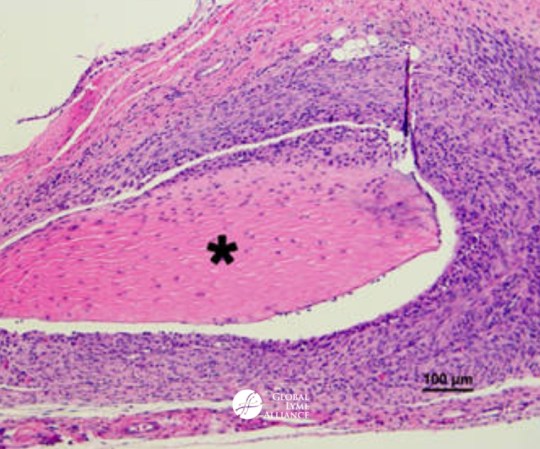
Pictured: Image of joint histopathology taken from a mouse infected with micro-colony/biofilm-like B. burgdorferi. Read Dr. Zhang’s full paper here.


timothy sellatiTimothy J. Sellati, PH.D. is Chief Scientific Officer at Global Lyme Alliance

As GLA’s Chief Scientific Officer, Dr. Sellati leads GLA’s research initiatives to accelerate the development of more effective methods of diagnosis and treatment of Lyme and other tick-borne diseasesmorphological variantshttps://www.dovepress.com/evaluation-of-in-vitro-antibiotic-susceptibility-of-different-morpholo-peer-reviewed-article-IDR  Metronidazole led to reduction of spirochetal structures by ~90% and round body forms by ~80%. Tigecycline and tinidazole treatment reduced both spirochetal and round body forms by ~80%–90%.
In terms of qualitative effects, only tinidazole reduced viable organisms by ~90%. Following treatment with the other antibiotics, viable organisms were detected in 70%–85% of the biofilm-like colonie

_________________

**Comment**

Great work by Zhang et al.!  Paper found here:  http://www.discoverymedicine.com/Jie-Feng/2019/03/persister-biofilm-microcolony-borrelia-burgdorferi-causes-severe-lyme-arthritis-in-mouse-model/

Unfortunately, they use the falsely skewed 10-20% percentages regarding the PTLDS group when microbiologist Holly Ahern argues convincingly that when ALL subgroups are added, it’s more like 60% that develop chronic/persistent symptoms:  https://madisonarealymesupportgroup.com/2019/02/25/medical-stalemate-what-causes-continuing-symptoms-after-lyme-treatment/  This is quite important and reveals the true state of affairs.

When I heard Dr. Zhang a few years back, he was working on this very concept, and please know the mycobacterium drugs have many side-effects that require close monitoring:  https://madisonarealymesupportgroup.com/2016/10/09/mycobacterium-drugs-for-ld/

The drug we used effectively throughout our treatment was Tinidazole which we pulsed throughout the entire time with 2-3 other antibiotics focusing on Bb’s different morphological variants as well as the various coinfections we had:  https://madisonarealymesupportgroup.com/2016/02/13/lyme-disease-treatment/  Dr. Eva Sapi found:

https://www.dovepress.com/evaluation-of-in-vitro-antibiotic-susceptibility-of-different-morpholo-peer-reviewed-article-IDR  Metronidazole led to reduction of spirochetal structures by ~90% and round body forms by ~80%. Tigecycline and tinidazole treatment reduced both spirochetal and round body forms by ~80%–90%.  In terms of qualitative effects, only tinidazole reduced viable organisms by ~90%. Following treatment with the other antibiotics, viable organisms were detected in 70%–85% of the biofilm-like colonies.