Study: Wi-Fi Is An Important Threat To Human Health
Published on
Written by Martin L.Pall
We are all familiar with the concept of sending and receiving data wirelessly via our smart phones and computers.
But this convenient and increasingly popular technology appears to have a hidden downside on human health, according to researchers.
Research shows seven effects repeatedly reported following Wi-Fi & other EMF exposures. These effects include stress, hormone change, sperm dysfunction and DNA impact. The report is published in Environmental Research Volume 164, July 2018, Pages 405-416.
Wi-Fi is thought to act via voltage-gated calcium channel activation. One claim of no Wi-Fi effects was found to be deeply flawed.
Repeated Wi-Fi studies show that Wi-Fi causes oxidative stress, sperm/testicular damage, neuropsychiatric effects including EEG changes, apoptosis, cellular DNA damage, endocrine changes, and calcium overload.
Each of these effects are also caused by exposures to other microwave frequency EMFs, with each such effect being documented in from 10 to 16 reviews. Therefore, each of these seven EMF effects are established effects of Wi-Fi and of other microwave frequency EMFs.
Each of these seven is also produced by downstream effects of the main action of such EMFs, voltage-gated calcium channel (VGCC) activation. While VGCC activation via EMF interaction with the VGCC voltage sensor seems to be the predominant mechanism of action of EMFs, other mechanisms appear to have minor roles.
Minor roles include activation of other voltage-gated ion channels, calcium cyclotron resonance and the geomagnetic magnetoreception mechanism.
Five properties of non-thermal EMF effects are discussed. These are that pulsed EMFs are, in most cases, more active than are non-pulsed EMFs; artificial EMFs are polarized and such polarized EMFs are much more active than non-polarized EMFs; dose-response curves are non-linear and non-monotone; EMF effects are often cumulative; and EMFs may impact young people more than adults.
These general findings and data presented earlier on Wi-Fi effects were used to assess the Foster and Moulder (F&M) review of Wi-Fi.
The F&M study claimed that there were seven important studies of Wi-Fi that each showed no effect. However, none of these were Wi-Fi studies, with each differing from genuine Wi-Fi in three distinct ways. F&M could, at most conclude that there was no statistically significant evidence of an effect.
The tiny numbers studied in each of these seven F&M-linked studies show that each of them lack power to make any substantive conclusions.
In conclusion, there are seven repeatedly found Wi-Fi effects which have also been shown to be caused by other similar EMF exposures. Each of the seven should be considered, therefore, as established effects of Wi-Fi.
Several species of bacteria and fungi were found living in the central nervous system (CNS) of patients with amyotrophic lateral sclerosis(ALS) that could potentially be related to the development of the disease, a study reports.
However, according to the researchers, more studies are still needed to confirm if there is a direct link between these pathogens and disease onset.
ALS is a progressive neurological disorder in which motor neurons — the nerve cells responsible for controlling voluntary muscles — gradually degenerate and die, causing muscles to shrink (atrophy) and become weaker.
Despite major advancements in clinical research, the origins and causes of ALS remain largely unknown. In previous studies, a group of researchers from the Universidad Autónoma de Madrid in Spain suggested that ALS might be caused by a fungal infection, based on the observation of fungi structures on tissue samples from patients and on the identification of several species of fungi in the CNS (composed of the brain, brainstem and cerebellum) of individuals with ALS.
For this study, the same team of researchers set out to confirm if bacterial infections might also accompany fungal infections in tissue samples from patients with ALS.
They analyzed frozen CNS tissue samples from 11 patients diagnosed with ALS. To detect the presence of bacteria, scientists isolated DNA from the patients’ CNS samples and performed nested polymerase chain reaction (PCR) to look for bacterial DNA.Next-generation sequencing (NGS) was then used to identify which bacteria species were present in the samples.
Using this approach, the scientists found bacterial DNA in different regions of the CNS in all tissue samples. In addition, with immunohistochemistry (a technique that allows researchers to visualize structures in great detail using specific antibodies), they detected the presence of bacteria in neural tissue samples from patients, which was consistent with their previous findings.
NGS confirmed the presence of bacterial DNA in all tissue samples. Despite the large variability of bacteria orders found in the patients’ samples, the phyla Proteobacteria and Actinobacteria were the most represented in all regions of the CNS.
“Our results indicate that bacterial DNA and [bacterial cells] are present in CNS tissue, leading to the concept that both fungal and bacterial infections coexist in patients with ALS,” the researchers wrote.
“The confirmation that [ALS and other neurological] diseases are caused by fungi or bacteria, or both, should come from clinical trials using already approved antifungal and antibacterial agents. Patients with these neurodegenerative diseases do not have to wait for the development of new therapeutic agents. These studies using safe antimicrobial compounds could be started immediately after approval of these trials,” they added.
(Natural News) When it comes to the Religion of Vaccination, there’s one area of research that’s completely off-limits, and it encompasses looking into vaccine safety and effectiveness independently, and with an open mind. The reason for this, of course, is that every time a scientist dares to do this, he or she typically discovers that vaccines aren’t nearly as safe or effective as the medical police state claims – which instantly makes said scientist a target of the medical establishment, which has no qualms about doing almost anything in order to silence the truth.
One recent and prominent example of this type of medical tyranny involves Professor Chris Exley of Keele University in the United Kingdom, whose focused research into aluminum toxicity led him to conclude that childhood vaccines, many of which contain neurotoxic aluminum, can, in fact, cause autism – a discovery that, if you’ve been following independent vaccine science for any considerable period of time, is inherently “controversial” and a recipe for trouble.
Like Dr. Andrew Wakefield before him, Prof. Exley merely reported his findings in the interest of public health, as any good scientist would do. And in the process, he’s made himself enemy number one of the Vaccine Mafia, which is now trying to destroy his career and life by barring him from raising any further funding for his research endeavors.
In essence, Prof. Exley has officially blown the lid off the highly-destructive nature of aluminum in vaccines, indicating that this common chemical adjuvant has the potential to cause “severe and disabling” autism in children who are injected with it. And for violating the medical establishment’s never-to-be-challenged doctrine of “all vaccines are safe and effective,” Prof. Exley is now having to endure the ire of the priests and priestesses of the Cult of Vaccination, which are now out for blood.
Support Prof. Exley’s GoFundMe to help bring the truth about vaccines and autism to as many people as possible
Prof. Exley was one of the underwriters for an eye-opening 2017 study published in EBioMedicine, a journal associated with The Lancet, which found that underarm cosmetic products – mainly antiperspirant deodorants that contain aluminum – increase users’ risk of developing breast cancer.
He’s also studied other areas of aluminum toxicity similarly unrelated to vaccines – though vaccines eventually became a natural next-step for his particular area of focus. And rather than censor the progressive course of his research endeavors, Prof. Exley stuck true to science – and for doing this, he’s now paying a big price.
The good news, though, is that many people are on Prof. Exley’s side, and are working hard to get him funding from other sources. Some of his most ardently faithful followers have actually set up a GoFundMe page to help raise financial support for his continued research endeavors.
In light of the medical establishment’s continued betrayal of not only his work but also science at large, it’s up to everyday folks who care about truth to step up to the plate to make sure that parents know the truth – and more importantly, to ensure that as many children as possible are protected against toxic injections that could cause them lifelong harm.
“We’ve seen this drama unfold many times,” comments Age of Autism about this latest saga.
“A well respected doctor or researcher begins to ask questions about vaccine safety as a result of the science he or she conducts, and his career is adversely affected … [Prof. Exley’s] funding is dwindling and he needs our help.”
Dr. James Lyons-Weiler’s published a study, Reconsideration of the immunotherapeutic pediatric safe dose levels of aluminum, that says the recognized safe aluminum levels in vaccines are based on immune efficacy and ignore body weight. James says that several critical mistakes have been made in the consideration of pediatric dosing of aluminum and that safety inferences of vaccine doses of aluminum have relied solely on dietary (ingested, not injected) exposure studies of adult mice and rats.
On Day 1 of life, infants receive 17 times more aluminum than would be allowed if doses were adjusted per body weight.
The FDA states that 850 mcg of aluminum is safe for an adult. With his research, James found that a series of errors led to the guidelines that state 850 mcg of aluminum is safe for an adult.
The first serious problem (Problem #1) is that a provisionally tolerable weekly limit assumed to be safe was, by a series of errors and bad assumptions, transformed into a daily limit that appeared to be backed by studies. The studies used were not up to date, and the FDA’s determination used spurious estimates to transform safety information from dietary studies of adult mice into injected safe limits in human infants. These errors were made, in part, in the pediatric limit consideration by the FDA, who used outdated information not consistent with other organizations like World Health Organization.
To add to the confusion, the 1 mg/kg/week was also then changed to 2 mg/kg/week. The ATDSR used information from one study, assumed 1 mg/kg/week, adjusted using arbitrary functions that are without a doubt as good as a bad guess.
The provenance of these errors is reviewed further below, and in our newly published study.”
We came across this study last week on Medium. It has since been deleted, along with Jame’s account. We checked on web.archive.org to see if the page had been preserved; it had not. We searched Google, but it’s gone from search results, but we did find the article republished by James on LinkedIn.
Autism Symptoms Reduced Nearly 50% Two Years After Fecal Transplant
Recent research suggests our gut microbiomes affect brain communication and neurological health. Worldwide, interest is growing in the idea that changes in normal gut microbiota may be responsible for triggering various conditions. At ASU, a research team is exploring using the microbiome to treat autism symptoms.
According to the Centers for Disease Control and Prevention, about one in every 59 children in the U.S. is diagnosed with autism, up from one in every 150 in 2000. They report that
“about half a million people on the autism spectrum will become adults over the next decade, a swelling tide for which the country is unprepared.”
The apparent rise in autism spectrum disorder (ASD) and its stubborn resistance to treatment has spurred a legion of researchers to enter the field and explore the disability in innovative ways.
Currently, effective treatments for ASD include behavioral therapy, speech and social therapy, psychiatric medications, and dietary and nutritional approaches. However, no medical treatments have been approved to treat core symptoms of ASD such as social communication difficulties and repetitive behaviors.
One promising avenue of autism research involves the gut microbiome, which is the collection of microbes that lives in our intestines and helps us in many ways including digestion of our food, training our immune system and preventing overgrowth of harmful bacteria. Recent research suggests our gut microbiomes also affect brain communication and neurological health. Worldwide, interest is growing in the idea that changes in normal gut microbiota may be responsible for triggering a vast range of diseases.
In a new study, “Long-term benefit of Microbiota Transfer Therapy in Autism Symptoms and Gut Microbiota,” published in Scientific Reports, Arizona State University researchers Rosa Krajmalnik-Brown, Ph.D., James Adams, Ph.D, and lead author Dae-Wook Kang, Ph.D, demonstrate long-term beneficial effects for children diagnosed with ASD through a revolutionary technique known as Microbiota Transfer Therapy (MTT), a special type of fecal transplant originally pioneered by Dr. Thomas Borody, an Australian gastroenterologist.
Remarkably, improvements in gut health and autism symptoms appear to persist long after treatment.
At two years post-treatment, most of the initial improvements in gut symptoms remained. In addition, parents reported a slow steady reduction of ASD symptoms during treatment and over the next two years. A professional evaluator found a 45% reduction in core ASD symptoms (language, social interaction and behavior) at two years post-treatment compared to before treatment began.
“We are finding a very strong connection between the microbes that live in our intestines and signals that travel to the brain,” said Krajmalnik-Brown, a professor at the Biodesign Swette Center for Environmental Biotechnology at the Biodesign Institute and ASU’s School for Sustainable Engineering and the Built Environment. “Two years later, the children are doing even better, which is amazing.”
“Many kids with autism have gastrointestinal problems, and some studies, including ours, have found that those children also have worse autism-related symptoms,” said Krajmalnik-Brown. “In many cases, when you are able to treat those gastrointestinal problems, their behavior improves.”
Roughly 30-50% of all people with autism have chronic gastrointestinal (GI) problems, primarily constipation and/or diarrhea that can last for many years. That chronic discomfort and pain can cause irritability, decreased attention and learning, and negatively impact behavior.
An earlier study with only vancomycin (an antibiotic) had found major temporary improvements in GI and autism symptoms, but the benefits were lost a few weeks after treatment stopped despite use of over-the-counter probiotics.
So, the question at hand was what’s going on in the gut, and how does it affect both physical and behavioral symptoms of autism, and how can we develop a long-lasting treatment?
Krajmalnik-Brown, Kang and Adams have shown that by transferring healthy microbiota to individuals lacking certain gut bacteria, it is possible to “donate” a more diverse set of bacteria into the patient and improve gut health.
In Australia, Fecal Microbiota Transplantation (FMT) was initially developed by Borody. At his Centre for Digestive Diseases in Sydney, Borody has overseen more than 18,000 FMTs for various disorders since 1987. He pioneered in Australia the use of FMT for colitis and Clostridium difficile infection, and was the first to use oral FMT to treat children with ASD. Only one dose of FMT is usually enough to cure C. Difficile infections, but his patients with autism were far harder to treat. He discovered that three months of daily FMT was required to treat his autism patients, but eventually resulted in significant improvements in both GI and autism symptoms.
Based on his experience with his patients, Borody led the design of the clinical treatment used at ASU for this study. The MTT approach involves 10 weeks of treatment, including pre-treatment with vancomycin, a bowel cleanse, a stomach acid suppressant, and fecal microbiota transfer daily for seven to eight weeks.
The initial open-label study, led by Krajmalnik-Brown and Adams, and published in the journal Microbiome in 2017, concluded that “this exploratory, extended-duration treatment protocol thus appears to be a promising approach to alter the gut microbiome and improve GI and behavioral symptoms of ASD. Improvements in GI symptoms, ASD symptoms, and the microbiome all persisted for at least eight weeks after treatment ended, suggesting a long-term impact.” The present study now shows the benefits are extended beyond eight weeks to at least two years post-treatment.
The ASU team compared differences in the microbiome of children with autism compared to typically developing children. At the start of the study, children with autism were found to have lower diversity in their respective gut microbes and were depleted of certain strains of helpful bacteria, such as Bifidobacteria and Prevotella.
“Kids with autism are lacking important beneficial bacteria, and have fewer options in the bacterial menu of important functions that bacteria provide to the gut than typically developing kids,” Krajmalnik-Brown said.
FMT treatment substantially increased microbial diversity and the presence of helpful bacteria in the gut, such as Bifidobacteria and Prevotella. After two years, diversity was even higher and the presence of beneficial microbes remained.
“We originally hypothesized that our therapy would be efficient to transform the dysbiotic gut microbiome toward a healthy one. In our original paper in 2017, we reported an increase in gut diversity together with beneficial bacteria after MTT, and after two years, we observed diversity was even higher and the presence of beneficial microbes remained,” Kang said.
He added that this may be one of the reasons for success in improving the gut health, but further mechanistic studies are warranted to define specific roles of gut microbes in the context of autism.
The work done at ASU is not only about treating patients but also about learning from the treatment in order to develop better formulations and optimize dosing.
“Understanding which microbes and chemicals produced by the microbes are driving these behavioral changes is at the heart of our work,” Krajmalnik-Brown said. The team’s new publication reports that the study demonstrated that two years after treatment stopped the participants still had an average of a 58% reduction in GI symptoms compared to baseline. In addition, the parents of most participants reported “a slow but steady improvement in core ASD symptoms.”
“Every family completed the study, and every family returned two years later for a follow-up evaluation,” said Adams, citing the families’ dedication to the research. “The treatment was generally well-tolerated with minimal adverse effects.”
“This is a world-first discovery that when we treated the gut bacteria in these children during our clinical trial two years ago to reset their microbiome with FMT, positive results are still continuing to be improving two years from the original treatments. I would call it the highest improvement in a cohort that anyone has achieved for autism symptoms,” said Borody.
Professional evaluation revealed a 45% decrease in ASD symptoms compared to baseline. Researchers note that although there may be some placebo effect, much of that effect appears to be real. At the start of the study, 83% of participants were rated as “severe” autism. At the end of the study, only 17% were “severe,” 39% were “mild/moderate,” and 44% were below the cut-off for mild ASD.
Greg Caporaso, at Northern Arizona University, a leading expert in microbiome data science and a co-author on these studies, helped to analyze the microbiome data to better understand bacterial changes as a result of MTT.
“Drs. Krajmalnik-Brown, Kang and I are excited about the results, but we want to caution the public that we need larger clinical trials for this to become an FDA-approved treatment,” said Adams. Professional expertise is required for safe and effective treatment.
MTT improves GI distress by introducing key strains of beneficial bacteria and helping to raise levels of biodiversity within the gut, boosting health overall.
Adams has both professional and personal reasons for doggedly pursuing ways to help children with autism because he knows the situation first-hand. His daughter was diagnosed with autism just before her third birthday. Adams, a President’s Professor at ASU’s School for Engineering of Matter, Transport and Energy, and the chair of Materials Sciences, is also president of the Autism Society of Greater Phoenix, the largest parent support group in Arizona.
“Dr. James Adams is the reason why I started working on autism,” Krajmalnik-Brown said. “I had the methods to do all of the measurements and assessments in the microbiome part of the work, and he had the autism knowledge.”
Adams recruited patients, supervised clinical work and ASD assessments, and guided the patients through the trials, and Krajmalnik-Brown led the microbiome evaluations and helped plan the study.
All of the participants in the study exhibited chronic GI symptoms from infancy, including chronic constipation and/or chronic diarrhea. The treatment benefits extended beyond their physical symptoms, even causing some parents to note how much their children’s behavior had improved over time.
“It is very unusual to see steady gradual improvement after the conclusion of any treatment,” said Adams. “We only conducted the long-term follow-up study after several families told us that their child was continuing to improve significantly.”
Krajmalnik-Brown stated that the data suggests that the MTT intervention transformed the gut environment into a healthier status, leading to long-term benefit on both GI and ASD symptoms.
Adams said many of the participants in the trial shared common traits, including
birth by C-section
reduced breastfeeding
increased antibiotics
low fiber intake by the mother and child
All of these lead to limited biodiversity in their gut bacteria. Due to the open label nature of the study and the small sample size used, more research is needed in order to verify the usefulness of MTT as a therapeutic.
The initial study involved a “first-generation” estimate as to optimal dose and duration of treatment, and it was enough for 90% of the children to have substantial benefit. The team is now working on optimizing the dosing and duration to try to improve benefits even more, and to determine if booster doses may be needed in some cases.
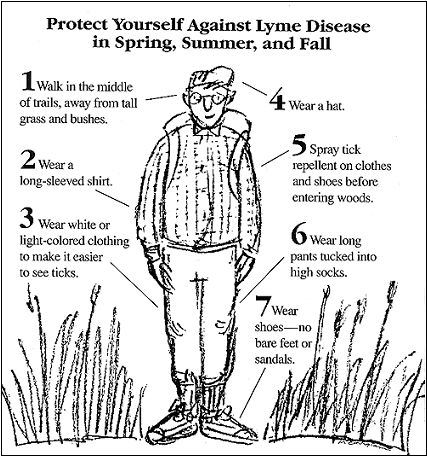
Spray exposed skin with DEET or picaridin. Picaridin is less toxic and approved for kids. For instance the top 3 scores for repelling deer ticks was: pump spray Sawyer Picaridin20% which lasted 8.5 hours, aerosol Ben’s 30% Deet Tick and Insect Wilderness which also lasted 8.5 hours, and pump spray Repel Lemon Eucalyptus which lasted 7 hours.Please know that “natural” products using things like essential oils have NOT been proven to repel ticks. Go here to learn more: https://www.cdc.gov/lyme/prev/natural-repellents.html
An FDA-approved organic compound found in grapefruit skin and Alaska yellow cedar trees that is a natural deterrent for many insects including the deer tick is being worked on by LSU researchers. Nootkatone has already proven to be both safer and more effective than existing commercial repellents, but is too expensive for consumer insect repellents.
stay in the middle of trails
when returning indoors, dry clothing on high heat for at least 10 min. Washing clothes will not kill ticks. High heat will.
take a shower and do a tick check. Have someone else look on your back and back of head.
If an embedded tick is found, remove it promptly by using a pointy tick removal tweezer. Get as close to the mouthpart as possible and pull steadily straight up without squeezing or twisting. Do not touch the tick with bare hands. Put in ziplock freezer bag and put in freezer you plan on having it tested. Remember; however, testing isn’t 100% accurate and you will not want to wait for results if you’ve been bitten. Your doctor should treat you prophylactially. It’s not worth the risk of infection. http://
Do not invite wildlife: There are numerous things you can do to discourage wildlife from your yard. Don’t put food outside, including bird feeders. Birds are probably the #1 transporters of ticks. Plant undesirable plants. Install fencing. Apply deer repellents. Clean up brush and leaves, and move woodpiles away from daily activity.
Spray your yard or use granules: Target areas where ticks live as well as perennial beds and along trails and paths in wooded areas. Normally, treatment is not needed in open and sunny lawns with short grass (although there are exceptions!). http://
Eliminate Tick Habitat: ticks love wooded, shady areas that are humid. Rake leaves, trim shrubs and trees, and treat border areas, stone walls, sheds, and wood piles. Creating borders of wood chips or stone will remind you of tick-risky areas and danger zones. They particularly like Japanese Barberry, honeysuckle, and buckthorn:https://madisonarealymesupportgroup.com/2018/01/20/manage-barberry-lower-ticks/. From experience I’ve learned not to use natural stone for landscape walls. Chipmunks burrow into the crevices bringing loads of ticks with them. I will only use interlocking stone now.
Remove Japanese Barberry, honeysuckle, and buckthorns
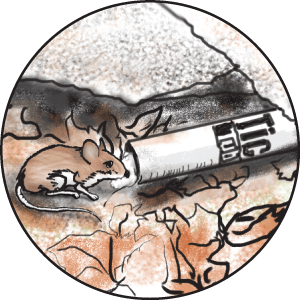
Target mice & rodents: Since ticks become infected by feeding on reservoir animals such as mice, chipmunks, squirrels, and deer, targeting these animals will help reduce the tick population. Ticktubes are tubes filled with permethrin treated cotton balls you place in rodent accessible areas so they will take the cotton back to their nests and they will rub their bodies against the treated cotton. Ticks feeding on the mice are then killed by the insecticide.Studies have shown risk to be reduced by 97% when using tick tubes. More info on how many you need for the size of your yard, etc.:http://www.ticktubes.com/facts.html
Contain your pets: The easiest way to protect your pets is to keep them away from ticks, by create a safe zone. This can be done by using fencing (solid or invisible) and or putting them on a chain where they can only go in certain areas.
Groom pets:Keep hair short to be able to identify ticks quickly. Brush hair and remove any ticks before bringing pets into the house.
Keep pets off all furniture and never let them into your bed.
Apply Tick control products on pets. For an excellent example of products:https://tickencounter.org/prevention/tick_control#top. There is a Lyme vaccine for dogs; however, it can cause Lyme disease symptoms just as the failed Lymerix vaccine did on humans. Cats also need tick protection. Make sure to discuss options with you veterinarian as they are educated with current information. Read all labels from products carefully.





 SOURCE: TickEncounter Resource Center. For an interactive map:

 Madison Area Lyme Support Group