
https://dermagicexpress.blogspot.com/2018/10/are-mosquitoes-involved-in-transmission.html?m=1
ARE THE MOSQUITOES INVOLVED IN THE TRANSMISSION OF LYME DISEASE?
November, 2018
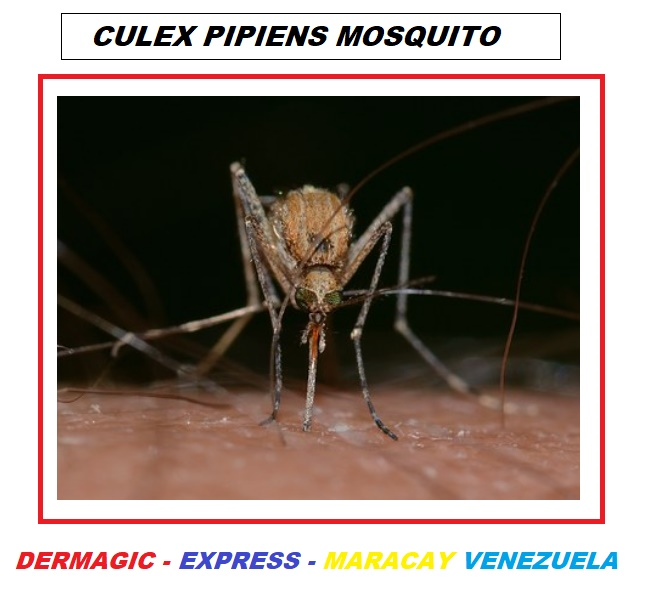

- Historically in the year 1961 Robert J.A. I first proved the experimental transmission of Borrelia, in this case Borrelia anserina, (discovered by Saknarof in the year 1891) by the hematophagous insect Aedes aegypti in geese of the Caucasus, since then it has been isolated from the blood of infected geese, turkeys, ducks, fowls, partridges, crows and sparrows from all parts of Africa, Australia, Austria, Bulgaria, Brazil, Egypt, East Indies, Germany, Greece, Hungary, India, the U.S.S.R., Rumania and Turkey.
- In 1985 Dolby et al. published in France a work of 4 Chronic Erythema Migrans (ECM) cases, where only 1 could be checked the sting by ticks, and raise the possibility that the transmission could have been by mosquitoes and flies (horseflies, tabanid).
- In 1987 Magnareli et al. conducted a study in Connecticut, United States collecting mosquitoes, horse flies and deer flies, in total 18 species, which were tested for Borrelia Burgdorferi finding a percentage of positivity that varied between 2.9 and 14.3% for blood-sucking insects. They also placed in cages insects with hamsters not contaminated with Borrelia; 11 species of females contaminated with Borrelia Burgdorferi fed on the blood of the hamsters. The spirochete was not found in the hamsters, but one of them presented positive titers of anti-Borrelia antibodies.
“Under the sun there is nothing hidden, and sooner or later the evidence appears that shows that what you tried to hide, became the evidence that became a truth”
1.) Doby JM , Chastel C , Couatarmanac’h A , Cousanca C , Chevrant-Breton J , Martin A , Legay B , Guiguen C . [Etiologic and epidemiologic questions posed by erythema chronicum migrans and Lyme disease. Apropos of 4 cases at the Regional Hospital Center, Rennes]. Bull Soc Pathol Exot Filiales. 1985;78(4):512-25.b[Article in French]
2.) Magnarelli LA1, Anderson JF. Ticks and biting insects infected with the etiologic agent of Lyme disease, Borrelia burgdorferi. J Clin Microbiol. 1988 Aug;26(8):1482-6.
3.) J.H. (Han) van der Kolk. Borrelia burgdorferi seeks vectors. Page 119 | Taylor and Francsi online. Published online: 15 Dec 2014.
Source:https://www.tandfonline.com/doi/full/10.1080/01652176.2014.972609?scroll=top&needAccess=true
4.) Chang YF, Novosel V, Chang CF, Summers BA, Ma DP, Chiang YW, Acree WM, Chu HJ, Shin S, Lein DH. 2001 Jul. Experimental induction of chronic borreliosis in adult dogs exposed to Borrelia burgdorferi-infected ticks and treated with dexamethasone. Am J Vet Res. 62:1104–1112.[Crossref], [PubMed], [Web of Science ®], [Google Scholar]
5.) Chang YF, Novosol V, McDonough SP, Chang CF, Jacobson RH, Divers T, Quimby FW, Shin S, Lein DH. 2000. Experimental infection of ponies with Borrelia burgdorferi by exposure to Ixodid ticks. Vet Pathol. 37:68–76.[Crossref], [PubMed], [Web of Science ®], [Google Scholar]
6.) Fernando SS. 1983. The giant kidney worm (Dioctophyma renale) infection in man in Australia. Am J Surg Pathol. 7:281–284.[Crossref], [PubMed], [Web of Science ®], [Google Scholar]
7.) Halouzka J, Postic D, Hubálek Z. 1998. Isolation of the spirochaete Borrelia afzelii from the mosquito Aedes vexans in the Czech Republic. Med Vet Entomol. 12:103–105.[Crossref], [PubMed], [Web of Science ®], [Google Scholar]
8.) Halouzka J, Wilske B, Stünzner D, Sanogo YO, Hubálek Z. 1999. Isolation of Borrelia afzelii from overwintering Culex pipiens biotype molestus mosquitoes. Infection. 27(4-5):275–277.[Crossref], [PubMed], [Web of Science ®], [Google Scholar]
9.) Liu D. 2012. Dioctophyme. In: Liu D, editor. Molecular detection of human parasitic pathogens. Boca Raton (FL): Taylor & Francis; p. 535–538.[Crossref], [Google Scholar]
10.) Qiu WG, Schutzer SE, Bruno JF, Attie O, Xu Y, Dunn JJ, Fraser CM, Casjens SR, Luft BJ. 2004. Genetic exchange and plasmid transfers in Borrelia burgdorferi sensu stricto revealed by three-way genome comparisons and multilocus sequence typing. Proc Natl Acad Sci USA. 101:14150–14155.[Crossref], [PubMed], [Web of Science ®], [Google Scholar]
11.) Stricker RB, Lautin A, Burrascano JJ. 2005. Lyme disease: point/counterpoint. Expert Rev Anti Infect Ther. 3:155–165.[Crossref], [PubMed], [Google Scholar]
12.) Wagner B, Erb HN. Dogs and horses with antibodies to outer-surface protein C as on-time sentinels for ticks infected with Borrelia burgdorferi in New York State in 2011. 2012. Prev Vet Med. 107:275–279.[Crossref], [PubMed], [Web of Science ®], [Google Scholar]
13.) Zákovská A, Nejedla P, Holíková A, Dendis M. 2002. Positive findings of Borrelia burgdorferi in Culex (Culex) pipiens pipiens larvae in the surrounding of Brno city determined by the PCR method. Ann Agric Environ Med. 9:257–259.[PubMed], [Web of Science ®], [Google Scholar]
14.) J. A. ROBERTS. Experimental Transmission of Borrelia anserine (Sakharoff 1891) by Aedes aegypti. Letter | Published: 16 September 1961. Nature volume 191, page 1225 (16 September 1961)
15.) Hubálek Z1, Halouzka J, Juricová Z. Investigation of haematophagous arthropods for borreliae–summarized data, 1988-1996. Folia Parasitol (Praha). 1998;45(1):67-72.
16.) Petr Zeman. Borrelia-infection rates in tick and insect vectors accompanying human risk of acquiring Lyme borreliosis in a highly endemic region in Central Europe. Folia Parasitologica 45[4] 319-325 (1998). Regional Center of Hygiene, Dittrichova 17, 120 07 Prague 2, Czech Republic
17.) Zákovská A1, Nejedla P, Holíková A, Dendis M. Positive findings of Borrelia burgdorferi in Culex (Culex) pipiens pipiens larvae in the surrounding of Brno city determined by the PCR method. Ann Agric Environ Med. 2002;9(2):257-9.
18.) Kosik-Bogacka D1, Bukowska K, Kuźna-Grygiel W. Detection of Borrelia burgdorferi sensu lato in mosquitoes (Culicidae) in recreational areas of the city of Szczecin. Ann Agric Environ Med. 2002;9(1):55-7.
19.) Kosik-Bogacka D1, Kuźna-Grygiel W, Bukowska K. The prevalence of spirochete Borrelia burgdorferi sensu lato in ticks Ixodes ricinus and mosquitoes Aedes spp. within a selected recreational area in the city of Szczecin. Ann Agric Environ Med. 2004;11(1):105-8.
20.) Zákovská A1, Capková L, Serý O, Halouzka J, Dendis M. Isolation of Borrelia afzelii from overwintering Culex pipiens biotype molestus mosquitoes. Ann Agric Environ Med. 2006;13(2):345-8.
21.) Kosik-Bogacka DI1, Kuźna-Grygiel W, Górnik K. Borrelia burgdorferi sensu lato infection in mosquitoes from Szczecin area. Folia Biol (Krakow). 2006;54(1-2):55-9.
22.) Alexandre C.Atalibaa. José S.Resendeb. NatalinoYoshinaric. Marcelo B.Labrunaa. Isolation and molecular characterization of a Brazilian strain of Borrelia anserina, the agent of fowl spirochaetosis.Research in Veterinary Science. Volume 83, Issue 2, October 2007, Pages 145-149https://doi.org/10.1016/j.rvsc.2006.11.014
23.) Nejedla P1, Norek A, Vostal K, Zakovska A. What is the percentage of pathogenic borreliae in spirochaetal findings of mosquito larvae? Ann Agric Environ Med. 2009;16(2):273-6.
24.) Petra Nejedla 1, Adam Norek 1, Karel Vostal 1, Alena Žákovská 1. What is the percentage of pathogenic borreliae in spirochaetal findings of mosquito larvae?. Ann Agric Environ Med. 2009;16(2):273–276
25.) Sikutová S1, Halouzka J, Mendel J, Knoz J, Rudolf I. Novel spirochetes isolated from mosquitoes and black flies in the Czech Republic. J Vector Ecol. 2010 Jun;35(1):50-5. doi: 10.1111/j.1948-7134.2010.00027.x.
26.) Melaun C1, Zotzmann S1, Santaella VG1, Werblow A1, Zumkowski-Xylander H2, Kraiczy P3, Klimpel S4. Occurrence of Borrelia burgdorferi s.l. in different genera of mosquitoes (Culicidae) in Central Europe. Ticks Tick Borne Dis. 2016 Mar;7(2):256-63. doi: 10.1016/j.ttbdis.2015.10.018. Epub 2015 Nov 12.
__________________
For more:
https://madisonarealymesupportgroup.com/2016/07/23/german-study-finds-borrelia-in-mosquitos/
https://madisonarealymesupportgroup.com/2018/10/04/deer-fly-lyme-carrying-ectoparasite-on-the-move/
 Madison Area Lyme Support Group