https://www.godupdates.com/essential-oils-toxic-for-cats/?

Her Cat Was Wasting Away Until They Figured Out Essential Oils Are Harmful to Pets

Are Essential Oils Bad for Cats

My cat, Natalee, has always had a sensitive tummy. She eats a fairly normal diet, with the exception that I have to buy specific brands online and have it shipped to the house. Otherwise, she’s always been a healthy little fur-baby–snuggly, playful and sweet. Until one day a few months back when she lost almost half her weight, baffled her vet and scared me with how sick she became! All her symptoms suddenly cleared up as quickly as they’d come on. It was a complete mystery until one day, my mom sent me an article asking, Are essential oils toxic to cats? That’s when it all started to make sense.

Did essential oils make my cat sick?

Natalee is a rescue cat whose tail bends at an odd angle at the end because it was broken at some point before I got her. When my kids and I went to adopt a cat, we knew we’d found the perfect one because she latched onto my daughter and purred loudly, her paws wrapped around my daughter’s neck. Plus, her grey and white coat matched my kids’ chosen outfits that day–a grey and white striped sweatshirt and soft fluffy white pullover! It was meant to be!

Natalee likes to ‘collect’ shoestrings and proudly bring them to you from her stash in the laundry room. I sometimes wake up covered in as many as five various strings that she’s brought to me in the night as I slept. In the morning, she eagerly awaits me waking to praise and pet her for her thoughtful presents.

Are essential oils toxic to cats

Then the shoestring gifts stopped. She stopped sleeping in my room. Natalee stopped hanging out on the couch next to me as I watched TV. She took to hiding in the garage all day. Nat was lethargic, and she started losing weight. A lot of it. She would sometimes scream out as if in pain. She would jump and run through her kitty door to her litter box in the garage. What’s worse, she often didn’t make it to the litter box in time anymore. I was really concerned about my cat, and also starting to be stressed out from cleaning up so many messes!

I took her to the vet in alarm. They were concerned when they discovered that my 9-pound cat only weighed 7 pounds, just a couple of weeks after her last checkup. Veterinarians tested her for a number of things, including cancer and parasites, but everything checked out. Her vet suggested a new brand of food and scheduled another appointment.

On her follow-up visit, Natalee had lost another 1.5 pounds and was down nearly half her weight. She hid in the garage, sleeping all day. And we still didn’t have answers!

Cat Mystery Revealed

And then, just as mysteriously as the symptoms came on, they started to disappear. I noticed after the Christmas holidays that Natalee seemed to feel better. She left the garage and returned to the den and my bedroom. She wanted to snuggle and play again. Her shoestring antics returned. Her vet was relieved when she put on all the lost weight and looked healthy again.

Essential oils poison for cats

I had been using natural oil diffusers in my bedroom and den. I’d read lavender promotes restful sleep and that eucalyptus is a natural stress-reliever. (Plus they both just smell good, right?) But with the busy holiday season, I had stopped using them and hadn’t started back up throughout January.

Then my mom forwarded me a story of a sick kitty that sounded pretty familiar. I did a few quick Google searches and noticed that most of these stories had a much worse outcome than Natalee’s. In many, the pet owners were warning others how their pets had died after being exposed to essential oils! I read up on the subject, and couldn’t believe I didn’t know that essential oils are dangerous to pets. I just had to share what happened to poor Natalee and some of these less fortunate pets so other pet owners can protect their fur-babies!

Here’s what you need to know about essential oils and your pets.

Are Essential Oils Safe For Cats?

Numerous reliable authorities in the animal and medical fields have shared that many essential oils are not safe for cats.

Are Essential Oils Toxic to Cats?

The TODAY show shared a story about Sue Klimas’ cat, Dinah, that sounded a lot like what happened to my cat Natalee! Dinah began vomiting, coughing and sneezing and vets ran blood tests, ultrasounds, and exploratory surgery, but were unable to determine what was wrong.

Dinah also went from 9 pounds down to 6!

Sue had been diffusing lavender and eucalyptus. When she stopped, Dinah’s health was restored and her weight returned to normal!

Michael San Filippo with the AMVMA (American Veterinary Medical Association) warns that essential oils can be toxic to pets. “We’d advise pet owners to be cautious using them around the house.”

Essential Oils Toxic to Dogs

The American Kennel club explains that some holistic vets believe there are benefits for using essential oils with your pets. But they add that ‘It’s easy to confuse natural with safe.” The AKC warns that “essential oils are potent substances that can pose serious risks when used improperly.”

The Canadian Veterinary Medical Association shares that while dogs are at risk of essential oil poisoning, cats are much more susceptible. This is because of nature and the way cats were designed!

“Cats’ livers are deficient in a process called “gluconuridation”, an important step in the metabolism of many compounds. As such, chemicals that are metabolized by other species often accumulate or are broken down into toxic metabolites in cats.” the CVMA shared.

To put it in simpler terms, cats don’t have certain enzymes in their livers that dogs and humans have, so it’s harder for their bodies to deal with toxins.

Essential Oils Dangerous for Cats

The American Society for the Prevention of Cruelty to Animals (ASPCA) states that cats, in particular, are susceptible to serious health problems from essential oils.

“Effects such as gastrointestinal upset, central nervous system depression and even liver damage could occur if ingested in significant quantities. Inhalation of the oils could lead to aspiration pneumonia.” Their website advises, “Based on this, we would not recommend using essential oils in areas where your pets have access unless pets are supervised or the use of the oil is approved by your veterinarian.”

Essential Oils Harmful to Pets

According to The Spruce Pets, “oils diffused in the air are inhaled and also collect on the fur, which results in your cat ingesting them during licking and cleaning. Toxicity can occur very quickly or over a longer period of exposure.”

Essential oil diffusers release oils into the air that the cats can inhale or lick off their fur. A good rule of thumb is that if you can smell the fragrance of the oil, there is oil in the air that can harm your cat.

Hills Pet indicates that cats in contact with essential oils could develop liver disease.

Tina Wismer, the medical director for the ASPCA Animal Poison Control Center shares that birds are even more susceptible than cats!

“Birds have a very different respiratory system than mammals do, and it’s very sensitive to inhaled toxins. We’ve had birds [affected by] new carpet in the house, or Teflon pans. A lot of different ways.”

Symptoms of liver disease in cats include:

  • Lack of Energy/Lethargy/Depression
  • Excessive Drooling
  • Poor Appetite
  • Weight Loss
  • Increased Thirst
  • Vomiting or Diarrhea
  • Changes in Behavior

List of Essential Oils That May Be Toxic to Cats

Just as there are many plants that are toxic to cats, there are numerous harmful essential oils. A few of the more commonly used oils that are dangerous to usearound your cat include:

  • Citrus Oils
  • Lavender
  • Peppermint
  • Wintergreen
  • Eucalyptus
  • Tea Tree
  • Cinnamon
  • Thyme
  • Clove
  • Oregano
  • Basil
  • Nutmeg
  • Fennel

Safety Tips for Using Essential Oils in a Home with Pets

According to the PDSA (People’s Dispensary for Sick Animals), the UK’s leading veterinary charity, here are some ways you can protect your pets if you use essential oils in your home.

  • Always store essential oils out of your cat’s reach.
  • Wash your hands after touching essential oils, especially before petting your cat.
  • Don’t use cleaning products with essential oil ingredients. Cats like to rub up against everything and roll around everywhere. And these products increase the likelihood your cat may get the oil on their fur.
  • Use heavily diluted oils, not heavily concentrated oils.
  • Keep your cat away from diffusers.
  • Use a prescription flea product, not homeopathic flea medications that may contain essential oils.

Has your pet or someone’s pet you know also gotten sick because of essential oils? Let us know on our Facebook page! You can share this article with your friends and family who own pets and may use essential oils. Let’s work together to help keep our fur-babies safe!

cat essential oils - Cat became sick

Washington Doctors Successfully Treat Coronavirus Patient – Results Seen in hours, Patient Sent Home

https://www.theverge.com/2020/2/4/21122327/coronavirus-experimental-medication-treatment-wuhan-china-gilead-hiv

Excerpt: 

It’s not clear if the medication, called remdesivir, actually helped the patient, or if his improvement was a coincidence. But it’s one of a few drugs, including a combination of anti-HIV drugs, that doctors think might help patients with the new coronavirus.

Ironically, the antivirus was created by the pharmaceutical company Gilead as a treatment for Ebola.

The article states the drug didn’t do much for Ebola but a larger clinical trial on coronavirus patients is underway:  https://www.bioworld.com/articles/432804-gileads-remdesivir-enters-china-phase-iii-trial-to-fight-coronavirus

Excerpt:

The study, expected to be completed on April 27, is a phase III randomized, double-blind, placebo-controlled multicenter study to evaluate the efficacy and safety of remdesivir in hospitalized adult patients with mild and moderate 2019-nCoV infections. It will enroll 270 patients and be carried out in the China-Japan Friendship Hospital in Beijing.

Remdesivir is not approved by the Food and Drug Administration but has gone through safety testing during the Ebola outbreak and why Gilead is able to test it in sick patients.

_________________

For more:  https://www.pnas.org/content/early/2020/02/12/1922083117

Excerpt:

We tested the efficacy of the broad-acting antiviral remdesivir in the rhesus macaque model of MERS-CoV (Middle East Respiratory Syndrome) infection. Remdesivir reduced the severity of disease, virus replication, and damage to the lungs when administered either before or after animals were infected with MERS-CoV. Our data show that remdesivir is a promising antiviral treatment against MERS that could be considered for implementation in clinical trials. It may also have utility for related coronaviruses such as the novel coronavirus 2019-nCoV emerging from Wuhan, China.


https://phys.org/news/2020-01-vector-borne-fever-cats-demand-year-round.html

Vector-borne causes of fever in cats demand year-round preventive therapy

Vector-borne causes of fever in cats demand year-round preventive therapy

Increased body temperature is the single-most commonly noted abnormal finding for the medical practitioner. While it may be a sign of something relatively innocuous, it can also be an indication of underlying critical illness. In cats, an elevated body temperature equates to a reading in excess of 39.2°C or 102.5°F and, as in humans, it can arise as a result of two major mechanisms: hyperthermia and fever. Hyperthermia refers to a sudden and uncontrolled increase in temperature owing to failure of the body’s thermoregulatory mechanism. By contrast, in fever (or pyrexia, from the Greek for ‘fire’ or ‘burning heat’), the body’s hypothalamic set-point is increased, secondary to the release of pyrogens, as the body’s adaptive response to a pathological state.

In cats, fever typically presents with associated signs of depression and loss of appetite. For the veterinarian getting to the root of the problem in order that appropriate therapy can be implemented, there is a long list of differential diagnoses to consider, including infectious disease agents, neoplasia and immune-mediated diseases, among others. Based on a recent study of over 100 cats presenting to second-opinion veterinarians for investigation of fever, infectious causes are thought to be the most common.

Writing for an international audience of veterinary practitioners and feline researchers, an expert group of feline internists from the USA, Spain and the UK, led by Professor Michael Lappin of Colorado State University, provide an update on associated with fever in cats that are transmitted by arthropod vectors. Published in the Journal of Feline Medicine and Surgery, their two-part state-of-the-art review article focuses on common clinical and laboratory findings, and optimal diagnostic tests, treatments and strategies for prevention of a range of disease agents known or suspected to be transmitted by fleas, ticks and sandflies. Throughout, they stress that prevention of vector-borne infections is always preferable to treating clinically ill cats, and note that there is mounting evidence to show that consistent use of products that either rapidly kill vectors or, preferably, prevent vectors from biting a cat, is desirable.

Links between specific disease agents and fever in cats are not always clear-cut. For example, evidence of exposure to Bartonella species bacteria has been found in cats in many countries around the world, particularly in regions with high humidity and fleas. Well-documented manifestations of bartonellosis in cats include cardiac (endocarditis and myocarditis) and ocular (uveitis) disease, but whether fever will occur is likely influenced by a complex interaction involving both host and organism factors. Nevertheless, Bartonella henselae is common in fleas and known to survive at least 9 days in flea dirt. Professor Lappin stresses that adequate flea control is imperative to lessen the risk of infection in other cats, dogs and, indeed, people, in whom this agent is the cause of cat-scratch disease.

Among the tick-borne agents associated with feline fever are Ehrlichia species. Less is known about the particular causal agents of ehrlichiosis in cats compared with canine ehrlichiosis, but , together with lethargy and inappetence, is a commonly reported clinical abnormality in cats with suspected . Professor Lappin suggests that testing for these intracellular pathogenic bacteria might be indicated for cats with such signs and points to the importance of using preventive products that either rapidly kill attached ticks or, ideally, stop ticks from biting in the first place since it is known that, in dogs, Ehrlichia canis may be transmitted as early as 3 hours after tick attachment.

Commenting on the rationale for these two articles, the authors write: “We hope that these pieces of work will help answer many of the questions faced by veterinary clinicians regarding vector-borne pathogens in our feline patients. They represent a to try to ensure the information is relevant to all readers in order to help combat diseases in that have traditionally been overlooked.”


Explore further

AAFP releases updated feline retrovirus guidelines to the veterinary community


More information: Michael R Lappin et al, Role of vector-borne pathogens in the development of fever in cats: 1. Flea-associated diseases, Journal of Feline Medicine and Surgery (2020). DOI: 10.1177/1098612X19895941

https://6abc.com/5835756/  Video Here

Even in winter, Lyme ticks can be a threat

**Comment**
I’ve posted this before, but it clearly shows ticks are active even in winter:  https://madisonarealymesupportgroup.com/2016/01/20/polar-vorticks/
The idea that the climate affects these monsters is asinine if you study them for more than 5 minutes.  They seek out leaf litter, snow, and anything that protects them when conditions become harsh.  They survive 3 degree weather under snow and have been found on the blazing hot sand on beaches:  https://madisonarealymesupportgroup.com/2018/06/07/ticks-on-beaches/  They are in caves:  https://madisonarealymesupportgroup.com/2017/10/27/israeli-kids-get-lyme-disease-from-ticks-in-caves/
Again, the climate change narrative is a joke for ticks.

Regarding this Sophia-2 test and being CLIA waived:

Although the CLIA requires a waived test to be simple and have a low risk for erroneous results, it does not mean that they are completely free from error. Errors can happen during the testing process, especially when the instructions of the manufacturer were not completely followed. An error could also happen when the person conducting the test lacks familiarity with the testing system. Also, the only thing needed to be CLIA-waived is a free pass from the FDA.  https://testcountry.com/pages/what-is-clia-waived

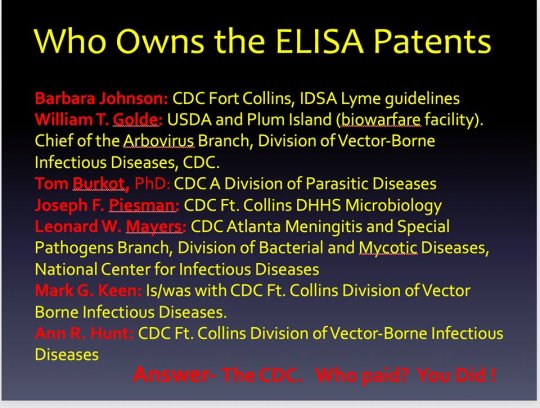
For decades the CDC has vilified CLIA-certified labs specializing in Lyme testing.  In fact, for years they called these “home-brewed” tests,  a label meant to inspire doubt and skepticism.  Why?  Well, let’s see, could the fact authorities often own the patents on test kits have anything to do with it?

64357008_10217935576008450_2638357839671721984_n

A little background on CLIA certification:

CLIA refers to Clinical Laboratory Improvement Amendments. These amendments were passed by the Congress way back in 1988. These laws stipulate that laboratory testing procedures should ensure timeliness, accuracy, and dependability irrespective of the location of the tests.

Prior to 1988, roughly 25% of patient testing conducted in laboratories was not meeting minimum quality requirements. Studies showed that the laboratories that followed minimum quality standards performed better than the laboratories that did not.

The CLIA standards were created in order to ensure that a patient’s test results would be accurate, timely and reliable, regardless of where in the United States the test would be performed.

Seems to me authorities have it all wrong.  FDA approval means little more than cronyism where one health and human services operating division gives another operating division a free pass, whereas, CLIA certification was put in place to at least assure minimum quality standards.  If you look at the organizational chart within the FDA you quickly see that the office of vaccine research and review is directly under the office of compliance & biologics quality.  https://www.fda.gov/about-fda/fda-organization-charts/center-biologics-evaluation-and-research-organization-chart

Again, quite interesting when you understand the Lyme vaccine debacle and backstory.  These people are not to be trusted.  At all.

Many people, including doctors, state that certain labs are FDA approved.  This is untrue. There are FDA approved tests – NOT LABS. And again, just because the FDA approves the tests doesn’t mean they are good and/or accurate.

For more on the Sofia-2 Test:  https://globallymealliance.org/gla-pov-fda-clears-quidel-lyme-disease-immunoassay-sofia-2/

Excerpt:

This rapid test is not intended as a stand-alone determinant of B. burgdorferi infection status and a negative result does not preclude infection with B. burgdorferi. Nevertheless, a negative result would save time and expense insofar as testing by the more elaborate and second-tier Western immunoblot assay, which requires subjective interpretation of results, would be contraindicated.

Despite the rapid results obtained using the Sofia Lyme FIA, as pointed out in another GLA POV entitled “Advances in Serodiagnostic Testing for Lyme Disease Are at Hand,” improvements in serologic testing methods or protocols will not differentiate active infection from past exposure. Thus, ideally, use of NextGen tests like Quidel’s Sofia Lyme FIA will be coupled with other diagnostic methods to directly detect the presence of B. burgdorferi and other tick-borne pathogens in patient samples, thereby allowing discrimination between active vs. past infections. GLA is a leader in actively supporting research efforts to develop such direct detection methods.

And as always, testing isn’t perfect.  

Please notice the illogic in the statement that a negative result doesn’t preclude infection but that a negative result will save time and money in further testing.  Come again?  You just said a negative result doesn’t mean you aren’t infected but they expect you to just sit down and take it.

This attitude is why thousands upon thousands are walking around with undiagnosed infections.

https://danielcameronmd.com/conversion-disorder-guillain-barre-syndrome-or-lyme-disease/

CONVERSION DISORDER, GUILLAIN-BARRÉ SYNDROME OR LYME DISEASE?

The authors of “Atypical Lyme Neuroborreliosis, Guillain-Barré Syndrome or Conversion Disorder: Differential Diagnosis of Unusual Neurological Presentations,” present a challenging diagnostic case involving a 62-year-old woman with symptoms consistent for multiple neurologic disorders.

Teodoro and colleagues describe the case of a woman, who was initially suspected of having a conversion disorder but later diagnosed with Guillain-Barré syndrome, possibly triggered by an infection with Borrelia burgdorferi, the causative agent of  Lyme disease. ¹

(Conversion disorder is a mental condition in which a person has blindness, paralysis, or other nervous system (neurologic) symptoms that cannot be explained by medical evaluation.)

The woman reported to the emergency room with weakness in her left hand and both of her legs, which resulted in 2 consecutive falls with head trauma. Test results were normal, and she was discharged. But the following day her symptoms worsened, and she returned to the hospital with significant motor impairment (an inability to walk independently) and urinary incontinence.

“On admission, her neurological examination revealed asymmetric tetraparesis, hyporeflexia, doubtful hemihypesthesia, and left extensor plantar reflex,” writes Teodoro and colleagues in the journal Case Reports in Neurology.

(Tetraparesis means weakness in all extremities. Hemihypesthesia is a reduction in sensitivity on one side of the body.)

Conversion Disorder

The woman was initially treated for a conversion disorder since her findings suggested this diagnosis including “the absence of a typical pattern the reference to a positive Hoover sign in one of the early evaluations, inconsistent and fluctuating motor deficits, coinciding timeline with stressful life events, and a predominantly anxious basal affective state,” writes Teodoro.

The patient reported having a recent stressful event and symptoms of anxiety.  In turn, she was prescribed the antidepressant Sertraline (100mg) and Pregabalin (150mg), a nerve pain drug, also known as Lyrica.

But by day 5, the woman’s symptoms had worsened. Her upper and lower limbs were areflexic. And, needle electromyography revealed “a subacute motor axonal neuropathy pattern and a right median nerve mononeuropathy.”

Guillain-Barré syndrome

Guillain-Barré syndrome, an autoimmune disorder, was considered based on EMG findings and a spinal tap which revealed albuminocytologic dissociation, a hallmark finding of Guillain-Barré syndrome.

A 5-day course of 32 g/day of intravenous immunoglobulin (0.4 g/kg/day) was initiated and led to a partial improvement in motor function.

Lyme disease

She was subsequently diagnosed with Lyme disease based on a positive IgM titer and a repeat spinal tap, which showed an elevated mononuclear white blood cell count of 20/μL and positive IgM.

“None of the most common infectious agents associated with Guillain-Barré syndrome were identified.  Surprisingly serologies for Borrelia were revealed to be positive, with further finding of IgM Borrelia antibodies in CSF,” writes Teodoro.

“The possibility of a Guillain-Barré syndrome due to Borrelia infection should be considered,” the authors point out, “although this syndrome usually develops as a post-infectious syndrome.”

The woman was given a 14-day course of Ceftriaxone (2 g/day) and showed significant improvement in motor function. However, she was discharged requiring additional physical therapy and rehabilitation.

This is not the first case of a medical condition being diagnosed as a conversion disorder.  “There are case reports of Guillain-Barré syndrome misdiagnosed as a conversion disorder² highlighting the importance of considering the clinical heterogeneity of the possible presentations,” writes Teodoro.

Furthermore, although it is rare, there have been reports of Lyme disease mimicking Guillain-Barré syndrome.³

“This case highlights the importance of the differential diagnosis of atypical presentations of neurological disease, including the possibility of functional neurological symptoms,” the authors conclude.

References:
  1. Teodoro T, Oliveira R, Afonso P. Atypical Lyme Neuroborreliosis, Guillain-Barré Syndrome or Conversion Disorder: Differential Diagnosis of Unusual Neurological Presentations. Case Rep Neurol. 2019 Apr 30;11(1):142-147.
  2. Edelsohn G. Guillain-Barré misdiagnosed as conversion disorder. Hosp Community Psychiatry. 1982 Sep;33(9):766–7.
  3. Tyagi N, Maheswaran T, Wimalaratna S. Neuroborreliosis: the Guillain-Barré mimicker. BMJ Case Rep. 2015 Jun 25;2015.pii:bcr2014209080.

__________________

For more:  https://madisonarealymesupportgroup.com/2019/01/09/transverse-myelitis-guillain-barre-associated-with-bartonella/

https://madisonarealymesupportgroup.com/2018/12/07/acute-flaccid-paralysis-is-most-often-guillain-barre-syndrome/

https://madisonarealymesupportgroup.com/2019/01/18/acute-transverse-myelitis-a-clinical-manifestation-of-lyme-that-nobody-has-a-clue-about-prevalence/

https://madisonarealymesupportgroup.com/2018/12/07/nevada-man-diagnosed-with-guillain-barre-syndrome-after-getting-flu-shot/

VARIOUS VACCINES ARE DEFINITELY CAUSING GBS.

https://madisonarealymesupportgroup.com/2018/10/19/rise-in-acute-flaccid-myelitis-cases-and-the-link-to-vaccinations/

https://madisonarealymesupportgroup.com/2016/11/07/connection-of-acute-flaccid-myelitis-and-vaccinations/ The connection between vaccination and paralysis has been known since the 40’s and 50’s and was written about in The Lancet by Stephen Mawdsley in an article titled, “Polio Provocation: Solving a Mystery With the Help of History.”

Mawdsley states:

“The application of epidemiological surveillance and statistical methods enabled researchers to trace the steady rise in polio incidence along with the expansion of immunization programs for diphtheria, pertussis, and tetanus. A report that emerged from Guy’s and Evelina Hospitals, London, in 1950, found that 17 cases of polio paralysis developed in the limb injected with pertussis or tetanus inoculations. Results published by Australian doctor Bertram McCloskey also showed a strong association between injections and polio paralysis. Meanwhile, in the USA, public health researchers in New York and Pennsylvania reached similar conclusions.Clinical evidence, derived from across three continents, had established a theory that required attention.”