https://danielcameronmd.com/lack-knowledge-lyme-disease-in-canada/

LACK OF KNOWLEDGE ABOUT LYME DISEASE IN CANADA
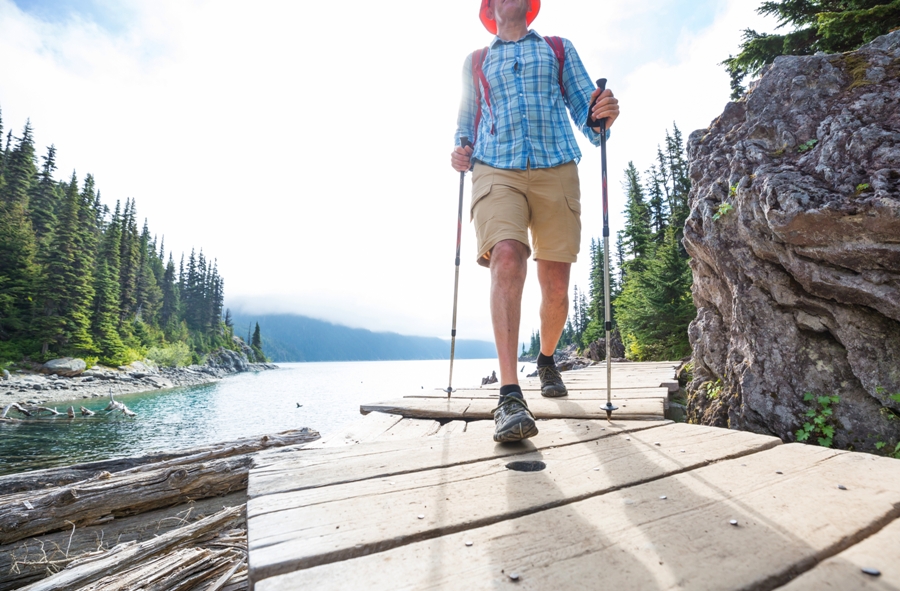
man hiking in shorts along lake

The number of Lyme disease cases in Canada continues to rise. Climate change, along with other factors, are enabling ticks to expand into the eastern and central provinces of Canada, including southern New Brunswick. But how knowledgeable are residents in those areas about Lyme disease and how willing are they to adopt protective measures to prevent tick bites? A new survey provides some answers.

Researchers surveyed 137 participants from 11 professional and recreational organizations across New Brunswick between December 2018 and February 2019. Thirty-six percent of the participants spent time outdoors for their occupation and 64% for recreational activities.

Only one of the participants had been previously diagnosed with Lyme disease in Canada, while 14 were unsure about whether they had ever been infected.

“Of these participants, two reported that their symptoms began six or more years prior to the completion of the survey and one participant indicated that they were still suffering at the time of the study,” the authors write.¹

Survey participants were asked how frequently they perform protective behaviors. For example, “How often do you wear long pants to avoid ticks infected with Lyme disease?”

Hiking (66%) was the most common activity reported by participants in the recreational group while golfing (12%) was the least. Other activities included sport fishing, home gardening, sport hunting, dog ownership, and recreational paddling.

The most commonly reported activities by participants who worked outdoors included individuals who owned a small wood lot, farmers, tree planters, forestry professionals, and a dog trainer. Owning a wood lot (63%) was the most common activity, while dog training (2.1%) was the least common activity.

Comfort inspires safety behaviors

The only two safety behaviors that occurred more than “sometimes” involved wearing long pants and protective footwear. However, these behaviors were related more to comfort than to tick bite prevention.

The authors noted that “the protective behaviors are only frequently adopted if they protect the individual from immediate discomfort, such as long pants protecting one’s legs from scratches and protective footwear preventing foot and ankle injuries.”

Individuals were less likely to adopt the following behaviors: tucking pants in socks, spraying insecticide on the environment, avoidance of sitting on grass, and avoidance of walking in long grass.

Survey results

“Overall, the entire sample reported a low level of knowledge about Lyme disease,” writes Pierre and colleagues in their article entitled “Knowledge and Knowledge Needs about Lyme Disease among Occupational and Recreational Users of the Outdoors.”¹

“Our findings call attention to a desire for further information about all aspects of tick exposure and Lyme disease among individuals that spend time outdoors in New Brunswick,” the authors write.

Furthermore, “behaviors linked to avoiding tick bites are being carried out relatively infrequently.”

Questions raised by survey participants

There were a number of questions and concerns raised by the participants that demonstrate their desire to know more about Lyme disease in Canada and the prevalence of infected ticks in their region.  Comments included:

“Knowing which areas are active with Lyme-infected ticks would be very helpful. I feel like all the precautions are not worth the trouble if my area is not a hot-spot. I don’t know if some areas are more high risk than others or if the risk is the same across the province, or region.”

“Clear protocol explanations for how to remove ticks and if they should be brought with you to the doctor – how to proceed.”

What are the “side effects, side effects from delayed/neglected treatment?”

“Is there a time limit where the effects of Lyme are permanently irreversible?”

“Is it life-threatening?”

“How soon should an individual seek medical attention if feeling symptoms of [Lyme disease] LD?

“Why is it so much easier to get a diagnosis for animals than it is for humans?”

“Pets get lots of ticks. I’ve heard different information about whether cats/dogs can get Lyme disease, how it affects them (how you can tell they have it), whether they can transfer it to you, etc.”

“How are physicians trained to deal with this serious disease?”

“Have any advancements been made in diagnosis and treatment?”

“Do you still have to have testing and treatment done in the USA for best results?”

Editor’s note: The questions raised by those living in Canada are the same questions I am asked regularly in my practice.

_________________

**Comment**

An independent Canadian tick researcher has proven that tick and Lyme proliferation has nothing to do with the weather:  https://madisonarealymesupportgroup.com/2018/11/07/ticks-on-the-move-due-to-migrating-birds-and-photoperiod-not-climate-change/

He’s even called out other researchers on shoddy, biased research on the topic:  https://madisonarealymesupportgroup.com/2019/06/17/ontario-public-health-officials-called-out-on-shoddy-biased-research-utilizing-an-erroneous-climate-change-model-to-program-a-futuristic-tick-problem/

The reason this is important is researchers clamor for dollars.  We need research dollars going toward transmission studies, testing and diagnostics, as well as effective treatments.  The last thing we need is more climate data.

https://www.dailywire.com/news/epidemiologist-behind-highly-cited-coronavirus-model-admits-he-was-wrong-drastically-revises-model

Epidemiologist Behind Highly-Cited Coronavirus Model Drastically Downgrades Projection

By  Amanda PrestigiacomoDailyWire.com

Epidemiologist Neil Ferguson, who created the highly-cited Imperial College London coronavirus model, which has been cited by organizations like The New York Times and has been instrumental in governmental policy decision-making, offered a massively downgraded projection of the potential deathtoll on Wednesday. (See link for article)

___________________

**Comment**

A few key quotes:

Ferguson’s change of tune comes days after Oxford epidemiologist Sunetra Gupta criticized the professor’s model.

“I am surprised that there has been such unqualified acceptance of the Imperial model,” Gupta said, according to the Financial Times.

The important issue Gupta’s team raises is that COVID-19 was spreading much earlier than suspected and concludes that as many as half of the people in the United Kingdom have already been infected by COVID-19.

Which brings up the probability of this happening in the U.S. as well.

My entire family, as well as many neighbors and friends feel we’ve already had COVID-19 earlier this year and live to tell the tale.

For more:  https://blogs.mercola.com/sites/vitalvotes/archive/2020/03/26/stanford-professor-states-fatality-rates-at-least-10-fold-lower-than-estimates.aspx

Excerpt: 

But, like The Wall Street Journal’s writers point out, it is quite possible that “A universal quarantine may not be worth the costs it imposes on the economy, community and individual mental and physical health” and that statisticians should be called upon to “evaluate the empirical basis of the current lockdowns.”

https://madisonarealymesupportgroup.com/2020/03/21/study-shows-covid-19-testing-as-bad-as-lyme-msids-testing/

https://madisonarealymesupportgroup.com/2020/03/27/a-fiasco-in-the-making-as-the-coronavirus-pandemic-takes-hold-we-are-making-decisions-without-reliable-data/

And the most damning of all articles, Weiler points out that the CDC itself is behind the testing fiasco in the U.S. by insisting on having its own test so they could profit, create a vaccine, and own more patents at the expense of public health:  https://madisonarealymesupportgroup.com/2020/03/27/cdcs-deadly-testing-fiasco-centralization-of-public-health-authority-a-threat-to-national-security/


https://www.dailymail.co.uk/news/article-8156457/Cuomo-says-probably-not-best-strategy-quarantine-once.html

Cuomo admits his decision to quarantine everyone at once was ‘not the best strategy’ and that he is ‘working on’ release of coronavirus antibody test that will allow people to go back to work

(See link for article)

____________________

**Comment**

Dr. Birx Admits Initial Death Estimates Too Extreme

In a nutshell, she admits that the CDC STILL does not have an accurate test as well as the fact that the models used were faulty and don’t reveal what’s happening in reality (South Korea, Italy, Spain).

According to this: “must read” article,  https://madisonarealymesupportgroup.com/2020/03/27/cdcs-deadly-testing-fiasco-centralization-of-public-health-authority-a-threat-to-national-security/ perfectly good, reliable tests were offered to the U.S., but similarly with Lyme disease testing the CDC insists upon having their own.  As a result the U.S. has absolutely NO idea how many cases there are due to extremely faulty testing: https://madisonarealymesupportgroup.com/2020/03/21/study-shows-covid-19-testing-as-bad-as-lyme-msids-testing/

Excerpt:

Germany is not suffering from a raging infection outbreak because they have been conducting accurate testing since the onset of their first infection. The World Health Organization (WHO) offered the US CDC the test from Germany – and yet CDC made the deadly decision to develop their own test.

The German test was ready and available on January 17th 2020 – including published details of the protocol.

The test had also already been validated for specificity to SARS-2-CoV – using human samples – meaning it would not accidentally give false positives for other respiratory viruses – and also meaning that it would not give a false positive from human genes in the human samples.

Weiler, points out how the CDC has a history of insisting upon their own testing so they can corner the market, putting them in direct competition with the private sector.  He rightly points out what all of us in Lymeland have been screaming about:

It isn’t ethical to be in charge of public health AND own licenses to products.  

Agency scientists should not be allowed use US taxpayer’s funds to develop “their own” test. CDC, and HHS, in fact, should not own anything.”  James Lyons-Weiler

Those suffering with tick-borne illness have had to work about the faulty testing issue for over 40 years.  Doctors to this day are sending people home with a false sense of security after they test negative on the only approved CDC 2-tiered tests available. For decades the CDC has vilified small CLIA-approved labs doing more specialized testing for Lyme disease.  On their website a while back they actually had the nerve to call these tests “home-brewed,” always casting a negative light on ANY test other than their’s.  

I pray this COVID-19 testing fiasco shines a light on a very real problem – the CDC is a captured agency.

Due to the “Shelter at Home” order by Governor Evers, our support group meeting will once again be a conference call.  Please email me for the code if you would like to participate:  Lymecoordinator56@gmail.com.

Conference Call Ahead Sign

When:  April 18

Time:  2:30 p.m. – 4:30 p.m.

Where: From the comfort of your own home.

https://www.ncbi.nlm.nih.gov/pubmed/32164559

2020 Mar 12;20(1):216. doi: 10.1186/s12879-020-4940-0.

Scalp eschar and neck lymphadenopathy after tick bite (SENLAT) caused by Bartonella henselae in Korea: a case report.

Abstract

BACKGROUND:

Tick-borne lymphadenopathy (TIBOLA) is an infectious disease, mainly caused by species from the spotted fever group rickettsiae and is characterized by enlarged lymph nodes following a tick bite. Among cases of TIBOLA, a case of scalp eschar and neck lymphadenopathy after tick bite (SENLAT) is diagnosed when an eschar is present on the scalp, accompanied by peripheral lymphadenopathy (LAP). Only a few cases of SENLAT caused by Bartonella henselae have been reported.

CASE PRESENTATION:

A 58-year-old male sought medical advice while suffering from high fever and diarrhea. Three weeks before the visit, he had been hunting a water deer, and upon bringing the deer home discovered a tick on his scalp area. Symptoms occurred one week after hunting, and a lump was palpated on the right neck area 6 days after the onset of symptoms. Physical examination upon presentation confirmed an eschar-like lesion on the right scalp area, and cervical palpation revealed that the lymph nodes on the right side were non-painful and enlarged at 2.5 × 1.5 cm. Fine needle aspiration of the enlarged lymph nodes was performed, and results of nested PCR for the Bartonella internal transcribed spacer (ITS) confirmed B. henselae as the causative agent.

CONCLUSION:

With an isolated case of SENLAT and a confirmation of B. henselae in Korea, it is pertinent to raise awareness to physicians in other Asian countries that B. henselae could be a causative agent for SENLAT.

________________

For more:  https://madisonarealymesupportgroup.com/category/bartonella-treatment/

https://madisonarealymesupportgroup.com/2019/04/24/human-bartonellosis-an-underappreciated-public-health-problem/

https://madisonarealymesupportgroup.com/2020/02/19/bartonella-infection-everywhere-but-we-dont-know-about-it/