Archive for the ‘Viruses’ Category

Chronic Inflammatory Demyelinating Polyneuropathy as an Autoimmune Disease – but Associated with Bartonella, Mycoplasma & Viruses

https://www.ncbi.nlm.nih.gov/pubmed/31072742

2019 May 6. pii: S0896-8411(19)30043-5. doi: 10.1016/j.jaut.2019.04.021. [Epub ahead of print]

Chronic inflammatory demyelinating polyneuropathy as an autoimmune disease.

Abstract

Chronic inflammatory demyelinating polyneuropathy (CIDP) is an autoimmune disease characterized by neurological symptoms and signs of progressive weakness, paresthesias, and sensory dysfunction. Other symptoms include reduced or absent tendon reflexes, cranial nerve involvement, autonomic symptoms, ataxia, and neuropathic pain. Unlike other autoimmune diseases, CIDP generally affects older individuals and has a male predominance. The onset is generally insidious and can take up to 8 weeks with a relapsing-recovery pattern. Like all autoimmune diseases, the etiology is multifactorial, with both genetic and environmental factors contributing to it.

Case reports of CIDP have found associations with multiple pathogenic organisms including Hepatitis B and C viruses, Bartonella henselae, Mycoplasma pneumoniae, Human immunodeficiency virus, Cytomegalovirus and Epstein-Barr virus. Possible antigenic self-targets include myelin protein 0, myelin protein 2, peripheral myelin protein 22, Connexin 32, and myelin basic protein. Antibodies targeting the Ranvier node proteins such as contactin-1, contactin-associated protein 1, and neurofascin 155 have been described. CIDP is treated with rehabilitation and pharmacological modalities. Pharmacological treatments target autoimmune dysfunction and include corticosteroids, intravenous immunoglobulin, subcutaneous immunoglobulin, plasma exchange, immunosuppressive and immunomodulatory agents such as methotrexate, cyclophosphamide, rituximab, and mycophenolate mofetil. Although there are few observational studies and randomized clinical trials with limited evidence supporting the use of immunosuppressive drugs, they are widely used in clinical practice. A comprehensive review of CIDP is presented herein in light of the autoimmune tautology.

___________________

**Comment**

It’s a bit of a head-scratcher to me why they call this an autoimmune disease when it’s associated with multiple pathogenic organisms.  From everything I know – treat the infection and the symptoms improve:  https://madisonarealymesupportgroup.com/2017/10/03/treat-the-infection-psychiatric-symptoms-get-better/

That’s not to say the immune system doesn’t need to be addressed.

Lyme/MSIDS treatment includes both aspects as well as detoxification and addressing imbalances within the body which requires supplementation with whatever is lacking.

It is common knowledge that immunosuppressive drugs worsen Lyme/MSIDS patients, so they need to be used scrupulously and along with antimicrobials or the pathogens are in an environment where they are allowed to thrive, ultimately worsening the patient’s condition.

For more:  https://www.ninds.nih.gov/Disorders/All-Disorders/Chronic-Inflammatory-Demyelinating-Polyneuropathy-CIDP-Information-Page  Excerpt:  

Chronic inflammatory demyelinating polyneuropathy (CIDP) is a neurological disorder characterized by progressive weakness and impaired sensory function in the legs and arms. The disorder, which is sometimes called chronic relapsing polyneuropathy, is caused by damage to the myelin sheath (the fatty covering that wraps around and protects nerve fibers) of the peripheral nerves….It often presents with symptoms that include tingling or numbness (beginning in the toes and fingers), weakness of the arms and legs, loss of deep tendon reflexes (areflexia), fatigue, and abnormal sensations. CIDP is closely related to Guillain-Barre syndrome and it is considered the chronic counterpart of that acute disease.

The NIH link states the treatment is corticosteroids, but again, you’ve been warned that IF you have Lyme/MSIDS, that mono-therapy will make you worse.

Tingling, numbness, and stabbing pain are quite common in Lyme/MSIDS and many people with Epstein Barr (EBV) have misdiagnosed Lyme:  https://madisonarealymesupportgroup.com/2017/04/11/diagnosed-with-ebv-had-lyme/

https://madisonarealymesupportgroup.com/2017/11/04/24514/  EBV – A Key Player in Chronic Illness.

Neuropathy is also common with Lyme/MSIDS:  https://madisonarealymesupportgroup.com/2019/03/12/small-fiber-neuropathy-ptlds/
https://madisonarealymesupportgroup.com/2018/02/07/cranial-neuropathy-severe-pain-due-to-bb-infection/


Tick-borne Powassan Virus Confirmed in 6 Minnesota Counties

http://www.fox9.com/news/powassan-virus  Go here for 2 Min News Video

Tick-borne Powassan virus confirmed in 6 Minnesota counties

The virus was confirmed in Anoka, Cass, Clearwater, Houston, Morrison and Pine counties.

First documented in 1958, the virus is named after the Canadian town where it first appeared. Symptoms include headache, vomiting, weakness, and in many cases, swelling of the brain.

Government statistics show that half of those infected will suffer permanent neurological damage.
Unlike Lyme disease, which is treatable and preventable, if an affected tick is quickly removed, the Powassan virus has no known treatment and can be transmitted from a tick to human in only minutes.
___________________
**Comment**
I’ve looked everywhere but can not find why they think that deer ticks transmitting Powassan is a NEW thing.  It’s always been able to transmit it & is even called “Deer Tick Virus.” Even the CDC website states it and they’re usually the last to know about anything.
We’ve also known it takes mere minutes to transmit and being a virus it’s unique in that antibiotics won’t work – but there are many things you can do for viruses:  https://madisonarealymesupportgroup.com/2016/03/28/combating-viruses/
The frightening aspect of Powassan of course is that the symptoms can be severe and transmission happens quickly.  I do know many patients who improved on anti-virals.  Typically this is discovered through trial and error on their part. I am not aware if anti-virals would work on Powassan, but this recent study suggests certain ones may:  https://www.contagionlive.com/news/investigators-discover-how-ticks-reproduce-powassan-virus-in-salivary-glands  Excerpt:
…the utilization of the organ cultures is likely a bona fide way to rapidly assess the efficacy of gene inactivation methods as well as drugs and small molecule inhibitors as antivirals.”


Coppe Lab, a CLIA certified lab, right here Waukesha has been studying Powassan for quite some time. Their pdf below states that numbers look low because only severe cases are reported. Despite this, there’s been a 375% increase in the last 5 years. 

They state the clinical picture of Powassan looks like many other tick-borne illnesses and is…

probably overlooked yet directly contributes to disease long term.

About two-thirds are subclinical but round 30% of symptomatic adults contract a severe form called meningoencephalitis. One-third of those have incomplete recovery with neuropsychiatric symptoms that become chronic. The overall fatality rate is about 1% and severity of illness increases with the age of the patient.  

In 2016, Coppe Laboratories’ Study 1 evaluated 106 patientswith suspected acute tick-borne disease and 10.4% tested positive for POWV by immunofluorescence assay. Nearly 17% of the patients with positive Lyme results also tested positive for POWV exposure. The authors concluded,

“Infection with POWV may be underdiagnosed and may contribute to the persistent symptoms often associated with Lyme disease diagnosis.”16

Coppe states the following patients should be tested for POWV:
  • Patients with a recent tick bite. Studies have shown 2–9% of ticks to be infected with POWV in Lyme endemic areas.17
  • PatientswithLymeoranothertick-borneillness who have been treated with antibiotics and have persistent symptoms consistent with post-treatment Lyme disease.
  • Patients with tick exposure who have tested negative for Lyme disease or other tick-borne illnesses who continue to have symptoms.
  • Patients with tick exposure and unexplained neurologic symptoms.
  • ChronicFatigueSyndrome(CFS)orPost-Infectious Fatigue (PIF) patients with tick exposure.

Coppe has developed both direct and indirect tests for Powassan virus and is the only commercial laboratory to offer this type of testing.  See their pdf for case studies:  http://www.coppelabs.com/wp-content/uploads/coppe-powassan_16pg_030818_lores_indiv.pdf

More on Powassan:  https://madisonarealymesupportgroup.com/2018/06/13/half-of-powassan-cases-from-wisconsin-and-minnesota/


Tick Data – 76% Infected With One Organism, 20% Have Three or More Pathogens

https://www.tickcheck.com/statistics?

Each tick submitted for testing contributes to the research being conducted at TickCheck. By keeping records of all the results generated, we have been able to gain valuable insights into disease prevalence and co-infection rates. The comprehensive testing panel has been especially helpful in contributing to this research by ensuring all diseases and coinfections are accounted for when examining a tick.

Our current research shows:
  • 76% of ticks tested have at least one disease causing organism
  • 49% are co-infected with two or more organisms
  • 20% carry three or more
  • 9% of the ticks tested carry four or more

Infection Visualization by Tick Species

All Ticks Tested
76% Positive for Infection
Negative (24%)
_____________________________
  • 93% Positive for Infection
  • Negative (7%)
  • 63% Positive for Infection
  • Negative (37%)
  • 48% Positive for Infection
  • Negative (52%)

Coinfection Visualization

  • 2+ coinfection 49%
  • No coinfection 51%

Pathogenic Prevalence

The information below shows the positive/negative prevalence ratio of selected pathogens we test for. These pathogens were observed in ticks from the United States and Canada. Data set includes tests performed since TickCheck’s founding in 2014 and is updated in real time. (

Go to link at beginning to filter by state.  I’ve added the 3 listed for Wisconsin next to the entire sample size.  Please note the small sample sizes of WI ticks. 

Borrelia burgdorferi (deer tick) associated with Lyme disease

Sample size of 3,280 ticks.           70 Wisconsin ticks
  • 30% postive                                           33% positive
  • 70% negative                                         67% negative

Borrelia burgdorferi (western blacklegged tick) associated with Lyme disease

Sample size of 279 ticks.
  • 4% positive
  • 96% negative

Borrelia burgdorferi (lone star tick) associated with Lyme disease

Sample size of 899 ticks.
  • 8% positive
  • 92% negative

Borrelia burgdorferi (American dog tick) associated with Lyme disease

Sample size of 901 ticks.
  • 2% positive
  • 98% negative

Anaplasma phagocytophilum associated with anaplasmosis

Sample size of 2,146 ticks.           36 Wisconsin ticks
  • 8% positive                                           11% positive in Wisconsin
  • 92% negative                                        89% negative in Wisconsin

Babesia microti associated with babesiosis

Sample size of 1,894 ticks.           32 Wisconsin ticks
  • 4% positive                                            6% positive
  • 96% negative                                        94% negative

Bartonella spp. associated with bartonellosis

Sample size of 1,060 ticks.
  • 47% positive
  • 53% negative

Ehrlichia chaffeensis associated with ehrlichiosis

Sample size of 857 ticks.
  • 2% positive
  • 98% negative

Rickettsia spp. associated with Rocky Mountain spotted fever

Sample size of 944 ticks.
  • 23% postive
  • 77% negative

Francisella tularensis associated with tularemia

Sample size of 1,028 ticks.
  • 1% positive
  • 99% negative

Borrelia miyamotoi associated with B. miyamotoi

Sample size of 1,091 ticks.
  • 6% postive
  • 94% negative

Borrelia lonestari associated with STARI

Sample size of 831 ticks.
  • 19% postitive
  • 81% negative

Babesia spp. associated with babesiosis

Sample size of 564 ticks.
  • 5% positive
  • 95% negative

Mycoplasma spp. associated with Mycoplasma spp.

Sample size of 948 ticks.
  • 8% positive
  • 92% negative

Borrelia spp. associated with Borrelia spp.

Sample size of 612 ticks.
  • 17% postive
  • 83% negative

Powassan virus Lineage II associated with Deer tick virus

Sample size of 102 ticks.
  • 24% positive
  • 76% negative

Borrelia mayonii associated with Lyme disease

Sample size of 376 ticks.
  • 100% negative

Ehrlichia ewingii associated with ehrlichiosis

Sample size of 283 ticks.
  • 100% negative

Rickettsia amblyommii associated with Rocky Mountain spotted fever

Sample size of 177 ticks.
  • 46% positive
  • 54% negative

__________________

For more about Tickcheck: https://www.tickcheck.com/about

You can request free tick identification by sending in a quality picture of your tick. Using real-time PCR (Polymerase Chain Reaction), Tickcheck can determine the presence of certain pathogens with an accuracy level of over 99.9%.  All information about how to send in your tick, costs of various tests, time for results, etc. is found here:  https://www.tickcheck.com/info/faq

Jonathan Weber is the founder and CEO of TickCheck and became acutely aware of the dangers of tick-borne diseases after his father caught Lyme during a family trip on the Appalachian Trail.

___________________

**Comment**

This information supports current research showing many patients are infected with numerous pathogens causing more severe illness & requiring far more than the CDC’s mono therapy of doxycycline:  https://madisonarealymesupportgroup.com/2018/10/30/study-shows-lyme-msids-patients-infected-with-many-pathogens-and-explains-why-we-are-so-sick/

It also supports previous work showing coinfections within ticks:  https://madisonarealymesupportgroup.com/2017/05/01/co-infection-of-ticks-the-rule-rather-than-the-exception/

What I want to know is WHY nothing’s being done about this?  Why are people STILL given 21 days of doxycycline when that particular med will not work on numerous pathogens?
Lastly, a word about statistics – this tick data should be used with caution & never to turn sick patients away due to a statistic. If you are the sorry sucker who gets bit by that ONE tick carrying a “statistically insignificant” pathogen, you still got bit and have to deal with it.  
Shame on doctors for turning sick people away due to statistics and maps.
There’s no such thing as an “insignificant” tick bite!

But, Patients are STILL being turned away:  https://madisonarealymesupportgroup.com/2019/04/22/its-just-crazy-why-is-lyme-disease-treatment-so-difficult-to-find-in-mississippi/

https://madisonarealymesupportgroup.com/2019/03/19/jacksonville-family-shares-daughters-9-month-diagnosis-of-rare-disease-which-isnt-rare-lyme/

https://madisonarealymesupportgroup.com/2018/05/31/no-lyme-in-the-south-guess-again/

https://madisonarealymesupportgroup.com/2017/10/24/no-lyme-in-oklahoma-yeah-right/

https://madisonarealymesupportgroup.com/2016/09/24/arkansas-kids-denied-lyme-treatment/  “They had the classic symptoms, they had the bulls eye rash, they had the joint pain, they had fevers and had flu like symptoms, yet we were denied treatment for at least two of them and I don’t understand how this is legal,” said Bowerman.

According to Dr. Naveen Patil, Director of the Infectious Disease Program, ADH,

“We don’t have Lyme Disease in Arkansas, we have the ticks that transmit Lyme Disease but we don’t have any recorded cases of Lyme Disease.” 

Bowerman also received a letter from the clinic stating doctors would no longer treat her children because she consistently questioned their medical advice and recommendations.

This is getting to be way beyond ludicrous.


Co-infections in Persons With Early Lyme Disease

https://www.ncbi.nlm.nih.gov/pmc/articles/PMC6433014/#__ffn_sectitle

. 2019 Apr; 25(4): 748–752.
PMCID: PMC6433014
PMID: 30882316

Co-infections in Persons with Early Lyme Disease, New York, USA

Abstract

In certain regions of New York state, USA, Ixodes scapularis ticks can potentially transmit 4 pathogens in addition to Borrelia burgdorferi: Anaplasma phagocytophilum, Babesia microti, Borrelia miyamotoi, and the deer tick virus subtype of Powassan virus. In a prospective study, we systematically evaluated 52 adult patients with erythema migrans, the most common clinical manifestation of B. burgdorferi infection (Lyme disease), who had not received treatment for Lyme disease. We used serologic testing to evaluate these patients for evidence of co-infection with any of the 4 other tickborne pathogens. Evidence of co-infection was found for B. microti only; 4–6 patients were co-infected with Babesia microti. Nearly 90% of the patients evaluated had no evidence of co-infection. Our finding of B. microti co-infection documents the increasing clinical relevance of this emerging infection.

__________________

**Comment**

Sigh…..where to even begin

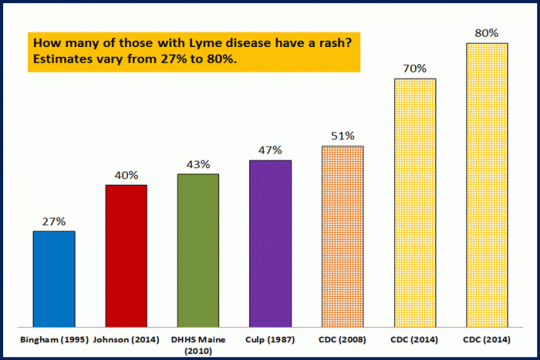
rashes-larger-blog-2

  • They used serologic testing. Research has proven this form of testing is abysmal: https://madisonarealymesupportgroup.com/2018/10/12/direct-diagnostic-tests-for-lyme-the-closest-thing-to-an-apology-you-are-ever-going-to-get/  Key quote: “These serologic tests cannot distinguish active infection, past infection, or reinfection.”In plain English, these tests don’t show squat. While this study in the link was for Lyme testing, I assure you, serologic testing for coinfections is just as abysmal. All of these coinfections are stealthy and persistent. They purposely don’t hang out in the blood & they’ve developed strategies to avoid the immune system as well as treatment.
  • The fact they only found 1 coinfection isn’t a shocker. Some of the sickest patients NEVER test positive because of dysfunctional immune systems. I’m not sure when they are ever going to think of using a provoking agent to stir the pathogens up, kill them, and then get the dead pieces and parts into the blood where this abysmal testing for antibodies can be picked up, but I’m not going to hold my breath. This study seriously makes me want to bang my head against the wall. They’ve learned nothing and continue to do the same exact things.
  • The only thing they got right was the, “increasing clinical relevance of this emerging infection,” but I’ve got news for them: this is just the tip of the iceberg.
  • They need to get Dr. Breitshwerdt in on these studies and allow him to test the patients for Bartonella using the tests he’s developed.  They also need to use provoking agents and then test, or use direct testing, and to drop the EM rash criteria like a bad habit.


Eye Problems in Tick-borne Diseases Other Than Lyme

http://danielcameronmd.com/eye-problems-tick-borne-diseases-lyme/

EYE PROBLEMS IN TICK-BORNE DISEASES OTHER THAN LYME

“Why should an ophthalmologist have a good understanding of Lyme diagnosis and treatment?” asks Sathiamoorthi [1], from the Mayo Clinic, in an article published in the Current Opinion in Ophthalmology. “Vision-threatening ophthalmic manifestations are relatively common in Lyme disease (LD) and Rocky Mountain spotted fever.”

by Daniel J. Cameron, MD MPH

“Knowledge of systemic and ophthalmic manifestations combined with an understanding of the epidemiology of disease vectors is crucial for the diagnosis of tick-borne diseases,” she explains.

While manifestations may be present with LD and Rocky Mountain spotted fever, ocular involvement is rare in other tick-borne diseases such as babesiosis, tick-borne relapsing fever, Powassan encephalitis, ehrlichiosis, anaplasmosis, and Colorado tick fever, Sathiamoorthi points out.

However, the true prevalence of ocular involvement due to tick-borne illnesses is unknown. Limitations with testing can make it difficult to identify patients. “It is crucial to know who is appropriate to test in order to avoid false positive results.” If an individual has been symptomatic for only a short period of time, they “may not have detectable serum IgM antibodies to the causative organism because it takes time for this immune response to develop.”

It can also be difficult to determine the cause of the ocular complaints if there is evidence of more than one tick-borne illness.

“One case report [2] describes a patient with optic neuritis and orbital myositis who had serologic evidence of HME [Human Monocytic Ehrlichioisis], Borrelia burgdorferi, and Babesia,” cites Sathiamoorthi.

There are more than one species of ticks associated with ocular findings, as well. According to Sathiamoorthi, those include Ornithodoros genus, Dermacentor variabilis Ambylomma americanum, Ixodes scapularis, and Dermacentor andersonii.

Sathiamoorthi advises doctors to “carefully generate a reasonable differential based on clues in the medical and social history regarding exposures and risks.”

“Patients who are most likely to have ophthalmic Lyme disease,” explains Sathiamoorthi, “are those with ocular manifestations commonly associated with Lyme disease (i.e. Bells palsy, cranial nerve palsies and keratitis); tick exposure in Lyme endemic regions; other signs/symptoms of late Lyme disease (i.e. inflammatory arthritis, carditis, acrodermatitis chronica atrophicans rash, encephalopathy and meningitis); and negative syphilis testing.”

Read more on eye problems in tick-borne diseases in “A growing list of eye problems in Lyme disease.”

References:

1. Sathiamoorthi S, Smith WM. The eye and tick-borne disease in the United States. Curr Opin Ophthalmol. 2016;27(6):530-537.
2. Pendse S, Bilyk JR, Lee MS. The ticking time bomb. Surv Ophthalmol. 2006;51(3):274-279.