Archive for the ‘Treatment’ Category

Highlights: How Fenben and Meben Disrupt Cancer Pathways

https://drturner.substack.com/p/cancer-fighters-fenbendazole-and?

Cancer Fighters: Fenbendazole and Mebendazole

Repurposing Parasite Drugs to Target Tumors and Disrupt Cancer Pathways

Article Excerpts:

Mebendazole, Fenbendazole and Albendazole all belong to a class of medications called “benzimidazoles” which were originally developed as treatment for parasites. Turns out they also do nasty things to cancer cells. (What follows is not an exhaustive list, but rather highlights some of the most prominent mechanisms.)

1. Induce Apoptosis (Programmed Cell Death)

Did you know that all cells have the ability to eliminate themselves by entering a process called “apoptosis”? Apoptosis is a form of guided, programmed cell death that allows the body to remove damaged, unnecessary, or potentially harmful cells in a controlled and orderly way.

For example, during embryonic development, it helps sculpt structures like fingers and toes by removing unneeded cells. In the immune system, apoptosis eliminates infected or malfunctioning cells, such as those with DNA damage, preventing them from becoming cancerous.

Turns out that these medications trigger apoptosis in cancer cells by activating pathways such as p53 and BAX.
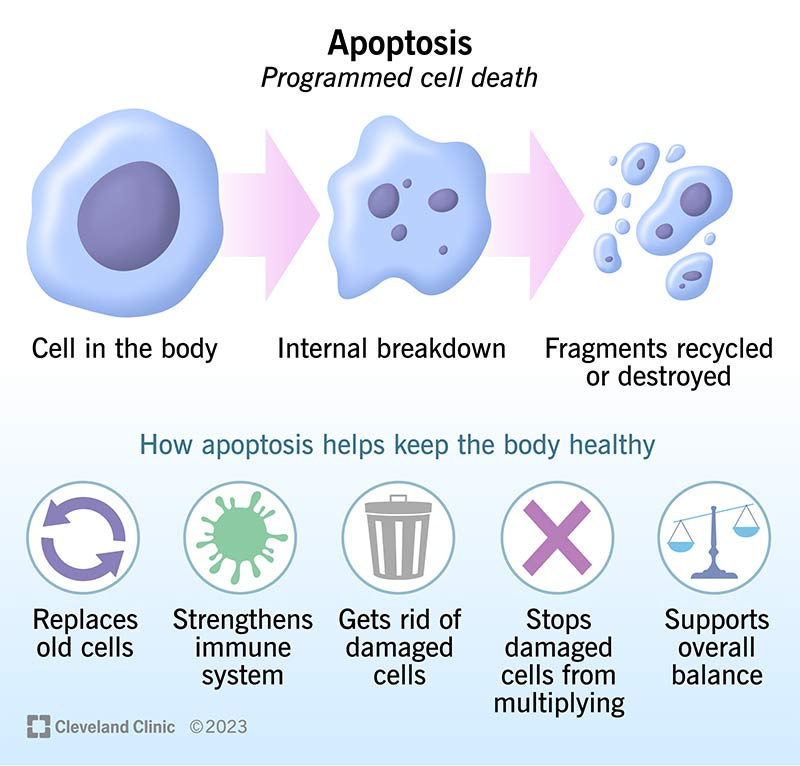
Apoptosis gets rid of cells by breaking them into bits your body recycles or destroys

2. Prevent cancer cells from dividing.

A cell is a 3-dimensional object that has an internal skeleton (think of it as a “scaffold”) around which the parts of the cell are attached. In order for a cell to divide, the genetic material replicates, a scaffolding system forms on the opposite end of the cell, and the the scaffold from each side reaches out and pulls the genetic material apart equally.
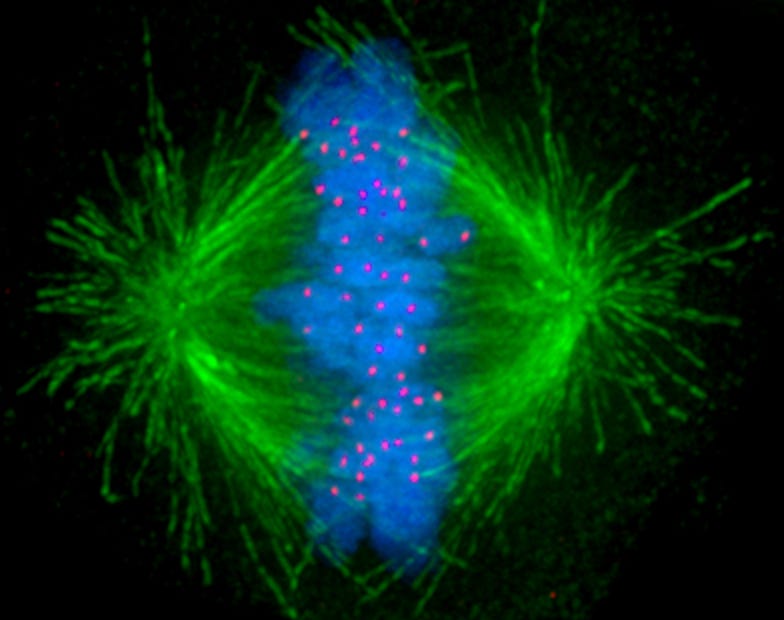
These pieces of scaffolding are called “microtubules” and if they can’t replicate and move properly, the cell is frozen — unable to divide.

Guess what?

These medications disrupt cancer cell microtubule function!

What about normal cells?

Cancer cells divide rapidly, depending heavily on microtubules for mitosis. Interruption of microtubule function thus has a disproportionately higher impact on these cells.

3. Kill cancer stem cells.

Cancer stem cells are the “seeds” that spawn further cancer growth — but they are not typically targeted by traditional approaches including radiation, surgery or chemotherapy; hence their failure rates.

Watch the video in the link above for more.

What this means, practically, is that measures should be taken to destroy cancer stem cells wherever they may be hiding.

Turns out these medications directly kill cancer stem cells.

(Extra credit: so do Ivermectin, doxycycline, metformin, atorvastatin, green tea extract (EGCG), melatonin, vitamin D3, curcumin, berberine, omega-3 fatty acid, resveratrol, aspirin, diclofenac, and phosphodiesterase 5-inhibitors)

For more reading: https://imahealth.org/cancer-stem-cells/

4. Interfere with the tumor’s ability to form new blood vessels.

In order for a tumor to grow, two essentials are needed: blood supply and energy supply (typically as glucose or glutamine; more on that next..)

So the tumor can only grow to the extent to which it can surround itself with new blood vessels. This process of recruiting blood vessels is called “angiogenesis”.

Guess what?

These medications inhibit angiogenesis (particularly by inhibiting a molecule called vascular endothelial growth factor (VEGF). So by cutting off the nutrient supply, these medications induce tumor starvation and shrinkage.

5. Inhibit Glucose Metabolism (Warburg Effect).

Normal cells have a choice of three main sources of biochemical energy: glucose, fatty acids and ketones. Cancer cells predominately rely on glucose (aka blood sugar) and glutamine—which is a vulnerability that can be exploited.

What if we interfered with the cancer cell’s ability to absorb and utilize glucose as a fuel?

Exactly.

These medications interfere with glucose uptake and utilization by “downregulating”glucose transporters such as GLUT1 and possibly hexokinase; the result is the cell is starved of energy.

Normal cells, which are less dependent on glucose as a fuel source, are less affected by these metabolic disruptions.

Here is Dr. Seyfried talking about the importance of glucose and glutamine for cancer growth:

And finally…

6. Disrupt cancer signaling pathways.

Imagine your body as a city with a traffic light system. Imagine that traffic light system operates during rush hour in a newly developing city (youth). Once the city is built (adulthood), the system mostly shuts down. But in certain rogue neighborhoods (tumors), this traffic controller comes back online and starts creating bypasses, shortcuts, and green lights for dangerous drivers (cancer cells), allowing them to speed through red zones, avoid checkpoints, and grow unchecked.

One of these traffic control systems is called the “Hedgehog (Hh) Pathway”.

Now you already know what I’m going to tell you next, right? 🙂

These medications decrease the activity of the Hedgehog pathway. (Extra credit: so does Ivermectin, Doxycycline, Vitamin D, Curcumin, and Sulforaphane.)

Treatment:

  • These medications should only be obtained from a licensed pharmacy (quality assurance) and taken under the supervision of a healthcare professional, as they are very bioactive, the dosing for cancer is different than for parasites, they interact with other medications and supplements, and require lab monitoring.

  • Mebendazole is the human form (pricey and difficult to find), while Fenbendazole is the veterinary form (a bit harder on the liver but much more affordable and accessible).  (See link for article and references)

Further Reading:

IMA cancer protocol, page 94

http://

 
In this groundbreaking conversation, Professor Thomas N. Seyfried, PhD (Boston College), author of Cancer as a Metabolic Disease, joins Ralph W. Moss, PhD and Ben Moss to discuss the Mitochondrial and Metabolic Theory of Cancer — and why it challenges decades of conventional thinking. Dr. Seyfried explains how cancer cells depend on glucose and glutamine as their dual fuel supply — and how cutting off both pathways may be the key to shutting cancer down.
 
He details the role of the Glucose Ketone Index (GKI), nutritional ketosis, and new interest in anti-parasitic drugs like fenbendazole and mebendazole, which appear to target cancer’s energy metabolism.
 
The full article with links, resources and full transcript can be found here: https://themossreport.com/s5-e13-prof…
 
This episode explores: 
  • Why the somatic mutation theory no longer explains cancer’s true origin
  • How mitochondrial dysfunction drives tumor growth
  • The critical role of glucose and glutamine fermentation in sustaining cancer cells • Why targeting both fuels together is essential for effective therapy
  • Emerging research on fenbendazole, mebendazole, and DON as tools in metabolic therapy
  • The potential of a paradigm shift in oncology — from genes to metabolism

For more:


TBI Diagnosis, Treatment & Link to UTI

http://  Approx. 40 Min

Go here to get your FREE report on the top 5 essential oils for chronic UTIs.
For more:

Italian Study: COVID Shots Increase Risk of Multiple Cancers

https://www.thefocalpoints.com/p/breaking-first-population-wide-study?

BREAKING: First Population-Wide Study Finds COVID-19 “Vaccines” Increase Risk of Multiple Cancers

Official government data from nearly 300,000 people tracked for 30 months show mRNA shots significantly increase the risk of overall cancer, breast cancer, bladder cancer, and colorectal cancer.

A groundbreaking new peer-reviewed study has just been published in EXCLI Journal. For the first time, researchers formally analyzed the long-term relationship between COVID-19 vaccination and cancer hospitalizations in a population-wide cohort of nearly 300,000 residents of Pescara province, Italy.

The study followed every resident aged ≥11 years for 30 months (June 2021 through December 2023) using official National Health Service data. The main vaccines administered were Pfizer-BioNTech (Comirnaty) and Moderna (Spikevax) mRNA shots, with smaller proportions receiving AstraZeneca (Vaxzevria) and Janssen (Johnson & Johnson) viral vector vaccines.

Importantly, the statistical models were adjusted for age, sex, comorbidities (diabetes, hypertension, cardiovascular disease, COPD, kidney disease), prior cancer, and prior SARS-CoV-2 infection — ensuring that infection status was explicitly taken into account. This makes it the longest and most comprehensive follow-up to date on cancer outcomes after COVID-19 vaccination.

The results are deeply concerning: while the study shows the expected biases that make vaccines look like they reduce overall death rates, it also uncovers the first statistically significant evidence of increased cancer risk following COVID-19 vaccination.  (See link for article)

______________

Important Excerpt:

  • The strongest, statistically significant increases were found for breast, bladder, colorectal, and overall cancer risk.

  • Nearly all other cancer sites also showed an upward trend, though not statistically significant due to wide confidence intervals.

  • Only lung and prostate cancers showed no evidence of increased risk.

It’s also important to note that this study, as all others stating the clot shots somehow reduced death, utilize a ‘healthy vaccinee bias,’ which simply means that since the ‘vaccinated’ are more likely to engage in health prevention, their cancer hospitalization rates should have been reduced; however, increases were still found and true cancer risk due to the shot may actually be greater than what was detected.  The other studies being used to tout the ‘safe and effective’ narrative used all sorts of shamwizardry to obtain that pre-determined outcome.  A few tactics used:

  • Trusts other studies (remember the adage: Trust but verify?)
  • Doesn’t reference any record level data to verify conclusions
  • Using modeling, not real world patient data
  • Not taking into account ‘vaccine’ harms
  • Using incorrect assumptions about fatality rates and ‘vaccine’ efficacy
  • And more…..
One thing is clear: mass COVID-19 “vaccination” campaigns unleashed a turbo cancer epidemic & severe harm

For more:


When a Tick Changes the Game: Jared Allen’s Battle with Alpha-Gal Syndrome

https://www.si.com/everyday-athlete/nfl-legend-jared-allen-s-tick-bite-diagnosis-every-athlete-needs-to-know-about

NFL Legend Jared Allen’s Tick Bite Diagnosis Every Athlete Needs to Know About

When a Tick Changes the Game: Jared Allen’s Battle with Alpha-Gal Syndrome

Most athletes know the importance of diet when it comes to peak performance; what you eat fuels your training, recovery, and overall health. But what happens when something as small as a tick forces you to rethink how you fuel your body completely? That’s precisely what happened to former NFL legend Jared Allen, who recently opened up about his battle with alpha-gal syndrome, a tick-borne food allergy that has reshaped his lifestyle—and his plate.

What is Alpha-Gal Syndrome?

Alpha-gal syndrome (AGS) is an allergy caused by the bite of the Lone Star tick, commonly found in the southeastern and midwestern United States. Unlike typical food allergies that react to things like peanuts or shellfish, AGS is unique: it causes the body to have a delayed allergic reaction to red meat and other mammal-based products. That means beef, pork, lamb, venison, and even hidden mammal-derived ingredients in foods or supplements can trigger severe symptoms.

The reaction doesn’t always happen immediately after eating, which makes it tricky to diagnose. Symptoms can range from stomach pain and hives to life-threatening anaphylaxis hours after a meal.

Jared Allen’s Diagnosis

For Jared Allen—known for his grit and strength on the football field—the diagnosis meant he had to completely cut mammal meat out of his diet and switch to what he calls a “fins and feathers” lifestyle, sticking to poultry and fish. Imagine going from fueling your body with steak or burgers after grueling workouts to suddenly being told those foods could send you to the ER. That’s a massive change for anyone, let alone a professional athlete used to finely tuned nutrition. (See link for article)

_____________

**Comment**

My son was recently bitten by a Lone star tick.  Well, I should say he was nibbled on by a LS tick, leaving a minuscule red pin prick.  The tick was not remotely engorged.  I received the frightening text from him but admitted I needed to brush up on all of this as so far Wisconsin patients are still mostly dealing with black legged ticks and Lyme/MSIDS even though Lone Star ticks have been found here.

But, the nibble was enough to cause profound illness in 2 weeks time.  (Yes, I’m kicking myself for not demanding prophylactic treatment, but we all grow slack at some point and need a wake-up call.  This was it!) 

His symptoms sounded exactly like Lyme but he was worried he had also developed Alpha Gal as he would get diarrhea within a few hours of eating red meat.  Thankfully this dreaded symptom quickly went away.

All I initially remembered was that LS ticks transmit not only Alpha Gal Syndrome (AGS) the meat allergy the NFL star got, but also STARI, which looks, smells, and acts just like Lyme disease, despite the fact at least 9 transmission experiments involving B. burgdorferi in Lone Star ticks have failed to demonstrate vector competency.  The offending agent of STARI is B. lonestari not B. burgdorferi, but the illness looks the same.  Go here for the nuts and bolts.

BTW: STARI is also called Masters’ disease, named after famed rebel Dr. Ed Masters who took the CDC on single-handedly and outwitted them.  All of Masters’ patients improved dramatically with extended antibiotic treatment despite the CDC’s belief that antibiotics should be used sparingly, if at all.

So, what to do?

Well, I figured if this looked and felt exactly like Lyme, it would respond to Lyme treatment.  My son went on the following (reminder: I’m not a doctor and I don’t diagnose or treat anyone):

  • 100mg minocycline, twice daily for two weeks; however when discontinued his symptoms returned, signaling that a layered approach was needed.  This is common.
  • he then pulsed 500mg tinidazole once a day for two successive days weekly
  • he then layered in 12mg ivermectin every other day
  • he did daily red light and sauna therapy
  • he did two rounds of EBOO (extracorporeal blood oxygenation and ozonation) 3 weeks apart.  He said the EBOO completely knocked him on his butt and he had to take a day off work to sleep, but that shortly he felt the best he had felt since starting treatment.
It took every bit of that treatment for three months to finally knock it.
 I’m happy to report he has remained symptom free.

On a side note, ivermectin and/or fenbendazole has:

This was not a fun experiment but I know how important it is to share our experiences, as that is often all we patients truly have – each other.

RMSF Case Documented in Quebec

https://www.ctvnews.ca/health/article/tick-borne-rocky-mountain-spotted-fever-detected-in-quebec-and-ontario/

Potentially deadly tick-borne illness recorded in Quebec and Ontario

Published: 

Canada’s first known human case of a potentially deadly tick-borne illness has been documented in Quebec.

The Rocky Mountain Spotted Fever case was recently recorded in Quebec’s Eastern Townships. It follows reports from Ontario of infected animals that visited Long Point on Lake Erie.

“Many people with this infection can be on the more severe end of the spectrum,” infectious disease specialist Dr. Isaac Bogoch told CTV’s Your Morning on Monday. “This can cause a very significant illness and can result in hospitalization and death.”

The bacterial illness is carried by several tick species, including dermacentor variabilis, which is also known as the American dog tick. Despite its name, Rocky Mountain Spotted Fever is most common in the eastern United States, where thousands of cases are recorded every year. (See link for article)

_____________

**Comment**

Unfortunately, the article regurgitates the climate change myth.

Ticks are marvelous ecoadapters and will be the last species on planet earth. They have the equivalent of antifreeze in their bodies and will simply find snow or leaf litter to crawl under when conditions become harsh.  In fact, warm winters are lethal to ticks, with overwinter survival dropping to 33% when the snow melted.  This has been substantiated by other researchers as well.  Scott & Scott, 2018, ticks and climate change, JVSM

They need snow cover to survive.

So ‘climate change’ would actually kill ticks.  

If only.

Important excerpt:

If left untreated, the fatality rate can be as high as between 20 to 30 per cent, according to the U.S.-based Cleveland Clinic. When treated with the antibiotic doxycycline, which is also used for Lyme disease, the fatality rate drops to between five and 10 per cent. Early intervention is key to avoid more serious outcomes, which can also include amputation, hearing loss and brain damage.

Sadly, very little real journalism is occurring in the U.S.  Reporters simply take regurgitated information and regurgitate it back yet again perpetuating the cycle of an accepted narrative.  Where are the investigative journalists digging for truth?  Where are the journalists who present all sides of an issue so the reader can form their own opinion?

They are an extinct species.