Archive for the ‘Transmission’ Category

Possibility of Brown Dog Ticks Transmitting Bartonella to Humans

https://pubmed.ncbi.nlm.nih.gov/33001978/

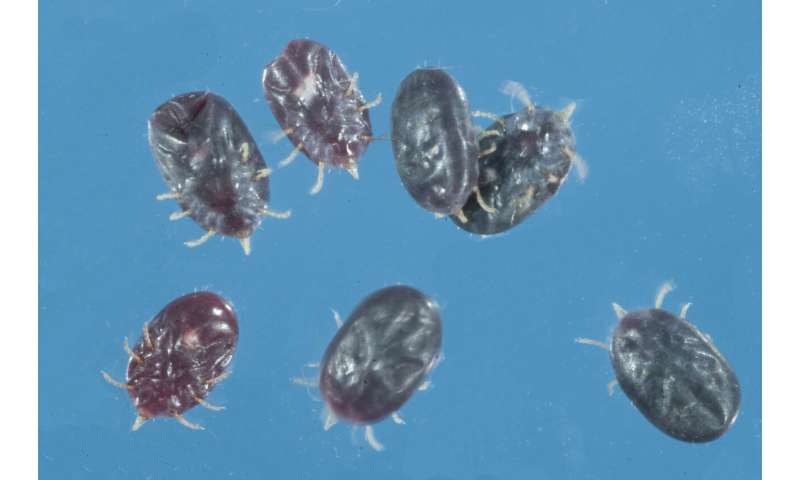
Transmission of Bartonella henselae within Rhipicephalus sanguineus: Data on the Potential Vector Role of the Tick

Free article

Abstract

Bartonella henselae is a fastidious intraerythrocytic, gram-negative bacteria that causes cat scratch disease in humans. Ixodes ricinus (castor bean tick) has been confirmed to be a competent vector of B. henselae, and some indirect evidences from clinical cases and epidemiological studies also suggested that some other tick species, including Rhipicephalus sanguineus (brown dog tick, pantropical dog tick or kennel tick), may transmit the bacteria. B. henselae has been detected in R. sanguineus but no experimental investigations have been performed to evaluate the vector competency of this tick species regarding B. henselae transmission.

To this end, this work aimed to assess the transstadial transmission of B. henselae between larvae and nymphs of R. sanguineus as well as transmission by nymphs infected at the larval stage. Four hundred B. henselae negative larvae were fed with B. henselae-infected blood by using an artificial membrane feeding system.

After five days of feeding:

  • B. henselae was detected by PCR in 57.1% (8/14) of engorged larval pools
  • 66.7% (4/6) of semi-engorged larval pools
  • 66.7% (2/3) of larval feces pools
  • after molting, B. henselae DNA was also detected in 10% (1/10) of nymph pools, but not in tick feces
  • after a pre-fed step of nymphs infected at the larval stage on non-infected blood meal, B. henselae was detected by PCR in blood sample from the feeder, but no Bartonella colonies could be obtained from culture

These findings showed that B. henselae could be transstadial transmitted from R. sanguineus larvae to nymphs, and also suggest that these nymphs may retransmitted the bacteria through the saliva during their blood meal.

This is the first study that validated the artificial membrane feeding system for maintaining R. sanguineus tick colony. It shows the possibility of transstadial transmission of B. henselae from R. sanguineus larvae to nymphs.

_______________________

**Comment**

For decades now, ‘authorities’ have denied ticks can transmit Bartonella.  Since so many Lyme/MSIDS patients have Bartonella it’s always seemed highly likely to me that ticks play a role. This study adds to the growing body evidence that yes, in fact, ticks play a significant role.  For more:  https://madisonarealymesupportgroup.com/2020/09/02/bartonella-found-in-ticks-biting-midges-and-moose/

https://madisonarealymesupportgroup.com/2017/04/18/bartonella-vectors/

The other theory is that the tick’s ability to suppress the immune system reactivates a latent Bartonella infection already within the body.  Bartonella is prolific and can be obtained in many, many ways besides the bite or scratch of a cat:  https://madisonarealymesupportgroup.com/2016/01/03/bartonella-treatment/

To date, Bartonella isn’t even on mainstream doctor’s radar for those bitten by ticks. This must change.  Bartonella can be a severe, chronic infection that causes untold damage both physically and mentally.

Psychiatric issues and Bartonella:  https://madisonarealymesupportgroup.com/2020/08/30/new-case-report-neuropsychiatric-symptoms-and-bartonella-associated-skin-lesions/

Work is being done on the connection between Bartonella and cancer:  https://madisonarealymesupportgroup.com/2020/09/11/bartonella-is-an-entity-often-diagnosed-in-breast-imaging-department-during-axullary-lymph-node-assessment/

Bartonella can cause encephalitis:  https://madisonarealymesupportgroup.com/2020/07/30/bartonella-causing-encephalitis/

Great article showing the systemic manifestations:  https://madisonarealymesupportgroup.com/2019/04/24/human-bartonellosis-an-underappreciated-public-health-problem/
Two Exotic Disease-Carrying Ticks Identified in Rhode Island & First Case of Parasitic Soft Ticks Reported in New Jersey

https://www.sciencetimes.com/articles/27511/20200929/two-exotic-disease-carrying-ticks-identified-rhode-island.

Two Exotic Disease-Carrying Ticks Have Just Been Identified in Rhode Island

Sep 29, 2020

Local authorities in Rhode Island announced that two new tick species were identified on Block Island. The tick species were traced back to Eurasia and Asia origins.

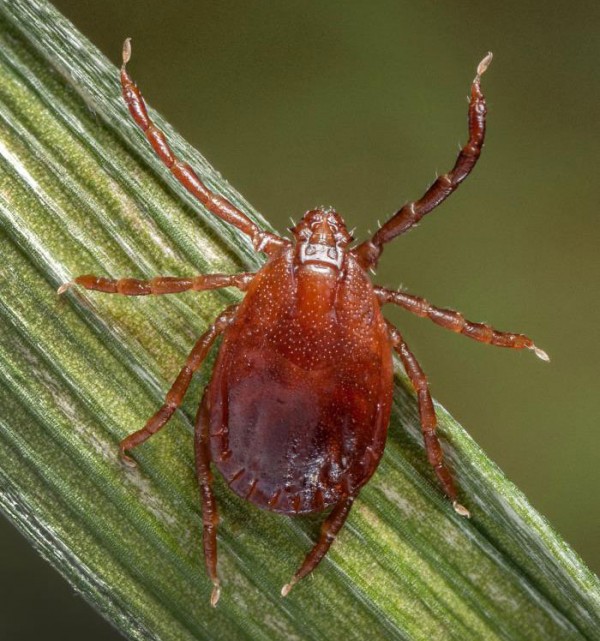
Dr. Danielle Tufts from Columbia University identified the two species Haemaphysalis longicornis (Asian long-horned tick) and Haemaphysalis punctata (red sheep tick), reported the state’s Department of Environmental Management (DEM). (See link for article) 

Two Exotic Disease-Carrying Ticks Had Just Been Identified in Rhode Island

(Photo: Asian long-horned tick, adult female dorsal view climbing on a blade of grass – Photo by James Gathany; CDC)

____________________

**Comment**

Both ticks are considered live-stock pests but they can and do bite humans, transmitting diseases.  Farmers, hunters, and hikes are at greater risk.

  • The red sheep tick is identified with Tick paralysis, Tick Borne Encephalitis virus, Tribec virus, Bhanja virus, Crimean-Congo haemorrhagic fever virus, Babesia bovis, Theileria recondita, Coxiella burneti, Francisella tularensis.  http://www.bristoluniversitytickid.uk/page/Haemaphysalis+punctata/17/#.X3S-TS2ZOWgCattle: Babesia major, Babesia bigemina, Theileria mutans, Anaplasma marginale and Anaplasma centrale

    Sheep: Babesia motasi, Theileria ovis

H.-punctata-female-dorsal-0-300x225

Red sheep tick, Adult female dorsal view

https://medicalxpress.com/news/2020-09-jersey-1.html

Bat tick found for the first time in New Jersey

Bat tick found for the first time in New Jersey

A tick species associated with bats has been reported for the first time in New Jersey and could pose health risks to people, pets and livestock, according to a Rutgers-led study in the Journal of Medical Entomology.

This species (Carios kelleyi) is a “soft” . Deer ticks, which carry Lyme disease, are an example of “hard” ticks.

“All ticks feed on blood and may transmit pathogens (disease-causing microbes) during feeding,” said lead author James L. Occi, a doctoral student in the Rutgers Center for Vector Biology at Rutgers University-New Brunswick. “We need to be aware that if you remove from your belfry, attic or elsewhere indoors, ticks that fed on those bats may stay behind and come looking for a new source of blood. There are records of C. kelleyi biting humans.”  (See link for article)

___________________

**Comment**

A few important points:

  1. A related species, Carios jersey, was found in amber 2001
  2. C. kelleyi has been found in 29 states so far
  3. Public health risk remains unknown, but it has been found to be infected with harmful pathogens in other states
  4. There are reports of this tick feeding on humans
  5. The bat it feeds on regularly roosts in attics and barns
  6. It has been identified with rickettsia and borrelia (Lyme):  https://www.sciencedirect.com/topics/agricultural-and-biological-sciences/carios
I can’t help but notice the bat connection, as well as the following:

https://www.newsbreak.com/news/2058858379813/first-case-of-parasitic-soft-ticks-reported-in-new-jersey  The current pandemic has been accompanied by cases of other illnesses and diseases such as African Swine Flu, Ebola, Bubonic Plague, West Nile Virus, Dengue outbreaks around the world.

Tick-borne Virus: All You Need to Know About the Disease That Has Killed 7 in China

https://economictimes.indiatimes.com/news/international/world-news/tick-borne-virus-all-you-need-to-know-about-the-disease-thats-killed-7-in-china/

Tick-borne virus: All you need to know about the disease that has killed 7 in China

**Comment**
While the world is fixated on COVID, there are other viruses that are deadly, and SFTS is one of them.
Important points:
  1. Symptoms include fever, coughing, thrombocytopenia (low platelets), leukcytopenia (love white blood cells), neurological issues and gastrointestinal disorders.
  2. SFTS has a 30% fatality rate.
  3. The Asian Longhorned tick appears to be the culprit which is now spreading across the U.S. ,despite the weather, by migrating birds.
  4. They don’t know if human to human transmission occurs.
  5. Since this was first isolated in 2011 you would think we would have better answers for something that kills 30% of the people it infects….

For more:  https://madisonarealymesupportgroup.com/2017/08/11/death-from-tick-borne-virus-sfts/  This article states the woman may have been infected by the bite from a cat.  If this is true, human to human transmission is highly probable.

https://madisonarealymesupportgroup.com/2018/09/12/three-surprising-things-i-learned-about-asian-longhorned-ticks-the-tick-guy-tom-mather/  We need answers on this tick fast because they line up on a blade of grass like a cluster-bomb.  Brush against it and you have hundreds if not thousands of ticks on you all at once.
And while researchers are quick to report it transmits Lyme disease rarely, it’s still a possibility:  https://madisonarealymesupportgroup.com/2019/10/26/researchers-conclude-asian-longhorned-tick-contributes-minimally-to-lyme-disease-in-the-u-s/
uninfected H. longicornis larvae could acquire B. burgdorferi s.s. while feeding on infected Mus musculus mice (infection prevalence >50% in freshly fed larvae) but that the infection was lost during the molt to the nymphal stage. None of 520 tested molted nymphs were found to be infected, indicating that transstadial passage of B. burgdorferi s.s. is absent or rare in H.
This tick should be a grave concern to all of us.

Allegheny County’s Tick Collector Warns of Lyme Disease Risks

https://www.post-gazette.com/news/environment/2020/08/07/ticks-Lyme-disease-risks-Allegheny-County-blacklegged-tick/stories/

Leah Lamonte, vector control specialist for the Allegheny County Health Department, looks for blacklegged ticks in their nymph stage after dragging a cloth along a trail in Hartwood Acres on July 30, 2020, in Allison Park.

Allegheny County’s tick collector warns of Lyme disease risks

Pam Panchak / Post-Gazette


Rarely Infected Not Infectious: How Dogs & Cats Have Become Victims of COVID-19

https://www.icam-coalition.org/infected-not-infectious-how-dogs-and-cats-have-become-the-victims-of-covid-19/

Excerpts:

Infected: Can dogs and cats be infected by SARS-CoV-2?

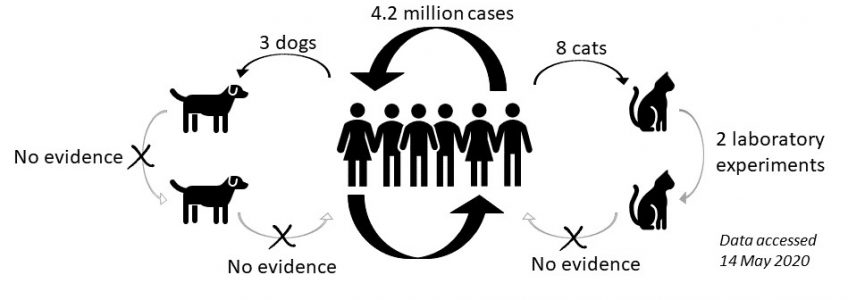
Since the outbreak of the COVID-19 pandemic we have seen a number of positive cases in companion animals (see our blog on why testing in companion animals should be limited). But equally as important, are the negative results.

Infectious: Can dogs and cats transmit SARS-CoV-2 to people? 

“Currently, there is no evidence that animals are playing a significant epidemiological role in the spread of human infections with SARS-CoV-2.” OIE. Evidence of transmission from dogs or cats to people would require clarity on two factors; timing and other transmission routes. A person would need to become sick with COVID-19 after their dog or cat had shown signs of infection AND all other possible routes of transmission from people would need to be excluded. Because they are in contact with many more dogs and cats than most people, veterinarians and shelter workers would be most at risk for this kind of transmission. Thankfully, there appears to be no greater prevalence of COVID-19 in these workforces.

With over 4 million human cases worldwide we have an abundance of complex, uncontrolled but undeniably valuable epidemiological evidence about transmission. The extremely small number of infections from people to dogs and cats, and the lack of any examples of transmission to people, is meaningful.

Dogs and cats are not playing a role in transmission of SARS-CoV-2 to people.

These companion animals are the victims of this reverse zoonosis; they are (rarely) infected but not infectious.

(See link for article)