It’s summer in North America and that means more people are outside enjoying the great outdoors. But, for some, simply heading out for a summer hike could make them sick.
There’s an increasing number of people across North America and around the world contracting Lyme disease. Lyme used to be considered an isolated disease found in North America and parts of Europe but it’s now found in 80 countries worldwide.
Its rise in North America has been particularly alarming. In the U.S. alone, the Centers for Disease Control says there are some 30,000 cases a year, but the CDC concedes the number is likely significantly higher than that. The Lyme Disease Association estimates the number is closer to a staggering 400,000 a year.
Some experts are sounding the alarm, calling it a pandemic.
“There are many countries around the world that are struggling with Lyme disease. It is a pandemic… There’s little doubt about that because it is so widely spread,” said Mary Beth Pfeiffer, an award-winning investigative journalist from upstate New York.
Pfeiffer began investigating Lyme disease when so many people in her community began getting sick and her initial research for the Poughkeepsie Journal eventually turned into a book, Lyme: The first Epidemic of Climate Change.
Health effects of Lyme
Lyme disease is caused by a bacteria called Borrelia burgdorferi that the tick contracts from hosts like deer or rodents. It’s then passed on to humans after a walk in tall grass or a hike in the wilderness.
“The bacteria is called a spirochete because of its spiral shape, and that gives it a great amount of motility so it’s able to move around in your system and throughout your tissue quite readily,” said Jim Wilson, the founder of the Canadian Lyme Disease Foundation (CanLyme).
The good news is that if a tick bite is caught early, within the first few hours or weeks, a course of antibiotics can pretty much eliminate the disease. But if it isn’t, that spirochete can wreak havoc on the body.
“Once you miss the opportunity to treat it acutely, the bacteria can disseminate from the site of tick bite,” said Dr. Kieran Moore, the principal investigator with the Canadian Institute of Health Research-funded Canadian Lyme Disease Research Network.
“It can be spread to your joints and cause rheumatological Lyme or it can spread into nerve tissue and cause nerve tissue damage, or it can attach to the muscle of the heart and the nerve conduction system of the heart and cause all types of different cardiac presentations.”
Unfortunately, many cases of Lyme aren’t caught early enough and patients continue to deteriorate without knowing why.
“I just kept deteriorating with really weird heart palpitations and cognitive issues like unable to concentrate, slurred speech, trouble swallowing, light sensitivity, sound sensitivity and just a rapid deterioration to the point where I had to come home from work,” said Barry Philpott, a Lyme disease patient.
Why it’s so hard to get treatment
Philpott isn’t the only patient who describes a decline in health without any explanation before finally getting a Lyme disease diagnosis. It’s virtually never the first thing a doctor looks for and Moore says that’s part of the problem.
“We need significant work to educate physicians both in the front lines — emergency medicine and primary care — as well as our specialist colleagues regarding the myriad of signs and symptoms that Lyme disease can present as,” said Moore.
The other issue: there is still no completely reliable test for Lyme.
“We know that the current diagnostic tests for Lyme disease are insensitive,” said Moore.
These diagnostic tests are particularly insensitive in the early stages of the disease, which means people could be going undiagnosed or misdiagnosed, leaving them vulnerable. Physicians and advocates for patients say this is the time to be especially vigilant.
“If someone presents in June, July or August just with undifferentiated fever, chills, muscle aches, headaches, neck stiffness… think Lyme disease,” said Moore.
Lyme and why it isn’t going away
Lyme isn’t going away. If anything, it’s getting worse.
“It has spread very quickly from the early ’80s onwards and we think that’s associated with climate change,” said Moore.
Pfeiffer, the investigative journalist, agrees.
“There are a number of things that are driving this epidemic and climate is one of the prime ones,” Pfeiffer said. “We’re certainly seeing that it’s warmer and it’s more humid in many places, especially in Canada, in the U.S., in the northeast and the midwest England.”
In her research, Pfeiffer also found a general lack of alarm over the disease, which she says is part of the reason Lyme has gone under-diagnosed and under-treated, especially in North America.
“We don’t have a handle and we need to do the work that we haven’t done,” she said. “I often compare Lyme disease to AIDS. The AIDS virus was identified in 1983. The Lyme disease bacterium was identified in 1981.
“The number of clinical trials that have been done for AIDS number about 11,000. You look at clinical trials for Lyme disease, there’s about 60. When I looked up those numbers it amazed me. Sixty trials for Lyme disease, 11,000 for AIDS.
“I’m not saying that AIDS did not deserve the attention it got, but Lyme disease is not getting the attention it deserves.”
Solutions to combating Lyme disease
Experts agree that it’s incumbent upon the medical community to start treating Lyme disease with more urgency. Since 2017 there has been a slight increase in funding for research in Canada. But other countries, including the U.S. are slower. Canada has also started educating physicians on recognizing signs and symptoms. However, it’s also important for people to educate themselves.
“Number one, educating people about the risk. Wherever you are going camping this year you should know, are ticks present and is the agent that causes Lyme disease present in those ticks, and you should be taking the appropriate precautions,” Dr. Moore said.
“Wear light-coloured clothing so you can see the ticks if they drop off the leaves or grasses and fall on to you. Use a repellant like DEET or Picaridin to repel the ticks off your clothing or skin.”
The message: until there is more research and more treatment available, prevention is the best medicine.
As to humidity – this is why ticks hide under snow and leaf litter. This is one of the reasons warmer winters are actually worse for tick survival. They are extremely adaptive to weather and can survive nearly anything but fire: https://madisonarealymesupportgroup.com/2016/01/20/polar-vorticks/
Our writer was not surprised by last week’s warning about increasing tick-borne infections
Tara Conlan at her home in Bentworth, Sussex, near the New Forest where she contracted Lyme disease. Photograph: Sonja Horsman/The Observer
Three years ago, a few weeks after a family trip to the New Forest, I started to feel constantly nauseous and tired. A small red patch appeared on my ankle. I turned to the web for some answers, and Google turned up trumps: much to my horror, my symptoms matched some of those for the tick-borne bacterial infection Lyme disease.
My GP was doubtful (we lived in London and I had not noticed any ticks on me) but agreed to a blood test. It came back positive so the rest of my family was tested. My husband and daughter also had it but, ironically, my son – on whom I had spotted a tick – did not. Lyme is like malaria in that you might get bitten by a mosquito but only some of them carry the disease.
Warnings issued last week that Lyme is on the rise – and that the number of cases may be three times higher than estimated – are no surprise to me. When I got it, I was shocked to find how easily it could be transmitted, how unreliable testing for it was, and how awful the consequences were for those who didn’t get the right diagnosis in time.
My symptoms ruined our Christmas holiday and the antibiotics affected my daughter’s health during school exams. But we were fortunate. I subsequently learned that of two others who contracted Lyme in the New Forest, one – a child – was affected neurologically.
Given that the hosts for the New Forest ticks were deer, suffice to say, I no longer felt like crying at the film Bambi and – unpopular opinion alert – I began hoping people would view the deer in Richmond Park not through misty eyes but through sights on a rifle. (I was not alone. A letter to the Timeslast week asked: “If deer are deemed to be a significant threat to human health, and an increase in the cull is thought to be a reasonable solution, then why are we even hesitating?”)
But my research revealed deer to be only part of the problem: the unpalatable truth is that ticks are carried by other animals, including cats, dogs and birds. The International Lyme and Associated Diseases Society states: “A patient’s residence does not necessarily reflect his or her Lyme disease risk. People travel, pets travel and ticks travel. “Migratory birds carry ticks over great distances,” it adds.
You can’t become immune to Lyme – a lesson that leading media analyst Claire Enders learned first-hand. She has had Lyme twice, with the second bout going undiagnosed for a year as her test results gave a false negative. An eloquent businesswoman from a medical Nobel prize-winning US family, she became such an authority on the illness that when she told Jeremy Hunt the NHS website’s Lyme guidance was inadequate, the then health secretary had it updated.
Yet she had to work hard to convince her doctors she had it again: “I was asked if I had a ‘Daily Mail illness’.It was demeaning. I felt devastated by the illness, so to be told it was in my head because the test was negative was awful.”
Enders was unable to walk and suffered nerve damage, but is thankfully better after an 18-month cycle of antibiotics and hydrotherapy.
Language is important in raising awareness. She describes it as a “climate-change illness” and says Lyme should be compared with tropical diseases, not flu: “It’s a neural illness.”
Specialists say milder winters have increased the tick population, as fewer are being killed off by freezing weather. Enders points out, “this country is covered with woods and crawling with deer. People forget that birds get ticks, so do cats, dogs and other animals”.
She highlights how the US has dealt with the increase of Lyme – opening up special clinics where antibiotics are given out. UK doctors are more reluctant to prescribe antibiotics due to increased resistance, but Enders argues that, for her and most others, they are the only cure. Around 70% of her US family has had Lyme, and their estate is now sprayed to kill ticks after employees died from the disease.
The National Institute for Health and Care Excellence has identified areas of the UK particularly at risk of the disease. They include the New Forest and Scottish Highlands where businessman Kenny Young got Lyme from ticks in the bracken. He was initially very tired but thought nothing of it until a rash appeared a few weeks later. “Luckily, I knew enough about Lyme to figure it out,” he said. “My doctor was in London and had never come across Lyme before. However, when I explained what had happened, she was very helpful and prescribed me the NHS-recommended course of antibiotics.”
He thinks the rise might be due to warmer weather but also different land usage: “In the past, there was much more bracken burning that kept it under control.”
Young now checks for ticks and says: “Hopefully, the big increase in Lyme across the UK and the US will encourage greater investment in finding a vaccine.”
Vaccination or better testing could help stop cases such as that of the former England rugby player Matt Dawson, whose misdiagnosis of Lyme led to him needing heart surgery. The expensive issue the government needs to confront is the ticks themselves and the bacteria they pass on; more research is needed into this mysterious and complex illness.
My specialist, Dr Darius Armstrong-James, says: “There seem to be other factors we don’t understand. I was told in medical school it was mostly [in the] New Forest and acquired by ticks from deer. Now it seems the animals that harbour Lyme are accepted to be much broader and the geography is obviously very broad.”
After my symptoms had subsided and my course of antibiotics was over, my samples were sent off to Porton Down to check I was clear of Lyme. However – and I suppose I shouldn’t have been surprised by this point– this isn’t as straightforward a process as you would think. Once you’ve had Lyme, your blood will always show a positive test – even when the disease has gone.
Ticks can be carried by dogs and cats, as well as wild animals such as deer and birds. Photograph: 4FR/iStockphoto
Symptoms include circular red mark on the skin, multiple red rashes, fatigue, aching joints, dizziness/vertigo, fever, night sweats, difficulty concentrating, neck stiffness/headaches, numbness or tingling, nausea, palpitations, shortness of breath, and mood changes.
What to wear insect repellent, a hat and long clothing in woodland; check yourself and pets for ticks.
The Asian longhorned tick, first found in the U.S. in 2010, is now established in 11 states along the East Coast. The female is capable of laying 2,000 eggs without mating and an infestation may kill livestock from the blood loss
While ticks are known vectors of disease, thus far this species has not transmitted disease in the U.S. It is known to carry thrombocytopenia syndrome virus triggering human hemorrhagic fever, responsible for killing 15% of those the tick bites in Asia
The number of ticks and range in which they live have been expanding dramatically. Tickborne illnesses include Lyme disease, infecting 300,000 each year in the U.S., Rocky Mountain spotted fever, babesiosis, Powassan virus and Bourbon virus
As Lyme disease rates skyrocket, it’s important to do a quick check each time you come back inside after being in a grassy area or near trees and bushes; Lyme disease may be successfully treated when caught early. Your risk of infection is lower if you effectively remove the tick as soon as possible
While you might have thought a tick is an insect, it really belongs to the arachnid family, along with spiders, scorpions and mites.1 A tick survives by feeding on the blood of a host, growing from the size of an apple seed before food and swelling to more than double their size after feeding.2
Ticks are more active during the summer months, between March and November in the northern hemisphere. Most enjoy living in warm moist places, such as bushes, tall grasses and shrubs. Animals and humans get ticks while walking through these areas.3
Of the 899 species of ticks found throughout the world, only 90 reside in the U.S.,4 and just a select few are known to bite humans.5 After a tick gets on you, it doesn’t usually bite right away but will crawl around to find an acceptable place to latch on and feed. They look for soft, moist areas, including near your ears, hair, underarms and groin. They also like to settle under the waistband of your pants.6
After piercing your skin with its mouth, the tick inserts a tube to feed on your blood until it’s full. This may take up to two weeks.7Tick bites are often painless so it may be difficult to tell if you’ve been bitten.
First new tick species in US in 50 years
In the past decade the U.S. has become home to a new species, the Asian longhorn. Dr. Gregory Poland from the Mayo Clinic says this tick represents the first time in 50 years a new species has made its way to the U.S.8 Because it is an emerging threat in the U.S. the CDC recommends that surveillance should include testing for pathogens.9
Ticks are associated with diseases in humans and animals. The Asian longhorn tick is known to carry human hemorrhagic fever caused by thrombocytopenia syndrome virus10 in Asia.11 This species has been found in 11 states, including:12
Arkansas
Connecticut
Kentucky
Maryland
North Carolina
New Jersey
New York
Pennsylvania
Tennessee
Virginia
West Virginia
However, while it appears to be spreading across the eastern U.S., the CDC has reported there is currently no evidence these ticks have transmitted disease to humans or animals.13 Asian longhorned ticks in Asia carry a virus responsible for killing 15% of those they bite.14
In recent years, this population has spread to several Pacific Islands, Australia and New Zealand. Although some experts warn against extrapolating information to the Asian longhorn tick carrying serious viruses in the U.S.,15 this species also represents additional dangers to livestock and other animals.16
North Carolina State veterinarian Dr. Doug Meckes sent out information17 reminding farmers and pet owners to be vigilant with preventive measures to avoid ticks in their animals. Five cows in Surry County, North Carolina, recently died due to acute anemia triggered by a tick infestation.18
Asian tick sounds like something from a horror film
Samples from the cows confirmed the ticks were Asian longhorn. According to Meckes, this was the fourth confirmed case since 2018 and the first in 2019.19 One young bull presented to the diagnostic lab for necropsy had 1,000 ticks. As described in this short video, the ticks are aggressive biters, feeding on both animals and humans.
The first identified case, in 2010, involved a white-tailed deer from West Virginia.20 In other reports the tick was found in New Jersey in 201721 when a woman discovered them on her sheep.22
The first recorded human bite was reported by a 66-year-old man from Yonkers, New York, in June 2018. He removed the tick from his leg and subsequently took it to the Lyme Disease Diagnostic Center in Westchester County for testing.23 After confirmation that it was the Asian longhorned tick, sampling was done near his home and nearby park, finding 90 ticks.24
A unique characteristic of this species is its ability to reproduce quickly and prolifically without mating.25 The female does not need a male to lay as many as 2,000 eggs at a time.26 The threat to livestock may be significant. A dairy cow may experience a 25% drop in milk production after becoming a host.27
As the species continues to multiply and spread, it is conceivable millions of animals could be exposed.28 A study published in the Journal of Medical Entomology29 developed a model demonstrating the wide area of North America where favorable conditions for the Asian longhorned tick may exist.30
Study author Ilia Rochlin, Ph.D., is a professor at Rutgers University. She believes the adaptability of this species means it has the potential to spread across the U.S. and southern Canada.31 The ability of the tick to reproduce without mating may make it extremely hard to control. Rochlin said,32 “In practice, it’s impossible to eradicate this species.”
Tick population rising, along with the diseases they carry
The number of all ticks and the range in which they live have both increased. According to the CDC,33the lone star tick has expanded from the southeastern U.S. into the northern and Midwestern states. The range of the black-legged tick, responsible for many cases of Lyme disease, has more than doubled in the past 20 years. Between 1993 and 2012, the number of counties in the U.S. at high risk for Lyme disease rose by more than 300%.34
Although the Asian longhorned does not yet carry disease, many other ticks do. The CDC announced it will begin monitoring the population and diseases ticks carry as the number of people diagnosed with diseases carried by ticks has more than doubled. Anna Perea, from the CDC’s Division of Vector-Borne Diseases, commented on the new monitoring:35
“For the first time this year, the CDC is funding states to conduct widespread surveillance of ticks and the pathogens they can transmit, in addition to funding human disease surveillance and education and prevention. Taken together, the data can help define areas where ticks are spreading, the infectious pathogens that they carry, and where risk of tick-borne disease is increasing.”
Tick-borne diseases may include Lyme disease, suspected to affect nearly 300,000 people each year.36 Rocky Mountain spotted fever, anaplasmosis, ehrlichiosis and babesiosis are also spread by ticks. New infections have also been detected, including the Bourbon virus, Heartland virus37 and Powassan virus.38 Ticks spread disease by virtue of the way they find nutrients.
In order to transition through life stages, ticks must have a blood meal to survive.39 Through the process of hatching from the egg, going through the larvae, nymph and adult stage, they may live up to three years. If unable to find a suitable host, they die.40 As they ingest blood, they also suck up any pathogens from the host and spread it to their next host.
Lyme disease rates skyrocketing
The rising number of ticks and their spreading habitat has meant an increase in the number diagnosed with tick-borne diseases. Lyme disease is the most prevalent of those conditions. CDC41data show that in 1997, there were 12,801 confirmed cases which more than doubled to 29,513 confirmed and 13,230 probable cases in 2017.
Data also show more males than females are affected, with the age group of 5 to 9 years having the greatest number affected. The disease is most frequently diagnosed in the months of June and July.42One study from researchers at Carnegie Mellon University43 called the rising epidemic of Lyme disease a “Ticking Bomb.”
These researchers found a relationship between rising temperatures and the incidence of Lyme disease, predicting the number of people diagnosed may rise by more than 20% by midcentury.44 In addition to temperature playing a role in the rising number of tickborne illnesses, researchers find smaller patches of forest may also increase the number of Lyme carrying ticks.
White-footed mice, also known to carry Lyme disease,45 are often the first blood meal for the larval tick.46 In smaller forest fragments measuring less than 5 acres, the mice are abundant because smaller areas of forest support fewer predators.47
Felicia Keesing from Bard College, New York, and other researchers have found an average of three times the number of ticks in a three-acre forest fragment than in larger areas. As many as 80% of the arachnids in the smallest patches were infected.48
Challenges of diagnosis and treatment for Lyme disease
Although the disease has been around for thousands of years, the medical community only began describing it in the 1970s. An autopsy of a 5,300-year-old mummy found the presence of the bacteria and a German physician first wrote about symptoms more than 130 years ago.49
Lyme disease is caused by a bacterium, which when left untreated may spread to the joints, heart and nervous system. The bacterium, Borrelia burgdorferi, may be treated successfully when found early.50 However, while commonly acknowledged now, Lyme disease has historically been a challenge to diagnose.
CNN reported51 on a U.S. Air Force enlisted man, Ruben Lee Sims, who was voted the “top enlisted management analyst of the year” in 1977. Only seven years later he was discharged and labeled a hypochondriac when the military was unable to diagnose Lyme disease. Misdiagnosed for more than three decades, he now shares his story to help others.
Early symptoms resemble the flu and the bullseye rash is not always recognized.52 Within 30 days of being bitten, you may experience fever, chills, fatigue and muscle and joint aches. Up to 80% of those infected will have a rash resembling a bull’s-eye target at the site of the tick bite, which gradually reaches 12 inches or more across.53
Later on, signs of infection may include severe headache and neck stiffness, a spreading rash on other areas of your body, severe arthritis pain and swelling, facial palsy, heart palpitations and possibly an irregular heartbeat.54 If left untreated, you may develop inflammation of the brain and spinal cord. This can lead to pain, numbness and tingling in the hands and feet as well as problems with short-term memory.55
Some people have seen multiple physicians and undergone a plethora of tests before being given a correct diagnosis.56 Early tests may not detect antibodies to the bacteria as it may take several weeks to rise to detectable levels.
Since early treatment is most effective57 some physicians begin treatment before offering a definitive diagnosis.58 The Lyme antibody test looks for exposure to the bacteria, but it may take your immune system several weeks to produce measurable levels. This can result in a false negative test with early testing.59
You’ve found a tick — now what?
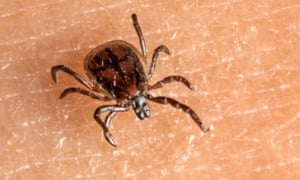
Anytime you’re out in grassy areas or around trees and bushes do a quick skin check when you get back inside. Look for small brown to black spots or crawling, eight-legged arachnids. If the tick is unattached to your skin and has not fed, slip a sheet of paper under it and seal it in a container with alcohol.
However, if it’s become attached to your skin, it’s important to remove it to lower your risk of infection. While there are several tools on the market you may want to consider, a set of fine-tipped tweezers will also do the job. According to the CDC you should:60
Grasp the tick close to the skin’s surface.
Using steady and even pressure, pull the tick upward. Twisting or jerking may cause the mouth parts to remain in the skin. If the mouth parts are left behind, try to remove them with clean tweezers. If you are unable to remove them easily, allow the skin to heal.
Clean the area and your hands thoroughly with rubbing alcohol or soap and water.
Do not crush the tick as this forces blood and pathogens into your body.61
Avoid using techniques such as painting the tick with nail polish or covering it with petroleum jelly. This will not suffocate it. Likewise, poking it or using heat to make it detach are not recommended.62
Once a tick has been safely removed drop it in a sealed container with alcohol and take it to your health department or Lyme disease center for identification. Keep an eye on the area for the next several weeks. If you develop a rash or flu-like symptoms, see a doctor who’s experienced in treating Lyme disease.
_________________
**Comment**
A few points for consideration:
While human infection from the Asian Long-horned tick has not been documented in the U.S., it may still be happening. Remember, in Asia, it causes illness that KILLS 15% of those whom contract it. Don’t take this lightly.
Regarding what to do when you find an attached tick – again – insanity is doing the same thing over and over and expecting different results. Since everyone admits catching this early makes all the difference, why are people still telling people to “wait and see?” No, do NOT wait and see! By that point it will be TOO LATE! Treat this as seriously as a heart attack and treat it prophylactically if you are bitten by a tick. It’s not worth the risk, trust me. A month’s worth of cheap antibiotics are worth it. Take probiotics, avoid sugar, and live to see another day, or take your chances, spend $15K a year for potentially ever, and hope you can keep working to keep the lights on, as well as keep your family intact. People STILL are not “getting” the seriousness of this. Here’s better advice on what to do if you are bitten: https://madisonarealymesupportgroup.com/2019/05/25/help-ive-been-bitten-by-a-tick-now-what/ and go here for better info on prevention: https://madisonarealymesupportgroup.com/2019/04/12/tick-prevention-2019/
Military Eyes Bug-Repellent Coating to Replace Permethrin in Uniforms
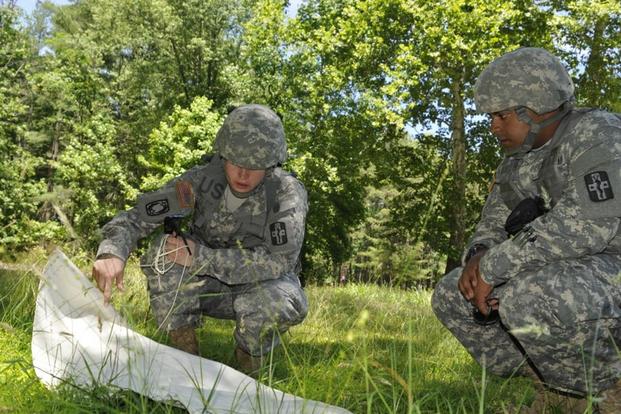
Army Reserve Spc. Susan Muir and Army Reserve Sgt. Sean Tynes, a preventive medicine specialist, trap and draw ticks for testing of Rocky Mountain spotted fever and Lyme disease at Lake Hurst at Joint Base McGuire-Dix-Lakehurst, June 11, 2015. (U.S. Army/Spc. Samuel Al-Nimri)
The Defense Department is exploring a replacement for permethrin, the bug repellent and insecticide that is soaked into most military combat uniforms.
Officials declined to provide details on the new product, which is still being tested and evaluated, but said it may be used “at a lower toxicity level” and last a uniform’s lifetime. Permethrin lasts through about 50 launderings.
“We are looking at new chemistries,” said Lt. Cmdr. James Dunford, a medical entomologist at the Uniformed Services University of the Health Sciences in Bethesda, Maryland, speaking with reporters on a call Wednesday to promote the Defense Health Agency’s “Bug Week.”
“We are working on a new chemical … that would also include environmental factors like sweat, ultraviolet light and abrasion, so we are trying to make it last longer,” added Dr. James English, a global health specialist with the Uniformed Services University, addressing several of the shortcomings of permethrin that cause it to lose its bug-fighting powers.
“DoD is always actively engaged in testing new products, methodologies and technologies to enhance the efficacy of the vector-borne disease protection we can provide for our service members. Any time we find a better tool … we are going to add it to our tool box,” English said.
The Pentagon’s marked its second annual “Bug Week” July 27 to Aug. 3 to raise awareness of the slew of disgusting diseases carried by bugs and provide information to service members and their families on preventing illness.
According to the Defense Department, Lyme disease continues to be the top domestic threat to U.S. troops when it comes to bug-borne diseases, with illnesses carried by mosquitoes being the major challenge overseas.
“Outdoor activities like farming, camping and military training exercises in grasslands or edges of the forest increase chances of these pathogens’ transmission,” Army Maj. Elizabeth Wanja of the Uniformed Services University for Health Sciences said in a news release.
The most ubiquitous vector-borne disease in the United States by far is Lyme, with more than 30,000 diagnosed cases of Lyme reported to the Centers for Disease Control and Prevention each year and estimates of infections as high as 300,000 annually.
From 2010 to 2016, the U.S. armed forces saw 721 confirmed cases and 3,266 suspected cases of Lyme, as well as 64 cases of Rocky Mountain spotted fever and 14 cases of ehrlichiosis — all carried by ticks.
Also from 2010 to 2016, the services saw 346 confirmed and 475 suspected cases of malaria, 86 cases of dengue, 78 cases of chikungunya and 52 cases of Zika.
Other diseases on the rise in the U.S. include the rare Powassan virus, with 33 cases across the U.S. in 2017. This illness, carried by the deer tick, affects the human nervous system, causing respiratory complications and brain swelling. And alpha-gal syndrome, which can be caused by a bite from the lone star tick, can cause a red meat allergy in humans.
To prevent infections, the Defense Department takes a “three-pronged approach,” English said.
This includes proper wearing of uniforms — “tucking your pants into your boots, long sleeves” — caring for uniforms so they maintain their insecticide impregnation and taking preventive medications for diseases such as malaria before and during deployment to endemic countries.
Officials say the key to preventing infection off-duty is to maintain similar practices. They recommend using an effective repellent containing DEET, IR3535 or oil of lemon eucalyptus, all of which the CDC classifies as providing “reasonably long-lasting protection,” wearing proper clothing (again, long pants and long sleeves) and conducting tick checks after being in grassy areas and woods.
“The more time you spend outside, the more likely you are to pick up ticks. The best way to prevent it is to not get them in the first place,” English said.
According to English, ticks need roughly 24 hours to transmit a disease, so if one is found on the body, remove it carefully, using tweezers to grasp it and pull away gently and “straight out in slow motion.”
Do not, he said, use a hot match to make it release or smother it with Vaseline or baby oil.
“None of that works and, in fact, all that does is make them regurgitate if they get trauma like that, and it can either [lead to] an infection or the pathogen can be vomited when it otherwise it wouldn’t,” he said.
To prevent mosquito-borne illnesses, deprive them of their breeding grounds, Dunford added. This means eliminating all standing water in yards and using environmentally friendly mosquito dunks in bird baths or fountains. Being aware of the potential for standing water has been especially important in a year that has seen extensive flooding at military bases, he said.
“As far as mosquitoes go, aedes aegypti [mosquitoes that carry dengue, Zika and other tropical diseases] don’t fly more than a block in their entire life, so if you are getting bit at your home in the daytime, they probably are breeding within a block of your home … even in something as small as a bottle cap full of water,” English said.
Again, wear protective clothing and use repellents, he added.
While several of these diseases are curable, many are not, and they not only pose a threat to readiness, given the symptoms and related down-time, they can carry long-term consequences.
In July, military researchers wrote a case study in the journal Military Medicine about a 24-year-old Army officer and U.S. Military Academy graduate who was discharged after exposure to Lyme disease resulted in chronic inflammation of his knees, rendering him unfit for duty.
In 2016, the Military Health System confirmed 156 cases of Zika, including five cases in pregnant beneficiaries. The Zika virus can cause severe birth defects in children, including microcephaly, a condition where a baby’s head is much smaller than normal that is linked to developmental and intellectual delays, seizures and other disabilities.
The Defense Department’s relationship with ticks made headlines earlier this month, thanks to an amendment to the proposed House national defense authorization act that seeks to determine whether the Pentagon has experimented with ticks and insects to spread disease.
Sponsored by Rep. Christopher Smith, R-New Jersey, the legislation would require the Pentagon inspector general to investigate the “possible involvement of DoD biowarfare labs in the weaponization of Lyme disease in ticks and other insects” from 1950 to 1975.
Smith said he was inspired to write the amendment based on several books, including “Bitten: The Secret History of Lyme Disease and Biological Weapons” by Kris Newby, that claim DoD research may have played a role in spreading Lyme.
“My amendment tasks the DoD Inspector General to ask the hard questions and report back,” Smith said in a news release.
Defense officials said Wednesday that the goal in studying Lyme and other tick-borne diseases is to prevent them.
Department spokeswoman Heather Babb said that the Pentagon cannot comment on Smith’s proposed legislation. But, she added, “DoD takes extreme care in all of our research programs to ensure the protection of our personnel and the community.”
Lorraine’s Dr Hilary Jones’ chilling eight-word warning over disease you can catch by going outside
The ‘nasty’ and ‘debilitating’ disease has sparked frantic warnings from the health professional
By James Rodger, 3 Aug, 2019
Lorraine’s Dr Hilary Jones has warned Brits of a disease they can catch – while out walking.
The ‘nasty’ and ‘debilitating’ disease has sparked frantic warnings from the health professional.
“You need to act as soon as possible”, Dr Hilary told ITV viewers.
As the summer nights continue to draw out long, with dry weather in Birmingham, many city residents will take to evening strolls.
You may even spend your nights at a local outdoor cinema event – or in a pub garden.
But, if you’re outdoors, you’ve been warned to take precautions over ticks.
Tick bites, of course, can lead to Lyme Disease, and Dr Hilary said: “You need to see your GP and they will prescribe antibiotics for three weeks, which will reduce your chances of contracting Lyme Disease.”
Dr Hilary said people need to cover up if they are walking to reduce the risk of tick bites(Image: ITV)
He added: “After the early stages, it is really difficult to diagnose and it is not dealt with very well by the NHS.
“The effects can be quite debilitating for many years.”
Birmingham-born John Caudwell’s revealed in 2015 that eleven members of his family have now been diagnosed with the potentially crippling disease .
Phones 4u founder Caudwell ccused NHS and the Government of ‘negligence’ in failing to properly investigate what he considers to be a public health scandal.
The 66-year-old – who made his fortune by selling Phones 4u for £1.5 billion in 2006 – called for further research into the illness.
“It is a public health scandal, a travesty, a tragedy that people are being left to suffer,” he said.
“The negligence at the top of the Health Service and in the Government is almost starting to border on the criminal and actionable.”
Dr Hilary, 66, said ticks are most common in woodlands and while many will want to go for long summer walks outdoors, he had some advice.
He said: “Cover the skin, long sleeves, long socks, to reduce the risk of being bitten.
“Check your pets and children, it really is a nasty disease.”
He also showed viewers a tick removing tool, but warned you need to make sure you remove all of the blood-sucking insect because you could easily leave parts of the mouth behind.
He added: “It is important to remove that tic as soon as possible. You want to do it carefully, and get under the mouth.”




 Madison Area Lyme Support Group