Archive for the ‘Testing’ Category

Tick-Borne Infection Revealing Human HIV Positivity in Young Adult

https://www.ncbi.nlm.nih.gov/pmc/articles/PMC6804791/

Tick- borne infection revealing human immunodeficiency virus (HIV) positivity in a young adult

Abstract

Purpose

To describe a patient whose retinal findings suggestive of tick-borne disease but evaluations led to early diagnosis and treatment of human immunodeficiency virus (HIV) infection.

Observation

A young patient presented with bilateral uveitis, branch retinal artery occlusion and retinal findings suggestive of infective/inflammatory etiology. Laboratory evaluations revealed that the patient was positive for co-infection with Rickettsia conorii and Bartonella henselae. On further investigation, the patient tested positive for HIV infection. The patient was treated with doxycycline as well as highly active anti-retroviral therapy (HAART) to control both opportunistic infections as well as HIV infection.

Conclusion and Importance

Patients with HIV infection are at risk for multiple, simultaneous opportunistic co-infections, including those with tick-borne diseases.

________________

**Comment**

A great example of how infections can drive viruses. Mainstream medicine is still hopelessly in the dark on the seriousness of tick borne infections and the polymicrobial nature of them:  https://madisonarealymesupportgroup.com/2018/10/30/study-shows-lyme-msids-patients-infected-with-many-pathogens-and-explains-why-we-are-so-sick/


What Makes Lyme Tick?

https://exelmagazine.org/article/what-makes-lyme-tick/  Full Article Here

What Makes Lyme Tick?

Ticks carry a multitude of bacteria that can harm human health, and a College of Medicine doctoral student is identifying all of them, in hopes of giving physicians ammunition against Lyme disease.

Lying inside a freezer in Drexel’s College of Medicine are 500 dead, mourned by no one.

The deer ticks, dog ticks, lone star ticks and other tiny parasites in the diminutive morgue traveled from nearly every state in the country to reach this resting place. They arrived in baggies or cookie tins or what-have-you, scooped from meadows and forests by helpful volunteers responding to a “call for specimens” on Drexel’s website that was posted by Kayla Socarrás, a doctoral student studying microbiology and immunology. Each tick contains multitudes of smaller organisms — a grab-bag of the pathogenic bacteria that make tick bites so hazardous.

Throughout 2018, Socarrás studied what makes these critters tick…..

________________

**Comment**

Great article worth reading on researchers who admit the following:

  • A single tick bite can infect you with numerous pathogens capable of persistent infection resulting in permanent illness that can mimic other diseases like MS.
  • Current testing utilizes “one strain of borrelia that was isolated 30 years ago — based on science that hasn’t kept up with contemporary understandings of how bacteria evolve.”
  • The classic EM rash is only present in less than half of all cases. The ranges actually go from 27-80%, yet we’ve been told for decades you must have it to have Lyme.
  • Lyme is extremely pernicious due to its ability to evade antibiotics and the immune system through creating biofilms and by “swapping genes or going dormant.” “A single strain of bacteria might have 1,200 genes out of a possible 5,400 genes available at the species level.”
  • Borrelia burgdorferi, the causative agent of Lyme disease can’t be cultured. And “Once the spirochete gains a foothold in the brain or other organs, it’s almost impossible to defeat.”
  • The article states, “One physician was able to reverse Alzheimer’s dementia in three patients who he determined had Lyme disease, by putting them on high-dose antibiotics. A psychiatrist noticed that some of the children referred to her had both bipolar disorder and Lyme disease; on a hunch, she tested all of her bipolar patients and determined that 90 percent were Lyme positive — she began treating them with antibiotics. Ehrlich recounts a case of a famous Duke oncologist with congestive heart failure; after he received a heart transplant, he was able to determine that the muscles of his heart had been massively infected with Borrelia burgdorferi.”


Image

Online Practitioner Webinar on Saturday for Doctors Treating Lyme/MSIDS

unnamed-2

Deer, Fragmented Forests, Ticks, a Lyme-like Disease….and a Little Praise for Possums

https://www.wm.edu/news/stories/2019/deer,-fragmented-forests,-ticks,-a-lyme-like-disease-and-a-little-praise-for-possums.php  Full Article Here

Deer, fragmented forests, ticks, a Lyme-like disease … and a little praise for possums
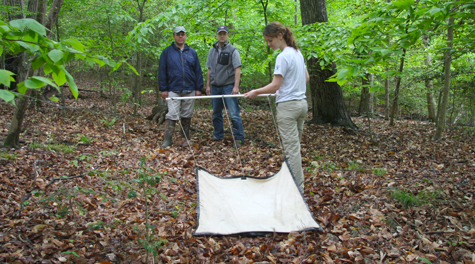
Joanna Weeks  drags a cloth to collect ticks in the College Woods

It’s a drag:  In a photo from 2013, Joanna Weeks ’13 drags a cloth to collect ticks working with W&M biologists Matthias Leu (left) and Oliver Kerscher. The three were among the co-authors on a 2019 paper that examines the link between a Lyme-like tick-borne disease and fragmented forested habitat.  Photo by Joseph McClain


“…Say — what’s that?”

“Nothing but a tick.”

“Where’d you get him?”

“Out in the woods.”

“What’ll you take for him?”

“I don’t know. I don’t want to sell him.”

—Tom and Huck, in Tom Sawyer

Ticks were evidently so rare in Samuel Clemens’ Hannibal that a single live specimen had value enough to tempt Tom Sawyer to part with his newly shed tooth. Matthias Leu says it was the same in the Switzerland of his more recent youth.

“When I was a boy, I spent all my time in the forest,” Leu said. “I never saw one tick. And in Switzerland now, you should not leave the trails because there are so many ticks. So, it’s not just in North America; it’s global.”

__________________

**Comment*

Great read which exposes the fact that little is known about the Ehrlichia chaffeensis bacterium which gives similar symptoms as Lyme disease. According to biologist Matthias Leu, “There probably has been a lot of ehrlichiosis that was misdiagnosed as Lyme.” Leu and his colleagues studied the habitat of the Lone Star Tick and found that forest fragmentation causes more edges which deer love, giving ticks an easy meal.

Leu explains that deer are “competent hosts,” serving not only as a meal for the tick, but also a reservoir for ehrlichiosis, capable of infecting the next feasting tick with Ehrlichia chaffeensis. He states that fawns and yearling deer are especially important in transmission of the bacterium.

According to this study, health providers often fail to consider ehrlichia when treating tick borne infections:  https://www.sciencedaily.com/releases/2018/10/181001171202.htm

“The failure to test for Ehrlichia, even as more and more evidence suggests that the infection may be just as common as other endemic tick-borne diseases, appears to impact patient care with antibiotics prescribed less frequently when testing is not ordered.”

For more on Ehrlichia:  https://madisonarealymesupportgroup.com/2018/12/02/everything-thats-known-about-ehrlichiosis/

https://madisonarealymesupportgroup.com/2018/10/15/ehrlichiosis-masquerading-as-thrombotic-thrombocytopenia-purpura/

https://madisonarealymesupportgroup.com/2018/10/02/north-carolina-ehrlichia-often-overlooked-when-tick-borne-illness-suspected/

https://madisonarealymesupportgroup.com/2018/07/24/oklahoma-ehrlichiosis-central/

https://madisonarealymesupportgroup.com/2018/03/09/dogs-ehrlichiosis/

https://madisonarealymesupportgroup.com/2019/05/04/ehrlichiosis-a-tick-borne-illness-that-can-imitate-blood-related-cancers/

https://madisonarealymesupportgroup.com/2018/12/02/everything-thats-known-about-ehrlichiosis/

https://madisonarealymesupportgroup.com/2018/10/15/ehrlichiosis-masquerading-as-thrombotic-thrombocytopenia-purpura/

https://madisonarealymesupportgroup.com/2018/10/02/north-carolina-ehrlichia-often-overlooked-when-tick-borne-illness-suspected/


Line Immunoblot Assay for Tick-Borne Relapsing Fever and Findings in Patient Sera From Australia, Ukraine, & the USA

https://www.mdpi.com/2227-9032/7/4/121

Line Immunoblot Assay for Tick-Borne Relapsing Fever and Findings in Patient Sera from Australia, Ukraine and the USA

Healthcare 2019, 7(4), 121; https://doi.org/10.3390/healthcare7040121
Received: 11 July 2019 / Revised: 25 September 2019 / Accepted: 16 October 2019 / Published: 21 October 2019
(This article belongs to the Special Issue Lyme Disease and Related Tickborne Infections)
Tick-borne relapsing fever (TBRF) is caused by spirochete bacteria of the genus Borrelia termed relapsing fever Borreliae (RFB). TBRF shares symptoms with Lyme disease (LD) caused by related Lyme disease Borreliae (LDB). TBRF and LD are transmitted by ticks and occur in overlapping localities worldwide. Serological detection of antibodies used for laboratory confirmation of LD is not established for TBRF. A line immunoblot assay using recombinant proteins from different RFB species, termed TBRF IB, was developed and its diagnostic utility investigated. The TBRF IBs were able to differentiate between antibodies to RFB and LDB and had estimated sensitivity, specificity, and positive and negative predictive values of 70.5%, 99.5%, 97.3%, and 93.4%, respectively, based on results with reference sera from patients known to be positive and negative for TBRF. The use of TBRF IBs and analogous immunoblots for LD to test sera of patients from Australia, Ukraine, and the USA with LD symptoms revealed infection with TBRF alone, LD alone, and both TBRF and LD. Diagnosis by clinical criteria alone can, therefore, underestimate the incidence of TBRF. TBRF IBs will be useful for laboratory confirmation of TBRF and understanding its epidemiology worldwide. View Full-Text
__________________